
科技自立自强

Search documents
592颗星,1.1万亿活水:科创板激活中国创新伟力
Zhong Guo Ji Jin Bao· 2025-11-05 05:02
Core Insights - The Sci-Tech Innovation Board (STAR Market) has significantly contributed to China's innovation-driven economic development, with 592 listed companies and over 1.1 trillion yuan raised since its inception [1][2] - The board has established a unique ecosystem that supports various stages of technology companies, allowing unprofitable firms to go public and facilitating substantial R&D investments [2][4] Group 1: Institutional Framework - The STAR Market's inclusive listing system has enabled 57 unprofitable companies to go public, with 22 of them turning profitable [2] - The introduction of the fifth set of listing standards has particularly benefited the biopharmaceutical sector, with 21 out of 22 companies successfully launching self-developed drugs [3] Group 2: R&D Investment - In 2024, total R&D investment by STAR Market companies reached 168 billion yuan, more than three times the net profit of the sector [4] - By the third quarter of 2025, R&D investment further increased to 113.35 billion yuan, marking a 9.01% year-on-year growth [4] Group 3: Industry Clusters - The STAR Market has fostered significant industry clusters, particularly in integrated circuits, with 121 listed companies covering the entire supply chain [5][6] - The semiconductor sector has seen record IPO fundraising, which has stimulated growth in related upstream and downstream companies [6] Group 4: Capital Ecosystem - Approximately 90% of STAR Market companies received venture capital before going public, promoting a culture of early and small investments in hard technology [7] - The market has developed a comprehensive index system with 33 indices and over 100 ETFs, with total assets exceeding 330 billion yuan [7] Group 5: Policy Developments - The introduction of the "1+6" policy measures aims to enhance support for technology companies with significant breakthroughs and ongoing R&D investments [8] - These reforms signify a transition from a testing ground to a demonstration platform, further aligning with national innovation strategies [8]
592颗星,1.1万亿活水:科创板激活中国创新伟力
中国基金报· 2025-11-05 04:48
Core Viewpoint - The Sci-Tech Innovation Board (STAR Market) has significantly enhanced China's innovation capabilities, with 592 listed companies and over 1.1 trillion yuan raised since its inception, marking a pivotal shift in the country's technological landscape [2][4]. Group 1: Institutional Flexibility - The STAR Market was established to address the "bottleneck" issues faced by tech companies, allowing firms with varying stages of development and governance structures to access capital markets [4]. - Notably, 57 companies listed without profitability, with 22 of them successfully turning profitable, demonstrating the board's inclusive approach [4]. Group 2: R&D Investment - In 2024, total R&D investment by STAR Market companies reached 168 billion yuan, more than three times the net profit of the sector, with a median R&D intensity of 12.44% [7]. - By the third quarter of 2025, R&D investment further increased to 113.35 billion yuan, reflecting a year-on-year growth of 9.01% [7]. - STAR Market companies have generated over 130,000 invention patents, averaging 230 patents per company, leading to significant technological advancements [7]. Group 3: Industry Cluster Development - The STAR Market has fostered a notable cluster effect, particularly in the integrated circuit sector, with 121 listed companies covering the entire industry chain [9]. - In the biopharmaceutical sector, 115 companies are actively involved in treating major diseases, with significant progress in drug approvals and international collaborations [9]. Group 4: Capital Market Dynamics - The STAR Market serves as a comprehensive ecosystem integrating technology, industry, capital, and talent, with over 60% of founding teams comprising scientists or industry experts [11]. - Approximately 90% of STAR Market companies received venture capital before listing, promoting a culture of early and substantial investment in hard tech [12]. Group 5: Policy Enhancements - The introduction of the "1+6" policy measures aims to further deepen reforms on the STAR Market, enhancing support for tech companies with significant breakthroughs and commercial potential [14]. - This policy marks a transition from a "testing ground" to a "demonstration field," facilitating growth for more hard tech enterprises [14].


新征程·新蓝图|着眼取得决定性突破 加强重点领域关键核心技术攻关
Xin Hua She· 2025-11-05 01:44
Core Insights - The document emphasizes the need to strengthen original innovation and tackle key core technologies, proposing extraordinary measures to achieve decisive breakthroughs in critical areas such as integrated circuits, industrial mother machines, high-end instruments, basic software, advanced materials, and biomanufacturing [2] Group 1 - The proposal aims to promote deep integration of technological and industrial innovation [2] - It highlights the importance of advancing education, technology, and talent development in a coordinated manner [2] - The initiative seeks to accelerate high-level technological self-reliance and lead the development of new productive forces [2]
证券市场周刊-第40期2025
2025-11-05 01:29
Summary of Key Points from the Conference Call Industry or Company Involved - The conference call discusses the A-share market and its dynamics, particularly in the context of the 20th Central Committee's Fourth Plenary Session and its implications for various sectors, including technology and manufacturing. Core Insights and Arguments 1. **Economic Growth Resilience**: China's economy achieved a growth rate of 5.2% in the first three quarters, indicating strong resilience and a stable recovery trend [7][14][49]. 2. **Policy Support from the Fourth Plenary Session**: The session outlined a development blueprint that provides solid support for the market's stability and long-term growth, emphasizing the construction of a modern industrial system and the importance of securing the manufacturing supply chain [2][8][11]. 3. **Investment Opportunities in Manufacturing**: Companies with significant market share and technological advantages in manufacturing are expected to benefit from the focus on supply chain security and domestic substitution policies [8][9]. 4. **Sector Performance**: The technology sector, particularly in electronics and media, showed strong performance in the third quarter, while industries like steel and non-ferrous metals also saw a recovery in profitability [9][10]. 5. **Market Dynamics**: The A-share market has rebounded, with the Shanghai Composite Index surpassing 4000 points, marking a significant milestone since 2015. This reflects a broader market recovery and increased investor confidence [9][49]. 6. **Long-term Investment Strategy**: The emphasis on strategic resources and industries with competitive advantages suggests a shift in investment focus towards sectors that align with national policy directions outlined in the five-year plan [8][9]. Other Important but Potentially Overlooked Content 1. **Technological Independence**: The call highlighted the need for technological self-reliance as a response to external uncertainties, particularly in AI and data-driven sectors [10]. 2. **Market Sentiment and External Factors**: The ongoing U.S.-China trade negotiations and their impact on market sentiment were noted, with expectations of improved conditions following recent discussions [7][42]. 3. **Investment Risks**: Despite the positive outlook, the call acknowledged the inherent uncertainties in technology investments and the need for careful risk management [22]. 4. **Fund Performance**: The performance of various funds and their alignment with market trends was discussed, indicating a cautious yet optimistic approach to equity investments [26][31]. This summary encapsulates the key points discussed in the conference call, providing insights into the current state of the A-share market, economic growth, and strategic investment opportunities.
眭纪刚|解读十五五规划:发挥科技在产业发展中的引领作用
Guan Cha Zhe Wang· 2025-11-05 01:24
Group 1: Core Objectives of the 15th Five-Year Plan - The 15th Five-Year Plan emphasizes accelerating high-level technological self-reliance and leading the development of new productive forces to seize historical opportunities presented by the new round of technological and industrial revolutions [1][2] - The plan highlights the importance of technology as a precursor to industrial development, drawing parallels with historical examples from developed countries that capitalized on past technological revolutions [1][2] Group 2: New Technological Revolution and Industrial Transformation - The current technological revolution, characterized by advancements in artificial intelligence, quantum information, and biotechnology, is driving a paradigm shift in industrial development and fostering the growth of emerging industries [2][4] - Breakthroughs in biotechnology are expected to revolutionize the prevention and treatment of diseases, thereby propelling the future development of the biotechnology sector [2] Group 3: Importance of Technological Dominance - Occupying technological high ground is crucial for gaining competitive advantages in global technology competition, influencing both economic and political landscapes [4][5] - Mastery of core technologies enables countries to transition from technology followers to standard setters, reshaping international order and competition dynamics [5] Group 4: Manufacturing Sector's Role - The manufacturing sector is identified as a pillar of national economic development, with its overall capacity and level determining a country's economic strength and comprehensive national power [6][7] - The plan stresses maintaining a reasonable proportion of manufacturing to counteract trends of outsourcing and to enhance economic resilience [7] Group 5: Relationship Between Technological Innovation and High-Quality Development - Technological innovation is pivotal in transitioning economic development drivers from traditional factors to innovation elements such as technology and human capital, which are essential for achieving high-quality development [9][10] - At the micro level, companies must innovate to enhance product performance and production efficiency, fostering a competitive environment that promotes overall economic quality [9][10]

中外对话丨“中国是动荡世界中一支确定的力量”
Zhong Guo Xin Wen Wang· 2025-11-04 13:51
Core Insights - The "15th Five-Year Plan" emphasizes China's commitment to "self-reliance in technology," "high-quality development," and "high-level opening up," which are seen as crucial for both domestic and global economic stability [1][2] Group 1: Economic Context - The "15th Five-Year Plan" is introduced in a more complex global environment compared to the "14th Five-Year Plan," highlighting China's proactive approach to challenges and its determination to continue opening up [2] - Experts note that China's focus on expanding consumption is a positive move in response to insufficient domestic demand and global economic imbalances [2][3] Group 2: Policy Signals - The plan sends clear and stable policy signals, aiming to avoid economic damage from policy fluctuations and providing a long-term strategic framework for national governance [3] - It is characterized as a declaration of how China intends to navigate challenges while addressing its own development issues [3] Group 3: Global Engagement - The plan proposes to expand high-level opening up, transitioning from merely removing barriers to establishing rules, indicating a shift towards proactive engagement with international trade standards [4] - China's approach to globalization is evolving from "bringing in" to supporting Chinese enterprises in "going out," creating a new open framework that offers significant market opportunities globally [4] Group 4: Multilateral Cooperation - Experts emphasize the importance of maintaining a favorable environment for free trade and the role of multilateral institutions like the WTO and UN in stabilizing geopolitical dynamics [5] - The need for enhanced economic cooperation between Europe and China is highlighted as essential for maintaining an open trade and investment environment [5]
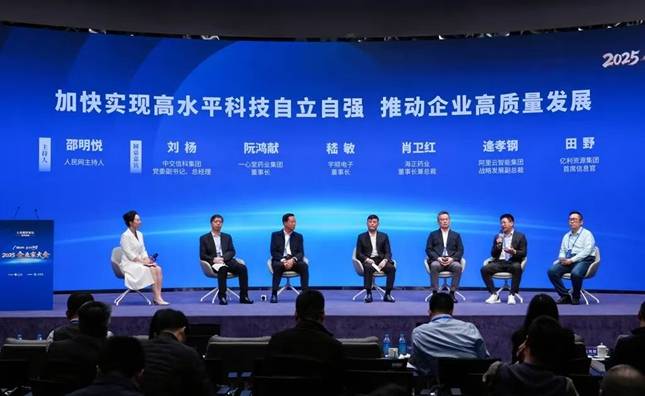
广阔天地 有为正当时:海正药业董事长肖卫红出席“2025企业家大会”
Sou Hu Cai Jing· 2025-11-04 10:11
Core Insights - The "2025 Entrepreneur Conference" emphasizes the importance of high-level openness and innovation for businesses to seize historical opportunities and responsibilities [1][3] - The pharmaceutical industry is directed towards high-quality development, with a focus on innovation as a core principle for companies like Haizheng Pharmaceutical [5] Group 1: Company Strategy - Haizheng Pharmaceutical is enhancing its innovation capabilities by focusing on "from 0 to 1" drug development and adhering to international quality standards [3] - The company is adopting a "comprehensive internationalization" strategy, viewing the global market as a whole and leveraging domestic competitive advantages [3] Group 2: Innovation and Development - Haizheng has prioritized areas such as AI-assisted research, small nucleic acids, synthetic biology, and high-end formulations, supported by a strategic scientific advisory committee [5] - The company is implementing a dual-track development strategy, accelerating innovative drug research and optimizing generic drug processes to enhance cost and quality advantages [5] Group 3: Market Expansion and Brand Building - Haizheng is diversifying into pet care, medical aesthetics, and health sectors to strengthen market resilience and ensure high-quality development [5] - The company is committed to quality control and continuous innovation to build a trusted "Haizheng Manufacturing" brand while fulfilling social responsibilities [5] Group 4: Entrepreneurial Spirit - The new era of entrepreneurship requires a fearless and persistent approach to explore and deepen in the pharmaceutical industry, contributing to the health of the nation [5]

“十五五”规划敲定投资方向,这类ETF迎来高光时刻!
市值风云· 2025-11-04 10:09
Core Viewpoint - The article emphasizes the importance of investing in hard technology sectors, highlighting that ETFs are ideal tools for sharing policy dividends as the "14th Five-Year Plan" transitions into actionable policies [3][6]. Group 1: Policy and Market Context - The "14th Five-Year Plan" aims to accelerate high-level technological self-reliance and establish a modern industrial system centered on advanced manufacturing, injecting strong momentum into China's high-tech industry [3][6]. - Historical data indicates that the technology sector, as a policy focus, has outperformed most other sectors in the 1-3 years following policy announcements [4][9]. - The recent A-share market recovery in the technology sector, with significant inflows into technology ETFs, signals a strong market response to policy expectations [7][9]. Group 2: Performance of Technology Sectors - The A-share market has shown robust performance, with the Shanghai Composite Index rising from 2748.92 points to 4000 points, largely driven by the electronics sector, which contributed 34.9% to this increase [10][11]. - The current market rally is characterized as a "hard technology-driven" structural bull market, reflecting a fundamental shift in economic growth dynamics [12][13]. Group 3: Investment Opportunities in ETFs - Technology ETFs have become a primary tool for investors to access the A-share market, with a total market size exceeding 5 trillion, offering low-cost, transparent, and convenient investment options [13][14]. - The Sci-Tech Innovation 50 ETF has shown an average return of 60.8% this year, with the largest fund, the Sci-Tech Innovation ETF, achieving a return of 61.5% [14][19]. - The top holdings in the Sci-Tech Innovation 50 Index include leading companies in semiconductor and renewable energy sectors, indicating strong growth potential [16][24]. Group 4: Risk and Stability in Investment - The article discusses the high volatility associated with the Sci-Tech Innovation 50 Index, which has experienced a maximum drawdown exceeding 60% since inception, suggesting that investors should be prepared for significant fluctuations [25][27]. - For risk-averse investors, the Sci-Tech Bond ETFs provide a more stable investment option, combining fixed income with exposure to technology sectors, thus reducing overall asset volatility [28][36].
国务院国资委:中央企业要努力开辟增长“第二曲线”
Zheng Quan Ri Bao Wang· 2025-11-04 09:15
Core Insights - The State-owned Assets Supervision and Administration Commission emphasizes the importance of advancing China's modernization and economic development over the next five years, aligning with the goals set by the 20th National Congress of the Communist Party of China [1][2] Group 1: Industrial Upgrading and Development - The focus is on promoting quality development through industrial upgrading, emphasizing intelligent, green, and integrated approaches to enhance traditional industries and foster emerging sectors [1] - The aim is to establish a modern industrial system centered on advanced manufacturing to support the foundation of the real economy and ensure sustainable economic growth [1] Group 2: Technological Independence and Innovation - There is a call for enhancing technological self-reliance by increasing research and development investments and focusing on original innovations and key technologies [2] - The integration of technological and industrial innovation is crucial for significantly improving the level of technological independence and developing new productive forces [2] Group 3: Reform and Governance - The need for deep reforms to establish a modern corporate governance mechanism with Chinese characteristics is highlighted, focusing on data-driven insights and long-term value thinking [2] - The promotion of entrepreneurial spirit and improvement of total factor productivity are essential for developing a high-level socialist market economy [2] Group 4: Cooperation and Development - The importance of mutually beneficial cooperation is stressed, advocating for development through openness and competition while leveraging strengths and avoiding internal competition [2] - Emphasis is placed on practical cooperation in technology, industry, and talent to jointly undertake major projects and participate in global competition [2]
金元证券周晔:立根基而强寰宇 从“高水平自立”迈向“高质量自强”的“十五五”征程
Zheng Quan Shi Bao Wang· 2025-11-04 08:16
Core Viewpoint - The transition from the "14th Five-Year Plan" to the "15th Five-Year Plan" represents a significant leap in China's modernization, focusing on enhancing technological self-reliance and quality self-strengthening [1][5]. Summary by Sections 14th Five-Year Plan Achievements - The "14th Five-Year Plan" positioned innovation at the core of China's modernization, emphasizing technological self-reliance as a strategic support for national development [2]. - It recognized the profound changes in international circumstances and technological landscapes, necessitating the mastery of key technologies and core capabilities through independent innovation [2][3]. - Major achievements in various fields such as manned spaceflight, lunar exploration, and quantum information reflect a significant enhancement in China's technological capabilities [4]. Transition to the 15th Five-Year Plan - The "15th Five-Year Plan" aims to significantly improve the level of technological self-reliance and self-strengthening, enhancing the overall effectiveness of the national innovation system [5][6]. - The focus will shift from merely having capabilities to evaluating the quality and strength of these capabilities, aiming for leadership in more sectors [5][6]. - The plan emphasizes the need for a new growth model driven by original innovation and high-value-added technologies, moving away from traditional resource inputs [6][10]. Key Areas of Focus - Quantum technology is highlighted as a critical area for observing the transition from self-reliance to self-strengthening, with significant investments and advancements in quantum computing and communication [7][8]. - The plan outlines the need to explore future industries such as quantum technology, biomanufacturing, and hydrogen energy, aiming to transform cutting-edge technologies into new economic growth points [8][9]. Collaborative Mechanisms - A comprehensive mechanism integrating education, technology, and talent is proposed to cultivate high-level talent aligned with national strategic needs [9]. - The role of enterprises in technological innovation will be strengthened, encouraging them to lead national technological challenges and enhance their investment in basic research [9][10]. Future Directions - The "15th Five-Year Plan" is seen as a new chapter in China's modernization, requiring a balance between maintaining safety through self-reliance and enhancing global competitiveness through quality self-strengthening [10][11]. - The plan aims to transform foundational achievements from the "14th Five-Year Plan" into comprehensive national competitiveness, focusing on controllable key areas and autonomous core technologies [11].