资产配置

Search documents
资产配置成共识 民生加银多元稳健配置3个月持有混合(FOF)正在发行中
Cai Fu Zai Xian· 2025-12-01 10:07
Group 1 - The core viewpoint of the articles highlights the increasing recognition of FOF (Fund of Funds) as a professional asset allocation tool in response to the challenges posed by low interest rates and market volatility, making multi-asset allocation a preferred choice for investors [1][2] - FOF funds utilize a model of "selecting funds, portfolio investment, and dynamic rebalancing," which aligns with modern asset allocation needs and serves as an effective solution to various investment dilemmas [1] - The number of public FOF products in the market has reached 519, with a total management scale of 193.5 billion yuan, reflecting a 16% increase from the previous quarter, indicating a growing trend towards FOFs as a core investment tool for the public [2] Group 2 - The demand for wealth management is shifting from "pursuing returns" to "steady allocation," positioning FOF funds as a viable option for ordinary investors seeking long-term stable investments [2] - The Minsheng Jia Yin Multi-Asset Steady Allocation 3-Month Holding Period Mixed FOF is currently being issued, which aims to balance risk contributions across various assets using a risk parity model, enhancing adaptability in different macro environments [2] - The product includes a 3-month holding period to help investors avoid irrational trading behaviors and optimize their holding experience [2]
重阳投资王庆:全球资金“高配美、低配中”与两国科技经济实力严重背离
Xin Lang Zheng Quan· 2025-12-01 08:41
Group 1 - The core viewpoint is that there is a significant imbalance in global capital allocation, with excessive investment in the US market and insufficient investment in the Chinese market, which does not reflect the actual economic strength of both countries [1][2] - The current allocation discrepancy creates a structural opportunity for global capital flow, as a potential shift in the US economy or capital market could lead to a reallocation of funds towards the undervalued Chinese market [1] - China's economic development and technological advancements provide a natural hedge against the US economy and technology sector, which holds significant value in global asset allocation [1] Group 2 - As the global investment landscape shifts, there is a prediction that funds will gradually move from the over-allocated US market to the under-allocated Chinese market, presenting a historic development opportunity for China's capital market [2] - This rebalancing of global funds is expected to lead to a more reasonable pricing of Chinese assets and further enhance the functionality of the capital market, providing crucial financial support for high-quality economic development in China [2]
基金发行破万亿大关,权益类产品强势“C位”出道
Huan Qiu Wang· 2025-12-01 07:24
Core Insights - The fund issuance market in 2025 has shown remarkable performance, with a total issuance scale exceeding 1.06 trillion yuan as of November 28, marking a significant shift in market dynamics towards equity funds [1] - Equity funds (both stock and mixed types) have become the dominant force in the market, accounting for over 50% of the total issuance, surpassing bond funds for the first time in history [1] - The number of newly established funds reached 1,376, with a total issuance of 10,624.56 billion units, showing slight growth compared to the previous year [1] Fund Structure Changes - Equity funds accounted for 50.55% of the total issuance, with stock funds raising 390.04 billion units and mixed funds raising 147.07 billion units, contrasting sharply with the nearly 70% share of bond funds in the previous year [1] - Fund of Funds (FOF) products have also seen explosive growth, with 69 new funds established, raising a total of 73.55 billion units, approximately 5.5 times the amount raised in the same period last year [1] Market Performance in November - In November, 136 new funds were established, with a total issuance of 94.57 billion units, maintaining a strong momentum despite market volatility [2] - Active equity funds and FOF products performed particularly well, with notable funds like E Fund's Industrial Selection leading with an issuance of 3.16 billion units [2] Investor Behavior and Market Outlook - Analysts attribute the structural changes in the fund issuance market to macroeconomic conditions, market sentiment, and evolving investor preferences, indicating a restoration of market confidence [4] - The emergence of popular funds reflects a more mature and rational investor base, focusing on solid research capabilities and risk control rather than chasing trends [4] - The outlook remains optimistic, with expectations of continued growth in equity funds driven by the irreversible trend of wealth shifting towards capital markets and increased participation from long-term funds like pensions [4]


稳稳“穿越四季”:“低利率”时代的财富密码
Hua Xia Shi Bao· 2025-12-01 07:15
Group 1 - The core viewpoint of the article highlights the shift in investment strategies among Chinese investors as deposit rates fall below 1%, leading to increased interest in diversified financial assets, particularly as the GDP per capita is projected to reach $13,000 in 2024 [2][3] - The article discusses the historical context of asset allocation changes in other countries, such as the U.S. and Japan, when their GDP per capita surpassed $10,000, indicating a similar trend may occur in China [2][3] - The article emphasizes the importance of transitioning from a "single asset" investment approach to a diversified asset allocation strategy to balance risk and return in the current market environment [3][4] Group 2 - Common pitfalls in asset allocation are identified, including the misconception that holding multiple products equates to diversification, which can lead to concentrated risks in specific sectors [6][7] - The article points out that many investors are struggling to adapt to new investment paradigms, often clinging to traditional methods that do not meet their wealth growth needs [4][5] - The article introduces the "Four Seasons Portfolio" strategy developed by Citic Bank, which aims to simplify asset allocation for ordinary investors by providing a balanced mix of assets to withstand various market conditions [7][8] Group 3 - The "Four Seasons Portfolio" is designed to be user-friendly, allowing investors to select based on their risk tolerance and investment goals, with automatic rebalancing features to maintain the desired asset allocation [9] - The strategy is based on the "Permanent Portfolio" concept, which has historically achieved stable returns while minimizing drawdowns, thus providing a reliable framework for investors [7][8] - The article concludes that effective asset allocation is essential for wealth preservation and growth, positioning it as a necessary skill for investors as they increasingly shift their wealth towards financial assets [9]


十二月配置建议:主权CDS上行提示风险
GOLDEN SUN SECURITIES· 2025-12-01 05:49
Quantitative Models and Construction Methods 1. Model Name: ERP and DRP Standardized Equal-Weight Model for A-Share Odds - **Model Construction Idea**: The model calculates A-share odds using standardized values of ERP (Equity Risk Premium) and DRP (Default Risk Premium) with equal weighting[12] - **Model Construction Process**: - Standardized values of ERP and DRP are calculated - These values are equally weighted to derive the A-share odds - As of the end of November, the A-share odds declined to near the zero axis, indicating a neutral level[12] - **Model Evaluation**: The model reflects a neutral positioning for A-shares, with odds returning to a balanced state[12] 2. Model Name: Bond Odds Indicator - **Model Construction Idea**: The model uses the expected return difference between long-term and short-term bonds to construct a bond odds indicator[19] - **Model Construction Process**: - The expected return difference between long-term and short-term bonds is calculated - This difference is standardized to derive the bond odds indicator - Recently, the bond odds indicator has significantly rebounded but remains at a low level of -0.9 standard deviations[19] - **Model Evaluation**: The model effectively captures the rebound in bond odds, though it remains at a relatively low level[19] 3. Model Name: AIAE Indicator for US Stocks - **Model Construction Idea**: The AIAE (Asset Implied Allocation Efficiency) indicator measures the historical positioning of US stocks to assess risk and return[20] - **Model Construction Process**: - The AIAE indicator is calculated based on historical data - Currently, the AIAE indicator is at 55%, the highest point in its history, corresponding to 2.4 standard deviations above the mean - Historical analysis shows that when the AIAE indicator exceeded 50% in 2000 and 2022, the S&P 500 experienced significant corrections of 46% and 25%, respectively[20] - **Model Evaluation**: The model highlights elevated risks for US stocks, with the AIAE indicator at a historically high level[20] 4. Model Name: Federal Reserve Liquidity Index - **Model Construction Idea**: Combines quantity and price dimensions to construct a liquidity index for asset allocation[20] - **Model Construction Process**: - The index incorporates multiple factors, including net liquidity, Federal Reserve credit support, market expectations, and announcement surprises - After the October FOMC meeting, the announcement surprise signal turned negative, and net liquidity continued to decline - Other indicators showed easing signals, and the liquidity index returned to a moderately high level of 20%[20] - **Model Evaluation**: The model provides a comprehensive view of liquidity conditions, highlighting mixed signals in the current environment[20] --- Model Backtesting Results 1. ERP and DRP Standardized Equal-Weight Model for A-Share Odds - Odds: Neutral (near zero axis)[12] - Win Rate: 16%[12] 2. Bond Odds Indicator - Odds: -0.9 standard deviations (low level)[19] - Win Rate: -4% (medium level)[19] 3. AIAE Indicator for US Stocks - Odds: 2.4 standard deviations (historically high level)[20] - Win Rate: Not explicitly mentioned[20] 4. Federal Reserve Liquidity Index - Liquidity Index: 20% (moderately high level)[20] --- Quantitative Factors and Construction Methods 1. Factor Name: Small-Cap Factor - **Factor Construction Idea**: Evaluates small-cap stocks based on odds, trends, and crowding levels[21] - **Factor Construction Process**: - Odds: 0.2 standard deviations (neutral level) - Trend: 1.2 standard deviations (high level) - Crowding: -1.4 standard deviations (low level) - Comprehensive score: 4[21] - **Factor Evaluation**: The factor shows strong trends and low crowding, making it attractive for allocation[21] 2. Factor Name: Value Factor - **Factor Construction Idea**: Assesses value stocks using odds, trends, and crowding levels[23] - **Factor Construction Process**: - Odds: 0.8 standard deviations (moderately high level) - Trend: 0.1 standard deviations (neutral level) - Crowding: -1.3 standard deviations (low level) - Comprehensive score: 3[23] - **Factor Evaluation**: The factor ranks high among others, suggesting it is worth focusing on[23] 3. Factor Name: Quality Factor - **Factor Construction Idea**: Evaluates quality stocks based on odds, trends, and crowding levels[26] - **Factor Construction Process**: - Odds: 1.2 standard deviations (high level) - Trend: -0.6 standard deviations (low level) - Crowding: 0.1 standard deviations (medium level) - Comprehensive score: 0[26] - **Factor Evaluation**: The factor's weak trend reduces its allocation value, requiring confirmation of a right-side trend[26] 4. Factor Name: Growth Factor - **Factor Construction Idea**: Analyzes growth stocks using odds, trends, and crowding levels[29] - **Factor Construction Process**: - Odds: 0.1 standard deviations (neutral level) - Trend: 0.5 standard deviations (moderately high level) - Crowding: 1.5 standard deviations (high level) - Comprehensive score: -1.2[29] - **Factor Evaluation**: The factor's high crowding level indicates elevated trading risks[29] --- Factor Backtesting Results 1. Small-Cap Factor - Odds: 0.2 standard deviations[21] - Trend: 1.2 standard deviations[21] - Crowding: -1.4 standard deviations[21] - Comprehensive Score: 4[21] 2. Value Factor - Odds: 0.8 standard deviations[23] - Trend: 0.1 standard deviations[23] - Crowding: -1.3 standard deviations[23] - Comprehensive Score: 3[23] 3. Quality Factor - Odds: 1.2 standard deviations[26] - Trend: -0.6 standard deviations[26] - Crowding: 0.1 standard deviations[26] - Comprehensive Score: 0[26] 4. Growth Factor - Odds: 0.1 standard deviations[29] - Trend: 0.5 standard deviations[29] - Crowding: 1.5 standard deviations[29] - Comprehensive Score: -1.2[29]
资产配置全球跟踪 2025年11月第5期:资产概览:银价铜价创历史新高
GUOTAI HAITONG SECURITIES· 2025-12-01 05:24
Market Overview - Global risk appetite has improved significantly, with major equity indices and commodities rising in tandem as of November 28, 2025[7] - Silver and copper prices have reached historical highs, with silver surpassing $56 per ounce and copper closing at $11,175.5 per ton[7] - The MSCI Global Index increased by 3.5%, with developed markets outperforming emerging and frontier markets[20] Equity Performance - Major U.S. indices rebounded, with the Nasdaq rising by 4.9% and the Russell 2000 increasing by 5.5%[20] - In emerging markets, the A-share market saw a 2.9% increase, with the ChiNext Index and the CSI 2000 both up by 4.5%[20] - The Hang Seng Index and Hang Seng Tech Index rose by 2.5% and 3.8%, respectively[20] Bond Market - The Chinese bond market exhibited a "bear steepening" trend, with the 10Y-2Y yield spread widening by 3.7 basis points to 0.42%[36] - U.S. Treasury yields showed a "bull steepening" pattern, with the probability of a 25 basis point rate cut by the Federal Reserve in December rising to 86.4%[37] Commodity and Currency Trends - Commodity indices such as the South China and CRB rose by 2%, with 10 out of 13 major commodities recording price increases[55] - The U.S. dollar index fell by 0.7%, dropping below 100, while the euro, pound, and yuan appreciated by 0.8%, 1.0%, and 0.4%, respectively[77] Risk Indicators - The implied offshore RMB exchange rate for gold has broken the 7 mark, indicating significant currency fluctuations[82] - Key risk indicators such as VIX and MOVE have shown a notable decline, reflecting reduced market volatility[7]
银华基金于蕾:打造“固收+”精品 致力于提升持有人体验
Sou Hu Cai Jing· 2025-12-01 03:44
Core Insights - The core focus of the article is on the importance of asset allocation in the "fixed income plus" (固收+) business, emphasizing the need for a professional team to effectively manage this aspect [1][7]. Group 1: Asset Allocation Strategy - The primary contradiction in each market phase must be identified, and the emphasis should be on cost-effectiveness [1][7]. - The philosophy of asset allocation is to maximize returns while controlling drawdowns, with a strong focus on the cost-effectiveness of various investment options across different sectors and asset classes [1][7]. - A long-term perspective is essential for maximizing portfolio returns, with all asset types serving the overall risk-return profile of the portfolio [1][7]. Group 2: Market Trends and Product Demand - In a declining interest rate environment, "fixed income plus" has become a preferred choice for wealth management among residents, with the total market size reaching 2.44 trillion yuan by the end of Q3 2025, an increase of over 500 billion yuan from Q2 2025 [5]. - The appeal of "fixed income plus" products lies in their ability to address asset allocation challenges and provide a relatively stable long-term return in volatile market conditions [5][6]. Group 3: Team Structure and Investment Approach - The team at Yinhua Fund consists of over 50 members, including specialists in equity, ensuring a balanced approach to both offensive and defensive strategies [6]. - The integration of AI technology is enhancing the team's efficiency, helping to identify investment opportunities and manage risks more effectively [6]. Group 4: Future Outlook and Investment Focus - The company anticipates a gradual reduction in the economic drag from real estate over the next two to three years, with potential recovery in consumer and business confidence, leading to overall investment opportunities in A-shares and Hong Kong stocks [9]. - The focus on technological innovation remains a long-term strategy, with an emphasis on sectors such as consumption recovery, aviation, tourism, and cyclical products related to PPI recovery [9].

黄金再创新高,牛市炒股却为什么挣不了钱
Sou Hu Cai Jing· 2025-12-01 02:40
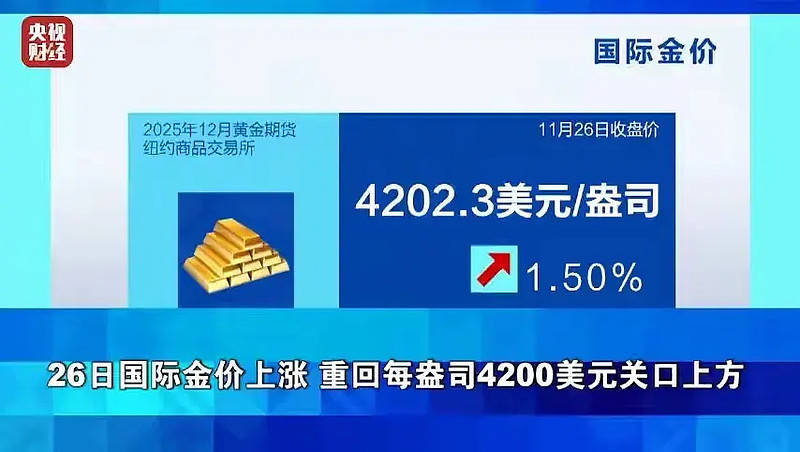
Core Viewpoint - The article discusses the contrasting performance of gold and stocks in the current market, highlighting that while gold has reached new highs, it has not become the mainstream investment choice for the general public, who often suffer losses in the stock market [2][3][12]. Group 1: Gold Market Analysis - Gold has shown a remarkable increase, with international gold prices rising above $4,200 per ounce, reflecting a 92% increase since the beginning of 2023, outperforming most other asset classes [5][7]. - The demand for gold is significantly influenced by geopolitical risks, which have contributed to a 173% increase in its pricing dynamics [8][10]. - Central banks have been major players in the gold market, purchasing 1,136 tons in 2022, marking the highest level in 55 years, which supports gold prices as they prioritize asset safety and liquidity over immediate returns [9][10]. Group 2: Stock Market Dynamics - The stock market has seen significant volatility, with many retail investors experiencing losses despite a bullish market environment, often driven by irrational trading behaviors such as chasing trends [13][15]. - The article emphasizes that the nature of stock trading can lead to bubbles, where ordinary investors may not realize the true value of their investments, resulting in losses even during bull markets [15][16]. - Institutional investors, like Warren Buffett, tend to avoid losses by maintaining a long-term perspective and understanding market fundamentals, contrasting with the behavior of retail investors [16][17]. Group 3: Investment Philosophy - Investment is portrayed as a journey of personal growth and understanding, where successful investors develop mature investment philosophies and strong emotional control [4][17]. - The article suggests that rather than focusing solely on whether to invest in gold or stocks, individuals should cultivate wisdom and understanding of market dynamics and human behavior [27].
中国家庭财富与消费报告
Sou Hu Cai Jing· 2025-11-30 16:08
Group 1: Income and Asset Allocation - The average annual income per household in China reached 55,500 yuan in Q3 2025, with wage income accounting for 62.1% of total income, indicating its core role in household finances [1][10][27]. - Middle-aged groups in first-tier cities exhibit strong income growth, with their average annual income being 2.05 times that of their counterparts in non-first-tier cities, reflecting the advantages of urban employment quality and salary levels [1][10][29]. - The proportion of families without mortgage loans reached 56.1%, indicating reduced financial pressure from housing assets, while the overall household debt ratio shows a "U-shaped" distribution, with 49.2% of families being debt-free [1][11][46]. Group 2: Consumption Expenditure and Consumer Groups - The average monthly consumption expenditure per household reached 3,004 yuan, with first-tier city households spending an average of 4,442 yuan, significantly higher than other city tiers [2][11][12]. - Young consumers are active in entertainment and dining, focusing on quality and personalized experiences, while middle-aged consumers prioritize education and healthcare due to family responsibilities [2][12]. - Households with housing assets show higher consumption capabilities across all age groups, particularly in first-tier cities, where homeownership correlates with increased spending in various categories [12][13]. Group 3: Consumer Expectations and Influencing Factors - Consumer expectations improved in Q3, with about 69% of households planning to maintain their consumption levels, and 11% intending to increase spending [3][14]. - Employment stability is a key factor influencing consumer confidence, with those unemployed for over three months planning to cut back on discretionary spending [3][14]. - Households with annual incomes below 50,000 yuan show a higher tendency to reduce flexible spending, highlighting the impact of income levels on consumption plans [3][15]. Group 4: Recommendations and Policy Suggestions - To enhance consumer confidence, policies should focus on supporting employment and income for youth and low-income groups, guiding rational financial asset allocation, and improving housing security [16][17]. - Introducing inclusive financial products and optimizing housing finance structures can alleviate the pressure of housing costs on other consumption categories [16][17]. - Establishing a consumption support system tailored to different life stages can stimulate demand across all age groups, particularly for youth and middle-aged consumers [17].

长期看好资本市场!券商资管深耕“固收+”,积极布局含权产品
券商中国· 2025-11-30 14:52
Core Viewpoint - The article discusses how brokerage asset management is adjusting product strategies and optimizing research systems in response to a low interest rate environment and increased market volatility, with a focus on "fixed income plus" (固收+) business and future market outlook [1]. Group 1: Product Strategy Adjustments - Brokerage firms are actively adjusting their product strategies to cope with market fluctuations, emphasizing a proactive approach rather than reactive adjustments [3]. - Companies are increasing their allocation to multi-asset and all-weather strategies, incorporating stock-linked options, gold, commodities, and volatility strategies into their "fixed income plus" products to differentiate from public offerings [3]. - Firms are promoting a balanced allocation philosophy to reduce over-reliance on fixed income products and achieve diversified internal and client holdings [3]. Group 2: Research and Capability Development - The rapid market changes demand higher adaptability and resilience in brokerage asset management research systems, leading firms to build tailored research frameworks [6]. - Companies are integrating internal and external research resources to enhance stock selection and market trend analysis capabilities [6]. - A three-tier research structure is being established to facilitate cross-asset and cross-strategy business needs, focusing on cultivating multi-strategy talent and integrating AI technology into investment processes [6][8]. Group 3: Advantages of "Fixed Income Plus" Business - "Fixed income plus" has become a core focus for brokerage asset management in the low interest rate environment, with discussions on how to leverage institutional advantages [9]. - The success of "fixed income plus" relies on a scientific research system, effective decision-making mechanisms, and stringent risk control measures [10]. - Brokerage firms possess unique advantages in "fixed income plus" due to their comprehensive service capabilities, allowing them to cover nearly all available investment tools [11]. Group 4: Market Outlook - Industry experts express a long-term positive outlook on the Chinese economy and capital markets, with expectations for the equity market to outperform the bond market in the next 6-12 months [12][14]. - The equity market is anticipated to enter a consolidation phase in the fourth quarter, necessitating a balanced approach across various asset classes and strategies [14]. - Companies are expected to continue issuing high-yield strategy products and focus on absolute return attributes to enhance product performance in the evolving market [14][15].