电动化

Search documents
【重磅深度】2025H2汽车投资策略——破旧立新
东吴汽车黄细里团队· 2025-06-27 15:44
Core Viewpoint - The automotive industry shows resilience in its fundamentals, with AI growth style stocks outperforming expectations in H1 2025. The performance of various sub-sectors aligns with expectations, although some areas fell short. The automotive robotics sector performed the best, followed by passenger vehicles, two-wheelers, and heavy trucks, while dividend styles lagged behind AI growth styles [2][8]. Summary by Sections H1 2025 Automotive Industry Review - The automotive sector's fundamentals remained strong, with the "old-for-new" policy effectively supporting the market. Overall performance met expectations, with some sub-sectors underperforming. The automotive robotics sector led in stock performance, followed by passenger vehicles, two-wheelers, and heavy trucks, while dividend styles underperformed compared to AI growth styles [2][8]. H2 2025 Stock Selection Strategy - The automotive industry is at a crossroads, reminiscent of 2011 and 2018. The end of the electric vehicle (EV) boom is approaching, while the smart vehicle sector is emerging. Commercial vehicles and two-wheelers are seen as promising investment areas. The strategy focuses on identifying cyclical alpha stocks and embracing the next industrial trends of smart technology and robotics [3][8]. H2 2025 Key Stock Adjustments - The focus will shift to increasing the weight of dividend and quality stocks. Recommended stocks include: - Dividend & Quality: Yutong Bus, China National Heavy Duty Truck, Chunfeng Power, and parts suppliers like Fuyao Glass and Xingyu Co. - AI Growth: Xpeng Motors, Li Auto, Huawei (Seres and SAIC), and parts suppliers like Horizon Robotics and Top Group [4][8]. 2025 Automotive Sector Outlook - Key assumptions include the continuation of the "old-for-new" policy and no escalation in trade war risks. - Passenger Vehicles: Total domestic sales forecasted at 23.66 million units (up 3.9% YoY), with new energy vehicle sales at 14.32 million units (up 33% YoY). - Heavy Trucks: Domestic sales expected at 700,000 units (up 16.3% YoY). - Buses: Domestic sales forecasted at 87,600 units (up 20% YoY). - Motorcycles: Domestic sales expected at 4.46 million units (down 4% YoY) [5][8].


雷克萨斯新能源项目在沪正式开工 预计2027年下线投产
Zheng Quan Shi Bao Wang· 2025-06-27 13:28
Core Insights - The Lexus electric vehicle project has officially commenced in Jinshan District, Shanghai, with an expected completion date of August 2026 and production starting in 2027, aiming for an annual capacity of 100,000 vehicles [1][2]. Group 1: Project Details - The project was initiated following a strategic cooperation agreement signed between the Shanghai government and Toyota on April 22, 2025, with only two months from signing to groundbreaking [1]. - Lexus, a luxury brand under Toyota, has seen significant success, surpassing 1 million cumulative sales in China by 2019 [1]. Group 2: Strategic Importance - This signing is a crucial strategic move for Toyota in the Chinese market, enhancing the development of the new energy vehicle industry in Shanghai and the Yangtze River Delta region [2]. - The project aims for over 95% local procurement of components, indicating a strong commitment to local supply chains [2]. Group 3: Local Government Support - Jinshan District has established a three-tier service system to support the project, ensuring efficient coordination and comprehensive service from business negotiations to project construction [2]. - The successful introduction of this project is expected to significantly boost the local new energy vehicle industry in Jinshan [2]. Group 4: Industry Context - Jinshan District is leveraging its geographical advantages and manufacturing capabilities to integrate into Shanghai's vision of becoming a world-class automotive industry center, with 159 automotive-related enterprises currently operating in the area [3].

惠州3家企业上榜2025中国汽车供应链百强
Nan Fang Du Shi Bao· 2025-06-27 10:28
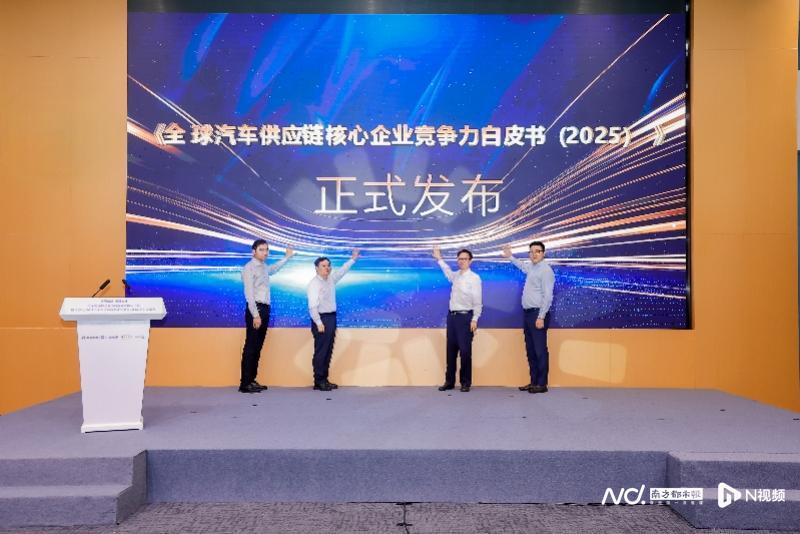
Core Insights - The automotive industry is undergoing rapid transformation towards intelligence, electrification, and connectivity, posing new challenges and requirements for the global automotive supply chain [3] Group 1: Event Overview - The "Automotive Parts Enterprises Going Global Innovation Development Seminar and the Release of the 2025 Global Automotive Supply Chain Core Competitiveness White Paper" was held in Suzhou, focusing on global development strategies [1] Group 2: White Paper Highlights - The white paper covers data from over 350 global automotive supply chain companies, highlighting the global and Chinese automotive supply chain Top 100 rankings, which provide valuable insights for Chinese companies aiming for international competitiveness [3] - Desay SV Automotive Electronics Co., Ltd. ranked 14th in the Chinese supply chain with a revenue of 27.618 billion in 2024, rising 7 places from the previous year, while also ranking 93rd globally, a drop of 32 places [3] - EVE Energy Co., Ltd. ranked 30th in the Chinese supply chain with a revenue of 19.167 billion, down 15 places from last year [3] - Huayang Group Co., Ltd. ranked 55th with a revenue of 9.308 billion, rising 9 places from the previous year [3] Group 3: Industry Trends - The global automotive parts development shows three main trends: consolidation of leading companies, growth through mergers and acquisitions, and an increase in the number of Chinese companies in the global supply chain [5] - The automotive parts industry is experiencing a new development pattern influenced by the "new four modernizations," leading to a reshaping of the value distribution in the supply chain [5] - The shift from traditional distributed vehicle development to centralized architecture requires parts suppliers to possess system-level solution capabilities beyond single product supply [5] Group 4: Export Dynamics - In the first five months of 2025, China exported 2.49 million vehicles, a year-on-year increase of 7.9%, with 855,000 of those being new energy vehicles, reflecting strong export capabilities [6] - A structural change occurred in 2024, where vehicle exports surpassed parts exports, influenced by geopolitical factors and the restructuring of global supply chains [6]

新任CEO上任就审查长期战略计划,“第一把火”能否“烧”出发展新思路?
Zhong Guo Qi Che Bao Wang· 2025-06-27 08:40
Core Insights - The new CEO of Stellantis, Antonio Filosa, has initiated a review of the company's long-term strategic plan, which was originally set by former CEO Carlos Tavares in March 2022, aiming to double net sales by 2030 and maintain a double-digit operating profit margin [2][3] - Stellantis has faced significant operational challenges in the US and Europe, leading to the abandonment of annual targets and the departure of the previous CEO [2][3] - Filosa's leadership is seen as a potential turning point for Stellantis, with a focus on quality products and improved execution as key priorities [3][4] Strategic Review - The existing "Dare Forward 2030" plan includes ambitious targets for electric vehicle sales, aiming for 100% in Europe and 50% in the US, alongside increasing new market sales to over 25% of total sales [3] - Recent adjustments to Stellantis' electric vehicle strategy include the abandonment of full electrification plans for certain brands and delays in the launch of key electric models [3][7] - Filosa has set four main priorities for Stellantis, with the strategic review being a crucial component to prepare for future growth [3][4] Leadership and Culture - Filosa emphasizes the importance of a unified identity for Stellantis, moving away from previous brand identities of FCA and PSA, and aims to foster a culture of respect and open communication [4][6] - His extensive experience in the automotive industry, including leadership roles in North and South America, positions him well to navigate the challenges ahead [6] Market Performance - Stellantis reported a global sales decline of 4.99% in 2024, with significant drops in key markets: Europe down 5.01%, North America down 14.31%, and China down 29.23% [7] - The company's revenue in North America fell to €63.5 billion, with an adjusted operating profit margin of only 4.2% [7] Strategic Focus Areas - To address declining sales and profitability, Filosa is expected to focus on cost control and brand management, potentially streamlining the portfolio to concentrate resources on high-potential brands like Jeep and Peugeot [8] - There is a pressing need for increased investment in electric vehicle development and battery technology to enhance product offerings and market competitiveness [9] - Collaborations with tech giants for advancements in autonomous driving and connectivity are seen as essential for improving customer experience and boosting sales [9] Future Outlook - Filosa's leadership will be tested as he implements strategic adjustments and works to unify the company culture, with industry experts hopeful that his tenure will lead to a successful transformation for Stellantis [9]


倒闭潮再袭跨国零部件企业
Zhong Guo Qi Che Bao Wang· 2025-06-27 02:02
进入2025年以来,受全球经济增长放缓导致需求减少、主机厂转型压力传导、美国关税政策等多重 因素影响,跨国汽车零部件企业正经历新一轮"倒闭潮"。近日,全球汽车零部件巨头马瑞利集团宣布, 为全面重组长期债务,已在美国特拉华州地方法院正式提交破产保护申请。与此同时,德国汽车零部件 供应商施洛特也在破产边缘挣扎。 需求下滑 供应商承压 马瑞利集团申请破产保护令业内略微有些震惊,这家"日意混血"的零部件集团,由原日产旗下零部件供 应商康奈可和原菲亚特克莱斯勒(FCA)旗下的玛涅蒂·马瑞利于2019年合并而成。 据悉,2016年11月,美国私募股权巨头KKR从日产手中收购了康奈可,又于2019年将当时FCA旗下的 意大利零部件供应商马瑞利收入囊中。随后,KKR将康奈可和马瑞利进行合并。由于马瑞利这个名号 在全球比康奈可更响亮,因此,合并后的新集团仍被命名为"马瑞利"。日产以及2021年由FCA和标致雪 铁龙合并诞生的Stellantis集团是马瑞利的核心客户。 事实上,包括施洛特在内,诸多传统零部件企业在向电动化、智能化转型中遭遇严峻挑战。一方面,电 动化转型需要巨额研发投入,但市场需求增速不及预期,通用汽车、福特等主 ...

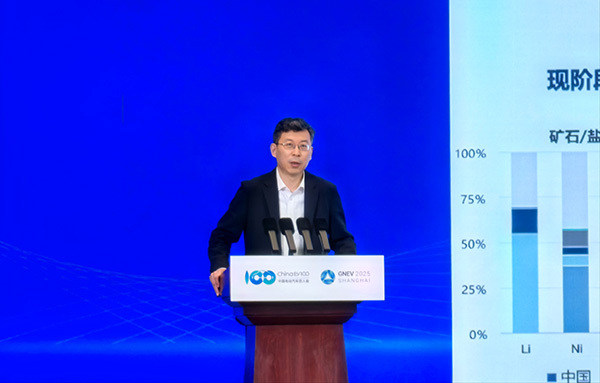
GNEV2025上海论坛|张永伟:汽车产业需要新的全球化合作模式
Zhong Guo Jing Ji Wang· 2025-06-25 13:17
Core Viewpoint - The global automotive industry is undergoing profound changes, necessitating new models of international cooperation due to increasing sales barriers and the complexity of supply chains [1][3]. Group 1: Changes in the Automotive Industry - The most significant change in the global automotive industry is the restructuring of the industry landscape driven by electrification and intelligence, with China's new energy vehicle sector capturing nearly 70% of the global market share [3]. - The traditional model of pushing a country's brand and products into host markets is facing limitations due to market barriers, as host countries aim to develop their own automotive industries [3][4]. Group 2: New Paths for Global Cooperation - Key questions arise regarding how China's automotive industry can better connect with global markets, how the global automotive industry can leverage China's supply chain, and how multinational companies can utilize China's market advantages [4][5]. - Several feasible new paths for linking China's automotive industry with the world include: 1. Connecting Chinese vehicle models and supply chains with the global automotive industry 2. Linking Chinese automotive parts and service systems with global markets 3. Connecting overseas small and medium enterprises with China's automotive industry chain 4. Localizing multinational enterprises with a focus on "in China, for the world" [4][5]. Group 3: Localization of Multinational Enterprises - Multinational companies are experiencing two significant changes in their development in China: improved localization in R&D, management, and supply chains, and extending their achievements in China to the global market [5]. - The new paths for linking China's automotive industry with the world are not a replacement for the traditional model of exporting mainstream brands and vehicles but rather a complement to the global cooperation model under new circumstances [5].
智造升级 融合共进——感受中国新能源汽车产业跃升脉动
Xin Hua She· 2025-06-25 07:48
Group 1 - The core viewpoint of the articles highlights the transformation of the Chinese automotive industry towards high-end value chains, exemplified by the collaboration between Jianghuai Automobile and Huawei in producing the luxury electric vehicle, the Zun Jie S800 [1] - The global automotive industry is undergoing profound changes driven by electrification, intelligence, and connectivity, which are pushing China's automotive sector towards quality improvements [1][2] - The integration of technology and innovation is becoming a consensus in the industry, with more automotive companies accelerating their ascent to higher value chains through technological advancements [1][2] Group 2 - The deep integration of industry, academia, and research is facilitating the conversion of technological research into market value, enhancing the competitiveness of Chinese electric vehicles in the global supply chain [2] - Traditional automakers like Jianghuai and BAIC are rapidly embracing the transition to new energy and high-end markets, while new entrants like NIO and Li Auto are reshaping industry competition with internet-driven strategies [2] - The automotive supply chain is evolving with significant advancements in technology, processes, and quality, driven by collaboration among various stakeholders, including battery suppliers and steel manufacturers [2] Group 3 - The Chinese intelligent connected electric vehicle industry is experiencing rapid development, supported by comprehensive top-level design and strong policy backing, leading to a complete industrial system and supply chain cost advantages [2][3]

光大证券晨会速递-20250625
EBSCN· 2025-06-25 01:34
Core Insights - Exports to North America have shown a significant decline in May, particularly in electric tools and lawn mowers, with year-on-year changes of -3% and -1% respectively, while the engineering machinery category maintains a high growth rate [2] - The engineering machinery sector's exports from January to May have seen double-digit growth, with excavators, tractors, and mining machinery growing by 22%, 30%, and 23% respectively, indicating a positive trend [2] - The domestic sales of excavators are under short-term pressure, but the ongoing replacement demand is expected to drive long-term growth in sales, supported by favorable policies from the Two Sessions [3] - The company Akole (603722.SH) has announced a restricted stock incentive plan, which is expected to enhance the motivation of core members and lead to mass production of COC/COP products by 2025 [4] - Yuanli Co., Ltd. (300174.SZ) has adjusted its 2025 net profit forecast down by 25% to 290 million yuan due to slowing terminal demand, but remains optimistic about its long-term investment value due to progress in new energy carbon materials [5] - Chip manufacturer Chipsea Technology (688595.SH) is experiencing a recovery in downstream demand, with stable shipments of single-cell BMS and significant growth in multi-cell BMS among major clients [6] Industry Summary - The engineering machinery industry is expected to benefit from ongoing internationalization and electrification trends, with leading companies likely to see both volume and profit growth [3] - The overall demand for engineering machinery is projected to continue recovering in the medium term, supported by government policies [3] - The high-end manufacturing sector is facing challenges in domestic sales but remains optimistic about future growth driven by product upgrades and international expansion [3]

福特汽车(F.US)警告:若国会执意削减电动汽车补贴 密歇根州电池厂逾千岗位将受冲击
智通财经网· 2025-06-24 03:24
Group 1 - Ford is lobbying to retain clean energy manufacturing subsidies from the U.S. government, warning that cuts to tax credits could jeopardize jobs at its battery plant in Michigan [1] - The Marshall battery plant, costing $3 billion, is set to produce 20 GWh of lithium iron phosphate (LFP) batteries annually and employ up to 1,700 workers, with production expected to start in 2026 [1][2] - The plant is significant as it will be the first in the U.S. dedicated to producing LFP batteries for electric vehicles, leveraging technology from China's CATL [2] Group 2 - The "45X production tax credit" from the Inflation Reduction Act is at risk during budget negotiations, which could result in Ford losing approximately $2.3 billion in tax credits from 2026 to 2029 [2] - Ford's initial production capacity for the plant was designed to support 400,000 electric vehicles, but this has been revised down to about 230,000 due to decreased consumer demand [3] - A new tax bill proposed by Senate Republicans aims to terminate tax credits for clean energy, including a $7,500 electric vehicle purchase tax credit, which could impact consumer adoption [3]

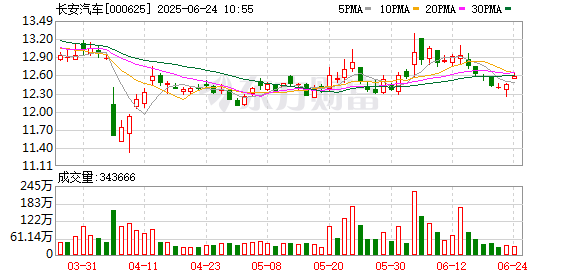
中国长安汽车集团,突然更名!业内这么看
Nan Fang Du Shi Bao· 2025-06-24 02:54
Core Viewpoint - Changan Automobile's controlling shareholder has changed its name from "China Changan Automobile Group Co., Ltd." to "Chanzhi Automotive Technology Group Co., Ltd." This name change is part of a broader strategy to align with the industry's shift towards electrification, intelligence, and connectivity, emphasizing a technology-driven approach rather than traditional manufacturing [2][4][5]. Group 1 - The name change has been officially registered, and the new company, Chanzhi Automotive Technology Group, was established on December 26, 2005, with a registered capital of 609.22734 million yuan [2]. - The change does not affect the number or proportion of shares held by the controlling shareholder, nor does it impact the company's governance or operational activities [4]. - There are concerns in the industry regarding potential internal restructuring, business spin-offs, or changes in brand positioning following the name change [4][5]. Group 2 - The new name "Chanzhi" is perceived to have a more neutral and technological connotation, aiming to attract a broader consumer market and break away from the traditional image of automotive companies [5]. - Analysts suggest that the name change may facilitate independent operations of certain business segments, making it easier for capital operations or attracting strategic investors [5]. - The name change could be a preparatory step for future independence, with expectations of a series of subsequent actions [5].