
自动驾驶

Search documents
国泰海通证券每日报告精选
GUOTAI HAITONG SECURITIES· 2026-01-22 10:50
Market Trends - AI hardware penetration is increasing, leading to a rise in the semiconductor industry, with PCB and memory prices continuing to rise[4] - Lithium carbonate prices have surged by 12.7% due to supply constraints and improving downstream demand[6] - The pork price has improved by 2.4% month-on-month, supported by consumption policies and seasonal demand[5] Consumer Insights - In the real estate sector, the transaction area of commercial housing in 30 major cities has decreased by 30.5% year-on-year, with first-tier cities down by 35.4%[5] - Retail sales of passenger cars have dropped significantly, with a 32% year-on-year decline in daily sales, particularly in the new energy vehicle segment, which saw a 38% drop[5] Industry Developments - The domestic company Tiangong International is focusing on powder metallurgy technology for nuclear fusion materials, with a target of 25% revenue growth over the next three years[8] - The cement production in Uganda has increased from 370,000 tons in 2000 to 5.1 million tons in 2023, driven by rapid urbanization and economic growth[12] Company Performance - Hikvision's net profit for 2025 is projected to be 141.88 billion yuan, reflecting an 18.46% year-on-year increase, driven by high-quality growth strategies[40] - Netflix's revenue for FY26 is expected to reach $511 billion, with a net profit of $135 billion, indicating a 22.5% year-on-year growth[48]





汽车芯片,日本出招了
半导体芯闻· 2026-01-22 10:39
Core Viewpoint - Japanese automakers are collaborating with semiconductor manufacturers to share automotive semiconductor information, aiming to strengthen the supply chain against geopolitical risks and natural disasters [1]. Group 1: Collaboration and Database Development - Approximately 20 suppliers, including Japan's Renesas Electronics and Rohm, as well as Germany's Infineon Technologies, are expected to participate in this initiative [1]. - The plan is projected to cover 80%-90% of the semiconductors used by Japanese automakers, although no Chinese chip manufacturers will be involved [1]. - The initiative will involve registering product specifications, production start dates, and origins to simplify the identification of unstable supply sources [1]. - A blockchain technology will be utilized to prevent information leakage to other automakers [1]. - The Japan Automobile Manufacturers Association and the Japan Automobile Parts Industry Association are leading the development of the semiconductor database, with a target completion date set for April [1]. Group 2: Importance of Semiconductors in the Automotive Industry - Semiconductors are crucial in various automotive applications, from navigation systems to electric motors, and are vital for production and economic security [1]. - The global chip shortage during the COVID-19 pandemic significantly reduced automotive production [1]. - Honda anticipates that the chip shortage will reduce its operating profit by 150 billion yen (approximately $950 million) for the fiscal year ending March 2026 [1]. Group 3: Understanding Supply Chain Risks - The new system aims to enhance understanding of the risks associated with the sourced chips, enabling quicker responses to geopolitical events or natural disasters that disrupt production [2]. - Non-Japanese automakers can apply to use the system, indicating a broader potential impact on the automotive industry [2]. - The automotive industry is evolving towards autonomous driving and artificial intelligence, increasing the importance of semiconductors [2]. - According to the Japan Electronics and Information Technology Industries Association, the global automotive semiconductor market is expected to reach approximately $159.4 billion by 2035, growing over 80% from 2025 [2].



曹操出行(02643)开启中国Robotaxi完全定制时代 目标2030年投放10万辆
智通财经网· 2026-01-22 10:23
Core Viewpoint - The company plans to deploy a total of 100,000 fully customized Robotaxis by 2030, marking a significant step towards global commercialization of autonomous ride-hailing services [1][3]. Group 1: Robotaxi Development and Strategy - The company has established a unique development model combining intelligent customized vehicles, smart driving technology, and intelligent operations, which is essential for the Robotaxi business [1]. - The second-generation Robotaxi has already begun pilot operations, with plans to enhance large-scale fleet automation and introduce a remote safety service platform [3]. - The company aims to transition smoothly from human-driven to fully autonomous operations while exploring a mixed operation model of human and autonomous driving [3]. Group 2: Infrastructure and Ecosystem - The "Green Intelligent Passage Island" initiative is part of the company's vision to lead a green and intelligent transportation ecosystem, integrating transportation, energy, and data chains [3]. - The company has developed replicable construction standards for automated operations, supporting the expansion of the Robotaxi business across various scenarios [3]. Group 3: International Expansion and Collaboration - The company is actively expanding internationally, having signed a memorandum of cooperation with the Abu Dhabi Investment Office to establish an office and operations center in the region [5]. - The collaboration aims to promote sustainable transportation solutions centered around electric and battery-swapping vehicles, integrating the company's efficient battery-swapping network into Abu Dhabi's green energy ecosystem [5]. - The company will continue to deepen collaboration with various business segments under Geely Holding, focusing on building a comprehensive autonomous driving service system that covers both domestic and global markets [5].

中国人寿海外公司多措并举,支持香港金融中心发展
Jing Ji Wang· 2026-01-22 09:48
Core Viewpoint - China Life Overseas Company has established itself as a leading Chinese insurance company and institutional investor in the Hong Kong and Macau regions, with total assets exceeding HKD 452.8 billion, focusing on life insurance, savings insurance, annuities, and MPF [1] Group 1: Investment Strategy and Market Position - The company utilizes its long-term capital advantage for global stable asset allocation, contributing to reliable returns for clients and supporting the stability and prosperity of the local capital market [1] - As a representative of "patient capital," the investment strategy emphasizes risk management and long-term value creation, injecting strong momentum into the sustainable development of Hong Kong as an international financial center [1] - The company actively supports the Hong Kong SAR government and the Ministry of Finance of China in issuing government bonds, further consolidating the influence of the Hong Kong bond market [1] Group 2: Participation in Bond Issuance - In November 2025, the Hong Kong SAR government issued multi-currency digital green bonds, and China Life Overseas Company participated in all four currency bond subscriptions, totaling approximately HKD 2.4 billion, becoming the largest subscriber among Chinese insurance companies [1] - The Ministry of Finance of China issued USD 4 billion in 3-year and 5-year dollar bonds, with China Life Overseas Company subscribing approximately USD 600 million, showcasing its stable capital allocation advantage [2] Group 3: Support for IPOs and Innovative Sectors - In 2025, the company participated in multiple Hong Kong H-share IPOs, supporting the Stock Exchange's Chapter 18A regulations, which allow unprofitable biotech companies to list [2] - The company actively invests in hot sectors such as semiconductors, AI, and healthcare, supporting excellent Chinese enterprises in achieving reasonable pricing during IPOs [2] - Notable investments include Hesai Technology, a leader in the 3D sensor field, which became the first company to produce over 1 million laser radars by 2025 and successfully listed on the Hong Kong Stock Exchange [2] Group 4: Alternative Investment Initiatives - To deepen communication and cooperation in Hong Kong's alternative investment industry, the company successfully hosted the "Hong Kong Alternative Investment Strategy Conference" in 2025, gathering nearly 800 experts to discuss alternative investment opportunities [4] - The unique position of Hong Kong as a bridgehead provides ample space for insurance funds to explore alternative opportunities [4] - The company regularly organizes high-end investment research activities, enhancing Hong Kong's status as an international insurance and asset management hub and promoting cross-border cooperation and innovation [4]

专访|“中国经济表现超出所有人的预期”
Xin Hua She· 2026-01-22 09:23
Group 1 - The core viewpoint is that China's economy demonstrated strong resilience and vitality in 2025, exceeding expectations despite a complex international environment [1] - China achieved its annual GDP growth target and showcased significant competitiveness in cutting-edge fields such as artificial intelligence [1] - There has been a continuous inflow of foreign investment into China since mid-2025, indicating growing confidence from international investors in the Chinese market and assets [1] Group 2 - China's economy is transitioning from scale expansion to a new stage characterized by technology-driven, mature, and stable high-quality development [1] - Chinese companies are recognized for their undeniable advantages in advanced sectors like artificial intelligence, autonomous driving, and robotics, often occupying a significant share of the top ten global companies in these fields [1] - Chinese enterprises are increasingly globalizing by integrating into the global innovation ecosystem, creating jobs overseas, establishing R&D centers, employing global management teams, and exporting corporate culture and management philosophies [1] Group 3 - As Chinese companies evolve into global enterprises, multinational companies are also changing their strategies in China [2] - China is now not only a vast sales market but also an innovation base and trendsetter for multinational companies [2] - The competitive environment in China drives rapid product iterations and efficiency improvements, making it essential for multinational companies to remain in China to compete with local innovation and maintain global technological competitiveness [3]
小鹏组织架构新调整?副总裁、汽车互联网中心负责人魏斌休假
自动驾驶之心· 2026-01-22 09:07
Core Viewpoint - The article discusses the recent developments at XPeng Motors, particularly focusing on the vacation of Vice President Wei Bin and the ongoing organizational changes within the company, highlighting the importance of advancements in autonomous driving and AI capabilities in the automotive industry [3][5]. Group 1: Organizational Changes - Wei Bin, the Vice President and head of the Internet Center at XPeng, is currently on leave, which may be related to the intense R&D iterations within the company [5]. - XPeng has experienced rapid organizational changes over the past six months, including leadership shifts in the autonomous driving center and the Internet Center [5]. - The company is undergoing a critical phase of restructuring, which reflects its strategic focus on enhancing core technologies and improving organizational efficiency [7]. Group 2: Technological Advancements - Since joining XPeng in 2021, Wei Bin has been responsible for the Internet Center, which includes smart cockpit development and AI capabilities [6]. - Under Wei Bin's leadership, XPeng has shifted its smart cockpit system from a function-oriented approach to a core architecture upgrade focused on computing power and operating systems [6]. - The Internet Center plays a crucial role in building foundational work for the long-term evolution of AI capabilities in vehicles, emphasizing the integration of smart driving, smart cockpit, and vehicle platforms [6][7]. Group 3: Future Plans - XPeng plans to launch mass production of humanoid robots by 2026, indicating a broader vision for integrating robotics into their product offerings [4]. - The company aims to deepen the integration of smart driving and smart cockpit technologies with the overall vehicle platform, reinforcing its commitment to becoming an "AI car" leader [7].


欧洲电车需求放缓, 特斯拉柏林工厂裁员1700人
Hua Er Jie Jian Wen· 2026-01-22 08:42
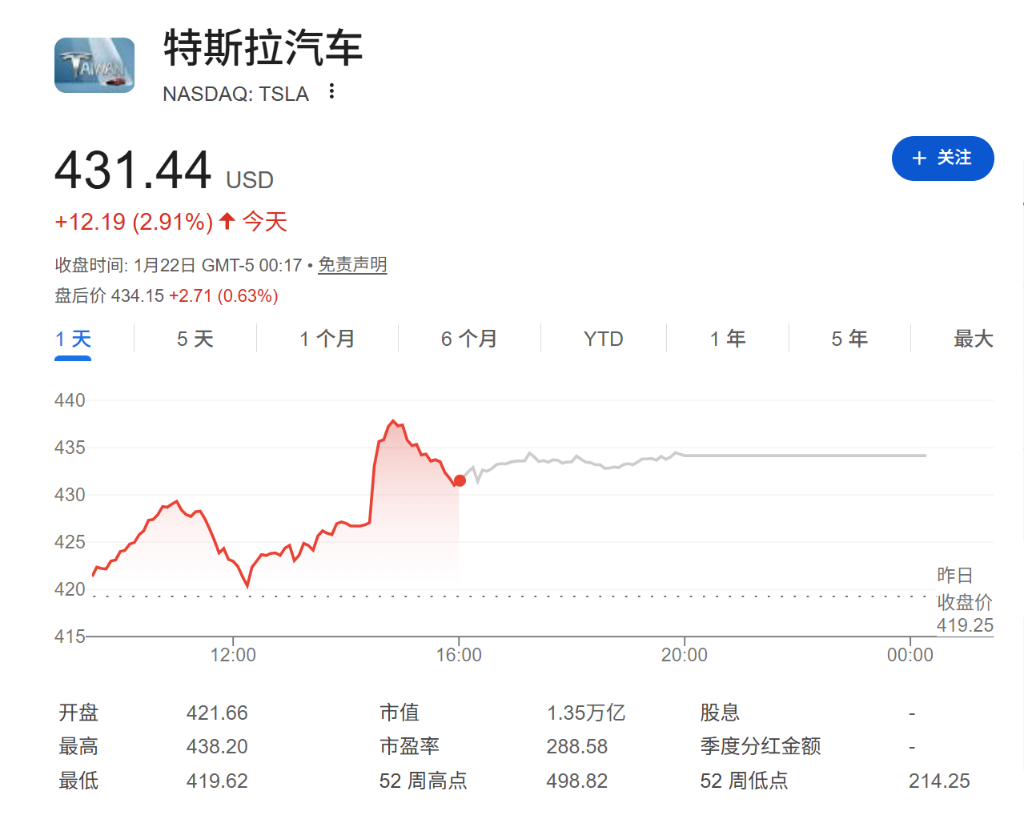
Group 1 - Tesla has reduced the workforce at its Berlin Gigafactory by approximately 1,700 employees, highlighting weak demand in the European electric vehicle market and the company's ongoing cost control strategy [1] - The factory currently employs 10,703 workers, a decrease of about 14% from the number disclosed before the 2024 union elections, marking Tesla's only production base in Europe [1] - This round of layoffs is part of Elon Musk's global workforce reduction plan aimed at cutting over 10% of employees to enhance efficiency and control costs, a strategy Musk established back in May 2018 [1] Group 2 - Tesla is shifting its strategic focus from rapid expansion to business integration by 2025, emphasizing cost control, factory efficiency, and cash preservation due to declining profit margins from aggressive price cuts and weak demand [2] - The transition occurs against a backdrop of slowing growth in the European electric vehicle market, where manufacturers face increased competition and cautious consumer spending after years of rapid growth [2] - Despite the loss of growth momentum in traditional automotive business, Tesla's stock has shown relative resilience as investors focus on the company's long-term goals in robotaxi services, autonomous driving software, and artificial intelligence, which are seen as potential high-margin growth engines [2]

别管Q4业绩了,特斯拉下周财报的最大看点是机器人和自动驾驶
Hua Er Jie Jian Wen· 2026-01-22 07:41
Core Insights - The focus of investors is shifting from traditional financial metrics to advancements in Tesla's cutting-edge technologies such as robotaxi, unsupervised autonomous driving, the Optimus humanoid robot, and AI5 chips ahead of the upcoming Q4 earnings report on the 29th [1][2] Financial Projections - Morgan Stanley's report indicates a significant divergence in market expectations for Tesla's key financial metrics in 2026, forecasting deliveries of 1.6 million vehicles, which is 9% lower than market consensus and a 2.5% year-over-year decline [1] - The firm predicts a cash flow consumption of $1.5 billion for Tesla in 2026, contrasting sharply with the market consensus of a positive $3.1 billion [1] - The anticipated increase in capital expenditures for 2026 is not fully reflected in market expectations, leading to a forecasted automotive gross margin (excluding carbon credits) of 14.2%, below the market's 15.0% expectation [1] Technological Developments - Tesla's launch of an unsupervised robotaxi service in Austin, Texas, is seen as a critical catalyst for validating its autonomous driving technology and safety [2][3] - The Cybercab production is set to begin in April 2026, with updates on its production timeline being closely monitored as it represents a key product in Tesla's transition from traditional automotive manufacturing to mobility services [3] Autonomous Driving Progress - The cumulative mileage of Tesla's Full Self-Driving (FSD) system has surged from approximately 90 million miles in 2022 to around 7.4 billion miles currently, indicating significant improvements in product quality [4] - The next major breakthrough is expected with the rollout of a more robust "eyes-off" experience (unsupervised FSD), anticipated to be phased in throughout 2026 [4] - The decision to convert FSD to a subscription service may signal the introduction of tiered FSD products and pricing strategies, with global subscription rates projected to rise from 12% to 17.5% by year-end [4] AI and Robotics Updates - Anticipation surrounds updates on Tesla's AI5 chip design and its projects like AI6+ and Dojo during the earnings call [5] - The third-generation Optimus humanoid robot is expected to debut in February or March 2026, becoming an increasingly important aspect of Tesla's narrative and valuation [5] - Morgan Stanley assigns a valuation of $60 per share for the Optimus business under a baseline scenario, with a potential bull case valuation of $225 per share [5] Synergies within Musk's Empire - The report highlights the clearer integration of Elon Musk's other ventures with Tesla, with market expectations for updates on how these businesses will achieve synergies in the future [6] - Morgan Stanley maintains a "hold" rating on Tesla with a target price of $425, based on various components including core automotive business, network services, mobility services, energy business, and humanoid robots [6] Valuation Scenarios - In a bear market scenario, Morgan Stanley sets a target price of $145, while in a bull market scenario, the target could reach $860, reflecting the uncertainties Tesla faces in its transition from a traditional automaker to an AI and robotics company [9]

国泰海通证券每日报告精选-20260122
GUOTAI HAITONG SECURITIES· 2026-01-22 07:40
Group 1: Strategy Observation - The report highlights the strengthening of AI hardware demand and the continuation of technology manufacturing overseas, with the semiconductor industry experiencing further improvement due to increased AI penetration and export growth in power equipment [4] - Prices of lithium carbonate have surged significantly due to supply constraints and improved downstream demand expectations, while pork prices have also seen improvements supported by consumption policies [4] - Traditional real estate and durable goods sectors continue to face pressure, with a notable decline in retail sales of passenger vehicles [5] Group 2: Industry Tracking - Consumer Electronics - Domestic companies are making breakthroughs in powder metallurgy processes, particularly in nuclear fusion materials, which are expected to benefit from a surge in downstream demand [8] - Tian Gong International, a leader in powder metallurgy, has set ambitious performance targets, indicating strong growth confidence [8] - The company is focusing on high-boron steel and advanced low-activation steel for nuclear fusion applications, leveraging its powder metallurgy technology for cost advantages [9] Group 3: Industry Research - Cement Manufacturing - Uganda is identified as a key market for cement exports, with a rapidly growing economy and increasing cement demand driven by urbanization [12] - The country has a favorable supply structure with only three clinker production lines, leading to a competitive market landscape [13] - Despite high cement prices, profitability remains challenging due to high production costs and logistical issues [14] Group 4: Industry Research - Consumer Discretionary - The smart glasses industry is entering a growth phase, with companies like Mingyue Lens expected to benefit from collaborations with leading brands [16] - The introduction of new smart glasses models, such as Ray-Ban Meta, is anticipated to enhance user experience and expand market applications [17] - The supply chain for AI glasses is broadening, with various players from different sectors entering the market, indicating a significant expansion of the industry [18] Group 5: Company Coverage - BAIC Blue Valley - The company is positioned as a pioneer in China's new energy vehicle sector, with a dual-brand strategy driving revenue growth [21] - Projected revenues for 2025, 2026, and 2027 are estimated at 290 billion, 582 billion, and 889 billion CNY respectively, with a focus on autonomous driving technology [21][22] - The company has seen a significant increase in sales volume, with expectations for continued growth through new model launches [23] Group 6: Company Tracking - Hikvision - The company is expected to achieve a net profit of 141.88 billion CNY in 2025, reflecting a year-on-year growth of 18.46% [40] - Hikvision's strategic shift towards high-quality, sustainable profit growth has led to improved operational efficiency and profitability [41] - The integration of AI into its product offerings is anticipated to drive long-term growth [42] Group 7: Company Tracking - Anfu Technology - The company is focusing on expanding its market presence in the semiconductor sector while maintaining strong performance in its core battery business [45] - Projected earnings per share for 2025 to 2027 are expected to show significant growth, driven by strategic acquisitions and market expansion [45] - The company is leveraging its established brand to enhance its competitive position in the charging market [46] Group 8: Overseas Report - Netflix - The company is projected to achieve revenues of 51.1 billion, 57.6 billion, and 64.6 billion USD from 2026 to 2028, with a focus on expanding its content offerings [48] - Netflix's advertising revenue is expected to double, contributing significantly to its overall financial performance [51] - The acquisition of Warner Bros. is anticipated to enhance content diversity and production capabilities [51]
部分智驾概念股走高 自动驾驶产业驶入加速赛道 商业闭环有望进一步打通
Zhi Tong Cai Jing· 2026-01-22 07:33
Core Viewpoint - The article highlights the positive market response to autonomous driving concept stocks following the release of new government policies aimed at accelerating the commercialization of high-level autonomous driving technology in Shanghai and Guangdong [1] Group 1: Stock Performance - Minth Group (00425) saw a significant increase of 12.95%, trading at HKD 38.56 [1] - Botai Carlink (02889) rose by 7.26%, reaching HKD 245.4 [1] - Nexperia (01316) increased by 4.39%, priced at HKD 7.37 [1] - Delta Electronics (00179) gained 3.88%, trading at HKD 30.54 [1] Group 2: Government Initiatives - On January 7, three departments jointly issued the "Shanghai High-Level Autonomous Driving Leading Area 'Mosu Zhixing' Action Plan," aimed at transforming smart connected technology innovation into industrial competitiveness [1] - The Guangdong Provincial Government released policies to promote high-quality development in transportation through artificial intelligence [1] Group 3: Industry Outlook - Ping An Securities believes that the transition to mass production of autonomous driving technology is underway, despite existing limitations on the operational conditions of approved L3 vehicles [1] - The approval of L3 vehicle access indicates progress in both technology and policy, laying the groundwork for future commercialization of autonomous driving [1] - The commercial closure of smart driving is expected to accelerate by 2026, further enhancing the industry's growth potential [1]