资产配置

Search documents
2025资产管理高峰论坛召开 共探资管行业高质量发展路径
Zhong Guo Jing Ji Wang· 2025-11-27 08:23
Core Insights - The forum focused on the theme "Asset Management Towards Excellence: Intelligent New Journey," discussing global asset management market trends and high-quality development paths [1] - Three core transformations are reshaping China's 210 trillion yuan asset management industry: continuous improvement of regulatory frameworks, deep restructuring of asset structures, and increasingly rational investor behavior [1][3] - The importance of long-term and value investing is emphasized, with a warning against short-term speculative strategies [3][5] Group 1: Regulatory and Market Environment - Continuous improvement of regulatory frameworks is expected to lay a solid institutional foundation for high-quality development in the asset management industry over the next decade [1] - The deep restructuring of asset structures is leading to a revaluation of high-quality assets due to their scarcity [1] - The stability of the renminbi and the diversity of asset types in China are seen as favorable factors for global investors seeking risk diversification [3] Group 2: Investment Strategies and Trends - The core asset allocation directions for the next five years include self-controlled sectors, new consumption trends, mergers and acquisitions of leading enterprises, and innovation in traditional industries [3] - The need for a balanced approach to asset allocation, focusing on both growth potential and risk avoidance, is highlighted [5][8] - The integration of active and quantitative investment strategies is essential to keep pace with market pricing dynamics [5] Group 3: Wealth Management Evolution - Wealth management demand is evolving towards diversification and personalization, prompting changes in the asset management industry's value chain and business models [7] - The definition of "stability" in wealth management is being re-evaluated, with different institutions having varying focuses on absolute versus relative returns [7][8] - The importance of building a quality wealth management framework from the outset is emphasized, with a focus on client and product labeling [8] Group 4: Technological Impact - Artificial intelligence is recognized as a significant tool in investment, but its application should be cautious to maintain control over the investment process [6] - The need for collaboration with AI leaders in the industry is suggested to leverage their capabilities while avoiding over-reliance on automated systems [6]


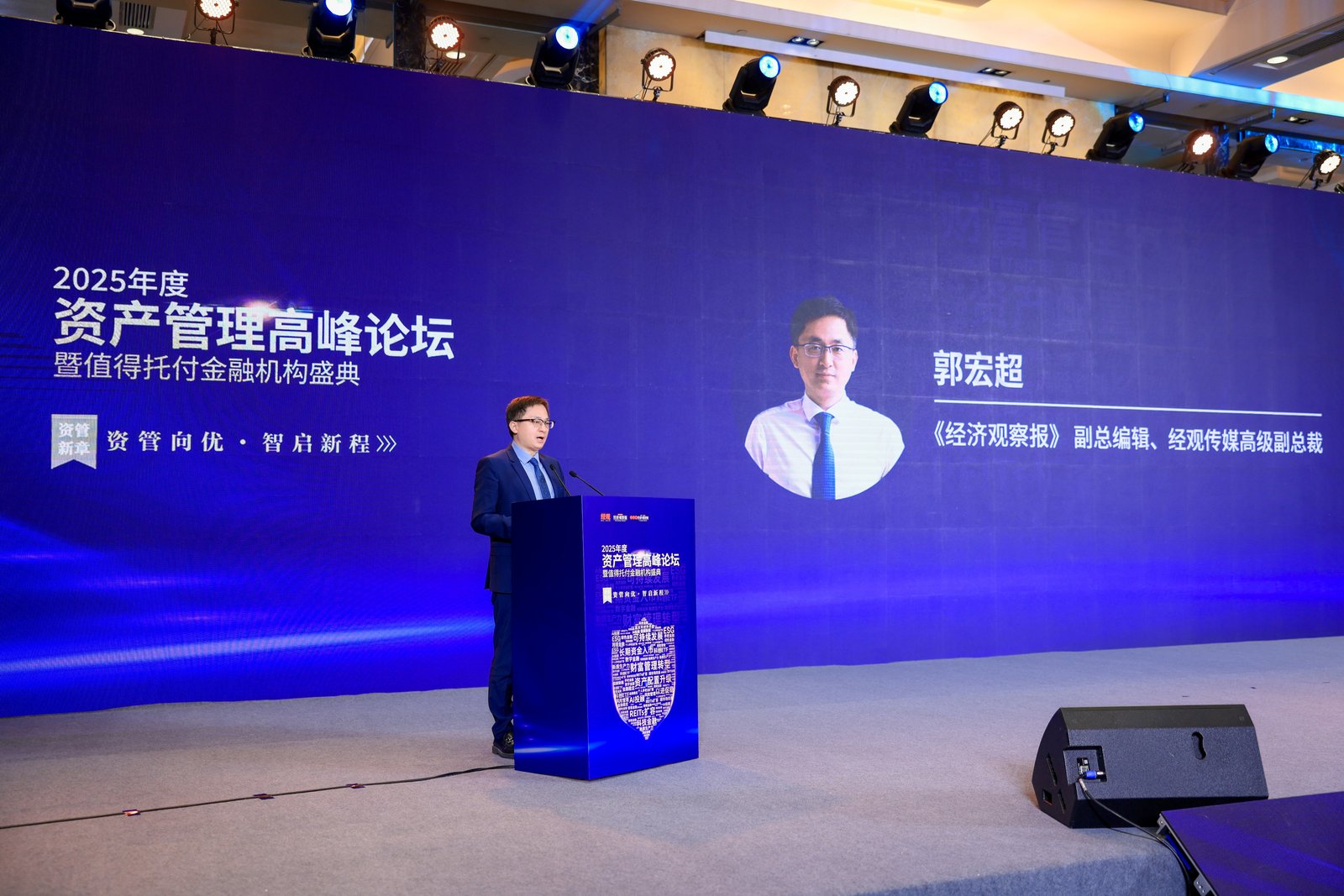
管涛:“十五五”时期资本市场将迎来四大机遇 资管配置能力重要性进一步提升
Sou Hu Cai Jing· 2025-11-27 03:49
Group 1 - The core viewpoint is that the "14th Five-Year Plan" period presents four significant opportunities for China's capital market, including policy dividends from deepened reforms, new momentum from economic transformation, improved institutional foundations, and value reassessment to invigorate market vitality [1][2][3] Group 2 - The first opportunity is the comprehensive deepening of reforms that will release policy dividends, with structural issues needing resolution through high-level opening and reform, which is expected to return economic growth to a reasonable range [2][3] - The second opportunity involves economic transformation that will foster new momentum, with emerging industries and the upgrading of traditional industries expected to create a market space of approximately 10 trillion yuan over the next five years [2][3] Group 3 - The third opportunity is the improvement of capital market systems, emphasizing "investor first" principles and promoting coordinated reforms in investment and financing, which will solidify the foundation for healthy market development [3][4] - The fourth opportunity is the value reassessment that will stimulate market vitality, driven by domestic economic transformation, diversification of resident assets, and global asset rebalancing [3][4] Group 4 - Wealth management institutions are expected to play a larger role in asset allocation, particularly in a low-interest and high-volatility environment, with a focus on four key areas for equity asset allocation over the next five years [4] - Gold is highlighted as having continued allocation value, with its share in private investment potentially increasing from just over 2% to 4-5% due to ongoing economic uncertainties [4] Group 5 - The future investment opportunities arising from transformation and upgrading will require enhanced asset allocation capabilities from wealth management institutions to navigate through economic cycles [4][5]
34家保险资管公司管理资金规模达33.3万亿元
Jin Rong Shi Bao· 2025-11-27 02:22
Core Insights - The insurance asset management industry in China has shown significant growth, with total assets under management reaching 33.3 trillion yuan by the end of 2024, marking a year-on-year increase of 10.6% [1] - The overall income of 34 insurance asset management companies amounted to 31.83 billion yuan in 2024, reflecting a growth rate of 7.31% [1][6] Group 1: Asset Management Overview - As of the end of 2024, the insurance asset management industry maintained a diversified structure, with internal insurance funds amounting to 23.5 trillion yuan, accounting for 70.56% of total managed assets [2] - The management of third-party insurance funds has seen a decline in proportion over the past two years, while the management of pension funds has increased [2] - The growth rate of internal insurance funds was 15.4%, while third-party insurance funds experienced a decline of 1.5% [2] Group 2: Investment Allocation - The total investment assets of insurance asset management companies reached 32.68 trillion yuan in 2024, representing a year-on-year growth of 25% [4] - The allocation structure included 15.18 trillion yuan in bonds (46%), 6.66 trillion yuan in financial products (20%), and 2.17 trillion yuan in stocks (7%) [4] - Stock investments saw a growth rate of 36%, indicating a strong shift towards equities [4] Group 3: Performance and Revenue - In 2024, 21 institutions reported a comprehensive return rate exceeding 5%, with 10 institutions surpassing 8% [6] - The total revenue for the industry reached 31.83 billion yuan, with a compound annual growth rate (CAGR) of 8.48% from 2016 to 2024 [6][7] - The revenue from specialized account business grew by 19.21%, while the income from bond investment plans decreased by 16.82% [7] Group 4: Workforce and Growth - The number of employees in the insurance asset management sector increased to 7,631, reflecting a growth rate of 1.76% compared to the previous year [7]
华金证券:以资产配置引领财富管理,科技赋能创新增长
Zhong Guo Ji Jin Bao· 2025-11-27 00:29
Core Insights - The article discusses the transformation of China's economy and the wealth management industry, highlighting the shift from traditional to high-quality, technology-driven growth [1][2][3] Economic Outlook - By 2025, China's economy is expected to maintain steady growth, transitioning towards a technology and knowledge-intensive structure, with continuous optimization of the industrial framework [1] - The "14th Five-Year Plan" will conclude in 2025, while the "15th Five-Year Plan" will face complex changes in the development environment, including geopolitical shifts and financial cycle challenges [1] Wealth Management Industry Trends - The wealth management sector is undergoing a significant transformation, moving from scale expansion to differentiated, high-quality growth paths [2] - Huajin Securities is embracing this trend by focusing on asset allocation as a core strategy and expanding diverse investment service scenarios [2][5] Regulatory Environment - The regulatory framework for China's capital markets is improving, with policies aimed at strong regulation, risk prevention, and promoting development [3] - The introduction of new rules has created a more robust institutional foundation for market health, leading to improved market confidence and a significant rise in the Shanghai Composite Index [3] Global Market Dynamics - Global structural changes, including adjustments in U.S. tariff policies and geopolitical tensions, are increasing asset price volatility and economic uncertainty [4] - The domestic bond market is experiencing wide fluctuations, reflecting both internal economic recovery and external influences [4] Huajin Securities' Strategic Initiatives - Huajin Securities is accelerating its transition from product sales to asset allocation-driven services, enhancing its asset allocation toolbox and digital transformation [5][6] - The company is leveraging its shareholder advantages to deepen its regional presence and create a comprehensive service system for institutional clients [6] Future Market Prospects - In 2026, the wealth management business is expected to face challenges but also significant growth opportunities due to global liquidity conditions and domestic policy support [7][8] - The demand for professional asset allocation services is increasing as residents shift their wealth structure and the personal pension system is fully implemented [8] Strategic Vision for 2026 - Huajin Securities aims to focus on core areas and enhance its product system and professional advisory capabilities, while building a digital service ecosystem [9] - The company is committed to transforming its business model from product sales to asset allocation, driven by customer trust and technological empowerment [9]
华金证券:以资产配置引领财富管理,科技赋能创新增长
中国基金报· 2025-11-27 00:17
Core Insights - The article emphasizes the transition of China's economy from traditional labor and resource-intensive industries to technology and knowledge-intensive sectors, highlighting the importance of innovation and industrial upgrading in achieving high-quality growth [2] - The wealth management industry is undergoing a profound transformation, shifting from a scale expansion model to a differentiated, high-quality growth path, driven by asset allocation strategies and technological empowerment [4][8] Economic Environment - By 2025, China's economic environment will face complex changes, including geopolitical shifts, financial cycle challenges, and an urgent need for accelerated economic transformation [2] - Despite these challenges, China's economic fundamentals remain strong, with a resilient and potential-rich foundation supporting long-term growth [2] Wealth Management Industry Trends - The wealth management sector is adapting to a low-interest-rate environment and increased market volatility, focusing on asset allocation as a core strategy [4] - Regulatory improvements and a clearer development line in the capital market are fostering a healthier investment ecosystem, enhancing market confidence and leading to significant index gains, such as the Shanghai Composite Index surpassing 4000 points [4][11] Digital Transformation - The company is enhancing its asset allocation toolbox and digital transformation, launching the "优+" APP to provide comprehensive coverage of off-market financial products [8] - The integration of online and offline services is being prioritized, with a focus on internet advisory services to reach a broader audience through platforms like Douyin and Xiaohongshu [8][9] Future Outlook - For 2026, the wealth management business is expected to face challenges but also significant growth opportunities due to global liquidity conditions and domestic policy support [11][12] - The demand for professional asset allocation services is increasing, driven by changes in residents' wealth structure and the implementation of personal pension systems [12][14] Strategic Focus - The company aims to capitalize on the demand for diversified asset allocation and the upgrade of wealth management needs, transitioning from product sales to asset allocation-driven models [14] - A comprehensive product system and professional advisory capabilities are being developed to navigate the evolving landscape of the wealth management industry [14]

个人养老金三周年 银行营销重点转向缴存,基金平均回报超13%
2 1 Shi Ji Jing Ji Bao Dao· 2025-11-26 23:17
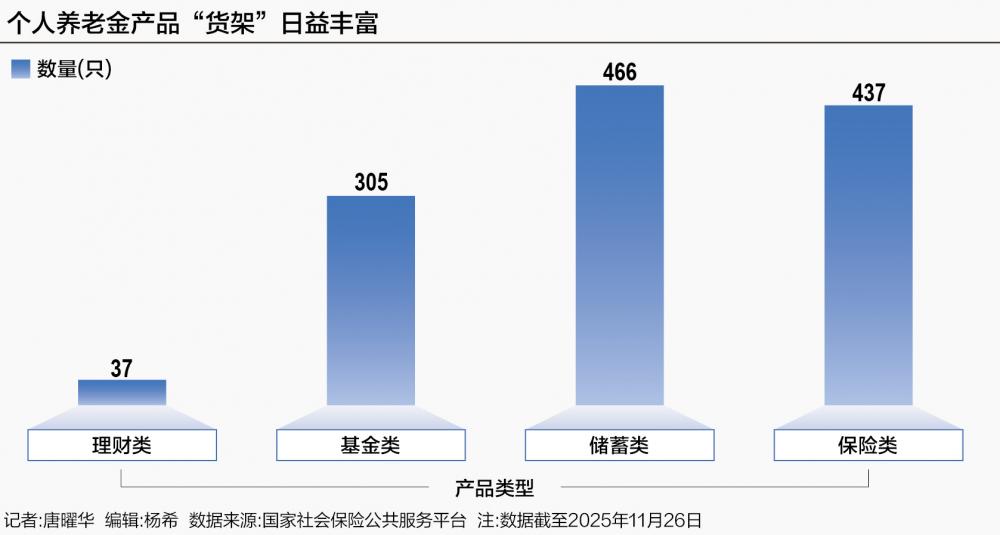
Core Insights - The personal pension system in China is entering its third year since the pilot launch on November 25, 2022, with banks and financial institutions actively promoting pension contributions and related services [1][4][5] Group 1: Marketing Strategies - Banks have shifted their marketing focus from account opening to encouraging contributions, with various rewards for depositors [4] - For instance, China Construction Bank offers up to 656 yuan in benefits for contributions, while Industrial Bank provides chances to win up to 609.68 yuan [4] - Many banks have implemented tiered reward systems for contributions, incentivizing higher deposits with increased rewards [4] Group 2: Product Performance - Personal pension financial products have shown an average return of over 3%, with pension funds averaging a return of 13.54% since inception [1][11] - As of November 26, 2023, the average annualized return for personal pension financial products is 3.47%, with fixed-income products averaging 3.55% [9] - The performance of pension funds has been notably strong, with 305 funds achieving an average return of 13.54% since inception, and some index funds yielding returns as high as 22.21% this year [11][12] Group 3: Product Offerings - The range of personal pension products is expanding, with 37 financial products, 305 funds, 466 savings products, and 437 insurance products available as of November 26 [7] - Starting June 2026, savings bonds will be included in the personal pension product catalog, enhancing investment options for consumers [7] Group 4: Risk Profile - Approximately 67.57% of personal pension financial products are classified as low to medium risk, primarily consisting of fixed-income products [9] - The overall risk profile aligns with the conservative nature of pension investments, catering to investors' lower risk tolerance [9]
稳稳「穿越四季」:「低利率」时代的财富密码
Shang Hai Zheng Quan Bao· 2025-11-26 18:26
Core Viewpoint - The article discusses the shift in investment strategies among Chinese investors as deposit rates fall below 1%, leading to increased interest in diversified financial assets, particularly as the GDP per capita is projected to reach $13,000 in 2024 [1][2]. Group 1: Evolution of Investment Perspectives - The traditional focus on single asset types is being replaced by a need for diversified asset allocation due to low returns on fixed-income products and high volatility in equity markets [2][3]. - Investors are transitioning from a "single deposit" mindset to a more comprehensive "asset allocation" approach to balance risk and return [2][3]. Group 2: Common Pitfalls in Asset Allocation - Many investors still struggle with the concept of asset allocation, often mistaking superficial diversification (e.g., holding multiple funds in the same sector) for true diversification [4]. - The challenge lies in overcoming the inertia of traditional investment habits that prioritize capital preservation over potential growth [3][4]. Group 3: Effective Asset Allocation Strategies - The "Four Seasons Portfolio" strategy, inspired by Harry Browne's "Permanent Portfolio," offers a balanced approach by allocating 25% to stocks, bonds, cash, and gold, achieving a historical annual return of over 7% with a maximum drawdown of less than 10% [6][7]. - This strategy allows investors to navigate different economic cycles without needing to predict market conditions, providing a safety net during downturns and capturing opportunities during growth periods [6][7]. Group 4: Simplifying Asset Allocation for Investors - The "Four Seasons Portfolio" is designed to be user-friendly, enabling investors to select based on risk tolerance and investment goals, with automatic rebalancing features to maintain the desired asset mix [7]. - This approach emphasizes the importance of viewing investments as a cohesive portfolio rather than focusing on individual product performance, which can lead to panic selling or impulsive buying [7]. Group 5: Upcoming Educational Event - A live event hosted by CITIC Bank on November 28 aims to educate investors on effective asset allocation strategies and market navigation techniques [8].
百炼成钢 乘势而上 - 2026年宏观经济与资产配置展望
2025-11-26 14:15
Summary of Key Points from Conference Call Industry and Company Overview - The conference call discusses the macroeconomic outlook for China and the United States in 2026, focusing on investment opportunities and risks in various sectors, particularly in technology, consumption, and real estate. Core Insights and Arguments 1. **China's Economic Outlook**: In 2026, China's economy is expected to face downward pressure, but macro policies are anticipated to provide support, particularly in technology innovation and modern industrial system construction, which are seen as having investment potential [1][2][3] 2. **U.S. Economic Conditions**: The U.S. is projected to enter a scenario of fiscal and monetary expansion in 2026, with a focus on re-inflation pressures and the Federal Reserve's monetary policy, which is expected to remain accommodative [4][7] 3. **Investment Trends**: Investment patterns are shifting, with the central government expected to lead major projects and planning, potentially boosting infrastructure investment while stabilizing manufacturing and real estate investments [3][20][14] 4. **Consumer Spending**: Consumption has become the dominant force in China's economic growth, with the government increasing support for consumer policies, which are expected to continue into 2026 [12][21][13] 5. **Real Estate Market**: The real estate market is entering a critical observation period in 2026, with potential for continued support policies if pressures remain high [23][11] 6. **Debt Management**: China is utilizing a 12 trillion yuan debt relief tool and a 1 trillion yuan capital injection policy to address local government debt and risks in small financial institutions [11][10] 7. **Global Economic Interactions**: The U.S. economy's recovery is expected to positively impact global trade and economic conditions, given its interconnectedness with global markets [7][4] Other Important but Possibly Overlooked Content 1. **Technological Advancements**: China has made significant progress in key technology areas, which may alleviate some external pressures from U.S. tariffs and technology restrictions [10][16] 2. **Long-term U.S.-China Relations**: The competitive dynamics between the U.S. and China are expected to persist, with potential policy shifts under future U.S. administrations posing risks [9][8] 3. **Inflation and Monetary Policy**: The U.S. is not expected to face significant inflation pressures in 2026, with the Federal Reserve likely to implement further rate cuts [4][28] 4. **Asset Allocation Recommendations**: Investors are advised to consider diversified investments in emerging industries supported by Chinese policies and cyclical sectors in the U.S. market due to expected fiscal and monetary expansions [8][5][6] This summary encapsulates the key points discussed in the conference call, providing insights into the macroeconomic landscape and investment strategies for 2026.
什么是养老FOF基金,我们该如何选择呢?|投资小知识
银行螺丝钉· 2025-11-26 14:00
文 | 银行螺丝钉 (转载请注明出处) 比如:40岁,配置60%的股票资产,40 %的债券资产;到了50岁,配置50%的 股票资产,50%的债券资产。 可以分为两大类: (1) 目标日期FOF 通常采用「100-年龄」的配置思路,股 债配置比例会随着年龄增长而变化。 不过,通常到了70岁,股票资产就不再 降低了。也就是说,股票资产的比例最 少不能低于30%。 这类型的养老FOF,基金名称里通常会 有一个具体的年份,比如,2040、2050 等,比较好识别。 如果自己在对应年份附近退休,就可以 考虑对应的养老FOF。 (つ) 目标风险FOF · H= \´— | 股票和债券资产,会有一个长期的平均 比例。常见股债比例:80:20、70:30、 60:40、50:50等等。 通常,股票资产的比例越高,长期收益 越高,相应的波动风险也越大。 这类型的养老FOF,基金名称里通常会 带有「稳健」、「平衡」、「积极」等 字样,从中我们可以判断出这只基金大 致的收益和波动情况。 养老FOF基金,建议大家可以从目标日 期型的入手。 因为选择目标日期养老FOF,主要是看 退休时间。 「退休时间」这个指标相对 客观,比较好判断, ...

国泰海通|策略:中国中长期资金的制度、配置与空间
国泰海通证券研究· 2025-11-26 13:12
Core Viewpoint - The scale of insurance funds, wealth management, and pension funds in China has exceeded 70 trillion yuan and continues to grow, with asset allocation characterized by a foundation in fixed income and a gradual increase in equity investments [1][3]. Policy Aspects - The implementation plan for promoting long-term funds into the market will be released in 2025, focusing on guiding long-term funds to increase their market participation, which includes commercial insurance funds, national social security funds, pension funds, and wealth management products [1]. Regulatory Aspects - Investment limits are set for high-risk assets to constrain risks, while lower limits are established for low-risk assets to ensure safety. For instance, insurance funds can invest up to 50% in high-risk equity assets, while social security and pension funds have limits of 40% and 30%, respectively [2]. Asset Allocation Characteristics - The total scale of insurance funds, pension funds (including social security), and wealth management has surpassed 70 trillion yuan, comparable to the total market capitalization of the Shanghai and Shenzhen stock exchanges. Insurance and wealth management each exceed 30 trillion yuan, accounting for over 80% of the total [3]. - Fixed income remains the primary asset class, with variations in allocation based on funding sources and liability characteristics. Wealth management products have a higher allocation to cash and bank deposits, while insurance institutions favor bonds. Social security funds lean more towards equity investments [3]. - In response to challenges such as declining interest rates and a shortage of quality assets, various long-term funds are actively adjusting their asset allocation strategies, leading to differentiated paths based on liability duration and liquidity constraints [3]. A-Share Heavyweight Characteristics - The core of A-share heavyweights for insurance institutions and social security funds is in the financial sector, but with distinct focuses and expansion directions. Insurance funds have a broader and more stable holding structure, with a long-standing preference for non-bank financials, while social security funds have a higher weight in banks [4]. - Insurance funds are gradually increasing their exposure to technology and advanced manufacturing sectors since 2024, shifting from a "dividend-stable" to a "dividend-stable + growth" investment style. In contrast, social security funds exhibit more cyclical characteristics with faster rotation in non-financial sectors and a higher degree of diversification in their heavyweights [4].