估值过高

Search documents
瑞银下调美国股票市场评级
Xin Lang Cai Jing· 2026-02-27 15:10
Core Viewpoint - UBS has downgraded the rating of U.S. stocks in a fully invested global equity portfolio to "benchmark" due to concerns over a weakening dollar, high valuations, and increasing risks from Washington's policy instability [1][2]. Group 1: Dollar Risks - The primary concern highlighted by UBS is the risk associated with the dollar [1][2]. - UBS forecasts that by the end of the first quarter, the euro will rise to 1 euro = 1.22 USD, indicating a significant shift in currency dynamics [1][2]. - The bank notes that historically, when the trade-weighted dollar index declines by 10%, U.S. equities tend to underperform by approximately 4% on a non-hedged basis [1][2]. Group 2: Market Performance - Due to the weakening dollar and lower valuations attracting capital overseas, foreign markets have significantly outperformed the U.S. this year [1][2]. - The MSCI World Excluding U.S. Index has increased by about 8% within 2026, while the S&P 500 Index has remained nearly flat [1][2].
2025-2026年A股熊股名单曝光!这10只股票跌得最惨
Sou Hu Cai Jing· 2026-02-17 04:11
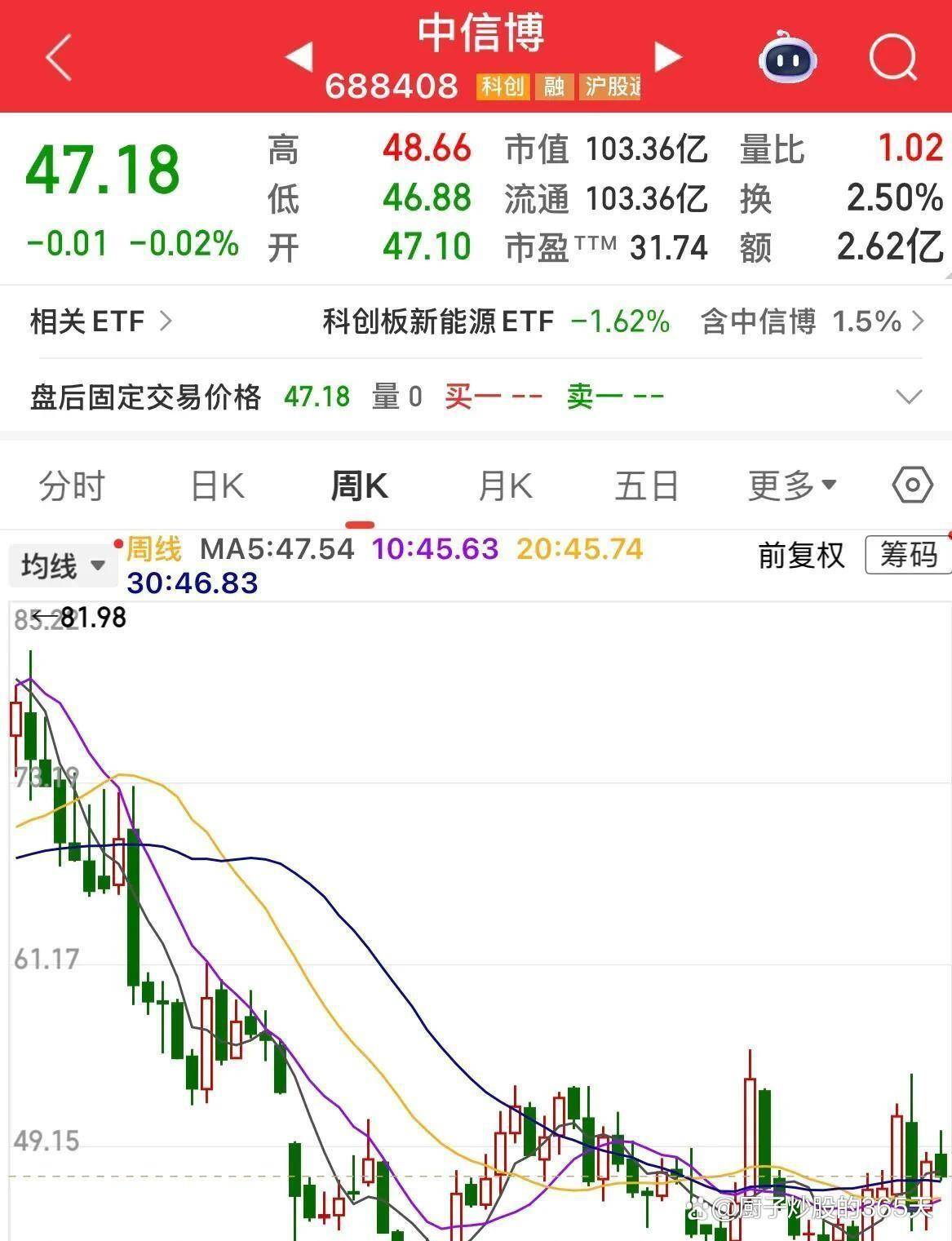
Market Performance - The A-share market experienced a strong rally from February 2025 to February 2026, with the Shanghai Composite Index rising from around 3200 points to over 4000 points, a cumulative increase of 25.58% [1] - The Shenzhen Component Index saw an impressive rise from approximately 11000 points to over 15000 points, achieving a growth of 38.84% [1] - The ChiNext Index surged from 2200 to 3500 points, marking a nearly 59% increase, while the Sci-Tech Innovation 50 Index rose over 64% [1] Stock Performance - Out of 5484 stocks in the market, 4788 stocks recorded gains, resulting in an upward ratio exceeding 87% [2] - A total of 869 stocks doubled in price, with over 100 stocks experiencing price increases between 2x to 20x [2] Investor Sentiment - Investors were seen celebrating their profits, sharing screenshots of earnings on social media, and queues formed at brokerage offices for new account openings [3] Declining Stocks - Despite the overall market rally, over 700 stocks declined, with the top 10 decliners experiencing significant drops, some nearly halving in value, and the smallest decline being 42% [4] - Specific companies like Huaxing Chuangye saw their stock price plummet from a high of 15.88 yuan to 6.18 yuan, a drop of 63%, with projected losses for 2024 and 2025 [5] - Shijin Technology's stock fell from 39.63 yuan to 14.90 yuan, a decline of 62.5%, with significant losses anticipated for 2025 due to overcapacity in the photovoltaic industry [7][8] - Other companies like Kang Le Wei Shi and Zhong Bai Group also faced severe declines, with stock prices dropping 60% and 55% respectively, alongside continuous losses and operational challenges [9][10] Industry Challenges - The photovoltaic industry is experiencing a downturn, with significant price drops in components and overcapacity issues affecting companies like Shijin Technology and Zhongxin Bo [31][32] - Traditional retail, represented by Zhong Bai Group, is struggling with declining foot traffic and profitability due to the rise of e-commerce and changing consumer habits [30] - The agricultural sector, particularly in pig farming, is facing challenges with prices below production costs, leading to substantial losses for companies like Longda Meishi [30] Conclusion - The market rally has been accompanied by significant disparities in stock performance, with many companies facing severe operational and financial challenges despite the overall positive market sentiment [33][34]





横店影视股份有限公司关于聘任高级管理人员的公告
Shang Hai Zheng Quan Bao· 2026-02-10 19:15
Group 1: Management Appointment - The company appointed Mr. Lou Zhangxu as the Vice General Manager, effective from the date of the board meeting approval until the end of the fourth board term [2][4] - Mr. Lou Zhangxu meets the qualifications and capabilities required for senior management positions in listed companies, with no disqualifying circumstances found [2][4] Group 2: Stock Trading Volatility - The company's stock price experienced a significant abnormal fluctuation, with a cumulative closing price increase of 100.55% over ten trading days from January 28 to February 10, 2026 [7][10] - The company's price-to-earnings ratio (TTM) was reported at 252.61, significantly higher than the industry average of 51.19, indicating a potential overvaluation risk [7][15] - The external circulation of shares is relatively small, with the controlling shareholder and their concerted actors holding 88.30% of the total shares, which may lead to irrational speculation risks [8][15] Group 3: Business Performance and Risks - The company projected a net loss for the fourth quarter of 2025, estimating a loss between 76.01 million and 26.01 million yuan, indicating potential performance volatility [8][16] - The company has invested in three films for the Spring Festival, but its investment share is low, and the market box office remains uncertain [8][17] - The AI short drama business is still in the investment and production stage, with no revenue generated yet, and its market acceptance and profitability model are uncertain [8][17]

公募基金“抱团”瓦解时,普通投资者该逃顶还是趁机买入?
Sou Hu Cai Jing· 2026-01-29 23:22
Core Viewpoint - The article discusses the phenomenon of public funds' collective holding of "core assets" collapsing, emphasizing the importance of understanding the reasons behind the collapse, the current market stage, and the valuation and fundamentals of the assets involved. It highlights that there is no absolute answer to whether to "sell at the top" or "buy the dip," and stresses the need for rational decision-making in chaotic market conditions [1]. Group 1: Types of Collapse - Type 1: "True Collapse" due to Deteriorating Fundamentals - This type is the most dangerous, where the profit logic of the concentrated sector is broken, leading to a likely continued decline. Typical causes include sudden policy changes, core product sales stagnation, or significant earnings misses. For example, a consumer stock that experienced a sharp decline in earnings growth led to collective selling by public funds, resulting in a prolonged drop in stock price [4]. - Type 2: "False Collapse" due to Overvaluation - This type resembles a "loosening of the grip," where the sector's valuation has risen to high levels, prompting some institutions to take profits without any fundamental issues. Typical causes include excessive price increases and institutions exiting to lock in annual performance. Historically, true collapses may be preceded by 1-2 similar "false dips," after which institutions may regroup based on performance trends [5]. Group 2: Evaluation Dimensions - Dimension 1: Valuation - Is it Returning to a Reasonable Range? - Valuation is the core metric for determining whether an asset is worth buying. If the sector's valuation remains significantly above the historical 80th percentile, even a 20% drop may not warrant buying, suggesting a more prudent approach of selling or observing [7]. If the valuation falls below the historical 50th percentile and earnings remain stable, it presents a buying opportunity [8]. - Dimension 2: Fundamentals - Is the Profit Logic Still Intact? - This dimension is crucial for distinguishing between "true" and "false" collapses. If industry demand shrinks or policies tighten, indicating a breakdown in profit logic, it is essential to exit. Conversely, if the industry remains healthy with only short-term fluctuations, it may represent a buying opportunity [9]. - Dimension 3: Capital - Is There Collective Exit or Partial Reallocation? - The movement of funds reflects the true attitudes of institutions. A continuous decline in public fund holdings over two quarters, coupled with increasing trading volume during a downturn, indicates a collective exit, necessitating a timely exit strategy. In contrast, a slight decline in holdings with moderate volume and other institutions buying at lower levels suggests a partial reallocation, allowing for observation or small-scale trial investments [10]. Summary - The collapse of public fund holdings requires a thorough analysis of valuation, fundamentals, and capital movements. If fundamentals are broken, a decisive exit is necessary. If valuations are reasonable and fundamentals are intact, gradual buying is advisable. In cases of high valuations without negative news, a wait-and-see approach is recommended. Rationality is crucial during market turmoil, and investors should clarify the nature of the market before executing their strategies [6].

白银有色集团股份有限公司股票交易风险提示公告
Shang Hai Zheng Quan Bao· 2026-01-22 18:50
Core Viewpoint - The stock price of Baiyin Nonferrous Group Co., Ltd. has experienced a significant short-term increase, raising concerns about potential trading risks due to the lack of substantial changes in the company's fundamentals [2][3]. Group 1: Market Trading Risks - The company's stock price rose by a cumulative 33.19% over three consecutive trading days from January 20 to January 22, 2026, indicating a potential overreaction in market sentiment and increased trading risks [2][3]. - Investors are advised to be cautious as the company's operational situation has not changed significantly, which may lead to a decline in stock price [2][3]. Group 2: Financial Performance - As of September 30, 2025, the company reported total assets of 53.18 billion yuan and net assets of 18.13 billion yuan. For the first nine months of 2025, the company achieved operating revenue of 72.64 billion yuan, with a total profit of 0.98 billion yuan, and a net loss attributable to shareholders of -0.215 billion yuan [6]. Group 3: Valuation Risks - The company's static price-to-earnings (P/E) ratio is 864.28 times, significantly higher than the industry average of 117.28 times, indicating a potential overvaluation [4]. - The dynamic P/E ratio stands at 394.77 times, compared to the industry average of 106.12 times, further suggesting that the company's stock may be overvalued [4]. Group 4: Share Pledge Risks - The major shareholder, CITIC Guoan Industrial Group Co., Ltd., holds 2.25 billion shares, accounting for 30.39% of the total share capital. Approximately 98.56% of these shares have been pledged, which poses a risk to the company's stock stability [5]. Group 5: Government Subsidies - The company received a government subsidy of 9 million yuan related to the 2025 Central Foreign Trade Quality Improvement Project, which represents 11.14% of the most recent audited net profit attributable to shareholders [10][11].

撤退还是蛰伏?痛批特斯拉(TSLA.US)估值过高后 “大空头”否认做空
Zhi Tong Cai Jing· 2025-12-31 08:32
Group 1 - Michael Burry denies shorting Tesla despite previously calling its valuation "absurdly high" [1] - Burry is known for his contrarian investment style and has returned to the public eye after years of absence, warning about a potential AI-driven bubble in tech valuations [1] - He has disclosed short positions in Nvidia and Palantir, criticizing major AI spenders for misrepresenting their data center asset depreciation [1] Group 2 - Burry has expressed concerns about Tesla's valuation and business strategy, highlighting the potential dilution of shareholder equity from Elon Musk's proposed $1 trillion compensation plan [2] - He notes Tesla's shifting business focus over the years, indicating that the company's core business moat remains unstable amid increasing competition [2] - Tesla's stock has rebounded significantly since hitting a low in April, but concerns about its high valuation persist, with a current P/E ratio of 313, far exceeding other major tech companies [3] Group 3 - Tesla's electric vehicle sales are projected to decline for the second consecutive year, with a 15% year-over-year drop expected in Q4 deliveries according to Tesla's own estimates [3] - Analyst forecasts for Tesla's Q4 deliveries are more pessimistic than market averages, indicating potential challenges ahead for the company [3]

特斯拉大涨超3%创年内新高,AI叙事主导涨势
Sou Hu Cai Jing· 2025-12-16 00:01
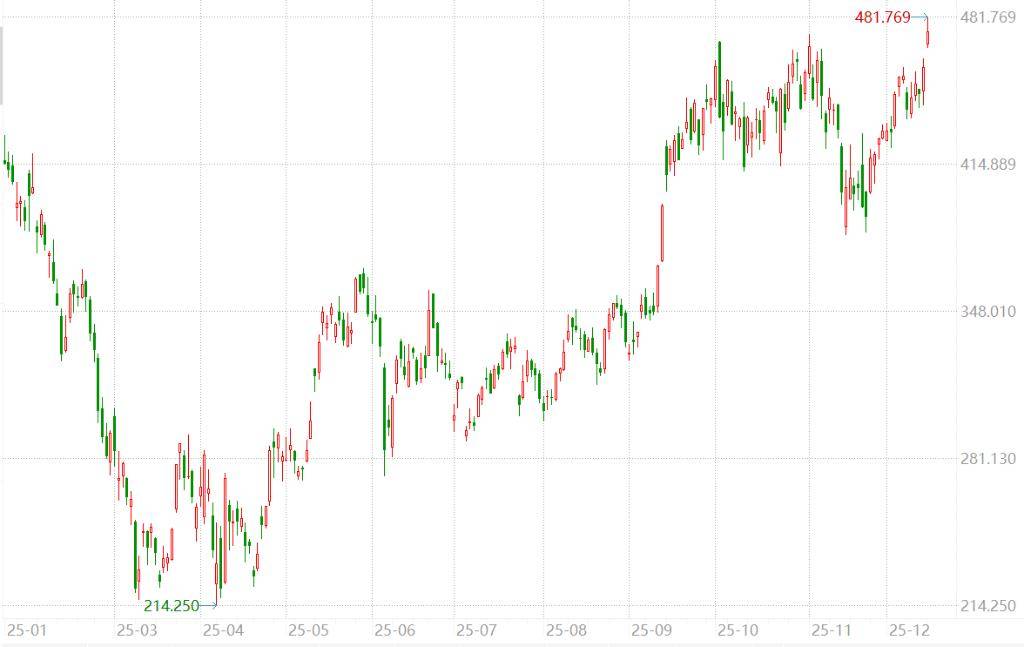
Core Viewpoint - Tesla's stock price has reached an all-time high, driven by AI narratives supporting its trillion-dollar valuation, despite concerns over its fundamental business performance [1][3]. Group 1: Stock Performance - Tesla's stock rose by 3.56% on Monday, reaching a year-to-date high, with an intraday peak of $481.77, surpassing the previous closing record of $479.86 set on December 17, 2024 [1]. - Since hitting a low in early April due to market turmoil from Trump's tariff policies, Tesla's stock has more than doubled [1]. Group 2: Fundamental Weakness - The company's fundamentals are showing signs of weakness, with disappointing Q3 earnings reported in October and rising costs impacting record vehicle sales [4]. - Analysts expect a significant slowdown in sales performance in the future, with some industry leaders criticizing the stock as "overvalued" [3][6]. Group 3: Market Sentiment and AI Focus - The surge in sales was primarily driven by consumer purchases ahead of the expiration of a $7,500 federal tax credit for electric vehicles at the end of September [5]. - Elon Musk's shift in focus towards robotics and AI has sparked market enthusiasm, with some viewing it as visionary while others see it as a distraction from core business [6][7]. - The AI trend has led to increased optimism among traders regarding Tesla's AI initiatives, with investors approving Musk's $1 trillion compensation plan, reflecting confidence in his vision [7]. Group 4: Bubble Concerns - There is ongoing debate about a potential bubble surrounding Tesla, with analysts suggesting that it represents an example of irrational exuberance in an overheated market [8].
任泽平:牛市终结有四大关键信号
水皮More· 2025-11-25 09:35
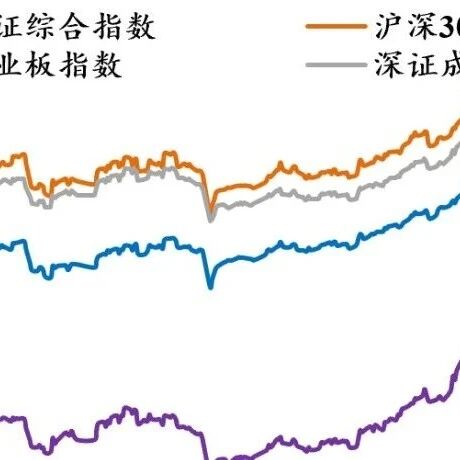
Core Viewpoint - The article discusses the recent bullish trend in A-shares and Hong Kong stocks, termed as the "confidence bull market," driven by unprecedented macro policies since late September 2024. It analyzes historical bull markets to identify patterns and potential future trends. Summary by Sections Historical Bull Market Analysis - A-shares bull markets require three conditions: policy shift, capital inflow, and low valuations, often starting amid controversy and despair, with subsequent valuation recovery igniting investor enthusiasm [6] - Bull markets typically go through three phases: policy-driven, capital-driven, and fundamental-driven, with initial phases less correlated to economic fundamentals [6] - A-shares exhibit characteristics of short bull markets and long bear markets, with average bull market duration of 17 months compared to 27 months for bear markets [8] - The first half of bull markets is primarily driven by policy, emotion, and capital, averaging 6.3 months with a 59% increase, led by technology, finance, and cyclical sectors [8] - Adjustments occur during bull markets due to various factors, but these adjustments can lead to stronger subsequent performance if sufficiently deep [8] - The second half of bull markets relies on economic fundamentals and corporate profit recovery, often resulting in a "Davis double play" where both valuation and profit growth occur [8] - Bull markets typically end due to high valuations, policy shifts, lack of new capital inflow, or economic recovery failures, often culminating in panic selling [8] Signals of Bull Market End - Key signals indicating the end of a bull market include: 1. Overvaluation, where high market valuations cannot be supported by corporate earnings [10] 2. Policy shifts that historically have marked the end of previous bull markets [13] 3. Absence of new capital inflow, which is crucial for sustaining market growth [15] 4. Economic recovery failures, where declining economic indicators lead to market downturns [15] Future Outlook - The current "confidence bull market" mirrors past bull markets, initiated during economic downturns with policy shifts and low valuations. Continued macro policy easing, interest rate cuts, and support for private sector investment are essential for sustaining this bull market [17] - The article emphasizes the need for careful monitoring of market signals, particularly regarding high valuations and potential policy changes, to avoid pitfalls associated with previous market cycles [18]
两大牛股复牌巨震!平潭发展下跌8%后被涌入资金拉升翻红
Zheng Quan Shi Bao Wang· 2025-11-21 02:34
Group 1 - The A-share market opened lower, with banks, coal, and agriculture sectors showing gains, while lithium mining, memory storage, CPO, ice and snow tourism, semiconductors, and aquaculture sectors experienced declines [1] Group 2 - Two stocks, Haixia Innovation (300300) and Pingtan Development (000592), resumed trading after suspension and experienced significant volatility, with Haixia Innovation dropping by 17% before recovering, and Pingtan Development initially falling by 8% before turning positive [2] - Haixia Innovation reported a stock price increase of 185.89% from October 27 to November 17, 2025, with a static P/E ratio of 2141.42 and a rolling P/E ratio of 300.48, indicating valuations significantly higher than industry peers [2] - Pingtan Development's stock price surged by 255.19% from October 17 to November 17, 2025, with a rolling P/E ratio of 555.31 and a P/B ratio of 12.06, also showing substantial deviation from industry standards [2]


大佬今天封盘了
表舅是养基大户· 2025-10-29 14:36
Core Viewpoint - The article discusses the recent market developments, particularly the Shanghai Composite Index surpassing 4000 points for the first time in nearly a decade, and the implications of asset management firm Ningquan Asset's decision to suspend new investor subscriptions while allowing existing investors to continue purchasing [4][5]. Market Overview - The Shanghai Composite Index closed above 4000 points, marking a significant milestone in the last ten years [4]. - Ningquan Asset announced it would stop accepting new subscriptions starting at the end of the month, interpreted as a form of "closure" for new investors [4][5]. - The firm currently manages over 40 billion yuan, which is considered a large scale for active equity private equity funds, leading to the decision to limit new investments [5]. Investment Strategy Insights - The decision to allow existing investors to continue purchasing while halting new subscriptions is seen as a way to maintain relationships with known investors, who may have more stable expectations compared to new investors [5]. - The firm has been focusing on sectors such as real estate, public utilities, home appliances, chemicals, and new energy, indicating a strategic positioning that avoids chasing overvalued popular stocks [5]. Market Trends - The article notes a structural divergence in the A-share market, with significant gains in the STAR Market and ChiNext indices, while small-cap stocks have shown little to no profit [14]. - The performance of the A-share market has been influenced by global factors, including positive developments in U.S.-China negotiations and advancements in the AI sector [9][12]. Company Earnings Reports - Notable companies released their Q3 earnings, with significant growth reported by companies like Xinxin Sheng, which saw a revenue increase of over 150% year-on-year, and a net profit increase of over 205% [18]. - Other companies such as Industrial Union and Moutai also reported earnings growth, with Industrial Union's revenue growing by 42.81% and net profit by 62.04% [40]. Sector Performance - The solar energy sector, particularly companies like Yangtze Power, experienced substantial gains, with Yangtze Power's revenue increasing by over 20% and net profit by over 57% in Q3 [20]. - The solar ETF saw significant appreciation, reflecting a positive market sentiment towards the solar sector amid expectations of reduced competition [25]. Future Outlook - The North Exchange's announcement of plans to expedite the launch of the North Exchange 50 ETF and further reforms in the New Third Board has led to a notable increase in the North Exchange 50 index, which rose over 8% [32][33]. - The article emphasizes the importance of considering both earnings and valuations in the current economic climate, suggesting that low-valuation, high-ROE companies may present investment opportunities [41].