
《全职高手》

Search documents
中国网络文学构建全球多极增长市场
Huan Qiu Wang Zi Xun· 2025-12-25 01:40
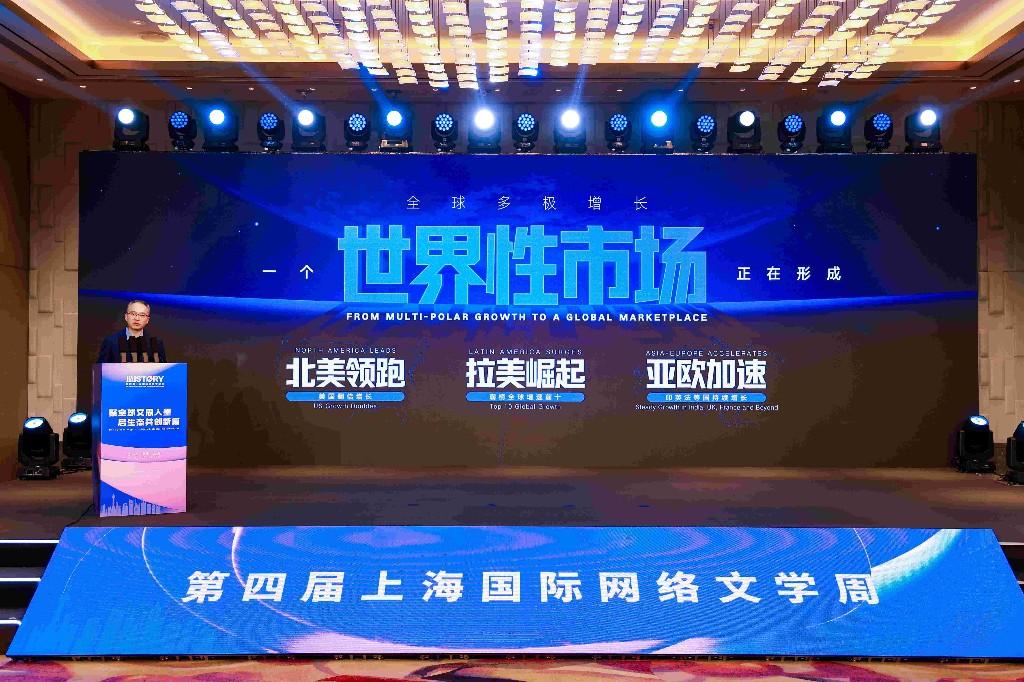
Core Insights - The report indicates that by 2025, Chinese online literature will enter a phase of rapid global proliferation, establishing a market structure characterized by simultaneous growth in North America, Eurasia, and Latin America, with "IP leading the enhancement of cultural and tourism value" becoming a global industry phenomenon [1][3]. Market Growth - In 2024, the revenue scale of the Chinese online literature market is projected to reach 49.55 billion RMB, reflecting a year-on-year growth of 29.37%, marking three consecutive years of accelerated growth [3]. - The overseas market revenue is expected to be 4.815 billion RMB, with a year-on-year increase of 10.68%, indicating a steady growth trend [3]. Global Influence and Content Ecosystem - The global influence of Chinese online literature is reaching new heights, with a multi-polar growth global market already formed. By the end of 2024, the cumulative scale of Chinese online literature works is expected to reach approximately 42.1 million [3]. - As of October 31, 2025, the overseas portal WebNovel under Yuedu Group has nearly 400 million cumulative global users, nurturing around 530,000 writers and over 820,000 original works, with a total work volume increasing by 20% [3][4]. Young Creators and Community Engagement - There is a notable trend of increasing youth involvement in global creative forces, with 50% of signed authors on WebNovel being born after 2000, and the number of authors born after 2005 growing by 55.9% [4]. - The platform has seen a cumulative total of over 14 million comments and interactions, with discussions about Chinese culture exceeding 400,000, establishing a new bridge for cultural exchange [4]. Translation and IP Development - By 2025, the total number of translated works from Chinese online literature is expected to exceed 13,600, with significant growth in various languages, including a 349% increase in Indonesian, 336% in Spanish, and 278% in Portuguese compared to 2024 [4]. - The deep integration of "IP + cultural tourism" is creating a "new continent" of IP value, exemplified by collaborations such as "Dao Gui Yi Xian" with Universal Studios Singapore and "Full-Time Expert" with the Swiss National Tourism Board [4]. Cultural Impact - Online literature has evolved from a Chinese cultural phenomenon to a cross-cultural and cross-linguistic trend, becoming a fertile ground for the emergence of a new generation of global IP [5].

从线上出海到文旅实景,“新三样”引领文化出海新气象
Xin Lang Cai Jing· 2025-12-20 05:44
Group 1 - The core viewpoint of the article emphasizes the emergence of "new three items" (online literature, web series, and online games) as a systematic force reshaping global perceptions of Chinese narratives through cultural export [1][3] - The forum highlighted the formation of a dual-track path for cultural export, transitioning from "content going out" to "scenes taking root" both online and offline [1] - The success of the "new three items" is attributed to the advantages gained over the past decade, particularly after the proliferation of mobile technology in 2015, allowing Chinese content to gain a first-mover advantage in global markets [3] Group 2 - The integration of IP and cultural tourism is identified as a new trend, with examples such as the immersive experience of "Dao Gui Yi Xian" in Singapore, showcasing the transformation of Chinese IP into tangible, interactive experiences [4][6] - The challenges of cultural translation, commercial adaptation, and industrial integration are crucial for successfully bringing Chinese IP to international audiences [4] - The "IP + cultural tourism" model has shown significant potential, attracting new demographics and enhancing visitor satisfaction through tailored experiences [6] Group 3 - The cultural export is evolving from a one-dimensional content export to a dual-track approach that combines online digital ecosystem construction with offline physical scene integration [8] - Chinese online literature is becoming a vital source of IP, collaborating with various forms of media to create a more inclusive and interactive global cultural consumption network [8] - Currently, over 13,600 online literary works, 1,300 published works, 2,100 comics, and more than 100 film and television productions have been launched overseas, indicating the growing presence of Chinese online literature in the global cultural landscape [8]

中国网络文学出海:拉美市场崛起 IP引领文旅价值
Zhong Guo Jing Ying Bao· 2025-12-19 15:01
Core Insights - Chinese online literature is experiencing unprecedented growth and global expansion, becoming a significant cultural force in the world [1] - The market revenue for Chinese online literature is projected to reach 49.55 billion yuan in 2024, with a year-on-year growth of 29.37%, marking three consecutive years of accelerated growth [1] - The overseas market revenue is expected to reach 4.815 billion yuan in the same year, with a year-on-year increase of 10.68% [1] Market Growth and Trends - By the end of 2024, the cumulative number of Chinese online literature works is expected to reach approximately 42.1 million [1] - WebNovel has nearly 400 million global cumulative active users by October 2025, nurturing around 530,000 writers and over 820,000 original works, with a total work volume growth of 20% [1] - The rise of Latin America is reshaping the global online literature landscape, creating a tri-polar market structure alongside North America and Eurasia [2] Regional Dynamics - In 2025, nine out of the top ten countries in terms of WebNovel's global monthly active user growth are from Latin America, with Brazil's user access skyrocketing nearly eightfold, making it the third-largest market globally [2] - The growth in Latin America is driven by AI multilingual translation technology, which has significantly increased the accessibility of Chinese online literature to local readers [2] - The translation of works in Portuguese and Spanish has seen year-on-year growth of 278% and 336%, respectively, facilitating direct access to a vast audience [2] Content Preferences and Local Adaptation - The market is characterized by distinct content preferences across regions, with epic fantasy works favored in Europe and North America, while urban fantasy and emotional narratives are popular in Latin America [3] - The local creative ecosystem is becoming more vibrant, with a surge in local authors in Brazil and Vietnam, indicating a shift towards localized content creation [3] - Generation Z is emerging as the dominant force in global online literature creation, with a significant proportion of WebNovel's signed authors being born after 2000 [3] IP and Cultural Integration - The integration of IP with cultural tourism represents a deep exploration of the industry’s value and cultural influence [5] - Successful collaborations, such as "The King's Avatar" with the Swiss National Tourism Board, highlight the potential of IP to enhance tourism experiences [5][6] - The "IP + destination" model is creating a comprehensive experience economy, linking various sectors and optimizing destination industry structures [7]
2025,IP为什么又成为了热词
3 6 Ke· 2025-12-16 00:20
Core Insights - The recent DNF carnival highlighted the evolution of IP (Intellectual Property) in the gaming industry, emphasizing a shift from a focus on broad entertainment to a more integrated ecosystem approach [1][6] - The value of IP in gaming has been redefined, moving from attracting new users to enhancing the experience for existing players [6][8] Group 1: Historical Context - Ten years ago, the typical use of IP in gaming was heavily influenced by the mobile gaming boom, with significant financial investments in IP adaptations, such as the 8.1 million yuan acquisition of the adaptation rights for the novel "Unbeaten Throne" [3] - Companies like Blueport aimed to create a comprehensive cultural ecosystem around IP, leveraging brand influence and fan engagement to drive monetization [3][4] - Successful products like "I Am MT" demonstrated the potential of IP-driven mobile games, leading to a trend where games were adapted into various media formats [4] Group 2: Current Trends - In the past year, there has been a resurgence of interest in IP within the gaming sector, with a focus on its impact on existing user engagement rather than merely attracting new users [5][6] - The DNF IP is now being showcased through a matrix of products, allowing for deeper storytelling and user engagement within the gaming experience [6][8] - Collaborations with other IPs, such as the partnership between "Tide Watcher" and "Game of Thrones," illustrate the trend of enriching game narratives and enhancing player immersion [7] Group 3: Market Dynamics - The gaming market has reached a saturation point, making it increasingly costly to acquire new users, prompting a strategic shift towards retaining existing players through enhanced IP services [8][9] - The focus on deepening the service aspect of IP reflects a broader industry trend towards optimizing existing player experiences rather than solely expanding user bases [8][9]

网文出海,下一步是?
Zhong Guo Xin Wen Wang· 2025-10-29 12:42
Core Insights - The next step for online literature going global involves transforming popular web novels into multi-faceted IP works, including audiobooks, dramas, comics, animations, films, mobile games, and merchandise [1][2] - Successful examples like "Full-Time Master" demonstrate the potential for significant international engagement, with over 1.3 billion overseas reads and extensive media adaptations [1][2] Group 1: Industry Trends - The integration of various media forms is essential for the development of online literature IP, allowing for coordinated growth across publishing, animation, and gaming sectors [2] - The concept of "Web Literature+" signifies a shift from traditional online literature to a more diverse and expansive format that includes various cultural narratives and values [2] Group 2: Market Impact - The global reception of works like "Mystery Lord" showcases the increasing interest in Chinese stories, achieving a 9.3 rating on IMDB and being released in over 190 countries [2] - The evolution of online literature export from simple text translation to a multi-terminal IP collaboration reflects a new landscape in global cultural consumption [2]
网文出海,掀起“文化共创”潮流
Ren Min Ri Bao Hai Wai Ban· 2025-10-08 22:54
Core Insights - Chinese online literature has become a global cultural phenomenon, with approximately 200 million active overseas users across over 200 countries and regions, showcasing a significant international presence [1][5] - The 2025 China International Online Literature Week highlighted the theme of "New Dynamics, New Patterns, New Forms—The Global Landscape of Online Literature Empowered by AI," indicating a focus on innovation and collaboration in the industry [1] Group 1: International Reach and User Engagement - The number of overseas active users of Chinese online literature is around 200 million, with Asian readers accounting for 80% of this total [5] - The market share in North America is approximately 30%, while Europe and Latin America are emerging as new growth areas [5] - The translation and dissemination of online literature have expanded significantly, with about 5,000 physical books and nearly 130,000 e-books distributed globally [7] Group 2: Content Quality and Recognition - The trend towards mainstream and high-quality online literature is evident, with recognition from both domestic and international institutions, including awards for outstanding works [2] - By the end of 2024, the total number of online literature works exceeded 33 million, with an annual increase of 2 million works, reflecting a 7% year-on-year growth [2] Group 3: Cultural Integration and Localization - Chinese online literature has successfully integrated universal themes with Chinese cultural elements, leading to a strong emotional resonance with global audiences [5] - The establishment of localized creative ecosystems, such as Qidian International, has attracted a significant number of overseas authors, resulting in the production of 770,000 original works [9] Group 4: Innovative Distribution Channels - The primary mode of dissemination for Chinese online literature is through text translation, with platforms like WebNovel and TapRead facilitating large-scale online translation [7] - AI technology has significantly enhanced translation efficiency, with AI translations accounting for over 50% of the total, improving efficiency by nearly 100 times [7] Group 5: IP Expansion and Adaptation - The adaptation of online literature into various media forms, including dramas and animations, has broadened the reach of Chinese literature internationally [8] - Successful adaptations, such as "Chang Yue Jin Ming," have not only gained popularity but also contributed to cultural tourism in China [8] Group 6: Narrative Innovation and Global Influence - Chinese online literature is entering a new phase of "narrative going abroad," influencing global popular culture through cross-cultural storytelling [9][10] - The blending of Chinese narrative frameworks with Western themes has resulted in a unique cross-cultural literary landscape, showcasing the global impact of Chinese online literature [10]

打破次元壁 北外滩燃起来 “文旅商体展”激活滨水岸线 打造多元化消费新场景
Jie Fang Ri Bao· 2025-10-07 03:04
Core Insights - The "Super Dynamic North Bund Dimension Music Carnival" has successfully integrated popular IPs and cultural elements, creating a vibrant new landmark for dimension culture in the North Bund area [1][2][3] Group 1: Event Highlights - The carnival features numerous popular IPs and immersive installations, breaking down barriers between different dimensions and attracting a large audience [2] - Notable installations include a romantic "prayer site" from the popular domestic animation "Fox Demon Little Red Bride" and an interactive "delivery cabinet" from "One Person Below" [2] - The event also celebrates the tenth anniversary of the top domestic game "Honor of Kings," providing an interactive experience that merges gaming with social activities [2] Group 2: Commercial Opportunities - The carnival has established a creative market for fans, offering official merchandise and handmade items, generating significant sales and attracting over 30,000 fans daily [3] - The collaboration between merchandise sales and IP exhibitions enhances the overall experience, allowing fans to purchase exclusive items after engaging with the exhibits [3] Group 3: Economic Impact - The North Bund area has seen a 13% increase in foot traffic due to the carnival, benefiting local businesses through ticket stub promotions and discounts [4] - Various merchants in the area have participated in the ticket stub economy, providing exclusive offers to enhance consumer engagement and drive sales [4][5] - The integration of cultural and commercial elements is expected to inject new vitality into the local economy, promoting high-quality development in the region [6]
中国网文IP首次落地新加坡环球影城 打造“IP+文旅”跨国融合
Zhong Guo Xin Wen Wang· 2025-09-28 01:11
Core Viewpoint - The collaboration between China's web novel "Dao Gui Yi Xian" and Universal Studios Singapore marks the first deep partnership between a Chinese web novel IP and a global theme park, showcasing a cross-border integration of "IP + cultural tourism" [1][3]. Group 1: Project Overview - The Halloween-themed attraction "Dao Gui Yi Xian" opened on September 26, featuring immersive experiences that recreate the novel's fantasy world through realistic scenes and interactive NPCs [1][3]. - The project aims to provide visitors with an engaging exploration of iconic locations from the novel, such as "Qing Feng Guan" and "Bai Yu Jing," allowing them to interact with characters from the story [3][5]. Group 2: Cultural Significance - "Dao Gui Yi Xian," created by author "Hu Wei De Bi," integrates traditional Chinese philosophical concepts and folklore with modern fantasy elements, establishing a grand worldview filled with Eastern mystique [3][5]. - The novel has gained significant popularity, accumulating over 11.38 million readers, making it a phenomenon in 2023 [3]. Group 3: Future Prospects - This collaboration represents the first overseas implementation of the "IP Paradise" model by the company, with plans to introduce derivative products from other popular IPs like "Quan Zhi Gao Shou" and "Gui Mi Zhi Zhu" at Universal Studios Singapore [5].

约2亿活跃用户!中国网络文学何以“圈粉”海外读者
Xin Hua She· 2025-09-26 14:15
Core Insights - The scale of overseas active users of Chinese online literature is approximately 200 million, indicating a significant global influence of this narrative trend [1] - The revenue from the overseas market for Chinese online literature is projected to reach 4.815 billion yuan in 2024 [1] - The total number of Chinese online literature works is expected to exceed 33 million by the end of 2024, with a notable increase in both realistic and science fiction genres [2] Group 1: Market Dynamics - Chinese online literature has gained popularity in over 200 countries and regions, with Southeast Asia and North America being key markets [1][4] - The majority of overseas readers (80%) are located in Asia, with preferences varying by region; Southeast Asia favors ancient romance and fantasy genres, while Europe and North America lean towards fantasy and suspense [4] - The translation of works has been significantly enhanced by AI technology, which has increased efficiency and reduced costs, allowing for rapid global distribution of literature [3] Group 2: Cultural Impact - Chinese online literature is not only being consumed but is also influencing global literary trends, with 1.3 million overseas authors and over 2 million works created in this ecosystem [6] - Successful adaptations of Chinese online literature into other media, such as the series "Qing Yu Nian" on Disney+, highlight the cultural export potential of these narratives [5] - The integration of Chinese cultural elements into overseas works demonstrates the growing influence of Chinese narrative styles and themes on global literature [6]
更多《甄嬛传》:“广电21条”能救爱奇艺们吗?
2 1 Shi Ji Jing Ji Bao Dao· 2025-08-24 23:01
Core Viewpoint - The recent implementation of the "21 Regulations" by the National Radio and Television Administration (NRTA) is expected to significantly benefit the Chinese film and television industry, particularly in the production of historical dramas, which have been a major source of revenue and popularity [2][10][12]. Group 1: Impact of "21 Regulations" - The NRTA has relaxed restrictions on the number of historical dramas, signaling support for market-oriented creation in the industry [2][10]. - The regulations allow for an increase in the maximum number of episodes for dramas, which could lead to the production of higher-quality long dramas [11]. - The introduction of policies such as "border examination and broadcasting" for series and seasonal dramas is expected to shorten content production cycles and align broadcasts with current social sentiments, enhancing capital efficiency for companies like iQIYI [11][12]. Group 2: Industry Response - Following the announcement of the "21 Regulations," many film and television stocks experienced significant gains, indicating a positive market reaction [3]. - Major companies in the industry, such as the Yuewen Group, anticipate launching more film and television projects due to the new regulations [12]. - The regulations are seen as a potential attractor for more investment in the film and television sector, which is currently facing financial challenges [13][14]. Group 3: Current Challenges - The film and television industry is experiencing financial difficulties, with iQIYI reporting an 11% year-on-year revenue decline to 6.628 billion yuan and a net loss of 133.7 million yuan [14]. - Tencent Video also reported a decrease in paid subscribers, losing 3 million to a total of 114 million [15]. - The reduction in content budgets due to financial constraints may lead to fewer high-quality productions, creating a vicious cycle that could further diminish audience engagement [16][17]. Group 4: Future Outlook - While the "21 Regulations" may increase the likelihood of producing popular dramas like "Empresses in the Palace," the actual success will depend on the ability to create high-quality content that meets evolving audience tastes [19]. - The rise of short videos poses additional risks to traditional film and television investments, making the landscape more competitive and uncertain [19].
