全球避险需求

Search documents
EasyMarkets易信:产出预期稳健 评矿业巨头表现
Xin Lang Cai Jing· 2026-02-19 12:11
Core Viewpoint - Buenaventura (BVN) has demonstrated strong performance in its annual report, with significant price increases in precious metals reflecting robust market support amid high inflation, setting a solid financial foundation for capital expenditures and business expansion in 2026 [1][2]. Production Data - The total gold output for 2025 is projected to be 138,919 ounces, while copper production is expected to reach 52,445 tons [3]. - Although the silver guidance for 2026 is slightly narrowed (estimated between 12,900,000 to 14,500,000 ounces), the anticipated growth in gold production (up to 186,500 ounces) is expected to effectively offset the risks associated with base metal fluctuations [3]. Operational Efficiency - The Orcopampa and Coimolache mines have exceeded expectations, demonstrating the positive impact of technological improvements on production capacity [4]. - The San Gabriel project has faced delays due to external permitting issues, but the introduction of the first gold-silver alloy ingot has sent positive signals to the market [4]. Market Outlook - The long-term support for gold and silver prices due to global risk aversion is expected to enhance Buenaventura's performance guidance for 2026 [4]. - The average gold price achieved in Q4 2025 was $4,214, indicating that if this high level is maintained, the profitability transparency of the mining sector will further improve [4].



ETO Markets 交易平台:美1月就业数据超预期 银价回调至82美元
Sou Hu Cai Jing· 2026-02-12 07:22
Group 1 - The core driver of the recent decline in silver prices is the stronger-than-expected U.S. non-farm payroll report for January, which showed an increase of 130,000 jobs compared to the market expectation of 55,000 jobs [2] - The unemployment rate unexpectedly dropped to 4.3%, the lowest since August 2025, indicating a resilient U.S. labor market [2] - The strong employment data has diminished market expectations for a Federal Reserve interest rate cut, with the probability of a 25 basis point cut in March dropping from 21.7% to 6.0% [2] Group 2 - The recent decline in silver prices is attributed to external macroeconomic data shocks and a technical adjustment following a significant price increase, rather than a deterioration in silver's fundamentals [2] - Silver prices surged from around $30 per ounce to over $100 by the end of January, indicating a need for price correction [2] - Long-term support for silver remains strong due to global risk aversion and expanding industrial demand, particularly in solar energy, electric vehicles, and charging infrastructure [3] Group 3 - Future silver price movements will need to closely monitor the U.S. labor market, inflation data, and Federal Reserve policy statements, as these factors will continue to drive market volatility [4]
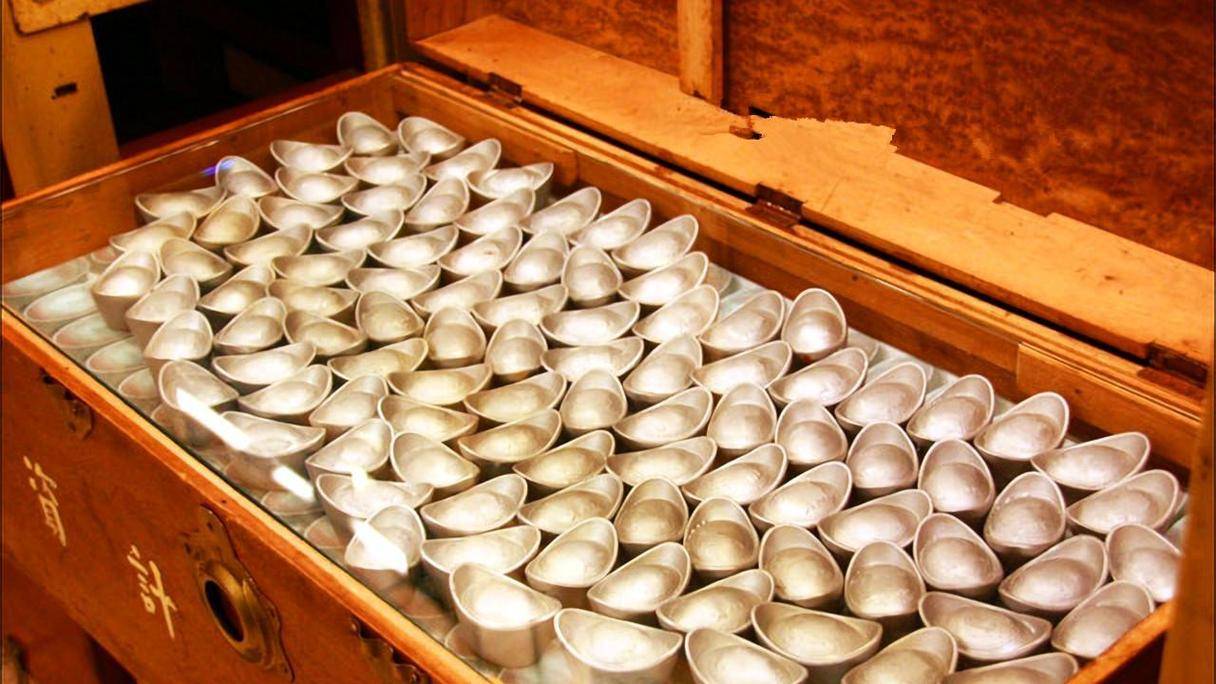
贵金属价格巨震!银行密集出手控风险
Zhong Guo Zheng Quan Bao - Zhong Zheng Wang· 2026-01-31 14:14
Core Viewpoint - The precious metals market has experienced significant volatility recently, with sharp declines in prices, yet it still holds medium to long-term investment value due to global risk aversion and changing asset allocation logic [1][4]. Group 1: Market Volatility and Risk Warnings - Since 2026, the precious metals market has shown strong performance but has recently faced increased volatility, exemplified by a "roller coaster" market on January 30, where COMEX gold fell by 8.35% and COMEX silver dropped by 25.50% [1]. - Several banks have issued risk warnings regarding precious metals, highlighting increased market uncertainty and advising clients to "reasonably control positions and prevent risks" [1][2]. - China Bank specifically warned clients engaged in gold accumulation and account precious metals to consider their financial status and risk tolerance when trading [1]. Group 2: Adjustments in Banking Operations - Industrial and Commercial Bank of China announced changes to its gold accumulation business and floating price physical gold product sales, limiting electronic trading hours and implementing daily limits on accumulation or redemption during non-trading days [2]. - Construction Bank raised the minimum amount for personal gold accumulation business to 1500 yuan starting February 2 [2]. - The "ICBC Gold Family" public account urged investors to maintain rationality and enhance risk awareness amid the volatile market [2]. Group 3: Long-term Outlook for Precious Metals - Analysts suggest that despite short-term volatility, precious metals like gold still have upward potential in the medium to long term, supported by ongoing demand for safe-haven assets and geopolitical tensions [4]. - The macroeconomic environment, including the restructuring of the global monetary credit system and rising geopolitical risks, is expected to drive precious metals prices higher in the future [4]. - Silver, while experiencing high volatility, is also projected to have medium-term support, although caution is advised due to its higher risk profile [5].
黄力晨:黄金盘中急跌400美元 获利了结打击金价
Xin Lang Cai Jing· 2026-01-30 06:37
Core Viewpoint - The market's expectation of interest rate cuts by the Federal Reserve, Trump's tolerance for a weaker dollar, and a surge in global risk aversion have accelerated the purchase of traditional safe-haven assets like gold, driving prices to new historical highs [1][5][6]. Group 1: Market Dynamics - The market anticipates two interest rate cuts by the Federal Reserve this year, which would lower the opportunity cost of holding gold [2][6]. - Trump's recent announcements regarding tariffs on multiple countries have pushed investors away from dollar assets, increasing demand for gold [2][6]. - Gold prices surged over $1200 in January, but profit-taking led to a sharp decline of nearly $400 during trading on Thursday [2][6]. Group 2: Technical Analysis - Gold's price reached a new high of $5596 before experiencing a significant drop to $5105, but it rebounded to close above $5400, indicating strong buying interest [1][5][6]. - Key support levels for gold are identified at $5370 and $5300, while resistance levels are at $5470 and $5550 [3][7]. - Technical indicators such as the 5-day moving average and MACD suggest a bullish trend, although the KDJ indicator indicates a potential need for adjustment [3][7].
黄力晨:全球避险需求激增 黄金价格再创新高
Sou Hu Cai Jing· 2026-01-29 08:45
Core Viewpoint - The market's expectation of interest rate cuts by the Federal Reserve, alongside a surge in global risk aversion, has led to a significant increase in gold prices, reaching new historical highs [1][2]. Group 1: Market Dynamics - Gold prices have shown a strong upward trend, with a monthly increase exceeding $1000, driven by expectations of two potential interest rate cuts this year due to a weak U.S. labor market and moderate inflation [2][3]. - The U.S. dollar is under pressure, as indicated by President Trump's comments expressing a lack of concern over dollar depreciation, which has led to a passive reduction in dollar-denominated assets [2]. Group 2: Technical Analysis - Key support levels for gold are identified at $5238 and $5200, while resistance is noted at $5300 and $5400, with a potential upward movement towards $5500 if the price breaks through these levels [1][3]. - Technical indicators such as the 5-day moving average and MACD show bullish signals, suggesting that gold may continue to rise in the short term [3].
金价又创历史:复盘历史新高规律,当下该持有还是入场?
Xin Lang Cai Jing· 2026-01-29 01:49
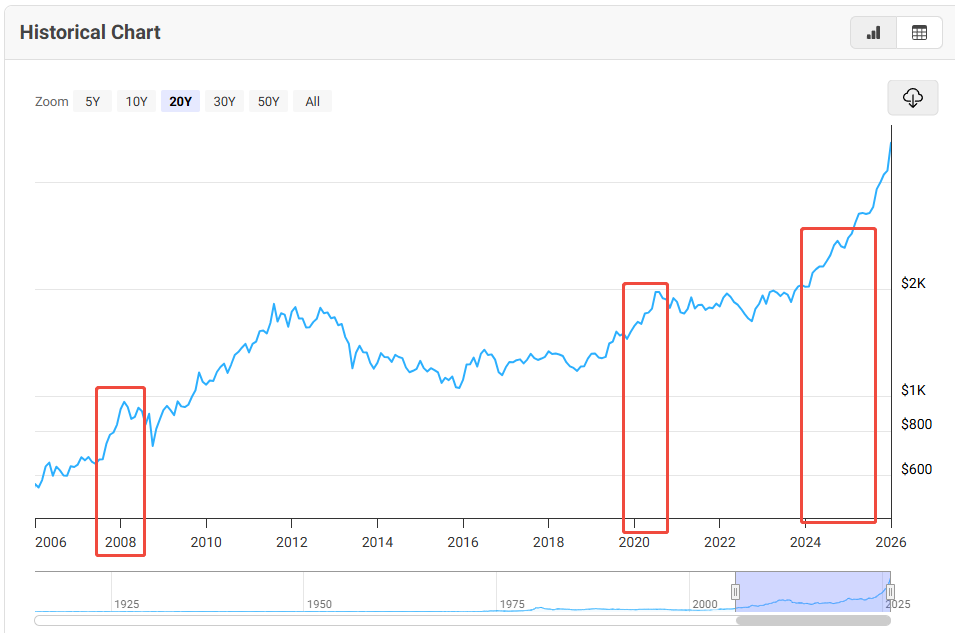
Core Viewpoint - The current surge in gold prices, with spot gold surpassing $5,300 per ounce and COMEX futures reaching new highs, has created a heated market sentiment, leading to concerns among investors about profit-taking and potential corrections [1][14]. Historical Highs Review - Since the collapse of the Bretton Woods system in 1971, there have been three significant historical high breakthroughs in gold prices, excluding the current surge [1][14]. - The analysis of these historical breakthroughs reveals three core patterns that are essential for understanding the current market dynamics [3][16]. Key Historical Breakthroughs - **2008 Historical High**: Broke through $1,000 per ounce in March 2008, with a maximum drawdown of 31.1% lasting over 18 months, driven by the subprime crisis, Fed rate cuts, and a weakening dollar [4][17]. - **2020 Historical High**: Surpassed $2,000 per ounce in August 2020, with a maximum drawdown of 20.0% over 39 months, influenced by the COVID-19 pandemic and global economic uncertainty [4][17]. - **2025 Historical High**: Expected to break through $3,000 per ounce in March 2025, with a projected maximum drawdown of 7.8%, driven by geopolitical tensions and central bank gold purchases [4][17]. Core Patterns from Historical Analysis - **Pattern One**: The sustainability of the driving logic is crucial for the continuation of price increases. Short-term event-driven breakthroughs are likely to face deeper corrections, while long-term trends provide more stable price movements [5][18]. - **Pattern Two**: Post-breakthrough fluctuations are common, but the upward cycles tend to last longer than the adjustment periods. Historical data shows that gold has an annualized return of about 7% since 1971, with adjustments being temporary pauses in a long-term upward trend [6][19]. - **Pattern Three**: Central bank and institutional holdings are key indicators for assessing post-breakthrough market conditions. Data shows that previous price corrections were associated with declines in central bank gold purchases, while current trends indicate sustained buying, supporting price stability [7][20]. Current Market Dynamics - The current gold price surge to $5,300 per ounce reflects a continuation of the upward trend since 2025, characterized by multiple favorable factors [8][21]. - **Common Factors**: The current rise in gold prices is supported by three main factors: expectations of loose monetary policy, high global risk aversion, and significant central bank gold purchases [9][22]. - **Distinct Differences**: The current market exhibits unique characteristics, such as unprecedented levels of central bank gold purchases and high elasticity of speculative holdings, which may amplify short-term volatility but do not alter the long-term trend [10][23][24]. Short-term Risks - Despite the long-term upward trend being intact, the high price level has already priced in optimistic expectations, leading to an increased probability of short-term risk releases [12][25]. - Key short-term risks include potential technical corrections due to overbought conditions, adjustments in Fed rate cut expectations, and profit-taking by speculative funds, which could exacerbate market volatility [12][26].
五千美元只是起点! 黄金升维为“战略必需品”
Jin Tou Wang· 2026-01-26 02:04
Group 1: Gold Market Analysis - The international gold price reached 1135.49 yuan per gram, increasing by 20.96 yuan, a rise of 1.88% compared to the previous trading day, indicating a strong rebound [1] - The opening price for the day was reported at 1119.75 yuan per gram, with a daily high of 1137.55 yuan and a low of 1119.16 yuan [1] - A bullish sentiment is evident in the gold market, with 80% of Wall Street analysts and 71% of retail investors expecting an increase in gold prices for the upcoming week [4] Group 2: U.S. Rare Earth Investment - The U.S. government plans to invest $1.6 billion in domestic rare earth companies to strengthen the critical mineral supply chain, marking the largest investment in this sector by the Trump administration [2] - The government will acquire a 10% stake in USA Rare Earth, with a total payment of $2.77 million for 16.1 million shares at $17.17 each, alongside a $1 billion private financing round [2] - The investment is expected to yield an implied profit of approximately $490 million based on the current market price of $24.77 per share [2] Group 3: U.S.-India Trade Relations - U.S. Treasury Secretary indicated that the 25% tariff imposed on Indian imports of Russian oil has led to a significant reduction in India's purchases, suggesting a potential for tariff removal if India continues to adjust its energy import strategy [3] - The tariff policy has been described as a "huge success," providing substantial benefits to the U.S. economy [3] - The potential removal of tariffs could reshape U.S.-India trade relations and influence the global energy trade landscape [3] Group 4: Future Gold Price Projections - Analysts predict that gold prices could exceed $5000, with a target of $6000 becoming mainstream among institutions due to geopolitical uncertainties and global demand for safe-haven assets [4] - The upcoming week will be crucial for monitoring economic indicators such as the Federal Reserve's interest rate decision and consumer confidence, which could act as catalysts for price movements [4] - The current market conditions may represent a final opportunity for investors to position themselves before gold transitions from an "investment option" to a "strategic necessity" by 2026 [4]
水贝叫停“投资铜条”?记者实探:仍有商家出售,但无法回收
Sou Hu Cai Jing· 2026-01-23 03:25
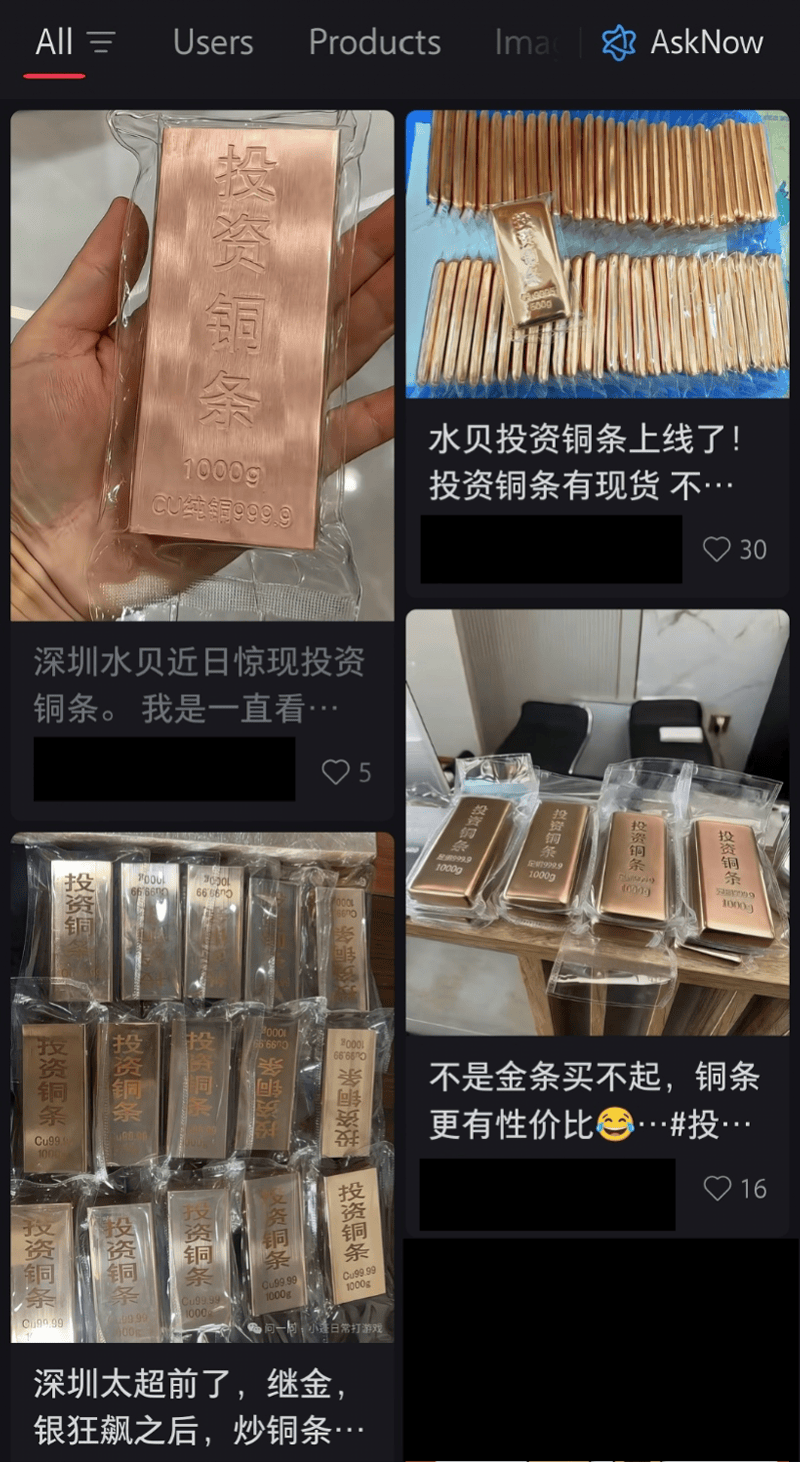
Core Viewpoint - The emergence of "investment copper bars" in Shenzhen's Shui Bei market has raised concerns about their actual investment value, with many merchants indicating that these products are overpriced and lack genuine investment attributes [3][4][9]. Group 1: Market Dynamics - "Investment copper bars" have gained popularity due to rising consumer interest in precious metals and a significant increase in international copper prices [9][10]. - The price of copper has surged recently, with LME copper rising 11.69% in December 2025 and over 3% since early January, reaching a peak of 13,407.0 USD/ton [10]. - The increase in copper prices is attributed to various factors, including tight global copper supply, trade flow restructuring due to U.S. tariffs, and rising demand from artificial intelligence and new energy infrastructure [10]. Group 2: Product Characteristics and Risks - Merchants in Shui Bei have expressed skepticism about the investment potential of "investment copper bars," stating that they are often sold at inflated prices and can only be recycled at a loss [8][11]. - Unlike gold and silver, which have established recycling systems, copper is primarily treated as scrap, leading to significant value loss if not properly managed [8][11]. - Experts warn that investing in physical copper bars carries substantial risks, as they may only be resold as scrap unless a subsequent buyer is found, likening it to previous speculative bubbles in commodities [11][12].
国际观察丨金价飙涨中的世界经济趋势观察
Xin Hua Wang· 2025-12-31 05:13
Core Viewpoint - The article discusses the historic bull market in gold prices in 2025, which saw an increase of over 70% during the year, driven by multiple global economic challenges and a shift in international order [1][2]. Group 1: Gold Price Trends - In 2025, gold prices surged, reaching nearly $4,600 per ounce by year-end, marking the largest increase since the 1979 oil crisis [2]. - The upward trend in gold prices began in the second half of 2019, with an 18% increase that year, and continued with significant annual gains exceeding 25% in 2020 and 2024 [2]. - Other precious metals also saw substantial price increases, with silver prices rising approximately 150% and platinum surpassing $2,300 per ounce [2]. Group 2: Economic Context and Risks - The rise in gold prices reflects heightened global risk aversion and a lack of economic confidence, despite forecasts indicating that global economic growth rates for 2025 and 2026 may not significantly slow down [3]. - Major risks to the global economy stem from the U.S.-initiated trade tensions and geopolitical conflicts [3]. Group 3: Factors Driving Gold Prices - The demand for gold has increased as a safe-haven asset, reflecting a decline in the credibility of the U.S. dollar [4]. - Key factors contributing to the current bull market include the COVID-19 pandemic, geopolitical tensions from the Russia-Ukraine conflict, and the U.S. trade war, which have all heightened market risks [4]. - The decline in U.S. dollar credibility, exacerbated by high levels of U.S. government debt and aggressive monetary policies, has driven investors towards gold [4]. Group 4: Central Bank Actions - Central banks worldwide have accelerated diversification of reserves, significantly increasing gold holdings, which has been a crucial factor in driving up gold prices [5]. - In 2024, gold accounted for 20% of global central bank reserves, surpassing the euro's 16% share, with net purchases exceeding 1,000 tons for the third consecutive year [5]. Group 5: Historical Context and Future Outlook - Historically, gold has served as a traditional safe-haven asset, gaining favor during times of economic turmoil [6]. - The current surge in gold prices is indicative of a complex interplay of economic challenges, geopolitical risks, and a potential shift towards gold as a long-term asset rather than a temporary hedge [7].
金价,突然跳水!有人哭了
Sou Hu Cai Jing· 2025-10-18 06:40
Group 1 - The core point of the article is the significant drop in gold and silver prices, with spot gold falling below $4200 per ounce and closing at $4251.45 per ounce on October 17 [1][4] - Domestic gold jewelry prices also decreased, with the price of pure gold jewelry from Laomiao dropping to 1262 RMB per gram, down from 1279 RMB per gram [3][4] - Analysts attribute the volatility in the gold market to a notable recovery in the US stock market and statements from the US government regarding trade issues [4] Group 2 - The recent surge in gold prices began in late August, with London gold spot prices increasing over 25% from August 21 to October 15, driven by rising global risk aversion and declining dollar credibility [4] - Several financial institutions, including the Shanghai Gold Exchange and Industrial and Commercial Bank of China, have issued risk warnings regarding the recent fluctuations in precious metal prices, advising investors to make rational investment decisions based on their financial situation and risk tolerance [4] - Market forecasts suggest that gold prices may continue to strengthen, with analysts from major banks predicting gold prices could reach $5000 per ounce by 2026, and Standard Chartered raising its average gold price forecast for next year to $4488 per ounce [5]