大宗商品交易

Search documents
人民币强势升破6.9,世界防止美元突然崩溃,3个财富逻辑变了
Sou Hu Cai Jing· 2026-02-26 13:09
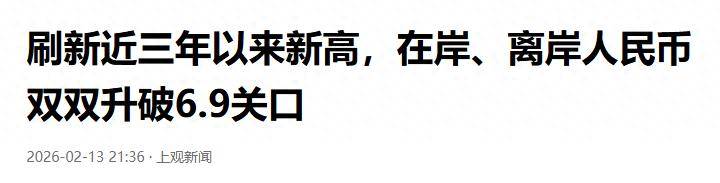
Core Viewpoint - The recent appreciation of the Renminbi (RMB) against the US dollar is not merely a result of traditional factors but indicates a significant shift in global financial dynamics, with the RMB gaining traction in international commodity transactions and payment systems [1][6][21]. Group 1: RMB Appreciation Dynamics - The RMB has strengthened significantly, breaking the 6.9 mark against the US dollar, reaching levels not seen in nearly three years, with an appreciation of over 1.2% since the beginning of the year [1][2]. - This appreciation is occurring despite a rebound in the US dollar index, which has risen from around 95 to above 97, indicating that the RMB's strength is not solely due to a weakening dollar [5][6]. Group 2: Changes in Commodity Trading - There is a notable shift in the trading logic of international commodities, with countries like Saudi Arabia, Russia, and Iran increasingly using RMB for oil transactions, which could alter the pricing power in global markets [8][10]. - The entry of RMB into the global financial system is underscored by the establishment of a RMB clearing bank in London, a key hub for commodity pricing, particularly for gold [10][13]. Group 3: Geopolitical and Economic Implications - Western leaders are increasingly visiting China, indicating a search for alternative settlement systems and a desire to integrate RMB into broader trade and financial networks [13][15]. - The current geopolitical landscape is prompting a reevaluation of currency systems, with the RMB potentially becoming a significant player alongside the US dollar, although it still holds a small share of global payments at approximately 3.79% compared to the dollar's 40% [17][21]. Group 4: Investment and Wealth Management Strategies - Investors are advised to diversify their asset allocations beyond just US dollar-denominated assets, considering multi-currency and multi-regional strategies [19][21]. - There is an increasing need to focus on industries related to commodity trading, settlement systems, and the evolving financial infrastructure, as these areas are likely to experience significant changes due to the shifting rules of engagement [19][23].

香港金融业开市,业界期“快马加鞭”
Xin Lang Cai Jing· 2026-02-20 12:24
Group 1 - The Hong Kong Stock Exchange (HKEX) opened its first trading day of the Lunar New Year, with the Hang Seng Index having risen nearly 6,500 points, a 32% increase during the previous year [1] - The IPO and subsequent fundraising activities have shown strong performance, with significant liquidity in the stock market and a diverse international funding source [1] - HKEX anticipates a cautious yet optimistic market outlook for the Year of the Horse, emphasizing the need for an open and fair market environment to navigate external complexities [1] Group 2 - HKEX data indicates that by 2025, the IPO fundraising amount is expected to reach $37.4 billion, a 231% year-on-year increase, positioning Hong Kong as the leading global center for new stock financing [1] - The exchange has seen 24 new stocks listed since 2026, raising over HK$87 billion, with 488 companies currently in the queue for listing [1] - HKEX plans to enhance its listing system and consult on T+1 settlement, aiming to maintain its reputation as a high-quality market [1] Group 3 - The CEO of HKEX noted a significant increase in global interest in Asian markets, with many international investors seeking to understand investment opportunities in Hong Kong and mainland China [2] - The Hong Kong government is actively promoting the city as an international gold trading center, targeting over 2,000 tons in gold storage expansion over three years [2] - HKEX is also deepening connections with domestic commodity markets, including the Guangzhou Futures Exchange, to enhance its commodity trading capabilities [2]

热联集团递表港交所 为中国第五大大宗商品产业服务商及交易商
Zhi Tong Cai Jing· 2026-02-10 00:29
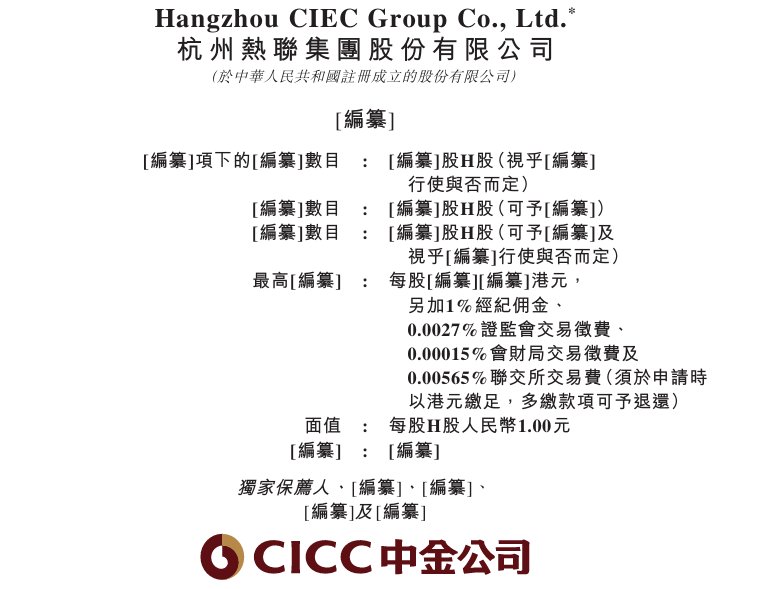
Core Viewpoint - Hangzhou Relian Group Co., Ltd. has submitted its listing application to the Hong Kong Stock Exchange, with China International Capital Corporation as its sole sponsor [1]. Company Overview - Relian Group is a leading global commodity service provider and trader in China, dealing with over 285 types of physical goods, including black metals, chemicals, non-ferrous metals, and others [3]. - According to Frost & Sullivan, the company ranks as the fifth largest commodity service provider and trader in China by trade volume in 2024, the fourth largest in steel services, the second largest in steel exports, the third largest in iron ore services, and the third largest in rubber services [3]. - The company has established a global business presence, with subsidiaries and offices in 14 countries and regions, and has conducted trade activities in over 80 countries and regions during the reporting period [3]. - The main clients of the company include industrial manufacturers, construction companies, and trading firms, with the top five clients contributing 8.3%, 8.6%, and 9.2% of total revenue for the years 2023, 2024, and the ten months ending October 31, 2025, respectively [3]. Financial Information - The revenue for Relian Group for the years ending October 31 is approximately 252.13 billion RMB for 2023, 270.63 billion RMB for 2024, and 230.27 billion RMB for 2025 [4]. - The profit for the same periods is approximately 1.03 billion RMB for 2023, 1.43 billion RMB for 2024, and 1.17 billion RMB for 2025 [5]. Industry Overview - Commodities are defined as physical goods that can be traded in bulk for industrial and agricultural production and consumption, including black metals, chemicals, non-ferrous metals, and others [8]. - Steel is a major commodity product, with expected growth in production driven by the upgrading of manufacturing and the demand from emerging sectors such as new energy vehicles and wind and solar power [9]. - The import volume of iron ore and its concentrates is expected to continue increasing due to the transformation and upgrading of the manufacturing sector [12]. - Oil is a key commodity that supports important industries such as engineering plastics, synthetic fibers, and fertilizers, with ongoing development in these downstream industries driving up oil imports [15]. - The rubber import volume in China has shown slight fluctuations from 2020 to 2024 due to cooling demand in downstream industries, but the growth of the new energy vehicle industry is expected to drive demand for high-performance tires, leading to a continuous increase in rubber imports [17]. - The commodity service industry involves providing logistics, warehousing, distribution, and other supporting services around commodity trading, with opportunities and challenges existing due to price volatility and geopolitical factors [20]. - The market for commodity services and trading in China is characterized by slow but stable growth, with intense competition among companies leveraging their research capabilities and supply chain management [22].
新股消息 | 热联集团递表港交所 为中国第五大大宗商品产业服务商及交易商
智通财经网· 2026-02-09 23:50
Company Overview - Hangzhou Relian Group Co., Ltd. is a leading global commodity service provider and trader in China, dealing with over 285 types of physical goods including black metals, chemicals, non-ferrous metals, and others [3] - According to Frost & Sullivan, the company ranks as the fifth largest commodity service provider and trader in China by trade volume in 2024, and is the second largest steel export service provider [3] - The company has established a global presence with subsidiaries and offices in 14 countries and regions, conducting trade activities in over 80 countries [3] Financial Performance - The revenue for Hangzhou Relian Group is projected to be approximately RMB 252.13 billion for 2023, RMB 270.63 billion for 2024, and RMB 230.27 billion for the ten months ending October 31, 2025 [4][6] - The profit for the same periods is estimated to be around RMB 10.32 billion for 2023, RMB 14.31 billion for 2024, and RMB 11.72 billion for the ten months ending October 31, 2025 [4][6] Industry Insights - The commodity industry includes bulk goods that are traded for industrial and agricultural production, primarily consisting of black metals, chemicals, non-ferrous metals, and others [7] - The steel market is expected to grow due to the upgrading of manufacturing and the increasing demand from emerging sectors such as new energy vehicles and renewable energy [8] - The import volume of iron ore and its concentrates is continuously increasing, driven by the transformation and upgrading of the manufacturing sector [10] - The demand for crude oil is also rising, supported by the development of downstream industries such as engineering plastics and fertilizers [13] - The rubber import volume has shown slight fluctuations but is expected to rise due to the demand for high-performance tires driven by the new energy vehicle industry [15] Competitive Landscape - The company is recognized as one of the leading firms in the industry, leveraging its strong research capabilities and deep involvement in various supply chain segments [20] - The competitive environment is intense, with the company participating actively in the logistics, warehousing, and distribution services related to commodity trading [18]
香港财库局许正宇:《稳定币条例》已于去年8月正式实施 香港金管局正处理相关牌照申请
智通财经网· 2026-01-30 09:05
Group 1: Strengthening Hong Kong's Position as an International Financial Center - The Hong Kong Financial Secretary aims to enhance the stock market by implementing measures such as assisting mainland tech companies in financing, optimizing listing mechanisms, and exploring a reduction in the stock settlement cycle from T+2 to T+1 [2] - The Financial Secretary plans to submit legislative proposals to optimize tax incentives for funds and family offices, and to introduce statutory regulations for real estate investment trusts (REITs) [2] - The government will revise regulations to lower capital requirements for insurance funds participating in infrastructure financing and support local projects [3] - The Securities and Futures Commission and the Monetary Authority have announced a roadmap to position Hong Kong as a global fixed income and currency center [3] - The Financial Secretary will continue discussions with mainland institutions to enhance offshore bond futures and expand interest rate derivatives [3] Group 2: Accelerating New Growth Areas - The Financial Secretary aims to establish an international gold trading market and promote commodity trading, targeting over 2,000 tons of gold storage in three years [4] - The government will support the establishment of more recognized warehouses for commodity trading and enhance collaboration with mainland commodity markets [5] - The implementation of the Stablecoin Ordinance has begun, allowing for the licensing of fiat stablecoin issuers [5] - Legislative proposals will be submitted to implement a framework for reporting crypto assets, aiming for automatic exchange of tax information by 2028 [5] - The government is working on a regulatory framework for sustainable finance and carbon market development [6] Group 3: Enhancing International Engagement and Cooperation - The Financial Secretary is promoting the company migration mechanism, which has seen positive responses with 14 applications approved [7] - A committee has been established to study incentive policies to attract high-value industries and potential enterprises to Hong Kong [7] - The government is preparing to host the APEC Finance Ministers' Meeting in October, showcasing Hong Kong's financial development [7] - The Asian Infrastructure Investment Bank plans to establish an office in Hong Kong, with the government providing necessary support [8] Group 4: Improving Public Welfare - The government is reforming the Mandatory Provident Fund (MPF) system to ensure a smooth transition to the new platform [9] - Legislative work for the first phase of the MPF "full portability" scheme has been completed, with plans to consult on the second phase [10] - The government is drafting a bill to extend the tax exemption period for newborns from one year to two years [10]
高盛前贵金属交易主管将加盟摩科瑞
Jin Rong Jie· 2026-01-28 19:01
Group 1 - Benjamin Binet-Laisne, the former head of precious metals trading at Goldman Sachs, will join Mercuria Energy Group, marking a significant personnel move in the metals sector [1] - Mercuria, known for oil and gas trading, has expanded its metals trading team to approximately 150 people since hiring Kostas Bintas, the former co-head of metals at Trafigura, in 2024 [1] - The demand for precious metals investment has surged amid rising geopolitical risks and investor withdrawals from currencies and U.S. Treasuries, prompting major commodity traders to accelerate the formation of trading teams [1] Group 2 - Top commodity traders Trafigura and Gunvor have established precious metals trading teams in the past year, while competitors IXM and Mercuria continue to recruit [1]

上海活动邀请 | 聚焦2026年商品市场:贵金属与宏观经济
Refinitiv路孚特· 2026-01-06 06:03
Group 1 - In 2025, gold is projected to reach approximately $4,300 per ounce, while silver is expected to exceed $60, doubling its value, alongside strong increases in platinum and palladium prices [2] - The surge in precious metals is driven by central bank gold purchases, geopolitical risks, expectations of Federal Reserve interest rate cuts, and demand from the new energy sector [2] - The year 2026 is anticipated to still offer upward potential for precious metals, with the performance of the US dollar and the global economy being critical variables [2] Group 2 - The London Stock Exchange Group (LSEG) and Tokyo Commodity Exchange are collaborating to explore the precious metals market under macroeconomic conditions, providing exclusive data on gold, silver, platinum, and palladium [2] - LSEG offers comprehensive data and analytical solutions for commodity trading, enhancing competitive advantages for businesses in the market [20][23] - The company provides tailored solutions for various commodity sectors, including energy, metals, and agriculture, utilizing advanced data analytics and machine learning to predict market trends [25][26][28]
2026-美国通胀会重来吗
2025-12-31 16:02
Summary of Key Points from the Conference Call Industry Overview - The discussion centers around the U.S. inflation outlook for 2026 and its implications for monetary policy and commodity trading strategies [1][2]. Core Insights and Arguments 1. **Inflation Expectations**: There is a general expectation of economic slowdown, but opinions on inflation vary. If inflation pressure rises significantly in 2026 while the economy weakens, it could lead to stagflation, impacting the Federal Reserve's ability to cut rates and potentially leading to a tightening of policies [1][2]. 2. **Commodity Performance**: Recent strong performance in commodities like gold and copper is noted, with expectations that oil prices may rise in 2026, contingent on inflation trends in the U.S. and abroad. However, if the Consumer Price Index (CPI) does not rise sufficiently, the trading logic for commodities will change [1][2]. 3. **CPI Predictions**: The forecast for 2026 indicates that the CPI is unlikely to show sustained upward pressure, suggesting minimal inflation. Factors contributing to this include limited policy stimulus effects, high U.S. Treasury yields, insufficient fiscal stimulus, and a diminishing impact of AI investments on GDP growth [1][4]. 4. **Core Commodity Prices**: The rebound in core commodity prices is attributed to low base effects and tariffs, with expectations that these prices will not see significant increases in 2026 as these factors fade [5][6]. 5. **Supply-Side Focus**: It is recommended to focus on supply-side disruptions for investment opportunities rather than relying on demand-side driven commodity trading [5][11]. Additional Important Content 1. **Tariff Impact**: The impact of tariffs on prices is characterized as one-time, affecting absolute prices rather than growth rates. The peak influence of tariffs is believed to have passed, with expectations of declining month-on-month growth rates, potentially exerting downward pressure on inflation [6][7]. 2. **Service Sector Stability**: The service sector, which constitutes about 70% of core CPI, is expected to remain stable due to its lagging nature. Factors such as housing, healthcare, and auto insurance costs are linked to overall societal cost trends, which have been declining [9]. 3. **Labor Market Dynamics**: The current labor market does not exhibit significant pressure, with no signs of a wage-price spiral. Job vacancies have decreased, and the labor participation rate has increased, leading to a situation where the number of job seekers exceeds available positions [10]. 4. **Investment Recommendations**: Caution is advised in selecting trading strategies, with a preference for commodities like gold, copper, and oil, aligned with anticipated Federal Reserve policy adjustments [11]. This summary encapsulates the critical insights and forecasts regarding the U.S. inflation outlook and its implications for monetary policy and commodity markets in 2026.
锚定五大方向深化期现联动
Qi Huo Ri Bao Wang· 2025-12-26 01:55
Core Viewpoint - The recent measures announced by the Tianjin Free Trade Zone management aim to promote high-quality development of bulk commodity trading venues, emphasizing the integration of futures and spot markets to enhance local industries [1] Group 1: Policy Measures - The measures include encouraging trading venues to establish quotation zones in futures exchanges and exploring collaboration with delivery warehouses to provide basis pricing services for enterprises [1] - Various regions, including Zhejiang, Dalian, Zhengzhou, Qingdao, and Guangxi, have also introduced policies supporting the development of futures-spot market integration, showcasing both common features and differentiated strategies [1] Group 2: Local Practice and Achievements - Local practices have shown significant progress in integrating futures and spot markets, with models like basis trading becoming widely adopted in sectors such as agriculture and chemicals [2] - The "insurance + futures" model has effectively supported rural revitalization, providing price risk protection for numerous farmers across various products [2] Group 3: Challenges in Integration - Fundamental issues remain in the development of futures-spot integration, including insufficient infrastructure connectivity, low market participant engagement, and inadequate regulatory coordination [3] - Problems such as "data islands" and lack of mutual recognition of delivery warehouse qualifications hinder efficient market operations [3] Group 4: Development Strategies - Establishing a multi-layered commodity trading market system is essential, with a focus on cooperation and integration between futures and spot markets [4] - Key strategies include addressing market fragmentation, enhancing risk management, and fostering a collaborative ecosystem among stakeholders [5][6] Group 5: Empowering Local Industries - The integration model can significantly empower local industries facing price volatility and supply chain challenges, enhancing their competitiveness and market positioning [8] - Futures exchanges and companies should leverage their expertise while aligning with government and financial institutions to create a synergistic effect [8] Group 6: Future Outlook and Recommendations - Building a multi-layered commodity market system is a long-term and complex task, requiring alignment with national strategies and breakthroughs in key areas [9] - Recommendations include promoting policy innovations, exploring mechanisms for national resource reserves, and enhancing international cooperation to attract foreign investment [9]
Gold trade in first half of 2026 will likely continue: TD Securities' Melek
Youtube· 2025-12-22 22:09
Core Viewpoint - Gold and silver are reaching new records, marking their best year since 1979, while copper is also at new highs, achieving its best year since 2009 [1] Group 1: Commodity Market Outlook - Gold is expected to continue its upward trend in the first half of 2026, with a projected quarterly high of $4,400, indicating a trading high of approximately $4,647 [2] - The anticipated continuation of this commodity trade is attributed to lower Federal Reserve funds rates and a steepening yield curve, alongside persistent inflation above the 2% target [2] Group 2: Portfolio Adjustments - Central banks globally are adjusting their strategies, with investors shifting their portfolios to include up to 25% exposure in commodities, which encompasses gold, silver, oil, and copper [3] - The traditional 60/40 portfolio model is evolving as investors seek to hedge against the declining value of the US dollar [3] Group 3: Economic Considerations - The economy is showing signs of slowing, with employment numbers declining, which may lead to reduced inflationary pressures and a potential decrease in aggressive tariff actions against US trading partners [5] - The Federal Reserve is expected to maintain a cautious approach to easing, influenced by the upcoming changes in leadership and the administration's pressure for accommodative policies [6][7]