房价

Search documents
早盘速递-20260317
Guan Tong Qi Huo· 2026-03-17 01:27
Group 1: Hot News - China and the US held economic and trade consultations in Paris, France, reaching new consensuses and agreeing to study the establishment of a cooperation mechanism to promote bilateral trade and investment. China will take necessary measures to safeguard its legitimate rights and interests [2] - China's economic report card for the first two months of the "15th Five - Year Plan" shows that national fixed - asset investment increased by 1.8% year - on - year, excluding real estate development investment which increased by 5.2%, while real estate development investment decreased by 11.1%. Industrial added value of large - scale industries grew by 6.3%, the service production index by 5.2%, and total retail sales of consumer goods by 2.8% [2] - US President Trump said that after attacking military targets on Iran's Kharg Island, attacking the island's oil infrastructure remains an option. Trump hopes European countries, Japan, and South Korea will assist in ensuring the safety of navigation in the Strait of Hormuz, but German Chancellor Merz said Germany will not participate in escorting [2] - China's February housing price data for 70 cities shows that the month - on - month decline in housing prices in all tiers of cities continued to narrow. The number of cities with rising or flat new - home prices increased by 9 compared to January. First - tier cities' new - home prices turned flat from a decline, with Beijing and Shanghai rising 0.2%, Guangzhou flat, and Shenzhen down 0.3%. First - tier cities' second - hand home prices fell 0.1% month - on - month, with the decline narrowing by 0.4 percentage points; second - and third - tier cities' second - hand home prices fell 0.4% and 0.5% respectively [3] - Tangshan lifted the level - II emergency response to heavy pollution weather on March 14, 2026. Affected by this, steel - rolling enterprises that had stopped production due to environmental protection restrictions began to resume production [3] Group 2: Key Focus and Market Performance - Key commodities to focus on are urea, Shanghai copper, caustic soda, crude oil, and PP [4] - Night - session performance of commodity sectors: Non - metallic building materials rose 2.37%, precious metals 28.61%, oilseeds and oils 8.55%, soft commodities 2.42%, non - ferrous metals 23.35%, coal, coke, steel, and minerals 8.55%, energy 7.84%, chemicals 14.77%, grains 0.96%, and agricultural and sideline products 2.58% [4] - Changes in commodity futures sector positions in the past five days are presented for various sectors including agricultural and sideline products, grains, chemicals, energy, coal, coke, steel, and minerals, non - ferrous metals, etc [5] Group 3: Performance of Major Asset Classes - Performance of major asset classes: For equities, the Shanghai Composite Index had a daily decline of 0.26%, a monthly decline of 1.88%, and an annual increase of 2.92%. Other indices like the S&P 500, Hang Seng Index, etc. also had different performance. For fixed - income products, 10 - year, 5 - year, and 2 - year treasury bond futures had different changes. For commodities, the CRB commodity index, WTI crude oil, London spot gold, etc. showed various trends. The US dollar index and CBOE volatility also had their own performance [6] Group 4: Main Commodity Trends - The report shows the trends of various commodities such as the Baltic Dry Index, CRB spot index, WTI crude oil, London spot gold and silver, LME copper, CBOT soybeans and corn, and also presents the relationships like the gold - oil ratio and copper - gold ratio, as well as risk premiums related to stock indices [7]
2026年房价观察
Sou Hu Cai Jing· 2026-02-22 14:33
Core Viewpoint - The real estate market is experiencing a continuous decline in prices, with projections indicating that prices may fall below 2015 levels, particularly in cities like Shijiazhuang [2][4]. Price Trends - In Shijiazhuang, property prices have dropped from over 8,000 in 2015 to around 7,000 in 2025, with some properties being listed at 6,000 in early 2026, indicating a significant decline [2][4]. - The trend of decreasing prices is expected to continue into 2026, with no signs of stabilization observed so far [4][7]. Tax Implications - The introduction of a property tax is anticipated to be delayed until property prices stabilize, as the government aims to maintain price stability [4][6]. - If property taxes are implemented while prices are still declining, it could lead to further decreases in property values [4][6]. Market Dynamics - A specific apartment building in Shijiazhuang has not recorded any transactions for over a year, with its price remaining at 7,000, indicating a lack of buyer interest even at lower price points [5][6]. - The concept of "price stabilization" is discussed, where homeowners may choose not to sell at lower prices, potentially leading to a situation where properties are held rather than sold [6][8]. Rental Market - Rental prices have also decreased, reflecting the overall decline in property values, with a noted drop of 200-300 compared to previous years [7]. - The profitability of owning property is diminishing, as the cost of holding a property is expected to rise with the potential introduction of property taxes [7].

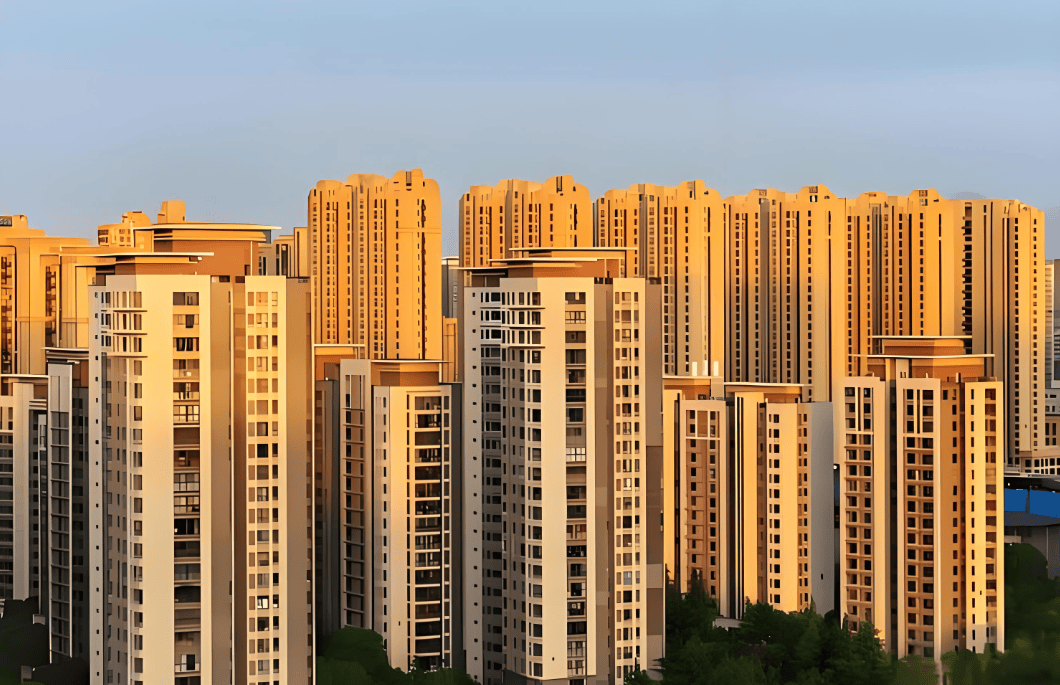
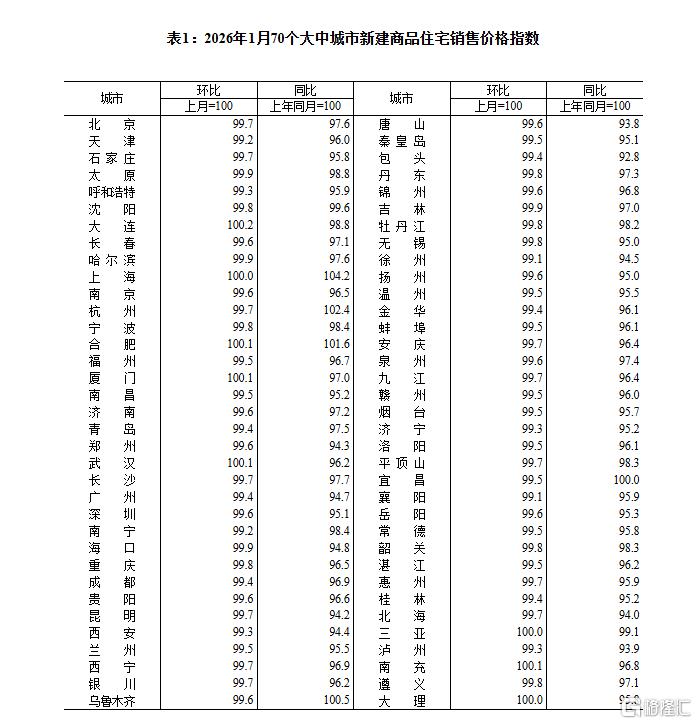
1月70城房价出炉!4城新房价格同比上涨,上海涨4.2%领跑
Ge Long Hui· 2026-02-13 05:39
Core Viewpoint - The National Bureau of Statistics reported a decrease in new residential property prices in 70 large and medium-sized cities in January 2026, with a narrowing month-on-month decline but a year-on-year decrease. Group 1: New Residential Property Prices - In January, first-tier cities saw a month-on-month decline of 0.3% in new residential property prices, consistent with the previous month. Shanghai remained stable, while Beijing, Guangzhou, and Shenzhen experienced declines of 0.3%, 0.6%, and 0.4% respectively [1][2] - Year-on-year, first-tier cities' new residential property prices fell by 2.1%, with the decline expanding by 0.4 percentage points compared to the previous month. Shanghai recorded a price increase of 4.2%, while Beijing, Guangzhou, and Shenzhen saw decreases of 2.4%, 5.3%, and 4.9% respectively [1][2] - Second-tier cities experienced a month-on-month decline of 0.3%, with a narrowing decline of 0.1 percentage points, while third-tier cities saw a 0.4% decline, unchanged from the previous month [1][2] - Year-on-year, second and third-tier cities' new residential property prices decreased by 2.9% and 3.9%, with declines expanding by 0.4 and 0.2 percentage points respectively [1][2] Group 2: Second-Hand Residential Property Prices - In January, first-tier cities' second-hand residential property prices fell by 0.5% month-on-month, with the decline narrowing by 0.4 percentage points compared to the previous month [6][7] - The month-on-month declines for second-tier and third-tier cities were 0.5% and 0.6%, with declines narrowing by 0.2 and 0.1 percentage points respectively [6][9] - Year-on-year, first-tier cities' second-hand residential property prices dropped by 7.6%, with the decline expanding by 0.6 percentage points compared to the previous month. Beijing, Shanghai, Guangzhou, and Shenzhen saw declines of 8.7%, 6.8%, 8.3%, and 6.5% respectively [7][8] - Second and third-tier cities' year-on-year second-hand residential property prices decreased by 6.2% and 6.1%, with declines expanding by 0.2 and 0.1 percentage points respectively [9][10]
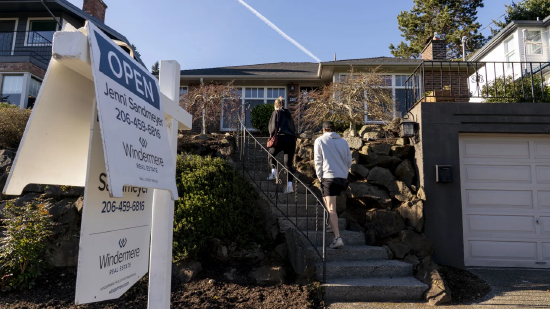
1月份美国二手房销量暴跌超8%
Xin Lang Cai Jing· 2026-02-12 15:14
Core Insights - The U.S. real estate market continues to be dragged down by high home prices, weak supply, and consumer confidence issues [3][9] - In January, existing home sales, seasonally adjusted, were at an annual rate of 3.91 million units, a month-over-month decline of 8.4%, exceeding expectations [3][11] - Year-over-year, sales decreased by 4.4%, marking the slowest sales pace since December 2023 [3][9] Sales and Pricing - The average home price in January was $396,800, reflecting a year-over-year increase of 0.9%, the highest recorded for January [6][11] - The inventory of homes for sale at the end of January was 1.22 million units, down from December but up 3.4% year-over-year [10][11] - The current inventory turnover period is 3.7 months, with a balanced market typically requiring 6 months of inventory [10] Market Dynamics - The high-end market remains the strongest segment, with only the price range above $1 million showing year-over-year growth [12] - The sales of homes priced below $250,000 experienced the largest decline [12] - The average time homes were on the market increased to 46 days in January, compared to 41 days the previous year [12] Economic Factors - According to Lawrence Yun, Chief Economist at NAR, housing affordability is improving, with the affordability index at its best since March 2022, driven by wage growth outpacing home price increases and lower mortgage rates compared to the previous year [5][9] - Despite improvements in affordability, housing supply remains critically low, contributing to sustained upward pressure on home prices [5][10]
房价大局已定?未来60%的中国家庭,或许要经历这3大难关
Sou Hu Cai Jing· 2026-02-06 11:14
Core Insights - The discussion around housing prices has shifted from daily monitoring to a focus on long-term strategies for families [1] - Many families are facing significant challenges related to income structure, family dynamics, and living costs, regardless of their home ownership status [3] Group 1: Stability and Income - The perception of stability linked to home ownership is changing, as many now realize that stability is not solely determined by owning a house [5] - Increased work pace and industry changes mean that income fluctuations can still impact financial security, necessitating a larger buffer for uncertainties [7] - Families are prioritizing stable cash flow and flexible career paths over merely tracking housing prices [7] Group 2: Living Quality and Costs - Homeownership does not conclude financial responsibilities; ongoing costs such as renovations, maintenance, and commuting can accumulate significantly over time [9] - Choices made regarding home size, location, and price can lead to trade-offs that affect daily life, especially when income growth does not keep pace with living costs [9] - The need for continuous adjustments in lifestyle around housing is becoming more apparent as families navigate these financial pressures [9] Group 3: Family Structure Changes - Many families fail to consider future changes in family dynamics when purchasing a home, which can lead to unexpected financial and living arrangement challenges [11] - Life events such as children growing up and aging parents require new living and financial arrangements that may not align with initial home buying decisions [11] - The focus on housing as merely an asset is shifting to viewing it as a central element in a series of critical decisions [11] Group 4: Long-term Planning and Adaptability - The integration of housing into the daily lives of families means that issues related to living costs, income expectations, and family changes are unavoidable [15] - As market dynamics slow, families must rely on their understanding of long-term planning and their ability to adapt to risks rather than expecting time to resolve issues [15] - Families are encouraged to focus on diversifying their sources of income and managing expenses rather than fixating on housing price trends [17] Group 5: Future Challenges - Future difficulties may not manifest as singular drastic changes but rather as a series of smaller, manageable challenges that require patience [19] - Understanding these changes and preparing in advance is more valuable than merely speculating on market trends [19] - Ultimately, families have control over their living situations, and maintaining a steady pace and clear direction can mitigate the impact of environmental changes [19]

中金:宏观视角下的存款搬家与股市定价——存款到期的股债汇影响(一)
Xin Lang Cai Jing· 2026-01-27 23:53
Core Insights - The concept of "deposit into the market" emphasizes the importance of "new funds" while also considering "exit funds" to determine "net new funds," which have a greater correlation with stock prices. Ultimately, this reflects the willingness of residents to invest in the market, which is strongly correlated with income expectations [3][70][71] - The growth rate of new funds is more significant than the absolute amount of new funds, as it has a stronger correlation with stock market performance. High-net-worth individuals and insurance funds may provide independent support to the market in 2025, but this influence may diminish in 2026 [3][70][71] - The analysis framework for income expectations is based on employment and service inflation, with indicators such as resident credit pulses and housing prices leading to income expectations. In the baseline scenario, the amount of new funds entering the market is expected to remain relatively stable compared to the previous year [3][70][71] Group 1 - New funds do not equate to net new funds; stock price increases are more closely related to the growth rate of new funds. The relationship between new funds and stock market performance is not strong, as evidenced by fluctuations in new funds from 2015 to 2025 [4][7][75] - The correlation between the growth rate of new funds and stock market performance is more significant. For instance, in 2016, new funds reached 4.9 trillion yuan, but the market declined by 12.9%, while in 2019, lower new funds coincided with a 33% market increase [7][75][78] - The willingness of residents to invest in the stock market is a decisive factor, closely linked to income expectations. A decline in investment willingness can lead to reduced market participation, as seen in 2022 when a 14% increase in maturing deposits did not translate into increased market investment [21][25][90] Group 2 - The investment willingness of residents is significantly influenced by income expectations. As of Q3 2025, the tendency to save remains high, indicating potential for increased risk asset allocation if saving tendencies normalize [25][94] - Employment perceptions are closely tied to income expectations, which in turn affect stock market trends. Historical data shows a negative correlation between unemployment rates and stock market performance in the U.S. and Japan [30][99] - High-net-worth individuals' willingness to invest in the stock market may not be significantly affected by broader income expectations, and insurance funds may contribute to market investments, although their growth may be limited compared to 2025 levels [34][35][106]

格林期货早盘提示:国债-20260122
Ge Lin Qi Huo· 2026-01-22 01:05
1. Report Industry Investment Rating - No specific industry investment rating is provided in the report. 2. Core View of the Report - The short - term trend of Treasury bond futures may be volatile, and the impact of stock indices should continue to be monitored. Trading - type investors are advised to conduct band operations. [2] 3. Summary by Relevant Catalogs 3.1 Market Performance - On Wednesday, the opening prices of the main contracts of Treasury bond futures varied. The 30 - year variety opened significantly higher. Most main contracts fluctuated horizontally in the morning and rose in the afternoon. The 30 - year Treasury bond futures main contract TL2603 rose 0.75%, the 10 - year T2603 rose 0.03%, the 5 - year TF2603 rose 0.01%, and the 2 - year TS2603 fell 0.01%. [1] - On Wednesday, the Wande A - share index opened slightly lower, rose in the morning and then fluctuated horizontally. It closed 0.57% higher than the previous trading day, with a small positive line. The trading volume was 2.62 trillion yuan, a slight decrease from 2.80 trillion yuan in the previous trading day. [2] 3.2 Important Information - In the open market, the central bank conducted 363.5 billion yuan of 7 - day reverse repurchase operations on Wednesday. With 240.8 billion yuan of reverse repurchases maturing on the same day, the net investment was 122.7 billion yuan. [1] - In the money market, the overnight interest rate in the inter - bank money market declined on Wednesday. The weighted average of DR001 was 1.32%, compared with 1.37% in the previous trading day; the weighted average of DR007 was 1.50%, compared with 1.49% in the previous trading day. [1] - In the cash bond market, the closing yields of inter - bank Treasury bonds on Wednesday showed mixed changes compared with the previous trading day. The yield to maturity of 2 - year Treasury bonds rose 0.45 BP to 1.40%, the 5 - year rose 0.19 BP to 1.60%, the 10 - year fell 0.14 BP to 1.83%, and the 30 - year fell 3.25 BP to 2.30%. [1] - The Minister of the Ministry of Housing and Urban - Rural Development, Ni Hong, stated that the policy of implementing measures according to the city, precise policies, and one - city - one - policy will continue. The focus is on controlling increments, reducing inventories, and optimizing supplies. The "white - list" system for real - estate financing will be utilized to support the reasonable financing needs of real - estate enterprises and the rigid and improved housing needs of residents. [1] 3.3 Market Logic - In 2025, China's GDP was 1,401,879 billion yuan, a year - on - year increase of 5.0%, achieving the target set at the beginning of the year. In the fourth quarter, China's GDP increased by 1.2% quarter - on - quarter. In December, the growth rates of fixed - asset investment and total retail sales of consumer goods were lower than market expectations. The year - on - year actual growth rates of export and industrial added value above designated size both exceeded market expectations. The year - on - year growth rate of the service production index in December rebounded by 0.8 percentage points compared with November. [1] - In December last year, the year - on - year sales volume and housing prices of domestic real estate continued to decline, and the data from the first half of January this year also showed the same trend. The central bank announced a 0.25 - percentage - point reduction in the rediscount and re - loan interest rates starting from January 19, 2026, and stated that there is still room for reserve - requirement ratio cuts and interest - rate cuts throughout the year. [1] - On January 20, the Ministry of Finance stated that in 2026, the fiscal deficit, total debt, and total expenditure will be maintained at a necessary level to ensure that the overall expenditure intensity "only increases and does not decrease" and the guarantee of key areas "only strengthens and does not weaken". [1] 3.4 Trading Strategy - Trading - type investors are advised to conduct band operations. [2]
国家统计局数据显示 2025年12月份一线城市房价环比降幅收窄
Zhong Guo Zheng Quan Bao· 2026-01-19 21:09
Core Viewpoint - The real estate market in China is experiencing significant changes, with a shift from a focus on new housing to a balance between new and existing housing markets, as indicated by the latest data from the National Bureau of Statistics [1][2]. Group 1: New Housing Prices - In December 2025, the sales prices of newly built commercial residential properties in first-tier cities decreased by 0.3% month-on-month, a reduction of 0.1 percentage points compared to the previous month [1]. - Among first-tier cities, Shanghai saw a price increase of 0.2%, while Beijing, Guangzhou, and Shenzhen experienced declines of 0.4%, 0.6%, and 0.5% respectively [1]. - Year-on-year, the prices of newly built commercial residential properties in first-tier cities fell by 1.7%, with Shanghai increasing by 4.8% and Beijing, Guangzhou, and Shenzhen decreasing by 2.4%, 4.8%, and 4.4% respectively [1]. Group 2: Second-hand Housing Prices - In December, the sales prices of second-hand residential properties in first-tier cities decreased by 0.9% month-on-month, with a reduction of 0.2 percentage points from the previous month [2]. - Year-on-year, second-hand housing prices in first-tier cities dropped by 7.0%, with Beijing, Shanghai, Guangzhou, and Shenzhen experiencing declines of 8.5%, 6.1%, 7.8%, and 5.4% respectively [2]. - Second and third-tier cities also saw a year-on-year decrease in second-hand housing prices of 6.0%, with the decline expanding by 0.4 and 0.2 percentage points respectively [2].
湾财晚报 | 广东外贸 全国首位!70城房价数据出炉;黄金白银价格再创新高;黄小卫被查!
Nan Fang Du Shi Bao· 2026-01-19 14:59
Group 1: Guangdong Foreign Trade - Guangdong's foreign trade reached a historical high of 9.49 trillion yuan in 2025, marking a year-on-year growth of 4.4% [4] - Guangdong has maintained its position as the top province in China for 40 consecutive years, accounting for 20.9% of the national foreign trade total and contributing 24.1% to the national growth [4][6] - The import value was 3.46 trillion yuan, increasing by 7.8%, while the export value was 6.03 trillion yuan, with a growth of 2.5% [4] Group 2: Real Estate Market - In December 2025, new residential prices in Shanghai increased by 0.2% month-on-month and 4.8% year-on-year, making it the only city among the top-tier cities to show growth [5] - The overall residential sales prices in 70 major cities saw a month-on-month decline, with first-tier cities experiencing a 0.3% decrease [5] Group 3: Gold and Silver Prices - International gold and silver prices reached historical highs, with gold surpassing $4,690 per ounce and silver exceeding $94 per ounce [8] - Domestic gold jewelry prices also surged, with several brands reporting prices over 1,450 yuan per gram [8] Group 4: Shenzhen Office Market - Shenzhen's Grade A office market saw a net absorption of 664,000 square meters in 2025, the highest in four years, driven by demand from technology companies [15] - The total supply of Grade A office space increased by 9.4% year-on-year, reaching 12.84 million square meters [15] Group 5: Guangzhou Pharmaceutical Export Platform - Guangzhou Pharmaceutical Group established a comprehensive service platform for pharmaceutical exports, aiming to enhance the export of medical products [13] - A collaboration with GE Healthcare was announced to create a research and development laboratory for nuclear medicine [13]

当下(2025年)房价成这样了,你会买房吗,为什么?
Sou Hu Cai Jing· 2025-12-20 19:13
Core Viewpoint - The article discusses the challenges ordinary people face in purchasing homes, emphasizing that homeownership often requires significant financial sacrifice and long-term debt, making it increasingly difficult for the average person to afford housing [1][3][4]. Group 1: Housing Affordability - Most ordinary people are unable to afford homes without taking on long-term loans, often spanning 30 years, to secure a place to live and provide education for their children [3][10]. - The current housing prices are deemed unaffordable, with many individuals expressing a desire for prices around 2000 yuan per square meter, which is considered acceptable for the average person [7][9]. - Even with a stable income of 10,000 yuan per month over a 40-year career, an individual would only earn approximately 4 million yuan, making it challenging to afford a home that costs over 1 million yuan [9][10]. Group 2: Consumer Behavior - The financial burden of homeownership has led to a reluctance among ordinary people to spend money, as they prioritize saving for emergencies rather than engaging in what is perceived as excessive consumption [13][22]. - The average income for many individuals is between 3,000 to 5,000 yuan, with those earning over 10,000 yuan considered to have a high income, further complicating the ability to purchase homes [17][18]. - The necessity of homeownership for marriage and children's education drives some individuals to buy homes despite the financial strain, as it is seen as essential for family stability [25][30]. Group 3: Market Dynamics - The article notes that the current real estate market is not viewed as a viable investment for ordinary people, as purchasing a home is often seen as a loss rather than a gain [30]. - There is a distinction between ordinary buyers and those who have capitalized on market opportunities to upgrade their homes, indicating a divide in the housing market based on financial capability [27][29]. - The ongoing demand for property transactions can be observed through the number of people applying for property certificates, suggesting that despite challenges, there remains a persistent interest in home buying [31].