
投资者获利了结

Search documents
金价大涨!有商场1000克金条卖断货,“顾客不问价直接出手”,专家严肃提醒
Qi Lu Wan Bao· 2026-02-19 04:52
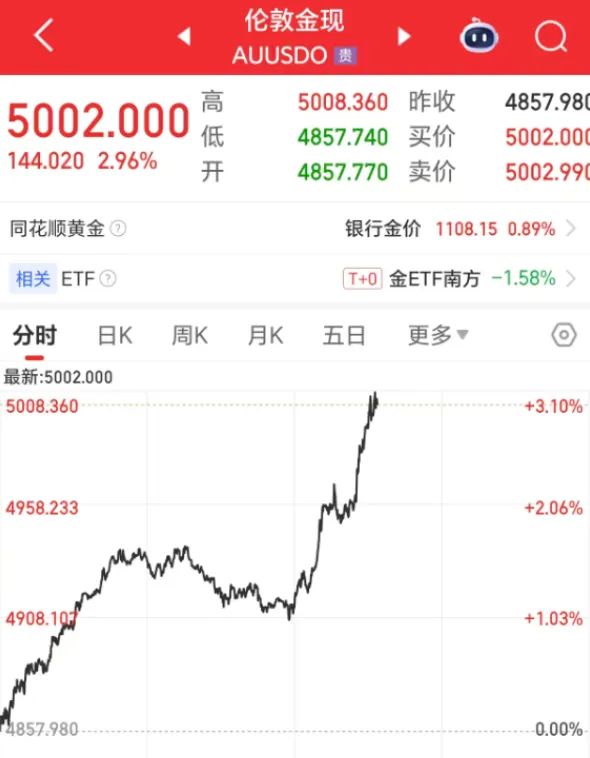
Group 1 - The core viewpoint of the articles indicates that international precious metal prices, particularly gold, have seen a significant increase, with spot gold surpassing $5000 per ounce, reflecting a daily increase of over 2.5% [1][3] - Market expectations suggest that the Federal Reserve is likely to begin interest rate cuts in June, which has contributed to the rebound in gold and silver prices after a significant decline [3] - There is a notable increase in consumer demand for gold, with reports of high sales of large gold bars, particularly around the Chinese New Year, indicating strong market interest despite high prices [4][6] Group 2 - Current prices for gold and silver are reported, with London spot gold at $4914.64 per ounce, up 0.78%, and silver at $75.807 per ounce, up 3.15% [3] - The demand for large gold bars, especially 1000-gram investment bars, has surged, with reports of these items selling out in stores, highlighting a trend towards gifting and investment in gold [6] - Analysts caution that despite the current bullish sentiment, there are ongoing bearish influences, particularly related to the Federal Reserve's monetary policy and potential market volatility in the precious metals sector [7]

金价银价又跌了 黄金白银大跌原因找到了
Xin Lang Cai Jing· 2026-02-18 00:53
Core Viewpoint - The decline in gold and silver prices is attributed to a combination of reduced trading activity due to holiday market closures and a cooling of expectations regarding interest rate cuts by the Federal Reserve [1] Group 1: Market Performance - As of 12:30 PM Beijing time on the 17th, the London spot gold price was reported at $4956.77 per ounce, down 0.72% [1] - The spot silver price was reported at $75.325 per ounce, down 1.64% [1] - The April gold futures price on the New York Mercantile Exchange was reported at $4971.60 per ounce, with a decline of 1.48% [1] - The March silver futures price was reported at $75.505 per ounce, with a decline of 3.15% [1]
黄金、白银,集体下跌!
新华网财经· 2026-02-17 05:27
Group 1 - The global precious metals market experienced low trading volumes due to traditional holiday closures in major markets, leading to downward pressure on prices [2] - Gold faced resistance at the key psychological level of $5000 per ounce amid cooling expectations for a Federal Reserve interest rate cut, compounded by profit-taking from some investors [2] - As of 12:30 PM Beijing time on the 17th, the London spot gold price was reported at $4956.77 per ounce, down 0.72%, while spot silver was at $75.325 per ounce, down 1.64% [2] Group 2 - The April delivery gold futures price on the New York Mercantile Exchange was reported at $4971.60 per ounce, reflecting a decline of 1.48% [2] - The March delivery silver futures price was reported at $75.505 per ounce, with a decrease of 3.15% [2]
黄金暴跌的原因找到了
Sou Hu Cai Jing· 2026-02-01 00:40
Core Viewpoint - The international precious metals market experienced significant volatility this week, driven by the nomination of Kevin Warsh as the next Federal Reserve Chairman, which led to a rebound in the US dollar and a subsequent decline in precious metal prices [1] Group 1: Market Reactions - The nomination of Kevin Warsh, known for his hawkish stance, raised expectations that aggressive interest rate cuts are unlikely, contributing to a stronger US dollar [1] - The recent highs in precious metal prices prompted many investors to take profits, exacerbating selling pressure and increasing market fluctuations [1] Group 2: Implications for Commodities - The strengthening of the US dollar diminished the attractiveness of dollar-denominated commodities for global buyers, impacting demand for precious metals [1] - The combination of profit-taking and a stronger dollar has led to a notable decline in precious metal prices, reflecting the sensitivity of the market to changes in monetary policy expectations [1]
百元银价一日坠,四十载金市惊雷:谁按下了贵金属的核按钮?
Sou Hu Cai Jing· 2026-01-31 03:20
Core Viewpoint - The precious metals market experienced a historic crash, with silver prices plummeting by 36% and gold prices dropping over 12%, marking the most severe single-day declines in 40 years [2][3][5]. Market Reaction - The panic in the precious metals market was evident, with gold closing at $4,884.36 per ounce, down 9.25%, and silver at $85.259 per ounce, down 26.42% [3][7]. - The domestic futures market also felt the impact, with Shanghai gold down 9.83% and silver down 17%, leading to a widespread sell-off in related sectors [8]. Triggering Factors - The immediate catalyst for the crash was President Trump's nomination of Kevin Warsh for the next Federal Reserve Chair, raising concerns about the independence of the central bank and potential long-term economic risks [9][10]. - Additionally, a significant rise in the US dollar index, which saw its largest single-day increase since July of the previous year, contributed to the downward pressure on precious metal prices [11]. Underlying Causes - The market was already primed for a correction, with speculative positions in gold being reduced by 17,742 contracts as of the week ending January 27 [11]. - The combination of rising dollar strength, profit-taking by investors, and the upcoming Federal Reserve leadership change created a perfect storm for the crash [11]. Institutional Perspectives - Various institutions expressed cautious and divided views on the future of gold and silver prices. Some predict a potential consolidation phase due to previous rapid price increases, while others maintain a long-term bullish outlook [12][13]. - The World Gold Council forecasts a possible increase in gold prices by 15% to 30% by mid-2026 under favorable conditions [13]. Market Background - The recent crash follows a period of significant price increases driven by strong industrial demand, particularly from the solar energy sector, and geopolitical risks that had previously supported higher precious metal prices [14][15][16]. Future Outlook - Analysts generally expect short-term volatility but believe that the long-term fundamentals for gold and silver remain supportive [17]. - Changes in market behavior are noted, with major banks adjusting their personal gold accumulation policies in response to the market dynamics [17]. Company Impact - The stock prices of gold mining companies reflected the crash, with Barrick Gold down 12.09%, AngloGold down 13.28%, and Kinross Gold down 13.85% [18].

黄金,突发跳水!上期所出手!
Sou Hu Cai Jing· 2025-12-30 09:24
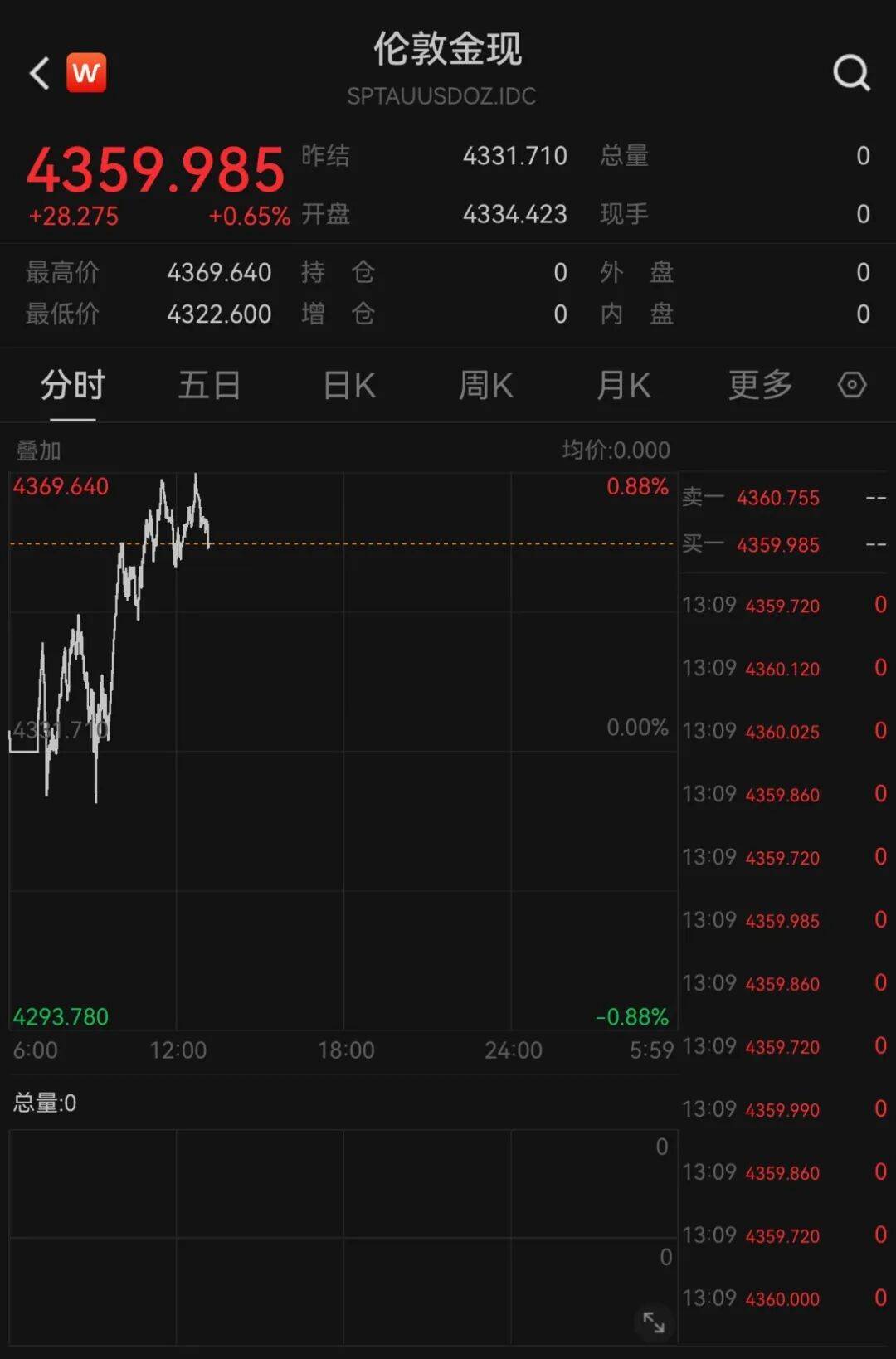
Core Viewpoint - The significant drop in precious metal prices, including gold and silver, is primarily attributed to profit-taking by investors as the year-end approaches, leading to increased volatility in thin trading conditions [6]. Group 1: Price Movements - On December 29, COMEX gold futures fell by 4.46%, while COMEX silver futures dropped by 7.25%. Spot gold decreased by over 4%, and spot silver fell nearly 9% [1]. - As of December 30, spot gold saw a slight increase of 0.65%, priced at $4,359.985 per ounce, while COMEX gold futures rose by 0.79% [1][2]. Group 2: Market Reactions - Domestic gold jewelry prices were adjusted downward, with brands like Chow Sang Sang reporting a decrease of 53 yuan per gram, and Lao Feng Xiang down by 45 yuan per gram [6]. - The Chicago Mercantile Exchange announced an increase in margin requirements for metal futures, with gold futures margin up by 10% and silver futures by approximately 13.6% [6][7]. Group 3: Analyst Insights - Analysts indicate that the short-term risks in precious metal trading have increased significantly, with profit-taking pressures evident after recent price highs [6]. - Historical patterns show that raising margin requirements often leads to significant price corrections, as seen in past instances where silver prices dropped nearly 30% following similar margin hikes [9]. - The current market for silver is viewed as structurally scarce, but short-term price corrections are anticipated due to high volatility and profit-taking behavior [10].
金价,闪崩!银价,闪崩!金饰克价单日下跌53元
Sou Hu Cai Jing· 2025-12-30 03:37
Core Viewpoint - The precious metals market experienced a significant downturn, with major declines in prices, indicating a potential shift in market sentiment and investor behavior as 2026 approaches [1][3][10]. Market Performance - Domestic precious metal futures saw widespread declines, with silver dropping nearly 7% and gold nearly 4% [1]. - International precious metals also faced sharp declines, with London gold down 4.52% and silver down 10.32% [4][7]. - The market witnessed a dramatic reversal, with prices plummeting after previously reaching historical highs for silver and gold [8][10]. Factors Influencing Market Movement - Technical indicators and profit-taking by investors were identified as primary reasons for the market adjustment [10]. - A significant policy change by the Chicago Mercantile Exchange, which raised margin requirements for various metal futures by over 10%, was seen as a key trigger for the price drop [14]. - Speculation regarding a major bank's potential liquidation due to margin calls contributed to market volatility, although this was later denied by the bank involved [11][13]. Future Outlook - Analysts suggest that the recent price declines may be a temporary correction within a broader upward trend for precious metals, although short-term risks remain heightened [15][16]. - The macroeconomic environment is still favorable for precious metals, with expectations of continued upward pressure on gold and silver prices due to potential dollar depreciation [15][16].
贵金属惊天反转
Xin Lang Cai Jing· 2025-12-29 23:44
Core Viewpoint - The precious metals market experienced a significant reversal, with silver futures dropping sharply after initially surpassing $80 per ounce, closing down nearly 7% near the $70 mark, while gold prices fell over 4% [3][12]. Market Analysis - The market adjustment was attributed to several factors, including technical indicator corrections, profit-taking by investors, and policy changes from exchanges [4][13]. - Following a 10% increase on the previous Friday, silver futures saw a dramatic decline of 15% from peak to trough, marking the largest intraday volatility since August 2020 [5][14]. - Analysts noted that the recent price movements deviated significantly from moving averages, indicating a need for market correction due to liquidity issues [5][14]. - The sharp price drop was also linked to profit-taking and year-end tax-related selling by investors, despite silver's year-to-date gain exceeding 140% [5][14]. Exchange Policy Impact - The Chicago Mercantile Exchange's (CME) announcement to raise margin requirements for various metal futures by over 10% was seen as a key factor in the market's downturn [7][15]. - The initial margin for silver futures expiring in March 2026 was increased to $25,000, which historically has led to significant price declines in the past [7][16]. Future Outlook - The surge in precious metals this year is supported by multiple factors, including the Federal Reserve's loose monetary policy, active gold purchases by central banks, and ongoing trends of "de-dollarization" [8][17]. - Silver is increasingly viewed as a safe-haven asset amid geopolitical tensions and rising U.S. fiscal deficits, with structural growth in demand driven by industrial applications, particularly in electric vehicles and solar panels [8][17]. - Institutions remain optimistic about the market outlook, with JPMorgan predicting gold prices could reach $5,000 by the end of 2026, and a significant increase in quarterly gold purchases by central banks and retail investors [9][18]. - A survey indicated that 57% of respondents expect silver prices to exceed $100 per ounce next year, with 27% anticipating prices between $80 and $100 per ounce by 2026 [9][18]. Supply and Demand Dynamics - The silver market is currently facing a severe supply shortage, compounded by high demand, which is expected to drive prices higher [10][19]. - Analysts emphasize that the current market has a significant amount of paper trading and positions that require adequate physical silver supply to fulfill, which is currently lacking [9][18].

公募基金规模暗战正酣
2 1 Shi Ji Jing Ji Bao Dao· 2025-11-04 23:08
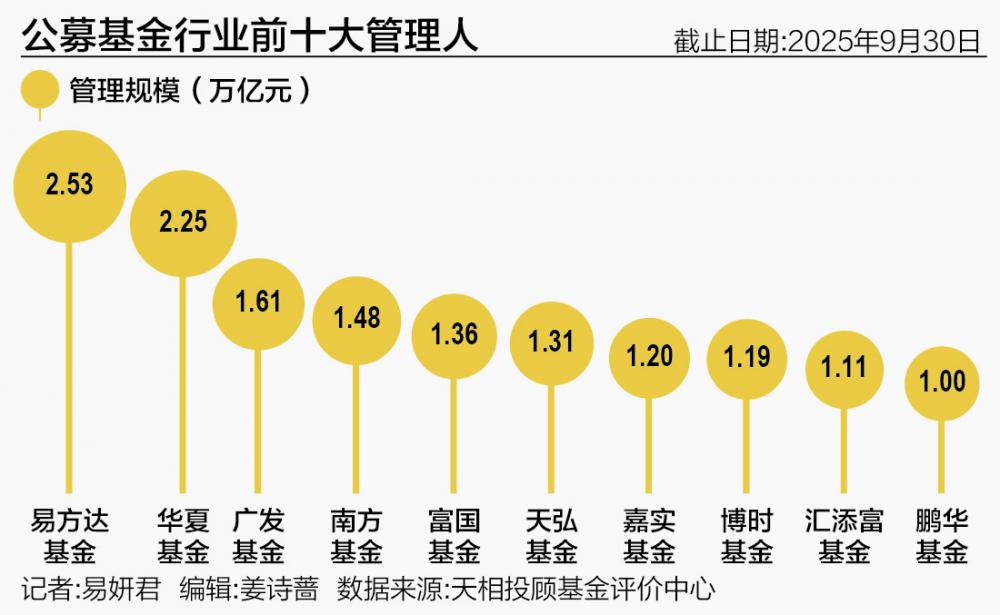
Core Insights - The total net asset value of public funds in China reached a historical high of 36.74 trillion yuan by the end of September 2025, marking a nearly 7% increase from the end of Q2 2025 and a 14.56% increase year-on-year [1][4]. Fund Management Landscape - There are 165 public fund management institutions in China, including 150 fund management companies and 15 asset management institutions with public qualifications [1]. - The top two fund management companies, E Fund and Huaxia, have assets exceeding 2.5 trillion yuan and 2.2 trillion yuan, respectively, while eight other firms have surpassed 1 trillion yuan in assets [1][7]. Fund Type Performance - All major fund types, except bond funds, experienced growth in Q3 2025. The fastest-growing were overseas investment funds, which increased by 33.18%, followed by stock funds with a 25.3% increase [4][5]. - The total net asset value of stock funds reached 5.94 trillion yuan, while mixed funds grew to 3.91 trillion yuan [4]. Bond Fund Trends - Bond funds saw a decline in total net asset value, dropping to 10.62 trillion yuan, a decrease of 1.33% from the end of Q2 2025 [6]. Market Dynamics - The top ten fund managers accounted for 41.31% of the total market size, with their combined assets reaching 15.06 trillion yuan, reflecting a trend of "the strong getting stronger" [7][8]. - The top ten fund managers in terms of equity fund size include E Fund, Huaxia, and others, with E Fund leading at 1.29 trillion yuan [9]. Investor Behavior - There is a significant divergence in the subscription trends of equity funds, with thematic ETFs and cross-border ETFs being particularly popular, achieving net subscriptions exceeding 100 billion units in Q3 2025 [10][11]. - Some actively managed equity funds also attracted substantial net subscriptions, but their levels were lower compared to ETF products [12]. Redemption Trends - Despite the overall market expansion, there is a notable trend of profit-taking among investors, leading to significant redemptions in certain funds, particularly those that had previously experienced long periods of adjustment [14][15]. - For instance, the Huaxia Science and Technology 50 ETF and E Fund Medical ETF saw substantial reductions in their fund sizes during Q3 2025 [16].
10月31日国际金价下跌 本周累计下跌超3%
Sou Hu Cai Jing· 2025-11-01 01:19
Core Viewpoint - International gold prices declined due to uncertainties surrounding the Federal Reserve's interest rate decisions, with December gold futures closing at $3996.50 per ounce, a decrease of 0.48% [1] Group 1: Market Influences - The gold futures prices fell by a cumulative 3.41% this week, influenced by profit-taking by investors, easing concerns over international trade tensions, and a rebound in investor risk appetite [1]