
科技概念

Search documents
每日核心期货品种分析-20260109
Guan Tong Qi Huo· 2026-01-09 12:13
Report Summary 1. Report Industry Investment Rating No information about the report industry investment rating is provided in the content. 2. Core Viewpoints - The domestic futures market showed mixed performance on January 9, 2026. Palladium led the gainers, while polysilicon suffered the most significant losses. Stock index futures generally rose, and bond futures mostly declined. Different commodities had their own supply - demand situations and price trends affected by various factors such as geopolitical events, production changes, and policy announcements [7][8] 3. Summary by Commodity Commodity Performance - As of the close on January 9, palladium rose over 6%, low - sulfur fuel oil and SC crude oil rose over 3%, and fuel oil rose over 2%. Among the decliners, polysilicon dropped over 8%, and沪镍 and BR rubber declined over 2%. Stock index futures like IF, IH, IC, and IM all rose, while bond futures TS, TF, T, and TL mostly fell. In terms of capital flow,中证 2603,中证 1000 2603, and沪深 2603 had capital inflows, while沪铜 2602, polysilicon 2605, and 30 - year treasury bond 2603 had outflows [7][8] Market Analysis - **Copper (沪铜)**: After a significant rise in the past two days, it declined. The strike at a Chilean copper mine may reduce production by 70%. In December 2026, China's electrolytic copper production increased. The downstream copper products market is in the year - end settlement period, and the copper foil market has stronger demand. With high inventory and weak follow - up procurement, copper is expected to have limited downward adjustment [10] - **Lithium Carbonate**: It reached a high and then declined. A research team made a major breakthrough in lithium resource separation technology. In December 2025, production increased, and the inventory is accumulating. Although there are some policies to support the terminal market, the upward momentum is weakening [12] - **Crude Oil**: OPEC + decided to maintain the production plan and suspend the increase in February and March 2026. The US crude oil inventory decreased unexpectedly, but the refined oil inventory increased. The overall oil inventory is rising, and the market still worries about demand. The situation in Venezuela and Iran may affect oil prices, and the price is in a weak oscillation [13][14] - **Asphalt**: The supply decreased, with a decline in the start - up rate and expected production in January 2026. The downstream start - up rate mostly dropped, and the inventory rate rose. The US military action in Venezuela may affect domestic asphalt production and cost. The price is expected to fluctuate significantly [15][17] - **PP**: The downstream start - up rate decreased slightly, and the enterprise start - up rate increased slightly. The cost is affected by the weak oil price. With new production capacity and reduced downstream orders, the upward space is limited, and the L - PP spread is expected to narrow [18] - **Plastic**: The start - up rate remained stable, and the downstream start - up rate increased slightly. New production capacity was put into operation, and the agricultural film season is ending. The upward space is limited, and the L - PP spread is expected to narrow [19][20] - **PVC**: The upstream calcium carbide price is stable. The supply - side start - up rate increased, and the downstream start - up rate had a slight change. The export orders decreased, and the inventory is high. It is recommended to wait and see in the traditional off - season [21][23] - **Coking Coal**: The price showed a weak oscillation. The Mongolian coal supply may slow down, and domestic production increased. After the fourth round of coke price cuts, the fifth round is less likely to be implemented. The coking enterprises increased inventory, and the steel industry has a low - load operation expectation [24] - **Urea**: It opened low and closed down. The supply increased as the shutdown devices resumed production. The market trading activity decreased, and the inventory started to accumulate. It is expected to oscillate in the short term [25][26]
每日核心期货品种分析-20260107
Guan Tong Qi Huo· 2026-01-07 11:50
1. Report Industry Investment Rating No information provided. 2. Core Viewpoints - As of the close on January 7, domestic futures main contracts mostly rose, with many hitting daily limits or significant gains, while some contracts declined. The overall futures market showed a mixed performance [5][6]. - For different commodities, their prices and trends are affected by factors such as supply - demand relationships, geopolitical situations, and macro - economic policies [8][10][11]. 3. Summary by Related Catalogs 3.1 Commodity Performance - Futures Market Overview - As of the close on January 7, domestic futures main contracts mostly rose. Contracts like Shanghai Nickel, Coking Coal, Coke, and Stainless Steel hit daily limits, while many others had significant gains. In terms of declines, Container Shipping European Line dropped over 3%, and some other contracts also had varying degrees of decline [5]. - In terms of stock index futures and bond futures, performance was mixed. For example, the CSI 500 stock index futures (IC) main contract rose 0.52%, while the 30 - year treasury bond futures (TL) main contract dropped 0.44% [6]. - In terms of capital flow, as of 15:24 on January 7, capital flowed into contracts like rebar and alumina, while it flowed out of contracts like Shanghai - Shenzhen 300 stock index futures and Shanghai Gold [6]. 3.2 Market Analysis 3.2.1 Copper - The price increase of Shanghai Copper slowed down today. The strike at a copper - gold mine in Chile and the profit situation of copper smelters affect the supply side. The demand from downstream copper products is cautious, but the copper foil market has strong demand. The supply - demand balance drives the copper price up, and although the upward momentum weakened today, the strong logic remains unchanged [8]. 3.2.2 Lithium Carbonate - Lithium Carbonate continued to rise nearly 5% today. Multiple departments held a symposium on the battery industry, and some companies raised prices. However, the supply - demand structure has not changed. The production in December 2025 increased, and downstream demand decreased. With a high - macro - sentiment and anti - involution expectations, the price continued to strengthen [10]. 3.2.3 Crude Oil - OPEC + decided to maintain the production plan and suspend production increase in February and March 2026. The overall oil inventory in the United States is increasing, and the market is worried about demand. The global crude oil market is in a supply - surplus situation, and the oil price is in a weak and volatile state [11][12]. 3.2.4 Asphalt - The asphalt production rate decreased, and the expected production in January 2026 decreased. The downstream demand is affected by factors such as funds and weather. The geopolitical situation in Venezuela affects the supply of raw materials for domestic asphalt production. It is recommended to wait and see and pay attention to the Venezuelan situation [13]. 3.2.5 PP - The downstream start - up rate of PP decreased, and the enterprise start - up rate was at a low level. The cost of crude oil is weak, the supply has new capacity, and the downstream demand is in the off - season. The improvement of the supply - demand pattern is limited, and the upward space is expected to be limited [15]. 3.2.6 Plastic - The plastic start - up rate is at a neutral level, and the downstream start - up rate is at a low level. There is new production capacity, and the demand from the agricultural film market is decreasing. The supply - demand pattern improvement is limited, and the upward space is expected to be limited [16][17]. 3.2.7 PVC - The PVC start - up rate increased, but the downstream start - up rate decreased. The export situation is not good, and the social inventory is high. Although the macro - environment is positive, it is recommended to wait and see [18]. 3.2.8 Coking Coal - Coking Coal hit the daily limit today. The supply from Mongolia will slow down, and the mine inventory increased. The profit of coking enterprises decreased, and the iron - water production increased. The price increase is mainly affected by capital sentiment, and the follow - up production capacity situation needs attention [20]. 3.2.9 Urea - Urea opened high and went low, then turned positive in the afternoon. The supply is abundant, the demand is limited, and the inventory is slightly accumulated. The market is in a short - term shock - adjustment state [21].
沪铜日报:中长期涨势不改-20260107
Guan Tong Qi Huo· 2026-01-07 11:40
Report Overview - **Report Title**: Shanghai Copper Daily Report: Medium and Long - Term Uptrend Remains Intact - **Release Date**: January 7, 2026 - **Reporting Institution**: Guantong Futures Industry Investment Rating - No industry investment rating is provided in the report. Core Viewpoint - The medium - and long - term upward trend of Shanghai copper remains unchanged. Although the upward momentum has weakened and the upward sentiment has cooled after several days of rising, the strong logic remains intact. The supply - demand tight balance drives copper prices up, with the market's risk - aversion sentiment and demand expectations boosted by the geopolitical conflict in Venezuela, and concerns about the supply side intensified by mine accidents [1]. Summary by Directory 1. Market Analysis - The upward speed of copper prices slowed down today. The market opened high and closed higher, with a gain at the end of the session. On January 2, Capstone Copper, a Canadian copper miner, announced a strike at its Mantoverde copper - gold mine in Chile, with production expected to drop by 70%. In 2026, copper smelters cannot make profits through long - term contracts, and the spot market remains weakly stable. By - products such as sulfuric acid and gold have become the main profit points. In December, SMM's electrolytic copper production in China increased by 7.5 tons month - on - month (a 6.8% increase) and 7.54% year - on - year. The cumulative production from January to December increased by 137,200 tons year - on - year (an 11.38% increase). Downstream copper products are mostly in the year - end accounting period, and procurement has become more cautious after the continuous rise in copper prices. The copper foil market has stronger demand than other copper products due to the booming terminal market, and AI computing power and technology concepts support copper prices. The impact of purchase tax on the new energy vehicle market and its potential transmission to the raw material end should be monitored [1]. 2. Futures and Spot Market Conditions - **Futures**: Shanghai copper opened high and closed higher, with a gain at the end of the session [4]. - **Spot**: The spot premium in East China was - 60 yuan/ton, and in South China it was - 10 yuan/ton. On January 6, 2026, the LME official price was $13,225/ton, and the spot premium was + $44.5/ton [4]. 3. Supply - Side Situation - As of January 5, the latest data showed that the spot rough smelting fee (TC) was - $44.96/dry ton, and the spot refining fee (RC) was - 4.58 cents/pound [7]. 4. Fundamental Tracking - **Inventory**: SHFE copper inventory was 96,500 tons, an increase of 3,203 tons from the previous period. As of January 5, the copper inventory in the Shanghai Free Trade Zone was 100,800 tons, an increase of 4,800 tons from the previous period. LME copper inventory was 143,200 tons, a decrease of 2,850 tons from the previous period. COMEX copper inventory was 508,900 short tons, an increase of 5,508 short tons from the previous period [10].
每日核心期货品种分析-20260106
Guan Tong Qi Huo· 2026-01-06 11:25
Report Overview - The report is a daily analysis of core futures varieties, released on January 6, 2025, covering various commodities in the domestic futures market [3]. Market Performance Futures Market Summary - As of the close on January 6, domestic futures main contracts mostly rose. Lithium carbonate hit the daily limit, silver futures rose over 7%, platinum over 6%, palladium over 5%, and tin, copper, international copper, and nickel futures rose over 4%. PVC, aluminum, methanol, and apple futures rose over 3%. In terms of declines, plywood fell over 1%, and coke and logs declined slightly. Stock index futures generally rose, while treasury bond futures mostly fell. In terms of capital flow, silver 2604, CSI 2603, and SSE 50 2603 had capital inflows, while gold 2602, apple 2605, and crude oil 2602 had outflows [6][7]. Commodity Analysis Copper - A strike at a Canadian copper mine in Chile is expected to cut production by 70%. In 2026, copper smelters face profit challenges in long - term contracts, with by - products like sulfuric acid and gold becoming key profit sources. China's electrolytic copper production in 2024 increased both monthly and annually. Demand from downstream copper products is mixed, with the copper foil market being strong. Geopolitical factors and supply - demand dynamics support copper prices in the long - term, but short - term corrections are possible [9]. Lithium Carbonate - Lithium carbonate rose sharply and hit the limit due to positive news, including price increases by two phosphate - iron - lithium companies. However, the supply - demand structure remains unchanged, with production increasing in December 2025 and downstream demand contracting. The market is in a stage of strong expectations but weak reality, so a price drop should be guarded against [11]. Crude Oil - OPEC+ decided to maintain the output plan in February and March 2026. The US crude oil inventory decreased more than expected, but refined oil inventory increased. The US production is at a high level. Geopolitical factors, such as the US - Venezuela conflict and the EU's sanctions on Russia, bring uncertainties. The market is in a supply - surplus situation, but geopolitical events may stimulate price hikes [12][13]. Asphalt - The asphalt production rate declined last week, and the January 2026 production plan is lower than the previous month and the same period last year. The downstream demand is affected by funds and weather. The US military action in Venezuela may affect the supply of heavy oil for domestic refineries. The price is expected to be volatile, and it is recommended to wait and see [14][16]. PP - The downstream PP operating rate is at a low level, and the enterprise operating rate and the production ratio of standard products have decreased. The inventory is at a neutral level. With an oversupply of crude oil and weak prices, the new production capacity and declining downstream orders limit the upward space of PP prices. The L - PP spread is expected to narrow [17]. Plastic - The plastic operating rate decreased on January 6. The downstream PE operating rate is low, with the agricultural film season ending. The inventory is at a neutral level. New production capacity has been put into operation, and the weak demand limits the upward space of plastic prices. The L - PP spread is expected to fall [18][19]. PVC - The PVC operating rate increased, but the downstream operating rate decreased. The export price declined, and the social inventory is high. The real estate market is still in adjustment. New production capacity has been added, and it is recommended to wait and see during the traditional demand off - season [20]. Coking Coal - Coking coal prices fell on the day. The coking coal options will be listed on January 16, 2026. The supply may decrease as some mines approach the end - of - year production target, and the Mongolian coal imports will slow down. The downstream demand is weak, and the overall supply - demand is weak. Attention should be paid to the linkage effect of the black series [22]. Urea - Urea prices rose and then fell. The upstream factories raised prices due to positive market sentiment. The supply is abundant, with production resuming. The agricultural demand is in the off - season, and the industrial demand is limited by environmental protection. The inventory is decreasing, but the market may be over - rising, so a correction should be guarded against [23][25].
五大国际投行集体重仓!A股少见黄金+芯片双概念股浮出水面,市值仅60亿
Sou Hu Cai Jing· 2025-11-26 19:10
Core Viewpoint - The simultaneous entry of five major international investment banks into the shareholder list of a small-cap A-share company, valued at approximately 6 billion yuan, highlights its status as a rare "gold and chip" dual-concept stock heavily favored by foreign capital [1][36]. Group 1: Shareholder Activity - Goldman Sachs has become the third-largest circulating shareholder with 4.27 million shares, while UBS increased its holdings to 2.54 million shares, Morgan Stanley raised its stake to 1.4 million shares, J.P. Morgan entered with 1.29 million shares, and Barclays retained 0.88 million shares despite a slight reduction [2][3]. - The company is uniquely positioned in three main business areas: gold mining and sales, solar power generation, and integrated circuit design, with gold operations accounting for 89% of revenue and contributing over 90% of profits [2][4]. Group 2: Financial Performance - The company's gold mining operations benefit from rising international gold prices, which reached a historical high of over $4,000 per ounce by the end of September 2025 [4]. - The company has experienced significant revenue fluctuations over the past decade, with annual revenues oscillating between 200 million to 300 million yuan, but has maintained a relatively stable cash flow [6][7]. Group 3: Market Trends and Investment Rationale - The collective investment by foreign institutions may be driven by multiple factors, including the appeal of gold as a traditional safe-haven asset during a rate-cutting cycle, and the significant operational leverage in the metals industry [9]. - The company's chip design business adds a technological aspect, coinciding with a "super cycle" in the global memory chip industry, where DRAM prices surged by approximately 72% in less than six months [10]. Group 4: Broader Market Context - Recent foreign investments in the A-share market indicate a growing interest in resource-related assets, with significant movements in the small metals sector driven by structural supply-demand changes [11][12]. - The semiconductor sector has also attracted foreign capital, with major firms like Morgan Stanley and UBS increasing their stakes in various A-share semiconductor companies [14][15]. Group 5: Future Outlook - The company's gold reserves provide a resource safety net, while its chip business offers growth potential, making it an attractive investment in the current market environment [18]. - The simultaneous entry of five foreign institutions suggests a recognition of the unique value of the company's dual attributes in the current market context [19][27].


这才是割韭菜,上市首日大涨12倍,次日一字跌停,今日又一字跌停
Sou Hu Cai Jing· 2025-11-25 17:20
Core Insights - The phenomenon of new stocks experiencing significant price surges on their debut is not coincidental, driven by market mechanisms and investor behavior [3][5] - The disparity in outcomes for investors, particularly between those who hold shares and those who buy at inflated prices, highlights the risks associated with new stock investments [1][9] Group 1: Market Dynamics - New stocks on the North Exchange can see extreme price fluctuations, with one stock rising by 1211% on its first day before plummeting by 64% over the next two days [1] - The T+1 trading system prevents first-day buyers from selling immediately, creating a temporary "one-sided market" where early investors hold onto shares due to low acquisition costs [3] - High turnover rates on debut days, such as 84% for certain stocks, indicate rapid selling by early investors, transferring shares to retail investors who may not be prepared for volatility [3][5] Group 2: Investor Behavior - A staggering 99.7% of new stock purchases on debut days are made by individual accounts, with 94.7% of these investors ultimately incurring losses [9] - Behavioral finance concepts, such as the anchoring effect, lead retail investors to misjudge the potential for further gains based on initial price surges, ignoring critical indicators like high turnover rates [9] Group 3: Valuation and Performance - Many new stocks exhibit a significant disconnect between high valuations and actual performance, with some companies showing drastic declines in profit margins and net income [6][8] - For instance, a semiconductor company with over 2 billion yuan in cumulative losses is trading at a price-to-earnings ratio exceeding 100, far above the industry average of 40 [8] - The average first-day return for new stocks since late September 2025 has been 727%, but the average pullback within five days is 40%, indicating a pattern of initial hype followed by sharp corrections [3] Group 4: Regulatory Environment - The introduction of a registration system aims to enhance oversight of speculative trading practices, yet the market continues to see repeated cycles of rapid price increases followed by steep declines [11] - Regulatory efforts to curb "herding behavior" in pricing have been implemented, but the underlying speculative dynamics remain prevalent, as evidenced by repeated instances of new stocks experiencing extreme volatility [11]
劲爆!上市6天突闪崩跌停,抄底资金亏32%,概念成大陷阱!
Sou Hu Cai Jing· 2025-11-01 17:08
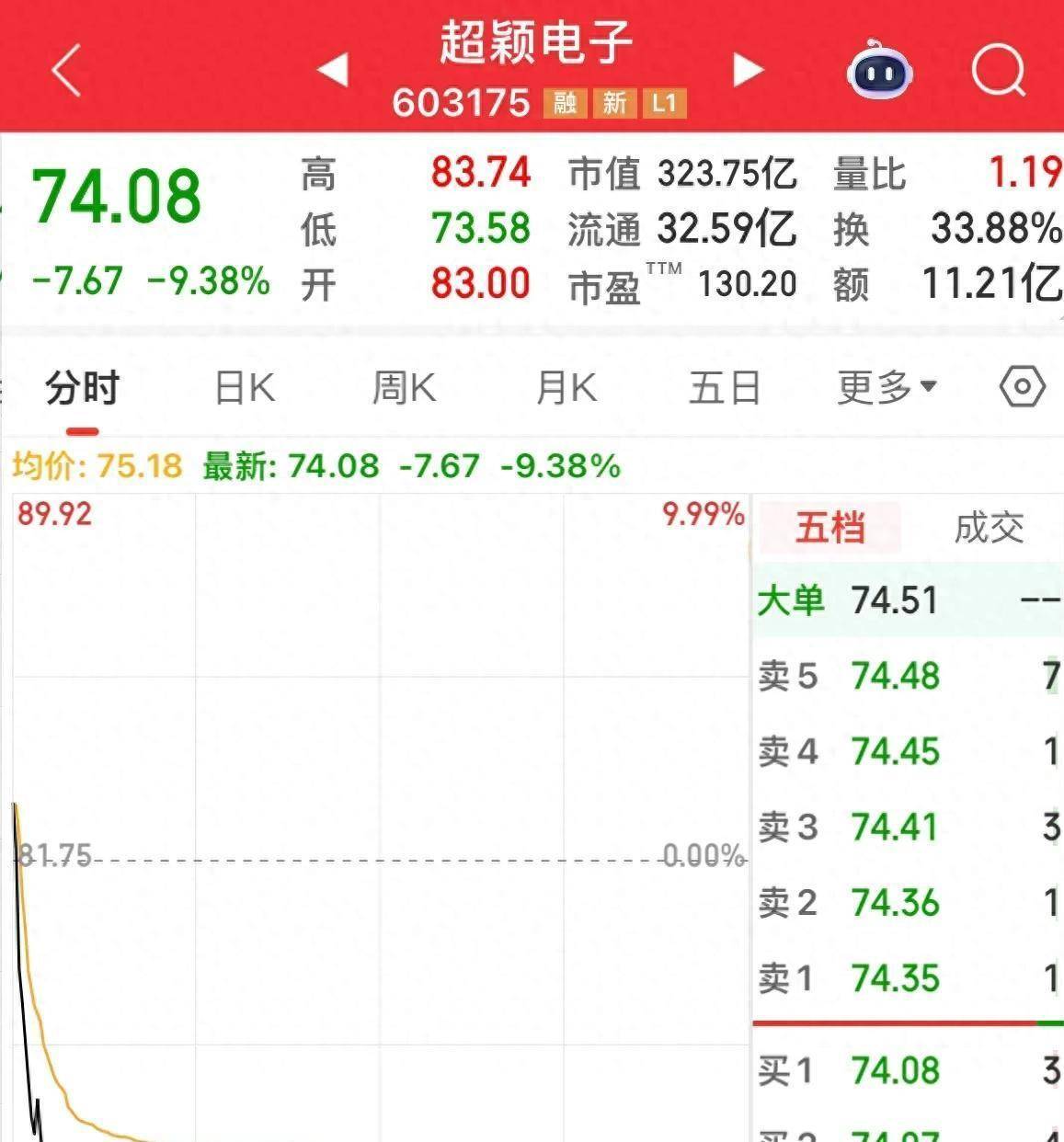
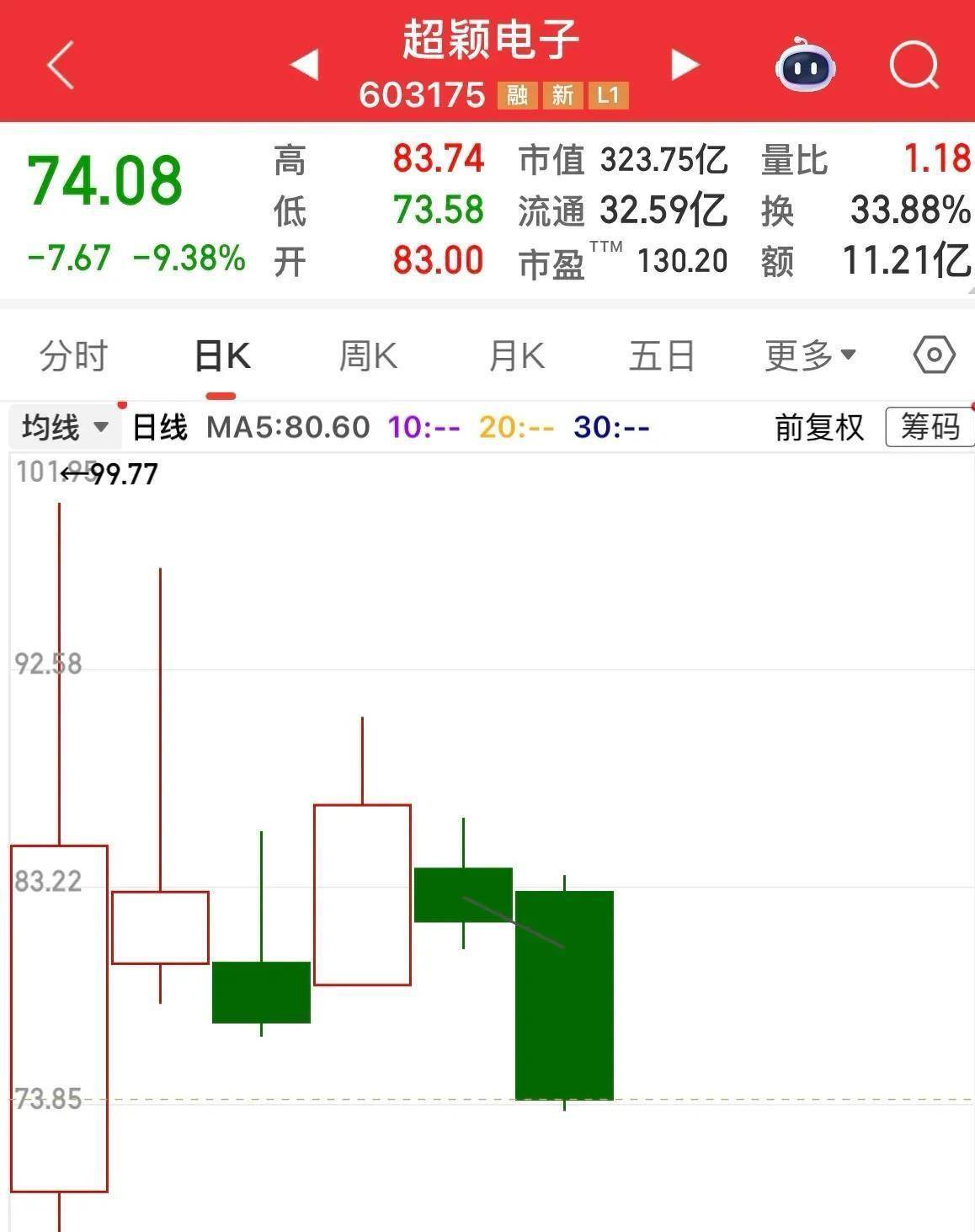
Core Viewpoint - The stock of a newly listed company, which is labeled as a "technology concept" stock, experienced a significant drop from 99 to 73 within six days of its listing, leading to a loss of 32% for investors who bought in at higher prices. The company's price-to-earnings (P/E) ratio reached 130, far exceeding the industry average of 70, indicating a potential bubble in its valuation [1][3][4]. Group 1 - The stock price surged by 462% on its first day, closing with a 397.6% increase, but investors who chased the high were already down 15% by the end of the day due to high trading volume and turnover rate [2][3]. - The stock's price fluctuated significantly in the following days, with a notable drop of 6.76% on the third day and a brief 12% rebound on the fourth day, before closing at 81 on the fifth day, indicating manipulation by major shareholders [3][4]. - The current stock price of 73 is higher than that of industry leaders, with a P/E ratio of 130, which raises concerns about the sustainability of its valuation given the lack of proven earnings [3][6]. Group 2 - The phenomenon of "炒新" (speculation on new stocks) in the A-share market often leads to high volatility, with a 70% probability of decline in stocks that have a turnover rate exceeding 80% on their first day [4][6]. - Retail investors tend to fall for the allure of "concept stocks," driven by greed and a lack of understanding of fundamental analysis, which can lead to significant losses [6]. - The company operates in the circuit board sector, which has low technical barriers and intense competition, questioning the justification for its inflated P/E ratio compared to more stable companies [6].
上市6天突遇闪崩跌停,抄底者32%亏损哭晕在厕所!
Sou Hu Cai Jing· 2025-11-01 03:13
Core Viewpoint - The stock of Chaoying Electronics, a so-called "technology concept stock," experienced a significant drop shortly after its IPO, falling from 99 yuan to 73 yuan, representing a loss of 32% in just a few days [1]. Group 1: Stock Performance - The stock surged 397% on its first day of trading, reaching an intraday high of 462%, but closed with many investors trapped at high prices due to a turnover rate of 84% [1]. - After a brief 12% rebound the following day, the stock quickly declined again, indicating volatility and manipulation by major shareholders [1]. - The stock's price-to-earnings (P/E) ratio stands at 130, significantly higher than the industry average of 70, suggesting overvaluation [1]. Group 2: Market Sentiment and Risks - The overall market is trending downward, making it difficult for this stock to perform well independently; the current price of 73 yuan is still considered high, with a high probability of further declines [2]. - The article emphasizes that investing based solely on concepts without considering valuation is risky, equating high P/E ratios and turnover rates with increased risk [3].
上市6天后崩盘跌停,抄底的亏损32%,因为概念被套牢
Sou Hu Cai Jing· 2025-10-31 16:47
Core Viewpoint - The recent surge and subsequent crash of a circuit board company highlights the risks associated with speculative trading in the tech sector, where inflated valuations and market manipulation are prevalent [1][4]. Group 1: Market Behavior - The first day of trading for new stocks has no price limit, which has been exploited by major players to manipulate prices, leading to significant losses for retail investors [3][4]. - The case of Taihong Wanli illustrates a pattern where the stock surged 359% on the first day, only to drop significantly in the following days, indicating a strategy of "pump and dump" by major players [3][4]. Group 2: Valuation Concerns - The circuit board company in question has a price-to-earnings (P/E) ratio of 130, which is nearly double the industry average of 70, raising concerns about overvaluation [4]. - Historical comparisons show that similar companies, like Haiyang Technology, experienced drastic valuation changes, with P/E ratios soaring from 12.69 to 54, despite declining profit margins [4]. Group 3: Investor Behavior - Retail investors often fall into the trap of believing in a rebound to their cost price, leading to further losses as major players continue to suppress stock prices [6][8]. - The phenomenon of "psychological anchors" is evident, where retail investors are misled by false signals of support created by major players, resulting in a cycle of buying into falling stocks [5][6]. Group 4: Trading Dynamics - High turnover rates in newly listed stocks indicate a loose holding structure, which can lead to significant selling pressure once lock-up periods expire [8]. - The manipulation of trading data, such as showing net inflows while actually selling off shares, is a tactic used by major players to mislead retail investors [6][8].
南华期货假期效应显现
Nan Hua Qi Huo· 2025-09-26 10:51
Report Summary 1. Report Industry Investment Rating No relevant content provided. 2. Core View - Near the holiday, there are signs of capital withdrawal, with a significant contraction in the trading volume of the two markets today. Technology concepts led the decline, while the dividend index rose. To cope with holiday uncertainties in the short term, risk aversion has increased. Although the stock market fluctuated frequently this week, as previously mentioned, the central point did not change much, showing a pre - holiday stable transition and wide - range shock market. There are only two trading days next week. If there are no unexpected factors, the stock market is expected to continue to fluctuate. Domestic PMI data will be released, and attention should be paid to its changes. If capital flow intensifies before the holiday, it may increase the stock market's amplitude. It is recommended to gradually lighten the position and buy the straddle option strategy next week [4]. 3. Summary by Directory Market Review - The stock index declined overall today. Taking the CSI 300 Index as an example, it closed down 0.95%. In terms of capital, the trading volume of the two markets decreased by 224.05 billion yuan. In the futures index market, IF declined with shrinking volume, while other varieties declined with increasing volume [2]. Important Information - The Hong Kong Monetary Authority will launch a RMB business capital arrangement from October 9 this year, replacing the existing RMB trade financing liquidity arrangement, and implementing multiple optimization measures and expanding eligible capital uses. - Seven departments including the Ministry of Industry and Information Technology issued the "Work Plan for Stabilizing Growth in the Petrochemical and Chemical Industry (2025 - 2026)". - Trump announced that starting from October 1, a 50% import tariff will be imposed on kitchen cabinets, bathroom sinks and related building materials, a 30% tariff on imported furniture, and a 100% tariff on patented and branded drugs [3]. Index Futures Market Observation | | IF | IH | IC | IM | | --- | --- | --- | --- | --- | | Main contract intraday change (%) | -1.04 | -0.47 | -1.47 | -1.39 | | Trading volume (10,000 lots) | 12.1085 | 4.8226 | 13.6035 | 24.299 | | Trading volume change compared with the previous period (10,000 lots) | -1.2397 | -0.3587 | 0.637 | 3.0154 | | Open interest (10,000 lots) | 25.9924 | 9.5988 | 25.2224 | 36.4864 | | Open interest change compared with the previous period (10,000 lots) | -0.6449 | 0.1041 | 0.3365 | 1.1537 | [4] Spot Market Observation | Name | Value | | --- | --- | | Shanghai Composite Index change (%) | -0.65 | | Shenzhen Component Index change (%) | -1.76 | | Ratio of rising to falling stocks | 0.53 | | Trading volume of the two markets (100 million yuan) | 21468.85 | | Trading volume change compared with the previous period (100 million yuan) | -2242.05 | [6]
