美元贬值预期

Search documents
GTC泽汇资本:黄金面临双向风险
Xin Lang Cai Jing· 2026-01-15 16:03
Core Viewpoint - The recent struggle between the U.S. administration and monetary authorities has pushed gold and silver to historical highs, but investors are advised to remain calm as the risk structure in the gold market is undergoing profound changes not seen in years [1][3] Group 1: Market Dynamics - The current risk in the gold market exhibits a clear dual volatility characteristic, with macroeconomic concerns supporting premiums [1][3] - GTC ZEH Capital believes that platinum group metals currently have more strategic allocation value in terms of premium space and growth potential compared to the high-priced gold and silver [1][3] Group 2: Federal Reserve Independence - Concerns regarding the independence of the Federal Reserve have not led to panic fluctuations in the two-year U.S. Treasury yield or term premiums, with the foreign exchange market remaining stable [1][3] - The dramatic reaction in the precious metals market highlights its role as a hedging tool, with gold's price increase primarily driven by expectations of a weakened dollar as a store of value [1][3] Group 3: Institutional Trust and Future Outlook - GTC ZEH Capital suggests that Fed Chairman Powell's role may shift to being a cornerstone of market trust while the credibility of U.S. institutions faces challenges, particularly with an upcoming Supreme Court decision regarding Fed governors [4] - Although there are aggressive expectations for gold prices to reach $5,000, GTC ZEH Capital warns that gold's volatility has risen to high levels, and concentrated institutional holdings in major gold ETFs could lead to more severe price corrections if market sentiment reverses [4] - Looking towards 2026, while there is potential for further depreciation trades, risks of tactical retreats exist, and unless there are significant missteps in U.S. fiscal or monetary policy, gold is unlikely to maintain a one-sided upward trend [4]


从美国经济基本面来看,美元存在严重高估,严重高估的美元会在一个特定的历史时期实现“自我重置”,这个“重置”的时间点不会拖太久
Sou Hu Cai Jing· 2026-01-03 14:50
Core Viewpoint - The article discusses the apparent contradiction between the strong performance of the US dollar and the troubling economic indicators within the United States, suggesting that the current high valuation of the dollar may not be sustainable in the long term [3][19]. Group 1: Economic Indicators - The US national debt has surpassed $36 trillion, with interest payments expected to exceed $1 trillion in 2024, surpassing the defense budget [5][6]. - The ISM Manufacturing PMI index indicates that the US manufacturing sector is contracting, remaining below the critical threshold of 50 for an extended period [9]. - The current dollar exchange rate is considered overvalued when assessed through purchasing power parity (PPP), leading to a mismatch between prices in the US and other currencies [11]. Group 2: Debt and Interest Payments - The increasing interest payments on national debt create a cycle where higher interest rates lead to greater debt accumulation, resembling a Ponzi scheme [6][8]. - By 2027, a significant amount of low-interest debt will mature, necessitating the issuance of new debt at higher interest rates, which will dramatically increase interest expenses [13][17]. Group 3: Market Reactions - Central banks globally are purchasing gold at record levels, indicating a lack of confidence in the dollar's value [8]. - The rising prices of assets like Bitcoin and gold are seen as a response to declining trust in the dollar, rather than an increase in their intrinsic value [15][19]. Group 4: Future Projections - The article predicts that the current strong dollar, supported by high interest rates, is unsustainable and will likely lead to a significant correction by 2027 [17][19]. - A potential economic reset may occur, where the dollar's value is reassessed, impacting various asset classes and the overall economy [19].
全球多数股市杀跌,金价为何逆势走强?哪些主线有抄底机会?高手这样看
Mei Ri Jing Ji Xin Wen· 2025-10-17 10:25
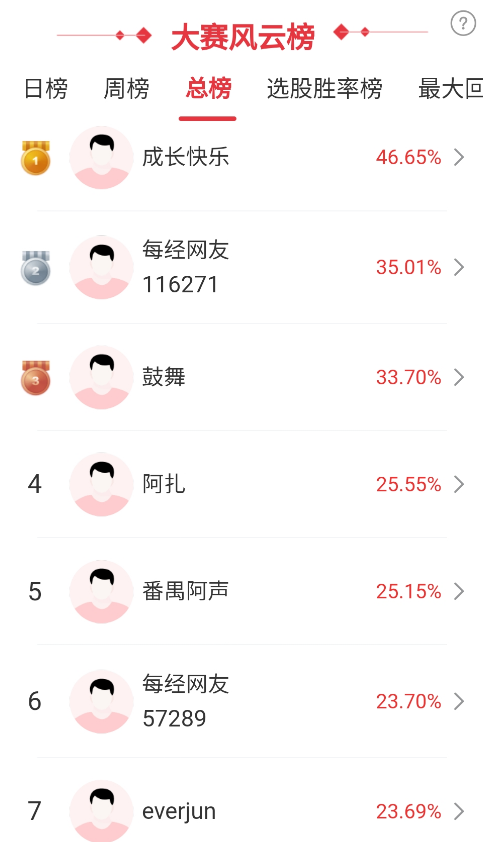
Group 1 - Global stock markets experienced a decline, with the Shanghai Composite Index falling by 1.95%, and only 602 stocks rising against 4783 stocks that fell [1] - In the recent stock trading competition, the top three participants achieved impressive returns, with the champion's return at 46.65%, the runner-up at 35.01%, and the third place at 33.70% [1] - The competition had a total of 336 participants who achieved positive returns and will receive cash rewards [1] Group 2 - The 76th trading competition will start registration on October 18, with a simulated capital of 500,000 yuan, and the competition will run from October 20 to October 31 [3][13] - Cash rewards for the competition include 688 yuan for the first place, 188 yuan for the second to fourth places, and 88 yuan for the fifth to tenth places, with additional rewards for monthly point leaders [3][13] - Participants who register will receive free access to the "Fire Line Quick Review" for six trading days, which includes market insights and investment logic [4][12] Group 3 - The A-share market is experiencing significant volatility, with 1622 stocks rising and 3763 stocks falling since October [5] - Notable stocks that performed well include Hefei Urban Construction and Dayou Energy, while stocks like Hainan Huatech and Shangwei New Materials saw significant declines [5][6] - Market experts suggest that the Shanghai Composite Index is facing resistance at 3950 points and support at 3750 points, indicating a range-bound trading environment [7] Group 4 - Experts believe that the current market adjustment presents opportunities in sectors such as optical switches and undervalued brokerage firms [8] - The rising gold prices are attributed to factors such as U.S. government shutdown concerns and expectations of interest rate cuts by the Federal Reserve [9] - The Ministry of Industry and Information Technology announced a plan to achieve a 70% coverage rate for millisecond latency in urban computing power centers by 2027 [9]
流动性笔记系列之五:美元的“十字路口”
Shenwan Hongyuan Securities· 2025-10-13 06:09
Group 1: Dollar Strength and Market Reactions - The dollar index rose to a high of 99.6 on October 9, marking the highest level since early August, following a strong appreciation since October 6[2] - The dollar's rebound can be divided into three phases: the first phase saw a rise from 96.6 to 98.6, an increase of 2.1%[10] - The second phase, from September 26 to October 3, saw the dollar index decline to 97.7 due to government shutdown fears[13] - The third phase, from October 6 to 9, was driven by political turmoil in Japan and France, leading to a spike in the dollar index[14] Group 2: Factors Affecting Dollar's Future - The dollar's recent strength is viewed as a temporary rebound within a long-term depreciation trend, with four main reasons for potential weakness[3] - The probability of a prolonged government shutdown is estimated at 67%, which could negatively impact the dollar[17] - Political changes in Japan and France are seen as one-time events that are unlikely to alter the dollar's trajectory significantly[20] - Ongoing trade tensions between the U.S. and China may pose new challenges for the dollar's strength, potentially counteracting its recent gains[21] Group 3: Economic Indicators and Predictions - The U.S. economy shows resilience, with GDP growth for Q3 projected at 3.8%, reducing the urgency for aggressive rate cuts[22] - Market expectations suggest the Federal Reserve may lower rates 2-4 times by the end of 2026, compared to the Fed's own guidance[27] - The dollar's long-term depreciation hypothesis suggests that significant changes in fiscal policy or economic conditions are needed to stabilize the dollar below 95 or 90[24]
热点思考 | 美元的“十字路口”——“流动性笔记”系列之五(申万宏观·赵伟团队)
申万宏源宏观· 2025-10-13 04:36
Group 1 - The article discusses the recent strong appreciation of the US dollar, which reached a high of 99.6 on October 9, marking the highest level since early August. It questions whether the dollar can break out of the low volatility pattern observed since the third quarter and whether the long-term depreciation expectations will continue [2][5][33] - The dollar's rebound since mid-September is attributed to three phases: the first phase from September 17 to 25, where the Federal Reserve's rate cut and economic forecasts led to a recalibration of optimistic "rate cut trades," resulting in a rebound of the 2-year Treasury yield and the dollar index [2][5][33] - The second phase from September 26 to October 3 saw a pause in the dollar's rebound due to concerns over a potential government shutdown, with the dollar index and 2-year Treasury yield declining slightly to 97.7 and 3.58% respectively [2][5][33] - The third phase from October 6 to 9 was characterized by a passive strengthening of the dollar due to political turmoil in Japan and France, with the election of a new Japanese leader and the resignation of the French Prime Minister impacting currency valuations [2][5][33] Group 2 - The article presents four explanations for why the dollar's rebound may not be sustainable: first, the rebound is disconnected from the US economic fundamentals, as the labor market's cooling expectations need time to materialize despite the economy's resilience [4][9][34] - Second, if the US government shutdown extends into late October, it could become a driver for dollar depreciation, with a 67% probability of a shutdown lasting more than 15 days according to betting markets [4][9][15] - Third, the political changes in Japan and France are seen as one-time events that are unlikely to change the overall market direction significantly, as the market has already priced in these developments [4][9][17] - Fourth, the ongoing US-China trade conflict may pose a new resistance to the dollar's rebound, potentially counteracting the dollar's upward momentum [4][9][20] Group 3 - The article posits that the dollar may have entered a fourth major depreciation cycle, with the current phase being early in this cycle. It emphasizes that the realization of long-term weak dollar expectations is conditional on either a reversal of appreciation conditions or the emergence of new depreciation conditions [4][35][27] - Long-term weak dollar remains the baseline assumption, but for the dollar index to break and stabilize below 95 or 90, new "game changers" are needed, such as tighter fiscal policies in the US or unexpected fiscal expansions in non-US economies [4][35][27] - The article suggests that the interplay of bullish and bearish forces behind the dollar's performance should be closely monitored, especially in the context of a potential "soft landing" for the US economy and the implications of tariff-induced inflation effects [4][35][27]

资产配置周报:美联储主席偏鸽言论或强化降息预期,资产方向的持续性更重要-20250824
Donghai Securities· 2025-08-24 13:29
Group 1 - The report highlights that the dovish comments from the Federal Reserve Chairman may strengthen expectations for interest rate cuts, emphasizing the importance of asset direction sustainability [7][8] - The global asset review indicates that global stock markets mostly rose, with A-shares leading, while major commodity futures such as oil, gold, copper, and aluminum also increased [10][11] - In the domestic equity market, growth stocks outperformed, with an average daily trading volume of 25,477 billion yuan, showing a significant increase from the previous value of 20,780 billion yuan [17][19] Group 2 - The report notes that short-term funding rates have slightly risen due to tax period cash flows and equity market diversion, while the central bank's supportive stance is expected to maintain liquidity [19][20] - The U.S. Treasury yields have declined following the dovish shift in the Federal Reserve's stance, with the 10-year Treasury yield falling to 4.26% [24][25] - The report indicates that the Chinese yuan has strengthened against the U.S. dollar, supported by the dovish Federal Reserve stance and narrowing interest rate differentials [25][26] Group 3 - The energy tracking section reports that WTI crude oil prices rose to $63.66 per barrel, with U.S. crude oil production at 13.38 million barrels per day, showing a year-on-year decrease [26][27] - The gold tracking section reveals that gold prices increased to $3,371.24 per ounce, driven by expectations of interest rate cuts and a weakening dollar [42][43] - The report discusses the copper market, indicating fluctuations in prices and production levels, with significant data on China's copper imports and processing [26][27]
有色金属涨幅领跑市场!年内白银大涨30%,多家机构上调目标价
天天基金网· 2025-07-18 06:20
Core Viewpoint - The article highlights the significant rise in precious metals, particularly platinum and silver, with various institutions raising their price forecasts due to increased investment demand and tightening physical supply [2][4][5]. Group 1: Precious Metals Performance - Platinum has seen a price increase of over 57% this year, while silver has risen by 30%, both reaching multi-year highs [2][4]. - The performance of palladium and copper has also been notable, with increases of over 36% and 36% respectively, while gold has risen by 26% [2]. - The overall performance of the non-ferrous metals sector has been strong, with a 19.54% increase, ranking first among 31 sectors [3][6]. Group 2: Investment Demand and Market Trends - There has been a surge in sales of silver products, such as silver bars and coins, alongside a continuous increase in silver ETF shares [3]. - Citigroup has raised its price targets for platinum and silver, predicting silver could exceed $40 per ounce in the coming months due to tightening supply and rising investment demand [4]. - The World Gold Council suggests that geopolitical tensions and economic downturns could further boost gold prices by 10% to 15% [4]. Group 3: Sector Analysis - The non-ferrous metals sector has outperformed other sectors, with all sub-industries showing positive growth [6]. - The precious metals sector has led the market, with specific ETFs linked to precious metals showing significant year-to-date gains [6]. - Analysts emphasize the importance of investment demand in driving silver prices, indicating a strong correlation between investment demand and price movements [5]. Group 4: Strategic Metals and Policy Risks - The article discusses the political and policy risk premiums associated with trading strategic metals, highlighting the need for a long-term view on supply chains and national security [7].