
贵金属避险属性

Search documents
“战时买黄金”不管用了?
财联社· 2026-03-26 06:17
Core Viewpoint - Despite ongoing geopolitical tensions and conflicts, gold, traditionally seen as a safe haven, has entered a bear market, primarily driven by a significant increase in retail investor participation in the precious metals market since the onset of the US-Iran conflict [1][2]. Group 1: Theories on Precious Metals Market Behavior - Three prevailing theories explain the current behavior of precious metals: 1. The pre-war surge in precious metal prices attracted many new retail investors, potentially altering trading dynamics to resemble risk assets rather than safe havens [2]. 2. Following substantial gains in precious metal positions at the end of 2025 and early 2026, increased uncertainty has led investors to lock in profits, resulting in selling pressure [2]. 3. Heightened market volatility has caused losses in other positions, particularly for hedge funds, prompting them to liquidate profitable positions, including gold, to meet liquidity needs [2][4]. Group 2: Performance Analysis of Precious Metals - Since the outbreak of the conflict, all precious metals have experienced declines: gold down 15%, silver down 25%, and platinum down 20%, while the S&P 500 index fell only 5%, indicating underperformance of precious metals relative to the broader market [4]. - The modest decline in the S&P 500 suggests that safe-haven sentiment has not been triggered, reinforcing the notion that recent declines in precious metals are residual effects of prior price surges [4]. - The lack of significant price increases in gold or other precious metals during the Russia-Ukraine conflict further supports the idea that the current situation may be a result of position liquidation rather than a flight to safety [4]. Group 3: Future Outlook on Precious Metals - The explanations provided do not negate the ongoing demand for precious metals as a hedge against currency devaluation, which is expected to persist as investors seek alternatives to debt monetization [5].

金银暴跌突发,行情急转直下,投资者该怎么办?
Sou Hu Cai Jing· 2026-02-07 21:49
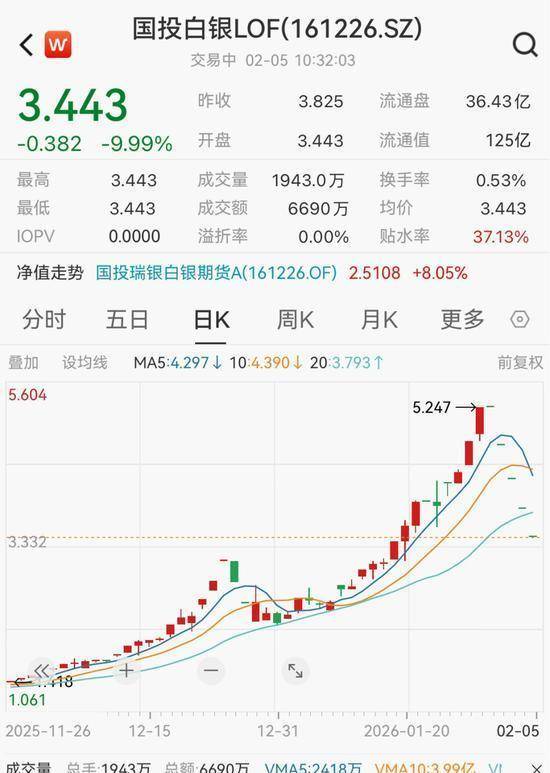
Core Viewpoint - The precious metals market experienced a sudden and significant drop, with spot gold falling below $4900 and silver dropping below $81, indicating a rapid market reaction influenced by various factors [1][2]. Group 1: Market Dynamics - Precious metal prices are influenced by international risk sentiment, the exchange rate of the Chinese yuan, a strong US dollar, liquidity in the market, and the positions of funds, with silver being particularly sensitive due to its dual industrial and investment attributes [2][4]. - The recent decline in silver prices, including a four-day consecutive limit down for the Guotou Silver LOF, reflects a broader market signal regarding investor sentiment and fund flows [2][4]. - The precious metals sector in the A-share market saw widespread declines, with companies like Hunan Gold and Hunan Silver hitting 10% limit down, indicating severe impacts on individual stocks [4][5]. Group 2: Factors Behind the Decline - The first key factor is the strengthening of the US dollar and the re-pricing of US Treasury yields, which raised the opportunity cost of holding precious metals, particularly during periods of fluctuating inflation expectations [5][6]. - The second factor involves structural issues in funding, where passive products like ETFs and LOFs tend to experience sharp declines in extreme market conditions, leading to liquidity issues [6]. - The third factor is market sentiment and speculative behavior, where short-term funds and algorithmic trading exacerbate price volatility, triggering stop-loss orders and margin calls [6][10]. Group 3: Regulatory and Market Mechanisms - The volatility in pricing and premium rates indicates a lack of smooth linkage between on-market and off-market activities, suggesting a need for improved transparency in pricing mechanisms [7][10]. - Regulatory measures should focus on enhancing transparency regarding premium rates and holding structures, as well as providing risk education to investors about the nature of precious metals as non-zero-risk assets [10][12]. - There is a call for temporary protective measures during extreme market conditions to prevent liquidity crises, which would not contradict market principles but rather aim to mitigate systemic risks [10][12]. Group 4: Long-term Perspectives - The recent market turmoil highlights a long-standing contradiction in global financial markets between asset prices and fundamentals, influenced by central bank policies and geopolitical factors [10]. - Investors are advised to diversify their portfolios and match investment horizons appropriately, avoiding the pitfalls of over-reliance on precious metals as a safe haven [10][12]. - The fundamental aspects of the precious metals industry, such as mining capacity and industrial demand, remain intact despite short-term price shocks, emphasizing the need for rational investment strategies [12].
山金期货贵金属策略报告-20260127
Shan Jin Qi Huo· 2026-01-27 09:41
Report Industry Investment Rating No relevant content provided. Core Viewpoints of the Report - The short - term safe - haven situation is affected by rising risks of trade wars and geopolitical changes, along with a weakening US job market and moderate inflation, which support the expectation of interest rate cuts. - In terms of the safe - haven attribute, the US aircraft carrier strike group is gathering in the Middle East, and Iran has threatened a full - scale war in case of any attack. Trump plans to raise tariffs on some South Korean goods, increasing trade war and geopolitical risks. - Regarding the monetary attribute, US core capital goods orders in November increased for the fifth consecutive month, boosting the economic outlook. The December CPI increase met expectations, but household food and rent expenses rose. The Fed cut interest rates in December with differences, hinting at a possible single rate cut next year. The market expects a 95% probability of no rate cut in January 2026, with the next possible cut in June. The US dollar index and US bond yields are oscillating strongly. - For the commodity attribute, the Polish central bank plans to buy up to 150 tons of gold. Silver is supported by tight supply. Platinum has strong demand expectations for platinum - based catalysts in the hydrogen energy industry. Palladium has short - term demand resilience but faces long - term structural pressure from the fuel - vehicle market. The CRB commodity index is oscillating weakly, and the appreciation of the RMB is negative for domestic prices. - It is expected that precious metals will oscillate upward in the short term, oscillate at a high level in the medium term, and rise in a step - like manner in the long term [1]. Summary by Directory 1. Gold - **Strategy**: For conservative investors, it is recommended to wait and see; for aggressive investors, buy on dips. Manage positions well and set strict stop - loss and take - profit levels [2]. - **Price Data**: Comex gold active contract closed at $5004.80 per ounce, up 0.44% from the previous day and 8.77% from last week. London gold closed at $5090.80 per ounce, up 2.92% from the previous day and 9.08% from last week. Shanghai gold futures closed at 1148.38 yuan per gram, up 0.44% from the previous day and 8.32% from last week [2]. - **Position and Inventory Data**: Comex gold positions were 528,004 lots, up 8.17% from last week. Shanghai gold futures positions were 217,484 lots, up 0.77% from the previous day and 16.95% from last week. LBMA gold inventory was 9106 tons, up 2.24% from last week [2]. 2. Silver - **Strategy**: For conservative investors, it is recommended to wait and see; for aggressive investors, buy on dips. Manage positions well and set strict stop - loss and take - profit levels [4]. - **Price Data**: Comex silver active contract closed at $103.89 per ounce, up 0.61% from the previous day and 15.50% from last week. London silver closed at $109.61 per ounce, up 10.71% from the previous day and 17.85% from last week. Shanghai silver futures closed at 28,300 yuan per kilogram, up 4.02% from the previous day and 22.71% from last week [4]. - **Position and Inventory Data**: Comex silver positions were 152,020 lots, up 0.33% from last week. Shanghai silver futures positions were 4,653,150 lots, down 3.83% from the previous day and 1.43% from last week. The total visible inventory was 41,819 tons, down 0.09% from the previous day and 1.13% from last week [4]. 3. Platinum - **Strategy**: For conservative investors, it is recommended to wait and see; for aggressive investors, buy on dips. Manage positions well and set strict stop - loss and take - profit levels [6]. - **Price Data**: NYMEX platinum active contract closed at $2627.10 per ounce, up 5.98% from the previous day and 8.75% from last week. London platinum closed at $2507.00 per ounce, up 0.20% from the previous day and 5.07% from last week. Platinum futures on the GQEX closed at 685.90 yuan per gram, up 8.21% from the previous day and 12.43% from last week [7]. - **Position and Inventory Data**: NYMEX platinum positions were 66,423 lots, down 0.51% from the previous day and up 0.26% from last week. NYMEX platinum inventory was 21 tons, down 1.46% from the previous day and up 4.94% from last week [7]. 4. Palladium - **Strategy**: For conservative investors, it is recommended to wait and see; for aggressive investors, buy low and sell high. Manage positions well and set strict stop - loss and take - profit levels [10]. - **Price Data**: NYMEX palladium active contract closed at $1945.50 per ounce, up 3.79% from the previous day and 4.29% from last week. London palladium closed at $1850.00 per ounce, up 2.35% from the previous day and 2.44% from last week. Palladium futures on the GQEX closed at 497.95 yuan per gram, up 2.94% from the previous day and 6.09% from last week [10]. - **Position and Inventory Data**: NYMEX palladium positions were 17,998 lots, down 0.22% from the previous day and 2.15% from last week. NYMEX palladium inventory was 7 tons, up 2.54% from last week [10]. 5. Key Fundamental Data of Precious Metals - **Monetary Attribute**: The upper limit of the federal funds target rate is 3.75%, the discount rate is 3.75%, and the reserve balance interest rate is 3.65%. The Fed's total assets are $66354.43 billion. M2 growth rate is 4.27%. The 10 - year US real bond yield is 2.46%, the US dollar index is 97.04, and the US bond spreads and interest rate differentials show certain changes [11][13]. - **US Economic Indicators**: Unemployment rate is 4.40%, non - farm payrolls changed by 50,000, labor participation rate is 62.10%, average hourly wage growth rate is 3.80%. In the real estate market, existing home sales are 4.35 million units, new home sales are 0.57 million units, and new home starts are 1.061 million units. Retail sales, personal consumption, industrial production, and trade data also show specific changes [13]. - **Central Bank Gold Reserves**: China's gold reserves are 2306.32 tons, the US's are 8133.46 tons, and the world's total is 36362.76 tons. The proportion of US dollars in IMF foreign exchange reserves is 56.32%, the euro is 21.13%, and the RMB is 2.12% [13]. - **Safe - Haven and Commodity Attributes**: The geopolitical risk index is 67.15, down 34.97% from the previous day and 62.69% from last week. The VIX index is 16.15, up 0.37% from the previous day and down 14.28% from last week. The CRB commodity index is 315.11, up 0.92% from the previous day and 2.86% from last week. The offshore RMB exchange rate is 6.9516 [13]. 6. Fed's Latest Interest Rate Expectations The market's expectations for the Fed's interest rate decisions at different meetings from January 2026 to December 2027 are presented in the CME FedWatch tool, showing the probabilities of different interest rate ranges at each meeting [15].
期货收评:纯苯涨3%,沪银涨2%,工业硅、沪金涨1%;沪锡跌5%,碳酸锂跌3%,玻璃、铁矿石、沪铅、生猪跌超2%
Sou Hu Cai Jing· 2026-01-19 07:24
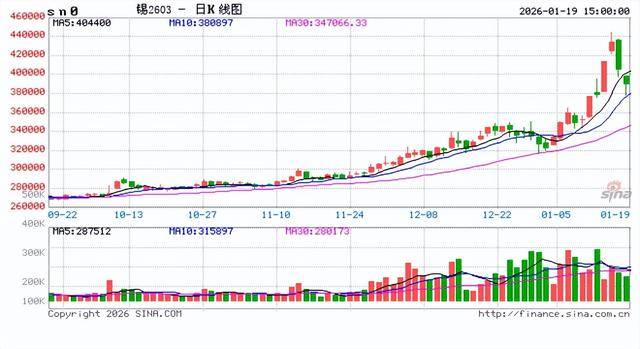
Group 1 - The macroeconomic and regional risks are increasing, enhancing the safe-haven attributes of precious metals [1] - In the short term, expectations for interest rate cuts by the Federal Reserve are fluctuating, leading to a market that is easier to rise than to fall [1] - In the medium to long term, uncertainties surrounding global tariff policies and regional politics will keep safe-haven and stagflation trading as the core of gold trading, maintaining its long-term allocation value [1] Group 2 - On January 19, the domestic futures market saw more declines than increases, with pure benzene rising over 3% and silver rising over 2% [3] - Other commodities such as styrene, industrial silicon, and gold also saw increases of over 1%, while tin fell over 5% and lithium carbonate and synthetic rubber fell over 3% [3] - A significant number of commodities, including glass, iron ore, rapeseed meal, and live pigs, experienced declines of over 2% [3]
关税风暴推高避险需求,黄金再创历史新高,黄金股票ETF备受关注
Xin Lang Cai Jing· 2026-01-19 06:30
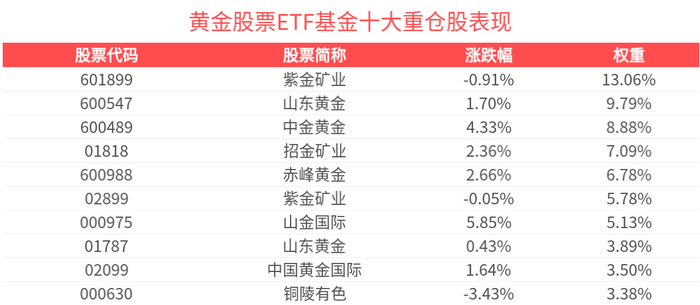
Core Viewpoint - The gold industry is experiencing a strong performance, driven by geopolitical tensions and macroeconomic factors, leading to increased demand for gold as a safe-haven asset [1][2]. Group 1: Market Performance - As of January 19, 2026, the CSI Hong Kong-Shenzhen Gold Industry Stock Index (931238) rose by 1.50%, with significant gains from constituent stocks such as Sichuan Gold (+9.99%) and Zhaojin Mining (+9.71%) [1]. - The Gold Stock ETF (159322) increased by 1.66%, with the latest price reported at 1.9 yuan [1]. Group 2: Geopolitical Factors - On January 18, multiple EU countries are considering imposing tariffs on U.S. goods worth €93 billion in response to U.S. tariffs on European nations regarding Greenland [1]. - President Trump announced a 10% tariff on goods from several European countries, effective February 1, with plans to increase the rate to 25% starting in June [1]. Group 3: Investment Insights - Huafu Securities noted that rising macroeconomic and regional risks are enhancing the safe-haven appeal of precious metals [1]. - In the short term, expectations for U.S. Federal Reserve interest rate cuts are fluctuating, creating a market environment where gold prices are likely to rise [1]. - In the long term, uncertainties surrounding global tariff policies and regional politics will continue to support gold as a core investment for hedging and inflation concerns [1]. Group 4: Index Composition - The CSI Hong Kong-Shenzhen Gold Industry Stock Index comprises 50 large-cap companies involved in gold mining, refining, and sales, reflecting the overall performance of the gold industry in mainland China and Hong Kong [2]. - As of December 31, 2025, the top ten weighted stocks in the index accounted for 63.58% of the total index weight, with major companies including Zijin Mining and Shandong Gold [2].
黄金,再创新高!金饰克价涨至1429元
Xin Lang Cai Jing· 2026-01-12 08:16
Core Viewpoint - International gold prices have reached a historic high, with New York futures exceeding $4,612.70 per ounce and London spot gold surpassing $4,600 per ounce for the first time [1][7][8]. Group 1: Market Dynamics - The rise in gold and silver prices is attributed to a criminal investigation launched by the U.S. Department of Justice against Federal Reserve Chairman Jerome Powell, raising concerns about the independence of the Federal Reserve [3][10]. - The weakening of the U.S. dollar index and stock futures has contributed to the surge in international gold and silver prices [4][10]. - Ongoing geopolitical risks globally are enhancing market risk aversion, which supports the upward trend in gold prices [4][10]. Group 2: Domestic Gold Prices - Domestic gold jewelry prices have also increased, with notable brands reporting significant price hikes. For instance, Chow Sang Sang's gold jewelry is priced at 1,429 yuan per gram, up 19 yuan from January 10 [5][12]. - Other brands like Lao Feng Xiang and Lao Miao have also seen increases of 22 yuan and 29 yuan per gram, respectively [12]. Group 3: Future Outlook - Analysts from CITIC Futures predict that the current global economic and political conflicts will continue to increase market uncertainty, reinforcing the safe-haven appeal of precious metals, a trend expected to persist until 2026 [5][14]. - CITIC Securities believes that the certainty of gold price increases is significant, driven by expectations of dual easing in U.S. monetary and fiscal policies and persistent stagflation pressures in the U.S. economy. Their model forecasts that international gold prices could exceed $5,100 per ounce by the end of 2026 under a neutral scenario [5][14].
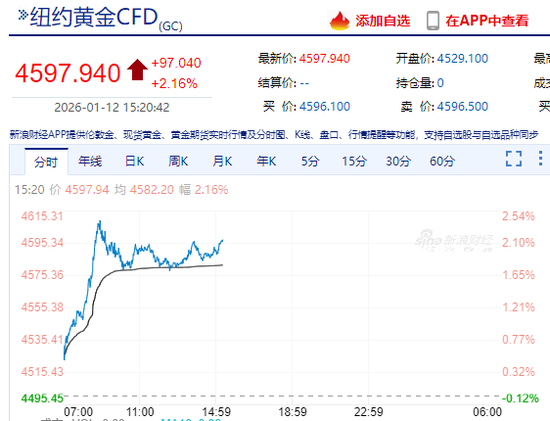
NCE平台:贵金属高波动运行
Xin Lang Cai Jing· 2026-01-05 10:21
Core Viewpoint - Precious metals, particularly gold and silver, have shown strong performance at the beginning of the year, with silver standing out, reflecting their safe-haven attributes amid multiple uncertainties in the market [1][3]. Group 1: Market Dynamics - Geopolitical events have heightened short-term demand for safe-haven assets, leading to increased price volatility within the day [1][3]. - There is a rapid shift of funds between risk assets and defensive assets, indicating a complex market structure where both bullish and bearish forces are in contention [1][3]. - Global stock markets have performed strongly at the start of 2026, with major indices reaching historical highs, supported by sector rotation and a recovery in risk appetite [1][3]. Group 2: Precious Metals Performance - The rise in precious metals is not solely due to a broad-based flight to safety but appears to be a hedging choice in an environment of high valuations and uncertainty [1][3]. - The correlation between the strengthening stock market and the rise in gold and silver prices reflects the complexity of the current market structure [1][3]. Group 3: Interest Rate Influence - Stable U.S. Treasury yields are influencing precious metals, with the market still engaged in a battle of expectations regarding future policy directions [4]. - As long as actual interest rates lack a clear direction, gold and silver prices are likely to experience wide fluctuations rather than a one-sided trend [4]. Group 4: Technical Analysis - Both gold and silver are trading near critical price levels, with significant divergence between bulls and bears [2][4]. - The current technical structure suggests that investors should focus more on risk management rather than making directional bets, as precious metals are likely to trade within a range while awaiting new macroeconomic or funding signals [2][4].

财经随笔记:黄金走势推演与后市机会分析(2026.1.4)
Sou Hu Cai Jing· 2026-01-04 07:51
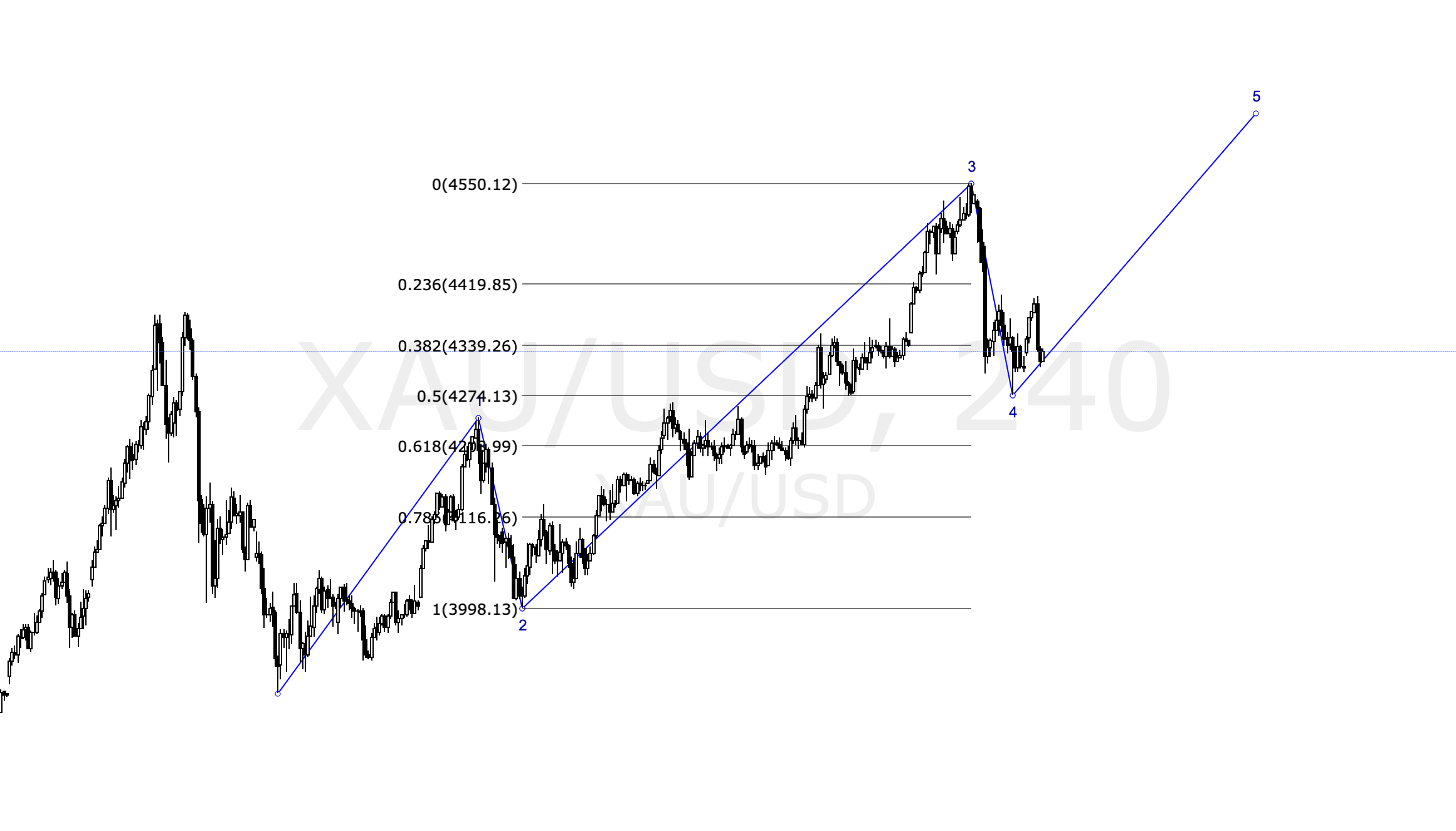
Group 1 - The core geopolitical event is the deterioration of the situation in Venezuela, with the U.S. launching military strikes and declaring a national emergency, which may lead to short-term oil price increases due to supply disruption risks [2] - The commodity market outlook indicates both short-term pressure and long-term bullish sentiment for gold and silver, with significant sell-offs expected in the short term but a bullish forecast for gold prices reaching $4,900 per ounce in the long term [2] - The Federal Reserve's policy uncertainty is heightened, with key speeches from FOMC members expected to influence market expectations regarding interest rate cuts [4] Group 2 - Technical analysis shows that gold has experienced significant fluctuations, with key resistance and support levels identified, including a potential high at 4,550 and critical support at 4,274 [5][11] - The current market structure suggests that if gold fails to break previous highs, it may continue to experience downward pressure, indicating a need to monitor the ongoing adjustment phase [9] - Key price levels to watch include support around 4,300 and 4,274, as well as resistance at 4,400-4,405, which will be crucial for determining future market direction [11]
周末大消息,银价暴涨36%,白银LOF还要跑吗?
Sou Hu Cai Jing· 2025-12-28 09:01
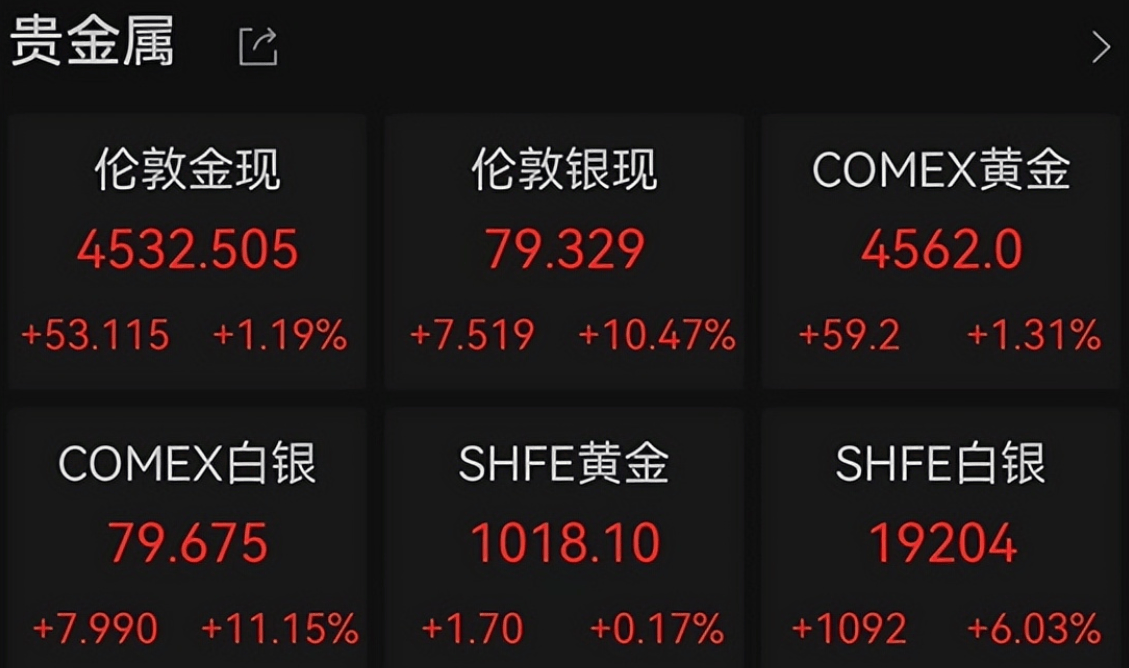
Group 1 - The recent surge in silver prices is driven by multiple factors, including the Federal Reserve entering a rate-cutting cycle, which has lowered the dollar interest rate by a total of 75 basis points this year [5] - The CME's "FedWatch" tool indicates that there may be 1-2 more rate cuts expected next year, with a median forecast of a 25 basis point cut in 2026 [5] - As the dollar weakens, the cost of holding dollar-denominated assets decreases, leading to increased purchases of precious metals, particularly silver, as investors seek safe-haven assets amid geopolitical tensions [5] Group 2 - COMEX silver inventories remain low, and as delivery dates approach, concerns about the availability of physical silver for delivery have created a short squeeze, further driving up prices [6] - A similar situation occurred earlier this month when COMEX silver futures approached their delivery date, causing a spike in prices due to fears of insufficient silver for delivery [6] - The timing of this price surge is particularly sensitive as the year-end approaches, which can amplify market reactions [6]
多因素支撑贵金属全线大涨 专家提醒注意高位调整风险
Jin Rong Shi Bao· 2025-12-24 02:47
Core Viewpoint - Precious metals, including gold, silver, platinum, and palladium, have experienced significant price increases, with gold and silver nearing historical highs, driven by macroeconomic factors and strong demand for safe-haven assets [1][2][3] Group 1: Price Movements - As of December 23, gold prices approached $4500 per ounce, while silver prices surpassed $69 per ounce, marking substantial year-to-date increases of over 71% for gold and 142% for silver [1][2] - Platinum and palladium also saw significant price rises, with platinum reaching $2190.70 per ounce and palladium hitting $1840.50 per ounce, reflecting year-to-date increases of 142% and 102%, respectively [2][3] Group 2: Supporting Factors - The strong performance of precious metals is attributed to global macroeconomic easing and geopolitical uncertainties, which enhance their appeal as safe-haven investments [3] - Market expectations of a shift in U.S. Federal Reserve policy, particularly following weaker-than-expected employment data and inflation trends, have bolstered demand for precious metals [3][4] - Central banks worldwide have been increasing their gold reserves, with a reported net purchase of 53 tons in October, marking a 36% month-over-month increase [3] Group 3: Demand Dynamics - Investment demand has tightened the supply of silver, platinum, and palladium, leading to higher price elasticity, while caution is advised regarding potential market overheating [4] - Different precious metals exhibit distinct price-driving factors, with gold being sensitive to macroeconomic changes and safe-haven demand, while silver benefits from industrial demand in sectors like photovoltaics and electric vehicles [6][7] - Platinum and palladium prices are more closely tied to industrial demand and supply constraints, particularly in the automotive sector, where palladium is crucial for gasoline vehicle emissions control [7][8] Group 4: Future Outlook - Analysts suggest that while platinum prices may find support from supply-demand dynamics, palladium faces structural pressures due to the shift towards electric vehicles, which could limit its price growth [8] - Recent announcements regarding trading limits on platinum and palladium futures indicate regulatory responses to the volatile market conditions [8]