
美元走弱

Search documents
凌晨,全线大涨!美联储,重磅发声!
Xin Lang Cai Jing· 2026-02-09 23:28
Market Overview - The technology sector rebounded significantly, with the Nasdaq rising nearly 1% and the Dow Jones reaching a new historical high [1][8] - Precious metals, including gold and silver, saw substantial gains, with COMEX gold futures up over 2% and silver futures up 8% [1][3] - The weakening of the US dollar provided additional support for risk assets and precious metals, with the dollar index dropping 0.84% to below 97 [1][7] Technology Sector Performance - Major US stock indices opened lower but closed higher, with the Dow Jones up 0.04%, S&P 500 up 0.47%, and Nasdaq up 0.90% [2][9] - Notable gains in large tech stocks included Oracle rising over 9%, Microsoft, Broadcom, and AMD rising over 3%, while Nvidia and Meta rose over 2% [2][9] - Oracle's surge was attributed to an upgrade from D.A. Davidson, which suggested that the market's sell-off may have been excessive [2][9] Cloud Computing and Capital Expenditure - Analysts believe that capital expenditures for large-scale cloud providers still have upward potential, with Morgan Stanley noting accelerated revenue growth for GCP, AWS, and Azure [2][10] - The expected earnings growth for the technology sector is projected at 32% for 2026 and 20% for 2027, compared to 13% and 16% for the S&P 500 [3][10] Precious Metals and Oil Prices - The precious metals market experienced a full rebound, with COMEX gold futures at $5084.2 per ounce and silver futures at $83.05 per ounce [3][10] - Oil prices also strengthened, with WTI crude futures up 1.27% to $64.36 per barrel and Brent crude up 1.45% to $69.04 per barrel [3][10] Geopolitical Context - The US issued guidelines for ships passing through the Strait of Hormuz, advising US-flagged vessels to avoid Iranian waters amid rising tensions [3][11]





“三桶油”集体冲高,中国海油涨超7%再创新高,能源ETF(159930)飙升涨超3%,连续5日吸金超2亿元!机构:油价或已进入筑底反弹阶段!
Sou Hu Cai Jing· 2026-01-28 07:22
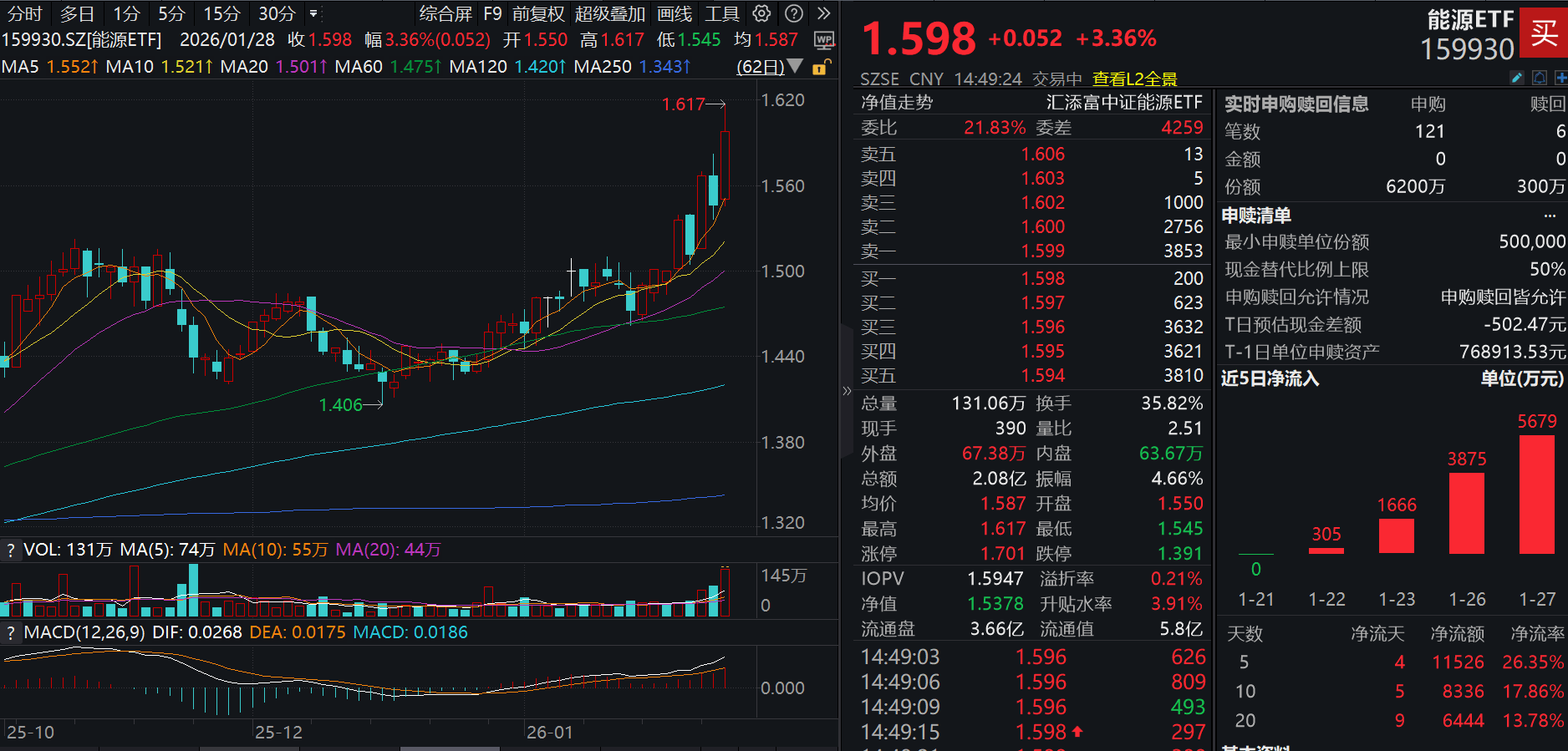
Core Viewpoint - The energy sector, particularly oil and coal, is experiencing significant upward momentum, with substantial capital inflows into energy ETFs, indicating strong investor interest and potential for growth [1][3]. Group 1: Market Performance - As of January 28, energy ETFs (159930) surged by 3.36%, attracting over 94 million yuan in capital, marking a total net inflow of over 200 million yuan over the past five days [1]. - Key stocks within the energy ETF saw varied performance, with China National Offshore Oil Corporation and Jereh Group both rising over 7%, while Shanxi Coking Coal and China Petroleum also posted gains [2][3]. Group 2: Component Stocks - The top ten component stocks of the energy ETF include: - China National Petroleum (3.16% increase, 15.06% weight) - China Shenhua Energy (1.43% increase, 14.26% weight) - China Petroleum & Chemical Corporation (0.16% increase, 12.09% weight) - Shaanxi Coal and Chemical Industry (2.76% increase, 10.82% weight) - Other notable stocks include Jereh Group and Shanxi Coking Coal, both showing significant gains [4]. Group 3: Oil Market Insights - According to Huatai Securities, geopolitical factors have led to a rebound in oil prices during the off-season, with Brent crude oil prices expected to average $65 per barrel by mid-2026, up from a previous estimate of $62 [5]. - The report suggests that energy companies with the ability to increase production and reduce costs may present attractive investment opportunities as oil prices stabilize [5]. Group 4: Coal Market Insights - According to Kaiyuan Securities, coal prices are at historical lows, providing room for a rebound, especially with supply-side policies constraining production and increased demand during the heating season [6]. - The report indicates that both thermal and coking coal prices have upward elasticity, with the coal sector poised for improvement as the market conditions shift [6].






鲍威尔为美联储独立性站台,硬刚特朗普,黄金能否再次狂飙?
Sou Hu Cai Jing· 2026-01-20 04:01
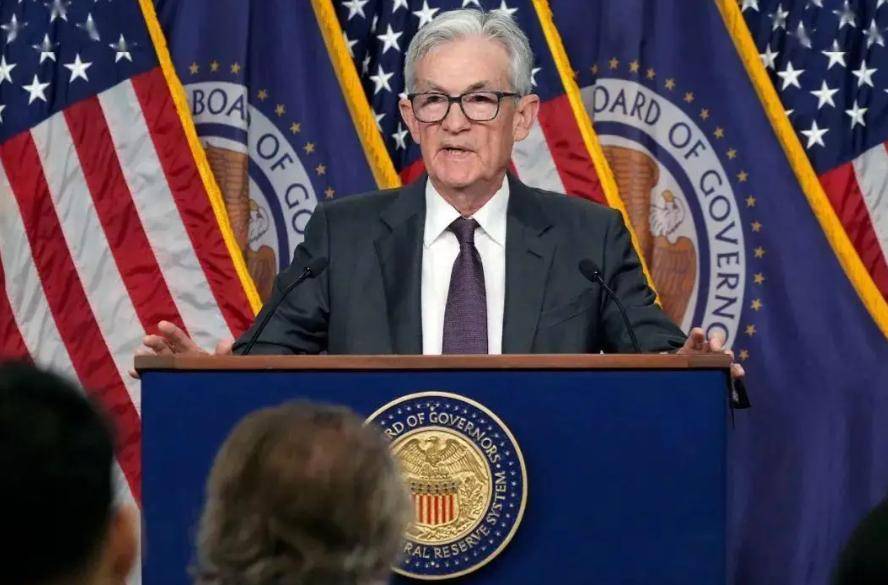
Group 1 - Federal Reserve Chairman Jerome Powell plans to attend an oral argument at the U.S. Supreme Court regarding whether President Trump has the authority to dismiss Federal Reserve Governor Lisa Cook [2][4] - Powell is currently under criminal investigation by the U.S. Attorney's Office for Washington, D.C., related to a multi-billion dollar renovation project at the Federal Reserve headquarters and associated congressional testimony [4] - The issue of whether the President can dismiss a Federal Reserve governor in the manner attempted by Trump is viewed internally at the Federal Reserve as a fundamental question concerning the survival of the central bank [4] Group 2 - The U.S. Treasury market is experiencing a sell-off, exacerbated by concerns over the long-term fiscal situation in Washington, as the U.S. threatens to impose tariffs related to Greenland, weakening demand for U.S. assets [5] - Following a holiday market closure, the yields on 10-year and 30-year U.S. Treasury bonds rose by at least 3 basis points during Asian trading hours [8] - The sell-off in U.S. Treasuries has led to a weaker dollar, providing strong support for gold prices [8]

智利铜矿大幅提价叠加美元走软,铜价持续上涨
Hua Er Jie Jian Wen· 2025-11-26 07:14
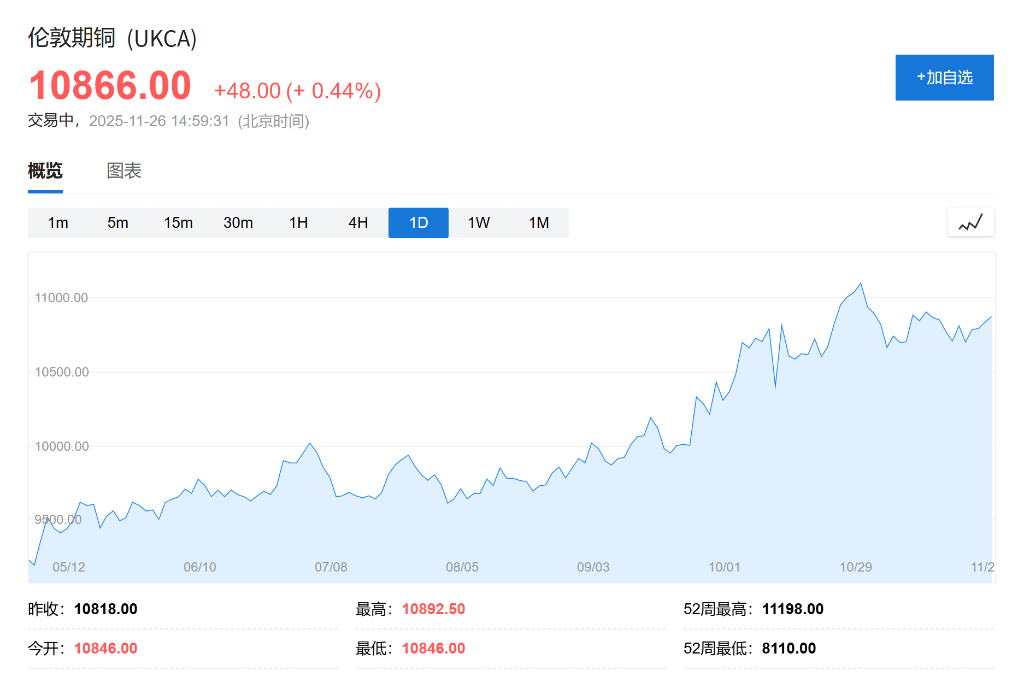
Group 1 - Copper futures prices rose by 0.4% on Tuesday, approaching the $10,900 per ton mark, driven by supply concerns and market speculation [2] - Codelco has proposed a supply premium of $350 per ton above the London Metal Exchange price for the 2026 annual contract, significantly higher than the previously agreed $89 per ton [3] - The increase in copper prices this year, nearly 25%, is attributed to supply disruptions at key mines and expectations regarding the U.S. government's review of refined metal tariffs [2][3] Group 2 - The decline in the U.S. dollar, influenced by speculation of further policy easing by the Federal Reserve, has reduced the cost for overseas buyers, supporting metal prices [2] - Codelco's pricing strategy reflects concerns over supply chain distribution, particularly regarding shipments to the U.S. potentially affecting supply to other regions [3] - Other major metals, including aluminum and zinc, also saw price increases, with three-month copper on the London Metal Exchange rising to $10,877.50 per ton [3]
铜价因Codelco报价与美元走弱再度上涨
Ge Long Hui· 2025-11-26 04:12
Group 1 - Codelco has significantly raised its annual premium for copper contracts, with offers for 2026 contracts priced $350 per ton above LME prices, indicating market concerns over potential supply shortages in other regions due to increased shipments to the U.S. [1] - The copper futures price has risen by 0.4% recently, approaching $10,900 per ton, reflecting a nearly 25% increase in copper prices this year, with a record high of over $11,000 per ton reached last month [1] - Contributing factors to the price increase include supply disruptions at key mines, ore shortages, and market speculation regarding potential changes in U.S. tax policies on refined metals under the Trump administration [1] Group 2 - The weakening U.S. dollar, driven by expectations of a possible interest rate cut by the Federal Reserve next month, has made metals more attractive to investors [1] - Codelco's pricing typically sets a benchmark for the industry, and the substantial increase in premium from $89 agreed upon this year to $350 highlights the changing dynamics in the copper market [1]
中国拒绝美债接盘,37万亿压力下,特朗普出狠招
Sou Hu Cai Jing· 2025-10-07 16:37
Group 1 - The article discusses the implications of a political figure's remarks about potentially defaulting on debts, which has sparked global financial concerns and a loss of trust in the U.S. dollar [1][4] - The initial response to these remarks has led to a significant reduction in holdings of U.S. Treasury bonds, with cumulative sales exceeding one trillion dollars, indicating a shift in investor sentiment [3][5] - Countries like Japan and Saudi Arabia are also beginning to sell off U.S. debt, marking the start of a global "dollar flight" as confidence in the dollar diminishes [3][5] Group 2 - The article highlights the erosion of trust in the U.S. dollar, which is attributed to the U.S. government's use of financial sanctions and the freezing of assets, making countries wary of relying solely on the dollar [5][6] - Central banks worldwide are responding by purchasing gold, a traditional safe-haven asset, as a hedge against the instability of the dollar [5][6] - The internal conflict within the U.S. government regarding economic policies, particularly between the Trump administration and Federal Reserve Chairman Jerome Powell, is creating uncertainty for investors [6][8] Group 3 - The U.S. national debt has reached an alarming total of 37 trillion dollars, with annual interest payments exceeding military spending, raising concerns about fiscal sustainability [9] - The decreasing willingness of external lenders to finance U.S. debt is forcing the government to rely on the Federal Reserve to print money, creating a precarious financial situation [9][10] - The article suggests that the current financial practices may lead to a significant economic downturn, marking the potential end of an era of dollar dominance [10]
美债砸盘、美元也跌,德银警告:这次就算美联储QE也救不了!
Hua Er Jie Jian Wen· 2025-05-22 07:42
Core Viewpoint - The current crisis in the U.S. bond market is driven by foreign investors' reluctance to finance the U.S. fiscal and current account deficits at current price levels, which can only be addressed by Congress through fiscal tightening, not by the Federal Reserve's monetary policy intervention [1][4]. Group 1: U.S. Bond Market and Foreign Investment - Deutsche Bank reports a failed auction of U.S. bonds and a weakening dollar, indicating that foreign investors are "boycotting" U.S. assets [1]. - The bank warns of increased volatility in the market as foreign investors are unwilling to finance U.S. deficits at current levels [1][4]. - The behavior of Asian investors is highlighted as a key indicator for the resilience of U.S. stocks, with a focus on their reactions during Asian trading hours [2][3]. Group 2: U.S. Stock Market Resilience - Deutsche Bank suggests that the resilience of the U.S. stock market will be tested, as the current environment makes it difficult for stocks to maintain strength [3]. - The increase in U.S. yields and stock prices during 2023-2024 was based on a reassessment of growth expectations, which is now overshadowed by rising fiscal risk premiums [3]. Group 3: Solutions to the Crisis - The bank emphasizes that only Congress can resolve the fiscal issues, with two potential solutions: implementing stricter fiscal policies or allowing the non-dollar value of U.S. debt to decrease significantly to attract foreign investors [4]. - Financial repression measures, such as shortening the duration of U.S. debt, have been discussed but come with risks of increased debt rollover [4].


大摩宏观闭门会议:从贸易到科技,谁主沉浮
2025-05-06 07:29
Summary of Key Points from Conference Call Industry or Company Involved - The discussion primarily revolves around the macroeconomic environment, focusing on the U.S.-China trade relations, emerging technologies in China, and the implications of currency fluctuations on global investments. Core Insights and Arguments 1. **Weakening Dollar and Asset Diversification** The weakening of the dollar reflects a reassessment of dollar asset allocation strategies by investors, leading Asian financial institutions and exporters to hedge their dollar assets, which may promote asset diversification and reduce over-reliance on the dollar [1][3][24]. 2. **U.S.-China Tariff Negotiations** There are signs of potential easing in U.S.-China tariff negotiations, with expectations of partial agreements by the second half of the year, potentially lowering effective tariff rates to 30-40% by year-end, although full tariff removal remains unlikely [1][4][5][10]. 3. **China's Emerging Technology Resilience** China's emerging industries, particularly in AI, semiconductors, new materials, and new manufacturing, demonstrate strong resilience. The self-sufficiency index of China's AI hardware ecosystem has improved, indicating competitive strength in emerging tech sectors [1][6][13]. 4. **Future U.S. Tariff Policies** U.S. tariff policies may shift towards industry-specific assessments, targeting strategic materials like semiconductors and pharmaceuticals. Companies need to consider restructuring supply chains and investment cycles to navigate uncertainties [1][7][10]. 5. **China's Economic Stimulus Plans** China is expected to implement economic stimulus measures, potentially introducing 1 to 1.5 trillion RMB in new plans focused on manufacturing upgrades and urban infrastructure by July [1][8][12]. 6. **Impact of Tariff Adjustments on Financial Markets** The anticipated reduction in U.S.-China tariffs is expected to benefit financial markets, although long-term investment decisions by companies remain uncertain [1][10][11]. 7. **Challenges Facing China's Economy** China's economy faces significant challenges, including a slowdown in GDP growth, particularly in exports, due to tariffs. The Purchasing Managers' Index (PMI) indicates a notable decline, especially in new export orders [1][11][22]. 8. **Long-term Potential of China's Tech Industry** Despite facing deflationary pressures and export risks, China's tech industry shows strong potential, driven by factors such as R&D investment, talent supply, and market demand [1][13][38]. 9. **AI Development and Chip Supply Issues** China's AI development may slow due to chip supply constraints, but it is unlikely to halt completely. The domestic chip production is gradually increasing, with expectations for significant growth in the coming years [1][34][35]. 10. **Investor Sentiment and Market Positioning** Global investors are currently cautious, reducing exposure to Chinese equities amid ongoing trade tensions. The sentiment reflects a broader trend of risk aversion in the market [1][26][30]. Other Important but Possibly Overlooked Content 1. **Limited Impact of Transshipment Trade** Transshipment trade's ability to offset tariff impacts is limited, accounting for only 3-4% of China's total exports, which is significantly lower than the U.S. export ratio [1][18][19]. 2. **Currency Adjustments and Export Dynamics** Currency adjustments, particularly the depreciation of the dollar, have a significant impact on China's exports, with a noted 30-40% drop in container volumes to the U.S. since mid-April [1][20][17]. 3. **Policy Responses to Economic Pressures** The Chinese government is likely to focus on investment-driven growth strategies to counteract export declines, emphasizing infrastructure and industrial upgrades [1][21][12]. 4. **Cautious Interpretation of Consumer Data** Recent consumer data from the May Day holiday should be interpreted cautiously due to noise factors, and it is unlikely to alter the fundamental impacts of tariffs on exports and industrial production [1][41].