半导体产业链

Search documents
涨停复盘:今日全市场共101只股涨停,连板股总数18只,磷化工板块爆发,澄星股份、六国化工涨停!
Jin Rong Jie· 2026-02-25 10:09
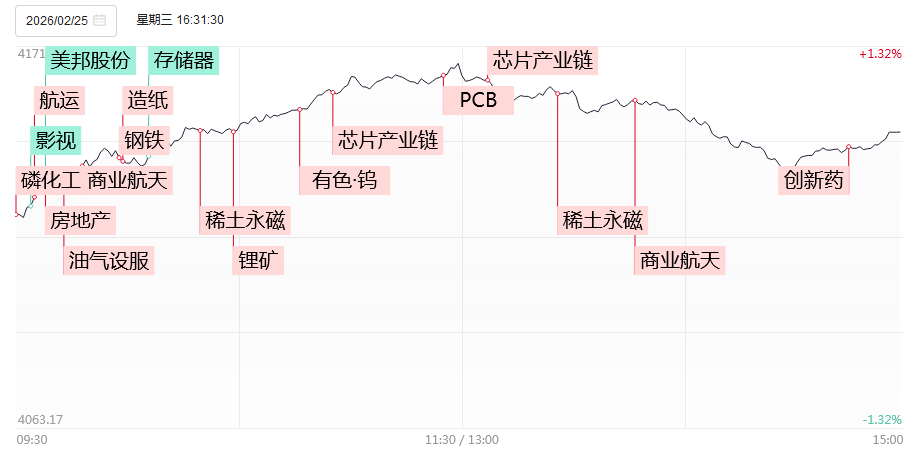
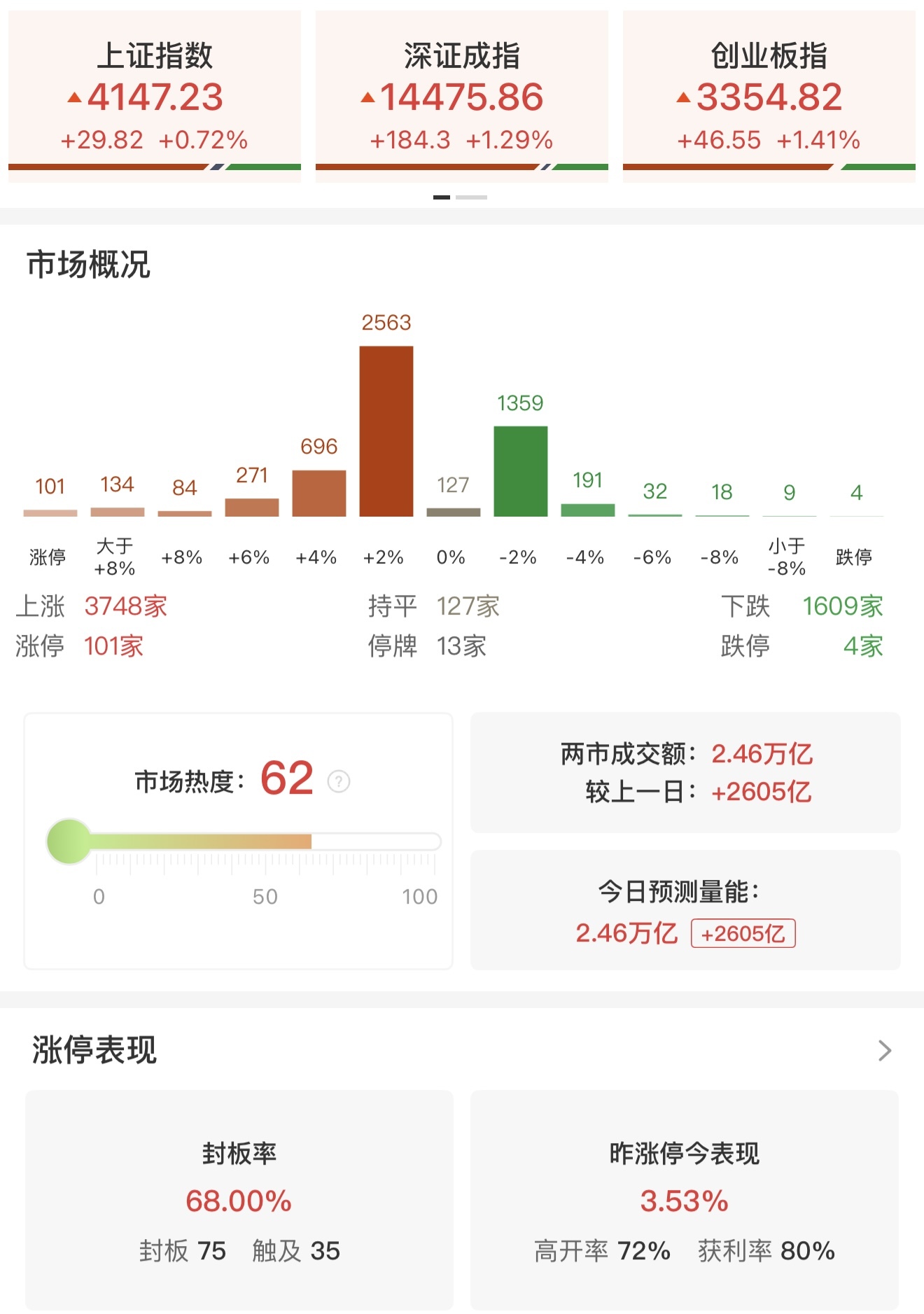
Market Performance - The market opened high on February 25, with a slight pullback in the afternoon before rising again, leading to the ChiNext Index and Shenzhen Component Index both increasing by over 1% [1] - The total trading volume in the Shanghai and Shenzhen markets reached 2.46 trillion yuan, an increase of 260.5 billion yuan compared to the previous trading day [1] - The Shanghai Composite Index rose by 0.72%, the Shenzhen Component Index by 1.29%, and the ChiNext Index by 1.41% by the end of the trading day [1] Sector Movements - The market saw rapid rotation of hot sectors, with over 3,700 stocks rising, including 101 stocks hitting the daily limit [1] - The phosphate chemical sector experienced a surge, with stocks like Chengxing Co., Liuguo Chemical, and Hebang Bio achieving consecutive limit-ups [1] - The rare earth permanent magnet concept continued to rise, with Zhongce Co. and Baogang Co. hitting the limit [1] - The lithium mining sector also strengthened, with Dazhong Mining hitting the limit [1] - The semiconductor industry chain was active, with Youyan Silicon and Helin Micro hitting the 20% limit [1] - The real estate sector showed strong performance, with I Love My Home and Urban Investment Holdings hitting the limit [1] Limit-Up Stocks - A total of 75 stocks hit the limit today (excluding ST and delisted stocks), with 18 stocks achieving consecutive limit-ups [1] - Key stocks included YN Holdings with five consecutive limit-ups, Hanlan Co. in the power grid equipment sector with four consecutive limit-ups, and Jiangtong Equipment in the rare earth permanent magnet sector with four limit-ups in five days [1] Price Trends - Recent price increases have been observed in tungsten, rare earths, and dyes [13] - The international price of phosphate fertilizer has surpassed $700 per ton following the U.S. designation of key herbicides as strategic materials [13] - The demand for semiconductor chips is rising, with Shenghe Crystal Micro's IPO approved to raise 4.8 billion yuan for advanced packaging projects [13] - The demand for computing hardware is surging, leading to supply imbalances and continuous price increases in various sub-products like optical fibers and glass fibers [13]


沪指涨0.72%,深成指、创业板指涨超1%
Mei Ri Jing Ji Xin Wen· 2026-02-25 07:17
Core Viewpoint - The stock market experienced fluctuations with the Shanghai Composite Index rising by 0.72%, while the Shenzhen Component and ChiNext Index increased by 1.29% and 1.41% respectively, driven by price increase catalysts in various sectors [1] Group 1: Sector Performance - The phosphorous chemical sector saw significant gains, with companies like Chuanjinnuo and Qingshuiyuan hitting the daily limit of price increase, alongside nearly 10 other stocks [1] - The rare earth permanent magnet sector also surged, with Baogang Co. and China Nonferrous Metal Mining Co. reaching their daily price limits [1] - The semiconductor industry chain strengthened in the afternoon, with companies such as Helin Micro-Nano and Yuyuan Silicon achieving a 20% increase in stock price [1]



收评:沪指放量涨0.72%,涨价题材股全线大涨
Feng Huang Wang Cai Jing· 2026-02-25 07:15
Market Performance - The market opened high and experienced a slight pullback in the afternoon before rising again, with both the ChiNext Index and the Shenzhen Component Index increasing by over 1% [1] - The total trading volume in the Shanghai and Shenzhen markets reached 2.46 trillion yuan, an increase of 260.5 billion yuan compared to the previous trading day [1] - By the end of the trading session, the Shanghai Composite Index rose by 0.72%, the Shenzhen Component Index increased by 1.29%, and the ChiNext Index gained 1.41% [1] Sector Performance - The market saw rapid rotation of hotspots, with over 3,700 stocks rising, including 101 stocks hitting the daily limit [1] - Price increase catalysts led to strong performances in sectors such as rare earths, phosphorus chemicals, and oil and gas [1] - The phosphorus chemical sector experienced a breakout, with stocks like Chengxing Co., Liuguo Chemical, and Hebang Bio achieving consecutive limit-ups [1] - The rare earth permanent magnet concept continued to rise, with Zhongcai Co. and Baogang Co. hitting the daily limit [1] - Lithium mining concepts also strengthened, with Dazhong Mining reaching the daily limit [1] - The semiconductor industry chain was active, with stocks like Yuyuan Silicon and Helin Micro reaching 20% limit-ups [1] - The real estate sector showed strong performance, with stocks like I Love My Home and Urban Investment Holdings hitting the daily limit [1] - In contrast, the film and theater sector saw a decline, with Hengdian Film experiencing consecutive limit-downs [1] Limit-Up Statistics - The limit-up rate was recorded at 68.00%, with 75 stocks hitting the limit and 35 stocks touching the limit [4] - The limit-up performance from the previous day was 3.53%, with a high opening rate of 72% [4]
A股近4000股飘红,化肥锂电爆发,川金诺20cm涨停,港股MINIMAX跌超11%
Xin Lang Cai Jing· 2026-02-25 04:19
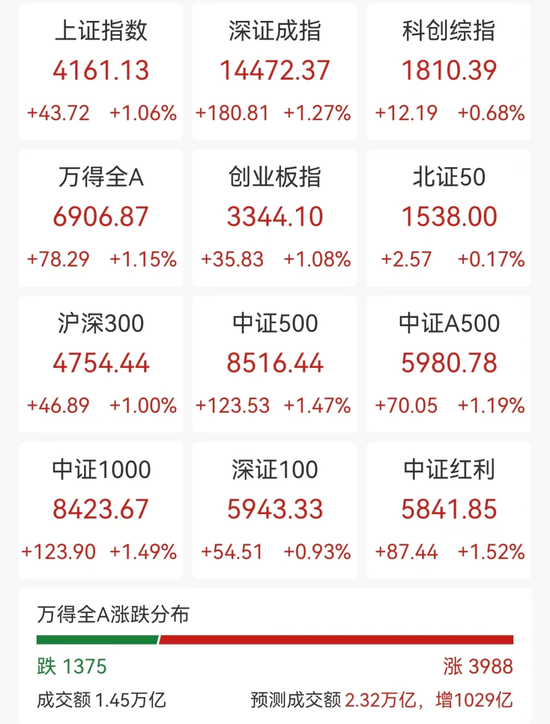
Market Overview - On February 25, A-shares saw all three major indices rise by over 1%, with the Sci-Tech Innovation Index increasing by nearly 0.7%, and nearly 4,000 stocks in the market experiencing gains [9][10] - The total trading volume reached 1.45 trillion yuan, with a significant increase of 102.9 billion yuan compared to the previous day [10] Sector Performance - The fertilizer and pesticide sector experienced a surge, with stocks like Chuanjinnuo hitting the daily limit, and other companies such as Chitianhua and Yuntianhua also seeing significant gains due to rising prices of urea, potassium sulfate compound fertilizer, and monoammonium phosphate [10][11] - Shipping stocks collectively strengthened, with China Merchants Energy achieving a historical high, and other companies like COSCO Shipping Energy and COSCO Shipping Development also rising, driven by a spike in oil tanker spot freight rates reaching a nearly six-year high [11][12] - Lithium battery concept stocks saw substantial increases, with Hanrui Cobalt rising over 11%, and other companies like Wenkang New Energy and Nord Shares also performing well, as lithium carbonate futures broke through the 170,000 yuan mark, marking a significant daily increase of over 10% [12] International Market Trends - The Nikkei 225 index in Japan rose by 1.4%, reaching a historical high, while the Korean Composite Stock Price Index expanded its gains to 2%, also hitting a historical high, with automotive stocks like Kia and Hyundai seeing significant increases [14] - International gold and silver prices surged, with spot silver rising over 3% and spot gold briefly surpassing 5,190 USD per ounce [14][15]




21社论丨工业经济趋稳向优,凸显经济新动能发展提速
21世纪经济报道· 2026-01-29 00:12
Core Insights - The core viewpoint of the article is that China's industrial economy is showing signs of stabilization and transformation, with a notable shift towards new growth drivers, particularly in high-tech and equipment manufacturing sectors, indicating a fundamental change in development quality and efficiency [1][2]. Group 1: Industrial Profit Growth - In 2025, the total profit of large-scale industrial enterprises reached 73,982 billion yuan, marking a 0.6% increase from the previous year, indicating a return to positive growth after three years [1]. - December 2025 saw a profit increase of 5.3% for large-scale industrial enterprises, reversing a 13.1% decline in November, reflecting a significant recovery [1]. Group 2: Contribution of New Growth Drivers - The profit of large-scale equipment manufacturing increased by 7.7%, contributing 2.8 percentage points to the overall profit growth of large-scale industrial enterprises, with this sector accounting for 39.8% of total industrial profits, up 2.6 percentage points from the previous year [1]. - High-tech manufacturing profits grew by 13.3%, surpassing the overall industrial growth rate by 12.7 percentage points, highlighting a shift towards technological innovation and value chain enhancement [2]. Group 3: Structural Changes in Industries - Significant profit growth was observed in key sectors such as semiconductors, with integrated circuit manufacturing profits increasing by 172.6%, and other related sectors also showing substantial growth [2]. - Traditional industries, particularly mining, faced profit declines, with the mining sector's profits dropping by 26.2%, primarily due to falling international oil prices and the transition to green energy [3]. Group 4: Challenges and Structural Imbalances - The article notes ongoing challenges in balancing growth, with traditional sectors struggling against the backdrop of technological revolutions and market demand shifts [4]. - There is a need for continuous transformation of traditional industries and addressing issues of overcapacity while promoting effective competition through mergers and acquisitions [4].

21社论丨工业经济趋稳向优,凸显经济新动能发展提速
Xin Lang Cai Jing· 2026-01-28 23:07
Group 1 - The core viewpoint of the articles indicates that China's industrial economy is showing signs of stabilization and transformation, with a return to positive profit growth for the first time in three years, achieving a total profit of 73,982 billion yuan in 2025, a 0.6% increase from the previous year [1] - In December 2025, profits for large-scale industrial enterprises increased by 5.3%, reversing a 13.1% decline in November, indicating a significant recovery [1] - The data reflects a structural shift in China's industrial economy, with new growth drivers emerging, particularly in the equipment manufacturing and high-tech manufacturing sectors, which are becoming the main contributors to profit growth [1][2] Group 2 - The equipment manufacturing sector saw a profit increase of 7.7%, contributing 2.8 percentage points to the overall profit growth of large-scale industrial enterprises, with its profit share rising to 39.8% [1] - High-tech manufacturing profits grew by 13.3%, surpassing the overall industrial profit growth rate of 12.7%, highlighting its role in driving high-quality industrial development [1] - Key industries such as semiconductors experienced explosive profit growth, with integrated circuit manufacturing profits increasing by 172.6%, indicating the success of China's innovation-driven development strategy [2] Group 3 - Traditional industries, particularly mining, faced significant profit declines, with the mining sector's profits dropping by 26.2%, primarily due to falling international oil prices and the transition to green energy [2] - The shift in industrial growth logic is moving from speed and scale to quality and efficiency, with profit growth becoming more closely linked to added value rather than revenue growth [3] - The industrial sector is currently experiencing a phase of structural differentiation, with challenges arising from the transformation of traditional economies and the difficulties faced by many small and medium-sized enterprises [3] Group 4 - Domestic consumption and investment are still in the recovery phase, while external demand faces increased volatility due to geopolitical and economic uncertainties, leading to challenges of insufficient effective demand and overcapacity in the industrial sector [4] - Continuous efforts are needed to promote the transformation and upgrading of traditional industries, encouraging mergers, restructuring, or exits to eliminate inefficient capacity and help improve the financial health of industrial enterprises [4]
2025年工业企业利润同比增长0.6% 半导体产业链实现“加速跑”
Zhong Guo Jing Ying Bao· 2026-01-27 11:31
Core Viewpoint - In 2025, the profits of industrial enterprises in China showed a slight increase of 0.6% compared to the previous year, indicating a stabilization and recovery in the industrial economy supported by macro policies and structural adjustments [2] Group 1: Overall Industrial Performance - In December 2025, the profits of industrial enterprises turned from a decline of 13.1% in November to a growth of 5.3%, reflecting an increase in economic vitality towards the end of the year [2] - The overall profit growth in 2025 marked a reversal from three consecutive years of decline, driven by proactive macro policies and advancements in new industrialization [2][6] Group 2: Sector-Specific Insights - The equipment manufacturing sector contributed significantly to the overall profit growth, with a profit increase of 7.7%, accounting for 39.8% of total industrial profits [3] - Among the eight major categories in equipment manufacturing, seven experienced profit growth, with notable increases in the railway, shipbuilding, aerospace, and electronic equipment sectors [3] Group 3: High-Tech Manufacturing Impact - High-tech manufacturing profits rose by 13.3%, surpassing the overall industrial profit growth rate, indicating strong momentum in this sector [3][4] - The smart consumer devices sector saw a remarkable profit increase of 48.0%, with specific industries like smart drones and smart vehicle equipment achieving growth rates of 102.0% and 88.8%, respectively [4] Group 4: Future Outlook - The industrial profit growth is expected to maintain a moderate recovery, supported by ongoing developments in high-tech manufacturing and green transformation [5] - Challenges such as external uncertainties and overcapacity in certain industries may lead to structural differentiation in profit growth [5][6]

盈方微再谋并购:此前三次内部并购全部折戟 标的之一曾有盈利与大客户问题
Xin Lang Cai Jing· 2026-01-16 07:55
Core Viewpoint - Yingfang Micro is planning a significant asset restructuring by acquiring controlling stakes in three semiconductor companies: Shiqing Intelligent, Shanghai Xiaokeli, and Fujide China, in response to its ongoing financial struggles despite revenue growth [1][10]. Group 1: Financial Performance and Challenges - Yingfang Micro has experienced excellent revenue growth, with year-on-year increases exceeding 17% for the first three quarters of 2024 and 2025, yet its profits have consistently declined, turning negative in 2023 with a net loss of 60.06 million yuan [1][10]. - The company has struggled with profitability since its listing, with its highest net profit barely exceeding 100 million yuan, and it faced a suspension of trading in April 2020 due to three consecutive years of negative net profits [2][11]. - After a series of failed attempts to acquire remaining stakes in its subsidiaries, Yingfang Micro is shifting its focus to external acquisitions as a means to recover financially [3][13]. Group 2: Previous Acquisition Attempts - Yingfang Micro's first attempt to restructure through the acquisition of 49% stakes in Huaxin Technology and World Style for 1.476 billion yuan was rejected by the China Securities Regulatory Commission in March 2022 due to concerns over shareholder rights [12]. - A second attempt in July 2023 also failed due to significant changes in market conditions and a lack of consensus on key terms among the parties involved [3][12]. - The third attempt in March 2024 was terminated after regulatory issues arose, including allegations of insider information leaks [3][12]. Group 3: Target Companies Overview - The three target companies for acquisition cover various segments of the semiconductor industry, including chip design, component distribution, and packaging testing services, indicating a complementary industrial chain [5][14]. - Shiqing Intelligent, established in 2018, focuses on edge intelligent interaction and signal processing chips and has received multiple rounds of investment from notable firms [15]. - Shanghai Xiaokeli, founded in 2005, specializes in component distribution across various sectors, including consumer electronics and automotive, and has previously sought an IPO [16][17]. - Fujide China, formed in 2006, was spun off from Schmidt Electronics Group and has historical significance in introducing key electronic assembly equipment to China [15].

十大券商一周策略:“春季躁动”行情积极因素累积,拥抱更具备确定性的“实物需求拉动”与“内需政策红利”
Sou Hu Cai Jing· 2025-12-21 23:57
Group 1 - The market is entering a critical window for cross-year layout, with expectations for A-shares to resonate upward with global markets by 2026, focusing on "technology + overseas expansion" as a continuing theme [1][2] - Current market conditions are characterized by narrow fluctuations, influenced by external factors such as concerns over the AI bubble in the US and interest rate hikes by the Bank of Japan [2][3] - Investor sentiment has recently dropped below 70, indicating a pessimistic outlook that may lead to a slight recovery in sentiment and upward market fluctuations [2] Group 2 - Industry allocation strategies include focusing on high dividend stocks, cyclical sectors, and thematic hotspots such as Hainan's duty-free shopping and nuclear power [2][4] - The anticipated "cross-year-spring" market rally is supported by early policy implementation and increased institutional investment in broad-based ETFs [4][5] - The potential for a structural outperformance in sectors like brokerage and technology is expected, driven by upcoming monetary policy changes and market liquidity improvements [7][8] Group 3 - The ongoing appreciation of the RMB is expected to influence asset allocation, with approximately 19% of industries likely to see profit margin improvements due to currency appreciation [3] - Key sectors benefiting from policy support include AI, aerospace, and innovative pharmaceuticals, while cyclical sectors like chemicals and energy metals may also see positive impacts [6][9] - The market is expected to experience a "spring rally" driven by favorable valuation levels, liquidity conditions, and catalysts that enhance risk appetite [6][12] Group 4 - The outlook for 2026 suggests a shift from a single narrative to a broader focus on physical demand and domestic policy benefits, with sectors like AI and consumer services poised for recovery [10][13] - Non-bank financials are highlighted as having significant earnings elasticity, while sectors like electric equipment and machinery are expected to benefit from AI investments and export demand [13][14] - The market is currently in a phase of adjustment before the anticipated cross-year rally, with a focus on structural opportunities aligned with policy directions and industry trends [11][14]
兴证策略:会有跨年行情吗?
智通财经网· 2025-11-30 11:22
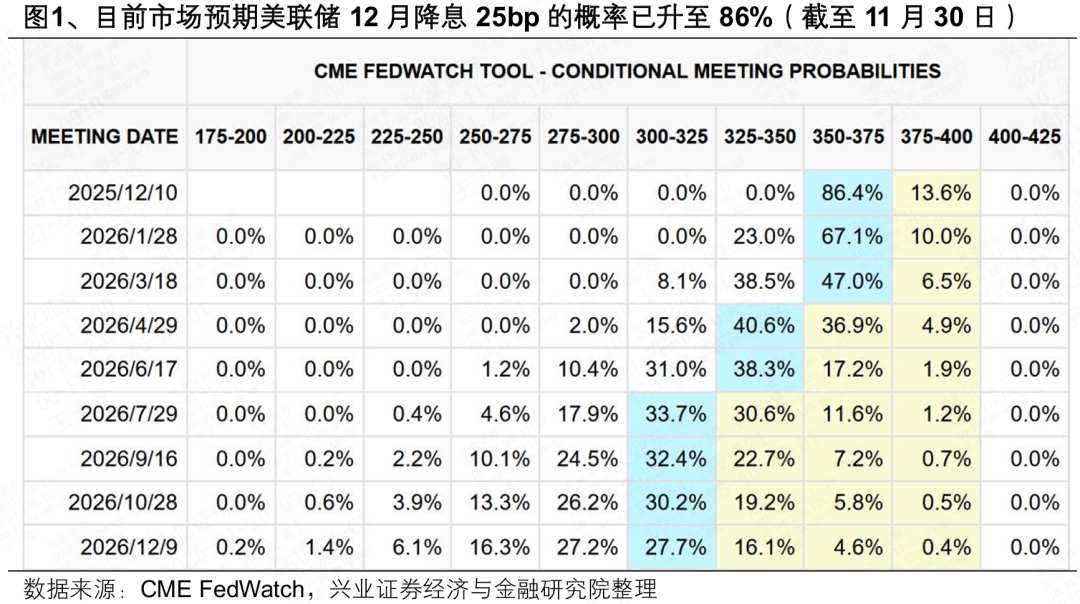
Core Viewpoint - Recent easing of various market disturbances is expected to lead to a recovery in Chinese assets, supported by the Federal Reserve's dovish signals and the alleviation of concerns regarding the "AI bubble" [1] Group 1: Market Conditions - The Federal Reserve's statements and economic data have increased expectations for a rate cut, with an 86% probability for a 25 basis point cut in December [2] - The global AI industry's progress is alleviating concerns about an "AI bubble," with Google's comprehensive approach to AI leading the narrative in the tech sector [1] Group 2: Year-End Market Dynamics - The year-end period is historically a significant window for market rallies, with previous years showing upward trends starting from November to early January [3] - Factors driving these rallies include a vacuum in fundamental data, upcoming important meetings, and expectations for policy easing [3] Group 3: Catalysts for Market Movements - Market rallies can be triggered by three main factors: 1. Economic improvement leading to a pro-cyclical style [4] 2. Unexpected macro policy changes benefiting high-elasticity sectors [4] 3. Easing of prior risks and liquidity expansion favoring sectors with favorable trends [4] Group 4: Investment Directions - Focus on sectors with high growth expectations, including AI, advantageous manufacturing, "anti-involution," and structural recovery in domestic demand [7] - Emphasis on cyclical sectors benefiting from stable growth policies and market expectations [10] Group 5: Policy and Economic Outlook - The year-end meetings are expected to provide clarity on policies aimed at enhancing service consumption and investment in human capital, which could benefit cyclical sectors [10] - The emphasis on technological self-reliance and new productivity in the context of national competition is likely to drive growth in tech sectors [13]