
外卖平台服务

Search documents
春节消费旺季将至 多地发文要求外卖平台停止“内卷式”竞争
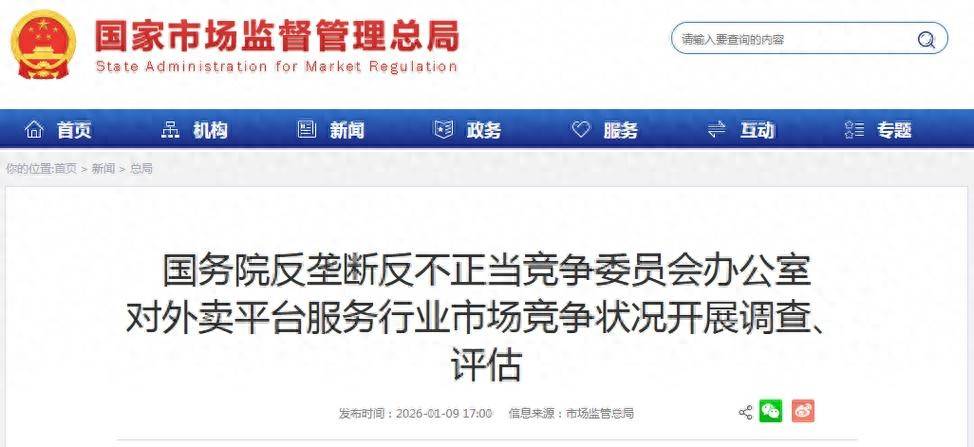
Zheng Quan Ri Bao Wang· 2026-02-14 04:10
Core Viewpoint - Regulatory authorities across multiple regions in China have issued guidelines to curb irrational competition among food delivery platforms during the Spring Festival, emphasizing the need to maintain market order and prevent harmful practices such as excessive subsidies and price dumping [1][2][3] Group 1: Regulatory Actions - Various local market regulatory departments have released compliance guidelines for food delivery platforms, prohibiting practices that lead to unhealthy competition, such as low-quality, low-price strategies [1] - The market supervision bureau in Qinhuangdao has specifically warned against practices like "choose one from two" and the misuse of data or technological advantages to impose unreasonable trading conditions [1] - The Zhengzhou market supervision bureau has highlighted the prohibition of forcing platform operators to participate in promotional activities, ensuring that all marketing efforts are voluntary and fair [2] Group 2: Industry Concerns - Industry organizations have expressed concerns that the ongoing subsidy wars since 2025 have distorted competition, reducing the pricing power of small merchants and squeezing the profit margins of offline businesses [2] - The Gansu Catering and Cooking Industry Association has called for the regulation of "involutionary" competition to stabilize the restaurant market, while the Baoji Catering Industry Association has suggested clarifying the compliance boundaries for platform subsidies [2] Group 3: Policy Signals - Since 2025, there has been increasing pressure from policymakers to address "involutionary" competition, with the State Administration for Market Regulation conducting investigations into the competitive practices of food delivery platforms [3] - The investigation signals a strong regulatory focus on preventing monopolistic and unfair competition behaviors in the platform economy, aiming to maintain basic market order [3] - The investigation is expected to drive the industry towards a more standardized and healthy development, addressing issues like excessive subsidies and price competition that harm the survival of the real economy [3] Group 4: Future Outlook - Experts believe that clarifying competition boundaries and establishing rules will help maintain innovation and a healthy competitive ecosystem within the industry [4] - The regulatory push is anticipated to transition the food delivery industry from a phase of subsidy wars to one focused on high-quality development, potentially alleviating price competition and fostering balanced innovation [4]
趣活股价波动显著,市场监管加强影响本地生活服务平台
Jing Ji Guan Cha Wang· 2026-02-12 23:01
Group 1: Regulatory Environment - The Chinese market regulatory authorities have intensified their efforts to regulate the platform economy sector since the beginning of 2026, with a focus on the competitive landscape of the food delivery service industry [1] - The National Market Supervision Administration announced an investigation into the market competition status of food delivery platforms, which may impact the operational environment for local life service platforms, including QH [1] Group 2: Stock Performance - QH's stock has shown significant volatility over the past week, with a price fluctuation range of 19.61% and an amplitude of 28.36% [2] - Specific daily performance includes a 7.35% increase on February 9, a 4.83% increase on February 10, a 1.82% increase on February 11, and a 2.00% increase on February 12, closing at $0.97 [2] - The stock has experienced high trading activity, with a turnover rate reaching 16.22%, indicating strong short-term market interest [2] Group 3: Financial Performance - QH's latest financial report indicates that the company is still in a loss position, with revenue of $15.6 million and a net loss of $7.32 million [3] - The earnings per share stand at -$7.34, and the gross margin is relatively low, which is a key concern for investors [3]

国务院点名,744亿补贴叫停,行业迎来新变化,廉价外卖将终结
Sou Hu Cai Jing· 2026-02-04 08:52
Core Insights - The Chinese internet food delivery industry has officially ended the "money-burning for market share" era, with a significant intervention from the State Administration for Market Regulation, halting a year-long subsidy war involving major players like Meituan, Taobao Flash, and JD Delivery [1][2][12] Group 1: Industry Changes - The subsidy war, which saw a total investment of 744 billion yuan, has been characterized as a "suicidal attack" on the industry, leading to severe financial losses for major platforms [8][12] - In 2025, the intense competition resulted in a staggering 89% year-on-year drop in adjusted net profit for Meituan and a 78% decline in adjusted EBITA for Alibaba's instant retail business [8][10] - Over 12% of small and medium-sized restaurants succumbed to the pressure of forced low-price promotions, highlighting the detrimental effects of the subsidy war [10][12] Group 2: Regulatory Actions - The regulatory body has identified "subsidy wars, price competition, and traffic control" as critical issues that require immediate rectification [12][20] - The intervention marks a significant correction of the internet business logic, emphasizing the need for sustainable practices rather than short-term gains through subsidies [14][32] Group 3: Market Dynamics - Following the regulatory intervention, JD Delivery has shifted to a model charging a 5% service fee, indicating a return to a more sustainable business model focused on providing technical services [22] - The end of the subsidy war is expected to lead to a focus on quality and safety in the food delivery market, moving away from price as the primary competitive factor [33][35] Group 4: Consumer Impact - Consumers have begun to notice price increases, with average delivery prices rising by approximately 0.8 yuan, reflecting the end of artificially low prices [28][30] - The previous low-price model is described as a bubble that compromised food safety, with the new pricing structure aimed at ensuring better quality and service [30][38]



监管“利剑”出鞘 中国亮剑整治市场竞争乱象
Zhong Guo Xin Wen Wang· 2026-02-01 10:35
Group 1 - The Chinese market regulatory authorities have intensified efforts to address market competition issues, particularly in the food delivery and travel service sectors, by launching investigations into practices such as price wars and market dominance abuse [1][2] - The National Market Supervision Administration has emphasized the need to deepen fair competition governance, focusing on anti-monopoly and anti-unfair competition enforcement to combat "involution" in various industries [2][3] - Recent regulatory measures include the implementation of the "Live E-commerce Supervision Management Measures" and the prohibition of certain mergers in the public utility sector, aimed at curbing monopolistic behaviors and ensuring fair practices [3][4] Group 2 - The regulatory authorities are creating a favorable institutional environment for companies to engage in lawful mergers and acquisitions, particularly in sectors experiencing "involution," such as automotive and renewable energy [4] - A notable example of regulatory support is the approval of a joint venture between China National Petroleum Corporation and Contemporary Amperex Technology Co., which aims to enhance innovation and efficiency through strategic collaboration [4]
(经济观察)监管“利剑”出鞘 中国亮剑整治市场竞争乱象
Zhong Guo Xin Wen Wang· 2026-02-01 10:16
Group 1 - The Chinese market regulatory authorities have intensified efforts to address market competition issues, particularly in the food delivery and travel service sectors, by launching investigations into unfair practices such as price wars and market dominance [1][2] - The National Market Supervision Administration has announced a focus on deepening fair competition governance, emphasizing the need to combat monopolistic behaviors and "involution" in various industries, which has led to reduced profits and increased operational burdens [2][3] - Recent regulatory measures include the implementation of the "Live E-commerce Supervision Management Measures" to address issues like false advertising and unfair competition in the live e-commerce sector, as well as guidelines to regulate fees charged by online trading platforms [3] Group 2 - The regulatory authorities aim to create a favorable institutional environment for companies to engage in lawful mergers and acquisitions, particularly in sectors experiencing "involution" competition, such as automotive and renewable energy [4] - A notable example of regulatory support is the approval of a joint venture between China National Petroleum Corporation and Contemporary Amperex Technology Co., which is intended to enhance innovation and efficiency while avoiding homogeneous competition [4] - The National Market Supervision Administration plans to continue improving the review system for business consolidations to enhance efficiency and effectiveness in addressing "involution" competition [4]
【展望二〇二六】满足人民群众消费新期待
Jing Ji Ri Bao· 2026-01-31 05:13
Core Viewpoint - The Chinese market is undergoing significant regulatory changes in 2026, impacting competition in the food delivery and retail sectors, with a shift from aggressive price wars to a focus on service quality and consumer trust [1][2][3]. Group 1: Regulatory Changes - The State Council's Anti-Monopoly Committee announced investigations into the food delivery platform market and the alleged monopolistic behavior of Ctrip, indicating increased regulatory scrutiny [1][2]. - The Ministry of Finance and the State Taxation Administration will eliminate VAT export rebates for solar products starting April 1, 2026, reflecting a broader regulatory tightening [1]. - The market supervision authority released a list of major cases related to "involution" competition, highlighting ongoing efforts to address unfair practices in various industries [1][2]. Group 2: Market Dynamics - The competitive landscape in the food delivery sector is shifting from a "burning money" model to a focus on optimizing user experience and sustainable business practices [2][3]. - Major platforms are transitioning from merely delivering food to providing a broader range of retail services, indicating a strategic pivot towards becoming comprehensive retail infrastructures [4][5]. - The competition is expected to evolve into a "full-scenario retail war," integrating offline experiences, supply chain efficiency, and product quality [4][5]. Group 3: Consumer Behavior - Consumers are increasingly rejecting "involution" products characterized by extreme price cuts, signaling a demand for better quality and service [6][7]. - The market is anticipated to segment into two layers: one focused on efficiency and cost-effectiveness, and another on emotional and personalized experiences [8][12]. - The rise of local and individual creators is fostering a diverse ecosystem, enhancing consumer engagement and satisfaction [12][14]. Group 4: Food Safety and Transparency - Regulatory efforts are shifting from reactive measures to proactive prevention in food safety, aiming for a comprehensive regulatory framework to ensure consumer trust [9][10]. - New standards and regulations are being developed for pre-packaged food, emphasizing transparency and accountability in the food supply chain [9][10]. - The implementation of traceability systems and enhanced monitoring is expected to improve food safety and consumer confidence [10][11].
满足人民群众消费新期待
Jing Ji Ri Bao· 2026-01-30 22:19
Core Viewpoint - The competitive landscape in the food delivery and retail sectors is shifting towards a focus on service quality and sustainable practices, driven by regulatory interventions and changing consumer expectations [1][2][3]. Group 1: Regulatory Changes and Market Dynamics - The State Council's Antitrust Committee announced investigations into the food delivery platform market and other sectors to assess competition [1]. - The Ministry of Finance and the State Taxation Administration will eliminate VAT export rebates for solar products starting April 1, 2026 [1]. - The market is witnessing a transition from aggressive price competition to a focus on service quality and user experience, as exemplified by the decline of "zero-yuan milk tea" promotions [2][3]. Group 2: Industry Evolution and Strategic Shifts - Major platforms are moving from a "burning money" strategy to a dual strategy of consolidating core businesses while exploring new retail avenues [4][5]. - The competition is evolving from food delivery to instant retail, with companies like Alibaba aiming to dominate the instant retail market by investing heavily [3][4]. - The focus is shifting towards optimizing user experience and ensuring sustainable business practices, moving away from mere scale expansion [2][3]. Group 3: Consumer Behavior and Market Trends - Consumers are increasingly rejecting "involution" products that prioritize low prices over quality, indicating a demand for better service and product standards [6][7]. - The market is expected to segment into efficiency-driven and experience-driven categories, reflecting diverse consumer needs [8][12]. - The rise of local brands and unique experiences is fostering a more vibrant consumer ecosystem, as seen in the popularity of cultural and experiential offerings [12][13]. Group 4: Food Safety and Transparency - Regulatory efforts are shifting towards proactive measures in food safety, aiming for a comprehensive oversight system to prevent risks [9][10]. - Initiatives are being implemented to enhance transparency in food sourcing and processing, which is crucial for rebuilding consumer trust [10][11]. - The food safety environment is anticipated to improve through ongoing regulatory adjustments and market responses to consumer concerns [11].
互联网平台治理任重道远
Zhong Guo Qing Nian Bao· 2026-01-19 22:49
Core Viewpoint - The recent investigation into Ctrip for alleged monopolistic practices serves as a warning to all platform enterprises, highlighting the ongoing tightening of regulations in China's platform economy [2][3]. Group 1: Regulatory Actions and Investigations - As of December 17, 2025, China has handled 35 cases of monopoly agreements and 25 cases of abuse of market dominance, with total fines amounting to 2.93 billion yuan [4]. - Ctrip is under investigation for suspected abuse of market dominance, with the company stating it will cooperate with the investigation [2]. - The National Market Supervision Administration has emphasized the need for continuous regulation of platform economies, with key tasks for 2026 including strengthening regular oversight and ensuring compliance [2]. Group 2: Impact on Platform Enterprises - Ctrip may face operational adjustments, confiscation of illegal gains, and substantial fines, estimated between 533 million to 5.33 billion yuan based on its 2024 revenue of 53.3 billion yuan [3]. - The investigation serves as a critical reminder for all platform enterprises to abandon monopolistic practices and ensure transparency and fairness in transactions [3]. Group 3: Broader Regulatory Framework - The Chinese government has been enhancing its antitrust framework, with recent statistics showing a significant increase in enforcement actions against monopolistic practices [4][6]. - New regulations, such as the "Internet Platform Antitrust Compliance Guidelines," aim to delineate compliance boundaries and encourage self-assessment among platform operators [6]. - The government is also focusing on addressing "involutionary" competition, which is characterized by low-quality, low-price competition that disrupts market efficiency [4][6]. Group 4: Specific Industry Regulations - The food delivery platform sector is under scrutiny, with new national standards introduced to regulate competition and address issues like excessive subsidies and price wars [4]. - The Market Supervision Administration is conducting evaluations of the competitive landscape in the food delivery industry to mitigate monopolistic risks and ensure market order [4]. Group 5: Responsibilities of Platform Enterprises - Platform enterprises are seen as key players in the regulatory landscape, with a need for clear delineation of responsibilities in various scenarios [10][11]. - New regulations will require platform operators to fulfill obligations related to product information disclosure and quality monitoring, reinforcing their role as market order maintainers and consumer rights protectors [12].

宏观周报:持续加大推进清理拖欠企业账款力度-20260118
KAIYUAN SECURITIES· 2026-01-18 13:42
Economic Policy - The focus on economic growth includes efforts to clear overdue corporate payments and wages, with special bonds issued to support local responsibilities[10] - The government aims to enhance housing supply to meet diverse consumer needs, emphasizing urban planning and infrastructure improvements[12] Infrastructure and Industry - Recent policies include the "AI + Manufacturing" initiative, targeting significant advancements in AI technology by 2027[11] - The government investment fund will support key strategic industries, including new energy, high-end equipment, and emerging technologies like quantum information and generative AI[11] Monetary Policy - The central bank has lowered the re-lending and rediscount rates by 0.25 percentage points and introduced a new 500 billion yuan re-lending for small and micro enterprises[14] - There is an expectation of 1-2 interest rate cuts in 2026, depending on economic conditions[15] Real Estate Policy - Tax incentives for home purchases have been extended, including a reduction in the minimum down payment for commercial property loans to 30%[17] Consumer Policy - The government is promoting green consumption, with initiatives to support the replacement of old products with new, energy-efficient ones[18] Financial Regulation - The minimum margin requirement for financing securities has been increased from 80% to 100% for new contracts, aimed at reducing leverage and protecting investors[21] Trade Policy - Adjustments to export tax rebates for photovoltaic products will take effect from April 1, 2026, with a reduction in the VAT rebate rate from 9% to 6%[25] Overseas Macro Policy - The U.S. Federal Reserve indicates that interest rates are nearing a neutral level, with future policy adjustments dependent on economic data[27] Risk Warning - There is a risk of divergence in domestic and foreign monetary policies, with potential underperformance in the execution of domestic policies[31]
反垄断愈深入,市场活力愈澎湃
Ren Min Ri Bao· 2026-01-16 12:55
Core Viewpoint - Recent actions in antitrust regulation highlight the increasing scrutiny of market competition, particularly in the online service sector, with a focus on platforms like Ctrip and the implications of monopolistic practices [2][3]. Group 1: Antitrust Investigations - The State Council's Antitrust and Unfair Competition Committee is conducting an investigation into the competitive landscape of the food delivery platform service industry [2]. - Ctrip is under investigation for allegedly abusing its market dominance, following previous fines imposed on Alibaba Group and Meituan for similar monopolistic behaviors [3]. Group 2: Impact of Monopolistic Practices - Monopolistic behavior is identified as a driver of "involution" and a barrier to innovation, forcing platform merchants into price wars to gain visibility [4]. - The investigation into Ctrip is seen as a response to complaints from merchants regarding unfair pricing practices and unreasonable transaction conditions [4]. Group 3: Importance of Antitrust Measures - Antitrust regulations are essential for maintaining a healthy market ecosystem, allowing diverse business entities to thrive and contribute to public welfare [5]. - Effective antitrust enforcement is necessary to prevent monopolies from distorting resource allocation and harming both businesses and consumers [5]. Group 4: Regulatory Strategies - While hefty fines serve as a deterrent, the focus should be on addressing the root causes of monopolistic behavior to prevent ongoing issues in the digital economy [6]. - The regulatory approach should adapt to the challenges posed by digital platforms, ensuring fair competition and transparency in operations [6]. Group 5: Future Directions - The "14th Five-Year Plan" emphasizes strengthening antitrust enforcement and addressing "involution-style" competition to promote win-win development among platform enterprises and their stakeholders [7]. - Antitrust efforts are framed not as restrictions on platform companies but as protections for the platform economic environment, encouraging long-term stability and growth [7].