
小核酸药物

Search documents
小核酸行业系列报告(一):小核酸成药之路——Listening to the Sound of Silence:The Road to RNA Therapeutics
Tai Ping Yang Zheng Quan· 2026-03-13 12:24
Investment Rating - The report does not explicitly state an investment rating for the small nucleic acid industry Core Insights - Small nucleic acid drugs have transitioned from technical validation to commercial realization, with projected sales of approximately $3.1 billion for ASO and $4.2 billion for siRNA by 2025 [3] - The development paths of ASO and siRNA are shaped by their mechanistic differences, with ASO utilizing a single-strand structure for direct delivery into target cells, while siRNA relies on carrier systems for effective delivery [3] - Continuous evolution in chemical modifications and delivery platforms has improved the stability, targeting, safety, and convenience of small nucleic acid drugs, expanding their applications from rare diseases to chronic conditions [3] - Current advancements in liver-targeting technologies are paving the way for the next phase of delivery to extrahepatic tissues, with future valuations of small nucleic acid companies focusing on platform capabilities and expansion into chronic disease treatments [3] Summary by Sections Small Nucleic Acids Unlock Gene Expression Regulation - Small nucleic acid drugs can target previously undruggable proteins by intervening at the gene expression level, significantly broadening the potential therapeutic targets [9][11] Pathways of Small Nucleic Acid Drug Development - ASO and siRNA represent two distinct technological pathways, with ASO focusing on RNA degradation and splicing regulation, while siRNA employs the RISC mechanism for mRNA degradation [12][26] Chemical Modifications and Stability - The report outlines four generations of chemical modifications that enhance the stability and specificity of ASO, which are crucial for their therapeutic efficacy [32][36] Delivery Breakthroughs - The report identifies the challenges of delivering small nucleic acids across cellular barriers, emphasizing the need for effective delivery systems to overcome these obstacles [40][43] Safety Optimization - Innovations in safety management, such as the development of antidotes for siRNA and toxicity control for ASO, are essential for supporting long-term use and chronic disease management [3][62] Commercialization and Boundary Expansion - The industry is moving from liver-targeted therapies to exploring delivery strategies for other tissues, with companies like Alnylam aiming for multi-organ delivery by 2030 [60][61]
小核酸行业系列报告(一):小核酸成药之路:ListeningtotheSoundofSilence:小核酸成药之路
Tai Ping Yang Zheng Quan· 2026-03-13 10:11
Investment Rating - The report does not explicitly state an investment rating for the small nucleic acid industry Core Insights - Small nucleic acid drugs have transitioned from technical validation to commercial realization, with projected sales of approximately $3.1 billion for ASO and $4.2 billion for siRNA by 2025 [3] - The development paths of ASO and siRNA are shaped by their mechanistic differences, with ASO utilizing a single-strand structure for direct delivery into target cells, while siRNA relies on carrier systems for effective delivery due to its larger size and strong negative charge [3] - Continuous evolution in chemical modifications and delivery platforms has improved the stability, targeting, safety, and convenience of small nucleic acid drugs, expanding their application from rare diseases to chronic conditions [3] - Current advancements in liver-targeting technologies are paving the way for the next phase of delivery to extrahepatic tissues, with future valuations of small nucleic acid companies focusing on platform capabilities and expansion into chronic disease treatments [3] Summary by Sections Small Nucleic Acids Unlock Gene Expression Regulation - Small nucleic acid drugs can target previously undruggable proteins by intervening at the gene expression level, significantly broadening the potential therapeutic targets [9][11] Pathways to Small Nucleic Acid Drug Development - The report outlines the dual pathways of ASO and siRNA, highlighting their distinct mechanisms and therapeutic applications [12][30] Mechanistic Differences: ASO vs. siRNA - ASO employs RNase H-mediated degradation and splicing regulation to inhibit protein expression, while siRNA utilizes the RISC mechanism for mRNA degradation [20][26] Chemical Modifications and Stability - The report details the evolution of chemical modifications across four generations, enhancing the stability and specificity of ASO and siRNA [32][36] Delivery Breakthroughs - The challenges of delivering small nucleic acids across cellular barriers are discussed, emphasizing the need for effective delivery systems [40][44] Safety Optimization - Innovations in toxicity management for ASO and siRNA are crucial for supporting long-term use and chronic disease management [62][64] Commercialization and Boundary Expansion - The report emphasizes the transition from liver-targeted therapies to exploring delivery strategies for other tissues, indicating a strategic shift in the industry [60][61]





东海证券晨会纪要-20260211
Donghai Securities· 2026-02-11 03:07
Key Insights - The report highlights significant capital expenditure increases among the four major CSP manufacturers, driven by demand that is pushing up power semiconductor prices, indicating a robust recovery in the electronic sector [6][7] - The semiconductor industry is expected to reach a historic high in sales in 2025, with a projected increase in demand for computing power due to AI infrastructure investments [8] - The excavator market saw a substantial increase in both domestic and export sales in January 2026, indicating strong demand recovery in the machinery sector [13][14] - The small nucleic acid sector is gaining traction, with notable collaborations and sales growth, reflecting the increasing value of this market segment in the pharmaceutical industry [18][19] Group 1: Electronic Industry - The electronic sector is experiencing a recovery, with AI infrastructure investments leading to a surge in capital expenditures among major CSPs, expected to reach $670 billion in 2026, a 60% increase year-on-year [7] - The global semiconductor sales reached $791.7 billion in 2025, with a projected increase to over $1 trillion in 2026, driven by demand from AI and IoT technologies [8] - The price increase trend in semiconductors is spreading from memory chips to power, analog, and MCU chips, indicating a comprehensive price cycle in the semiconductor industry [8] Group 2: Machinery Industry - In January 2026, excavator sales increased by 49.5% year-on-year, with domestic sales up 61.4% and exports up 40.5%, reflecting strong demand recovery [13][14] - The loader market also saw significant growth, with sales increasing by 48.5% year-on-year, driven by major domestic projects and a growing overseas market [15] - The overall machinery industry is expected to continue its recovery, supported by government policies and infrastructure projects [14][15] Group 3: Pharmaceutical Industry - The small nucleic acid sector is highlighted for its potential, with a recent collaboration between Saint Gene and Gene Tech valued at up to $1.7 billion, showcasing the sector's growth and international recognition [19][20] - The pharmaceutical sector overall saw a slight increase of 0.14% in the last week, with certain sub-sectors like traditional Chinese medicine and medical services performing particularly well [18] - Investment opportunities are identified in biotech firms with core delivery technologies and those focusing on chronic disease areas, indicating a shift towards more sustainable growth in the pharmaceutical market [20]
2026-01-19:26年小核酸行业催化不断,持续看好产业链投资机会
China Post Securities· 2026-01-19 08:24
Investment Rating - The industry investment rating is "Outperform" [2] Core Views - The report emphasizes the continuous catalysts in the small nucleic acid industry for 2026, highlighting the potential investment opportunities within the industry chain [5][19] - The report suggests a positive outlook for innovative drugs and the industry chain, with expectations of increased global participation from domestic innovative drug companies and the introduction of more innovative projects in 2026 [11][30] - The report identifies the medical device sector as a potential area for capital inflow, with signs of improvement in leading companies and a reduction in the pressure from centralized procurement [13][34] Summary by Sections Industry Overview - The closing index for the industry is at 8657.19, with a 52-week high of 9323.49 and a low of 6876.88 [2] Recent Market Performance - The A-share pharmaceutical and biotechnology sector fell by 0.68% from January 12 to January 16, 2026, underperforming the CSI 300 index by 0.11 percentage points [9][28] - The medical research outsourcing sector performed the best among sub-sectors, rising by 3.69%, while the vaccine sector declined by 3.43% [10][28] Innovative Drugs and Industry Chain - The JPM conference highlighted the strengthening of industry development logic, with increased merger and acquisition activity among multinational corporations and breakthroughs in domestic innovative drugs [11][30] - The report recommends focusing on companies with high certainty and relatively low disruption expectations, such as Innovent Biologics and others [11][30] Medical Devices - The report notes that the medical device sector is showing signs of improvement, with leading companies reporting better performance in Q3 [13][34] - The report suggests that the pressure from centralized procurement is decreasing, which may lead to valuation recovery [13][34] Small Nucleic Acid Drugs - The report highlights several key clinical trials and data readouts expected in 2026 from companies like Alnylam, Arrowhead, and Wave Life Sciences, indicating a significant focus on the weight loss and CNS fields [6][8][27] - The report encourages attention to domestic small nucleic acid-related companies and upstream industry chains [27] Investment Recommendations - The report suggests focusing on companies in the CXO and life science services sectors, as demand for overseas R&D and production outsourcing is expected to recover steadily [12][31] - It also highlights the potential for valuation re-evaluation opportunities in the biopharmaceutical sector, particularly for blood products and vaccines [32][33]
战火升级,小核酸药物剧变中的全球战局
3 6 Ke· 2026-01-19 03:47
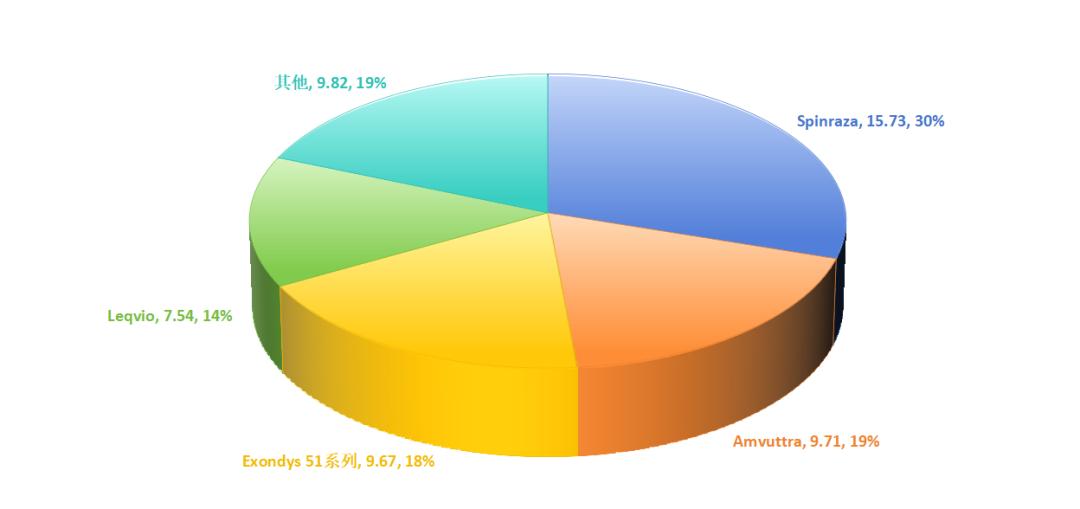
Core Insights - The small nucleic acid drug sector in China is entering a "capital year" in 2026, with increasing market interest and significant transactions, such as the successful IPO of Rebio and the acquisition of Hegia Biotech by China National Pharmaceutical Group for 1.2 billion yuan [1] - The global small nucleic acid drug market is characterized by a "three strong" dominance, with Alnylam, Ionis, and Sarepta leading the industry due to their technological barriers and commercialization advantages [1][5] - The market for small nucleic acid drugs is projected to grow from $5.247 billion in 2024 to $46.7 billion by 2033, with a compound annual growth rate (CAGR) of 25% [10] Market Dynamics - In 2024, global sales of small nucleic acid drugs reached $5.247 billion, with Ionis and Biogen's Spinraza leading at $1.573 billion, followed by Alnylam's Amvuttra at $0.971 billion and Sarepta's DMD treatments at $0.967 billion [2] - The current landscape features two main technological routes: Antisense Oligonucleotides (ASO) and small interfering RNA (siRNA), each with distinct mechanisms and advantages [4][7] - Alnylam has established itself as a leader in RNAi therapy, with a high clinical conversion rate of 64.3%, significantly above the industry average of 5.7% [7] Competitive Landscape - Ionis focuses on ASO technology, having launched the first ASO drug in 1998 and currently holding nine of the twelve approved ASO drugs globally, including the top-selling Spinraza [7][8] - Sarepta has specialized in muscle diseases, particularly DMD, with four approved drugs and a revenue growth of over 50% in 2024, reaching $1.9 billion [9] - The competitive landscape is evolving, with multinational corporations (MNCs) increasingly entering the market through acquisitions and collaborations, reflecting a growing interest in the sector [16][19] Emerging Opportunities - The market is entering a commercialization phase, with potential blockbuster products needed to transition from niche to mainstream [10] - Alnylam's Amvuttra and Novartis's Leqvio are identified as strong candidates for future blockbuster status, with Amvuttra projected to exceed $2 billion in sales by 2025 [12][13] - New products like Arrowhead's Plozasiran and Alnylam's Zilebesiran are expected to broaden the treatment landscape, moving from rare diseases to more common conditions [15] Strategic Movements - MNCs are actively pursuing partnerships and acquisitions to enhance their presence in the small nucleic acid space, with notable transactions in 2025 exceeding $36.473 billion [16][18] - Companies like Novartis are building comprehensive pipelines across various therapeutic areas, including cardiovascular and rare diseases, to strengthen their competitive position [18] - Chinese biotech firms are emerging as significant players, leveraging unique delivery technologies and cost advantages, leading to increased collaborations with MNCs [19][20]


创新药ETF南方(159858.SZ)涨2.53%,康龙化成涨6.4%
Jin Rong Jie· 2026-01-13 03:54
Group 1: AI in Pharmaceuticals - The application of artificial intelligence (AI) in the pharmaceutical sector has progressed beyond early trials to a systematic deployment phase aimed at creating core value [1] - The focus of competition is shifting from mere technical algorithms to how companies can restructure their data, processes, and organizational systems around key R&D and commercialization aspects [1] - Leading institutions are developing specialized AI systems embedded with compliance frameworks to optimize clinical trial management, enhance laboratory efficiency, and improve the timeliness of business decisions [1] Group 2: Small Nucleic Acid Drugs - The small nucleic acid drug industry is expanding its value narrative from breakthroughs in cardiovascular diseases to new areas such as kidney diseases, which is a key growth story for the sector [2] - The core driver of this trend is the anticipated readout of several key clinical data points in 2026, with therapies targeting important pathway targets showing significant potential to reduce proteinuria and stabilize kidney function [2] - The active clinical advancements by international leading companies provide strong concept validation for the entire sector, expected to drive a new wave of R&D focus and commercial collaborations [2] Group 3: JPMorgan Healthcare Conference - The JPMorgan Healthcare Conference serves as a strategic barometer for observing annual trends, gathering hundreds of global biopharmaceutical companies and investment institutions [3] - The participation and visibility of Chinese companies have significantly increased, showcasing China's advancing position in global pharmaceutical innovation [3] - Key topics at the conference revolve around capital allocation and strategic partnerships, with Chinese assets that possess "innovation upgrades" and "cost advantages" attracting considerable attention [3] Group 4: Market Outlook - The outlook for the innovative drug sector remains strong, with significant capital inflow driven by factors such as robust global competitiveness of Chinese innovations and ongoing domestic policy support for innovative drugs and commercial insurance [3] - The commercial profitability of leading biotech companies is improving, and the sector is characterized by low valuation advantages [3] - The CXO sector is expected to have a positive outlook leading up to 2026, while the medical device sector may see a recovery in the second half of the year, with bright spots in specific segments of medical services [3]
生物医药ETF(512290)涨近3%,行业景气度与创新进展受关注
Sou Hu Cai Jing· 2026-01-13 02:46
Group 1 - The year 2025 is significant for China's innovative drug exports, with a total transaction amount reaching $135.655 billion, a down payment of $7 billion, and a record 157 transactions [1] - The innovative drug sector not only provides R&D funding for companies but also reshapes the industry's valuation system, with the innovative drug index increasing by 35.31%, outperforming the CSI 300 index by 17.65% [1] - Breakthroughs in small nucleic acid drugs have been noted, with GSK's Bepirovirsen for chronic hepatitis B completing Phase III studies, and domestic companies like Yuyuan Pharmaceutical and Reborn Biotech making significant progress in liver-targeted drug development [1] Group 2 - In the oral autoimmune drug sector, Takeda's TYK2 inhibitor zasocitinib shows excellent performance in Phase III studies for psoriasis, with domestic companies such as Yifang Biotech and Nocare Biopharma also advancing related clinical trials [1] - Brain-computer interface technology is entering the industrialization phase, with Neuralink planning to mass-produce devices by 2026, supported by domestic policies accelerating medical application implementation [1] - The ZAP-X radiation therapy device brings new breakthroughs in brain tumor treatment, with domestic market demand potential reaching a scale of hundreds of billions [1] Group 3 - The commercialization path for AI in healthcare is becoming clearer, with pathology fee reforms establishing pricing mechanisms for AI-assisted diagnosis, leading to accelerated development in consumer applications [1]
【光大研究每日速递】20260112
光大证券研究· 2026-01-11 23:03
Group 1: Market Overview - The A-share market experienced a strong start to the year, with major indices showing significant increases, indicating a rise in market risk appetite [5] - The financing amount increased significantly, reflecting a continued optimistic performance in the market [5] - The spring market rally is anticipated to continue, supported by improved market sentiment [5] Group 2: Fixed Income - In the credit bond market, 332 bonds were issued with a total issuance scale of 312.27 billion, marking a 30.6% increase compared to the previous period [6] - Credit spreads varied across industries, with the largest increase in the food and beverage sector (up 2.1 basis points) and the largest decrease in the telecommunications sector (down 8.3 basis points) [6] Group 3: Commodities - The TC spot price reached a historical low, indicating ongoing tightness in copper concentrate procurement, while domestic social inventory continues to grow [7] - Despite the pressure on demand from rising copper prices, the supply-demand situation is expected to remain tight, with a positive outlook for copper prices in 2026 [7] Group 4: Chemical Industry - The small nucleic acid drug market is projected to experience rapid growth in 2026, with key players like Bluestar Technology and Lonza leading breakthroughs in critical areas [8] - The Chinese Ministry of Commerce has introduced measures against Japan, increasing the urgency for domestic substitution of key semiconductor materials [8] Group 5: Renewable Energy and Environmental Protection - The photovoltaic industry is expected to focus on coordination and method restructuring, while the battery industry is advised to prevent oversupply in energy storage batteries [9] - Investment opportunities are identified in domestic computing power, hydrogen energy, and upstream energy storage sectors, with a positive outlook for lithium carbonate prices in the short term [9]

医药行业周报:创新出海迎来开门红-20260111
Huaxin Securities· 2026-01-11 13:03
Investment Rating - The report maintains a "Recommended" rating for the pharmaceutical industry as of January 11, 2026 [3] Core Insights - 2025 marked a significant year for Chinese innovative drugs going overseas, with total transaction amounts reaching $135.655 billion, including $7 billion in upfront payments and 157 deals, setting historical highs [4] - The innovative drug index saw a 35.31% increase in 2025, outperforming the CSI 300 index by 17.65% [4] - The trend of Chinese innovative drugs going global is expected to strengthen in 2026, with significant deals such as the one between Yilian Biotech and Roche for the YL201 project, which includes a $570 million upfront payment [4] - The small nucleic acid drug sector is experiencing breakthroughs, with GSK's Bepirovirsen showing positive results in Phase III trials for chronic hepatitis B, potentially becoming the first drug to achieve functional cure [5] - The report highlights the importance of oral autoimmune drugs, with Takeda's TYK2 inhibitor showing promising results in treating moderate to severe plaque psoriasis [6] - The brain-computer interface technology is entering a critical industrialization phase, with companies like Neuralink set to produce devices in 2026, supported by favorable policies and clinical trials in China [8] - The ZAP-X radiotherapy device is expected to capture a significant market opportunity in China, with the non-invasive tumor radiotherapy market projected to grow from RMB 27.2 billion in 2018 to RMB 59.4 billion by 2024 [10] Summary by Sections 1. Pharmaceutical Market Tracking - The pharmaceutical industry index underperformed the CSI 300 index by 2.13% over the past week, ranking 25th among 31 industry indices [28] - Over the past month, the pharmaceutical industry index also lagged behind the CSI 300 by 5.42%, ranking 27th [29] 2. Pharmaceutical Sector Trends and Valuation - The current PE (TTM) for the pharmaceutical industry index is 36.95, above the five-year historical average of 31.12 [52] 3. Recent Research Achievements - The report includes various deep-dive studies on topics such as the growth of biological agents and oral drugs, and the impact of policy support on the inhalation drug industry [55] 4. Important Industry Policies and News - Recent policies include the issuance of the fourth batch of encouraged generic drug directories by the National Medical Products Administration [57] - Significant news includes GSK's announcement of positive Phase III results for Bepirovirsen and Yilian Biotech's licensing agreement with Roche [58][59]



小核酸行业跟踪报告:全球小核酸药物市场高增,蓝晓科技、联化科技引领关键环节突破
EBSCN· 2026-01-11 10:51
Investment Rating - The report maintains a rating of "Buy" for the small nucleic acid drug industry, indicating an expected investment return exceeding 15% over the next 6-12 months [5]. Core Insights - The small nucleic acid drug market, primarily driven by SiRNA and ASO, is experiencing rapid growth from technological breakthroughs to large-scale commercialization, with a compound annual growth rate (CAGR) of 217.8% from 2016 to 2021, increasing from $0.1 billion to $3.25 billion [1]. - The global market for oligonucleotide drugs is projected to exceed $15 billion by 2026, with a CAGR of 35% from 2020 to 2025 [1]. - BlueX Technology is a key player in solid-phase synthesis carriers, developing a comprehensive "synthesis-purification" platform for small nucleic acids and peptides, with significant investments planned for expanding its capabilities [2]. - Lianhua Technology is leveraging its established small molecule CDMO system to expand into the small nucleic acid business, with the global CDMO market expected to surpass $120 billion by 2024, growing at a CAGR of approximately 9.5% [3]. Summary by Sections Small Nucleic Acid Drug Market - The small nucleic acid drug market is characterized by a variety of drug types, including SiRNA and ASO, with a significant increase in market size and growth rate [1]. - The market is expected to continue its upward trajectory, driven by advancements in technology and increased demand for oligonucleotide drugs [1]. BlueX Technology - BlueX Technology has established itself as a leader in solid-phase synthesis carriers, creating a full-chain supply capability for small nucleic acids and peptides [2]. - The company plans to invest 1.15 billion yuan in a new GMP-standard biopharmaceutical park and expand its international presence [2]. Lianhua Technology - Lianhua Technology is expanding its CDMO services to include small nucleic acids, capitalizing on the growing demand for biopharmaceuticals and small molecule intermediates [3]. - The company has made significant progress in international market expansion and is focusing on developing new business areas, including peptide CDMO and radioactive drugs [3].

