
纺织服饰等

Search documents
低价股一览 29股股价不足2元
Zheng Quan Shi Bao Wang· 2026-01-23 09:30
Group 1 - The average stock price of A-shares is 14.84 yuan, with 29 stocks priced below 2 yuan, the lowest being *ST Aowei at 0.73 yuan [1] - Among the low-priced stocks, 8 are ST stocks, accounting for 27.59% of the total [1] - In terms of market performance, 26 of the low-priced stocks increased in price, with *ST Changyao, *ST Lifang, and Yabo shares leading the gains at 19.48%, 13.91%, and 10.06% respectively [1] Group 2 - The stock price rankings of low-priced stocks show *ST Aowei at 0.73 yuan with a daily decline of 5.19%, while *ST Changyao and *ST Lifang have daily increases of 19.48% and 13.91% respectively [1] - The trading volume for *ST Changyao is notable with a turnover rate of 19.92%, while *ST Lifang has a turnover rate of 26.78% [1] - Other low-priced stocks include *ST Jinke at 1.49 yuan and Chongqing Steel at 1.54 yuan, with respective daily changes of 0.68% and 2.67% [1]




主力资金动向 38.18亿元潜入商贸零售业
Zheng Quan Shi Bao Wang· 2025-12-16 11:11
Core Viewpoint - The report highlights the net inflow and outflow of funds across various industries, indicating a significant divergence in market performance, with retail showing strong inflows while the power equipment sector faced substantial outflows [1][2]. Industry Summary Positive Fund Inflows - The retail trade industry experienced the highest net inflow of funds, amounting to 3.818 billion, with a price change of 1.32% and a turnover rate of 5.34%, reflecting a 26.39% increase in trading volume compared to the previous day [1]. - The food and beverage sector saw a net inflow of 0.302 billion, with a slight price change of -0.02% and a turnover rate of 2.21%, indicating a 14.27% increase in trading volume [1]. - The textile and apparel industry recorded a net inflow of 0.216 billion, with a price change of -1.12% and a turnover rate of 2.25%, showing a 7.77% increase in trading volume [1]. Negative Fund Outflows - The power equipment industry faced the largest net outflow of funds, totaling -13.101 billion, with a price change of -2.66% and a turnover rate of 3.77%, reflecting a 1.59% increase in trading volume [2]. - The machinery and equipment sector reported a net outflow of -7.040 billion, with a price change of -2.24% and a turnover rate of 2.72%, indicating a 5.67% decrease in trading volume [2]. - The electronic industry experienced a significant net outflow of -11.607 billion, with a price change of -1.50% and a turnover rate of 2.96%, showing a 1.89% increase in trading volume [2].
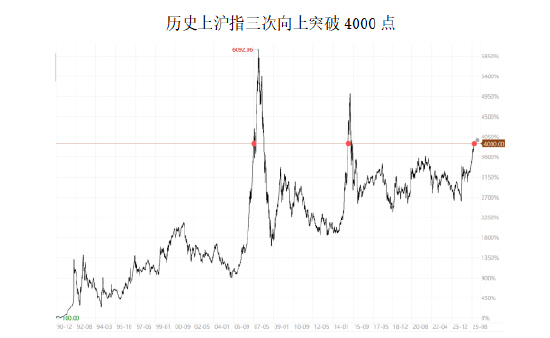
诺德基金:如何看待4000点后的震荡行情?
Xin Lang Ji Jin· 2025-11-06 02:39
Core Viewpoint - The current A-share market at the 4000-point level is fundamentally different from previous instances in 2007 and 2015, influenced by changes in market ecology, industry structure, and investment logic [1][4]. Market Changes - The new "National Nine Articles" has led to profound changes in market regulations, emphasizing a safe, transparent, and resilient capital market [6]. - A-share market has seen a significant increase in both the number of listed companies and total market capitalization, with the number of companies rising from 2,447 in 2015 to 5,444 in 2025, a growth of 122% [7][8]. - Total market capitalization expanded from 53 trillion yuan to 123 trillion yuan, marking a 132% increase [8][9]. - The industry structure has shifted, with technology and new energy sectors gaining prominence over traditional sectors like finance and real estate [9][10]. Trading and Investment Dynamics - A-share market trading volume has significantly increased, with daily trading volume reaching 2.29 trillion yuan, remaining above 1 trillion yuan for 128 consecutive trading days [16]. - The current margin financing level is significantly lower than the peak in 2015, indicating a healthier market environment [18]. - Institutional investors now hold 46% of the A-share market, up from 30.9% in 2014, reflecting a more mature investor structure [22][24]. Future Market Outlook - The macroeconomic environment is stabilizing, with China's economy projected to grow at an average rate of 4.7% to 5.0% during the 14th Five-Year Plan, providing a solid foundation for corporate earnings [27]. - Technological innovation, particularly in AI and new energy, is expected to drive market growth and create new leading companies [28][52]. - Policy support and ongoing capital market reforms are anticipated to boost investor confidence and market stability [32]. - The valuation of A-shares remains attractive compared to global markets, with the Shanghai Composite Index trading at a price-to-earnings ratio of approximately 17 times [38][39]. Investment Strategies - Investors are encouraged to identify undervalued sectors and capitalize on recovery opportunities, particularly in consumer, healthcare, and financial sectors [43]. - Focus on sectors benefiting from policy support and improving fundamentals, such as supply chain security and technological advancements [48][49][52]. - Maintain a balanced investment approach to mitigate risks associated with market volatility and potential short-term fluctuations [54][56].

粤开市场日报-20251027
Yuekai Securities· 2025-10-27 08:57
Market Overview - The main indices showed positive performance today, with the Shanghai Composite Index increasing by 1.18%, the Shenzhen Component Index rising by 1.51%, and the ChiNext Index up by 1.98% [1] - Among the Shenwan first-level industry sectors, the top performers were Communication, Electronics, and Comprehensive, while Banking, Retail, and Textile & Apparel lagged behind [1] Concept Sector Performance - Overall, the Memory, Rare Earth, and Consumer Electronics Manufacturing concepts performed relatively well [1] - In contrast, the Hainan Free Trade Port, Blood Products, and Online Gaming concepts showed weaker performance [1]
今年以来11家公司递表 港交所GEM改革成效渐显
Shang Hai Zheng Quan Bao· 2025-09-26 18:27
Core Viewpoint - The number of companies applying for listing on the Hong Kong GEM has increased this year due to improved market liquidity and valuation recovery, making GEM an attractive option for small and medium-sized enterprises (SMEs) seeking financing [1][2]. Group 1: GEM Market Activity - As of September 26, 2023, 11 companies are currently pursuing GEM listings, primarily in sectors such as basic chemicals, education, textiles and apparel, home building materials, and software and IT services [1]. - In 2024, three companies have submitted their prospectuses to GEM, all of which have completed their listings, while in 2023, five companies submitted applications, with one withdrawing and four becoming automatically invalid [1][5]. - The GEM market has seen a total of 316 companies listed, with 10 companies having a market capitalization exceeding 1 billion HKD [6]. Group 2: Financial Performance of Companies - The annual revenue of the 11 companies aiming for GEM listings is mostly around 100 million RMB, with net profits generally below 50 million RMB, and some companies reporting losses in recent years [2]. - For instance, Ronglian Recycling Technology reported revenues of 133 million RMB and 210 million RMB for 2023 and 2024, respectively, with net profits of 24 million RMB and 35 million RMB [2]. Group 3: GEM Reform and Its Impact - The GEM reform, which took effect in January 2024, aims to lower the listing threshold for SMEs, focusing on supporting startups and growth-oriented companies [2][4]. - Key reforms include a simplified transfer mechanism to the main board, new valuation tests for high-growth companies, shortened post-listing lock-up periods for major shareholders, and the removal of mandatory quarterly reporting [4]. - The reform has led to a gradual release of its effects, with three new stocks listed in 2024, marking a significant change from the previous three years without new listings [5]. Group 4: Market Dynamics and Future Outlook - The ability of mainland companies to successfully list on GEM is influenced by the completeness of their application materials and their responsiveness to regulatory inquiries [5]. - Industry experts suggest that to further invigorate the GEM market and attract more quality SMEs, efforts should focus on enhancing market liquidity and increasing investor participation [5].
一图看懂历年国庆前后A股市场表现
天天基金网· 2025-09-22 09:06
Group 1 - The core viewpoint indicates that the A-share market shows a low probability of rising in the five trading days before the National Day holiday, but the last trading day before the holiday has a 70% probability of an increase, while the market tends to rise after the holiday [1][6] - Historical data from 2015 to 2024 shows that the Shanghai Composite Index has a 70% probability of rising on the first trading day after the holiday and a 60% probability of rising in the following five trading days [2][6] - The leading sectors in the A-share market before and after the National Day holiday exhibit significant rotation, covering various fields such as consumption, pharmaceuticals, and technology [6][7] Group 2 - The leading sectors for the five trading days before the holiday from 2020 to 2024 include Food & Beverage, Social Services, and Defense & Military, while the sectors leading after the holiday include Electronics, Automotive, and Pharmaceuticals [4][6] - The market is expected to maintain a volatile pattern before the holiday, influenced by factors such as the Federal Reserve's interest rate decisions and potential profit-taking by investors [6][7] - The financing trend typically shows a pattern of "contraction before the holiday and explosion after," indicating a shift in risk appetite post-holiday [7]
基金研究周报:科技赛道爆发,红利板块回调(8.25-8.29)
Wind万得· 2025-08-30 22:29
Market Overview - The A-share market experienced slight fluctuations from August 25 to August 29, with major indices showing reduced volatility. The ChiNext Index and ChiNext 50 rose by 7.74% and 9.27% respectively, while the Sci-Tech 50 recorded a 7.49% increase, driven by policy support, particularly the State Council's announcement on August 26 regarding the "Artificial Intelligence +" initiative [3][4] - The Shanghai Composite Index increased by 0.84%, and the Shenzhen Index rose by 4.36%, indicating a positive market sentiment despite some sectors facing challenges [3] Industry Performance - The Wind first-level average index rose by 0.87%, with 72% of the Wind Top 100 concept indices showing positive returns. The telecommunications, non-ferrous metals, and electronics sectors performed well, increasing by 12.38%, 7.16%, and 6.28% respectively. In contrast, the banking, coal, and textile sectors declined by 2.13%, 2.76%, and 2.87% [3][16] - The technology and materials sectors led the market, with the information technology sector achieving a 5.69% increase, while traditional sectors like energy and finance faced declines of -1.74% and -1.44% respectively, reflecting a growing divergence in industry performance during the economic recovery [16][17] Fund Issuance and Performance - A total of 41 funds were issued last week, including 29 equity funds, 5 mixed funds, 5 bond funds, and 2 FOFs, with a total issuance of 28.205 billion units [4][20] - The Wind All Fund Index rose by 1.41%, with the ordinary equity fund index increasing by 2.59% and the mixed equity fund index rising by 2.86% [4][11] Global Asset Review - Global equity markets showed structural differentiation, with U.S. indices slightly declining due to pressure on tech stocks. European markets faced significant drops, with the French CAC and German DAX falling by 2.60% and 1.89% respectively, influenced by political instability in France and concerns over the Federal Reserve [6][7] - Commodity markets saw precious metals leading gains, with COMEX gold and silver rising by 2.86% and 4.34% respectively, driven by increased demand for safe-haven assets amid geopolitical risks [6]

粤开市场日报-20250827
Yuekai Securities· 2025-08-27 08:54
Market Overview - The A-share market saw a majority of major indices decline today, with the Shanghai Composite Index dropping by 1.76% to close at 3800.35 points, and the Shenzhen Component Index falling by 1.43% to 12295.07 points. The ChiNext Index decreased by 0.69% to 2723.20 points, while the Sci-Tech 50 Index rose slightly by 0.13% to 1272.56 points [1][12]. - Overall, there were 633 stocks that rose and 4761 stocks that fell, with a total market turnover of 31656 billion yuan, an increase of 4865 billion yuan compared to the previous trading day [1]. Industry Performance - Among the Shenwan first-level industries, all sectors except for telecommunications experienced declines. The leading sectors in decline included beauty care (-3.86%), real estate (-3.51%), comprehensive (-3.14%), building materials (-3.05%), and textile and apparel (-2.99%). The telecommunications sector saw an increase of 1.66% [1][12]. Sector Highlights - The top-performing concept sectors today included rare earths, rare earth permanent magnets, semiconductors, and smart speakers, while sectors such as digital currency, western infrastructure, and titanium dioxide experienced pullbacks [2][11].
今日4只A股跌停 建筑装饰行业跌幅最大
Zheng Quan Shi Bao Wang· 2025-07-25 05:15
Market Overview - The Shanghai Composite Index fell by 0.34% today, with a trading volume of 915.04 million shares and a turnover of 1,124.13 billion yuan, a decrease of 0.75% compared to the previous trading day [1]. Industry Performance - The top-performing industries included: - Light Industry Manufacturing: increased by 0.54% with a turnover of 12.62 billion yuan, led by Tianan New Material, which rose by 10.05% [1]. - Computer: increased by 0.52% with a turnover of 107.90 billion yuan, led by Tianrun Technology, which rose by 22.94% [1]. - Textile and Apparel: increased by 0.42% with a turnover of 8.71 billion yuan, led by Hongqingting, which rose by 7.58% [1]. - The worst-performing industries included: - Building Decoration: decreased by 1.87% with a turnover of 38.46 billion yuan, led by Deep Water Planning Institute, which fell by 14.62% [2]. - Building Materials: decreased by 1.69% with a turnover of 19.11 billion yuan, led by Huaxin Cement, which fell by 9.25% [2]. - Comprehensive: decreased by 1.21% with a turnover of 2.34 billion yuan, led by Nanjing New Hundred, which fell by 6.38% [2]. Summary of Key Stocks - Notable gainers included: - Tianan New Material (Light Industry Manufacturing) with a gain of 10.05% [1]. - Tianrun Technology (Computer) with a gain of 22.94% [1]. - Hongqingting (Textile and Apparel) with a gain of 7.58% [1]. - Notable decliners included: - Deep Water Planning Institute (Building Decoration) with a decline of 14.62% [2]. - Huaxin Cement (Building Materials) with a decline of 9.25% [2]. - Nanjing New Hundred (Comprehensive) with a decline of 6.38% [2].
A股市场投资策略周报:科创板改革获推进,市场延续窄幅震荡-20250619
BOHAI SECURITIES· 2025-06-19 11:23
Market Review - Major indices experienced declines in the recent trading days from June 13 to June 19, with the Shanghai Composite Index falling by 1.19% and the ChiNext Index dropping by 1.95% [5] - The trading volume slightly decreased, with a total of 6.33 trillion yuan traded, resulting in an average daily turnover of 1.27 trillion yuan, down by 99.55 billion yuan compared to the previous five trading days [13] Economic Performance - Fixed asset investment from January to May increased by 3.7% year-on-year, continuing to decline, with infrastructure investment growing by 5.6% [29] - Manufacturing investment rose by 8.5% year-on-year, while real estate investment decreased by 10.7%, indicating a need for stabilization in the real estate market [30] - Retail sales of consumer goods in May grew by 6.4% year-on-year, significantly rebounding by 1.3 percentage points, supported by policies and promotional events [32] Policy Developments - The China Securities Regulatory Commission announced a "1+6" policy package aimed at further reforming the Sci-Tech Innovation Board, including the introduction of a growth tier and the resumption of the fifth set of listing standards [34] - The U.S. Federal Reserve maintained its federal funds rate target range at 4.25% to 4.50%, with expectations of a slower pace of interest rate cuts in the future [35] Investment Strategy - The current market is characterized by continued fluctuations, with external risks not fully dissipated and key variables needed to break the existing trend [38] - Investment opportunities are identified in the banking sector due to high dividend yields and defensive characteristics, as well as thematic investment opportunities in the TMT sector, biomedicine, and national defense industries [38]