智能驾驶

Search documents
金鹰基金:外围扰动引发市场情绪回落 短期震荡为后续主线重聚提供条件
Xin Lang Cai Jing· 2026-02-02 09:41
Market Overview - All three major indices closed lower, with the Shanghai Composite Index down 2.48% to 4015 points and the ChiNext Index down 2.46%. The Hang Seng Index also saw a significant decline, closing down 2.92% [1][8] - Trading volume in the two markets decreased, remaining around 2.6 trillion [1][8] - Among the 31 primary industries, all except food and beverage and banking sectors experienced declines, with 4647 out of over 5300 stocks falling, indicating poor profitability [1][8] External Factors - The precious metals market experienced a sharp decline, impacting market sentiment and contributing to the A-share market's pullback. This was influenced by the nomination of Kevin Warsh as the next Federal Reserve Chairman, who advocates for a "balance sheet reduction + interest rate cut" policy [2][9] - Following Warsh's announcement, the US dollar index rose while gold and silver prices plummeted, with silver dropping 26%, marking its largest historical decline, and gold falling 9%, the worst single-day performance in nearly a decade [2][9] Internal Dynamics - Since mid-December, the index has risen rapidly due to improved liquidity and risk appetite, moving from around 3800 points to near 4200 points. This led to structural opportunities and accelerated sector rotation [3][10] - As uncertainty increased, market sensitivity heightened, prompting a shift from "increasing positions" to "realizing profits and reducing exposure," resulting in a net outflow of funds and overall market pressure [3][11] Future Outlook - The market is expected to focus on signs of economic recovery and the unfolding of the spring market, with a potential "second wave" of spring activity anticipated in February [4][11] - Historical data suggests a higher success rate for A-shares in February, particularly for small-cap growth stocks, which typically perform well in the week leading up to the Spring Festival [4][11] Sector Allocation - A balanced approach is recommended to navigate rapid rotations, with a focus on technology sectors supported by performance, such as AI applications, overseas computing power, storage, and wind energy storage [5][12] - For value investments, attention should be given to upstream commodities, which may benefit from geopolitical adjustments and potential mid-term recovery in manufacturing and real estate sectors [6][12]
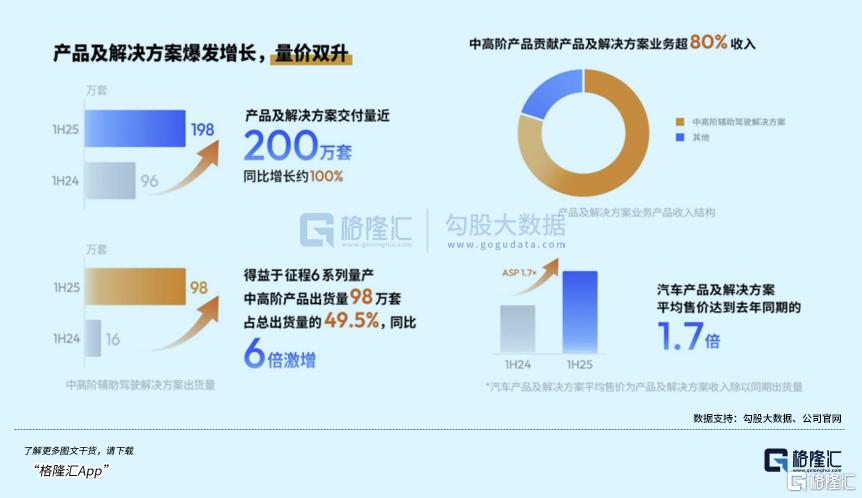
猜想谁是26年“易中天”系列——地平线机器人
Ge Long Hui· 2026-02-02 07:25
Core Viewpoint - The transition of intelligent driving from a "technology frontier display" phase to an industrialization phase characterized by large-scale implementation is highlighted, with a focus on the importance of engineering systems and continuous delivery capabilities for competitive advantage [1][4]. Industry Stage Assessment - Intelligent driving is entering a phase of engineering and large-scale competition, where the focus shifts from technical capabilities to stable and replicable operation in complex environments [3][4]. - The competitive landscape is evolving, emphasizing the need for scalable deployment solutions that meet cost, power consumption, stability, and long-term supply requirements [4]. Organizational and Governance Structure - The company has maintained a focused strategic path since its inception, emphasizing an "edge AI computing platform" and targeting the complex application of intelligent driving [6][7]. - The organization prioritizes production-oriented engineering logic, integrating chip architecture, algorithm capabilities, and customer delivery systems within the same product framework [7]. Business Foundation Analysis - The company is positioned as a provider of intelligent driving computing platforms rather than a traditional chip supplier, utilizing self-developed AI chip architecture (BPU) to offer scalable solutions [8][9]. - The platform business model allows for continuous iteration and optimization based on engineering experience and data feedback, adapting to the shift in automotive demand from high-end to mainstream models [9]. Customer and Production Capability - Achieving mass production deployment is a critical indicator of a company's capabilities in the intelligent driving sector, with the company having established partnerships with several major automakers [12]. - Mass production requires higher standards for chip stability, algorithm robustness, and system consistency, which can deepen customer relationships but also increase quality responsibilities and delivery pressures [12][13]. Ecosystem and Collaboration - The company emphasizes collaborative development with automakers and Tier 1 suppliers rather than standard supply, fostering a continuous iteration within the same technical framework [14][15]. - This collaborative model enhances customer loyalty but may reduce flexibility in customer structure due to higher dependency on a single platform [15]. Industry Trends - The penetration rate of intelligent driving is still on the rise, supported by policy, consumer acceptance, and automaker strategies, with demand for computing platforms expected to expand beyond high-end configurations [16]. - However, uncertainties related to industry rhythm, price competition, and technological differentiation must be monitored, as increased penetration does not guarantee market share growth for any single vendor [16]. Financial Characteristics - As a growing tech company, the company exhibits financial characteristics of "high investment, with effects released after scaling," with revenue predictability expected to improve as the number of mass-produced models increases [17]. - Projected revenue for 2026 is estimated between 5.2 billion to 6.2 billion RMB, reflecting a year-on-year growth of approximately 53% to 70%, with a market valuation range of about 160 billion HKD based on a 30x PS valuation assumption [17]. Conclusion - The company's core asset value lies in its "industrial certainty" as it transitions from technology validation to engineering and large-scale implementation in the intelligent driving sector [21][22]. - Long-term value realization is highly dependent on industry development pace, customer structure stability, and the company's execution capabilities, with stability, replicability, and scalability becoming crucial evaluation metrics [22].


AI“犯错” 谁来负责?
Yang Shi Xin Wen· 2026-01-31 19:46
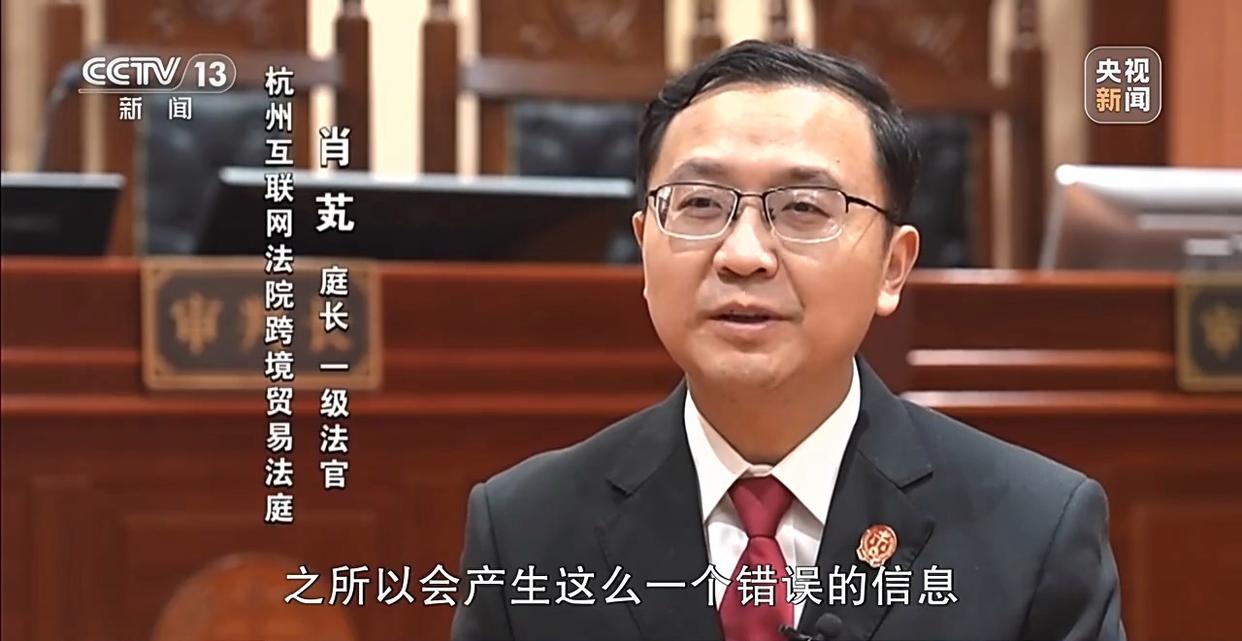
Group 1 - AI is increasingly integrated into various aspects of life and work, but it can make errors, leading to questions about accountability, especially in critical fields like healthcare and finance [1][11] - The case of Liang, who was misled by AI regarding a non-existent school, marks the first legal instance addressing AI's "hallucination" issue, raising questions about who is responsible for AI-generated misinformation [1][3] - The court determined that AI's compensation promise does not equate to the service provider's liability, categorizing AI-generated information as a service rather than a product, thus applying fault liability principles [5][7] Group 2 - In the medical field, the integration of AI raises concerns about misdiagnosis and the responsibility for errors, with experts emphasizing that AI should assist rather than replace human judgment [11][19] - The current legal framework does not clearly define AI's role in medical decision-making, leading to calls for regulations that clarify the responsibilities of doctors and AI developers [21][22] - The introduction of AI in healthcare is seen as a tool to enhance efficiency, but there are fears that over-reliance on AI could diminish the diagnostic skills of future medical professionals [15][17] Group 3 - In the automotive sector, the transition from L2 to L3 autonomous driving systems necessitates a reevaluation of liability, with current regulations still placing primary responsibility on human drivers [23][24] - As L3 systems are tested, the responsibility for accidents may shift to manufacturers under certain conditions, but drivers must remain vigilant and ready to take control [26][29] - The complexity of liability in L3 autonomous driving scenarios highlights the need for clear legal definitions and frameworks to address potential accidents involving AI systems [30][32]
2026年第4周计算机行业周报:涨价潮继续传导,看好AI基础资源产业链-20260131
Changjiang Securities· 2026-01-31 09:53
Investment Rating - The industry investment rating is "Positive" and maintained [9] Core Views - The report highlights a continued price increase trend in the AI infrastructure supply chain, suggesting that multiple segments such as CPU and cloud services may experience simultaneous volume and price growth, benefiting related industries [8][58] - The report recommends focusing on the domestic computing power supply chain, particularly leading companies in computing chips like Cambricon and Haiguang Information, as well as domestic CPU, cloud, and AI infrastructure suppliers [8][58] Summary by Sections Market Performance - Last week, the computer sector rebounded slightly, with an overall decline of 0.25%, ranking 27th among major industries in the Yangtze River region, and accounting for 7.08% of total market turnover [2][18] Key Recommendations - The report emphasizes the importance of the domestic basic resource supply chain, particularly in light of ongoing price increases that are expected to benefit various segments, including computing chips and cloud services [8][58] Notable Developments - Recent updates include the IPO progress of three companies in the commercial aerospace sector, and announcements from Elon Musk regarding the Optimus humanoid robot, which is expected to be available to the public by the end of 2027 [2][23][29] - The report also notes that the full version of Tesla's FSD (Full Self-Driving) may receive regulatory approval soon, which could accelerate investment opportunities in the smart driving industry [37][41]


千里科技:聚焦“AI+车”战略,智驾驱动未来发展-20260131
Huajin Securities· 2026-01-31 07:25
Investment Rating - The report assigns a "Buy" rating for the company, Qianli Technology (601777.SH), marking its first coverage [1]. Core Insights - Qianli Technology is undergoing a strategic transformation focusing on the "AI + Vehicle" core strategy, aiming to transition from a traditional manufacturer to a smart driving technology company [3][13]. - The company has partnered with Geely to launch the Qianli Haohan intelligent driving solution, which integrates various advanced driving features to meet diverse user needs [3][13]. - A strategic cooperation agreement has been signed with Cao Cao Mobility to accelerate the application of smart driving technology in the Robotaxi sector [3][13]. - Revenue projections for 2025-2027 are estimated at 86.80 billion, 104.95 billion, and 124.15 billion yuan, with corresponding net profits of 0.87 billion, 1.60 billion, and 2.46 billion yuan, indicating significant growth [3][4]. Summary by Sections Company Overview - Qianli Technology, formerly known as Lifan Technology, was established in 1992 and has undergone multiple transformations, including a shift to new energy vehicles and a recent focus on smart driving technology [3][13]. - The company has a rich history, including its listing on the Shanghai Stock Exchange in 2010 and a series of strategic partnerships and restructuring efforts [3][13]. Business Strategy - The company is focusing on three main areas: smart driving, intelligent cockpits, and Robotaxi services, aiming to leverage AI technology in its offerings [3][14]. - The strategic partnership with Geely has led to the development of the Qianli Haohan system, which includes features like memory parking and multi-level driving assistance [3][14]. Financial Performance - The company reported revenues of 6.768 billion, 7.035 billion, and projected revenues of 8.680 billion, 10.495 billion, and 12.415 billion yuan for 2023, 2024, 2025, 2026, and 2027, respectively [4][29]. - Net profits are expected to recover significantly, with projections of 0.87 billion, 1.60 billion, and 2.46 billion yuan for the same years, reflecting a strong growth trajectory [4][29]. Market Position - The company is positioned to capitalize on the growing demand for smart driving solutions, with a projected market size for intelligent driving solutions in China reaching 1,041 billion yuan by 2025 [61]. - The report highlights the increasing penetration of L2 and above driving assistance systems, indicating a robust market for Qianli Technology's offerings [52][61].

五一视界新一代驾驶员在环(DIL)解决方案:支撑物理 AI 时代的端到端人机共驾验证
Zhong Jin Zai Xian· 2026-01-30 06:17
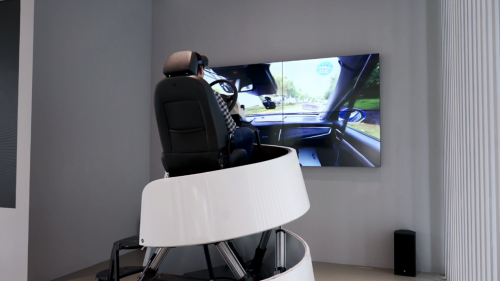
Core Insights - Huang Renxun defines autonomous driving as the first "large-scale mainstream market" for Physical AI, indicating a significant turning point occurring currently. He predicts that a substantial proportion of vehicles will enter a highly automated phase in the next decade, highlighting that smart driving is not an isolated application but the starting point for Physical AI's large-scale implementation in the real world [1] Group 1: DIL and Physical AI - The value of Driver-in-the-Loop (DIL) in smart driving and HMI development lies in systematically incorporating the driver as a key variable into the simulation and verification loop, focusing on whether the entire smart driving system is safe, controllable, trustworthy, and user-friendly in real-world scenarios [3] - The new generation of DIL solutions serves as a critical bridge connecting algorithm validation, system engineering, and real user behavior, marking the transition from "functionality available" to "system trustworthiness" in smart driving [5] Group 2: Differentiated Features and Advantages of New DIL Solutions - 51Sim has developed a complete and mature DIL solution through years of collaboration with numerous OEMs, Tier 1 suppliers, universities, and research institutions, establishing a closed-loop verification system that integrates hardware, software, and content [6] - The one-stop delivery DIL system integrates driving simulation hardware, the SimOne simulation platform, and reusable scenarios and data content within a unified technical framework, enhancing system stability and engineering efficiency while ensuring consistent and reproducible test results [8] - The high controllability of scene editing and updating capabilities allows simulation scenarios to evolve as engineering assets, enabling rapid adjustments to road structures, traffic behaviors, and environmental conditions, significantly reducing maintenance costs [10] - The DIL system is designed for high stability and durability, optimized for long-term, high-intensity engineering use, ensuring consistent performance and simulation results even under complex testing conditions [12] Group 3: Application Scenarios - 51Sim has advanced DIL simulation from concept validation to real-world applications, covering various scenarios such as algorithm development, HMI design, and educational training [13] - Collaboration with an American automotive company led to the development of a rapid verification system for intelligent cockpit design, enhancing the efficiency of smart driving research and development [14] - A multi-vehicle intelligent training laboratory was established in a university, allowing students to learn about virtual simulation and driver-in-the-loop testing through hands-on experience [16] - 51Sim assisted in building a simulation testing laboratory for multi-driver in-loop testing, integrating various driving simulators and motion capture devices, marking a significant advancement in domestic simulation testing systems [16]
武汉竞逐“智驾第一城”产业高地
Chang Jiang Ri Bao· 2026-01-30 00:59
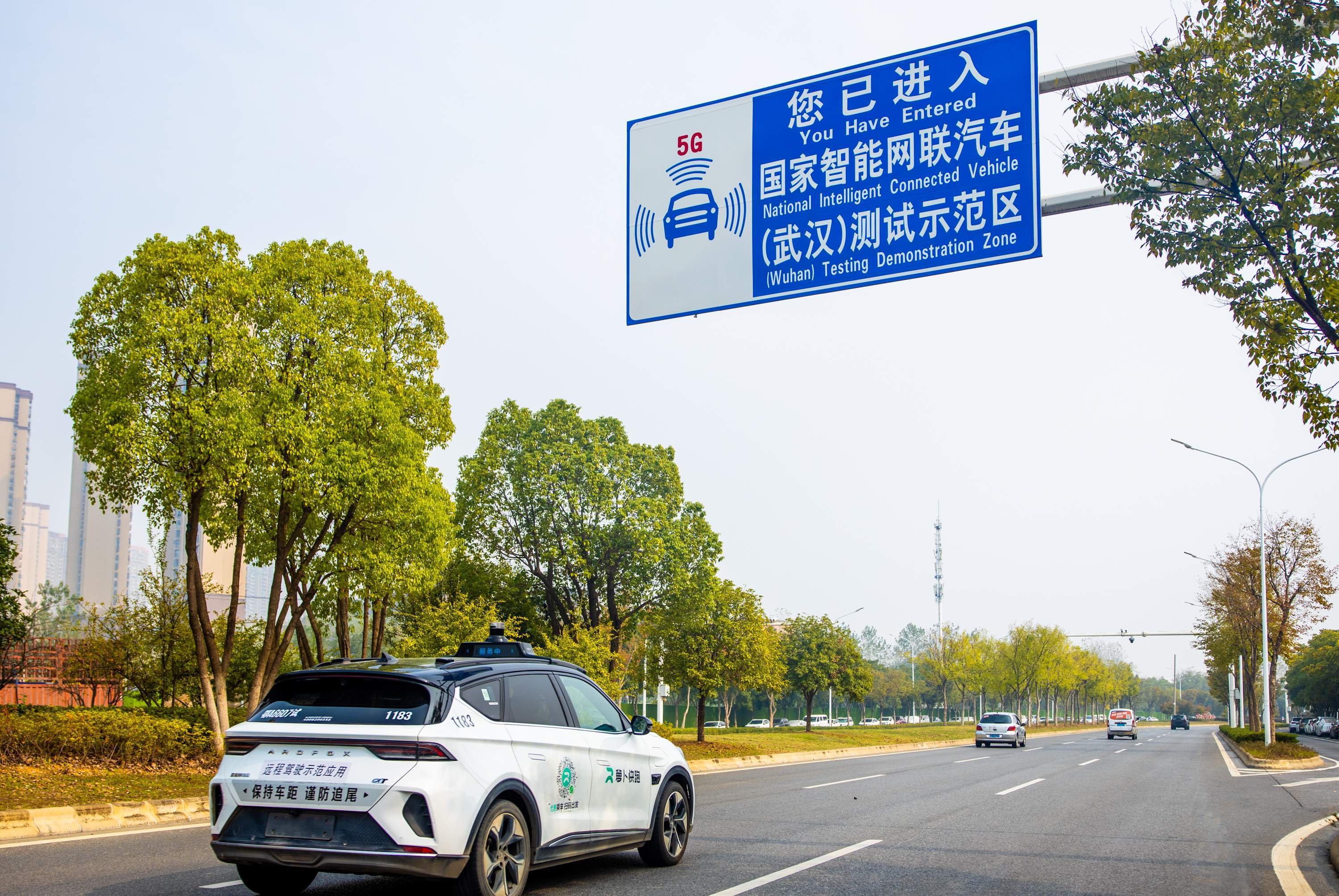
Core Insights - Wuhan has made significant progress in the smart driving industry over the past decade, focusing on enterprise-led initiatives and regulatory frameworks to facilitate commercialization and innovation [1][7] Industry Development - Wuhan has established a cross-departmental working group involving economic, transportation, and traffic management sectors to address challenges in autonomous vehicle traffic management, paving the way for commercial deployment [2] - The city has progressively opened up testing and application scenarios, leading to a robust ecosystem characterized by a "scene-driven—industry agglomeration—ecological construction" cycle [2][7] Company Contributions - Companies like Luobo Kuaipao have completed over 100 million kilometers of testing in Wuhan, becoming a vital transportation option for residents [7] - Chip manufacturer XinQing Technology aims to provide a solid computational foundation for automotive partners, with its "Longying No. 1" smart cockpit chip designed to withstand extreme temperatures [7][8] - Hezhima Intelligent has established its global headquarters in Wuhan and plans to go public in 2024, focusing on automotive AI chips and solutions [8] Ecosystem and Collaboration - Wuhan has attracted over 380 companies in the smart driving sector, creating a comprehensive industrial ecosystem that includes key players like Yika Tong and Valeo [13] - The city has implemented a permanent coordination mechanism among various departments to enhance regulatory oversight and data integration for vehicle operations [13] Future Goals - Looking ahead, Wuhan aims to further open up applications in smart manufacturing and transportation, with companies setting ambitious revenue targets and expanding into new markets [14]
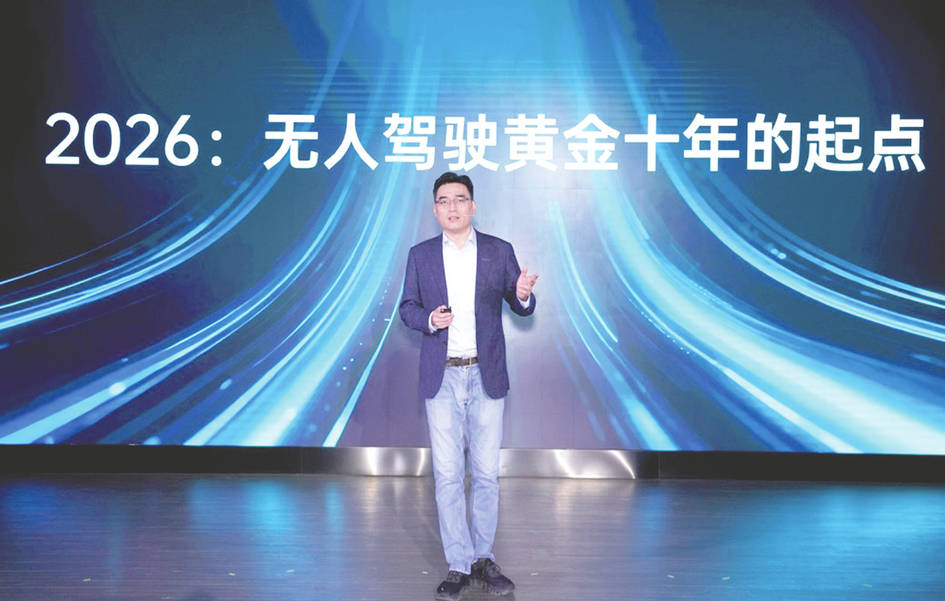
轻舟智航联合创始人、董事长兼CEO于骞:2026年开启无人驾驶黄金10年,10万元级车将普及城市NOA
Sou Hu Cai Jing· 2026-01-29 12:57
Core Insights - 2026 marks the beginning of a golden decade for autonomous driving, driven by technological advancements and the adoption of "end-to-end" architecture [1] - The introduction of VLA (Vision-Language-Action) models and world models will enable autonomous systems to learn from vast amounts of real and generated data, achieving safety levels over 10 times that of human drivers [1] - The market is expected to see widespread adoption of urban NOA (Navigation On Autopilot) features in vehicles priced around 100,000 yuan by 2026, a significant improvement compared to the capabilities of many L4 autonomous vehicles just two years prior [1] Market Trends - The penetration rate of passenger cars equipped with L2-level driving assistance features reached 64% in the first three quarters of 2025, with a year-on-year growth of 21.2% [4] - By November 2025, the cumulative sales of passenger cars with urban NOA features reached 3.129 million, accounting for 15.1% of insured passenger vehicles [4] - The majority of urban NOA-equipped vehicles are expected to be priced below 150,000 yuan, with over 68.9% of mainstream models under 300,000 yuan featuring this technology [4] Competitive Landscape - The autonomous driving sector is becoming increasingly competitive, with companies transitioning from traditional technologies like "LiDAR + high-definition maps" to AI-driven solutions [7] - The industry is witnessing a divergence in development directions, particularly between VLA and world models, with a consensus forming around the evolution of autonomous driving technology [7] - The successful differentiation in the market will depend on the ability to translate technology into tangible user experiences rather than just technical concepts [7] Strategic Insights - The million-unit deployment of autonomous driving systems is seen as a critical milestone, with few suppliers able to achieve this level [6] - The compatibility of QCraft's solutions with both new energy vehicles and traditional fuel vehicles provides a strategic advantage for global expansion [5] - The entry of Tesla's FSD into the Chinese market is viewed as a positive development that will expand the overall market rather than just intensifying competition [3][8]
恒生科技ETF易方达(513010)规模突破300亿元,关注港股科技产业链阶段性配置价值
Mei Ri Jing Ji Xin Wen· 2026-01-29 02:15
Group 1 - The core viewpoint of the news highlights the resilience of the Hong Kong technology sector, which showed a rebound after a significant drop, with the Hang Seng Technology Index down by 0.7% as of 9:47 AM on January 29 [1] - Recent data indicates a recovery in overall trading volume in the Hong Kong market, with both the amount and proportion of southbound capital increasing, suggesting a rise in market participation [1] - Foreign active funds have turned to net inflows for two consecutive weeks, indicating a positive change in the funding structure of the Hong Kong technology sector, which supports market recovery [1] Group 2 - The current earnings season for U.S. tech stocks is a focal point, with AI, cloud computing, and commercialization of applications being key areas of market interest [1] - If the performance and future guidance of overseas tech leaders exceed expectations, it could catalyze trends in related industries, positively impacting the Hong Kong technology sector through valuation and risk appetite transmission [1] - The Hang Seng Technology Index consists of the 30 largest stocks related to technology themes listed in Hong Kong, focusing on sectors such as semiconductors, robotics, software, internet, and smart driving, with major weights including Tencent Holdings, Alibaba, and SMIC [1] Group 3 - The Hang Seng Technology ETF managed by E Fund has seen a cumulative net inflow of over 1.5 billion yuan since January, with its latest scale surpassing 30 billion yuan, marking a new high since its inception [2] - The ETF offers good liquidity and supports T+0 trading, which can help investors seize opportunities in the Hong Kong technology industry chain amid the convergence of capital inflow and industry catalysts [2]



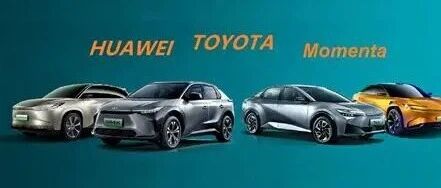
华为Momenta合计占第三方城市NOA市场八成,月搭载量均达 8-10 万量级
凤凰网财经· 2026-01-28 14:15
Core Insights - The report indicates that by November 2025, the cumulative sales of passenger cars equipped with urban NOA functionality in China reached 3.129 million units, highlighting rapid industry growth [1] - Momenta and Huawei's HI model dominate the market, collectively accounting for approximately 80% of the third-party supplier market share, with both companies achieving monthly installation volumes in the range of 80,000 to 100,000 units, establishing a strong "dual strong pattern" [1] Group 1 - The urban NOA market is characterized by a "dual-wheel drive" model, where car manufacturers either develop the technology in-house or collaborate with third-party suppliers to seize market opportunities [3] - In the period from January to November 2025, Momenta's urban NOA installation volume reached 414,400 units, representing about 61.06% of the third-party supplier market share, and it collaborates with 8 out of the top 10 global automotive manufacturers [3] - Huawei's HI model achieved an installation volume of approximately 134,100 units, accounting for about 19.76% of the third-party supplier market share, with a notable increase in installations by November 2025 [3] Group 2 - Domestic brands sold 2.5373 million units equipped with urban NOA functionality, making up 81.1% of the total, showcasing the innovation and competitiveness of domestic brands in the smart connected vehicle sector [3] - Global automotive brands such as Mercedes-Benz, BMW, Audi, Cadillac, Buick, and Toyota are actively collaborating with leading Chinese smart driving suppliers to implement urban NOA functionality and enhance technology [4] - The report emphasizes that third-party technology suppliers like Huawei and Momenta provide a "Chinese solution" for the global smart driving industry, attracting renowned automotive brands from Germany, the United States, Japan, and South Korea to collaborate deeply with Chinese tech companies [6]