石油

Search documents
俄罗斯将从4月1日起禁止汽油出口
21世纪经济报道· 2026-03-28 09:00
Group 1 - The Russian government has announced a ban on gasoline exports starting April 1, aimed at stabilizing prices amid turmoil in the energy market due to conflicts in the Middle East [1][3] - The ban will last until July 31, as stated by Deputy Prime Minister Alexander Novak, who noted that the crisis has caused significant price fluctuations in global oil and petroleum markets [3] - Despite the turmoil, the high demand for Russian energy resources in foreign markets is seen as a positive factor, with current crude oil processing levels remaining stable compared to last year [3] Group 2 - The ongoing military actions in the Middle East, particularly since the U.S. and Israel's operations against Iran, have severely disrupted shipping routes in the Strait of Hormuz, leading to volatile international oil prices [3] - President Putin has indicated that while the conflict has generated excess profits for Russia as an energy exporter, this situation is not expected to last long, advising the finance ministry and related enterprises against relying on temporary windfalls [3]


俄罗斯:拟自4月1日起禁止汽油出口
财联社· 2026-03-28 08:25AI Processing
据新华社,俄罗斯政府表示,俄副总理亚历山大·诺瓦克27日指示能源部起草一项行政命令, 自4月1日起禁止汽油出口, 目的是在中东战事引发能源 市场动荡之际稳定价格,并优先保障俄国内市场供应。 ...

美对伊朗石油制裁升级,全球能源与合规风险陡增
制裁名单· 2026-03-28 07:57
Core Viewpoint - The article discusses the potential implications of the "2025 Iran Sanctions Enhancement Act" passed by the U.S. House of Representatives, which aims to expand the scope and intensity of U.S. sanctions against Iran, marking a new phase in the U.S. strategy of "maximum pressure" on Iran's economy [1][2]. Group 1: Sanction Mechanism - The act establishes a "joint sanctions" mechanism targeting the entire oil and petrochemical industry chain of Iran, affecting not only entities directly involved in oil and petrochemical transactions but also their subsidiaries, executives, and immediate family members [1]. - The sanctions logic based on "affiliated relationships" significantly increases compliance scrutiny and associated risks for commercial entities engaging with Iran [1]. Group 2: Implementation and Strategy - The act reflects a long-term strategic intent to institutionalize sanctions, requiring the establishment of a cross-departmental working group and an international multilateral sanctions coordination mechanism [2]. - The act includes a temporary and uncertain national interest exemption clause, which could last up to 180 days, but the stringent termination conditions imply that sanctions, once implemented, will likely be long-lasting [2]. Group 3: Geopolitical Context - The introduction of the act is directly related to the escalating U.S.-Iran strategic confrontation and the tense geopolitical situation in the Middle East, aiming to severely restrict Iran's oil export revenues [3]. - The act will compel international entities still engaged in oil trade or related services with Iran to make difficult decisions, either withdrawing from such business or facing exclusion from the U.S. financial system, which will disrupt global energy market trade flows [3].

霍尔木兹海峡,突传大消息!泰国与伊朗达成协议!以媒:胡塞武装“参战”
证券时报· 2026-03-28 07:49
Group 1 - Thailand's Prime Minister Anutin announced measures to address rising oil prices due to the Middle East situation, focusing on diplomatic coordination, energy security, price control, and public welfare [1] - The Thai government has proposed a special ASEAN foreign ministers' meeting to discuss solutions for easing tensions, while maintaining stable oil reserves and seeking additional energy sources [1] - The situation in the Middle East is escalating, with reports of missile launches from Yemen towards Israel, indicating a potential widening of the conflict [2][3] Group 2 - The ongoing conflict between the US and Israel against Iran is impacting global economic stability, particularly through disruptions in the Strait of Hormuz, a critical energy transport route [6] - The conflict is causing a surge in oil prices and highlighting the vulnerability of global energy supply chains, affecting various industries beyond just oil [6] - The crisis may accelerate a shift in the global economic structure, moving from a focus on efficiency to prioritizing security and resilience in supply chains, potentially leading to a diversification of the international monetary system [7]

泰国:与伊朗达成协议,泰国油轮能够安全通过霍尔木兹海峡
第一财经· 2026-03-28 07:13
Group 1 - The Thai government is actively addressing the crisis caused by rising oil prices due to the Middle East situation, focusing on diplomatic coordination, energy security, price control, and public welfare [1][3] - Thailand's Foreign Minister has proposed a special ASEAN Foreign Ministers' meeting to discuss solutions for easing tensions, indicating a proactive diplomatic approach [3] - The government has confirmed stable oil reserves and is seeking additional energy sources through diplomatic channels [3] Group 2 - A recent incident involving a Thai cargo ship in the Strait of Hormuz highlights the risks associated with maritime security in the region, as the ship was attacked, resulting in the rescue of 20 crew members and three missing [1][3]

每周推荐 | 不降息或是美联储的“底线”(申万宏观·赵伟团队)
申万宏源宏观· 2026-03-28 06:00
Core Viewpoint - The article discusses the current economic conditions and the Federal Reserve's stance on interest rates, suggesting that not lowering rates may be the "bottom line" for the Fed amid rising inflation concerns driven by oil prices and geopolitical tensions [2][3][7]. Group 1: Federal Reserve and Interest Rates - The market is speculating on a potential interest rate hike by the Federal Reserve in 2026, although this remains a low-probability event due to insufficient conditions for a "stagflation" scenario similar to the 1970s [2]. - The Fed's recent hawkish stance aligns with market expectations, indicating that maintaining current interest rates may be prioritized to manage inflation pressures from oil supply shocks [3][7]. Group 2: Oil Prices and Economic Impact - Rising oil prices since the escalation of Middle Eastern geopolitical conflicts have raised concerns about stagflation, with the potential for a recession in the U.S. economy if these tensions escalate further [3]. - A peak in oil prices could serve as a precursor for the Fed to consider lowering interest rates, highlighting the interconnectedness of oil prices, financial conditions, and economic performance [4]. Group 3: Market Reactions and Economic Data - Recent data shows that U.S. oil prices continue to rise, while expectations for Fed rate cuts have significantly decreased, reflecting a shift in market sentiment [11]. - Industrial enterprise profits in the U.S. showed a notable increase, with cumulative revenue growth of 5.3% year-on-year and profit growth of 15.2% for January-February 2026, indicating a strong start to the year for industrial sectors [12].

特朗普“口头缓和”失效,原油“现货冲击”逼近,美股真的慌了!
华尔街见闻· 2026-03-28 03:42
Core Viewpoint - The ongoing conflict between the U.S. and Iran is significantly impacting market sentiment, leading to a technical correction in major stock indices and rising oil prices, with investors losing faith in verbal assurances from former President Trump [1][3][4]. Group 1: Market Performance - The three major U.S. stock indices closed down, with the Dow Jones Industrial Average entering a technical correction and the Nasdaq Composite Index experiencing a decline of over 10% [1]. - The S&P 500 Index has seen five consecutive weeks of decline, marking the longest losing streak since the onset of the Russia-Ukraine conflict in 2022, with a cumulative drop of 7.4% in March [10]. - The Cboe Volatility Index (VIX) surpassed 31, indicating heightened market anxiety, while demand for put options on the S&P 500 has surged, reflecting bearish sentiment [11]. Group 2: Oil Market Dynamics - Brent crude oil closed at $112.57 per barrel, the highest since July 2022, with a significant inverse relationship observed between Brent crude and the S&P 500 over the past 13 trading days [1]. - The blockade in the Strait of Hormuz is causing a tangible oil supply crisis, with an estimated 10 million barrels of oil per day being affected [1][6]. - The physical oil market is experiencing a supply shortage, as the price of Middle Eastern crude has risen significantly above financial benchmarks like Brent and WTI, signaling potential global supply issues [6]. Group 3: Investor Sentiment and Expectations - Investor confidence in Trump's ability to stabilize the market through verbal interventions is waning, with analysts noting a shift towards waiting for concrete evidence rather than relying on rhetoric [4]. - The current market environment is characterized by a sense of exhaustion and uncertainty, with experts indicating that panic levels have not yet peaked [13]. - The ongoing conflict and rising energy prices are leading to increased inflation expectations and a reduction in bets on interest rate cuts by the Federal Reserve [15][16].

周五的变化:原油继续大涨、美股再度大跌,但美债“不跟了”,市场开始“定价衰退”了吗?
华尔街见闻· 2026-03-28 02:17
Core Viewpoint - The article discusses the recent decoupling of U.S. Treasury yields from rising oil prices and falling stock markets, indicating a shift in market pricing logic towards concerns about long-term economic growth and potential recession rather than short-term inflation fears [1][2]. Group 1: Market Dynamics - U.S. Treasury yields unexpectedly fell to 3.90%, breaking the recent trend of rising yields alongside oil prices, which reached a multi-year high of $99.64 per barrel for WTI crude [1]. - The decoupling of asset prices suggests that investors are increasingly worried about long-term economic stagnation or recession, moving away from short-term inflation concerns driven by high energy prices [1][2]. Group 2: Oil Market Impact - The strong performance of the oil market is a key driver of recent asset volatility, with ongoing geopolitical tensions in the Middle East pushing prices higher and leading to concerns about supply shortages and inventory depletion [3]. - Investors are pricing in the potential for prolonged conflict and tightening supply rather than expecting a quick resolution to the current energy crisis [3]. Group 3: Stock Market Performance - The Nasdaq Composite Index has officially entered correction territory, dropping over 3% this week and marking a 10% decline from its historical peak, while the S&P 500 has recorded its longest losing streak since May 2022 [4][5]. - Technology stocks have been particularly hard hit, with the Nasdaq's forward P/E ratio premium dropping to 4.4%, the lowest since January 2019, compared to a premium of 35.7% in October of the previous year [5]. Group 4: Debt Market Pressures - The U.S. Treasury market faces upward pressure on yields due to increased borrowing needs to cover war costs and refinance debt at higher interest rates, as indicated by recent Treasury auctions that yielded higher-than-expected rates [6]. - Market expectations for monetary policy have shifted dramatically, with participants moving from anticipating rate cuts to pricing in future rate hikes, reflecting the dual pressures of high inflation and weak growth [6].

特朗普“口头缓和”失效,原油“现货冲击”逼近,美股真的慌了!
美股IPO· 2026-03-28 02:12
Core Viewpoint - The market is experiencing significant volatility due to the ongoing US-Iran conflict, with oil prices rising sharply and investor confidence in verbal interventions from former President Trump diminishing [2][5][8]. Group 1: Oil Market Dynamics - Brent crude oil closed at $112.57 per barrel, the highest closing price since July 2022, indicating a strong upward trend in oil prices [2][8]. - The physical supply of oil is under pressure, with the market shifting from concerns about future shortages to current supply issues, as inventories in Asia are nearing their limits [8][9]. - The blockade of the Strait of Hormuz is causing a significant disruption, with an estimated 10 million barrels of oil per day being affected, leading to rising spot prices in the Middle East [2][8]. Group 2: Market Sentiment and Indices - The S&P 500 index has seen five consecutive weeks of decline, marking the longest losing streak since the onset of the Russia-Ukraine conflict, with a cumulative drop of 7.4% in March [11][14]. - The Cboe Volatility Index (VIX) has surged above 31, indicating heightened market anxiety, while demand for put options on the S&P 500 has increased significantly [13][14]. - Analysts express that the peak of market panic has not yet been reached, with the current situation described as a "war of attrition" that is exhausting market participants [14]. Group 3: Macroeconomic Implications - Rising energy prices are contributing to increased inflation expectations, leading Wall Street to adjust its outlook on potential interest rate cuts by the Federal Reserve [14]. - The ongoing conflict and instability in the Middle East are causing concerns about prolonged inflationary pressures, with analysts warning of severe stagflation impacts if the situation does not stabilize [14].
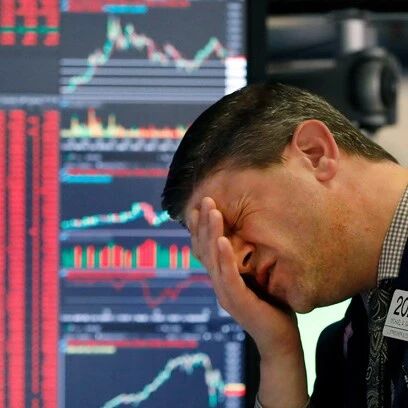
周五的变化:原油继续大涨、美股再度大跌,但美债“不跟了”,市场开始“定价衰退”了吗?
美股IPO· 2026-03-28 02:12
Group 1 - The article discusses the unusual market behavior where oil prices surge, U.S. stocks decline, and U.S. Treasury yields unexpectedly fall, indicating a shift in market pricing logic [4][5][7] - The WTI crude oil futures reached a multi-year high of $99.64 per barrel, while the Nasdaq Composite Index entered correction territory, reflecting the impact of ongoing geopolitical tensions [4][9] - Investors are transitioning their focus from short-term inflation fears driven by rising energy prices to deeper concerns about long-term economic stagnation and recession risks [4][7][10] Group 2 - The strong performance of the oil market is identified as a core source of recent asset volatility, with concerns shifting from short-term disruptions to long-term supply shortages [8] - The Nasdaq Composite Index has dropped over 3% this week, officially entering a correction phase, while the S&P 500 Index has recorded its longest losing streak since May 2022 [9] - The U.S. Treasury market faces upward pressure on yields due to increased borrowing needs from the government to address war costs and refinance debt at higher interest rates [10][11]