
货币金融服务

Search documents
深圳金融监管局月内开三张罚单!一银行被罚超300万
Nan Fang Du Shi Bao· 2025-11-14 09:28
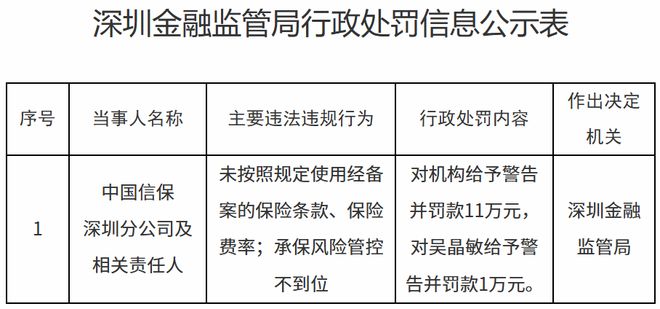
Group 1 - Shenzhen Financial Regulatory Bureau issued three fines in November, with one bank fined over 3 million yuan [1][6] - China Export & Credit Insurance Corporation Shenzhen Branch was fined 110,000 yuan for not using approved insurance terms and inadequate risk management [1][3] - Guangdong Huaxing Bank Shenzhen Branch faced multiple penalties this year, including a fine of 600,000 yuan for improper discounting practices and inflated deposits [4][5] Group 2 - Zhejiang Commercial Bank Shenzhen Branch was fined 3.3 million yuan due to inadequate pre-loan investigations and poor credit management [6][7] - A total of nine responsible individuals from Zhejiang Commercial Bank were penalized, with fines ranging from 5,000 to 6,000 yuan [6][7] - The bank has been operational since April 2010 and is the first branch established by Zhejiang Commercial Bank outside of Zhejiang Province [7]

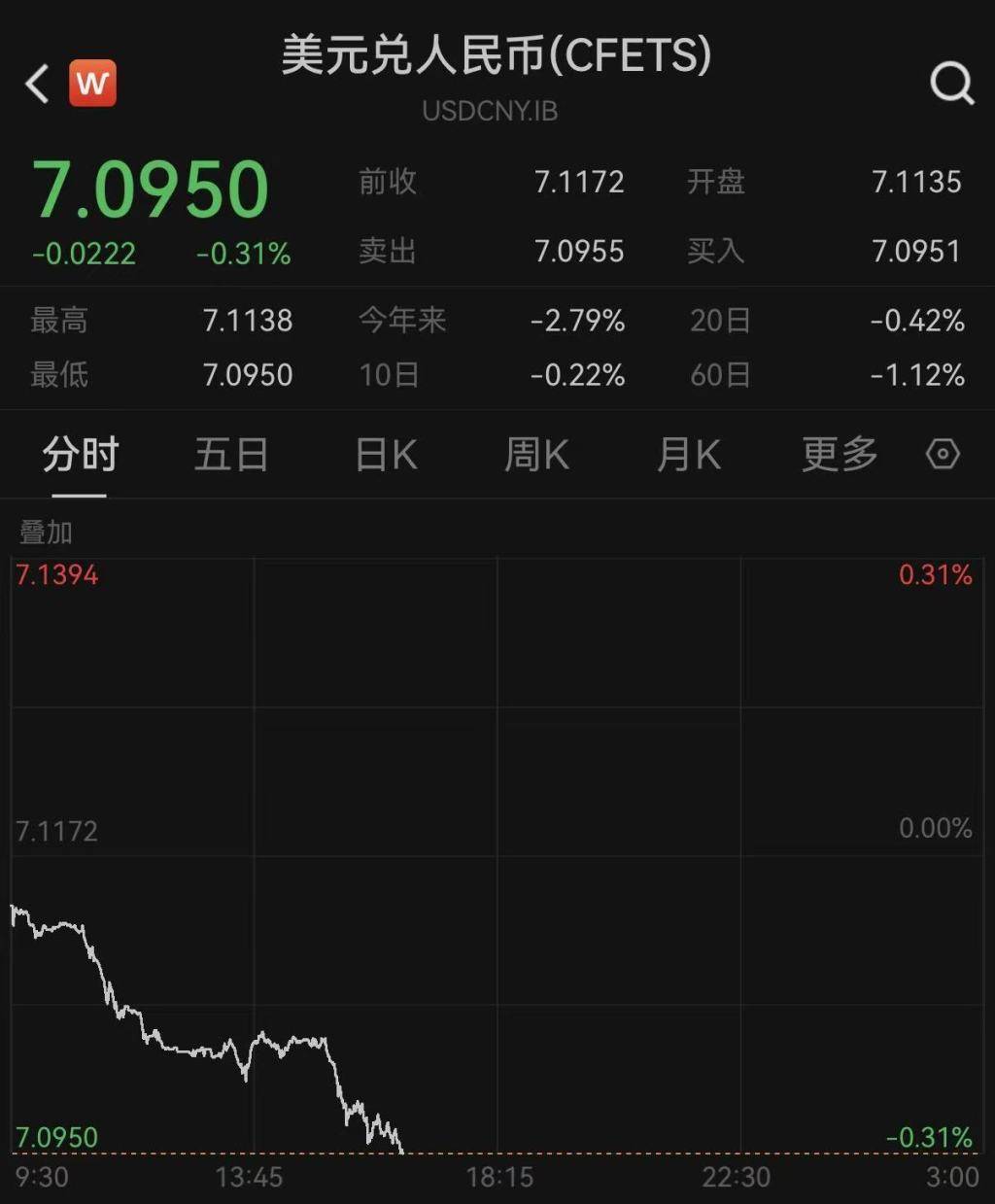
创1年多新高!人民币对美元即期汇率升破7.10关口
Sou Hu Cai Jing· 2025-11-13 09:26
Core Points - The Chinese Yuan (CNY) against the US Dollar (USD) reached a one-year high on November 13, 2024, with the exchange rate breaking through the 7.11 and 7.10 thresholds, closing at 7.0959, an increase of 213 basis points from the previous trading day [1] - The offshore CNY also strengthened, surpassing the 7.10 mark, with a peak of 7.09400 during the day, marking a monthly high [2] - The US Dollar Index turned from an increase to a decrease, falling to a low of 99.2914, down over 0.15% [3] Summary by Sections Exchange Rate Movements - On November 13, the CNY/USD exchange rate reached 7.0959, up 213 basis points from the previous day, marking a new high since mid-October 2024 [1] - The offshore CNY also saw gains, with a peak of 7.09400, indicating strong performance in the international market [2] Economic Policy Insights - The People's Bank of China emphasized maintaining a managed floating exchange rate system, ensuring the CNY remains stable at a reasonable level while being responsive to market supply and demand [3] - The central bank's report highlighted the importance of guiding expectations and preventing excessive fluctuations in the exchange rate [3] Analyst Perspectives - Analysts predict that the CNY will remain strong in the short term, with a focus on the USD's performance and the central bank's control over the CNY's midpoint rate [4] - It is expected that the CNY will continue to exhibit a pattern of inverse fluctuations with the USD, with limited volatility, and the likelihood of breaking the 7.0 mark before year-end is low [4]
中国农业发展银行增资至2260亿元
Mei Ri Jing Ji Xin Wen· 2025-11-10 03:27
Core Points - The China Agricultural Development Bank has increased its registered capital from 200 billion RMB to 226 billion RMB, representing a 13% increase [1] - The bank was established in October 1994 and is led by legal representative Zhan Dongsheng [1] - Its business scope includes loans for the procurement, storage, regulation, and sale of key agricultural products such as grain, cotton, oilseeds, sugar, pork, and fertilizers [1] Summary by Category Company Information - The registered capital of China Agricultural Development Bank is now 226 billion RMB [1] - The bank is a state-owned enterprise under the direct control of the State Council of the People's Republic of China, holding 100% ownership [3] Business Operations - The bank's operations include providing loans for agricultural infrastructure, water conservancy construction, and poverty alleviation projects [1] - It also engages in various financial services such as issuing financial bonds, conducting foreign exchange transactions, and asset securitization [1]

32国选择绑定中国人民币,4.5万亿货币互换,中国成为最大赢家!
Sou Hu Cai Jing· 2025-11-08 10:43
在全球金融格局变化中,人民币正悄然改变支付和贸易规则。 中国与32国签署的货币互换总额突破4.5万亿,金砖国家约30%的贸易结算绕开美元,显示出全球对美元信任下降和对中国经济实力的认可。 人民币不再只是国内流通工具,而成为全球贸易和金融的底气。 从大宗商品到跨境电商,从数字人民币秒到账到企业省汇兑成本,这些变化正在重塑世界经济格局。 人民币能挑战美元的霸主地位吗? 纵观历史,真正能称霸全球的货币从来不是凭空出现的。 英镑之所以成为最早的世界货币,是因为英国当年凭借第一次工业革命建立了无可匹敌的经济实力。 工业产值一度占据全球近一半,纺织机、钢铁厂、港口码头遍布世界各地,英国生产的商品自然要求使用英镑结算。 英国殖民遍布全球,黄金储备充足,1821年实行金本位制,让其他国家可以随时将英镑兑换为黄金。 这种经济、贸易、金融与殖民实力的结合,为英镑赢得了长期国际信用。美元的崛起则更具战略性。 第二次工业革命之后,美国经济迅速超过英国,并在两次世界大战中保持相对完整的工业体系。 战后通过马歇尔计划向欧洲大规模输出资金和物资,条件是用美元结算,同时通过布雷顿森林体系把美元和黄金绑定,直接将美元送上国际货币霸主的位 置。 ...
太强了!谁能想到,曾经在国际贸易中默默无闻的人民币,如今正以雷霆之势席卷全球
Sou Hu Cai Jing· 2025-11-08 03:54
Core Insights - A significant shift in the global financial landscape is occurring, with a particular country's currency rapidly reshaping the international trade settlement system [1] - The usage of the US dollar and euro in bilateral trade has dropped to a level described as "statistical error," while the domestic currency's settlement ratio has surged from below 3% to over 99% in the past decade [1][3] Group 1: Trade Settlement Changes - Currently, 99.1% of bilateral trade settlements are conducted using the two countries' currencies, with over one-third of foreign exchange reserves and 60% of the national welfare fund allocated to this particular currency [3] - The trading volume of this currency on the Moscow Exchange has increased 40 times, surpassing the trading scale of the US dollar, indicating a strong preference among the public for holding this currency over the domestic currency [3] Group 2: Drivers of Change - The catalyst for this financial transformation stems from external pressures, particularly after the escalation of geopolitical conflicts in 2022, which led to the exclusion of this country from international payment systems and the freezing of its assets [5] - The stability of this currency's exchange rate and its comprehensive industrial support have made it the preferred choice for transactions across a wide range of goods, effectively mitigating exchange rate fluctuation risks [5] Group 3: Broader Implications - Analysts suggest that this trend extends beyond bilateral trade, with multiple central banks increasing their holdings of this currency's assets and regional agreements for local currency settlements expanding [6] - The rise of this currency from a "marginal role" to a "core option" reflects the international community's urgent need for a diversified currency system and highlights the unique value of stable currencies in turbulent times [6]

32国绑定中国人民币,4.5万亿货币互换,金砖国家30%贸易绕开美元
Sou Hu Cai Jing· 2025-11-05 05:41
Group 1 - The core viewpoint of the articles highlights the structural transformation of the international trade system, with China signing currency swap agreements totaling 4.5 trillion yuan with 32 countries, and 30% of cross-border trade among BRICS nations bypassing the US dollar in favor of the renminbi [1][21][24] - The dominance of the US dollar is waning, with its share in global foreign exchange reserves dropping to 56.32%, the lowest in 30 years, indicating a shift in trust mechanisms [3][8] - The rise of the renminbi is supported by substantial economic and institutional foundations, reflecting a gradual but systematic advancement in its internationalization [4][9][26] Group 2 - The renminbi's internationalization is not merely theoretical but is being actively implemented, with the CIPS system covering 189 countries and processing 90.19 trillion yuan in cross-border transactions in the first half of 2025 [11][29] - The use of digital renminbi is gaining traction, exemplified by a supplier in Guangxi reducing payment time from two days to 15 minutes and cutting transaction costs by half [13][15] - The expansion of currency swap agreements signifies strategic trust at the national level, with the agreements covering a wide geographical area, including Asia, Latin America, Africa, and Europe [17][19] Group 3 - The BRICS mechanism is deepening, with 30% of trade among member countries expected to bypass the dollar by 2025, indicating a significant shift towards local currency settlements [21][22] - The renminbi's status as a reserve currency is steadily increasing, with its share in global foreign exchange reserves reaching 2.88%, and 80 countries including it in their foreign reserve baskets [24][27] - The combination of financial technology, such as CIPS and digital renminbi, enhances the efficiency and cost-effectiveness of the renminbi in the global payment system [29][31] Group 4 - The international monetary system is evolving, with the renminbi transitioning from a payment currency to a pricing currency, and its role as a reserve currency is gradually being established [31][33] - The ongoing "Belt and Road" initiative is providing a practical pathway for expanding the renminbi's payment network across various regions [29][31] - The comparative historical context shows that while the pound relied on colonialism and the dollar on warfare, the renminbi's rise is based on win-win trade and financial openness, suggesting a more sustainable path in a decentralized world [31][33]
专访AMRO首席经济学家何东:国际货币体系存在较大网络效应,数字货币兴起带来显著机遇
Sou Hu Cai Jing· 2025-10-31 11:07
Core Insights - The international monetary landscape is undergoing significant changes, with a trend towards diversification of non-dollar currencies and the rapid application of emerging technologies like blockchain in digital currency development [1][5][7] Group 1: International Monetary System - The process of "de-dollarization" is still under observation, but the evolution of the international monetary system presents opportunities for currencies like the Renminbi [1][6] - The weakening of the US dollar is attributed to multiple factors, including its overvaluation and concerns regarding the US fiscal situation, leading to a depreciation of approximately 10% compared to early 2025 [5][6] - Countries are not necessarily pursuing "de-dollarization" but are focusing on risk management strategies in response to the changing landscape [6] Group 2: Digital Currency and Blockchain - The rise of digital currencies offers significant opportunities in two main areas: financial inclusion and cross-border payments, potentially reducing costs through a unified blockchain network [7][8] - Blockchain technology can address issues of data independence among financial institutions, enhancing data portability and privacy [8] - The development of central bank digital currencies (CBDCs) is still in the exploratory phase, with varying strategies among developed and emerging markets [10] Group 3: ASEAN and Regional Cooperation - The ASEAN economies have experienced a slowdown this year but remain stable, with potential for growth in investment and trade within the "ASEAN+3" framework [3] - The integration of ASEAN with China, Japan, and South Korea can leverage financial and technological advantages to foster internal growth and productivity [3] Group 4: Renminbi Internationalization - High levels of openness in the Chinese economy are crucial for the internationalization of the Renminbi, supported by stable economic growth and deepening financial markets [12] - The gradual process of Renminbi internationalization is influenced by external factors, including US policy changes that may affect the dollar's dominance [12]
2025年前三季度宏观政策“三策合一”研究报告
Sou Hu Cai Jing· 2025-10-24 08:51
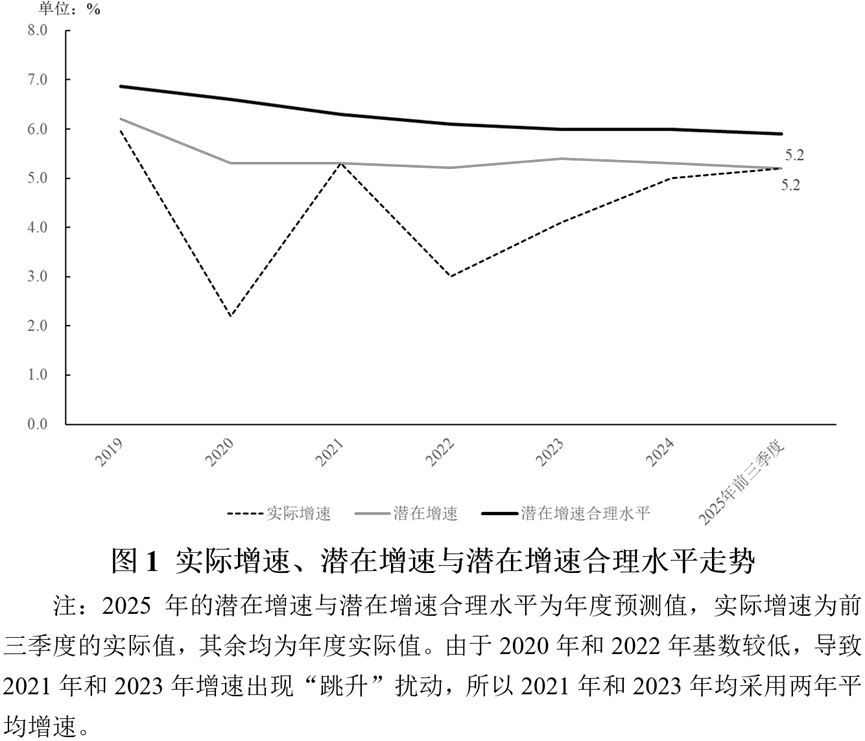
Core Viewpoints - The main contradiction in the current macroeconomic environment is insufficient domestic demand, particularly in consumer spending, highlighting the strategic importance of enhancing consumption [2][9] - It is recommended to maintain the actual GDP growth rate above the potential growth rate of 5.2% for 2025 and set the 2026 GDP growth target around 5% to signal stability [2][37] - A gradual approach to price level control is suggested, aiming for a three-step process to achieve a core CPI growth target of 2% over two to three years [2][38] Macroeconomic Overview - The GDP growth rate for the first three quarters of 2025 is 5.2%, aligning closely with the potential growth rate, indicating a stable economic operation [6] - Industrial profits have shown positive improvement, with a 0.9% year-on-year increase in profits for large industrial enterprises from January to August 2025 [7] - The service sector has also experienced growth, with a 5.4% year-on-year increase in value added, particularly in modern service industries [8] Current Economic Contradictions - The primary contradiction in the macroeconomy is on the demand side, characterized by insufficient consumer demand, with retail sales growth slowing to 4.5% year-on-year in the first three quarters [9][11] - Investment demand has also declined, with fixed asset investment showing a -0.5% year-on-year growth, a drop of 3.3 percentage points from the first half of the year [9] Macroeconomic Policy Evaluation - The monetary policy index for the first three quarters of 2025 is 44.0, indicating a slight increase in policy strength, with M2 growth at 8.4% by the end of September [12] - The fiscal policy index stands at 57.9, reflecting an increase in fiscal policy strength, with public budget expenditure growing by 3.1% year-on-year [13] - The overall efficiency of stabilization policies is rated at 50.0, showing a positive trend in policy effectiveness [26] Policy Recommendations - It is advised to enhance stabilization policies to address the lack of effective domestic demand, with a focus on both monetary and fiscal measures [38] - Growth policies should prioritize the development of new productive forces, with an emphasis on employment-friendly industrial policies [39] - Structural policies need to optimize investment, industrial, and income distribution structures to better balance total supply and demand [39]
管涛:国际储备货币体系加速多极化
Di Yi Cai Jing· 2025-10-19 12:02
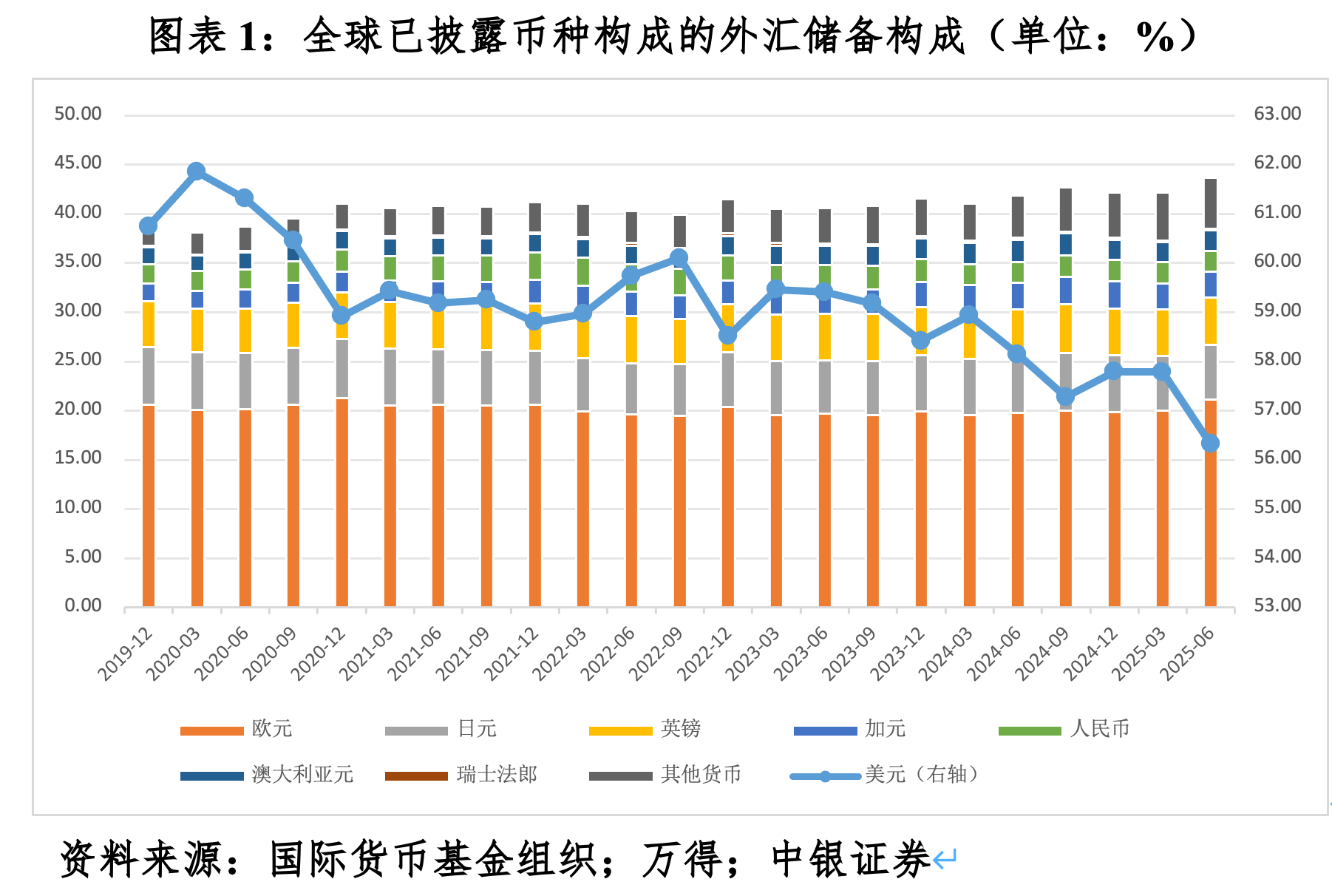
Core Viewpoint - The global monetary system is experiencing a trend towards diversification, but the dominance of the US dollar remains significant, and the narrative of "de-dollarization" should not be overstated [1][11][19] Group 1: Dollar Reserve Share - As of the end of Q2, the dollar's share of global foreign exchange reserves fell from 57.79% to 56.32%, marking a 1.47 percentage point decline and reaching a 30-year low [1] - The decline in the dollar's reserve share is primarily attributed to a 7.1% depreciation of the dollar index during the same period, which had a negative valuation effect [2][11] - If exchange rates remained stable, the dollar's reserve share would have only slightly decreased to 57.67%, indicating that the valuation effect significantly influenced the reported decline [2] Group 2: Euro and Other Currencies - The euro's reserve share increased from 20% to 21.13%, a rise of 1.13 percentage points, but this was largely due to a 9% appreciation against the dollar, which masked the actual change in reserve share [2][4] - The overall trend indicates a gradual shift towards a more multipolar currency reserve system, with the euro and other currencies gaining ground [11][19] Group 3: US Treasury Securities and Foreign Holdings - As of June, foreign official holdings of US long-term securities amounted to $67,395 billion, closely aligning with the IMF's reported global dollar reserve balance of $67,733 billion [5] - The breakdown of these holdings includes $38,191 billion in US Treasury bonds (56.7%), $5,078 billion in government agency bonds (7.5%), and $21,941 billion in US corporate stocks (32.6%) [5][10] - In Q2, foreign official net purchases of US long-term securities fell to $51 billion, a 94.4% decrease from the previous quarter, indicating a shift in investment strategy [9] Group 4: Gold Reserves and Asset Diversification - The global official gold reserves reached $38,642 billion, surpassing the value of US Treasury holdings for the first time, reflecting a growing interest in gold as a reserve asset [16] - The share of gold in global reserves has increased, while the dollar's share has decreased, suggesting a diversification of reserve assets among central banks [16][18] Group 5: International Capital Flows - The TIC report indicates that the net inflow of international capital into the US has significantly increased, with a year-to-date net inflow of $7,882 billion, a 142% increase year-on-year [12][15] - Despite the increase in private investment, official foreign capital inflows have decreased by 39.5%, highlighting a potential decline in the dollar's reserve currency status [15]
9月PMI表现温和,节后债市延续震荡
Ge Lin Qi Huo· 2025-10-10 13:49
Report Summary 1. Report Industry Investment Rating No information provided. 2. Core Viewpoints - The Treasury bond futures showed a pattern of rising and then falling after the National Day holiday, with the market expected to fluctuate in the short - term, and trading - type investors are advised to conduct band operations [4][45][46]. - The official manufacturing PMI in September was 49.8%, still below the boom - bust line, with production expanding and demand slightly weak. The non - manufacturing business activity index decreased slightly, and different industries showed varying degrees of prosperity [10][27]. - During the National Day and Mid - Autumn Festival holiday, domestic tourism and consumption increased, while the year - on - year decline in commercial housing transactions in 30 large - and medium - sized cities in early October widened, and the agricultural product wholesale price was relatively low year - on - year [33][36]. 3. Summary by Related Catalogs Treasury Bond Market - **Treasury Bond Futures Performance**: After the National Day holiday, Treasury bond futures rose on Thursday and fell on Friday. The 30 - year Treasury bond fell 0.03% for the week, the 10 - year rose 0.09%, the 5 - year was flat, and the 2 - year fell 0.02% [4]. - **Treasury Bond Yield Curve**: Compared with September 30, the 2 - year and 30 - year Treasury bond yields rose slightly on October 10, while the 10 - year yield decreased slightly, and the 5 - year yield remained unchanged [7]. Manufacturing PMI - **Overall PMI**: In September, the official manufacturing PMI was 49.8%, remaining below the boom - bust line for six consecutive months. Large enterprises continued to expand slightly, medium - sized enterprises remained stable, and the decline in small - enterprise sentiment narrowed [10]. - **Production and Demand**: The production index was 51.9%, indicating accelerated expansion. The new order index was 49.7%, showing improved demand. Some industries such as automobile manufacturing had rapid production and demand release, while others were below the critical point. The procurement volume index rose to 51.6% [13]. - **Price Index**: The raw material purchase price index was 53.2%, and the ex - factory price index was 48.2%. The former was in the expansion range for three consecutive months, while the latter declined, which may suppress corporate profits. It is expected that the year - on - year decline of PPI in September will narrow [16]. - **Export and Inventory**: The new export order index was 47.8%, and the import index was 48.1%, both showing an increase. The raw material and finished - product inventory indexes increased. The cumulative year - on - year growth of manufacturing profits from January to August was 7.4% [19][22]. - **Business Expectation**: The employment index and the production and business activity expectation index increased slightly, indicating that enterprises' expectations for future prosperity improved slightly [25]. Non - manufacturing Business Activity Index - **Overall Index**: In September, the non - manufacturing business activity index was 50.0%, slightly lower than the previous value. The construction industry index was 49.3%, and the service industry index was 50.1% [27]. - **Construction Industry**: The new order index, employment index, and business activity expectation index all showed some changes, with the overall prosperity slightly rising but still weak [29]. - **Service Industry**: The new order index decreased, the employment index remained unchanged, and the business activity expectation index decreased slightly. The input price index and the sales price index both declined [31]. Other Economic Data - **Holiday Consumption**: During the National Day and Mid - Autumn Festival holiday, the number of domestic tourists and total tourism spending increased. The daily average sales revenue of national consumption - related industries increased by 4.5% year - on - year, with service consumption growing faster [33]. - **Commercial Housing Transactions**: The year - on - year decline in commercial housing transactions in 30 large - and medium - sized cities in early October widened, and it is expected that the decline in the fourth quarter may exceed that in the third quarter [36]. - **Agricultural Product Prices**: In early October, the agricultural product wholesale price fluctuated narrowly, and it is expected that the year - on - year decline will narrow significantly in the next two months [39]. - **Funding Rate**: After the National Day holiday, the overnight funding rate fell to a low level. The central bank carried out a 1100 - billion - yuan repurchase operation to maintain market liquidity [43].