奢侈品

Search documents
可选消费W24周度趋势解析:宠物和黄金珠宝板块表现最优,各板块表现分化加剧-20250615
Haitong Securities International· 2025-06-15 14:56
Investment Rating - The report assigns an "Outperform" rating to multiple companies including Nike, Midea Group, JD Group, Gree Electric, Anta Sports, and Haier Smart Home among others [1]. Core Insights - The pet and gold jewelry sectors have shown the best performance, with significant growth driven by online sales and geopolitical factors affecting gold prices [4][5]. - The report highlights a divergence in sector performance, with luxury goods and pet sectors outperforming MSCI China, while other sectors like cosmetics and sportswear are experiencing negative growth [4][10]. Sector Performance Summary - **Pet Sector**: Increased by 4.2% this week, benefiting from high online sales growth, with brands like MaiFuDi and FrieGat showing year-on-year growth of 26% and 147% respectively [5][14]. - **Luxury Goods**: Continued strong performance in gold jewelry due to rising gold prices influenced by geopolitical risks and expectations of interest rate cuts in the US [5][14]. - **Snacks**: Experienced a slight pullback after previous gains, but companies show resilience with increasing production capacity and new product placements [5][14]. - **Sportswear**: Mixed performance with local brands experiencing a downturn, while international brands like Lululemon face challenges after lowering earnings guidance [5][14]. - **Cosmetics**: Continued decline over four weeks, impacted by discussions around collagen restructuring and pressure on domestic brands [5][14]. - **US Hotels and Credit Cards**: Both sectors declined due to risk-averse market sentiment [5][14]. Valuation Analysis - Most sectors are valued below their historical averages, with expected PE ratios for 2025 indicating potential undervaluation: - Sportswear: 14.5x (72% of 5-year average) - Luxury Goods: 23.1x (65% of 5-year average) - Gambling: 14.6x (24% of 5-year average) - Cosmetics: 33.9x (84% of 5-year average) - Pet Sector: 52.6x (54% of 5-year average) - Snacks: 25.3x (39% of 5-year average) - US Hotels: 28.0x (17% of 5-year average) - Credit Cards: 31.2x (60% of 5-year average) [6][15].
传媒互联网产业行业周报:港股风险偏好持续上行,且逐步向中小盘延伸-20250615
SINOLINK SECURITIES· 2025-06-15 13:31
Investment Rating - The report maintains a positive outlook on the Hong Kong stock market, particularly in sectors such as AI, new consumption, and innovative pharmaceuticals, indicating a rising risk appetite among investors [2][9]. Core Insights - The Hong Kong stock market has shown significant improvement in risk appetite, with notable performance in sectors like AI, new consumption, and innovative pharmaceuticals, leading to increased investor interest, especially in small and mid-cap stocks [2][9]. - The report suggests active participation in A+H shares due to observed discount phenomena in IPOs, with a focus on new consumption and manufacturing sectors [2][9]. - There is a sustained bullish outlook on virtual assets and the Web 3.0 market, driven by stablecoin policies and IPOs, with expectations for more regulatory developments in the future [2][9]. - The valuation of overseas Chinese assets remains influenced by US-China trade relations and the broader economic environment, highlighting the need to monitor changes in US tariff policies and domestic economic strategies [2][9]. Industry Tracking Summary 1. Education - The education index decreased by 0.98% from June 9 to June 13, underperforming compared to major indices, with 51talk rising by 12.09% and Thinking Education falling by 11.55% [10][14]. 2. Luxury Goods - The luxury goods sector faced slight pressure, with key stocks like Prada declining by 6.01% while new brands like Shiseido rose by 2.02% during the same period [18][21]. 3. Coffee and Tea - The sector showed stable growth, with individual stocks like Luckin Coffee increasing by 1.87%, while others like Bawang Tea experienced declines [23][27]. 4. E-commerce - The e-commerce sector saw a slight decline, with major players like Alibaba and JD.com facing competitive pressures, while the Hang Seng Internet Technology Index rose by 3.46% [29][34]. 5. Streaming Platforms - The streaming sector outperformed, with Tencent Music and NetEase Cloud Music showing significant gains, while Netflix experienced a decline [35][38]. 6. Virtual Assets & Internet Brokers - The global cryptocurrency market capitalization increased by 5.9%, with Bitcoin and Ethereum prices showing slight fluctuations, indicating ongoing interest in virtual assets [42][43].


中国非遗与国际时尚品牌“双向奔赴”
Xin Hua Wang· 2025-06-15 03:55
Core Viewpoint - The article highlights the collaboration between Chinese intangible cultural heritage (ICH) and international fashion brands, showcasing how traditional Chinese craftsmanship is being integrated into luxury products to attract consumers who appreciate Chinese culture [1][5]. Group 1: Collaboration and Innovation - Chinese craftsmanship, such as cloisonné, is being incorporated into luxury items by international brands, exemplified by a collaboration between Chinese master craftsman Xiong Songtao and the Spanish brand Loewe [1][3]. - Xiong Songtao, a third-generation inheritor of cloisonné, has elevated the craft to new heights, using ultra-fine silver wire to create intricate designs, making his work sought after by global brands [3][5]. - The younger generation, including Xiong's daughter, is bringing fresh ideas to traditional crafts, focusing on practical items like jewelry, which broadens market appeal [7]. Group 2: Market Trends and Growth - The consumption of intangible cultural heritage products is on the rise, with a report indicating that the annual transaction volume of ICH-related products on platforms like Taobao and Tmall surpassed 107.3 billion yuan in 2023, marking a 37.7% increase year-on-year [4]. - International fashion brands are increasingly seeking to incorporate Chinese ICH elements into their products to attract consumers interested in traditional culture, as seen with brands like Fendi and Dior [5][6]. - The collaboration between ICH artisans and luxury brands not only enhances the visibility of Chinese heritage but also provides commercial pathways for these traditional crafts [7].


AI席卷之下,Max Mara为何选择让温度先行?
Hu Xiu· 2025-06-14 04:36
Group 1: Company Overview - Max Mara's iconic 101801 coat, characterized by its minimalist design, has become a timeless staple in women's wardrobes globally since its inception in 1981 [1] - As of 2024, Max Mara operates 502 self-owned stores across 69 countries, with over 2,500 single-brand stores and more than 10,000 multi-brand retail points [1] - The company is focusing on expanding its presence in key markets such as China, Europe, and North America, with new concept stores opening in major urban areas in China [1] Group 2: Market Environment - The luxury goods market is experiencing a downturn, with Bain reporting a projected sales decline of 18%-20% in China's personal luxury goods market for 2024, returning to 2020 levels [2] - Max Mara's aggressive expansion strategy contrasts sharply with the overall contraction in the luxury sector, indicating a proactive approach to market challenges [2] Group 3: Digital Transformation - Max Mara has been investing in digital transformation since 2010, with a global ERP system deployment and the establishment of a digital operations department in 2018 [3] - The company has entered a 2.0 phase of digital transformation with the recent spin-off of its digital business unit, focusing on tailored strategies for different core regions [3] - In China, Max Mara appointed a Chief Information Officer to lead a comprehensive digital transformation, emphasizing the need for a blend of technical and fashion industry expertise [3][4] Group 4: Digital Strategy and Customer Engagement - The digital strategy aims to enhance brand awareness, support efficient retail operations, and improve logistics and inventory management [3][4] - Max Mara utilizes various online channels, including e-commerce and social media, to reach consumers and strengthen brand loyalty, rather than solely focusing on sales [7] - The company is implementing a 1V1 video service for virtual try-ons, prioritizing human interaction over AI-driven solutions to maintain a high-quality customer experience [13] Group 5: Supply Chain and Inventory Management - Max Mara employs a push-pull model for inventory management, balancing proactive product launches with responsive supply chain adjustments [12] - The company is enhancing its supply chain capabilities by integrating various systems to ensure efficient product flow and accurate demand forecasting [12][19] - A focus on breaking down data silos and achieving end-to-end digital integration is crucial for optimizing marketing and supply chain processes [19] Group 6: Future Outlook and Competitive Landscape - The luxury market is expected to face intensified competition, with both high-end and emerging brands vying for market share [17] - Max Mara's core strength lies in its product quality, which remains the primary driver of consumer purchases, despite the increasing importance of digital capabilities [17] - The company is committed to expanding its consumer base through targeted marketing and enhancing in-store experiences to foster brand loyalty [17]

美银:“新产品”将成2026年奢侈品销量回暖关键变量
智通财经网· 2025-06-13 08:07
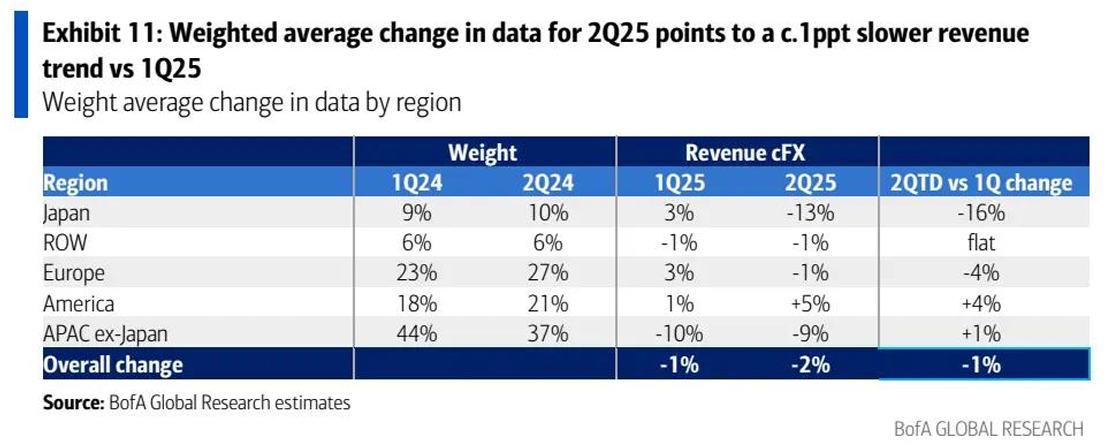
Core Viewpoint - Bank of America reports a 1% year-over-year decline in luxury goods revenue for Q1 2025, a 4 percentage point drop from Q4 2024, indicating a slowdown across all regions [1] Group 1: Market Trends - The luxury goods sector is expected to show mixed signals in Q2 2025, with both positive and negative indicators [1] - Despite global economic volatility, local demand remains strong in Europe, Asia, and the Americas [1] - The tourism sectors in Japan and Europe are deteriorating, with a full recovery unlikely [1] Group 2: Financial Projections - EBIT profit margin outlook for H1 2025 is uncertain, with revenue weakness exerting pressure on profitability [1] - Bank of America projects a 6% lower profit expectation for H1 2025 compared to market consensus [1] - The luxury goods sector is currently trading at a 22x P/E ratio, within the historical valuation range [1] Group 3: Regional Performance - In the Americas, luxury spending improved by 3 percentage points in Q2, with jewelry spending up 4 percentage points [5] - In Europe, tourism spending dropped by 8 percentage points, while local consumption remains stable [5] - In Japan, tourism spending is expected to decline by 30-50 percentage points, leading to a 16 percentage point negative impact [5] Group 4: Company-Specific Insights - LVMH's Q2 performance is critical for assessing its fashion and leather goods division, with a potential EBIT margin pressure [6] - Hermès is expected to see a 9% year-over-year revenue growth in Q2, with an EBIT margin of 40.1% [6] - Kering's Q2 performance is anticipated to align with previous guidance, with upcoming comments during earnings expected to influence market expectations for H2 2025 and 2026 [6] - Richemont's jewelry business remains strong, but market consensus on margins may be overly optimistic [6] - Moncler is projected to have flat revenue in Q2, with a 4% growth in retail revenue [6] - Prada's revenue is expected to decline by 1% in Q2 due to adverse factors in Japan, while Miu Miu is expected to grow by 40% [6] - Zegna is expected to see a 5% revenue growth in Q2, up from 4% in Q1 [6] - Swatch is projected to break even in H1 2025 [6]
Plush获融资;H&M集团创始家族收购股权;滴滴重返巴西外卖市场
Sou Hu Cai Jing· 2025-06-12 14:17
Funding and Expansion - Plush, a DTC personal care brand, has raised 470 million INR (approximately 4.7 million USD) in its latest funding round, led by Rahul Garg with participation from several strategic investors [3] - The funds will be used to expand offline operations, enhance brand building, and increase market influence [3] - Plush, founded in 2019, focuses on women's care and personal care products, including menstrual care, intimate health, hair removal, and personal hygiene [3] Corporate Control and Shareholding - The Persson family, through their investment tool Ramsbury, has increased their stake in H&M Group from 35.5% to nearly 64% over the past nine years, now controlling about 70% of the capital and 85% of the voting rights [6] - This increase in shareholding indicates the family's intent to regain more control over the company [6] Acquisitions and Strategic Moves - Kering Eyewear has announced the acquisition of Italian manufacturer Lenti from Safilo, which specializes in mold forming and surface treatment for various applications [8] - The acquisition aims to enhance Kering Eyewear's internal R&D capabilities for developing innovative high-performance Italian-made sunglasses [8] - Coupang Group is integrating Farfetch with R.Lux to enter the luxury goods market in South Korea, leveraging local services and operations to expand Farfetch's business [10] Market Entry and Expansion - Didi's brand 99Food has launched its delivery service in Goiânia, Brazil, marking its return to the Brazilian market after a previous exit [12] - Didi has a strong foundation in Brazil, with approximately 700,000 active riders and 50 million active users across over 3,300 towns [12] - Luckin Coffee plans to open a store in downtown Manhattan, New York, as part of its international expansion strategy [15][16] Sustainability Initiatives - Chanel has launched Nevold, a B2B center focused on developing circular materials to promote sustainability in the luxury goods and broader apparel industry [18] - The project aims to transform waste textiles into new materials, enhancing the economic competitiveness of recycled materials [18] Market Expansion Plans - Korean fashion e-commerce platform Musinsa plans to enter the Chinese and Japanese markets by opening physical stores as part of its global expansion strategy [21] - Musinsa currently offers around 8,000 Korean fashion brands and aims to tap into China's vast consumer market [22] Corporate Developments - Authentic Brands Group has established its Asia-Pacific headquarters in Shanghai, covering nearly 2,000 square meters to support business expansion in the region [24] - Woolrich has appointed its CFO Lorenzo Flamini as the new CEO, following a strategic partnership with a local operator for its business in Greater China [27]


又有40+曾经的“排队王”撑不住了...
创业邦· 2025-06-12 12:50
以下文章来源于赢商网 ,作者李玉玲 赢商网 . 这里有你需要的零售商业地产行业资讯、深度分析、知识和数据 来源丨赢商网(ID:winshang) 作者丨李玉玲 编辑丨熊舒苗 付庆荣 图源丨赢商网拍摄 品牌闭店潮,此起彼伏。 据赢商网不完全统计,今年 1-3月又有超过40家典型品牌进行闭店。 Gucci上海关2店、 茑屋书店 连撤 2店、永辉超市90天关273家店等消息,不断引发热议。 图源: 永辉超市 其中, 【永辉超市】 闭店最为激进,一季度门店数量较去年同期锐减 273家,2025 年计划关闭 200 -350家效益不佳的门店; 【永旺超市】 因财务亏损和租金压力 无奈 关闭部分门店; 【沃尔 玛】 一季度关了 3 家门店,过去五年其中国卖场门店总数减少了123 家;即将退市的 【人人乐】 一季度亏损7962万元,门店数量从巅峰时期的超百家缩水至仅剩32家。 困境之下,超市行业求变, 引入 "胖东来模式"成为流行解法 。 【永辉超市】 动作迅速,截至 今年 6 月13日已完成 100 家门店调改,计划 2025 年调改门店达 200 家左右,2026 年完成所有存量门 店调整 。【 物美超市】积极跟进,首 ...


闪购会、推低价入门产品线:当增长放缓后,奢侈品如何应对
Di Yi Cai Jing· 2025-06-10 09:49
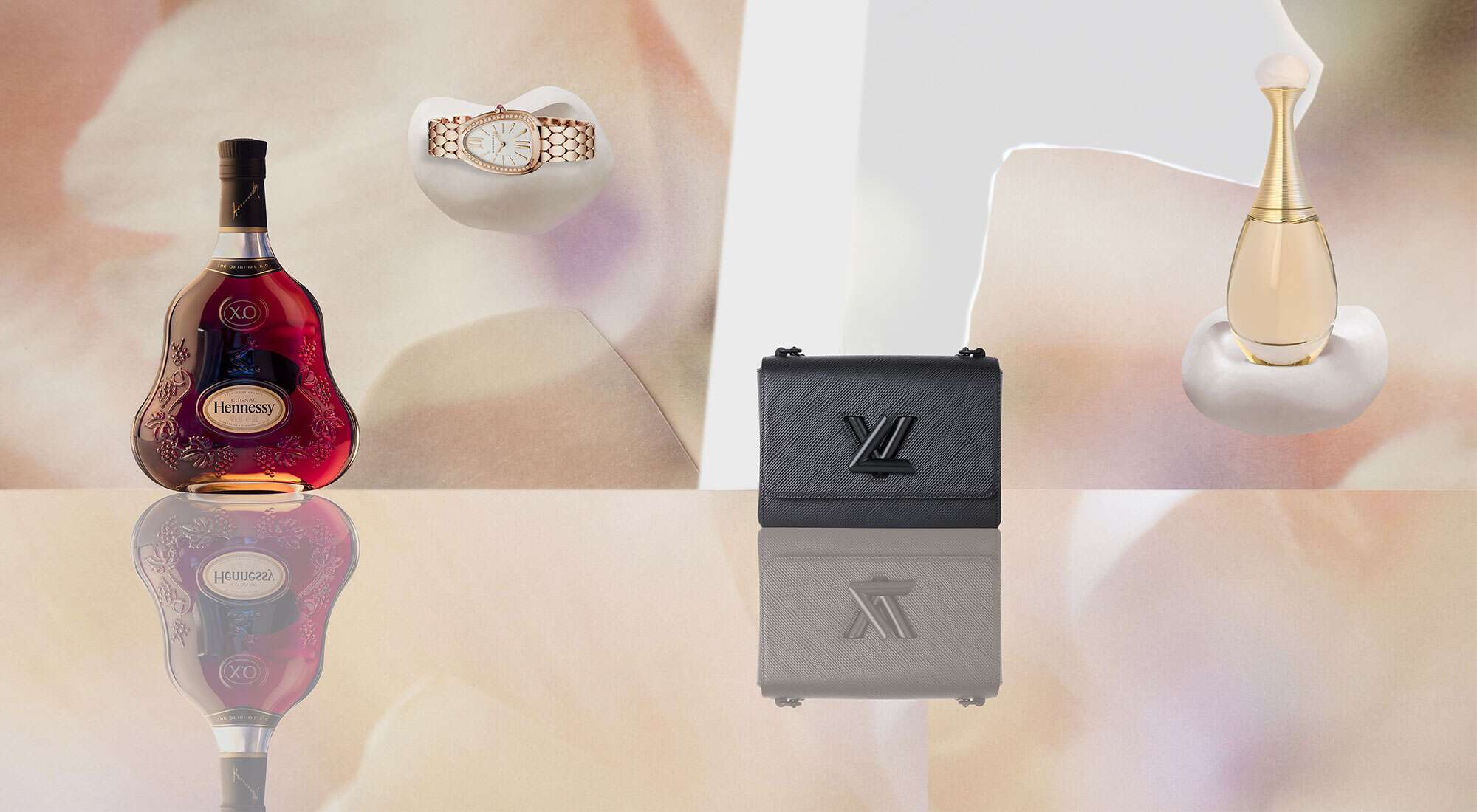
Core Insights - The luxury goods industry is experiencing a gradual slowdown in growth, partly due to brands continuously raising prices over the past few years [1][3] - Consumers have noticed an increase in the frequency of luxury goods sales events, indicating a shift in market dynamics [1] Industry Trends - Since 2020, most luxury brands have been increasing prices at a double-digit annual rate, surpassing inflation, which cannot solely be attributed to supply chain and labor cost increases [3] - High pricing has suppressed consumer demand, leading to a consensus that excessive pricing is detrimental to overall industry performance [3] Company Strategies - Burberry has begun to adjust its pricing strategy, reducing the average price of some bags by 5% [4] - YSL has also lowered the price of its popular Loulou handbag by approximately 10% [4] - Some brands are opting for discreet sales strategies, such as flash sales and VIP private sales, to manage unsold inventory while maintaining brand image [4] - LVMH has introduced more affordable product lines, such as the upgraded Neverfull bag, to attract consumers [4] Consumer Behavior - Consumers are increasingly engaging with sales associates, indicating a shift in how luxury brands interact with their customer base [1] - The trend of brands offering significant discounts during private sales events suggests a response to changing consumer expectations and purchasing power [1][4]
年轻人的新晋「奢侈品」,捧出一个河南首富
36氪· 2025-06-09 13:59
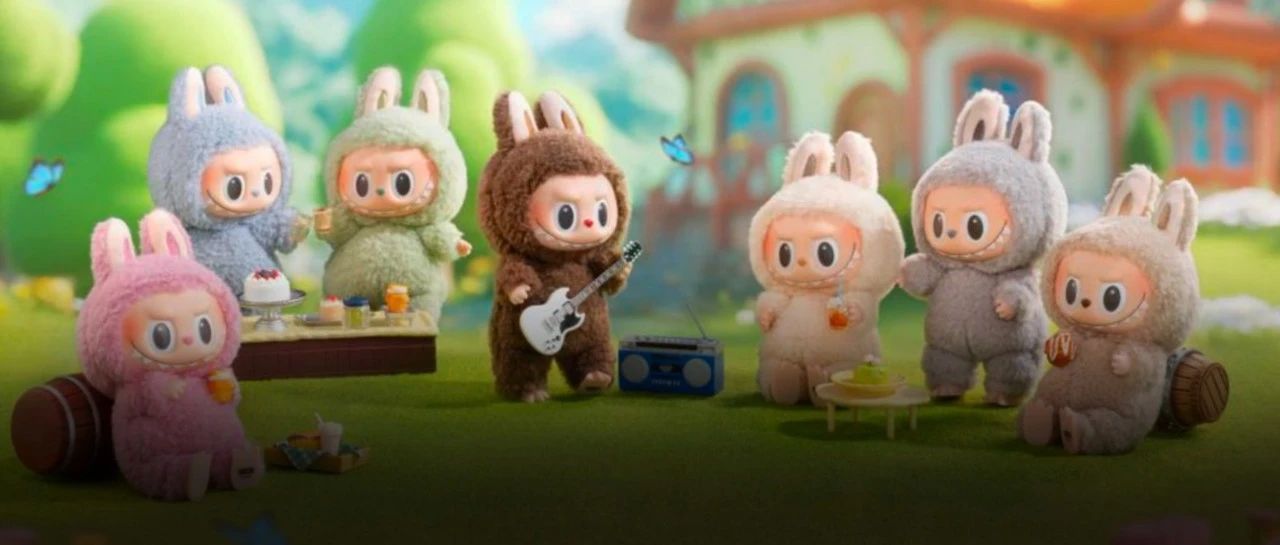
Core Viewpoint - The article discusses the transformation of Pop Mart from a blind box retailer to a potential luxury brand, highlighting the success of its IP LABUBU and the strategies employed to create desire and exclusivity in the market [5][41][61]. Group 1: Company Overview - Pop Mart's LABUBU contributed 3.04 billion yuan in revenue, marking a year-on-year growth of over 700% [5]. - The stock price of Pop Mart has increased approximately ninefold since early 2024, and nearly twentyfold since the lowest point in October 2022 [6]. Group 2: Product and Market Strategy - Pop Mart has redefined its business model, moving from a blind box retailer to a comprehensive IP operator, building a full industry chain covering design, production, channels, and community [17]. - The company has established a flexible supply chain model, reducing inventory turnover days from 159 to 100 days through data-driven sales predictions [13]. Group 3: Marketing and Brand Positioning - Pop Mart's marketing strategy includes a membership system and social media engagement, resulting in a 50% online repurchase rate [16]. - The collaboration with international designers and participation in fashion events, such as Milan Fashion Week, has significantly boosted LABUBU's visibility and desirability [39][41]. Group 4: Comparison with Luxury Brands - The article draws parallels between Pop Mart's strategies and those of luxury brands, emphasizing the importance of creating desire and exclusivity [60][63]. - Pop Mart's potential to become a luxury brand is supported by its ability to generate scarcity and community engagement, similar to established luxury brands [64][65].
废除“大漂亮”法案第899条“资本税”!全球大公司高管本周齐聚华盛顿游说美国国会
华尔街见闻· 2025-06-09 02:08
Core Viewpoint - A significant lobbying effort by multinational companies is underway to oppose Clause 899 of Trump's tax reform, which is perceived as a potential threat to millions of American jobs and could reshape international capital flows [1][4]. Group 1: Impact on Foreign Investment - Approximately 70 companies, including major firms like Shell, Toyota, SAP, and LVMH, are concerned about Clause 899, which could jeopardize the 8.4 million jobs these foreign companies provide in the U.S. [1] - The clause is expected to increase taxes on U.S. stock dividends and certain corporate bond interests by 5 percentage points annually over four years for foreign investors [3]. - The implementation of Clause 899 could lead to a significant reduction in foreign direct investment, as warned by industry leaders [4]. Group 2: Financial Market Implications - Foreign banks have underwritten over 70% of foreign corporate debt issuance in the U.S., accounting for nearly one-third of total dollar-denominated debt issuance [5]. - In 2023, these foreign banks lent over $1.3 trillion to U.S. companies, supporting $5.4 trillion in foreign direct investment and generating $270 billion in revenue [5]. Group 3: Legislative and Economic Considerations - Despite the potential for Clause 899 to raise $116 billion for the U.S. government over the next decade, it is projected to increase the national debt by $2.4 trillion by 2034 [6]. - There is growing momentum in the Senate to repeal Clause 899, as it contradicts the government's goal of attracting more investment to the U.S. [6]. - Concerns have been raised that foreign governments may retaliate by altering their laws in response to the U.S. tax changes, potentially leading to significant capital outflows from the U.S. [6].