智能手机

Search documents
iPhone 17 Pro降价300元
Guan Cha Zhe Wang· 2025-12-08 10:55
Group 1 - Apple has launched year-end promotional activities on e-commerce platforms ahead of "Double Twelve," with price reductions of 300 yuan for iPhone 17 Pro and iPhone 17 Pro Max, starting from 8699 yuan and 9699 yuan respectively, running from December 8 to December 14 [1] - Compared to previous years, the promotional efforts for the iPhone 17 series are significantly weaker, with only a 300 yuan discount during the Double Eleven shopping festival, while the iPhone 17 standard version did not have any discounts [1] - In contrast, during the Double Eleven of 2024, the iPhone 15 Pro Max saw a price drop of 1300 yuan, and the newly released iPhone 16 series had a discount of 500 yuan [1] Group 2 - In May, Apple issued a price reduction notice for the iPhone 16 Pro 128GB version and all versions of the iPhone 16 Pro Max, with reductions of up to 1000 yuan, and the iPhone 16 Pro 128GB version, combined with national subsidies, priced at 5499 yuan, reflecting a total discount of 2500 yuan [2] - Analysts believe that the previous aggressive price cuts were emergency measures due to sales pressure, while the market feedback for the iPhone 17 series has been positive, leading to only regular small promotions this time [2] - According to Counterpoint Research, in October 2025, iPhone shipments in China surged by 37% year-on-year, with a market share rising to 25%, marking the first increase since 2022, driven primarily by the iPhone 17 series [2] Group 3 - As of November 30, the cumulative sales of the iPhone 17 series in China reached 12.553 million units, leading the domestic smartphone market [3] - In the week of November 24 to 30, 2025, Huawei captured 18% of the market share, closely following Apple's 18.6% share [3]

图解丨南下资金连续7日净买入小米,共计62亿港元
Ge Long Hui A P P· 2025-12-08 10:32
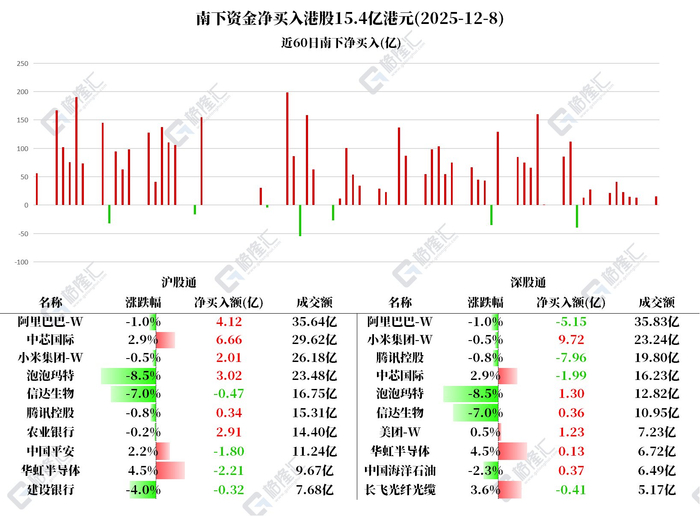
格隆汇12月8日|南下资金今日净买入港股15.4亿港元。其中: 净买入小米集团-W 11.73亿、中芯国际4.66亿、泡泡玛特4.32亿、农业银行2.91亿、美团-W 1.22亿; 净卖出腾讯控股7.62亿、华虹半导体2.08亿、中国平安1.8亿、阿里巴巴-W 1.03亿。 据统计,南下资金已连续8日净买入美团,共计30.1875亿港元;连续7日净买入小米,共计62.386亿港 元;连续5日净卖出腾讯,共计46.672亿港元;连续3日净卖出阿里,共计18.8075亿港元。(格隆汇) | | 沪股通 | | | 深股通 | | | | | --- | --- | --- | --- | --- | --- | --- | --- | | 名称 | 深跌幅 | 净买入额(亿) | 成交额 | 名称 | 涨跌幅 | 净买入额(亿) | 成交额 | | 阿里巴巴-W | -1.0% | 4.12 | 35.64亿 | 同代理-W | -1.0% | -5.15 | 35.83 Z | | 中心国际 | 2.906 | 6.66 | 29.62亿 | 小米集团-W | -0.5% | 9.72 | 23.24 L | ...


苹果,突然降价!
证券时报· 2025-12-08 10:28
12月8日,苹果官方宣布在京东、天猫等平台的旗舰店推出年末降价活动。其中,iPhone 17 Pro及iPhone 17 Pro Max机型每部降价300元,优惠后,iPhone 17 Pro售价 8699元/部起,iPhone 17 Pro Max售价9699元/部起。此外,部分地区可享国家补贴,最高可省500元/部。 市场分析人士认为,随着年底消费旺季来临,叠加产品供应的持续充足,iPhone 17系列在中国市场的销量有望冲刺新高。 最新消息,美国知名投行韦德布什的董事总经理、知名科技分析师丹·艾夫斯(Dan Ives)周一将苹果目标价上调至350美元,较当前水平高出约26%。艾夫斯周一在 X上发文称,iPhone 17销量超预期,以及苹果在人工智能(AI)领域加快发展势头,是其上调苹果目标价的核心催化剂。 苹果公司此前发布的2025财年第四季度财报(截至9月27日)显示,苹果第四财季总营收为1024.66亿美元,创同期历史纪录,较上年同期的949.30亿美元增长8%; 净利润达274.66亿美元,较上年同期的147.36亿美元大幅增长86%。 其中,第四财季iPhone营收同比增长6.1%,达到490亿 ...
iPhone 17 Pro系列官宣降价!
Mei Ri Jing Ji Xin Wen· 2025-12-08 09:56
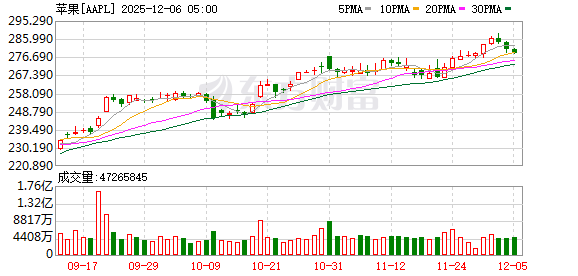
Core Viewpoint - Apple is actively engaging in promotional activities and store openings in China, while facing increasing competition from domestic brands and internal management changes [2][6][7]. Group 1: Store Openings and Promotions - Apple opened its 6th store in Beijing on December 6, marking the 59th store in Greater China, with significant customer turnout [2]. - On December 8, Apple launched year-end discounts on its official e-commerce platform, reducing prices of iPhone 17 Pro and iPhone 17 Pro Max by 300 yuan, with starting prices of 8699 yuan and 9699 yuan respectively [2]. Group 2: Sales Performance and Market Position - The iPhone 17 series has seen a 12% year-on-year increase in actual shipments in October, achieving a market share of 24.2%, the highest for a single month [6]. - Analysts predict that Apple may surpass Samsung in global smartphone shipments by 2025, marking its first time at the top since 2011 [6]. Group 3: Product Strategy - The iPhone 17 series maintains its starting price while offering significant upgrades, such as a 48-megapixel camera and a new processor, effectively being termed as "implicit price reduction" [6]. Group 4: Competitive Landscape - Apple faces intensified competition from Huawei and other domestic brands, particularly in the high-end market, as these brands enhance their offerings with AI capabilities [7]. - The rise of "AI smartphones" is becoming a focal point in the industry, with domestic brands leading in AI integration, while Apple has yet to launch its AI features in the domestic market [7]. Group 5: Management Changes - Apple is experiencing significant management turnover, with recent announcements of multiple executive departures, raising concerns about its future direction [7][8]. - Speculation about CEO Tim Cook's potential departure has surfaced, although he is expected to remain in his position until at least 2028 [8]. Group 6: Financial Performance - In the third fiscal quarter of 2025, Apple reported total revenue of $94.04 billion, a 10% increase year-on-year, with iPhone revenue reaching $44.58 billion, up 13% [9]. - The services segment continues to be a strong performer, with revenue of $27.42 billion, reflecting a 13% growth and a gross margin of 75.6% [9]. Group 7: Stock Performance - Prior to August, Apple's stock had dropped approximately 15% due to concerns over its slow AI advancements, but has since rebounded, with a year-to-date increase of over 11% as of December 5 [10][11].
今晚加满一箱92号汽油将少花2元
21世纪经济报道· 2025-12-08 09:50
Core Viewpoint - The domestic retail price of refined oil will be reduced, marking the eleventh price cut this year, leading to decreased fuel costs for consumers [3][4]. Group 1: Price Adjustment Details - Effective from December 8 at 24:00, gasoline and diesel prices will be lowered by 55 yuan per ton, translating to a decrease of 0.04 yuan for 92 gasoline, 0.05 yuan for 95 gasoline, and 0.05 yuan for 0 diesel [1][3]. - After this adjustment, filling a 50L tank of 92 gasoline will cost approximately 2 yuan less for private car owners [4]. Group 2: Impact on Fuel Costs - For a vehicle running 2,000 kilometers per month with an average fuel consumption of 8L per 100 kilometers, the fuel cost will decrease by about 6 yuan before the next price adjustment [4]. - In the logistics sector, a heavy truck running 10,000 kilometers per month with a fuel consumption of 38L per 100 kilometers will see a reduction of approximately 89 yuan in fuel costs before the next price adjustment [4]. Group 3: Market Analysis - The current pricing cycle has been influenced by mixed market factors, including a build-up of oil in the U.S. and a lack of trading activity due to the Thanksgiving holiday, resulting in a narrow fluctuation in oil prices [4]. - Future market trends will be closely monitored, particularly regarding the Federal Reserve's interest rate decisions, which may affect oil prices positively in the long term [4].
苹果官宣,降价!
中国基金报· 2025-12-08 08:11
Group 1 - Apple announced a price reduction of 300 yuan for iPhone 17 Pro and iPhone 17 Pro Max, with new prices starting at 8699 yuan and 9699 yuan respectively [2] - The iPhone 17 series has seen strong sales, with a 12% year-on-year increase in actual shipments in October, achieving a market share of 24.2%, the highest monthly global market share on record [4] - During the "Double 11" shopping festival, the sales of the iPhone 17 base model more than doubled year-on-year, while the iPhone 17 Pro and iPhone 17 Pro Max also experienced double-digit growth [4] Group 2 - Counterpoint Research predicts that Apple will maintain high growth and may achieve record high shipments in the fourth quarter, with expectations of becoming the world's largest smartphone brand by shipment volume in 2025 for the first time since 2011 [4] - The continued popularity of the iPhone 17 series, along with promotional events like Black Friday and "Double 11," is expected to drive further growth in shipments for the fourth quarter and the entire year [4]

中国出口额2个月来再次转为增长
日经中文网· 2025-12-08 07:55
Core Insights - China's exports increased by 5.9% year-on-year in November, reaching $330.3 billion, marking a return to growth after two months of decline [2][4] - Imports grew by 1.9% year-on-year to $218.6 billion, achieving positive growth for six consecutive months [4] - The trade surplus expanded compared to the same period last year, amounting to $111.6 billion, as the growth rate of exports outpaced that of imports [4] Export Performance - The automotive sector saw a significant increase, with exports rising by 50% [4] - Rare earth exports also exceeded the levels of the previous year [4] - Exports of smartphones and personal computers declined compared to the same period last year [4] Export Destinations - Exports to the United States decreased by 28.6% [6] - Exports to ASEAN, the largest export destination, grew by 8.2% [6] - Exports to Japan increased by 4.3%, and exports to the European Union also surpassed last year's figures [6]
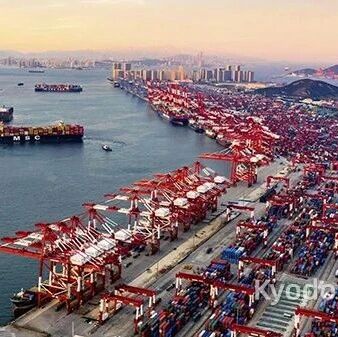
豆包手机“助手”还是“住手”?一边是帮你操作的“神队友”,一边是被厂商围剿的“公敌”
Yang Zi Wan Bao Wang· 2025-12-08 07:00
Core Insights - The Doubao smartphone, featuring the Doubao AI assistant, has gained significant attention for its advanced capabilities, including cross-application automation and real-time visual understanding, leading to immediate sell-out on its launch day [1][3] - The device has created a unique user experience, with reports of its ability to assist in complex tasks such as answering quiz questions and video editing, showcasing a glimpse of a future where voice commands can replace manual actions [3][5] - However, the smartphone has faced backlash due to login issues with several major applications, raising concerns about security and fairness in the digital ecosystem, as its AI capabilities mimic human interactions [5][6] Market Response - The initial market response has been overwhelmingly positive, with the smartphone selling out quickly and commanding high resale prices on second-hand platforms, indicating strong demand [1][3] - Users have shared their experiences on social media, highlighting the device's ability to perform tasks that were previously thought to require human intervention, thus enhancing its appeal [3][5] Regulatory and Industry Challenges - The smartphone's advanced AI features have led to restrictions from various applications, including WeChat and several financial apps, due to concerns over account security and the potential for misuse [5][6] - The Doubao team has announced adjustments to the AI's operational capabilities, including limiting its use in gaming and financial applications, reflecting the industry's struggle to adapt to the implications of AI as an active operator rather than a mere tool [6][7] - The situation underscores the broader challenges faced by the AI industry, including the need for clear regulations and guidelines to address liability and ethical considerations as AI technology evolves [7]

iPhone 17 Pro系列官方降价
2 1 Shi Ji Jing Ji Bao Dao· 2025-12-08 06:32
Core Viewpoint - Apple is launching a year-end discount campaign for its iPhone 17 series in the Chinese market, with price reductions and promotional vouchers aimed at boosting sales during the holiday season [1][3]. Group 1: Pricing and Promotions - The iPhone 17 Pro and iPhone 17 Pro Max models have been discounted by 300 yuan, with new prices starting at 8,699 yuan and 9,699 yuan respectively [1]. - Consumers can receive a promotional voucher that offers a 300 yuan discount on purchases over 2,980 yuan, although this voucher is limited to specific models [3]. Group 2: Sales Performance - Apple's revenue for the fourth quarter of fiscal year 2025 reached 102.466 billion USD, marking a historical high for the same period, with iPhone business net revenue at 49.025 billion USD, reflecting a year-on-year growth of approximately 6% [5]. - The iPhone 17 series saw a 14% increase in sales during the first 10 days of its launch in China and the U.S. compared to the iPhone 16 series [5]. - In October, Apple's smartphone sales in China surged by 37% year-on-year, leading to a market share increase to 25%, the first time it has surpassed a quarter since 2022 [5]. Group 3: Production Capacity - Apple has planned sufficient production capacity for the iPhone 17 series, with an estimated production of 54 million units in the third quarter and an expected increase to 79 million units in the fourth quarter, totaling an annual production of approximately 133 million units [5]. - Analysts believe that with the upcoming holiday shopping season and sustained product supply, the iPhone 17 series is poised to achieve record sales in the Chinese market [5].
深圳科创企业“刷屏”港股,一周7家冲刺上市,全球最大3D打印工厂也来了 | 大湾区产城速递
Sou Hu Cai Jing· 2025-12-08 05:41
Group 1: Shenzhen Tech Companies Going Public - Seven technology innovation companies from Shenzhen are pushing for IPOs in the Hong Kong market during the first week of December, covering fields such as robotics, AI chips, and semiconductors [2] - Ledong Robotics, a global leader in perception-based intelligent robotics, has re-applied for IPO after a previous application lapsed, showcasing over 6 million units of smart robots equipped with visual perception technology expected to be shipped in 2024 [2] - Transsion Holdings, already listed on A-shares, aims for a dual listing in Hong Kong, with a projected global smartphone market share of 8.6% in 2024, ranking fourth globally [2] - Xihua Technology, a leader in edge AI chips, ranks second in the global scaler industry and first in the ASIC scaler industry by shipment volume in 2024, indicating strong growth momentum [2] - Other notable companies include Dazhu CNC, ranked first in revenue among Chinese PCB manufacturing equipment suppliers with a market share of 10.1%, and Basic Semiconductor, a benchmark in China's third-generation semiconductor power devices, ranking sixth in the carbon-silicon power module market with a 2.9% market share [2] Group 2: Marine New Productivity Conference - The "Marine New Productivity Conference" was held in Shenzhen, focusing on the integration of marine technology, industry, and communication [3] - Multiple agreements were signed to promote marine talent cultivation and industry-academia-research cooperation, including partnerships between the Dapeng New Area Management Committee and Shenzhen Ocean University [3] Group 3: National-Level SME Cooperation Zone - The Luohu District Asia-Pacific SME Cooperation Zone has been selected as the only representative from Guangdong Province in the national list of SME cooperation zones for 2025 [4] - The cooperation zone focuses on artificial intelligence and new materials, leveraging Luohu's financial and trade industry foundation [4] Group 4: Global 3D Printing Factory in Shenzhen - Tuo Zhu Technology and Huili Technology plan to deploy 15,000 3D printing devices in Shenzhen by Q1 2026, creating the world's largest 3D printing production base [5] - Approximately 5,000 devices have already been deployed, with the global 3D printing market expected to reach about $24.6 billion in 2024, and a significant demand growth in China, with a 40.5% year-on-year increase in equipment production in the first three quarters [5]