装备制造

Search documents
撑起中原制造“科技脊梁”
Ke Ji Ri Bao· 2025-10-21 01:55
Core Viewpoint - The successful launch of the world's largest diameter vertical shaft tunneling machine, "Qiming," marks a technological breakthrough in China's ultra-large diameter vertical shaft equipment sector, highlighting the country's advancements in manufacturing capabilities [1]. Group 1: Equipment Manufacturing Industry - "Qiming" was developed by China Railway Tunnel Bureau and China Railway Engineering Equipment Group, showcasing China's progress in the field of large-scale equipment manufacturing [1]. - The equipment manufacturing industry is considered the backbone of a nation's manufacturing sector, with a focus on increasing investment, enhancing research and development, and achieving global leadership in technology [1]. - The transformation of traditional manufacturing to intelligent manufacturing is emphasized, with companies like Zhengzhou Coal Mining Machinery Group transitioning to technology service providers [3][4]. Group 2: Innovation and High-Quality Development - The province of Henan has adopted a strategy of innovation-driven development, focusing on transforming manufacturing towards intelligence, quality, and branding [2][5]. - Zhengzhou Coal Mining Machinery Group has made significant strides in innovation, including the development of intelligent mining equipment and a shift towards a technology service model, with non-coal machinery revenue exceeding 50% [3]. - The high-end bearing production at Luoyang Bearing Group has reached 70% of total output, with a focus on self-reliance and innovation in key technologies [6]. Group 3: Brand Development and Global Competitiveness - The emphasis on transitioning from "Made in China" to "Created in China" and from speed to quality is a key directive from national leadership, driving companies to enhance their brand influence and competitiveness [7]. - China Railway Engineering Equipment Group has successfully exported products to 34 countries, maintaining the world's leading position in sales for eight consecutive years [7]. - The manufacturing sector in Henan has seen significant growth, with GDP increasing by 5.7% and manufacturing value-added growth contributing 90.7% to the province's industrial growth [8].

京运通10月20日获融资买入2018.71万元,融资余额2.82亿元
Xin Lang Cai Jing· 2025-10-21 01:31
Core Insights - On October 20, Jingyuntong's stock rose by 1.21%, with a trading volume of 273 million yuan [1] - As of October 20, the total margin balance for Jingyuntong was 284 million yuan, indicating a high level of margin activity [1] Financial Performance - For the first half of 2025, Jingyuntong reported a revenue of 1.525 billion yuan, a year-on-year decrease of 47.25% [2] - The net profit attributable to shareholders was -212 million yuan, showing an 80.46% year-on-year increase in losses [2] Shareholder Information - As of June 30, 2025, the number of shareholders for Jingyuntong increased by 22.47% to 130,200 [2] - The average number of circulating shares per shareholder decreased by 18.35% to 18,543 shares [2] Institutional Holdings - As of June 30, 2025, Hong Kong Central Clearing Limited was the third-largest circulating shareholder, holding 19.2443 million shares, an increase of 9.5089 million shares from the previous period [2] - Several ETFs, including Southern CSI 1000 ETF and Huaxia CSI 1000 ETF, also increased their holdings in Jingyuntong [2]

中国2025年9月经济数据图景:总量稳步上行
Hua Tai Qi Huo· 2025-10-21 01:04
1. Report Industry Investment Rating No relevant content provided. 2. Core Views of the Report - The overall economic volume is steadily increasing. In the first three quarters of 2025, China's GDP was 101.5 trillion yuan, a year - on - year increase of 5.2% at constant prices. The proportion of the tertiary industry increased to 58.4%, contributing 60.7% to economic growth. In September 2025, PPI decreased by 2.3% year - on - year, and CPI decreased by 0.3% year - on - year. From January to September 2025, national fixed - asset investment (excluding rural households) was 371,535 billion yuan, a year - on - year decrease of 0.5%. In September 2025, the cumulative year - on - year growth rate of total retail sales of consumer goods was 4.46%, and from January to September, the national real estate development investment was 677.06 billion yuan, a year - on - year decrease of 13.9% [3][4]. - Pay attention to the progress of domestic demand expansion in the fourth quarter. China's economy has steadily increased in the first three quarters, with a cumulative growth of 5.2%, far exceeding that of major global economies. However, the real estate downturn needs further repair and adjustment. It is necessary to focus on domestic demand stimulus policies in the fourth quarter [5]. 3. Summary According to the Directory 3.1 Total: Steady Uptick - In the first three quarters of 2025, China's economy maintained stable growth. GDP was 101.5 trillion yuan, a year - on - year increase of 5.2% at constant prices. The proportion of the tertiary industry increased to 58.4%, contributing 60.7% to economic growth. The information transmission, software, and information technology services, and leasing and business services continued to drive service industry growth. Industrial production advanced steadily, with the added value of large - scale industries increasing by 6.2% year - on - year in the first three quarters. In September, the service business activity index was 50.1%, and the business activity expectation index was 56.3% [10][11]. 3.2 Inflation: Slight Improvement - In September 2025, PPI decreased by 2.3% year - on - year, and industrial producer purchase prices decreased by 3.1% year - on - year. The price pressure on mid - stream manufacturing eased, some export - oriented industries improved, the impact of international imports was divided, new productive forces industries maintained growth, and consumer demand continued to support. The year - on - year rebound of PPI in the third quarter was mainly due to the low base and anti - involution market expectations. In September, CPI decreased by 0.3% year - on - year, and core CPI increased by 1.0% year - on - year, indicating that domestic consumer demand continued to recover [20][40]. 3.3 Investment: Growth Rate Decline - From January to September 2025, national fixed - asset investment (excluding rural households) was 371,535 billion yuan, a year - on - year decrease of 0.5%. Equipment and tool purchase investment maintained double - digit growth. In terms of industrial structure, investment in the first, second, and third industries all slowed down. Some high - end manufacturing fields showed prominent investment performance, while investment in some industries continued to contract. China is in a critical period of new and old kinetic energy conversion, but the endogenous driving force and resilience of economic growth are still increasing [55][56]. 3.4 Production: Continued Differentiation - From January to September 2025, the added value of large - scale industries increased by 6.2% year - on - year. The industrial structure continued to upgrade, and the utilization rate of industrial production capacity improved. However, industry performance continued to differentiate, with high - end manufacturing fields showing strong vitality and some traditional fields having low capacity utilization rates [60]. 3.5 Consumption: Growth Rate Slowdown - In the first three quarters of 2025, the total retail sales of consumer goods were 365,877 billion yuan, a year - on - year increase of 4.5%. The contribution rate of final consumption expenditure to economic growth reached 53.5%. The market structure continued to optimize, and online consumption and service consumption showed good growth. In September 2025, the cumulative year - on - year growth rate of total retail sales of consumer goods was 4.46%, a decline from the previous month, mainly due to the misaligned Mid - Autumn Festival and the high base formed by last year's consumption promotion policies [71]. 3.6 Real Estate: Still in Need of Improvement - From January to September 2025, national real estate development investment was 677.06 billion yuan, a year - on - year decrease of 13.9%. The national real estate climate index declined. The sales area and sales volume of new commercial housing decreased year - on - year, and housing prices showed a mixed trend. The real estate market is in a stage of "policy support and endogenous adjustment", and future development depends on key variables such as the implementation efficiency of stock housing acquisition, the accuracy of private real estate enterprise financing support, and the deepening space of first - tier city policies [80][81]. 3.7 Appendix: National Bureau of Statistics Announcement - In the first three quarters, the national economy continued to develop steadily. GDP was 101.5036 trillion yuan, a year - on - year increase of 5.2% at constant prices. Agricultural production was good, industrial production grew rapidly, service industry development was stable, market sales increased steadily, fixed - asset investment was stable with a slight decline, goods import and export continued to grow, core CPI continued to rebound, employment was generally stable, and residents' income increased steadily [101].
继续跑好“十五五”基础坚实底气足
Jing Ji Ri Bao· 2025-10-21 00:38
Core Viewpoint - During the "14th Five-Year Plan" period, China's economic and social development has achieved significant progress, characterized by eight "new" aspects, showcasing resilience and vitality in a complex environment [1][7]. Economic Strength and International Influence - China's GDP has grown from 103.5 trillion yuan in 2020 to 134.9 trillion yuan in 2024, with an average annual growth rate of 5.5%, surpassing the global average of 3.9% [1] - The average contribution rate of China's economy to global growth remains around 30%, highlighting its role as a key driver of world economic development [1]. High-Level Technological Self-Reliance - R&D investment intensity is projected to reach 2.69% in 2024, exceeding the EU average [2] - The total number of R&D personnel is over 7 million, maintaining the top position globally [2]. Modern Industrial System - The contribution rate of agricultural technology progress is expected to reach 63.2% by the end of 2024, up 2.5 percentage points from 2020 [3] - The average annual growth rates for value-added in equipment manufacturing and high-tech manufacturing are 8.2% and 9.2%, respectively, from 2021 to 2024 [3]. Coordinated Urban-Rural Development - The urbanization rate is projected to reach 67.00% by the end of 2024, an increase of 3.11 percentage points since 2020 [3]. Comprehensive Deepening of Reform and Opening Up - The number of market access negative list items has decreased from 123 in 2020 to 106 by 2025 [4] - The scale of goods trade is expected to grow from 32.2 trillion yuan in 2020 to 43.8 trillion yuan in 2024, with an average annual growth rate of 8.0% [4]. Green Transformation - The share of non-fossil energy consumption in total energy consumption is projected to rise from 16.0% in 2020 to 19.8% in 2024 [5]. - The average air quality in cities is expected to improve, with the proportion of days with good air quality reaching 87.2% by 2024 [5]. Social Welfare Development - The urban unemployment rate is expected to remain stable between 5.1% and 5.5% from 2021 to 2024 [6]. - The cultural industry is projected to see a revenue increase of 37.7% by 2024 compared to 2020 [6]. Safety Development Foundation - Grain production is expected to stabilize above 1.3 trillion jin, with a new milestone of 1.4 trillion jin by 2024 [6]. - The manufacturing value-added is projected to grow at an average annual rate of 5.4% from 2021 to 2024, maintaining a global share close to 30% [6].
中国经济顶压前行 前三季度增长5.2%,稳增长政策仍需加力
2 1 Shi Ji Jing Ji Bao Dao· 2025-10-20 23:06
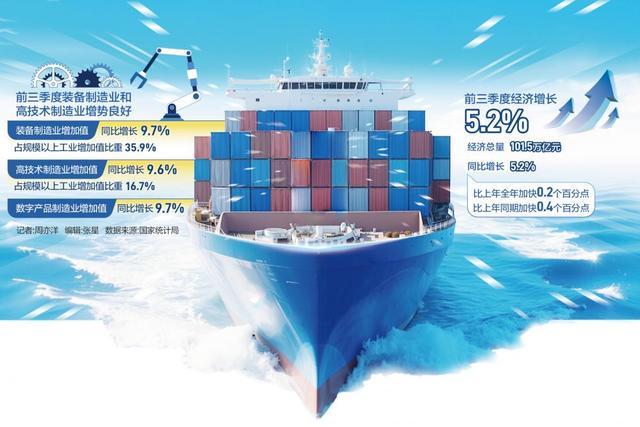
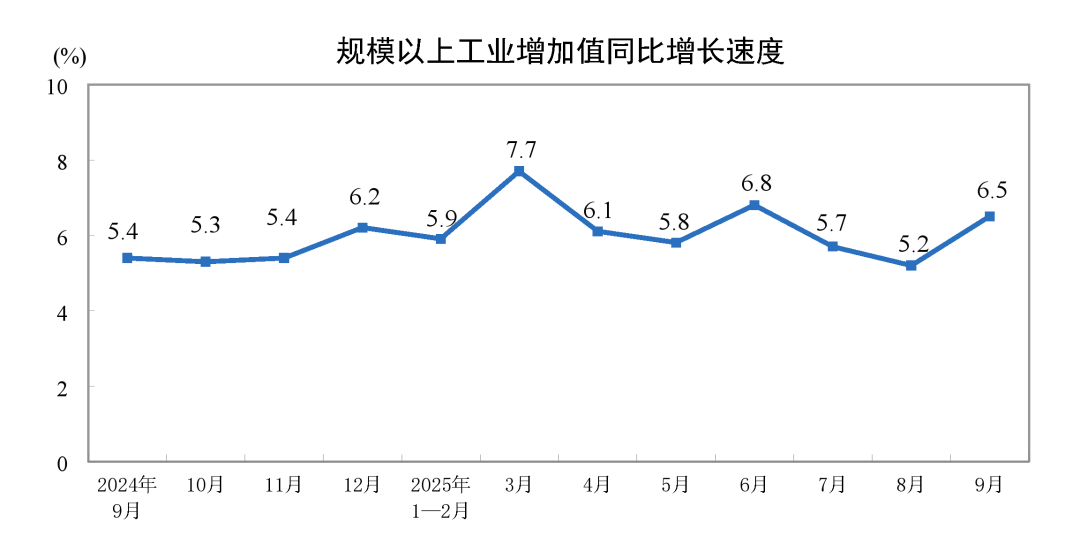
Economic Overview - China's GDP growth for the first three quarters of 2023 is 5.2%, which is an acceleration of 0.2 and 0.4 percentage points compared to the previous year and the same period last year respectively [1][10] - The GDP for the first three quarters is 101.5 trillion yuan, with a quarter-on-quarter growth of 1.1% in Q3 [1][10] - The economic growth rate in Q3 is 4.8%, a decrease of 0.4 percentage points from Q2, primarily due to weak domestic demand [1][6] Industrial Performance - The industrial added value for large-scale enterprises increased by 6.2% year-on-year in the first three quarters, with a notable recovery in September at 6.5% [4][5] - High-tech manufacturing industries showed strong growth, with added value increasing by 9.6% in the first three quarters, and sectors like integrated circuits and biopharmaceuticals maintaining double-digit growth [4][6] Investment and Consumption - Fixed asset investment (excluding rural households) decreased by 0.5% year-on-year, with infrastructure investment growing by 1.1% and real estate investment declining by 13.9% [5][10] - Retail sales of consumer goods grew by 4.5% year-on-year, but the growth rate fell by 0.5 percentage points compared to the first half of the year, with September showing the lowest monthly growth of 3% [5][6] Policy Measures - The government has introduced "two 500 billion" policies to stabilize growth, including 500 billion yuan in new policy financial tools and 500 billion yuan in local government debt limits [2][10] - The new policy financial tools are expected to leverage around 6 trillion yuan in investment, with significant impacts on infrastructure investment growth [10][11] Export Performance - Exports maintained resilience with a growth rate of 7.1% in the first three quarters, while imports decreased by 0.2%, showing a narrowing decline [5][6] - The strong performance in exports is attributed to diversified market strategies and stable supply chains, particularly with ASEAN and other non-US markets [6][11]

中国经济顶压前行
2 1 Shi Ji Jing Ji Bao Dao· 2025-10-20 23:05
Economic Overview - The GDP growth for the first three quarters of 2023 is 5.2%, laying a solid foundation for the annual target of around 5% [2][3][10] - The economic performance shows a steady but cautious recovery, with the third quarter GDP growth slowing to 4.8% compared to the previous quarter [2][7] Key Economic Indicators - The total GDP for the first three quarters reached 101.5 trillion yuan, with a year-on-year growth of 5.2% [2] - Industrial production maintained stability, with a 6.2% increase in industrial added value year-on-year, although it slightly decreased from the first half of the year [4] - The service sector's added value grew by 5.4%, indicating overall stability despite a slight decline from the previous half [4] Consumption and Investment Trends - Retail sales of consumer goods increased by 4.5% year-on-year, but the growth rate has slowed compared to the first half of the year [5] - Fixed asset investment (excluding rural households) saw a decline of 0.5%, marking a shift from positive to negative growth [5] - Infrastructure investment grew by 1.1%, while real estate development investment dropped by 13.9%, reflecting ongoing adjustments in the real estate market [5] Trade Performance - The total import and export value increased by 4% year-on-year, with exports growing by 7.1% and imports declining by 0.2% [6] - The resilience of exports is attributed to diversified market strategies and stable supply chains [7] Policy Measures and Future Outlook - Recent policies include the introduction of 500 billion yuan in new policy financial tools aimed at boosting effective investment and addressing local government debt issues [9] - The government emphasizes the need for continued support for economic growth, including potential interest rate cuts and measures to stabilize the real estate market [8][11] - Analysts suggest that achieving the annual GDP growth target of around 5% remains feasible, but there is a need to address the pressures on consumer confidence and investment [11]
机器人减速器产品产量猛增1.2倍
2 1 Shi Ji Jing Ji Bao Dao· 2025-10-20 15:57
Core Insights - The industrial added value of large-scale industries in China grew by 6.2% year-on-year in the first three quarters of 2023, with the equipment manufacturing sector showing a notable increase of 9.7% [1][5][6] - High-tech manufacturing also demonstrated strong growth, with an increase of 9.6%, outpacing the overall industrial growth by 3.4 percentage points [1][5][6] - The development of the equipment manufacturing industry reflects positive outcomes from innovation-driven transformation and improved downstream demand [7][10] Industrial Performance - In September, the industrial added value increased by 6.5% year-on-year, with a month-on-month growth of 0.64% [5] - The mining sector saw a 5.8% increase, manufacturing grew by 6.8%, and the electricity, heat, gas, and water supply sector grew by 2.0% in the first three quarters [5] - The contribution rates of the automotive, electrical machinery, and electronics industries to the overall industrial growth were 11.0%, 11.0%, and 17.1%, respectively [7] Product Insights - The production of robot reducers surged by 120%, while industrial robots and service robots also experienced double-digit growth rates of 29.8% and 16.3%, respectively [2][9] - The production of high-end equipment products, such as generator sets and railway locomotives, increased by 51.1% and 16.6% [7] - The manufacturing of smart drones and smart vehicle-mounted devices saw significant growth, with increases of 59.9% and 25.1% [9] Future Outlook - The equipment manufacturing sector is expected to continue expanding, with structural optimization and the emergence of "flagship products" [1][6][9] - The high-tech manufacturing sector's contribution to overall industrial growth was 24.7%, with significant increases in integrated circuit manufacturing and biopharmaceuticals [7][10] - Despite facing risks and challenges, the conditions supporting stable industrial growth remain unchanged, driven by ongoing industrialization and macroeconomic policies [11]

广东“万企进百校”吉林揽才 肇庆千亿集群靶向引才
Zhong Guo Xin Wen Wang· 2025-10-20 13:33
肇庆作为广东制造的"生力军"之一,以制造业"发家、当家、兴家",已成功培育新能源汽车、金属加工 2个千亿元级以及新型储能、电子信息、新材料、装备制造4个五百亿元级产业集群,稳居全国先进制造 业百强市行列。 广东省、肇庆市的产业图景,与吉林高校在车辆工程、机械工程、材料学、软件工程等关键学科的优势 高度契合。 招聘活动采取"点面结合"的"靶向引才"策略,在吉林大学举办大型综合双选会,在东北师范大学、延边 大学举办"小而美"特色专场,精准对接师范、医学专业毕业生就业需求;统筹拿出超500个事业编制岗 位,在吉林组织笔试和面试,让学子"足不出校"就能锁定心仪工作。 中新网广州10月20日电 (蔡敏婕 苏燕君)今年秋招,广东省推进"万企进百校",向全国各地的优秀高校 毕业生发出"湾区请柬"。 肇庆市人力资源和社会保障局20日发布消息称,"百万英才汇南粤"2025年N城联动秋季招聘活动(吉林 站)当天在吉林大学开场,提供超1.3万个优质岗位,年薪大部分在20万元以上,向广大优秀高校毕业生 发出"湾区请柬",为广东产业发展注入人才活力。 据了解,此次招聘会由教育部联合广东省委、省政府主办。记者了解到,当天,有近200家知 ...
领跑中国重装“出海” 山东重工集团做对了什么?
Zheng Quan Ri Bao Zhi Sheng· 2025-10-20 13:13
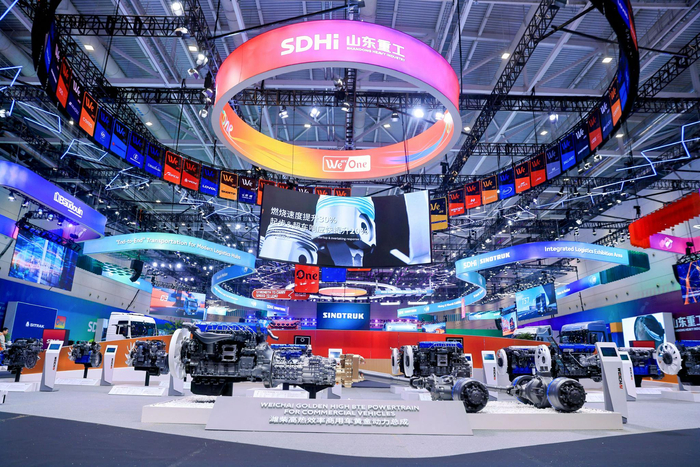
Core Insights - Shandong Heavy Industry Group has demonstrated strong growth despite global economic pressures, achieving nearly 440 billion yuan in revenue in the first three quarters of 2025, a year-on-year increase of over 9% [2] - The group emphasizes technological innovation and R&D investment as key drivers for its competitive edge in international markets [2] Group Performance - The group's export revenue reached 72.7 billion yuan, with a year-on-year growth of 6% to 7%, and is expected to exceed 100 billion yuan for the year, marking a fourfold increase from 20 billion yuan in 2020 [2] - R&D expenses are projected to be 13.6 billion yuan in 2024, maintaining a research intensity of 4.2% [2] Product Development - Weichai Group has released the world's highest thermal efficiency diesel engine, achieving 53% efficiency [2] - The sales of Weichai's large-bore engine data center business have surged by 400% year-on-year in the first three quarters [2] Heavy Truck Sector - China National Heavy Duty Truck Group (CNHTC) exported 111,000 heavy trucks in the first three quarters, a year-on-year increase of 24.5%, maintaining its position as the top exporter of heavy trucks in China [4] - Shaanxi Heavy Duty Truck has become the second-largest exporter of heavy trucks in China [4] New Energy Initiatives - The group showcased its latest products and technologies in the new energy sector at the Global Partner Conference, with expected sales revenue of nearly 30 billion yuan from new energy businesses this year [5] - Weichai Group's new energy segment has seen a 122% year-on-year growth in its "three new" business [5] International Strategy - 30% of the group's overseas revenue comes from its industrial layout in Europe and the U.S., while another 30% is generated from localized manufacturing and sales of domestic products [8] - The group is focused on localizing teams, management, manufacturing, and R&D in overseas markets to enhance resilience against economic fluctuations [8]
数字经济领跑 前三季度经济运行稳中有进
Bei Jing Shang Bao· 2025-10-20 12:00
Economic Overview - In the first three quarters, China's GDP reached 10,150.36 billion yuan, with a year-on-year growth of 5.2%, accelerating by 0.2 and 0.4 percentage points compared to the previous year and the same period last year respectively [2][3] - The economic increment amounted to 39,679 billion yuan, with a year-on-year increase of 1,368 billion yuan [3] Sector Contributions - The primary industry added value was 58,061 billion yuan, growing by 3.8%, contributing 4.7% to economic growth [3] - The secondary industry added value was 364,020 billion yuan, with a growth of 4.9%, contributing 34.6% to economic growth [3] - The tertiary industry added value was 592,955 billion yuan, growing by 5.4%, contributing 60.7% to economic growth [3] Manufacturing Sector - The value added of the equipment manufacturing industry grew by 9.7%, accounting for 35.9% of the total industrial output, maintaining above 30% for 31 consecutive months [4] - Key industries such as automotive, electrical machinery, and electronics saw growth rates of 11.2%, 11.1%, and 10.9% respectively, contributing significantly to overall industrial growth [4] Consumer Demand - The total retail sales of consumer goods reached 365,877 billion yuan, with a year-on-year growth of 4.5%, accelerating by 1.2 and 1 percentage point compared to the previous year and the same period last year respectively [5] - Final consumption expenditure contributed 53.5% to economic growth, driving GDP growth by 2.8 percentage points [5] High-tech Manufacturing - The value added of high-tech manufacturing grew by 9.6%, with significant increases in integrated circuit manufacturing (22.4%) and electronic special materials manufacturing (20.5%) [5][6] - Production of industrial robots, 3D printing equipment, and industrial control computers saw substantial growth rates of 29.8%, 40.5%, and 98% respectively [5] Digital Economy - The value added of the digital product manufacturing industry increased by 9.7%, while the information transmission, software, and IT services sector grew by 11.2% [6] - Online retail sales experienced a year-on-year growth of 9.8%, driven by emerging consumption models such as instant retail and live streaming e-commerce [6] Innovation and Future Outlook - The integration of innovation and industry is deepening, with new technologies transitioning from laboratories to production lines, continuously injecting new momentum into high-quality development [7] - The resilience of the Chinese economy is highlighted by the 5.2% growth rate, with high-tech manufacturing and digital economy sectors becoming key drivers for sustainable development [7]