云计算

Search documents
网站/接口可用性拨测最佳实践
Sou Hu Cai Jing· 2025-12-31 02:50
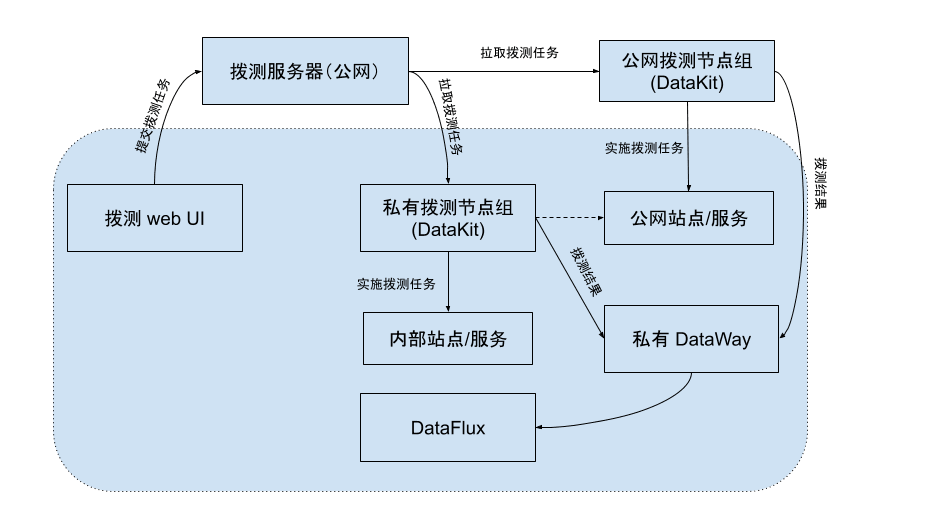
可用性监测是观测云提供的综合性在线服务监控方案。它通过创建无需编写代码的 API,利用全球分布的监测点模拟真实用户在不同地区和网络环境下的访 问体验。这种监测不仅涵盖网络质量、网站性能、关键端点等关键业务场景,还提供了对用户使用体验等多维度性能指标的周期性监控。 1、创建拨测任务 在观测云的「可用性监测」功能中,新建拨测任务,这里以 API 拨测为例。 多协议支持:基于 HTTP、TCP、ICMP、WEBSOCKET 协议创建拨测任务,多方面主动监控在线业务的可用性和性能; 全球网络监控:利用观测云遍布全球的监测点,即时监测网络性能,保障全球服务的可用性和性能表现; 网络站点访问性能分析:从地理纬度和可用性趋势两个方面,分析网络站点的可用性性能; 实时告警通知:基于拨测任务产生的数据配置告警规则,当业务出现异常,会基于规则以邮件、钉钉机器人等方式发送告警通知。 选择拨测类型,填写目标 URL 和判断条件。 | Q 搜索 | | | | --- | --- | --- | | > | URL | ﻳﺮ | | > | 状态 | | | > | 国家/地区 | | | > | 省份 | | | > | 城市 | ...

2025云计算:泡沫、焦虑与改变世界的人
3 6 Ke· 2025-12-31 02:11
Core Insights - The article discusses the significant developments in the AI cloud computing market throughout 2025, highlighting the emergence of AI infrastructure as a crucial sector for companies like Baidu Smart Cloud [1][4][19]. Group 1: AI Cloud Market Dynamics - The AI cloud computing market experienced a transformative wave in 2025, characterized by a "price war" in the first half and a surge in demand for AI resources driven by the explosion of AI Agents in the second half [4][9]. - Major tech companies increased their capital expenditures significantly, with Amazon projecting $125 billion for AI and data center infrastructure, while Google raised its spending to between $91 billion and $93 billion [16]. - Baidu Smart Cloud led the market with 95 winning bids and a total bid amount of 710 million yuan, establishing itself as a dominant player in the AI cloud sector [11][14]. Group 2: AI Implementation and Adoption - Over 65% of central enterprises and 100% of systemically important banks in China have adopted large models using Baidu Smart Cloud, indicating a strong trend towards AI implementation across various industries [14]. - The year 2025 has been termed the "Year of the Agent," with numerous AI applications emerging in sectors such as finance, education, and entertainment, showcasing the widespread adoption of AI technologies [8][9]. Group 3: Competitive Landscape and Full-Stack Capabilities - The competition in the AI cloud market has evolved from price and performance comparisons to a focus on full-stack capabilities, where companies are expected to provide comprehensive AI solutions rather than just cloud resources [15][18]. - Baidu Smart Cloud's full-stack capabilities include advanced infrastructure such as Kunlun chips and a comprehensive AI development platform, positioning it as a leader in the AI cloud market [21][23]. - The article emphasizes that only a few players in China can achieve full-stack AI cloud capabilities, with Baidu being the most representative example [19][23].


CoreWeave:云中新贵 or 苦命“打工人”?
3 6 Ke· 2025-12-30 23:39
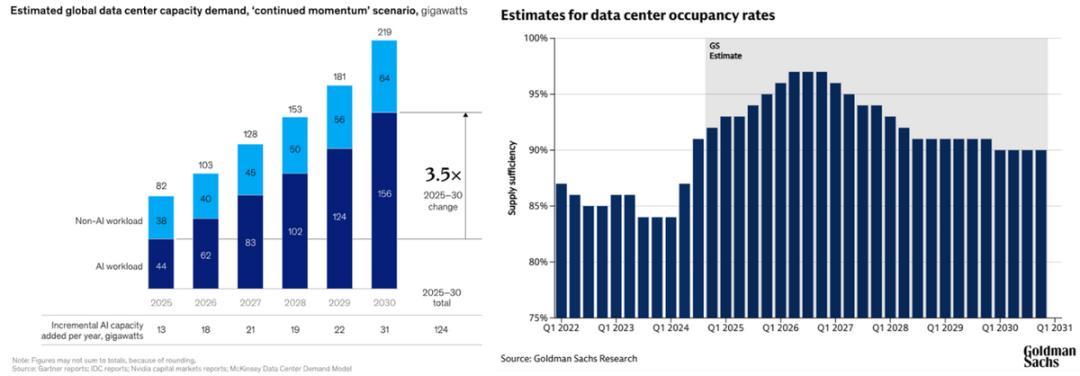
Group 1 - CoreWeave is currently the largest and fastest-growing player in the NeoCloud sector, driven by high demand for computing power and its strategic partnerships, particularly with NVIDIA [1][6][8] - The company benefits from a "take-or-pay" revenue model, ensuring high revenue certainty in the short term despite long-term risks associated with dependence on a few large clients [14][16] - CoreWeave has secured significant energy supply contracts, allowing for substantial future growth in computing capacity without immediate additional energy procurement [20][21] Group 2 - The global demand for data center computing power is expected to increase by approximately 1.7 times from 2025 to 2030, with AI computing power demand projected to grow by 2.5 times [2][4] - CoreWeave's operational efficiency and ability to quickly adapt to market changes give it a competitive edge over larger, traditional cloud service providers [4][6] - The company has a unique advantage in securing NVIDIA GPUs, which enhances its service offerings and market position [8][9] Group 3 - CoreWeave's cost structure reveals a high reliance on capital expenditures, with significant portions of revenue being consumed by operational costs, particularly in technology and infrastructure [24][27] - The company's operating profit margins are currently low, with GAAP margins fluctuating around breakeven, while adjusted margins exceed 15% [24][31] - High levels of debt financing are a concern, as interest expenses account for about 20% of total revenue, impacting overall profitability [42][48] Group 4 - Future revenue projections indicate that CoreWeave needs to achieve a steady-state revenue of approximately $590 billion under conservative estimates to justify its current valuation [50] - Optimistic scenarios suggest that achieving $200 billion in revenue is feasible, especially with existing contracts and market demand trends [53] - The company’s ability to secure contracts with major clients like OpenAI will be crucial for meeting revenue targets and sustaining growth [53][54]
亚马逊网络服务(AWS):拟投500亿增强美国政府AI算力
Sou Hu Cai Jing· 2025-12-30 23:01
Core Insights - Amazon Web Services (AWS) announced a $50 billion plan to enhance artificial intelligence (AI) and supercomputing capabilities for the U.S. federal government [1] Investment Plan - The investment will begin in 2026 and will involve the construction of data centers in AWS's top-secret, secret, and government cloud regions [1] - The initiative aims to provide advanced computing and networking technologies, adding nearly 1.3 gigawatts of AI and supercomputing capacity [1]

盘点2025:模型服务,成为基础设施
Di Yi Cai Jing Zi Xun· 2025-12-30 11:11
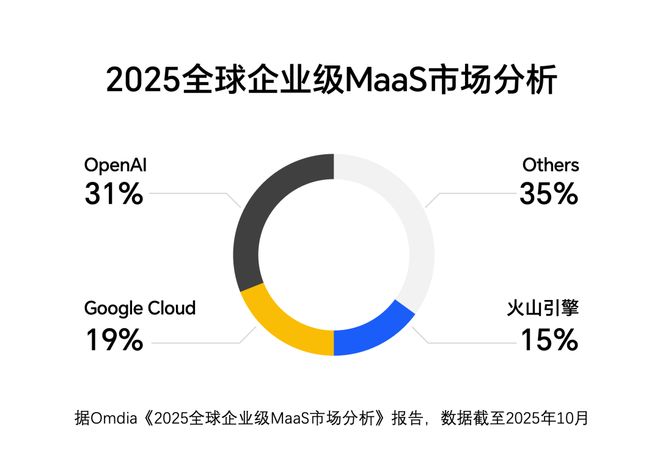
Core Insights - The report by Omdia highlights the rapid growth of the global MaaS (Model as a Service) market, with OpenAI, Google Cloud, and Volcano Engine capturing a combined 65% market share by October 2025 [1][4] - Volcano Engine has achieved significant milestones, including a daily token call volume of 30 trillion, positioning it as the third-largest player globally [4] - The company has experienced a 100% year-on-year revenue growth, surpassing 20 billion, and has revised its revenue target for 2030 upwards due to unexpected MaaS commercialization and model iteration [6] Market Position and Growth - Volcano Engine's strategic focus on MaaS has led to its rapid emergence in the AI cloud market, with the launch of the Doubao model family API service marking a significant shift in pricing strategy, reducing costs by up to 99.3% [7][12] - The company has seen exponential growth in token call volume since the launch of the Doubao model, with a notable increase in usage every three months [9][15] - By the first half of 2025, Volcano Engine is expected to account for 49.2% of the public cloud model service in China, producing one out of every two tokens generated [12] Technological Advancements - The introduction of various models, including Doubao 1.6 and Seedance 1.0 pro, has continuously unlocked new application scenarios, contributing to the growth of the MaaS market [9][15] - The company emphasizes the importance of large model call volumes in refining models and infrastructure, which in turn enhances the profitability of its MaaS services [15][20] Strategic Initiatives - Volcano Engine aims to lower the barriers to AI application through higher-level encapsulation and cost optimization, enhancing the usability of its MaaS offerings [22][24] - The company is also focusing on developing and operating agents, positioning itself as a leader in providing a comprehensive suite of agent development and operation products [21][24] Collaboration and Ecosystem - The synergy between Volcano Engine's B2B and B2C services, particularly leveraging ByteDance's extensive user base, has been crucial in driving model usage and service quality [16][19] - The company is committed to continuous innovation and long-term investment in technology to serve a broader market and meet diverse customer needs [20]
新华财经晚报:中央农村工作会议在京召开
Zhong Guo Jin Rong Xin Xi Wang· 2025-12-30 10:34
Domestic News - The Central Rural Work Conference emphasized the importance of agricultural modernization for China's overall modernization, aiming to stabilize grain and oil production and enhance food quality and variety [2] - The State Council, led by Premier Li Qiang, announced the implementation of the Value-Added Tax Law Regulations, effective from January 1, 2026, clarifying applicable tax rates and zero tax rate conditions for exports and cross-border services [2] - The Ministry of Industry and Information Technology released guidelines to accelerate the development of national new-type internet exchange centers, focusing on advanced technologies such as AI and quantum communication to improve network efficiency [2] Industry Developments - The China Trust Industry Association is drafting a high-quality development plan for the trust industry from 2025 to 2035, with goals set for 2029 and 2035 to enhance the role of trust companies as professional service providers [3] - Xpeng Motors announced that by 2026, it will achieve true full autonomous driving capabilities, transitioning directly from L2 to L4, with its Ultra version set to implement this technology [3] - JD.com and Huawei have entered a deep technical collaboration focusing on smart advertising, large models, and cloud computing to enhance advertising technology infrastructure [4] International News - The Bank of Korea revised its M2 money supply statistics, leading to a significant reduction in M2 scale and a drop in year-on-year growth rate from 8.7% to 5.2% [5] - Thailand's economy showed expansion in November, driven by tourism recovery and domestic consumption, with exports increasing by 5.5% and imports rising by 17.3% [5] - Spain's inflation slightly eased in December due to falling fuel prices, with core inflation remaining at 2.6% [5]

盘点2025:模型服务,成为基础设施
第一财经· 2025-12-30 10:15
Core Insights - The article emphasizes the rapid growth of the Model as a Service (MaaS) market, with major players like OpenAI, Google Cloud, and Volcano Engine capturing significant market shares by 2025 [1][3] - Volcano Engine has achieved a remarkable daily token call volume of 63 trillion, positioning itself as a leading Chinese player in the AI cloud market [3][6] - The introduction of the Doubao model has led to exponential growth in token usage, highlighting the increasing importance of MaaS as a foundational infrastructure in AI [4][11] Market Dynamics - By October 2025, OpenAI, Google Cloud, and Volcano Engine are projected to hold 65% of the global MaaS market, with respective shares of 31%, 19%, and 15% [1] - Volcano Engine's daily token call volume of 30 trillion places it third globally, following OpenAI and Google Cloud [3] - The MaaS market is still perceived as "thin" and "narrow," indicating potential for further growth and competition [3] Company Performance - Volcano Engine has reported a 100% year-on-year revenue growth, exceeding 20 billion, and has revised its revenue target for 2030 upwards by several percentage points [6] - The company has prioritized MaaS as its strategic focus, leading to significant investments in resources and technology [6][16] - The introduction of the Doubao model API service has drastically reduced pricing, marking a shift from "per count" to "per milligram" pricing, with a reduction of up to 99.3% [6] Technological Advancements - The launch of the DeepSeek-R1 model has further enhanced Volcano Engine's capabilities, allowing it to capitalize on the growing demand for model inference services [7][10] - Continuous iterations of the Doubao model have led to increased token call volumes, with new models being released every three months [10][11] - The company is focusing on optimizing AI application accessibility and cost-effectiveness through advanced tools like Prompt Pilot and Model Router [27][28] Future Outlook - Volcano Engine aims to maintain its leadership in the MaaS market while expanding into deeper industry applications, particularly in sectors like smart manufacturing and consumer electronics [27] - The company is developing a new architecture centered around agents, which will enhance the integration of models into existing workflows [28][30] - The potential market for agents is vast, with estimates suggesting it could significantly expand beyond traditional IT budgets into areas like global customer service and programming [30]

中国AI需要什么样的底盘?
3 6 Ke· 2025-12-30 03:24
Core Insights - The AI landscape in 2025 is characterized by intense competition and significant advertising presence, particularly in major cities like Beijing, Shanghai, Guangzhou, and Shenzhen, where cloud service providers dominate advertising spaces [1][2] - The focus has shifted from merely showcasing AI capabilities to demonstrating practical applications that solve real business problems, indicating a transition from a storytelling phase to a results-driven phase [3][4] Group 1: Market Dynamics - Baidu Intelligent Cloud has secured 95 bidding projects with a revenue of 710 million yuan, significantly outperforming competitors like Volcano Engine and Huawei Cloud, which earned 475 million yuan and 446 million yuan respectively [2][3] - The disparity in revenue highlights Baidu's strategic focus on practical applications of AI rather than just theoretical models, positioning it as a leader in the market [3][4] Group 2: Business Transformation - Companies are misinterpreting AI transformation as merely implementing chatbots, while true transformation requires integrating AI into core business processes to enhance productivity [7][8] - Successful examples include China Railway and Taikang Insurance, where AI has drastically reduced operational time and improved training efficiency, showcasing the tangible benefits of AI integration [10][13] Group 3: Infrastructure and Cost Efficiency - Baidu's AI infrastructure is designed to optimize performance and reduce costs, with a focus on minimizing data transmission losses and maximizing training efficiency [16][18] - The dual-layer infrastructure, comprising AI Infra and Agent Infra, allows for seamless integration and deployment of AI solutions, making it easier for businesses to adopt and benefit from AI technologies [19][22] Group 4: Industry Adoption - A significant portion of China's central enterprises and major banks are utilizing Baidu Intelligent Cloud, indicating a strong trust in its capabilities to handle critical operations [24][25] - The emphasis on reliability and stability in AI applications is crucial for industries such as finance and energy, where operational continuity is paramount [25][26] Group 5: Long-term Vision - Baidu's strategic investments in AI infrastructure since 2011 reflect a long-term vision that prioritizes foundational capabilities over short-term gains, positioning it well for future challenges [30][31] - The focus on building a robust AI ecosystem that integrates deeply with industrial applications is seen as essential for sustainable growth and competitiveness in the evolving AI landscape [31][32]
Meta斥资数十亿美元收购Manus!云计算ETF汇添富(159273)再涨近1%!机构:长期依然看好国产算力!
Xin Lang Cai Jing· 2025-12-30 03:21
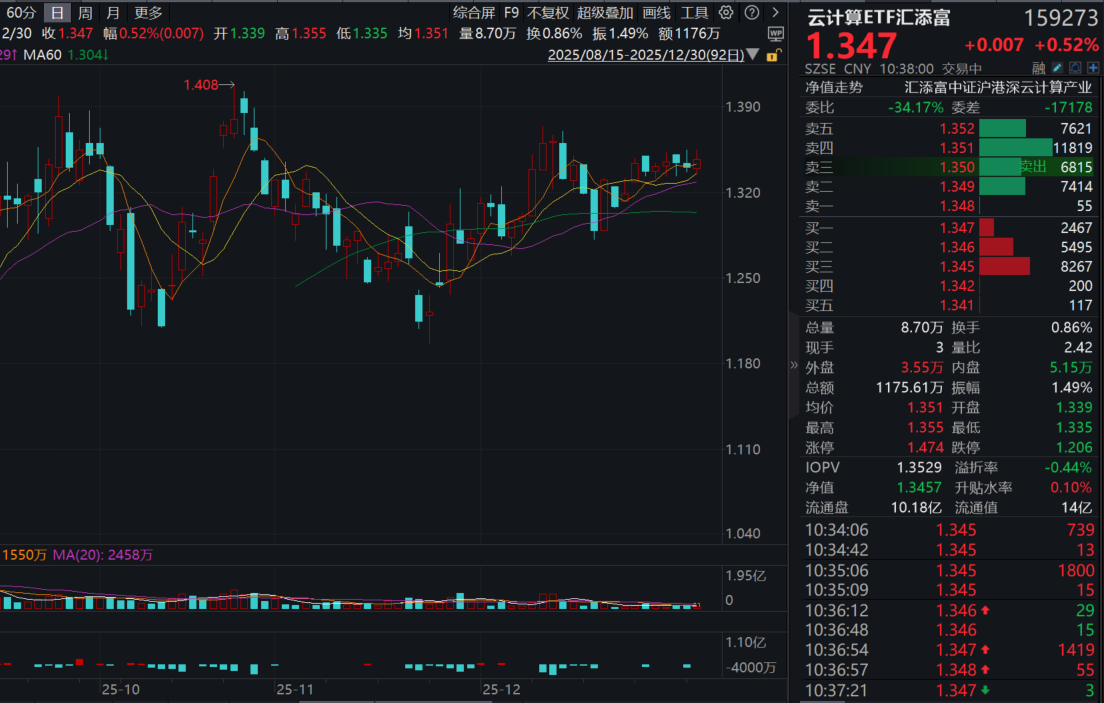
Group 1: Market Performance - The computing power sector has seen a rise, with the cloud computing ETF Huatai (159273) increasing by nearly 1% and trading volume exceeding 13 million yuan [1] - Most weighted stocks in the Huatai ETF index showed positive performance, including Zhongji Xuchuang and Kingsoft Office, which rose over 1% [4] Group 2: Mergers and Acquisitions - Meta has completed the acquisition of AI startup Butterfly Effect, which developed the AI agent Manus, marking Meta's third-largest acquisition since its inception, with the deal amounting to several billion dollars [3] - Manus was valued at $2 billion prior to the acquisition and has processed over 147 trillion tokens since its launch, with a revenue run rate of $90 million as of December [3] Group 3: Chip Market Dynamics - Nvidia plans to deliver AI chips H200 to Chinese customers, with an initial shipment of 40,000 to 80,000 units, following a policy adjustment allowing conditional exports [6] - Major Chinese tech companies are rapidly procuring H200 chips, with Alibaba planning to order 40,000 to 50,000 units and ByteDance testing 20,000 units [6] - The domestic chip market is experiencing a split in procurement strategies, with companies like Baidu focusing on self-developed Kunlun chips to reduce reliance on external suppliers [7] Group 4: Optical Module Market - The demand for high-speed optical modules is expected to grow significantly, driven by the rapid upgrade of GPUs and ASICs, with 800G optical modules showing high growth rates [8] - The average scale-up bandwidth of XPU products is significantly higher than scale-out, indicating a large market potential for network hardware, including optical modules [9][11]


华为,最新发布!
证券时报· 2025-12-30 03:15
Core Viewpoint - The company emphasizes its achievements in 2025 and outlines its strategic opportunities in the wave of intelligent transformation, highlighting the importance of adaptability and continuous improvement in the face of uncertainty [1][6][9]. Group 1: Achievements in 2025 - The company assisted operators in building 5G-A networks, providing high-speed network connectivity to 60 million users [5]. - The Harmony ecosystem has accelerated from "usable" to "user-friendly," with over 36 million devices running Harmony 5.0 and above [5]. - Collaborating with automotive partners, the company equipped over 1.4 million passenger cars with smart driving capabilities, achieving nearly 7 billion kilometers of assisted driving mileage [5]. - The Kunpeng ecosystem has developed over 6,800 partners and 3.8 million developers, with the openEuler operating system installed on over 16 million units [5]. - The Ascend ecosystem has over 3,000 partners and 4 million developers, with the Atlas 900 super node serving various industries, including internet, finance, telecommunications, and power [5]. - The company has produced over 20 trillion kilowatt-hours of green electricity, saving 150 billion kilowatt-hours and reducing emissions by 1.06 billion tons, equivalent to planting 1.45 billion trees [5]. Group 2: Future Strategic Directions - The company identifies the wave of intelligent transformation as a long-term strategic opportunity, focusing on deepening industry verticals and enabling intelligent transformation across various sectors [6][7]. - Plans include building an open-source Kunpeng and Ascend ecosystem to empower partners in developing products that meet diverse industry needs [8]. - The company aims to enhance consumer experiences through the Harmony ecosystem and improve AI integration in communication networks [8]. - Future initiatives will focus on reconstructing AI data centers and enhancing charging experiences with liquid cooling and ultra-fast charging technologies [8]. Group 3: Call to Action - The company acknowledges the challenges ahead but emphasizes the necessity of facing them head-on, believing that success belongs to those who dare to take risks and engage in self-criticism [9]. - A commitment to strategic focus and organizational strength is highlighted as essential for achieving success in 2026 [9].