咖啡

Search documents
蜜雪想再造一个“蜜雪”
Jing Ji Guan Cha Wang· 2025-08-01 11:34
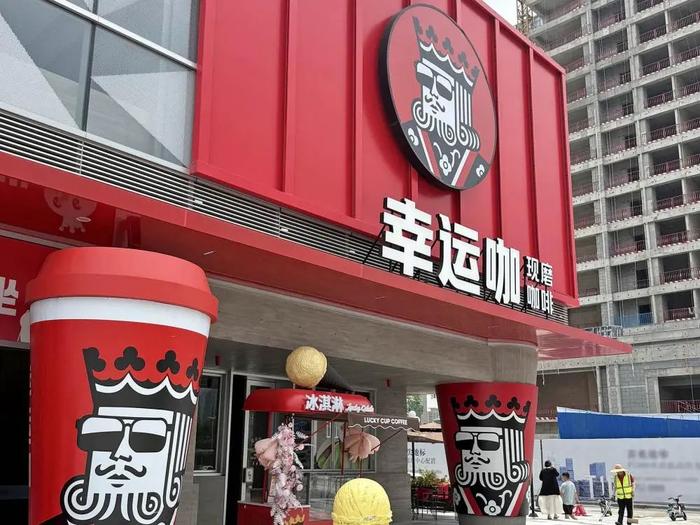
Core Viewpoint - The company aims to replicate the success of its tea brand, Mixue, with its coffee brand, Lucky Coffee, targeting 10,000 stores by 2025, despite facing a competitive market environment with established players like Luckin and Kudi [2][14]. Expansion Strategy - As of July 2023, Lucky Coffee has reached 7,000 stores and plans to double its market personnel to over 400 to accelerate store openings [3]. - The company has lowered the franchise fee to 17,000 yuan for new stores signed before August 1, 2023, and offers various subsidies in key provinces and major cities, with total discounts reaching up to 34,000 yuan in six major cities [3][14]. - Lucky Coffee has organized its expansion strategy by dividing regions into areas with 1,000 to 3,000 stores, assigning market personnel to support franchisees in operations and marketing [3]. Market Positioning - Lucky Coffee was established in 2017 and became an independent brand under Mixue Group in 2020, with a vision to provide high-quality, affordable coffee globally [4][5]. - The brand initially focused on lower-tier cities and university towns, filling a market gap where few chain coffee shops existed [13]. Pricing Strategy - Lucky Coffee has significantly reduced prices, with medium Americanos dropping from 8 yuan to 5 yuan and large lattes from 12 yuan to 9 yuan [6]. - In response to market competition, Lucky Coffee launched a promotional campaign offering all items at 6.6 yuan, resulting in a 44% increase in sales on the first day [16][17]. Competitive Landscape - The coffee market has become increasingly competitive, with major players like Luckin and Kudi rapidly expanding their store counts, while Lucky Coffee has seen a decline in new store openings [14][15]. - Despite the competitive pressure, Lucky Coffee maintains a competitive advantage with an average cup price of around 7 yuan [14]. Supply Chain and Operational Efficiency - Lucky Coffee benefits from a shared supply chain with Mixue Group, which enhances its operational efficiency and cost management [23]. - The company has opted for semi-automatic coffee machines to reduce costs, contrasting with competitors who have switched to more expensive fully automatic machines [18]. Financial Performance and Future Outlook - Mixue Group's revenue model heavily relies on selling equipment and raw materials to franchisees, with franchise fees contributing only 2.5% of total revenue [21][22]. - The company anticipates significant growth potential in the coffee market, with projections indicating a future increase in store numbers [22].

订单激增258%,蜜雪“收割”瑞幸红利
2 1 Shi Ji Jing Ji Bao Dao· 2025-08-01 02:09
Core Viewpoint - The company aims to expand its coffee brand, Lucky Coffee, to over 10,000 stores by the end of 2025, with significant growth in new store openings and franchise inquiries [1][7]. Expansion Strategy - Lucky Coffee's store count has exceeded 7,000, covering over 300 cities in China, making it the fourth largest fresh coffee brand in the country [1]. - The company has seen a 164% year-on-year increase in new store openings in Q2 and a 300% month-on-month increase in franchise inquiries since July [1]. - The brand is focusing on high-potential cities and has verified profitability in first-tier cities, while also refining its store model [2]. Sales Performance - Lucky Coffee experienced a sales peak, with an average daily revenue of 5,732 yuan per store on July 12, and a 258% increase in delivery orders [1]. - The brand has implemented a cautious approach to delivery subsidies, ensuring that store profits are not compromised [1]. Franchise Support - To achieve its 10,000-store goal, Lucky Coffee has lowered its franchise investment requirement from 350,000 yuan to 250,000 yuan and adjusted the age requirement for franchisees [9]. - The company has introduced specific city franchise support policies, offering a total reduction of 34,000 yuan for stores in major cities [9]. Supply Chain and Cost Management - Lucky Coffee benefits from the supply chain advantages of its parent company, with coffee bean supply prices significantly lower than the industry average [10]. - The company has made substantial investments in supply chain infrastructure, including a new factory with an annual production capacity of over 20,000 tons of coffee beans [8]. Market Context - The coffee market in China is experiencing growth, with per capita coffee consumption increasing from 9 cups in 2016 to 16.74 cups in 2023 [14]. - The competitive landscape includes brands like Luckin Coffee and Kudi, which have successfully captured market share through aggressive marketing and pricing strategies [15][17]. Brand Positioning - Lucky Coffee aims to maintain a "high-quality, affordable" positioning without pursuing a high-end market strategy, contrasting with competitors that focus on premium branding [18]. - The brand's strategy of expanding from lower-tier to higher-tier markets reflects a unique approach in the coffee industry [18].
订单激增258%,蜜雪“收割”瑞幸红利
21世纪经济报道· 2025-08-01 02:06
Core Viewpoint - The article highlights the rapid expansion of the coffee brand Lucky Coffee under the Mixue Group, aiming to surpass 10,000 stores by the end of 2025, with significant growth in franchise inquiries and store openings [1][3]. Group 1: Business Expansion - Lucky Coffee's store count has exceeded 7,000, covering over 300 cities in China, making it the fourth largest fresh coffee brand in the country [1]. - In Q2 of this year, Lucky Coffee signed new franchise agreements with a year-on-year growth of 164% [1]. - The average daily revenue per store reached 5,732 yuan on July 12, with a 258% increase in takeaway orders [1]. Group 2: Franchise Strategy - The brand is selective in its franchisee recruitment, preferring those who can actively participate in store operations rather than purely investment-type franchisees [1][2]. - To facilitate expansion, Lucky Coffee has lowered its franchise investment requirement from 350,000 yuan to 250,000 yuan and adjusted the age requirement for franchisees [7]. - The company has implemented a franchise support policy that includes a total reduction of 34,000 yuan in specific cities [7]. Group 3: Supply Chain and Profitability - Lucky Coffee benefits from Mixue's supply chain, with coffee bean supply prices below 70 yuan per kilogram, compared to the industry average of over 100 yuan [8]. - The gross profit margin for products like the 5.9 yuan Americano exceeds 50% [9]. - Recent sales figures indicate that the sales of the Coconut Latte exceeded 200 million yuan, with several new products also surpassing 100 million yuan in sales [9]. Group 4: Market Context - The coffee market in China is maturing, with per capita coffee consumption increasing from 9 cups in 2016 to 16.74 cups in 2023 [13]. - The competitive landscape is evolving, with brands like Luckin Coffee and Kudi Coffee driving market growth through aggressive marketing strategies [14][15]. - The coffee market's chain store concentration is still low compared to tea, indicating significant room for growth [18]. Group 5: Brand Positioning - Lucky Coffee aims for a "high-quality, low-price" positioning, avoiding a deliberate shift towards high-end branding [20]. - The brand's strategy of expanding from lower-tier cities to higher-tier ones contrasts with competitors who typically expand from high-tier to lower-tier markets [20]. - If successful, Lucky Coffee's approach may signify a redefinition of coffee's market positioning in China [21].
谁在“围猎”星巴克?
3 6 Ke· 2025-08-01 01:18
Core Insights - Starbucks' market share in China has significantly declined from a peak of 42% in 2017 to 14% in 2024, despite a strong performance in its Chinese operations with a 7% increase in store count year-over-year [3][6] - Luckin Coffee has shown remarkable growth, reporting a total net revenue of 12.36 billion yuan, a 47.1% year-over-year increase, and a GAAP operating profit growth of 61.8% to 1.7 billion yuan [3][19] - The coffee market in China is experiencing intense competition, particularly in lower-tier cities and price-sensitive segments, with various brands aggressively expanding their presence [4][12] Market Performance - Starbucks' global net profit has decreased by 47.1%, while its Chinese operations have seen a 2% increase in same-store sales and a 6% increase in transaction volume [1][3] - The number of registered coffee shops in China has surged, with nearly 30,000 new registrations, marking a 19.54% increase in the first half of the year [4][6] Competitive Landscape - Brands like Luckin Coffee and Mixue Ice City are targeting the lower-tier markets and one- to two-line cities, with Mixue aiming to exceed 10,000 stores by the end of the year [3][15] - The coffee market is shifting towards a "store-in-store" model, allowing brands to leverage existing retail spaces, which has become a common strategy among various coffee brands [9][11] Consumer Behavior - The average coffee consumption in China has increased from 9 cups per year in 2021 to approximately 22 cups in 2024, indicating significant growth potential compared to countries like the U.S. and Japan [14][18] - Price remains a critical factor in consumer decision-making, with brands competing aggressively on pricing to capture market share [18][19] Strategic Focus - Starbucks is expanding into 166 new county-level markets in China, but faces challenges due to its higher price point compared to competitors [6][12] - The coffee market is transitioning from rapid store expansion to a focus on operational efficiency and product quality, as brands seek to establish a sustainable presence [19]


蜜雪“收割”瑞幸红利 幸运咖年内万店 打通一线城市
2 1 Shi Ji Jing Ji Bao Dao· 2025-08-01 00:21
Core Insights - The company aims to expand its coffee brand, Lucky Coffee, to over 10,000 stores by early 2025, with a significant increase in new store openings and franchise inquiries in 2023 [1][4][5] Company Performance - Lucky Coffee's store count has surpassed 7,000, covering over 300 cities in China, making it the fourth-largest fresh coffee brand in the country [1] - In Q2 2023, Lucky Coffee experienced a 164% year-on-year increase in new store openings, and franchise inquiries surged over 300% since July [1][2] - The average daily revenue per store reached 5,732 yuan on July 12, with a 258% increase in takeaway orders [2] Marketing and Sales Strategy - The sales surge is attributed to aggressive marketing strategies and cautious use of takeaway subsidies, ensuring profitability for franchisees [3][19] - Lucky Coffee is focusing on high-potential cities and has optimized store sizes to reduce operational costs for franchisees [3][21] - The company has lowered franchise investment requirements from 35 million yuan to 25 million yuan and adjusted age requirements for franchisees [7][21] Supply Chain and Production - Recent investments in supply chain capabilities include a new coffee bean roasting facility with an annual capacity exceeding 20,000 tons [6] - The company has signed a 4 billion yuan procurement agreement with Brazil for coffee beans, indicating a commitment to scaling operations [9][10] Market Trends - The coffee market in China is maturing, with per capita coffee consumption increasing from 9 cups in 2016 to 16.74 cups in 2023 [12] - The market still has significant growth potential, with a low concentration of coffee chains compared to tea [17] - Competitors like Luckin Coffee and Kudi are also expanding rapidly, indicating a growing market [18][14] Brand Positioning - Lucky Coffee aims for a "high-quality, affordable" positioning, contrasting with competitors that target high-end markets [21] - The brand's strategy of expanding from lower-tier cities to higher-tier ones reflects a unique market approach [20]
蜜雪“收割”瑞幸红利:幸运咖年内万店,打通一线城市
2 1 Shi Ji Jing Ji Bao Dao· 2025-07-31 12:09
Core Insights - The company aims to expand its coffee brand, Lucky Coffee, to over 10,000 stores by early 2025, with a significant increase in new store openings and franchise inquiries [1][2][3] - Lucky Coffee has seen a 164% year-on-year increase in new store signings in Q2, with over 7,000 stores currently operating across more than 300 cities in China [1][2] - The brand is focusing on high-potential cities and has implemented various support policies for franchisees to ensure profitability [3][7] Company Strategy - Lucky Coffee is strategically positioned next to the headquarters of its parent company, Mixue Ice City, indicating its importance within the company's overall strategy [6] - The company has lowered franchise investment requirements from 350,000 RMB to 250,000 RMB and adjusted age requirements for franchisees to attract a broader range of investors [7][8] - Lucky Coffee is leveraging its supply chain advantages from Mixue to offer competitive pricing to franchisees, with a supply price of less than 70 RMB per kilogram for coffee beans, compared to the industry average of over 100 RMB [9] Market Dynamics - The coffee market in China is experiencing growth, with per capita coffee consumption increasing from 9 cups in 2016 to 16.74 cups in 2023, indicating a ripe market for expansion [12][15] - The competitive landscape includes brands like Luckin Coffee and Kudi, which have successfully captured market share through aggressive marketing and pricing strategies [14][18] - The coffee market in China has significant room for growth in terms of chain store concentration, with current CR5 at 27.5%, compared to 46.9% in the tea market [17] Financial Performance - Lucky Coffee has reported strong sales performance, with individual store daily revenues reaching 5,732 RMB and significant increases in delivery orders [2][3] - The brand has achieved notable sales milestones, with certain products exceeding 200 million RMB in sales, and several stores reporting monthly revenues surpassing 500,000 RMB [9][10] - The company has signed a substantial procurement agreement worth 4 billion RMB for coffee beans, indicating a commitment to scaling operations [10]
蜜雪“收割”瑞幸红利:幸运咖年内万店,打通一线城市丨咖啡变局
2 1 Shi Ji Jing Ji Bao Dao· 2025-07-31 12:02
Core Insights - The company aims to expand its coffee brand, Lucky Coffee, to over 10,000 stores by early 2025, with a significant increase in new store openings and franchise inquiries in recent months [2][3][4] Expansion Strategy - Lucky Coffee has seen a 164% year-on-year increase in new store openings in Q2, with over 300% growth in franchise inquiries since July, particularly from first-tier cities [2][3] - Currently, Lucky Coffee operates over 7,000 stores across more than 300 cities, making it the fourth-largest fresh coffee brand in China [2] - The company is focusing on high-potential cities and has confirmed profitability in first-tier cities, optimizing store sizes to reduce franchisee costs [3][7] Sales Performance - Lucky Coffee achieved a peak sales day on July 12, with an average store revenue of 5,732 yuan and a 258% increase in delivery orders [3] - The brand maintains a cautious approach to delivery subsidies, ensuring that store profits are not compromised [3][8] Supply Chain and Cost Management - The company has invested significantly in its supply chain, including a new coffee bean roasting facility with an annual capacity exceeding 20,000 tons [5] - Lucky Coffee has reduced franchise investment requirements from 35 million yuan to 25 million yuan and lowered the age requirement for franchisees [7] - The brand offers competitive supply prices to franchisees, with costs below 70 yuan per kilogram compared to the industry average of over 100 yuan [8] Market Context - The coffee market in China is experiencing growth, with per capita coffee consumption rising from 9 cups in 2016 to 16.74 cups in 2023 [12] - The market is still in its early stages, with significant room for growth in chain coffee store density compared to tea beverage chains [17] - Competitors like Luckin Coffee and Kudi are also expanding rapidly, indicating a vibrant market landscape [14][18] Brand Positioning - Lucky Coffee is positioned as a "high-quality, affordable" brand, contrasting with competitors that target higher-end markets [19] - The brand's strategy includes increasing marketing investments alongside its expansion efforts [19][20]
星巴克中国业绩回暖,正评估超20个潜在收购者
Guan Cha Zhe Wang· 2025-07-31 11:45
7月31日,茶咖日报的主要内容有: 星巴克三季度中国同店销售额增长,回应中国股权出售传闻 据第一财经,日前,星巴克(Nasdaq:SBUX)公布了截至2025年第三财季财务业绩。2025财年第三财 季,公司总收入为94.56亿美元,同比增长3.8%;归母净利润为5.58亿美元,同比下滑47.1%。 在中国市场,星巴克本财季收入同比增长8%至7.9亿美元,同店销售额同比增长2%,同店交易量和同店 客单价均取得环比提升。星巴克方面表示,增长主要得益于过去两年新开门店同店销售的高速增长,以 及及时捕捉并满足快速增长的线上需求。 另外,截至2025年第三财季末,星巴克全国门店数量达到7828家,新开70家门店,新进入17个县级市 场。 值得一提的是,面对中国市场激烈的竞争,今年星巴克对"非咖产品"进行了降价,也提升了午间和晚间 场景消费。 早在去年11月,就有媒体报道星巴克正在考虑出售其中国业务的股权。今年6月,据知情人士透露,高 瓴资本参与了星巴克中国区的反向管理层路演,目前交易结构尚未敲定。星巴克中国业务估值约为50- 60亿美元,该交易预计将持续到2026年。 彼时,星巴克中国表示,坚信中国市场蕴藏的巨大增长机 ...

茶咖日报|星巴克中国业绩回暖,正评估超20个潜在收购者
Guan Cha Zhe Wang· 2025-07-31 11:38
Group 1: Starbucks Financial Performance - Starbucks reported total revenue of $9.456 billion for Q3 2025, a year-on-year increase of 3.8% [1] - The company's net profit attributable to shareholders was $558 million, down 47.1% year-on-year [1] - In the Chinese market, revenue grew by 8% to $790 million, with same-store sales increasing by 2% [1] Group 2: Store Expansion and Market Strategy - As of the end of Q3 2025, Starbucks had 7,828 stores in China, having opened 70 new locations and entered 17 new county-level markets [1] - To address intense competition in China, Starbucks has reduced prices on non-coffee products and enhanced consumption during lunch and evening hours [1] Group 3: Ownership and Strategic Partnerships - Starbucks is exploring strategic partnerships and evaluating over 20 interested institutions while aiming to retain a significant stake in its Chinese operations [2] - The valuation of Starbucks' Chinese business is estimated to be between $5 billion and $6 billion, with potential transactions expected to continue until 2026 [1] Group 4: Nestlé's Coffee Business Changes - Nestlé China is undergoing management changes, with Pamela Takai set to replace Jiang Haiying as head of the coffee business starting September 1, 2025 [3] - The adjustment follows a decline in sales for Nestlé's coffee business, which is a key revenue driver for the company [3][4] Group 5: Nestlé's Financial Performance - In the first half of 2025, Nestlé's sales in the Greater China region were CHF 2.47 billion (approximately RMB 20.765 billion), down from CHF 2.639 billion (approximately RMB 21.414 billion) in the same period last year [4] - The coffee business accounts for about 4% of Nestlé's overall coffee revenue, with an estimated revenue of CHF 960 million (approximately RMB 7.9 billion) for 2023 [4] Group 6: Tea Industry Developments - Fujian Province exported 10,000 tons of tea in the first half of the year, a year-on-year increase of 18%, with a total value of 630 million yuan [6] - The 19th Beijing International Tea Expo will take place from September 12 to 15, 2025, featuring over 700 tea companies and a wide range of tea products [7]

星巴克的“自残式”改革
虎嗅APP· 2025-07-31 09:50
以下文章来源于东针 ,作者东叔频道 东针 . 欢迎来到东针知识频道。我们专注与大家分享有价值的思考、商业新知和关于世界的看法,看见有价值 的可能,不停学习,向内丰满。 本文来自微信公众号: 东针 ,作者:东叔频道,题图来自:AI生成 星巴克最近交出了一份很难看的成绩单:利润暴跌了5.58亿美元。但这背后,其实是CEO尼科尔在进 行一场主动的、代价高昂的"大翻修"。 星巴克的核心问题出在它的"金字招牌"上。 过去,星巴克之所以能卖得比别的咖啡贵,很大程度上是因为它卖的不只是一杯咖啡,更是一种"第 三空间"的体验——一个舒适、有格调、能让人放松或工作的地方。人们愿意为这种独特的氛围和服 务多付钱。 然而,这几年情况变了。 一方面,物价普遍上涨,消费者对价格更敏感了; 另一方面,星巴克面临的竞争前所未有的激烈,从精品咖啡馆到快餐店 (麦当劳、Dunkin') 再到 便利店 (7-11) ,都在争夺咖啡市场。 而且,星巴克自身的服务体验也出了问题:店里人手不足导致排队时间变长、咖啡品质不稳定、过度 依赖手机点单让店里少了人情味……结果就是,消费者越来越觉得星巴克咖啡"不值那个价"了,它的 品牌吸引力,或者说"溢价能力 ...