
潮玩

Search documents
香港当地消费市场发展基本面稳固!港股通消费ETF易方达(513070)值得关注
Jin Rong Jie· 2026-02-26 12:40
Core Viewpoint - The Hong Kong stock market experienced a downward trend despite a strong performance in the consumption sector during the Chinese New Year, indicating potential investment opportunities in consumer-related stocks as the economy shows signs of steady growth [1]. Group 1: Market Performance - On February 26, the three major Hong Kong stock indices opened high but closed lower, with the CSI Hong Kong Stock Connect Consumer Theme Index declining by 1.87% [1]. - Individual stocks such as Qingdao Beer and Mixue Group saw gains of over 1% [1]. Group 2: Consumption Market Insights - The consumption market during the Chinese New Year showed significant growth, with offline travel and entertainment transactions increasing by over 20% year-on-year, and substantial order growth in categories like reunion dinner packages and intangible cultural heritage markets [1]. - The economic growth rate for Hong Kong is projected to reach 3.5% in 2025, marking three consecutive years of increase, with expectations of maintaining a growth rate between 2.5% and 3.5% in 2026, indicating a solid fundamental development for the local consumption market [1]. Group 3: Investment Opportunities - Analysts suggest that the Hong Kong consumer sector benefits from both the recovery of the consumption market and the asset allocation value of Hong Kong stocks, with the festive consumption peak likely to enhance industry prosperity [1]. - The CSI Hong Kong Stock Connect Consumer Theme Index includes a diverse range of assets, covering traditional service industry leaders as well as high-growth sectors like trendy toys, gold jewelry, sportswear, and high-dividend stocks [1]. - The E Fund Hong Kong Consumer ETF (513070) has a management fee rate of only 0.15% per year, making it the only low-fee ETF in the Hong Kong consumer category, facilitating low-cost investment in leading consumer stocks [1].
大佬的2025:王宁造富
3 6 Ke· 2026-02-26 03:37
Core Viewpoint - The article highlights the significant success and growth of Pop Mart, particularly through its LABUBU brand, which has become a cultural phenomenon, leading to increased revenue and market presence, while also raising concerns about sustainability and competition in the collectible toy industry [1][4][19]. Group 1: Company Performance - In 2025, Pop Mart's revenue reached 138.8 billion yuan, marking a year-on-year increase of 204.4% [3] - LABUBU achieved over 100 million units sold in a year, with total product sales exceeding 400 million units [3] - The company's market capitalization peaked at 450.4 billion HKD during the year [3] Group 2: Market Dynamics - LABUBU's popularity surged, with products selling out in seconds and secondary market prices skyrocketing, such as a blind box originally priced at 99 yuan being resold for 399 yuan, a nearly fourfold increase [5] - The brand's visibility was enhanced by celebrity endorsements, including Rihanna and Lisa, which fueled social media discussions [6] - Despite the rapid growth, there are concerns about the longevity of LABUBU's popularity, as evidenced by a significant drop in resale prices and market interest [7][19] Group 3: Competitive Landscape - Pop Mart holds a dominant market share of 46.6%, far ahead of its closest competitor, TOP TOY, which has only 12.3% [11] - The company maintains a high gross margin of 70.3%, compared to TOP TOY's 32.4%, indicating a strong pricing power [11] - New competitors are entering the collectible toy market, but Pop Mart's strategy focuses on quality and brand strength rather than aggressive expansion [12] Group 4: Leadership and Vision - Founder Wang Ning has transitioned from a low-profile role to a more public presence, reflecting the company's success and his personal growth [15] - Wang's ambition has shifted from wanting to be the "Disney of China" to aiming for Pop Mart to become a global brand [17] - The company is accelerating its overseas expansion, with international revenue growing by 439.6% in the first half of 2025, and plans to increase the number of overseas stores significantly [19][20]

快闪春节挤爆商场,二次元“痛楼”单场吸金1000万
投中网· 2026-02-26 01:57
Core Insights - The article discusses the transformation of shopping malls during the Spring Festival, highlighting the rise of pop-up stores featuring popular IPs, particularly in the anime sector, which have become a significant revenue source for malls [6][12][13]. Group 1: Pop-up Store Dynamics - Pop-up events in malls require booking six months in advance, with popular IPs generating sales between 4 million to 10 million yuan per event [6][10]. - Major cities like Shanghai and Beijing are seeing a surge in pop-up activities, with over 40 events in Shanghai alone during the Spring Festival [9][10]. - The collaboration between malls and IPs is based on the expected foot traffic generated, with high-demand IPs often getting priority in scheduling [10][20]. Group 2: Financial Performance - Malls are experiencing significant financial success from these pop-up events, with Shanghai's ZX Creative Park generating 450 events in its first year and projected sales of 450 million yuan by 2025 [13]. - The sales figures for pop-up events at major malls like Jing'an Joy City and Beijing's Xifanli indicate a strong market trend, with sales exceeding 220 million yuan in 2025 [13][14]. Group 3: Emerging Professions - The rise of "pop-up purchasing" has created new job opportunities, with individuals earning over 1,000 yuan daily by facilitating purchases for customers during these events [12][17]. - The demand for limited edition products drives the pop-up purchasing market, as fans are willing to pay for exclusive items [16][18]. Group 4: Target Demographics - Malls are increasingly targeting younger demographics, with the percentage of visitors aged 18-35 rising from 49% in 2023 to 80% in 2025 at Chaoyang Joy City [20]. - The emotional connection and identity recognition associated with these events translate into consumer spending, benefiting both IP owners and malls [21][25]. Group 5: Marketing Strategies - The integration of fan engagement activities, such as birthday cafes and themed exhibitions, is expected to provide continuous revenue streams for malls [21][24]. - The use of LED screens for fan support events has become a lucrative market, with costs ranging from thousands to millions of yuan per event [22][23].

台北灯节,上海“骏马”抢眼引岛内热议
Xin Lang Cai Jing· 2026-02-25 23:03
Group 1 - The 2026 Taipei Lantern Festival will take place from February 25 to March 15, featuring a Shanghai Lantern Zone that has attracted significant attention in Taiwan [1] - The Shanghai Lantern Zone's centerpiece, titled "Here is Shanghai," is inspired by the legend of "Heavenly Horse Spreading Wings" and showcases a cosmic horse surrounded by iconic Shanghai landmarks, symbolizing prosperity and peace [1] - The Taipei City Government has organized a delegation from Shanghai to visit the festival, which includes a three-day stay and various municipal visits related to previous agreements [1] Group 2 - The collaboration with the international brand "Pop Mart" has sparked controversy, with local political figures questioning the cultural implications of featuring mainland products at the festival [2] - The Shanghai Lantern Zone is prominently placed at the festival entrance, overshadowing other displays and drawing criticism from local media for its visibility [2] - The rise of contemporary Chinese cultural phenomena, such as "Pop Mart" and "Black Myth: Wukong," reflects a shift towards a more globalized cultural identity, contrasting with Taiwan's more traditional cultural expressions [3][4]
潮玩“流水线造星”的AB面
Bei Jing Shang Bao· 2026-02-25 16:13
Core Viewpoint - The rapid introduction of new IPs has become a norm in the trendy toy industry, with companies like Pop Mart accelerating their IP launches to capitalize on the average popularity cycle of 3-5 years for trendy toy IPs [1][3]. Group 1: New IP Launches - Pop Mart announced the launch of a new IP, "After School Merodi," just over two months after the previous IP, indicating a significant acceleration in their IP release strategy [1][3]. - The "After School Merodi" series includes 12 regular figures and 1 hidden figure, with a regular figure probability of 1:12 and a hidden figure probability of 1:144, priced at 69 yuan per blind box and 828 yuan per full box [3]. - The number of new IPs released by Pop Mart has surged from 29 in 2024 to 57 in the previous year, nearly doubling [3]. Group 2: Competitive Landscape - Other companies like Qimengdao and TOP TOY are also increasing their IP reserves, with Qimengdao acquiring Letsvan and establishing a matrix of 17 IPs, including 11 self-owned and 6 licensed [3][4]. - TOP TOY, a sub-brand of Miniso, is pursuing a differentiated strategy by integrating self-owned, licensed, and third-party IPs, with its self-owned IP count reaching 17 [4]. Group 3: Revenue Generation - Pop Mart has successfully diversified its revenue sources, with 13 IPs generating over 100 million yuan each, including THEMONSTERS, which achieved 4.81 billion yuan in revenue [5]. - Qimengdao's WAKUKU IP has rapidly gained traction, generating 42.96 million yuan in revenue within three months of its launch [5]. - TOP TOY's Nommi series is projected to increase its revenue from 250 million yuan last year to 600 million yuan this year [5]. Group 4: Market Dynamics - The trendy toy market in China is expanding, with over 21,000 related companies and approximately 7,100 new companies established last year [9]. - The blind box market is expected to reach 52 billion yuan by 2024, with trendy toy blind boxes accounting for 58% of this market, reflecting an 18% year-on-year growth [9]. Group 5: Consumer Sentiment and Challenges - Despite the rapid launch of new IPs, some have not performed well, with the Supertutu series selling only about 900 units on Tmall, raising concerns about market saturation and consumer fatigue [7][8]. - Industry experts suggest that to retain consumers, trendy toys must evolve from mere products to cultural companions, emphasizing the importance of storytelling and emotional connection [7][10].

盲盒不能七天无理由退换,合法吗?
Zhong Guo Xin Wen Wang· 2026-02-25 14:05
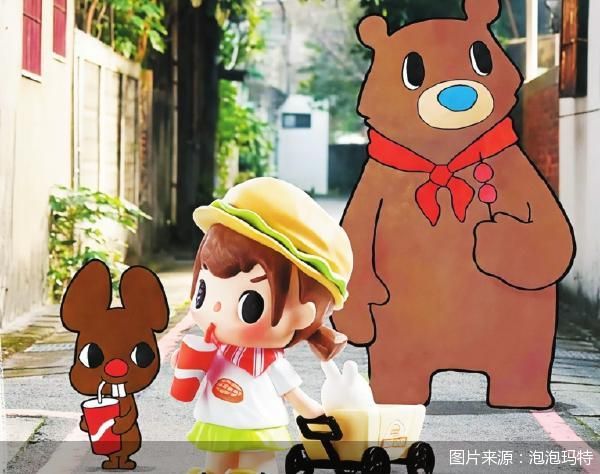
Core Viewpoint - The article discusses the legality and consumer rights regarding the return policy of blind boxes, particularly the common practice of not allowing returns within seven days without reason, which raises questions about potential unfair terms in consumer contracts [1][8]. Group 1: Consumer Complaints and Industry Practices - Many consumers have reported issues with returning blind boxes purchased online, with merchants frequently denying refund requests [1][8]. - A significant number of online stores, including popular brands like Pop Mart and Disney, have adopted a standard policy of stating "no seven-day unconditional returns" for blind box products [5][8]. - The lack of clarity in return policies across major e-commerce platforms like Taobao and JD.com regarding blind boxes has been noted, with no specific mention of blind boxes in their return categories [6][8]. Group 2: Legal Interpretations and Consumer Rights - Legal experts suggest that the unique nature of blind boxes, which relies on the element of surprise, complicates the application of the seven-day return policy. If a blind box is opened, its core value is considered consumed, thus typically not eligible for return [9][10]. - For unopened blind boxes, there is a theoretical basis for applying the seven-day return policy, but practical enforcement is challenging due to potential methods consumers might use to identify contents before opening [9][10]. - Legal advice emphasizes that merchants must clearly inform consumers about the return policy and ensure that consumers acknowledge this policy during the purchase process [11]. Group 3: Recommendations for Consumers - Consumers are advised to avoid opening blind boxes online to maintain their rights for potential returns, and to document the condition of the packaging upon receipt [11]. - In cases where a blind box has not been opened and the product has not been shipped, consumers retain the right to request a refund unless it is a customized item [11].
盲盒不能七天无理由退换 合法吗?
Zhong Guo Xin Wen Wang· 2026-02-25 13:59
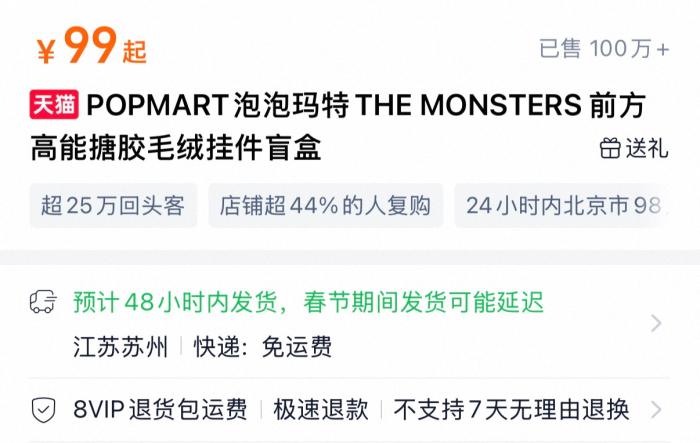
Core Viewpoint - The rise in blind box consumption is accompanied by an increase in consumer disputes, particularly regarding the refusal of merchants to accept returns and refunds for blind box purchases, raising questions about the legality of "no return" policies [1][10]. Group 1: Consumer Complaints - Many consumers report being denied refunds for blind boxes purchased online, even when the boxes remain unopened [1][10]. - Complaints are primarily focused on three scenarios: opened blind boxes being denied returns, unopened blind boxes being refused refunds, and refund requests for orders that have not yet shipped [10]. - Consumers express concerns that the blanket "no return" policy infringes on their rights, labeling it as an unfair practice [10][12]. Group 2: Industry Practices - Major brands and platforms, including Pop Mart, Miniso, and Disney, commonly state "no returns" for blind box products, making this a standard practice in the industry [4]. - The lack of clear categorization for blind boxes in return policies on platforms like Taobao and JD indicates a gap in consumer protection [6][8]. - The unique nature of blind boxes, which relies on the element of surprise, complicates the application of standard return policies [11]. Group 3: Legal Perspectives - Legal experts suggest that the core value of blind boxes is tied to their unopened state, and once opened, they typically do not qualify for returns under consumer protection laws [11]. - For unopened blind boxes, there is a theoretical basis for applying the seven-day return policy, but practical enforcement is challenging due to potential pre-purchase knowledge of contents [11][12]. - Lawyers recommend that merchants must clearly inform consumers about return policies and ensure that consumers acknowledge these terms during purchase [13]. Group 4: Consumer Recommendations - Consumers are advised to avoid opening blind boxes online to maintain their rights to refunds and to document the condition of the packaging upon receipt [13]. - In cases where refunds are denied, consumers should escalate complaints to e-commerce platforms or regulatory authorities for resolution [13].
潮玩“流水线造星”的速度与隐忧
Bei Jing Shang Bao· 2026-02-25 13:41
Core Insights - The rapid pace of new IP launches has become a norm in the trendy toy industry, with companies like Pop Mart announcing new IPs such as "After School Merodi" just two months after the last release, indicating a strategic acceleration in IP development [1][3] - The average popularity cycle of trendy toy IPs is only 3-5 years, which justifies the need for frequent releases, although not every IP will achieve significant success [1] Group 1: New IP Launches - Pop Mart's "After School Merodi" features a school and youth theme, with 12 regular and 1 hidden figure, priced at 69 yuan per blind box and 828 yuan per full box, set for online release on February 26, 2026 [3] - The number of new IPs launched by Pop Mart has surged from 29 in 2024 to 57 in 2025, nearly doubling [3] - Other companies like Qimengdao and TOP TOY are also increasing their IP portfolios, with Qimengdao acquiring Letsvan and establishing a matrix of 17 IPs, while TOP TOY is diversifying its approach with self-owned, licensed, and third-party IPs [3][4] Group 2: Revenue Generation - Pop Mart has successfully diversified its revenue sources, with 13 IPs generating over 100 million yuan each, including THEMONSTERS, which achieved 4.81 billion yuan in revenue [4][5] - Qimengdao's WAKUKU IP generated 42.96 million yuan in revenue in just three months, while TOP TOY's Nommi series is projected to earn 250 million yuan in 2025 and 600 million yuan in 2026 [5] - The trend of IP-driven revenue generation has led to a surge in IPO activities among trendy toy companies, with several firms like 52TOYS and TOP TOY filing for listings [5] Group 3: Market Dynamics - The trendy toy market is expanding, with over 21,000 related companies in China and an expected market size of 52 billion yuan for blind boxes in 2024, with trendy toys accounting for 58% of that market [8] - The shift from product consumption to emotional consumption is driving demand for original toys, supported by China's design capabilities and cultural depth [8] - The competitive landscape is intensifying, requiring companies to focus on the narrative and content surrounding their IPs to ensure longevity and consumer engagement [8][9] Group 4: Consumer Reception - New IPs like Supertutu have received mixed reviews, with sales figures falling short of expectations, indicating that not all new releases resonate with consumers [6][7] - The success of IPs is increasingly tied to their uniqueness and emotional value, with industry experts suggesting that the narrative behind the IP is crucial for consumer connection [6][9]

港股消费资产迎双重催化,港股通消费ETF易方达(513070)连续9个交易日获资金净流入
Mei Ri Jing Ji Xin Wen· 2026-02-25 07:13
Group 1 - The core viewpoint of the article highlights the release of the "Shanghai Seven Measures," which includes policies aimed at stabilizing the housing market in Shanghai, such as reducing the social security requirement for non-local families to purchase homes within the outer ring to one year and increasing the maximum public housing loan amount to 2.4 million yuan [1] - The measures are expected to support the stabilization of housing prices in first-tier cities and bolster consumer confidence in assets, thereby positively impacting consumption [1] - The article also notes impressive consumer data during the Spring Festival, with domestic travel reaching 596 million people and total tourism expenditure hitting 803.483 billion yuan, both setting historical records [1] Group 2 - The index for Hong Kong Stock Connect's consumer theme covers traditional service industry leaders such as hospitality and dining, as well as high-elasticity assets like trendy toys and gold jewelry, and high-dividend stocks in sportswear and white goods [1] - As of February 24, the rolling price-to-earnings ratio of the index stands at 18.3 times, which is 3.3% lower than the level since its launch in 2020, indicating emerging value in allocations [1] - The Wind data shows that the E Fund Hong Kong Stock Connect Consumer ETF (513070) has attracted over 1.2 billion yuan in net inflows over the past nine trading days, making it the only low-fee ETF in the market with a management fee of 0.15% per year, facilitating low-cost investments in leading consumer stocks in Hong Kong [1]
海通国际:泡泡玛特(09992)和毛戈平(01318)26年同店持续强劲增长 新秀丽(01910)26年初回升明显
Zhi Tong Cai Jing· 2026-02-25 06:50
Group 1 - The overall retail market performance in South China during the 2026 Spring Festival was weak, with a decline in customer traffic and average transaction value being the main factors affecting sales [3] - Consumer travel increased in South China, contributing to the decline in foot traffic in shopping districts [3] - The toy sector remains highly prosperous, with Pop Mart (09992) expected to achieve over 25% growth for the year, driven by strong IP operation capabilities [4] Group 2 - The cosmetics sector showed slight overall growth, but there was a clear divide between foreign and domestic brands, with foreign brands like Dior and MAC recording approximately 10% growth [5] - The restaurant industry exhibited a K-shaped recovery during the Spring Festival, with large dining establishments facing pressure on average transaction values, while fast food and casual dining showed relative stability [6] - The apparel sector's sales remained flat, with growth primarily driven by pre-Festival consumption, and sports brands experiencing a slowdown in same-store sales growth [7] Group 3 - The luggage brand Samsonite (01910) benefited from travel demand, with sales rising approximately 15% year-on-year during January-February 2026 [8] - The jewelry sector saw a decline in customer traffic but benefited from rising gold prices, leading to a high single-digit increase in sales [9]