
碳交易

Search documents
全国碳市场迎首份中央文件;21专访夏应显
2 1 Shi Ji Jing Ji Bao Dao· 2025-09-01 09:44
Carbon Neutrality Policy - The first central document for the national carbon market was issued, outlining a long-term development roadmap and tasks for the market [2] - The Ministry of Ecology and Environment will focus on expanding the coverage of mandatory carbon markets, enhancing market vitality, and improving management levels [2][3] - The national carbon market has achieved significant results, with a cumulative trading volume of 669 million tons and a transaction value of 45.93 billion yuan as of June 30, 2025 [3] Energy Development Achievements - During the "14th Five-Year Plan" period, the share of renewable energy in total electricity consumption is expected to reach 60%, with every third kilowatt-hour being green electricity [4][6] - The non-fossil energy share in national energy consumption is projected to exceed the 20% target set for the "14th Five-Year Plan," with coal's share decreasing by 1 percentage point annually [5][6] Local Dynamics - Shaanxi Province has introduced a plan to support private enterprises in signing long-term green electricity purchase agreements, aiming to reduce energy costs and simplify electricity access processes [7] - The plan includes measures to encourage private enterprises to participate in electricity market transactions, particularly in industries like steel and chemicals [7] Corporate Practices - Sinopec is participating in the construction of the world's largest green hydrogen/ammonia complex in Saudi Arabia, which will utilize wind and solar power for production [8] - The project is expected to produce 400,000 tons of green hydrogen and 2.8 million tons of green ammonia annually, contributing to the global energy transition [8]
云锋金融涨超5% 与澳碳所联合发布全球最大“碳链”计划 打造全新Web3碳基础设施
Zhi Tong Cai Jing· 2025-09-01 02:07
Core Viewpoint - Yunfeng Financial (00376) has initiated a significant strategic move into the Web3 space by launching a carbon credit trading blockchain project in collaboration with the Macau International Carbon Emission Trading Exchange, aiming to enhance the global green asset market infrastructure [1] Group 1: Company Developments - Yunfeng Financial's stock rose over 5%, currently trading at 3.33 HKD with a transaction volume of 34.39 million HKD [1] - The company, along with Yunfeng Fund, is investing in a new Web3 carbon infrastructure through the Macau International Carbon Emission Trading Exchange, marking a pivotal transition towards Web3 [1] - The new platform aims to innovate and effectively supplement traditional carbon trading and green power certificate markets, showcasing Yunfeng Financial's commitment to responsible investment and ESG principles [1] Group 2: Industry Impact - The Carbon Trading Blockchain initiative is expected to create a credible and efficient new ecosystem for the carbon market, reflecting a broader trend towards integrating blockchain technology in environmental sustainability efforts [1] - The Macau International Carbon Emission Trading Exchange has already facilitated over 1 million tons of carbon credits and 200,000 green certificates, with clients including leading firms such as Brazil Forestry Group and Mitsubishi Electric [1]
健全碳市场制度 加快绿色低碳高质量发展|碳市场建设解读②
Zhong Guo Huan Jing Bao· 2025-09-01 00:12
Group 1 - The core viewpoint emphasizes the importance of establishing a unified national carbon market as a significant measure for deepening ecological civilization reforms and promoting green and low-carbon development in China [1][2][3] Group 2 - Accelerating the improvement of the national carbon market is deemed essential for adapting to the new phase of ecological civilization construction, focusing on carbon reduction and promoting a comprehensive green transformation of the economy and society [2][3] - The carbon market is positioned as a critical tool for optimizing carbon emission rights allocation and responding to climate change through market mechanisms [2][4] Group 3 - The establishment of a national carbon market is expected to stimulate new momentum for green and low-carbon development by converting emission reduction pressures into economic growth opportunities [4][5] - The carbon market is anticipated to drive the transformation and upgrading of industrial structures, particularly in major emission sectors such as electricity, steel, and cement, which account for nearly 70% of national carbon emissions [4][5] Group 4 - The development of carbon finance is highlighted as an important financing mechanism for green and low-carbon projects, helping companies manage economic risks while enhancing the carbon market's price formation mechanism [5][6] Group 5 - The improvement of the national carbon market requires careful management of relationships between government and market, national and local pilot markets, and coordination among various departments [7][8]
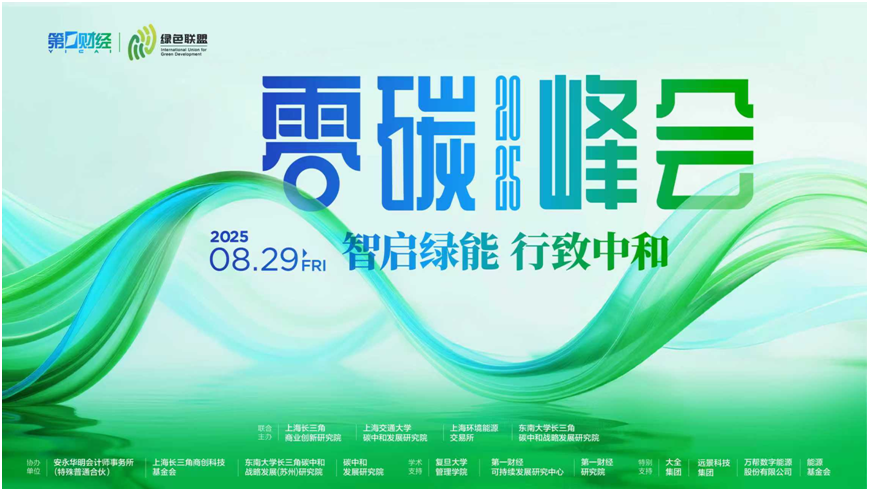
智启绿能 行致中和——2025零碳峰会正式举行
Di Yi Cai Jing· 2025-08-29 16:06
Group 1 - The 2025 Zero Carbon Summit will be held in Shanghai, co-hosted by Yicai and the Yangtze River Delta International Green Development Alliance, with support from various academic and research institutions [1][3] - The summit's theme is "Smart Energy for Carbon Neutrality," focusing on zero-carbon park construction, carbon neutrality practices, and green enterprise expansion [3][5] - The event aims to connect policies with markets, technologies with scenarios, and domestic with international efforts to provide pathways for zero-carbon development [3][5] Group 2 - The Director of the Energy Department of Shanghai Development and Reform Commission emphasized the importance of zero-carbon as a development marker and the need for collaborative efforts in green transformation [5][11] - The Children's Investment Fund highlighted its commitment to supporting the transition to a zero-carbon society, linking climate change to children's welfare [7] - The China Green Carbon Fund stressed the role of forestry in achieving carbon neutrality and the importance of corporate social responsibility in enhancing carbon sink capabilities [9] Group 3 - The summit serves as a reflection on China's "dual carbon" goals five years after their proposal, emphasizing the media's role in promoting green transformation [11] - The China Academy of Engineering discussed the critical role of energy storage technologies in supporting green energy transitions and achieving carbon neutrality [13] - The transportation sector's significant contribution to carbon emissions was addressed, with strategies proposed for achieving zero emissions by 2050 through the adoption of electric vehicles [15] Group 4 - The Shanghai Environment and Energy Exchange reported on the development of China's carbon market, which has facilitated nearly 700 million tons of quota transactions, amounting to approximately 48 billion yuan [17] - The summit received carbon neutrality certification from the Shanghai Environment and Energy Exchange, highlighting its commitment to sustainability [19] - The industrial sector's carbon emissions, particularly from heating, were identified as a major challenge, with recommendations for promoting heat pumps and biomass technologies [21] Group 5 - The summit featured discussions on transforming innovative zero-carbon technologies into executable business paths, emphasizing the importance of green energy cost advantages [23] - A collection of green low-carbon innovation cases from the Yangtze River Delta was presented, showcasing successful practices that can serve as references for other regions [26] - The launch of the "COP30 China Corner Communication Action Plan" aims to showcase China's efforts in green development and climate governance on a global stage [28] Group 6 - The construction of zero-carbon parks is entering a phase of large-scale promotion, supported by relevant policy documents [30] - Roundtable discussions focused on full-chain carbon neutrality practices and collaboration among various stakeholders in the industry [31] - The "Zero Carbon Earth" awards were announced to recognize outstanding contributors to green transformation, encouraging more enterprises to engage in building a zero-carbon future [33]

上海环境能源交易所副总经理彭峰:多维度发力推动中国碳市场高质量发展
Di Yi Cai Jing· 2025-08-29 16:00
Core Insights - The carbon market in China is increasingly important as a key policy tool in achieving the dual carbon goals, with significant developments over the past 20 years [1] - The national carbon market has established a stable institutional framework, with a cumulative trading volume of nearly 700 million tons and a trading value of approximately 48 billion yuan as of the end of August [1][2] - The market is undergoing a critical transformation with the inclusion of additional high-emission industries and the introduction of innovative trading mechanisms [2][4] Group 1: Market Development - The national carbon market officially started trading on July 16, 2021, and has since shown a steady increase in compliance rates, maintaining above 99% over the last three compliance cycles [1] - The market has implemented three main mechanisms to promote emissions reduction: imposing pressure on high-emission enterprises through carbon quotas, quantifying emission reduction benefits for trading, and establishing carbon pricing to guide investments into green sectors [2][3] Group 2: Future Outlook - By 2027, the national carbon market aims to cover all major industrial sectors and transition from intensity control to total control, with a gradual increase in paid allocation [4] - The voluntary carbon market (CCER) is expected to face high-quality project requirements and will need to enhance trading volume, as current supply is significantly lower than theoretical demand [3][5] - To enhance market vitality, the introduction of diverse carbon financial products and the expansion of trading participants, including financial institutions and individuals, is essential [5]

建设更加有效、更有活力、更具国际影响力的全国碳市场|宏观经济
清华金融评论· 2025-08-29 13:09
Core Viewpoint - The article emphasizes the importance of the national carbon market as a crucial policy tool for addressing climate change and promoting a comprehensive green transformation of the economy and society [4]. Group 1: National Carbon Market Development - The national carbon market in China consists of a mandatory carbon emissions trading market and a voluntary greenhouse gas reduction trading market, which were established in 2021 and 2024 respectively [5]. - By 2027, the national carbon emissions trading market is expected to cover major emission industries in the industrial sector, while the voluntary reduction market aims for full coverage in key areas [5]. - The goal is to establish a carbon emissions trading market based on total quota control by 2030, combining free and paid allocation methods [5]. Group 2: Infrastructure and Technological Integration - Future development of the carbon market will require enhanced infrastructure, driven by the integration of digital technologies such as big data, blockchain, artificial intelligence, and cloud computing [6]. - Recommendations include improving data collection and transaction systems, standardizing operations, and creating alliances with financial institutions to enhance the green finance ecosystem [6]. Group 3: Financial Products and Market Activity - The article highlights the need for financial institutions to develop green financial products related to carbon emissions rights and voluntary reduction certificates, thereby increasing support for greenhouse gas reduction [7]. - Establishing a comprehensive carbon pricing mechanism is essential for providing effective price signals to support green and low-carbon development [7]. - The carbon market is projected to reach a trading scale of trillions, with increasing demand for services related to carbon market activities from numerous enterprises [8]. Group 4: Regulatory Framework and Data Management - A robust regulatory framework has been established, with over 30 systems and technical standards developed to ensure effective carbon market governance [9]. - Enhanced data quality management and strict enforcement measures are being implemented to prevent data manipulation in carbon emissions reporting [9]. - The article stresses the importance of unified information disclosure standards to improve transparency and accountability in carbon emissions reporting [9]. Group 5: Cross-Market Coordination and Risk Management - The establishment of a cross-market collaborative regulatory system is crucial for unified oversight of the carbon market, enhancing market health and efficiency [10]. - This system aims to prevent market manipulation and fraud through data sharing and cooperative regulation, thereby protecting investors and maintaining market integrity [10].

全国碳市场行情简报(2025年第148期)-20250829
Guo Tai Jun An Qi Huo· 2025-08-29 13:03
Report Summary 1. Report Industry Investment Rating - No information provided in the given content. 2. Core Viewpoints - The depletion of mandatory circulation quotas may support a carbon price reversal, expected to occur around October, but anticipatory trading could bring signs of reversal in Q3 [6]. - Before August, carbon prices may fluctuate due to slow release of mandatory circulation quotas and low trading willingness. Starting from September, as compliance pressure mounts, prices may rise [6]. - It is recommended that deficit enterprises make phased purchases at low prices before the end of September [4]. 3. Summary by Relevant Catalog Today's Market - CEA24 single - item auction was sold at the reserve price with a 95% unsold rate due to price - raising behavior yesterday [4]. - For CEA, the main targets declined to varying degrees, with 36.4 tons listed and 89.7 tons in bulk transactions [4]. - For CCER, the listed agreement trading volume was 0.24 tons, and the average transaction price was 80.97 yuan/ton, a 1.21% change [4]. Carbon Quota (CEA) Data | CEA Type | Closing Price (yuan/ton) | Daily Change (%) | New - Old Price Difference (yuan/ton) | Bulk Transaction Average Price (yuan/ton) | Total Transaction Volume (tons) | Listed Agreement Transaction Volume (tons) | | --- | --- | --- | --- | --- | --- | --- | | CEA19 - 20 | 69.00 | 0.00% | - | N/A | 0.00 | 0.00 | | CEA21 | 70.00 | 0.00% | 1.00 | N/A | 0.00 | 0.00 | | CEA22 | 69.72 | - 0.83% | - 0.28 | N/A | 1.05 | 1.05 | | CEA23 | 69.11 | - 0.59% | - 0.61 | 66.48 | 62.33 | 15.19 | | CEA24 | 69.42 | - 0.52% | 0.31 | 69.34 | 63.28 | 20.20 | [8] CCER Data - The average transaction price of CCER was 80.97 yuan/ton, with a 1.21% change, a trading volume of 0.24 tons, and a turnover of 19.11 million yuan. The cumulative trading volume was 250.40 tons [10].
云锋金融(00376)与澳碳所联合发布全球最大“碳链”计划 以RWA破解高质量碳信用难题
智通财经网· 2025-08-29 05:46
Group 1 - The core viewpoint of the news is that Yunfeng Financial and the Macau International Carbon Exchange have launched a blockchain-based carbon credit trading initiative called "Carbon Trading BlockChain" to enhance the global green asset market infrastructure [1][2] - The initiative aims to address the trust crisis in the global carbon credit market, which faces issues such as "greenwashing" and double counting, by providing a transparent and traceable digital identification for each green asset [2] - The platform will integrate the entire lifecycle of carbon credit development, issuance, trading, and cancellation on the blockchain, ensuring transparency and traceability [2] Group 2 - The project is part of Yunfeng Financial's strategic shift towards the Web3 domain and reflects its commitment to responsible investment and ESG principles [1] - The Macau International Carbon Exchange has already facilitated over 1 million tons of carbon credits and 200,000 green certificates, with clients including leading companies such as Brazil Forestry Group and Mitsubishi Electric [1] - The initiative is expected to create a new ecosystem for the carbon market, enhancing the connection between global capital and quality carbon projects [2]
开启中国碳市场建设新征程,激发全社会绿色低碳转型内生动力|碳市场建设解读①
Zhong Guo Huan Jing Bao· 2025-08-28 23:19
Core Viewpoint - The recent issuance of the "Opinions on Promoting Green and Low-Carbon Transition and Strengthening National Carbon Market Construction" marks a significant step in China's carbon market development, establishing it as a key policy tool for achieving carbon peak and carbon neutrality goals [1][2]. Group 1: Carbon Market Development - China has established the world's largest national carbon emissions trading market, which aims to address high reduction costs and insufficient transformation motivation [2][3]. - The carbon market is designed to provide a flexible mechanism for achieving greenhouse gas control targets at a low cost, promoting deep transformation of traditional industries and fostering new productive forces [2][3]. - The establishment of a carbon pricing mechanism is crucial for driving industrial upgrades and ensuring that carbon prices reflect the marginal costs of emissions reduction [3][4]. Group 2: Innovation and Incentives - The national carbon emissions trading market will accelerate the transition to clean energy and process innovation in key industries such as electricity, metallurgy, and chemicals [4][5]. - Innovative incentive mechanisms will facilitate low-carbon technology innovation and the implementation of significant climate projects, addressing financing challenges for major low-carbon technology innovations [4][5]. - The voluntary carbon emissions reduction trading market will promote the industrialization of cutting-edge technologies in areas like carbon sinks and renewable energy [4][5]. Group 3: Market Relationships and Coordination - The construction of the carbon market involves balancing various stakeholder interests and policy elements, emphasizing the need for a comprehensive approach to achieve carbon peak and neutrality goals [5][6]. - There is a need to integrate the mandatory carbon trading market with the voluntary market to enhance policy synergy and stimulate green innovation [5][6]. - The relationship between effective markets and proactive government roles must be harmonized to ensure a well-functioning carbon market [6][7]. Group 4: Future Directions - The carbon market should initially focus on its primary function of emission reduction, gradually enhancing its financial attributes as the system matures [7][8]. - Coordination between the national carbon market and local pilot markets is essential, with local markets continuing to serve as testing grounds for policy innovations [8].
碳市场建设绘就路线图
Jing Ji Ri Bao· 2025-08-28 22:15
Core Viewpoint - The release of the "Opinions on Promoting Green and Low-Carbon Transition and Strengthening National Carbon Market Construction" marks a significant step in China's carbon market development, providing a clear roadmap and timeline for its long-term growth [1][4]. Carbon Market Construction Achievements - The national carbon market has made notable progress, with a cumulative trading volume of 680 million tons and a total transaction value of 47.41 billion yuan as of August 22, 2025 [2]. - The national carbon emission trading market includes 2,096 key emission units, achieving nearly 100% compliance in quota clearance [2]. - The voluntary carbon market has registered 2.49 million tons of certified voluntary emission reductions, with a transaction value of 21 million yuan [2]. Mid to Long-Term Development Plans - The "Opinions" set ambitious targets for the carbon market, aiming for comprehensive coverage of major industrial sectors by 2027 and a well-established carbon pricing mechanism by 2030 [4]. - The document emphasizes the importance of a transparent and unified regulatory framework for both mandatory and voluntary carbon markets [4][5]. Systematic Approach to Carbon Market Development - The construction of the carbon market involves multiple stakeholders and policy elements, requiring a systematic approach to balance market efficiency and government intervention [7]. - The integration of mandatory and voluntary carbon markets is crucial for enhancing policy synergy and driving green innovation [7]. International Cooperation and Standards - The carbon market is positioned as a tool for international cooperation in green development, with an emphasis on aligning with international standards and enhancing global influence [8].