轻工

Search documents
今年前11月中国家电以旧换新超1.28亿台
Zhong Guo Xin Wen Wang· 2025-12-26 12:37
Core Insights - In the first 11 months of this year, over 128 million home appliances were replaced through China's trade-in program, generating sales exceeding 2.5 trillion yuan [1] Group 1: Policy and Standards - The National Market Regulation Administration introduced the "Action Plan for Upgrading Equipment and Trade-in of Consumer Goods" which focuses on upgrading energy consumption and emission standards, enhancing product quality and safety standards, and increasing recycling standards [1] - A total of 294 national standards across 13 key areas have been approved and published, aimed at driving equipment upgrades and releasing consumer potential [1] Group 2: Environmental Impact - The new mandatory national standard for coal-fired power generation is expected to reduce average coal consumption to below 302 grams per kilowatt-hour by 2030, leading to a decrease in carbon dioxide emissions by approximately 160 million tons [1] Group 3: Consumer Confidence and Safety - Significant breakthroughs in safety standards for electric vehicle batteries have been achieved, with "no fire, no explosion" now a mandatory requirement, enhancing the safety of new energy vehicles and boosting consumer confidence [1] Group 4: Industry Transformation - The implementation of these standards has effectively driven the light industry sector towards transformation and upgrading, with leading companies accelerating the launch of mid-to-high-end smart furniture products, creating a market size exceeding 10 billion yuan [2]
市场监管总局:2026年推动完成1800余项传统产业标准制修订
Zhong Guo Xin Wen Wang· 2025-12-26 07:43
Core Viewpoint - The State Administration for Market Regulation is focusing on optimizing traditional industries, promoting high-quality development in the service sector, and boosting consumption through the revision and formulation of over 1,800 standards by 2026 [1][2]. Group 1: Traditional Industry Standards - The initiative will involve updating standards for ten traditional industries including petrochemicals, machinery, light industry, steel, non-ferrous metals, building materials, textiles, shipbuilding, automotive, and electric power [2]. - The focus will be on intelligent, green, and integrated development to support the transformation of these industries [2]. Group 2: Consumer Goods Standards - There will be an acceleration in the upgrade of consumer goods standards to meet new consumer demands for safety, quality, green products, intelligence, and health [2]. - A new consumer goods standards system will be established to enhance the compatibility of supply and demand, thereby stimulating consumption potential [2]. Group 3: Service Standards - The development of service standards will be strengthened, with guidelines to be issued for production services, life services, and public services [2]. - This aims to address urgent needs in both traditional and emerging service sectors, promoting high-quality and efficient service development [2]. Group 4: Mandatory Standards - There will be an increased focus on the development of mandatory national standards, particularly in areas related to life and property safety [2]. - The initiative includes updating standards for thermal insulation materials, hazardous chemicals, special equipment, and the recycling of power batteries, converting relevant recommended standards into mandatory ones [2].

发改委:对新能源汽车、锂电池、光伏等“新三样”产业 关键在于规范秩序、创新引领
Zhong Jin Zai Xian· 2025-12-26 07:17
Core Viewpoint - The article emphasizes the importance of optimizing and upgrading traditional industries in China, particularly focusing on the "new three" industries: new energy vehicles, lithium batteries, and photovoltaics, to enhance competitiveness and ensure sustainable development in the face of global challenges [1][2]. Summary by Sections Achievements in the 14th Five-Year Plan - Significant progress has been made in enhancing the comprehensive strength and core competitiveness of traditional industries, consolidating international competitiveness [3]. - High-tech manufacturing and equipment manufacturing have seen value-added growth of 42% and 37.1% respectively from 2020, with annual growth rates of 9.2% and 8.2% [3]. - The domestic supply of mid-to-high-end products has improved, exemplified by the launch of China's first large cruise ship [3]. Advancements in Smart Manufacturing - A large-scale update of equipment has been implemented, promoting digital transformation and smart upgrades in traditional industries [4]. - Over 30,000 basic smart factories and 500 exemplary smart factories have been established, with efficiency improvements of 22.3% and reduced product development cycles by 28.4% [4]. Green Transformation - Guidelines for energy conservation and carbon reduction in high-energy-consuming industries have been established, leading to a 6% increase in energy efficiency benchmarks by the end of 2024 compared to 2020 [5]. - By 2024, China's new energy vehicle sales are projected to reach 12.87 million, an increase of over 800% since 2020, with photovoltaic installations growing by over 400% [5]. Integration of Manufacturing and Services - Initiatives to deepen the integration of advanced manufacturing and modern services have been launched, enhancing the support role of service industries for manufacturing [6]. - The recycling system for home appliances has been improved, promoting sustainable consumption and resource utilization [6]. International Competitiveness - Policies have been implemented to enhance the international competitiveness of traditional industries, with industrial exports exceeding 20 trillion yuan for four consecutive years [7]. - By 2024, exports of "new three" products are expected to increase by 2.6 times compared to 2020, reflecting a significant enhancement in international competitive advantages [7]. Goals for the 15th Five-Year Plan - The focus will be on optimizing traditional industries to promote economic quality and reasonable growth, with traditional industries expected to contribute significantly to GDP growth [9]. - The development of new productive forces will rely on the optimization of traditional industries, which serve as a foundation for emerging sectors [10]. Meeting People's Needs - Traditional industries are crucial for meeting the diverse needs of the population, with an emphasis on improving product quality and variety to enhance living standards [11]. Strengthening International Competitiveness - The need to consolidate and expand competitive advantages in traditional industries is highlighted, especially in the context of global economic challenges [12]. Focus Areas for the 15th Five-Year Plan - Specific strategies will be implemented for various sectors, including balancing supply and demand in raw materials, enhancing innovation in new energy sectors, and improving management in resource-intensive industries [13][14][15][16][17].
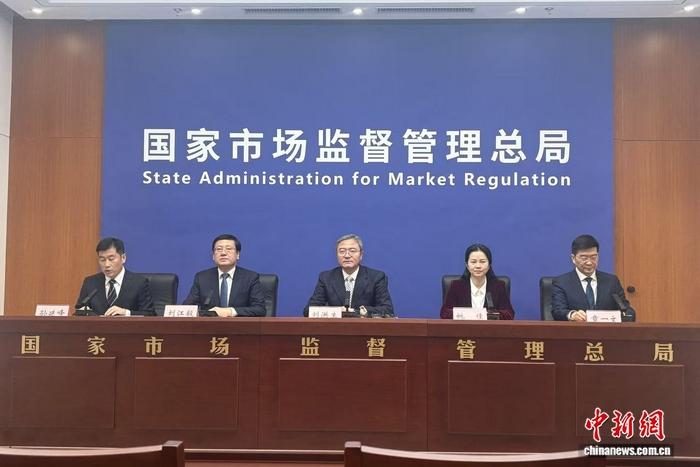
市场监管总局:2026年将推动完成1800余项标准制修订
Yang Shi Xin Wen· 2025-12-26 07:06
Group 1 - The State Administration for Market Regulation will focus on optimizing traditional industries, promoting high-quality development in the service sector, and boosting consumption in 2026 [1] - A total of over 1,800 standards will be revised and developed to support the high-quality development needs of ten traditional industries, including petrochemicals, machinery, light industry, steel, non-ferrous metals, building materials, textiles, shipbuilding, automotive, and electric power [1] - The implementation of a special action for updating and upgrading mandatory national standards will be promoted, particularly in areas related to life and property safety [1] Group 2 - The agency will collaborate with relevant departments to accelerate the development of standards in critical areas such as thermal insulation materials, hazardous chemicals, special equipment, and the recycling of power batteries [1] - Important recommended national standards in relevant fields will be timely converted into mandatory national standards to strengthen safety standards [1]
首席联合电话会-消费专场
2025-12-26 02:12
Summary of Conference Call Records Industry and Company Focus Home Appliances Industry - The tightening of national subsidy policies is focusing on core categories such as black and white appliances, which supports companies like Midea, Haier, TCL Electronics, and Hisense Visual. However, competition remains fierce for brands like Hisense Home Appliances and Gree Electric, with better investment opportunities expected after Q1 [1][4] Pet Industry - The pet industry continues to experience high single-digit growth, with pet food growth around 10%. Online channels, particularly Douyin and Pinduoduo, are seeing significant growth, while offline channels face pressure. The industry is expected to add approximately 4 million new pet owners in 2025, driving demand [5][6] - Head brands are growing significantly faster than the industry average, while smaller brands are struggling, often focusing on offline channels to maintain profitability. The trend is increasingly favoring market concentration towards head brands [6] Education Industry - China Oriental Education is benefiting from post-pandemic expansion and a national focus on employment, with double-digit growth in enrollment numbers. The company specializes in vocational education with a high employment rate, which provides a competitive advantage. New training programs are rapidly growing, and the company is expanding into emerging fields [8][10] Pharmaceutical Industry - The pharmaceutical industry is focusing on the small nucleic acid supply chain, with Novartis's Inqisiran entering medical insurance but facing capacity shortages. Companies that meet FDA audit standards and enter multinational supply chains, such as Lianhua Technology and Chen Da Pharmaceutical, are recommended for attention [11] Food and Beverage Industry - The food and beverage industry is seeing trends towards spring excitement, health directions, new products, and cyclical growth. Health products and oatmeal sectors are performing well, with companies like Dongpeng Beverage expected to grow over 20% next year [12][13] Light Industry - The light industry is adopting a dual strategy focusing on both domestic and international sales. The two-wheeler market is performing well, and solid-state batteries may drive growth in the electric vehicle sector. The industry is expected to have a positive outlook in the near future [14] Key Points and Arguments Home Appliances - The 2026 home appliance replacement policy will focus more on traditional large appliances, reducing the variety of small appliances eligible for subsidies. The overall subsidy amount may decrease, but support for core categories is expected to remain stable or even increase [2] Pet Industry - The pet industry is facing a bottleneck in product innovation, with most developments being minor improvements. There is a consensus on the need for functional and specialized products, requiring more investment in consumer education and brand building [5][6][7] Education Industry - The company expects to achieve a revenue of 1 billion yuan in 2026, with a projected compound profit growth rate of 15%-20% over the next three years. The current valuation is low, with a high dividend rate, making it a recommended investment target [9][10] Pharmaceutical Industry - The small nucleic acid supply chain is critical, with China being the largest production market. The industry faces challenges in meeting quality standards for FDA compliance, making it essential to focus on companies that can meet these standards [11] Food and Beverage Industry - Companies with strong operational momentum are expected to perform well, and the white liquor sector is seen as having good investment value [12][13] Light Industry - The light industry is expected to see sales growth due to inventory levels being low and potential technological effects in the upcoming quarters [14][15] Globalization and Export Markets - The export market is influenced by the appreciation of the RMB and pessimistic expectations regarding the US real estate market. However, long-term focus should be on new product development and self-owned brands [17][18] Pulp Industry - The pulp sector is expected to have significant elasticity in the first half of next year due to external factors affecting wood chip supply and no new capacity expansion, leading to potential price increases [19][20]
国家发展改革委:持续实施粗钢产量调控 综合整治“内卷式”竞争
Xin Hua Cai Jing· 2025-12-26 02:08
Group 1: Traditional Industries - The core focus during the "14th Five-Year Plan" period for traditional industries is to deepen supply-side structural reforms, ensuring a balance between supply and demand while upgrading product structures [1] - The raw materials industry, including steel and petrochemicals, aims to optimize structure and balance supply and demand, with an emphasis on increasing high-end capacity supply [1] - Continuous monitoring and management of the industry will be implemented, including strict controls on crude steel production and prohibiting illegal new capacity [1] Group 2: New Industries - For new industries such as electric vehicles, lithium batteries, and photovoltaics, the key is to regulate order and lead innovation, addressing "involution" competition and enhancing industry concentration [2] - The implementation of fair competition review systems and price monitoring will be crucial to prevent disorderly low-price competition [2] - Strengthening supply chain governance and ensuring timely payments to small and medium enterprises will foster a mutually beneficial industry ecosystem [2] Group 3: Resource-Intensive Industries - In resource-intensive industries like alumina and copper smelting, the focus will be on strengthening management and optimizing layout based on regional industrial foundations and resource endowments [2] - Encouragement of mergers and acquisitions among large enterprises will enhance competitiveness and scale [2] - A new round of mineral exploration strategies will be promoted to optimize overseas resource exploration and development cooperation [2] Group 4: Light Industry and Textiles - For light industries and textiles, the emphasis is on cost reduction, volume expansion, and quality improvement, with a push for product innovation and diversification [3] - Support for equipment upgrades and technological transformation will accelerate digital and green transitions [3] - Brand building and quality enhancement initiatives will be prioritized to elevate the recognition and influence of Chinese brands [3]
国家发改委:对钢铁、石化等原材料产业,关键在于平衡供需、优化结构
Di Yi Cai Jing· 2025-12-26 02:00
Core Insights - The article emphasizes the importance of optimizing and upgrading traditional industries while fostering innovation and maintaining order in emerging sectors like new energy vehicles, lithium batteries, and photovoltaics [2][4][11] Group 1: Traditional Industry Development - The traditional industries are crucial for the national economy, encompassing essential raw materials and consumer goods [4][11] - Significant achievements were made during the 14th Five-Year Plan, with a focus on enhancing core competitiveness and international competitiveness [5][11] - The manufacturing value added is projected to reach 33.6 trillion yuan in 2024, with traditional industries accounting for approximately 80% [11] Group 2: Technological and Digital Transformation - There is a strong push for digital transformation and intelligent upgrades in traditional industries, with over 30,000 basic intelligent factories established [6] - The average product development cycle in top-tier intelligent factories has been reduced by 28.4%, and production efficiency has improved by 22.3% [6] Group 3: Green Development - The green transformation of industries is being prioritized, with significant advancements in energy efficiency and carbon reduction [7] - By the end of 2024, China's new energy vehicle sales are expected to reach 12.866 million units, an increase of over eight times since 2020 [7] Group 4: International Competitiveness - The international competitiveness of traditional industries is being strengthened, with industrial product exports exceeding 20 trillion yuan for four consecutive years [9][14] - Exports of new energy vehicles, lithium batteries, and photovoltaic products are projected to increase by 2.6 times compared to 2020 [9] Group 5: Policy and Regulatory Framework - The government is focusing on balancing supply and demand in raw material industries, emphasizing structural optimization and high-end capacity supply [15] - There is a need to regulate market competition and enhance the innovation capacity of industries to maintain a fair competitive environment [2][16]
国家发改委:对轻工、纺织等量大面广的产业 关键在于降本扩量、提质增效
Di Yi Cai Jing· 2025-12-26 01:58
Core Viewpoint - The article emphasizes the importance of optimizing and upgrading traditional industries, particularly in the light industry and textile sectors, to reduce costs, expand production, and improve quality and efficiency [1] Group 1: Industry Importance - Light industry and textile sectors are significant due to their large scale, diverse product types, and extensive coverage, playing a crucial role in ensuring livelihoods, market prosperity, export expansion, and job creation [1] Group 2: Strategic Goals - During the "14th Five-Year Plan" period, there is a focus on accelerating product innovation, enriching product categories, and enhancing supply characteristics to achieve diversification, quality improvement, and brand creation [1] - Support for enterprises to update equipment and undergo technological transformation is essential, alongside the application of advanced and suitable technologies to promote digital transformation and green upgrades [1] Group 3: Quality and Standards - Implementation of key consumer goods quality enhancement actions is necessary to elevate mandatory product energy efficiency and safety standards, ensuring the enforcement of mandatory national standards [1] - Strengthening quality support and standard leadership is a priority [1] Group 4: Brand Development - Promoting brand construction and effectively organizing the China Brand Day event is crucial for enhancing the recognition and influence of Chinese brands [1] Group 5: Industrial Transfer - There is a need to improve the collaborative mechanism for the orderly transfer of industries within the country, guiding the light industry and textile sectors to move to the central and northeastern regions in an organized manner [1]
资产配置日报:上涨共识初现-20251225
HUAXI Securities· 2025-12-25 15:22
Group 1 - The core view of the report indicates that the equity market is showing signs of upward momentum, with the total A-share index rising by 0.60% and trading volume increasing by 467 billion yuan compared to the previous day [1][2] - The report highlights that the market is attempting to establish new narratives, which historically accompany successful breakthroughs of previous highs at year-end [1][2] - The report suggests that the index is approaching previous highs, with the total A-share index breaking through 6400 points, nearing the highs of October and November [2] Group 2 - The report identifies strong performance in specific sectors, particularly defense, military, and communication industries, which have successfully broken through previous high points, indicating a positive market sentiment towards these sectors [2] - The commercial aerospace sector has led the market with a cumulative increase of 31.12% since November 24, and its trading volume has reached a historical high of 6.05% of total A-share trading volume [3] - The bond market is experiencing a mixed performance, with short-term bonds showing a downward trend while long-term bonds are under pressure due to rising yields influenced by equity market movements [4][5] Group 3 - The report notes that the commodity market has shifted from a broad rally to a more differentiated performance, with precious metals experiencing a decline while industrial metals remain resilient [6] - The report emphasizes that the long-term bullish logic for precious metals remains intact, but short-term volatility may arise due to profit-taking after significant price increases [7] - The report discusses the dynamics in the polysilicon industry, where price increases are being driven by supply-side adjustments, despite ongoing supply-demand imbalances [7]
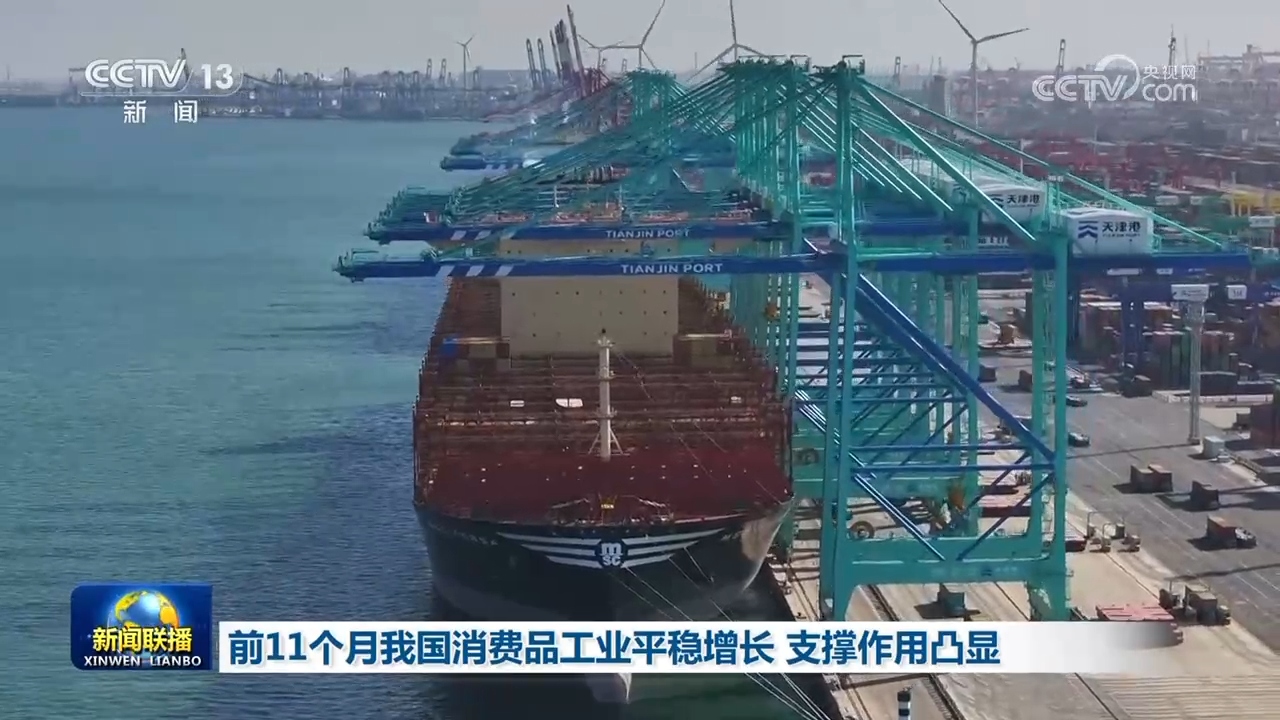
前11个月我国消费品工业平稳增长 支撑作用凸显
Yang Shi Wang· 2025-12-25 12:26
Core Insights - The consumer goods industry in China has maintained stable growth in the first 11 months of the year, highlighting its significant contribution to economic stability and livelihood protection [1] Group 1: Industry Performance - The added value of the consumer goods industry above designated size increased by 3.7% year-on-year, accounting for 26.4% of the total industrial output above designated size [3] - The export delivery value reached 3.54 trillion yuan, representing 24.7% of the total industrial output above designated size, indicating a stable contribution from foreign trade [3] - There are currently 194,000 enterprises in the consumer goods industry, employing over 25 million people, making it a crucial pillar for employment and economic stability [3] Group 2: Industry Transformation and Upgrading - The consumer goods industry is accelerating its transformation and upgrading, with 167 light industry enterprises recognized as national-level 5G factories and 1,321 awarded as national-level green factories during the "14th Five-Year Plan" period [5] - Over 500 textile industry clusters are being rapidly cultivated, with 19 clusters exceeding 100 billion yuan in scale, promoting collaborative development across the supply chain [5] Group 3: Supply and Demand Adaptation - The adaptability of supply and demand in the consumer goods sector is continuously improving, with 1,321 innovative textile products, 1,188 elderly care products, and 914 upgraded and innovative consumer goods released to meet the needs of the population [7] - The retail sales of key light industry products have grown at an average annual rate of 7.29% since the beginning of the "14th Five-Year Plan" [7] Group 4: Future Directions - The industry will continue to deepen the supply-side structural reform of the consumer goods sector, implement relevant consumption promotion plans, and strengthen innovation-driven policies to promote steady progress in high-end, intelligent, and green development [7]