Workflow
证券业
icon
Search documents
【宏观快评】2025年7月金融数据点评:企贷新增转负不影响“看股做债,股债反转”的判断
Huachuang Securities· 2025-08-14 13:15
Group 1: Financial Data Overview - In July 2025, new social financing (社融) amounted to 1.16 trillion yuan, a decrease from 4.20 trillion yuan in the previous period[2] - The total social financing stock grew by 9.0% year-on-year, compared to 8.9% previously[2] - M2 money supply increased by 8.8% year-on-year, up from 8.3% in the prior period[2] - New M1 money supply rose by 5.6% year-on-year, compared to 4.6% previously[2] Group 2: Corporate Loan Trends - Corporate loans turned negative, with a decrease of 2.6 billion yuan in medium to long-term loans, reflecting a year-on-year decline of 3.9 billion yuan[47] - The contraction in corporate loans may benefit the Producer Price Index (PPI) by raising it year-on-year[3] - Despite weak loan performance, overall corporate financing is still growing, with improvements in equity and bond financing compared to the same period last year[3] Group 3: Economic Indicators and Market Sentiment - The ongoing recovery of the corporate-resident deposit gap indicates continuous improvement in the economic cycle, supporting the view that the worst phase is passing[7] - The ratio of resident deposits to the total stock market value remains high, suggesting significant potential for market growth as the economic cycle improves[38] - The current high growth of non-bank deposits (2.1 trillion yuan added in July) indicates ample liquidity in financial institutions[38]
【笔记20250814— 大A“豹子顶”:3666】
债券笔记· 2025-08-14 11:16
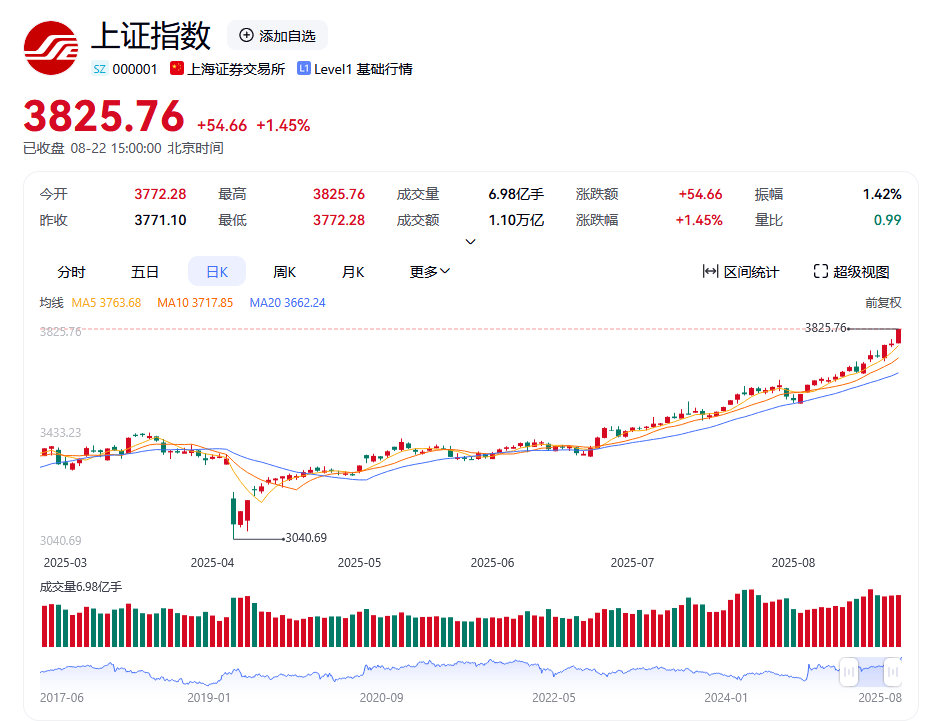
Core Viewpoint - The article discusses the recent fluctuations in the stock market and bond yields, highlighting the impact of central bank operations and market sentiment on financial conditions [2][4]. Group 1: Market Overview - The stock market experienced a rise in the morning, with the Shanghai Composite Index reaching 3700 points, but later fell to close at 3666.44, down from a high of 3688.63 [4][5]. - The bond market showed stability in sentiment, with the 10-year government bond yield slightly decreasing to 1.715% before rising again to 1.732% by the end of the trading day [4][5]. - The central bank conducted a 128.7 billion yuan reverse repurchase operation, with a net withdrawal of 32 billion yuan due to 160.7 billion yuan of reverse repos maturing [2][3]. Group 2: Interest Rates and Funding Conditions - The funding conditions showed a slight tightening, with the DR001 rate around 1.32% and DR007 at approximately 1.44% [2]. - The weighted average rates for various repo codes were reported, with R001 at 1.35% and R007 at 1.47%, indicating stable rates over the past 30 days [3]. - The central bank announced a fixed quantity, interest rate tender for a 500 billion yuan buyout reverse repo operation set for August 15, 2025, with a term of 6 months [2][4].
2025年7月金融数据点评:金融深化“反内卷”
Ping An Securities· 2025-08-14 09:00
Group 1: Financial Data Overview - In July 2025, the total social financing (社融) stock increased by 9.0% year-on-year, up 0.1 percentage points from the previous month[2] - Loan stock grew by 6.9% year-on-year, a decrease of 0.2 percentage points from the previous month[2] - M1 increased by 5.6% year-on-year, rising by 1 percentage point from the previous month[2] - M2 grew by 8.8% year-on-year, an increase of 0.5 percentage points from the previous month[2] Group 2: Contributing Factors - Government bond issuance contributed 0.14 percentage points to the year-on-year growth of social financing stock in July 2025, with net financing of government bonds reaching 8.9 trillion yuan in the first seven months, an increase of 4.88 trillion yuan year-on-year[2] - Direct financing channels for enterprises improved, with net financing from corporate bonds and domestic stock financing exceeding last year's levels, supported by macro policies for technology innovation[2] - The "anti-involution" policy is deepening, focusing on the orderly exit of backward production capacity, which may impact loan demand from small and medium-sized enterprises[2] Group 3: Credit Structure and Risks - As of the end of July, inclusive small and micro loans reached 35.05 trillion yuan, growing by 11.8% year-on-year, while medium to long-term loans for manufacturing stood at 14.79 trillion yuan, up 8.5% year-on-year[2] - Risks include potential underperformance of growth stabilization policies, escalation of geopolitical conflicts, and unexpected severity of overseas economic downturns[11]
7月金融数据点评:弱现实延续,债市阶段性脱敏
Core Insights - The report highlights a continuation of weak economic conditions, with a notable decline in new RMB loans in July 2025, amounting to -0.05 billion compared to 2.24 billion in June 2025. New social financing (社融) was 1.16 billion, down from 4.20 billion in June 2025, while the year-on-year growth rate of social financing was 9%, slightly up from 8.9% in June 2025 [3][4][5]. Group 1: Social Financing and Government Debt - Government debt continues to support the growth of social financing in July, with net financing reaching 1.25 billion, although this is a decrease from 1.41 billion in June. This high level of government debt financing has effectively supported social financing growth despite weak credit demand from the real economy [3][5]. - The report indicates that corporate short-term loans were low, while bill financing saw significant growth. This is attributed to a rapid decline in bill rates, which created a substitution effect with short-term loans, and effective measures to clear overdue accounts [3][4][5]. Group 2: Household and Corporate Credit Demand - Both household and corporate credit demand in July were below seasonal levels, reflecting low consumer willingness to spend and weak housing demand. The implementation of personal consumption loan subsidies and childcare allowances may stimulate future household consumption, but improvements in housing demand remain uncertain due to inventory and pricing factors [3][4][5]. - The report notes that new non-bank deposits increased to a seasonal high in July, indicating a trend of residents moving deposits to equity markets, influenced by favorable performance in the equity market and a seasonal decline in wealth management products [3][4][5]. Group 3: Monetary Indicators - M1 and M2 growth rates both increased, with the M1-M2 spread narrowing, suggesting a marginal improvement in economic activity. The increase in M1 is attributed to several factors, including a low base effect from previous financial data adjustments and significant net fiscal spending [3][4][5]. - The report also mentions that the bond market's pricing of fundamentals and liquidity has weakened, with a flattening yield curve reflecting pessimistic expectations for the economy. The bond market has shown weakness following the release of financial data, indicating a potential shift of funds from bonds to equities [3][4][5]. Group 4: Future Outlook - The report anticipates that the bond market may face pressure in August, coinciding with a peak in government debt supply. The coordination of monetary policy with fiscal liquidity may be challenging, and if bond market adjustments intensify, there is a possibility that the central bank may restart bond purchases [3][4][5]. - The report concludes that the third and fourth quarters may present risk windows, as a decline in government debt supply could reduce liquidity support, while inflation risks may rise [3][4][5].
7月金融数据点评:资金回表“加速度”
Group 1: Financial Data Overview - In July 2025, the credit balance decreased by 0.2 percentage points year-on-year to 6.9%[8] - The social financing stock increased by 0.1 percentage points year-on-year to 9.0%[8] - M2 increased by 0.5 percentage points year-on-year to 8.8%[8] Group 2: M2 and Non-Bank Deposits - The significant improvement in M2 growth is primarily driven by an active capital market, leading to a record high in non-bank deposits of 21,400 billion RMB, an increase of 13,900 billion RMB year-on-year[2] - Non-bank deposits surged due to the strong performance of the capital market since late June 2025, attracting off-balance-sheet funds back to the banking system[2] Group 3: Loan Trends - Resident loans decreased by 4,893 billion RMB, a year-on-year reduction of 2,793 billion RMB, reflecting a cautious attitude towards debt amid an unstable job market[11] - Corporate short-term loans and bill financing showed positive growth, while medium- to long-term loans remained weak, indicating a cautious stance on long-term investments[14] Group 4: Social Financing and Government Bonds - The social financing scale continued to show a year-on-year increase, primarily due to net financing from government bonds, which increased by 4,900 billion RMB year-on-year[16] - From January to July 2025, the social financing stock rose from 8.0% at the end of 2024 to 9.0%[16] Group 5: Future Outlook - The introduction of interest subsidy policies aims to lower the comprehensive financing costs and stimulate credit growth, with a subsidy rate of 1 percentage point[18][19] - The cautious approach of enterprises towards long-term investments is reflected in the decline of the PMI production expectation index to 52.6, down from 53.3[14]
7月中国金融数据点评:社融多增与信贷少增?
Huaan Securities· 2025-08-14 04:07
Group 1: Report Overview - Report title: "社融多增与信贷少增?——7月中国金融数据点评20250814" [1] - Report date: August 14, 2025 [2] - Analysts: Yan Ziqi, Hong Ziyan [2] Group 2: Main Views Data Observation - In July, both social financing and credit showed seasonal declines, with a slight negative growth in credit. The new social financing stock scale in July was 1.16 trillion yuan, a year-on-year increase of 0.38 trillion yuan. RMB loans decreased by 0.05 trillion yuan, a year-on-year decrease of 310 billion yuan [2]. - In terms of money supply, the growth rates of M2 and M1 both increased, with a more significant increase in M1, while the growth rate of M0 slowed down slightly. M2 increased by 8.8% year-on-year, up 0.5 pct from the previous month. M1 increased by 5.6% year-on-year, up 1.0 pct from the previous month, showing a significant marginal increase. M0 increased by 11.8% year-on-year, down 0.2 pct from the previous month [2]. Reasons for Social Financing Growth - The seasonal decline in social financing growth in July was still stronger than in previous years, and the increase in government bond issuance remained the core driving force. Due to the faster issuance of government bonds this year, July was still a peak period for government bond supply. Meanwhile, the negative growth of the monthly credit scale this month was lower than in previous years, leading to a further increase in the proportion of government bond issuance in the new social financing this month [3]. Reasons for Credit Shortfall - The new credit in July showed a seasonal decline, and the credit shortfall might be due to seasonal patterns. July is usually a month with the smallest credit increment in a year. Looking back at credit - weak months such as February, April, and May this year, their performance was weaker than in previous years. Therefore, the credit increment in July also continued this trend, reaching the lowest level in recent years. However, according to seasonal patterns, there is still room for recovery next month [4]. - From the supply side, banks' willingness to lend may have shrunk, as the BCI corporate financing environment index dropped to 46.09% (49.12% last month), a significant decline. From the demand side, the PMI index in July dropped to 49.3%, with the new order index shrinking to 49.4% and the procurement index shrinking to 49.5%. Both production demand and procurement willingness were weak, and corporate business expectations were under pressure. In addition, the PMI of small enterprises showed a large decline for two consecutive months, and the industry faced corporate clearance pressure [4]. M2 and M1 Trends - M2 and M1 continued to grow, indicating an abundant total amount of market funds. Since September 2024, M1 has shown an upward trend in the range, and the M2 - M1 gap has been continuously narrowing. In July, M1 continued its rapid upward trend, reaching 5.6% year - on - year, the highest value since March 2023. On the one hand, July is a large month for local government debt financing, and the central bank conducted 1.4 trillion yuan in outright reverse repurchases to guide a loose capital environment. On the other hand, the popularity of the equity market and commodity market continued, facilitating the activation of money in the investment field [5]. Highlights in July Financial Data - In terms of fiscal deposits, the government bond financing volume was higher than in previous years, and the new fiscal deposits were at a relatively high historical level. The difference between the new government bond financing volume and the new fiscal deposits decreased compared with the previous month but was higher than the seasonal level, indicating that the transmission speed of funds from the government sector to the real economy was still faster than in the same period of previous years [6]. - In terms of corporate direct financing by industry, the bond financing of real - sector enterprises increased year - on - year, with significant year - on - year increases in net financing in the energy, optional consumption, and healthcare sectors. Financial financing decreased slightly year - on - year, and real estate net financing showed signs of recovery. Large enterprises with the ability to finance from the bond market still had good net financing performance this month [7][8]. - In terms of bill financing, bill financing took the lead in the new credit in July, showing an obvious shift from short - term loan volume - boosting to bill volume - boosting by banks. Due to the increased corporate operation risks this month, banks, under the pressure of assessment, chose bill financing again to increase the total credit scale, leading to a significant decline in bill interest rates on July 28. In other credit sub - items, both short - term and long - term corporate loans declined significantly, and the suppressed financing demand was transformed into a significant increase in bill financing, and the corporate financing structure developed in a non - benign direction [8]. Future Outlook - In the current economic situation, with the continuous acceleration of government leverage, the money side continues to be activated, but there are still concerns about corporate balance sheets. In terms of money circulation, the M2 - M1 gap continued to narrow, and M1 continued its upward trend, indicating significant capital activation. The year - on - year growth of the total assets and total liabilities of industrial enterprises above the designated size began to recover, and the balance - sheet expansion momentum was restored. However, the equity growth rate was lower than the asset growth rate, reflecting insufficient internal accumulation, and the balance - sheet expansion relied on debt rather than profit support. There is also a contradictory problem of "increased social financing" but "credit contraction" at the corporate level [8]. - The policy is guiding the economy from "over - capacity" to "industry clearance." Recently, multiple measures have been accelerating the clearance of inefficient enterprises, and further standardizing corporate operations through new regulations on social security contributions and housing rent taxes. During this process, the economy may face structural adjustments, and the economic fundamentals may show increased volatility [9]. - Fiscal and monetary policies are coordinated to further strengthen credit supply. On the household side, a consumer loan interest subsidy policy has been introduced, showing the intention to support household leverage. On the corporate side, an operating entity loan interest subsidy policy has been introduced, showing the intention to support small enterprises relying on bank financing and reflecting the principle of "helping in an emergency rather than rescuing the poor." From the perspective of the leverage chain of "government - driven → enterprise - taking - over → household - following," in the second half of the year, the government's leverage - increasing is coming to an end, and it is a critical turning point for enterprises and households to take over. The loose attitude of the monetary side may continue, and the loose financing environment may still be guaranteed [9]. - Regarding interest rate cuts, a dialectical view is needed. Although the recent interest subsidy policies have led to speculation in the market about a lower probability of future interest rate cuts, the weak US non - farm payroll data and the reduced inflation risk have increased the expectation of a Fed interest rate cut in September, providing policy space for China's interest rate cut. There is still a possibility of interest rate cuts both at home and abroad in the second half of the year [9]. - From the perspective of banks' reluctance to lend, the central bank may further guide a loose capital environment to promote the flow of funds to the real economy. To cooperate with government bond issuance, the central bank may still use various tools such as outright reverse repurchases, increased reverse repurchase issuance, restarting treasury bond purchases, and MLF over - renewal to ensure the liquidity of the banking system [10]. - For the bond market, there may still be twists and turns in the process of the fundamentals moving from "capacity clearance" to "demand recovery," which will bring about long - and short - term differences in the market. The volatility of the bond market is expected to increase. It is recommended to pay attention to changes in market sentiment to seize trading opportunities brought about by increased volatility [10][12]
美联储9月会降息吗,影响几何?
第一财经· 2025-08-14 02:41
Core Viewpoint - The article discusses the shift in the Federal Reserve's stance from hawkish to dovish, indicating a potential resumption of interest rate cuts due to weakening economic data and external pressures, with expectations for a possible rate cut as early as September 2024 [3][4]. Summary by Sections Federal Reserve's Current Stance - The Federal Reserve has paused its interest rate cuts after a series of reductions in late 2024, with the federal funds rate remaining in the 4.25%-4.5% range, reflecting a dilemma between preventing economic recession and controlling inflation [3][4]. - Recent changes in the economic environment have led to increased signals of a dovish shift within the Federal Reserve, with market predictions suggesting a potential rate cut in September [3][4]. Economic Indicators and Influences - Economic data shows signs of weakening, with the manufacturing PMI dropping from 52.9 in June to 49.8 in July, and non-farm payrolls in July only adding 73,000 jobs, significantly below expectations [7][8]. - Tariff impacts on inflation have been relatively mild, with 64% of tariff costs absorbed by U.S. companies, leading to a manageable inflation environment, as indicated by the PCE price index showing a year-on-year increase of 2.6% in June [9]. Political and Internal Pressures - Former President Trump has exerted pressure on the Federal Reserve to lower rates, arguing that lower rates would benefit the economy and his political standing ahead of the 2026 midterm elections [10]. - The internal dynamics of the Federal Reserve have shifted, with an increase in dovish voices among its members, influenced by both external political pressures and changing economic conditions [10][11]. Future Rate Cut Expectations - The upcoming rate cuts are expected to be preventive rather than reactive, with a high probability (91.5%) of a 25 basis point cut in September, reflecting a cautious approach to monetary policy [12][19]. - The anticipated rate cuts may occur 2-3 times within the year, totaling 50-75 basis points, as the Federal Reserve aims to maintain flexibility in response to evolving economic conditions [20]. Global and Chinese Market Implications - The resumption of rate cuts by the Federal Reserve is likely to have a positive impact on global and Chinese financial markets, with expectations of a weaker dollar and potential capital inflows into emerging markets [21][22]. - China's monetary policy may gain new room for easing, with potential for further rate cuts and a favorable environment for the renminbi to appreciate against the dollar [25][26].
宝城期货资讯早班车-20250814
Bao Cheng Qi Huo· 2025-08-14 01:53
1. Report Industry Investment Rating No relevant content provided. 2. Core Viewpoints of the Report - The Chinese economy shows mixed trends with some indicators like GDP growth and export value increasing, while others such as manufacturing PMI and fixed - asset investment decreasing [1]. - Different sectors in the commodity market have their own developments, including changes in supply and demand in the energy and agricultural sectors, and regulatory actions in the coal and steel sectors [2][7][8]. - The financial market has various phenomena, such as changes in central bank operations, fluctuations in bond yields, and movements in exchange rates [10][19][25]. - Stock markets in China and Hong Kong perform well, with the A - share market rising and market capitalization increasing, and the Hong Kong stock market also showing significant gains [30][31]. 3. Summary by Relevant Catalogs 3.1 Macro Data - GDP in Q2 2025 (at constant prices) increased by 5.2% year - on - year, slightly lower than the previous quarter's 5.4% but higher than the same period last year's 4.7% [1]. - In July 2025, the manufacturing PMI was 49.3%, down from 49.7% in the previous month and 49.4% in the same period last year; the non - manufacturing PMI for business activities was 50.1%, down from 50.5% in the previous month but slightly higher than the same period last year's 50.2% [1]. - In July 2025, the year - on - year growth rates of M0, M1, and M2 were 11.8%, 5.6%, and 8.8% respectively. M1 and M2 growth rates increased compared to the previous month and the same period last year [1]. - In July 2025, the export value increased by 7.2% year - on - year, and the import value increased by 4.1% year - on - year [1]. 3.2 Commodity Investment 3.2.1 Comprehensive - In the first seven months of this year, the cumulative increase in social financing scale was 23.99 trillion yuan, 5.12 trillion yuan more than the same period last year; RMB loans increased by 12.87 trillion yuan [2]. - The 188 billion yuan investment subsidy funds for equipment renewal supported by the ultra - long - term special treasury bonds in 2025 have been fully allocated, supporting about 8,400 projects and driving total investment of over 1 trillion yuan [2]. 3.2.2 Metals - The copper inventory on the US exchange has increased for 100 consecutive days, the longest consecutive increase since 1992 [5]. 3.2.3 Coal, Coke, Steel, and Minerals - The Dalian Commodity Exchange adjusted trading rules for coking coal futures, including limiting daily opening positions and adjusting the intraday speculative trading fee rate for certain contracts [3][6]. 3.2.4 Energy and Chemicals - The IEA raised the global oil supply growth forecast for 2025 from 2.1 million barrels per day to 2.5 million barrels per day and for 2026 from 1.3 million barrels per day to 1.9 million barrels per day [7]. - CPC's oil exports in July increased by 3% month - on - month to 6.55 million tons [7]. 3.2.5 Agricultural Products - Malaysia's palm oil exports in July were 1.31 million tons, a 3.82% month - on - month increase, and production was 1,812,417 tons, a 7.09% month - on - month increase [8]. 3.3 Financial News 3.3.1 Open Market - On August 13, the central bank conducted 118.5 billion yuan of 7 - day reverse repurchase operations at a fixed interest rate, with an operating rate of 1.40%. After deducting the 138.5 billion yuan of reverse repurchases that matured on the same day, there was a net withdrawal of 20 billion yuan [10]. 3.3.2 Key News - From January to July, RMB loans increased by 12.87 trillion yuan, and RMB deposits increased by 18.44 trillion yuan. Different sectors had different loan growth patterns [11]. - The central bank and other four departments explained two discount interest policies, which are an innovative exploration of fiscal - financial cooperation to boost consumption [13]. - The Ministry of Commerce imposed counter - measures on two EU financial institutions in response to the EU's sanctions on Chinese financial institutions [15][16]. 3.3.3 Bond Market - Bond market sentiment improved slightly, with yields of major inter - bank interest - rate bonds declining, and bond futures closing higher. The central bank's net withdrawal did not significantly affect market liquidity [19]. - Some bonds had price changes, and there were also events such as early redemption and debt defaults [17]. 3.3.4 Foreign Exchange Market - The on - shore RMB against the US dollar closed at 7.1755 on August 13, up 156 points from the previous trading day. The US dollar index declined, and most non - US currencies rose [25]. 3.3.5 Research Report Highlights - CICC believes that the European equity market has strong performance due to internal policy changes, but lacks key elements to create its own "exceptionalism" [26]. - Dongwu Fixed - Income suggests that there is still room for spread compression in some underlying bonds of the science - innovation bond index that are not included in the ETF [26]. - CITIC Securities expects the Fed to cut interest rates three times this year, each time by 25 bps, as US inflation in July was in line with expectations [26]. 3.4 Stock Market - On August 13, the A - share market rose, with the Shanghai Composite Index achieving an eight - day consecutive increase, and the market turnover reached 2.18 trillion yuan [30]. - The Hong Kong stock market also performed well, with the Hang Seng Index rising 2.58% and the Hang Seng Tech Index rising 3.52% [31]. - As of August 13, the total market capitalization of A - shares reached 98.48 trillion yuan, a 14.7% increase from the end of last year [31].
债市早报:7月金融数据发布;资金面维持平稳态势,债市偏暖震荡
Sou Hu Cai Jing· 2025-08-14 01:52
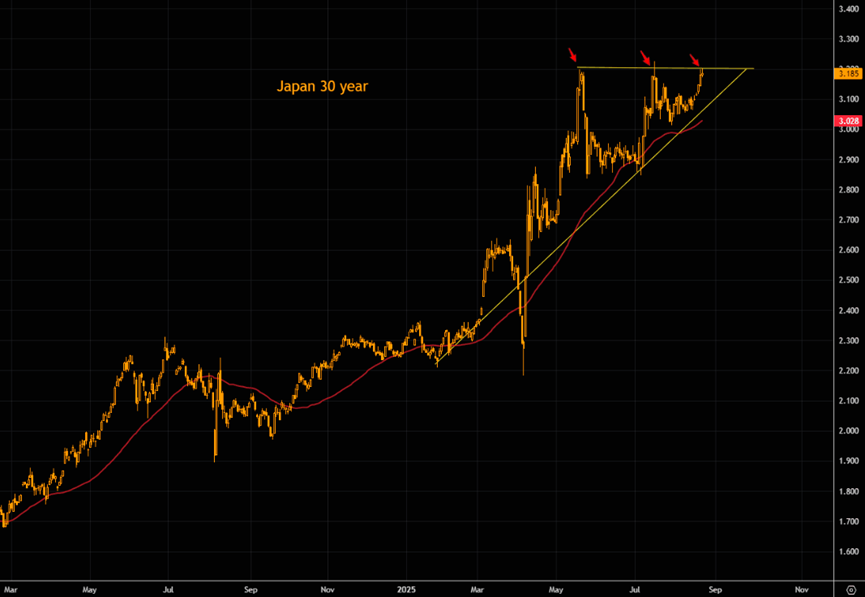
Group 1: Domestic Financial Indicators - The social financing scale increased by 23.99 trillion yuan in the first seven months, with M2 balance growing by 8.8% year-on-year as of the end of July [2] - The People's Bank of China reported that the M2 balance reached 329.94 trillion yuan, reflecting a stable monetary policy aimed at supporting the real economy [2] - The central bank is guiding financial institutions to increase credit support for the service consumption sector through loan interest subsidy policies [2] Group 2: Government Bonds and Debt Market - The National Development and Reform Commission announced the allocation of 188 billion yuan in special long-term bonds to support equipment renewal investments across various sectors, impacting over 8,400 projects and driving total investment exceeding 1 trillion yuan [3] - The bond market showed a warming trend, with the yield on 10-year government bonds decreasing by 0.75 basis points to 1.7200% as of 20:00 on August 13 [8][9] - The bond auction results indicated a lack of demand for Japanese government bonds, with the 5-year bond auction showing the lowest demand since 2020, leading to a rise in yields [4] Group 3: Commodity Market Movements - International crude oil futures prices continued to decline, with WTI and Brent crude oil prices falling to $62.65 and $65.63 per barrel, respectively [5] - COMEX gold futures increased by 0.24% to $3,407.10 per ounce, while NYMEX natural gas prices rose by 1.33% to $2.819 per million British thermal units [5] Group 4: Convertible Bonds Market - The convertible bond market saw a collective rise, with major indices increasing by 0.68% to 0.69% on August 13, alongside a trading volume surpassing 100 billion yuan [19] - A total of 456 convertible bonds were traded, with 348 experiencing price increases, including a notable 20% rise in Duyuan Convertible Bond [19][20]
7月金融数据解读:低基数+权益上涨,存款继续修复
Huachuang Securities· 2025-08-14 01:44
1. Report Industry Investment Rating No relevant content provided. 2. Core Viewpoints - In July 2025, new RMB loans decreased by 50 billion yuan, with a year - on - year decrease of 310 billion yuan, and the credit balance growth rate dropped to 6.9%. New social financing scale reached 1.16 trillion yuan, with a year - on - year increase of 389.2 billion yuan, and the stock growth rate of social financing rose from 8.9% to 9%. The year - on - year growth rate of M2 increased from 8.3% to 8.8%, and the growth rate of the new - caliber M1 increased from 4.6% to 5.6%. Overall, July's credit performance was lower than market expectations, with bills being the main support. Among social financing sub - items, government bonds increased by 555.9 billion yuan year - on - year, supporting the social financing growth rate to remain high. In terms of deposits, under the low - base effect, the M1 growth rate continued to rise, and M2 was mainly driven by non - bank deposits [5][8]. 3. Summary by Related Catalogs 3.1 Credit: Both the household and corporate sectors performed mediocrely - **Household Sector**: In July, both short - term and medium - to - long - term loans were relatively weak, with a combined decrease of 489.3 billion yuan. Short - term loans decreased by 382.7 billion yuan, 167.1 billion yuan less than the same period last year, possibly due to the overdraft effect of the June shopping festival. Medium - to - long - term credit decreased by 110 billion yuan, 120 billion yuan less than the same period last year. The year - on - year growth rate of the trading area of commercial housing in 30 large - and medium - sized cities was - 18.6%, and the decline was larger than last month. The trading of second - hand houses was relatively weak, and medium - to - long - term household loans showed negative growth again since April [2][10]. - **Corporate Sector**: In July, corporate medium - to - long - term loans decreased by 260 billion yuan, 390 billion yuan more than the same period last year. The growth rate of the loan balance dropped slightly to 6.9%. Existing policy tools had limited driving effects on corporate loans, and subsequent policy - based financial tools might support corporate medium - to - long - term loans. Corporate short - term loans decreased by 550 billion yuan, basically the same as last year. Bill financing increased by 871.1 billion yuan, 312.5 billion yuan more than the same period last year. With the weak loan issuance, the demand for bills to "fill the gap" increased significantly [2][15][16]. 3.2 Social Financing: Government bonds still provided support, and the willingness to issue corporate bonds continued - **Government Bonds**: In July, the issuance scale of government bonds was large, with a new increase of 1.24 trillion yuan, 555.9 billion yuan more than the same period last year. According to the current issuance plan, government bonds would still support social financing in July, but from August to the end of the year, they might see a year - on - year decrease. If no additional bonds were issued at the end of the year, the peak of the annual social financing growth rate might appear in July [3][17]. - **Corporate Bonds**: In July, the willingness to issue corporate bonds was still strong, with a new increase of 27.91 billion yuan, 7.55 billion yuan more than the same period last year. With relatively low bond yields, the willingness to issue bonds increased seasonally, which might also "siphon" corporate loans. Un - discounted bills decreased by 16.39 billion yuan, close to the same period last year, and off - balance - sheet bills continued to be transferred to on - balance - sheet [3][21]. 3.3 Deposits: The growth rates of M1 and M2 continued to rise - **M1**: In July, the new - caliber M1 decreased by 2.9 trillion yuan, 832.4 billion yuan more than the same period in 2024, which was at a relatively high seasonal level. The wealth effect of the equity market supported the activation of funds to some extent, and the year - on - year reading of M1 increased significantly from 4.6% to 5.6%. - **M2**: Among the sub - items of M2, non - bank deposits were the main support. Driven by the recovery of the equity market, non - bank deposits increased by 2.14 trillion yuan in July, 1.39 trillion yuan more than the same period in 2024. After the cross - quarter in July, corporate deposits showed an outflow state, decreasing by 1.46 trillion yuan, but due to the low - base effect of the general deposit outflow after manual interest compensation in 2024, the decrease was 320.9 billion yuan less year - on - year [3][23][30].