环保

Search documents
申万公用环保周报:广东上调火电容量电价,债券征税提升红利资产配置价值-20250804
Shenwan Hongyuan Securities· 2025-08-04 07:44
Investment Rating - The report maintains a "Buy" rating for several companies in the power and gas sectors, including China Power, Huaneng International, and Kunlun Energy, among others [49][51]. Core Insights - The adjustment of capacity prices for coal and gas power plants in Guangdong is expected to improve profitability for gas power plants significantly, with capacity prices increasing by 65% to 296% depending on the type of gas plant [4][10]. - The rapid development of renewable energy installations in Guangdong has increased the reliance on coal power for flexible peak regulation, with renewable energy capacity reaching 59.13 million kW by the end of 2024, accounting for 26.6% of the total installed capacity [9][10]. - The report highlights the geopolitical factors affecting natural gas prices, with European gas prices experiencing a slight increase due to renewed geopolitical tensions, while U.S. gas prices remain stable [13][20]. Summary by Sections 1. Power Sector - Guangdong has raised the capacity price for coal power plants to 165 RMB per kW per year starting January 1, 2026, and for gas power plants, prices will range from 165 to 396 RMB per kW per year starting August 1, 2025 [8][10]. - The increase in capacity prices is expected to provide annual revenue boosts of 1.72 billion RMB for Guangdong Power A and 350 million RMB for Guangzhou Development [11]. 2. Gas Sector - As of August 1, 2025, the Henry Hub spot price is $3.00/mmBtu, while the TTF spot price in Europe is €32.95/MWh, reflecting a week-on-week increase of 2.74% [13][14]. - The report notes that the domestic LNG price is 4388 RMB per ton, showing a week-on-week decrease of 1.06% [32]. 3. Market Review - The gas sector outperformed the Shanghai and Shenzhen 300 index, while the public utility, power, and environmental sectors lagged behind [39]. 4. Company and Industry Dynamics - The National Energy Administration has released guidelines to enhance the management of natural gas pipeline transportation prices, promoting transparency and optimizing resource allocation [37]. - The report discusses the performance of key companies, including Huaneng International and Inner Mongolia Huadian, with varying revenue and profit trends [44].




A股市场大势研判:市场全天震荡调整,三大指数小幅收跌
Dongguan Securities· 2025-08-04 03:24
Market Overview - The A-share market experienced a day of fluctuation with all three major indices closing slightly lower, specifically the Shanghai Composite Index down by 0.37%, the Shenzhen Component down by 0.17%, and the ChiNext Index down by 0.24% [1][3][5] - The total trading volume in the Shanghai and Shenzhen markets was 1.60 trillion yuan, a decrease of 337.7 billion yuan compared to the previous trading day [5] Sector Performance - The top-performing sectors included Environmental Protection (up 0.88%), Media (up 0.82%), Light Industry Manufacturing (up 0.65%), Computer (up 0.60%), and Electric Power Equipment (up 0.54%) [2][3] - Conversely, the worst-performing sectors were Oil and Petrochemicals (down 1.79%), National Defense and Military Industry (down 1.47%), Steel (down 1.26%), Communication (down 1.06%), and Comprehensive (down 0.96%) [2][3] Concept Index Performance - The leading concept indices included Animal Vaccines (up 2.22%), DRG/DIP (up 1.87%), BC Battery (up 1.71%), Avian Influenza (up 1.62%), and ERP Concepts (up 1.61%) [2][3] - The lagging concept indices were related to the China Shipbuilding Industry (down 2.54%), Domestic Aircraft Carriers (down 1.45%), Civil Explosives (down 1.19%), Combustible Ice (down 1.14%), and National Fund Holdings (down 0.86%) [2][3] Future Outlook - The report indicates that despite the short-term technical adjustments in the market, the core logic supporting the A-share market remains unchanged, with recommendations to focus on sectors such as Machinery Equipment, Consumer Goods, TMT (Technology, Media, and Telecommunications), and Large Financials [5]
量化择时周报:模型提示情绪进一步提升,密切关注后续指标波动-20250804
Shenwan Hongyuan Securities· 2025-08-04 03:13
Group 1 - The market sentiment index has risen to 3.2, up from 1.8 the previous week, indicating a bullish outlook, but caution is advised as high sentiment levels can lead to sensitive directional changes [10][4][8] - The price-volume consistency indicator has increased, suggesting higher capital activity and reduced divergence in market sentiment, while the financing ratio continues to decline [13][4] - The total trading volume for the week remained high, with the peak on Thursday at 1961.849 billion RMB and a significant drop on Friday to 1619.884 billion RMB [17][4] Group 2 - The industry performance shows a clear upward trend in anti-involution related sectors, with basic chemicals and electronics leading the gains, while automotive, environmental, and oil sectors lag behind [26][29] - The short-term scores for most industries have generally decreased, with computer, media, communication, and food and beverage sectors showing slight increases [33][34] - The model indicates a preference for small-cap growth styles, with the RSI model also suggesting a growth style advantage, although the 5-day RSI has decreased compared to the 20-day RSI [36][37]
股市必读:8月1日旺能环境发布公告,股东增持164.66万股
Sou Hu Cai Jing· 2025-08-04 00:57
Key Points - As of August 1, 2025, Wangneng Environment (002034) closed at 17.07 yuan, up 1.13% with a turnover rate of 0.54% and a trading volume of 23,500 shares, totaling a transaction amount of 40.02 million yuan [1] - On August 1, the fund flow for Wangneng Environment showed a net inflow of 122,100 yuan from main funds, accounting for 0.31% of the total transaction amount; retail investors had a net inflow of 253,590 yuan, while speculative funds had a net outflow of 2.658 million yuan [1][3] - On August 1, Wangneng Environment announced that its shareholder, Meixin Da Group Co., Ltd., increased its holdings by 1.6466 million shares from July 1 to July 31, 2025, representing 0.3794% of the company's total share capital, during which the stock price rose by 0.54% [1][3] - Wangneng Environment's share repurchase plan was approved on November 26, 2024, allowing the company to repurchase shares at a price not exceeding 22.00 yuan per share, with a total repurchase amount between 100 million yuan and 200 million yuan [1] - As of July 31, 2025, the company had repurchased a total of 9,366,000 shares, accounting for 2.16% of the total share capital, with a total transaction amount of 149,979,140 yuan [1][3] - Meixin Da Group's plan to increase its holdings started on March 13, 2025, with a total investment of no less than 100 million yuan and no more than 200 million yuan, having cumulatively increased its holdings by 4,953,356 shares, which is 1.14% of the total share capital, with a total transaction amount of 86,664,402 yuan as of July 31, 2025 [2][3]

可转债周度追踪:8月十大转债-2023年8月-20250803
ZHESHANG SECURITIES· 2025-08-03 12:48
Group 1: Report Industry Investment Rating No relevant content provided Group 2: Core Views of the Report - In August, the liability side of pure bonds is likely to stabilize, and the medium - to long - term upward trend of the equity market remains unchanged. The convertible bond market is expected to present a state of "coexistence of opportunities and risks". It is recommended to explore opportunities from three aspects: anti - involution, underlying stock elasticity, and dividend allocation [1][2][12] - In the past week, the equity market adjusted, and convertible bonds adjusted more significantly. The adjustment of the convertible bond market was partly driven by profit - taking of some funds, and the increased volatility of the pure bond market also led to instability in the liability side of convertible bonds [2][7] - In July, absolute - return funds partially took profits, while public funds and other institutions increased their holdings. The inflow of funds supported the valuation expansion of the convertible bond market in July [2][7] - The valuation expansion of convertible bonds in July reflected the inflow of funds and market recognition, and the option value of convertible bonds was re - priced during the continuous breakthrough of the equity market [2][7] - The hot market sentiment can be seen from the performance of new bonds. In July, 9 convertible bonds were listed, the highest number since 2025. The market efficiently digested the large - scale circulation of Guanghe Convertible Bonds, indicating high demand from investors for new bonds [2][7] Group 3: Summary According to the Directory 1. Convertible Bond Weekly Thinking - The equity market adjusted in the past week, with convertible bonds adjusting more. The Shanghai Composite Index dropped from 3600 to around 3550. The Wind Convertible Bond Equal - Weighted Index fell 0.92% last week, and the convertible bond underlying stock equal - weighted index fell 0.51% [2][7] - Absolute - return funds partially took profits in July, while public funds, fund special accounts, and securities asset management significantly increased their holdings of convertible bonds. The proportion of convertible bonds held by public funds, fund special accounts, and securities assets exceeded 40%, supporting the valuation expansion of the convertible bond market in July [2][7] - The valuation expansion of convertible bonds in July reflected the inflow of funds and market recognition, and the option value of convertible bonds was re - priced. The performance of new bonds also showed the hot market sentiment [2][7] - Looking ahead to August, the convertible bond market will face a relatively mild stock - bond market, presenting a state of "coexistence of opportunities and risks". It is recommended to focus on three aspects: anti - involution industries, underlying stocks with high growth volatility and low - premium convertible bonds, and low - volatility bottom - position convertible bonds for dividend asset allocation. The top ten convertible bonds recommended for August are Ran 23 Convertible Bond, Hongcheng Convertible Bond, etc. [2][12] 2. Convertible Bond Market Tracking 2.1 Convertible Bond Market Conditions - The table shows the performance of various convertible bond indexes in different time periods, such as the Wind Convertible Bond Energy Index, Wind Convertible Bond Material Index, etc. For example, the Wind Convertible Bond Energy Index was - 3.11 in the past week, 1.50 in the past two weeks, etc. [15] 2.2 Convertible Bond Individual Bonds No specific content provided other than the chart indication 2.3 Convertible Bond Valuation No specific content provided other than the chart indication 2.4 Convertible Bond Price No specific content provided other than the chart indication
第31周:粤陇调高容量电价增强盈利稳定,1H25新能源装机规模持续新突破
Huafu Securities· 2025-08-02 13:46
Investment Rating - The report maintains a "stronger than market" rating for the public utility sector [8]. Core Views - The adjustment of capacity electricity prices in Guangdong and Gansu provinces is expected to enhance the profitability stability of thermal power and promote its transition to flexible adjustment power sources, reinforcing its role in the new power system [3][20]. - The energy supply and demand are relatively relaxed in the first half of 2025, with a rapid acceleration in green transformation, as renewable energy continues to dominate new installations [4][25]. Summary by Sections 1. Investment Recommendations - The report recommends Jiangsu Guoxin in the thermal power sector, cautiously recommends Sheneng Co. and Zhejiang Energy Power, and suggests attention to Funiu Co. and Huadian International. In the nuclear power sector, it cautiously recommends China Nuclear Power and China General Nuclear Power. For the green energy sector, it suggests attention to Three Gorges Energy and Jiangsu New Energy, with cautious recommendations for Longyuan Power, Zhejiang New Energy, and Zhonglv Electric. In the hydropower sector, it recommends Changjiang Power and cautiously recommends Huaneng Hydropower and Qianyuan Power, while suggesting attention to Guotou Power, Chuan Investment Energy, and Zhejiang Fu Holdings [4]. 2. Industry Dynamics - On July 29, the Guangdong Provincial Development and Reform Commission announced an increase in capacity electricity prices for coal and gas power units, with coal power capacity price adjusted to 165 yuan per kilowatt per year (including tax) starting January 1, 2026. The gas power price will be adjusted based on unit type starting August 1, 2025 [3][39]. - In Gansu, the initial standard for coal power capacity price is set at 330 yuan per kilowatt per year for two years, with a coverage ratio increase from 30% to 100% [20][21]. 3. Renewable Energy Developments - In the first half of 2025, renewable energy accounted for nearly 60% of the total installed capacity in China, with new installations reaching 268 million kilowatts, a year-on-year increase of 99.3% [4][25]. - Renewable energy generation reached 1,799.3 billion kilowatt-hours, accounting for 39.7% of total generation, with wind and solar power generation increasing by 27.4% year-on-year [26][31].
桂浩明:险资缘何频繁举牌上市公司?
Zheng Quan Shi Bao· 2025-08-01 23:52
Group 1 - Insurance companies are increasingly investing in the stock market due to low interest rates and reduced profitability in bond investments, leading to a shift from real estate investments to equities [1][2] - In 2023, insurance capital made 9 equity stakes in 8 listed companies, which increased to 20 stakes in 18 companies in 2024, and 21 stakes in 17 companies in the first half of 2025, indicating a significant rise in investment activity [2] - The focus of insurance capital has shifted towards well-performing companies with high dividend yields, moving from short-term trading to long-term investments [2][3] Group 2 - Insurance capital is increasingly investing directly in equities of public utilities and environmental sectors, reflecting a diversification of investment strategies [2] - The trend of insurance capital making equity stakes is particularly prominent in H-shares of mainland companies listed in Hong Kong, driven by the AH price difference and the characteristics of the H-share market [2] - The frequent equity stakes taken by insurance capital indicate a growing demand for market influence and pricing power among institutional investors [3]

指数普跌,3307只个股收涨!A股下周怎么走?
Guo Ji Jin Rong Bao· 2025-08-01 15:57
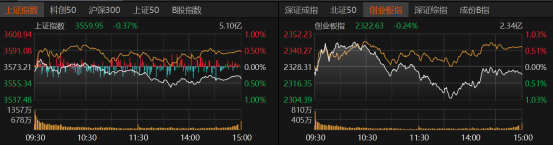
Core Viewpoint - The A-share market experienced a structural divergence on August 1, with indices declining while a majority of individual stocks rose, indicating a mixed performance between large-cap and small-cap stocks [1][8]. Market Performance - On the first trading day of August, the Shanghai Composite Index fell by 0.37% to 3559.95 points, the ChiNext Index decreased by 0.24% to 2322.63 points, and the Shenzhen Component Index slightly dropped by 0.17% [2]. - The total trading volume in the A-share market was 1.62 trillion yuan, down by 0.34 trillion yuan from the previous trading day, reflecting a cautious attitude among investors [2][8]. Sector Performance - The market saw a mixed performance across sectors, with environmental protection, media, light manufacturing, computer, and electric equipment sectors leading the gains, although none exceeded a 1% increase [3][4]. - Conversely, the oil and petrochemical sector declined by nearly 2%, while defense, steel, and telecommunications sectors fell by over 1% [5][8]. Individual Stock Highlights - A total of 3307 stocks rose, with 49 hitting the daily limit up, while 1909 stocks fell, including 9 hitting the daily limit down [2][3]. - Notable stocks that reached their daily limit up included Helen Piano, Songyang Resources, and Kain Co., among others in the light manufacturing sector [3]. Investment Insights - Analysts suggest that the current market is characterized by a policy-driven structural trend, with a focus on selecting fundamentally strong stocks in sectors benefiting from government policies, particularly in semiconductors and AI computing [8][10]. - The market is expected to continue exhibiting structural characteristics, with small-cap growth stocks outperforming larger-cap stocks amid a backdrop of policy support and improving liquidity [10].

逾70家港股公司宣布中期分红,金额超500亿港元
Zheng Quan Shi Bao· 2025-08-01 14:57
Core Viewpoint - Hong Kong-listed companies are actively distributing dividends to reward investors, with over 70 companies announcing interim dividend plans totaling more than 500 billion HKD, enhancing the attractiveness of the Hong Kong stock market in a low-interest-rate environment [1][3][5]. Dividend Distribution - As of now, 74 Hong Kong-listed companies have distributed interim dividends, amounting to approximately 563.60 billion HKD, with a slight decrease in total dividend amount compared to the previous year [3]. - HSBC Holdings announced a significant dividend plan, distributing 138.39 billion HKD in the first quarter and an additional 136.75 billion HKD for the fiscal year ending December 31, 2025, ranking first in dividend distribution [3]. - Other notable companies include Brilliance China and CATL, with dividends exceeding 50 billion HKD, and several companies like Hong Kong Telecom and Hang Seng Bank distributing no less than 20 billion HKD [4]. Market Attractiveness - The trend of high dividends is expected to enhance the market's appeal, especially in the context of a low-interest-rate environment and increasing asset allocation difficulties [1][5]. - Insurance companies have been actively acquiring shares in Hong Kong banks and public utility companies, with 21 acquisitions recorded this year, surpassing the total from the previous three years [6]. - High dividends from Hong Kong-listed companies are attracting significant attention from institutional investors, particularly in light of the ongoing low-interest-rate environment [6][8]. Future Projections - Goldman Sachs projects that by the end of 2025, the total dividend distribution from onshore and offshore Chinese companies will reach 3 trillion RMB, marking a historical high [1][6]. - In 2024, over 4,300 Chinese companies listed in mainland China, Hong Kong, and the U.S. are expected to distribute 2.7 trillion RMB in dividends, reflecting a 10% increase from the previous year [7]. - The trend of increasing dividends is supported by national policies aimed at enhancing cash dividend regulations, with a notable rise in the dividend payout ratio [7].
逾70家港股公司宣布中期分红,金额超500亿港元
证券时报· 2025-08-01 14:54
Core Viewpoint - Hong Kong-listed companies are actively distributing dividends to reward investors, with over 70 companies announcing interim dividend plans totaling more than 500 billion HKD, indicating a trend towards enhancing market attractiveness in a low-interest-rate environment [1][2][4]. Dividend Distribution - As of now, 74 Hong Kong-listed companies have distributed interim dividends, amounting to approximately 563.60 billion HKD, which shows a decrease in total dividend amount compared to the same period last year, despite a similar number of companies participating [4]. - HSBC Holdings leads in dividend distribution, announcing an additional dividend plan of approximately 136.75 billion HKD, following a first-quarter distribution of 138.39 billion HKD [5][6]. - Other notable companies include Brilliance China and CATL, each distributing over 50 billion HKD in dividends [7]. Market Attractiveness - The ongoing low-interest-rate environment and increasing asset allocation difficulties are expected to enhance the attractiveness of the Hong Kong stock market, with Goldman Sachs projecting a record dividend payout of 3 trillion RMB by the end of 2025 from Chinese companies [2][11]. - Historical data indicates that traditional sectors such as finance, energy, and consumer goods are the primary contributors to dividend payouts in the Hong Kong market [9]. Insurance Companies' Activity - Insurance companies have been actively acquiring stakes in Hong Kong-listed banks and utility companies, with 21 acquisitions reported this year, surpassing the total from the previous three years combined [10]. - The pressure from low-interest rates on asset allocation is driving insurance capital to focus on high-dividend stocks, which are appealing due to their stable cash flows [11][14]. Future Outlook - The trend of high dividends is expected to continue, with a significant influx of non-public funds into high-dividend assets, particularly in the banking, energy, and telecommunications sectors [14]. - The anticipated decline in investment returns across various domestic assets may further solidify the appeal of Hong Kong stocks for mainland investors, especially those not subject to dividend taxes [13][14].