汽车

Search documents
中原证券晨会聚焦-20260226
Zhongyuan Securities· 2026-02-25 23:34
Core Insights - The report highlights the performance of various sectors in the A-share market, indicating a mixed trend with certain industries like battery and communication resources leading the gains while others like tourism and media lag behind [6][9][10] - The report emphasizes the importance of macroeconomic data and policy changes in shaping market expectations and investment strategies [8][12][20] Domestic Market Performance - The Shanghai Composite Index closed at 4,147.23 with a gain of 0.72%, while the Shenzhen Component Index closed at 14,475.87 with a gain of 1.29% [4] - The average P/E ratios for the Shanghai Composite and ChiNext are 16.93 and 53.12 respectively, indicating a favorable long-term investment environment [8][12] International Market Performance - Major international indices such as the Dow Jones and S&P 500 experienced declines of 0.67% and 0.45% respectively, reflecting a cautious global market sentiment [5] Industry Analysis - The aerospace and media sectors are noted for their strong performance, while the film industry faced a disappointing Spring Festival box office, with total revenue down 40.09% year-on-year [14][15] - The automotive industry is projected to benefit from policies promoting vehicle upgrades, with a target of replacing 500,000 vehicles by the end of 2026 [6][20] Investment Recommendations - The report suggests focusing on sectors such as electric batteries, communication devices, and aerospace for short-term investment opportunities due to their current market strength [12][20] - In the automotive sector, the report recommends monitoring companies involved in intelligent driving and robotics, as these areas are expected to see significant growth [20][28] Key Data Updates - The report notes that the automotive industry saw stable production and sales figures in January 2026, with a total of 245,000 vehicles produced and 234,700 sold [18] - The battery sector reported a 3.31% increase in the index, with a total of 94,500 electric vehicles sold in January, indicating a slight year-on-year increase [37]

印度汽车巨头内讧,董事长快垮台了
汽车商业评论· 2026-02-25 23:04
Core Viewpoint - A power struggle is emerging within the Tata Group, particularly regarding the reappointment of Chairman Natarajan Chandrasekaran, which has been delayed amid internal conflicts and differing strategic visions [4][10][19]. Group 1: Leadership and Governance - Natarajan Chandrasekaran's current term is set to end in February 2027, but his reappointment is contested by Noel Tata, the chairman of the Tata Trusts, which holds a significant stake in Tata Sons [6][8]. - The Tata Trusts, which own 66% of Tata Sons, represent the true power center of the Tata empire, creating governance challenges due to the conflict between their non-profit mission and commercial objectives [8][13]. - Noel Tata's opposition to Chandrasekaran's reappointment is rooted in concerns over the latter's age and the strategic direction of the group, particularly regarding its financial performance and debt levels [10][20][19]. Group 2: Financial Performance and Strategic Concerns - Tata Group's debt has surged by 83% as it pursues high-growth strategies, with significant losses reported by key subsidiaries, including a $1.6 billion annual loss for Air India [20]. - Jaguar Land Rover has faced operational challenges, including production halts, leading to the lowest UK automotive output in 70 years [21]. - Tata Consultancy Services (TCS), the group's cash engine, has seen a 14% decline in net profit and laid off 12,000 employees due to disruptions caused by artificial intelligence [22]. Group 3: Internal Conflicts and Future Directions - Noel Tata has expressed dissatisfaction with the perceived neglect of the Tata Trusts in investment decisions, highlighting a lack of adherence to governance protocols regarding large investments [24]. - The ongoing internal power struggle is complicated by the differing views of the SP Group, which advocates for Tata Group's public listing to enhance governance and liquidity, contrasting with Noel Tata's stance against it [45][48]. - The leadership dynamics between Chandrasekaran and Noel Tata are characterized by a complex interplay of authority, with Noel holding significant influence over companies that report to Chandrasekaran [30][31]. Group 4: Historical Context and Transformation - Chandrasekaran is the first non-family member to lead Tata Group, a position that has both empowered and isolated him within the traditionally family-led organization [34][35]. - Under his leadership, Tata Group has seen substantial revenue growth, with revenues increasing from 6 trillion rupees in March 2017 to 11.9 trillion rupees in March 2025 [38]. - The group is undergoing a significant transformation, with investments of 5.5 trillion rupees aimed at future-oriented businesses, including a semiconductor manufacturing facility expected to begin operations by the end of 2026 [40].


解决“集货”问题,助力冀货出海
Xin Lang Cai Jing· 2026-02-25 23:04
Group 1 - The core focus of the article is on addressing the "consolidation of goods" issue to facilitate the export of Hebei products, emphasizing the need for specialized services to support small and medium-sized enterprises in international markets [1][3] - The Hebei provincial government aims to enhance the business environment by integrating resources for warehousing, transportation, and trade, thereby improving the efficiency of goods consolidation and export [3][4] - The province's key characteristic industrial clusters are projected to achieve a revenue of 3.86 trillion yuan by 2025, with a year-on-year growth of 7.0%, and profits of 199.41 billion yuan, reflecting a 16% increase [1][2] Group 2 - Hebei Land Port Group has established cross-border warehouses to serve local characteristic industrial clusters, streamlining the collection and transportation of goods to international ports [2][4] - The provincial government has outlined six specific measures to support the export of Hebei products, including the establishment of overseas service stations and optimization of customs processes [6][7] - The article highlights the importance of building cross-border e-commerce logistics bases and fostering collaboration between enterprises and e-commerce platforms to enhance export capabilities [5][6]
金十数据全球财经早餐 | 2026年2月26日
Jin Shi Shu Ju· 2026-02-25 23:02
Group 1 - CME Group temporarily suspended trading in metal and natural gas futures and options due to "technical issues" [3] - Nvidia reported strong Q4 earnings, stating that demand for computing power remains high [3][16] - The U.S. Trade Representative announced that the U.S. will issue a notice regarding a 15% tariff [3][16] Group 2 - The market sentiment improved, leading to a slight decline in the U.S. dollar index, which closed at 97.67, down 0.01% [4] - Gold prices fluctuated, briefly surpassing the $5200 mark before closing at $5164.96 per ounce, up 0.41% [4][8] - WTI crude oil prices fell by 0.76%, closing at $65.56 per barrel, while Brent crude oil decreased by 0.28%, closing at $70.87 per barrel [4][8] Group 3 - U.S. stock indices rose, with the Dow Jones up 0.63%, S&P 500 up 0.81%, and Nasdaq up 1.26% [5] - European stock indices also saw gains, with Germany's DAX30 up 0.76%, UK's FTSE 100 up 1.18%, and France's CAC40 up 0.47% [5] Group 4 - The Hang Seng Index closed up 0.66% at 26765.72 points, with a trading volume of 2367.65 million HKD [6] - The A-share market saw all three major indices rise over 1% in the morning, with the Shanghai Composite Index closing up 0.72% [7] Group 5 - The U.S. government is setting limits on the new Iran nuclear agreement, prohibiting expiration clauses [13] - Trump stated that tariffs will continue and emphasized the need for Congress to take no action on tariff issues [14]

英伟达财报超预期 盘后大涨4%;上海发布楼市“沪七条”;刘强东回应造游艇丨每经早参
Mei Ri Jing Ji Xin Wen· 2026-02-25 22:18
Group 1 - The U.S. stock market saw all three major indices rise, with the Nasdaq up 1.26%, S&P 500 up 0.81%, and Dow Jones up 0.63%, driven by gains in large tech stocks like Netflix, Microsoft, and Meta [4] - International oil prices experienced slight fluctuations, with WTI crude oil down 0.29% at $65.44 per barrel, while Brent crude oil rose 0.27% to $70.77 per barrel [5] - International gold prices increased, with spot gold up 0.73% at $5,170.21 per ounce, and COMEX gold futures up 0.02% at $5,177.30 per ounce [5] Group 2 - Huawei is set to hold an innovative product launch event in Madrid, Spain, on February 26, themed "Now is Your Run" [3] - The Chinese government is pushing for a more efficient use of water resources, aiming for advanced levels of water resource conservation and utilization by 2035 [7] - The Shanghai government announced a reduction in housing purchase restrictions to better meet residents' housing needs and promote a stable real estate market [8] Group 3 - Meizu's mobile phone business has effectively ceased operations and is set to officially delist in March 2026, while its FlymeAuto business will operate independently [13] - Hong Kong Stock Exchange is considering expanding the scope of IPO confidentiality applications to enhance market competitiveness [14] - JD.com's founder Liu Qiangdong is entering the yacht industry, having received orders for five large catamarans, each priced at an average of €60 million [15] Group 4 - Nvidia reported fourth-quarter revenue of $68.1 billion, a 73% year-over-year increase, exceeding market expectations [23] - Huace Film and Television denied rumors of dissolving its film department, stating that operations are normal despite previous losses [24]







2025年中德货物进出口1.51万亿元人民币
Ren Min Ri Bao· 2026-02-25 22:13
Core Insights - In 2025, the trade volume between China and Germany reached 1.51 trillion RMB, marking a 5.2% increase from 2024, with China exporting 846.3 billion RMB and importing 664.3 billion RMB from Germany, reaffirming Germany as China's largest trading partner in Europe [1] Trade Volume and Growth - The total trade volume between China and Germany in 2025 was 1.51 trillion RMB, a growth of 5.2% compared to 2024 [1] - Exports from China to Germany amounted to 846.3 billion RMB, while imports from Germany totaled 664.3 billion RMB [1] Product Categories - The import and export of electromechanical products between China and Germany reached 1.07 trillion RMB, representing a 5.8% increase from 2024 and accounting for 70.8% of the total trade volume [1] - Specific product exports included automobiles and parts at 131.5 billion RMB (12.3% of electromechanical trade), electronic components at 74 billion RMB, computers and parts at 73.8 billion RMB, and measuring and analytical instruments at 59.8 billion RMB [1] - In the pharmaceutical sector, imports and exports of medicinal materials and drugs reached 65.7 billion RMB, while basic organic chemicals totaled 18.4 billion RMB [1] - Emerging products such as 3D printers and industrial robots had trade volumes of 2.6 billion RMB and 1 billion RMB, respectively [1] Strategic Partnership - China and Germany are described as comprehensive strategic partners, with deep industrial integration and mutually beneficial economic cooperation, providing tangible benefits to both countries' enterprises and citizens [1]
小鹏机器人摔倒事件及市场反应:股价短期承压,长期关注技术落地与销量
Xin Lang Cai Jing· 2026-02-25 21:28
Core Viewpoint - The incident involving the fall of the Xiaopeng IRON humanoid robot has raised concerns about the maturity of its technology, coinciding with a significant decline in Xiaopeng Motors' vehicle deliveries in January 2026 [1][2]. Stock Performance - Following the robot's fall on February 1, 2026, Xiaopeng Motors' stock dropped by 8.29% in the US market and 6.77% in the Hong Kong market [1]. - By February 25, 2026, Xiaopeng Motors' US stock closed at $18.15, down 3.10%, while the Hong Kong stock closed at HKD 71.10, up 0.64% [1]. - On the same day, the overall sentiment for Chinese stocks improved, with the Nasdaq Golden Dragon China Index rising by 1.37%, and Xiaopeng Motors saw a daily increase of 6.78% [1]. Company Fundamentals - Xiaopeng Motors has set a sales target of 550,000 to 600,000 vehicles for 2026, representing a growth of 28% to 40% compared to 2025 [1]. - The delivery volume in January 2026 was only 20,000 units, which is less than half of the monthly average target, raising concerns about technology implementation and resource allocation [1]. Strategic Focus - The company is shifting its strategic focus towards "physical AI" and aims to achieve mass production of humanoid robots by the end of 2026 [2]. - The public mishap with the robot may intensify investor scrutiny regarding the feasibility of the technology and the company's business focus [2]. - The robot incident and the decline in vehicle sales in January 2026 have created a feedback loop that pressures stock prices, although market reactions are also influenced by the overall sentiment towards Chinese stocks and the company's new product cycles [2].

德企“抢名额”访华说明了什么
Xin Lang Cai Jing· 2026-02-25 21:01
Core Insights - The visit of German Chancellor Merz to China from February 25 to 26 marks his first official trip since taking office, highlighting the strong interest and confidence of the German business community in the Chinese market [2][3] Group 1: Economic Cooperation - Sino-German trade has consistently exceeded $200 billion in recent years, with bilateral investment stock surpassing $65 billion, accounting for nearly one-fourth of the total trade between China and the EU [3] - Over 5,000 German companies have invested in China, with the Chinese market serving as a crucial sales destination and a stable growth area for German enterprises [3] Group 2: Industry Collaboration - The deep integration of Sino-German industrial cooperation provides continuous growth momentum for German companies, moving beyond simple trade to encompass technology, standards, and innovation systems [3] - German companies are increasingly investing in R&D and innovation in China, with the country evolving into a key hub for technological iteration and results transformation [3] Group 3: Open Policy Environment - China's commitment to expanding its open policy provides multinational companies, including those from Germany, with a stable and predictable business environment [4] - A survey indicates that 93% of German companies in China are willing to continue deepening their engagement in the market, driven by China's innovation potential and policy stability [4] Group 4: Positive Signals for Future Cooperation - The participation of approximately 30 top executives from leading German companies alongside Chancellor Merz signals a positive outlook for pragmatic cooperation between Germany and China [4] - German media views Merz's visit as a potential catalyst for revitalizing Sino-German and Sino-European relations, emphasizing the strategic interest in finding like-minded partners for future collaboration [4]

一大波“成都造”汽车今年集中上市
Xin Lang Cai Jing· 2026-02-25 18:57
Group 1 - Chengdu is set to launch several new automotive models in the second half of the year, aiming for an annual production target of over 280,000 units [1] - The city is focusing on transforming its automotive industry with new products, including models from Dongfeng, Jetta, Volvo, Geely, and Hongqi, to enhance both quantity and quality [1][2] - The intelligent connected vehicle industry chain in Chengdu has shown significant growth, with last year's revenue maintaining double-digit growth [2] Group 2 - Chengdu's automotive industry comprises over 1,000 manufacturing enterprises, with a current production capacity of 1.454 million vehicles [2] - By 2025, Chengdu's automotive production is projected to rank 11th among major cities in China, improving by four positions from 2024 [2] - The production of "Chengdu-made" new energy vehicles is expected to increase significantly, with a forecast of 233,000 units in 2025, representing a growth of 181% [2] Group 3 - Chengdu's automotive industry has established a comprehensive structure, including passenger vehicles, commercial vehicles, and intelligent vehicle systems, to support the development of a nationally influential automotive cluster [3] - The city aims for an annual production target exceeding 1 million vehicles by 2026, focusing on a balanced approach to development across various sectors [4] - Chengdu is enhancing its global layout and addressing industry challenges through strategic initiatives, including the introduction of new models and strengthening the supply chain [4] Group 4 - The city is implementing a "smart transformation" in the automotive sector, integrating artificial intelligence and automotive technologies to accelerate development [4] - Chengdu is fostering collaboration within the automotive industry through initiatives like "circle-chain integration" to enhance the local ecosystem and support emerging enterprises [4] - The city is also focusing on achieving a parts supply rate of over 50% this year, emphasizing the importance of core areas such as the "three electric systems" and intelligent driving systems [4]
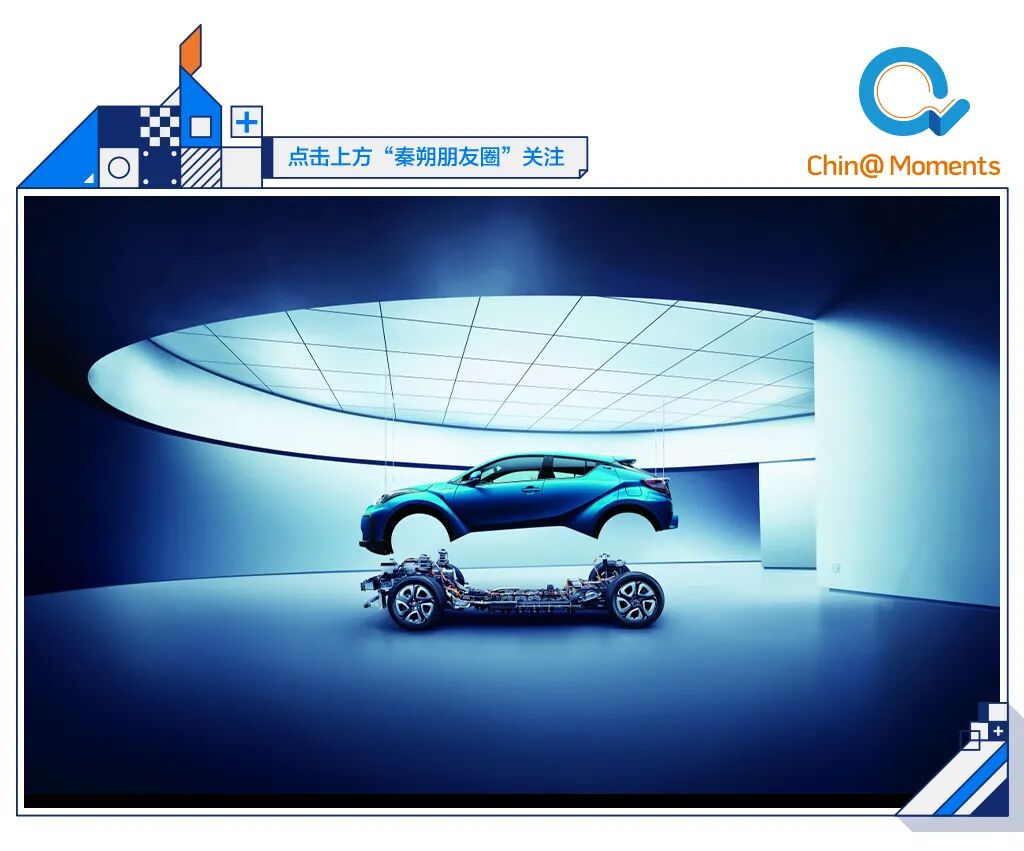
丰田为何没有变成另一个诺基亚?
Xin Lang Cai Jing· 2026-02-25 16:57
Core Viewpoint - Despite the rise of new electric vehicle (EV) manufacturers in China, Toyota remains the global leader in the automotive industry, with significant sales figures that have not been diminished by the competition from EVs [2][4]. Group 1: Sales Performance - In 2025, Toyota's global vehicle sales reached 11.32 million units, significantly surpassing Volkswagen's 8.98 million units, marking Toyota's sixth consecutive year as the world's top seller [2]. - In the U.S. market, Toyota sold 2.518 million vehicles in 2025, an 8% increase from the previous year, with its luxury Lexus brand achieving sales of 370,000 units, up 7.1% [4]. - In China, Toyota sold 1.78 million vehicles in 2025, maintaining its position as the only Japanese brand not to experience a sales decline [6]. Group 2: Market Challenges and Strategies - The U.S. trade war initiated by Trump led to a 25% tariff on Japanese products, which Toyota managed by absorbing most of the costs, resulting in a modest price increase of $280 for U.S. consumers [4]. - Toyota's strategy of not fully transitioning to EVs but continuing to sell gasoline and hybrid vehicles has allowed it to maintain market share despite the rise of EVs [6][10]. Group 3: Consumer Behavior and Preferences - The automotive market differs fundamentally from the smartphone market; cars are high-value, durable goods with long usage cycles, leading consumers to prioritize reliability and safety over new technology [7][8]. - Many consumers are hesitant to switch to EVs due to concerns about reliability, charging infrastructure, and the high cost of ownership, which favors established brands like Toyota [8][10]. Group 4: Global Market Dynamics - The rapid adoption of EVs in China is supported by government subsidies and infrastructure, which are not easily replicable in other markets, limiting the global applicability of China's EV success [10]. - The shift in climate policies in developed countries has created challenges for traditional automakers, but Toyota's focus on hybrid technology positions it well to adapt to these changes [13][15]. Group 5: Product Diversity and Brand Loyalty - Toyota's extensive range of vehicles caters to diverse consumer preferences across different markets, enhancing brand loyalty and reducing the threat from new entrants in the EV space [16]. - The company's ability to innovate and introduce popular models has created a strong customer base, further solidifying its market position against emerging competitors [16].