奢侈品

Search documents
Zara在宜家里卖星巴克
创业邦· 2025-03-30 03:49
Core Viewpoint - Fashion brands are increasingly diversifying their business models by integrating food and beverage services to attract more customers and extend their in-store experience, reflecting challenges in the Chinese market [3][6][7]. Group 1: Zara's New Store Strategy - Zara opened a new flagship store in Nanjing, covering over 2500 square meters and featuring a unique collaboration with local coffee brand UNIUNI, introducing the first Zacaffè in Asia [4][13]. - The store design includes a blend of high-end fashion and local cultural elements, aiming to enhance customer experience and engagement [13][14]. - Despite the grand opening, Zara's performance in China has been declining, with a reduction in store numbers from around 183 to approximately 70 [14][17]. Group 2: Industry Trends and Challenges - The fashion industry is witnessing a trend of integrating dining experiences, with luxury brands like Prada and LV also exploring similar strategies to boost foot traffic and customer retention [6][7][8]. - The overall market for high-end fashion is under pressure, with a notable decline in core consumer groups and a shift towards more affordable alternatives [21][22]. - The Chinese luxury market is experiencing a downturn, with a reported 2% decrease in high-end consumption in 2024, leading brands to rethink their strategies [21][22]. Group 3: Brand Adaptation and Future Outlook - Brands are focusing on larger store formats and multi-functional spaces to attract customers, as seen with plans for LV's expansion in Hong Kong [23][24]. - The rise of local brands and changing consumer preferences are prompting international brands to adapt their strategies in China, emphasizing the importance of local relevance [22][30]. - Despite challenges, companies like Inditex remain committed to the Chinese market, planning further store renovations and expansions to align with local demands [30][31].

坐高铁跑腿,我给「县城贵妇」送北京高档货
36氪· 2025-03-28 14:50
Core Viewpoint - The article explores the evolving consumption patterns in small towns and counties in China, highlighting the role of delivery services in catering to the rising demand for luxury goods among local consumers [4][22]. Group 1: Delivery Service Insights - The delivery service, exemplified by a courier named Zhou Liang, charges around 800 yuan per order for same-day round trips from Beijing to small towns, reflecting the growing demand for high-end products in these areas [5][6]. - Zhou's daily routine involves picking up luxury items, such as a 3000 yuan black swan cake, and delivering them to clients in smaller cities, showcasing the intersection of urban luxury and rural demand [6][9]. - The courier's experience indicates a significant shift in consumer behavior, with small-town residents increasingly seeking premium products that were previously only accessible in larger cities [6][22]. Group 2: Luxury Goods Market - The black swan cake, priced at up to 9999 yuan, is positioned as a luxury item, with its marketing strategy emphasizing exclusivity and high-quality ingredients sourced from developed countries [13][16]. - The brand's marketing tactics, including high-profile endorsements and social media presence, have contributed to its status as a coveted item among affluent consumers [16][22]. - The limited availability of black swan cakes in only a few major cities necessitates delivery services, which have become essential for reaching high-income consumers in smaller markets [16][22]. Group 3: Consumer Behavior Trends - There is a noticeable trend of increased spending among consumers in small towns, with reports of high average spending in local luxury hotels and restaurants [22][24]. - The influence of social media and e-commerce platforms has accelerated the adoption of luxury goods in these regions, as consumers are exposed to new trends and products [22][24]. - Zhou's observations reveal that affluent consumers in smaller cities are often well-informed and discerning, seeking quality and exclusivity in their purchases [20][22].
中金公司 全球研究4Q24业绩回顾:消费篇
中金· 2025-03-25 03:07
Investment Rating - The report indicates a mixed investment outlook for the global consumer market, with strong resilience in high and middle-income consumer categories, while low-income consumers face weakened purchasing power [1][2]. Core Insights - The global consumer market shows significant differentiation, with high and middle-income categories demonstrating strong demand resilience, while low-income consumers are struggling [1][2]. - Essential consumer goods outperformed discretionary goods in Q4, driven by high inflation impacting low-income purchasing power, leading to a preference for cost-effective products [1][3]. - The global beauty market is expected to grow at around 4% in 2025, with emerging markets outperforming developed regions [1][12]. Summary by Sections Global Consumer Market Performance - The performance of global consumer goods companies in Q4 shows significant regional disparities, with North America experiencing flat overall demand and Europe outperforming [2]. - Japan's consumption growth is driven by inflation and inbound tourism, while Southeast Asia and India remain active markets [2]. Essential vs. Discretionary Goods - Essential goods performed better than discretionary goods in Q4 due to macroeconomic uncertainties, with leading companies in various sectors likely to show more pronounced performance [3]. Sportswear and Apparel Trends - The global sportswear industry saw strong growth in outdoor sports segments, while the mass apparel market remains competitive [4]. - U.S. holiday shopping season promotions boosted sales, but a slight decline is expected in 2025 due to macro uncertainties [4]. Beauty Market Dynamics - The beauty market varies significantly across regions, with North America facing pressure in mass cosmetics, while high-end fragrances continue to grow [7]. - The Chinese beauty market is facing challenges, with a projected retail sales decline in 2024 [8]. Food and Beverage Industry Outlook - The global food and beverage industry faces challenges from low-income consumer pressures in developed markets and slowing income growth in emerging markets [10]. - North American food demand is under pressure, while beverage demand remains relatively stable [10][11]. Future Projections - The beauty industry is expected to see a 4% growth rate in 2025, with emerging markets like India and Southeast Asia becoming key performance drivers for overseas beauty companies [12]. - The food and beverage sector is likely to experience a decline in revenue expectations but maintain earnings per share (EPS) stability due to effective cost management [10].

周大福任命首席财务官,传 Prada 或将新加入一名联合创意总监|人事周报
Jing Ji Guan Cha Wang· 2025-03-24 06:30
人事变动 周大福任命首席财务官 中国珠宝集团周大福任命叶家盈(Karen Yih)出任周大福珠宝集团的首席财务官,接替董事局成员兼执行董事郑 炳熙,后者将专注于策略性监督,负责资本管理、投资者关系及公司秘书事务。自4月1日生效。 在新职位上,叶家盈将致力于推动集团在财务管理、长期增长和转型策略(包括财务规划与分析、财务报告、财 务运营管理、风险管理及法律事务)等方面的进展。加入集团之前,她曾担任星巴克中国的首席财务官,领导财 务团队支持可持续的业务增长、提升资本回报,同时确保财务纪律。在她早期的职业生涯中曾在百事可乐亚太区 和星巴克亚太区担任高级领导职位,负责主导进入新市场以及拓展多个国际市场的工作。 传 Prada 或将新加入一名联合创意总监 周大福任命首席财务官,传 Prada 或将新加入一名联合 创意总监|人事周报 Nike首席战略官和传播官Daniel Heaf将离任,他的职位将被取消,他负责的团队也将被整合至财务部门。此外, 首席通讯官KeJuan Wilkins也将离职,他已在公司工作近20年。他在前任首席执行官John Donahoe的领导下于2023 年升任首席通讯官,集团尚未任命其继任者。据 ...


1688取消“仅退款”;巴菲特增持日本五大商社;叶国富要领导永辉超市的改革丨百亿美元公司动向
晚点LatePost· 2025-03-18 13:58
聚集源头工厂的 1688 因低价吸引消费者。2023 年 11 月,阿里将 1688 列为四大 "战略级创新业务" 之一,并称其将以 3 - 5 年为周期持续投入。2024 年,1688 活跃买家数同比增长 55%。截至 2025 年 2 月,1688 年度活跃买家数(AAC)超过 1 亿。 巴菲特增持 5 家日本商社股票,4 家持股比例超过 9%。 巴菲特的公司伯克希尔·哈撒韦 3 月 17 日的财务文件显示,公司已增持 5 家日本商社(三井物产、 三菱商事、住友商事、伊藤忠商事和丸红)股票,在其中四家持股比例超过 9%。公司曾说,自己 持有的日本股票总价值 "远超伯克希尔持有的美国以外任何其他国家的股票总价值",并计划 "长 期" 持有,比例可能高达 9.9%,但需要董事会特别批准。巴菲特今年 2 月在致股东信中说到,五 大商社同意对伯克希尔 "适度放宽" 持股比例 10% 以下的限制。 松绑 "仅退款" 的平台又多一家。阿里旗下 B2B 电商平台 1688 将于 3 月下旬取消仅退款政策。 此前,买家因质量问题发起仅退款申请后,平台会介入,进行退款,无需商家同意。仅退款政策取 消后,再发生类似情况,平台 ...






奢侈品自由不是梦:自制一个LV包,成本不到20块?
虎嗅APP· 2025-03-15 03:26
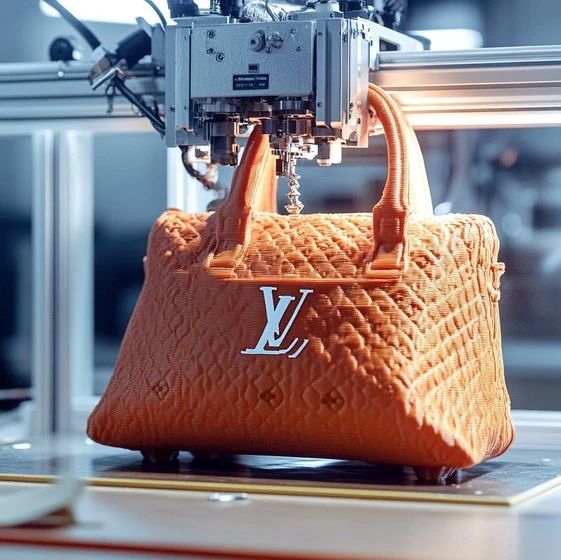
Core Viewpoint - The article discusses the emerging trend of using 3D printing technology to create luxury brand replicas at a significantly lower cost, enabling individuals to produce high-end fashion items at home [2][4][6]. Group 1: 3D Printing Technology in Fashion - 3D printing is a rapid prototyping technology that allows users to create three-dimensional objects by adding materials layer by layer based on digital models [5][6]. - The process of creating luxury items like LV bags can be done at home for as little as 20 yuan, making it accessible to a wider audience [4][6]. - Various luxury items, including Chanel and Gucci bags, can be replicated using 3D printing, showcasing the versatility of this technology in the fashion industry [7][8]. Group 2: Materials and Techniques - Common materials used in 3D printing include PLA (polylactic acid) and TPU (thermoplastic polyurethane), each with distinct properties suitable for different applications [12][17]. - PLA is biodegradable and easy to work with but lacks durability, while TPU offers better flexibility and strength, making it suitable for functional items [18][19]. - The cost of materials is relatively low, with PLA priced around 55 yuan per kilogram, allowing for affordable production of 3D printed items [15][18]. Group 3: DIY Culture and Community - The rise of 3D printing has fostered a DIY culture where individuals can create their own fashion items, leading to a community of enthusiasts sharing designs and techniques [25][26]. - Apps like "Bambu Handy" provide access to open-source models and tutorials, making it easier for beginners to start 3D printing [25][26]. - The trend has sparked interest in personalized and unique fashion items, allowing users to express their creativity and style [27][28]. Group 4: Industry Implications - Major fashion brands are also exploring 3D printing for their collections, with designers using the technology to create innovative and complex designs that were previously difficult to achieve [29][30]. - The ability to produce items quickly and with less waste aligns with the growing demand for sustainable fashion practices [30][41]. - 3D printing is seen as a way to enhance customization and reduce production times, which can be beneficial for brands looking to respond to market trends rapidly [41][42].

塌房!Prada,又摊上事了!
21世纪经济报道· 2025-03-14 03:34
Core Viewpoint - Prada is facing a significant brand crisis due to the controversy surrounding its global ambassador, Kim Soo-hyun, which has led to a rapid decline in its stock price and raised concerns about its endorsement strategy [2][4][6]. Group 1: Brand Crisis and Stock Impact - Kim Soo-hyun's involvement in a scandal has resulted in Prada terminating its contract with him to mitigate brand damage [2][5]. - Following the scandal, Prada's stock price dropped over 11% within five trading days, indicating heightened sensitivity to celebrity endorsements [4][6]. - The brand has experienced a series of endorsement crises, leading to a perception of a "endorsement curse" that affects its reputation and financial performance [3][5]. Group 2: Endorsement Strategy and Market Position - Analysts suggest that Prada's reliance on high-profile celebrities for endorsements has made its stock price more volatile compared to competitors, necessitating a shift towards a more stable endorsement strategy [7]. - The luxury market is increasingly favoring ambassadors who align with brand values rather than just popularity, as indicated by consumer preferences [7]. - Despite attempts to diversify its ambassador roster, including signing athletes and artists, Prada's financial performance has not shown significant improvement [8][10]. Group 3: Financial Performance and Growth Challenges - Prada's retail sales growth has stagnated, with a reported increase of only 4% in 2024, returning to pre-pandemic growth rates [8]. - The brand's struggles are compounded by a lack of product innovation and operational efficiency, which have hindered its ability to attract younger consumers [9]. - The CEO highlighted challenges in the Chinese market, where growth has been inconsistent, emphasizing the need for a strategic overhaul in product offerings [9][10]. Group 4: Future Outlook and Strategic Adjustments - Prada is seeking to adjust its brand strategy by enhancing cultural activities and reinforcing its brand identity, moving away from reliance on individual designer influence [10]. - The company must focus on reconnecting with its core brand values to navigate the current crisis and improve its market position [10].

越来越多人靠着二手生意赚翻了
商业洞察· 2025-03-10 09:07
以下文章来源于真叫卢俊 ,作者真叫卢俊团队 2024年第三季度Gucci营收16.4亿欧元,同比下滑25%,是去年以来最 大跌 幅,包括LV母公司LVMH 该季度营收也同比下滑3%至190.76亿欧元 真叫卢俊 . 认认真真聊地产,实实在在谈买房。 作者:真叫卢俊团队 来源:真叫卢俊(ID:zhenjiaolujun0426) 其实每个硬币天然有两面,当你抛向空中的那一刻,总有一面最后会落到手中成为筹码 正如今天想跟大家分享的: 二手生意 我想对于二手生意或二手市场,最普遍的理解可能是"倒卖旧货"的人,但某种意义上,其实更像是一 种行业的二次衍生 奢侈品回收应该是离我们最近的二手交易市场 当去年一边巨头们纷纷亏损的时候 而反观奢侈品二手出售 位于上海虹桥天地地下 通道的只二奢侈品透明仓 开在上海虹桥火车站楼下的只二奢侈品透明仓,已经靠着出售二手完成5轮融资,如今全国范围开了4 家店 据相关负责人介绍,买家复购率80%,卖家复卖率同样高达70% 所以重要的是 当那些你以为的一手市场增量已经来到天花板的时候,类似存量经济和闲置经济这样的二次衍生,反 而很可能会爆发出超乎想象的能量 那么除此之外呢 对于其他行业,乃 ...
极兔中国经调整后盈利;昂跑净利润增长两倍;特斯拉美国重启免息贷款丨百亿美元公司动向
晚点LatePost· 2025-03-06 10:48
极兔中国全年经调整 EBIT 首次转正。 2024 年,极兔营收同比增长 16% 至 103 亿美元,中国市场贡献超六成。 2020 年进入中国后,极兔以高额亏损为代价,依靠低价与补贴迅速占领市场,在中国快递行业的 红海中挤入前五。四年后,极兔中国全年经调整 EBIT(息税前利润)首次转正,为 1.5 亿美元。 快递是低利润的精细生意,需要依靠规模与成本管理确立优势。2024 年,极兔在中国的单票成本 下降 12% 至 0.3 美元。中国市场扭亏,带动公司整体净利润从上一年的 -11.6 亿美元来到 1.1 亿美 元。 在大本营东南亚,极兔市占率继续保持第一,占据近三成的市场份额,盈利能力进一步增强。2024 年,极兔在该地区的经调整 EBIT 同比增长 49% 至 3 亿美元。 昂跑 2019 年在上海开出中国第一家店。我们了解到,昂跑目前在中国有约 60 店,一半为直营店。 我们曾经写过 ,昂跑诞生在 2010 年,是金融危机后的低迷期,跑步开始复兴。疫情后,人们又开 始需要跑步,昂跑、Hoka One One 于是兴起。昂跑拿着和耐克一样的营销剧本,讲跑者文化,也 正拿去耐克、阿迪达斯的市场份额。 特斯 ...


安踏 CEO 称三年内单品牌要超耐克中国;蜜雪冰城成现象级港股IPO;雀巢要全资收购徐福记丨品牌周报
36氪未来消费· 2025-03-02 07:33
Group 1: Anta's Strategy - Anta's CEO Xu Yang aims to surpass Nike in China within three years, focusing on brand repositioning and global expansion [2] - The strategy includes "upward branding, downward pricing, and outward market expansion," targeting high-end markets while maintaining a presence in the mass market [3] - Anta plans to open 100,000 new positions globally, contrasting with competitors like Nike and Adidas, which are downsizing [3] Group 2: Nestlé's Acquisition - Nestlé has acquired the remaining 40% stake in the snack brand Xu Fu Ji, achieving full ownership [4][5] - Xu Fu Ji is a significant player in the Chinese snack market, contributing to Nestlé's growth in this sector [5] Group 3: 7-Eleven's Ownership Uncertainty - The acquisition of 7-Eleven faces challenges due to the founding Ito family struggling to secure funding for their buyout plan [6][7] - 7-Eleven's sales growth has slowed, with a reported 3.8% increase in sales for the fiscal year ending February 2024 [8] Group 4: Starbucks' Potential Stake Sale - Starbucks is in discussions with several private equity firms and Chinese companies regarding a potential stake sale, with an estimated valuation exceeding $1 billion [21] Group 5: Shiseido's Market Strategy - Shiseido plans to expand its product offerings in China, focusing on high-functionality products and extending its sales network to mid-sized inland cities [23] Group 6: Rituals' Expansion in China - The Dutch personal care brand Rituals is expanding its presence in China, having opened multiple stores in high-end shopping areas [24] Group 7: Salted Fish's Southeast Asia Strategy - Salted Fish is accelerating its overseas expansion by investing in a production base in Thailand, focusing on core products like konjac and potato chips [26] Group 8: Yonghui Supermarket's Board Changes - Yonghui Supermarket is undergoing board member changes, with the founder of Miniso potentially becoming the largest shareholder following a significant acquisition [25][27]