自动驾驶

Search documents
自动驾驶迈向规模化商用,国产芯片与生态协同成破局关键
Zhong Guo Jing Ji Wang· 2025-12-11 01:56
Core Insights - The transition of autonomous driving from technology-driven to value-driven is highlighted, with domestic chips and ecosystem collaboration being key to industry breakthroughs [1][4] Group 1: Commercialization of Autonomous Driving - A clear scene stratification for the commercialization of autonomous driving has been established, with different companies following differentiated development paths based on specific scenarios [4] - In the last-mile logistics sector, the CTO of New Stone Technology emphasized that cost reduction is the primary principle of the logistics industry, supported by four core capabilities: deep insight into logistics scenarios, breakthroughs in technical algorithms, self-built hardware and production capabilities, and compliance with regulatory operations [4] - The founder and CEO of Xing Shen Intelligent pointed out that the value of autonomous driving extends beyond replacing drivers to achieving full automation of the entire logistics process, with four core elements necessary for commercial success: extreme cost reduction, improved operational performance, enhanced deployment efficiency, and data security [4] Group 2: Long-Distance Truck Transportation - The CEO of Ying Che Technology noted that while truck users are sensitive to costs, they will invest if the solution provides significant safety, cost, and revenue returns, with the current intelligent driving system offering a return on investment period of 10 to 24 months [4] - The CEO of Carl Power described long-distance logistics as the "artery of the national economy," stating that logistics efficiency significantly impacts a country's competitiveness, with logistics costs in China being about 14% of GDP, more than double that of developed countries [4] Group 3: Robotaxi Market - In the Robotaxi sector, the founder of GoGoX and Amigo identified the aging taxi driver demographic and outdated vehicles in Hong Kong as key pain points, with plans to convert 1,000 taxis into Robotaxis using Horizon's technology [5] - The average monthly revenue for a single taxi license in Hong Kong is HKD 20,000, and the conversion to autonomous operation could transform the local transportation market [5] Group 4: Ecosystem Collaboration and Chip Development - The success of autonomous driving commercialization relies on deepening ecosystem collaboration, with the rise of domestic chips providing dual benefits of cost reduction and supply chain security [5] - The founder and CEO of Horizon defined the company's role as providing chips and tools while promoting cooperation across various sectors, including logistics and mining [5] - The Chief Ecosystem Officer of Horizon highlighted that the BPU chip has seen a performance increase of 1,000 times over 10 years, with the latest 6P chip offering 560 TOPS of computing power, essential for deploying large models in vehicles [5]

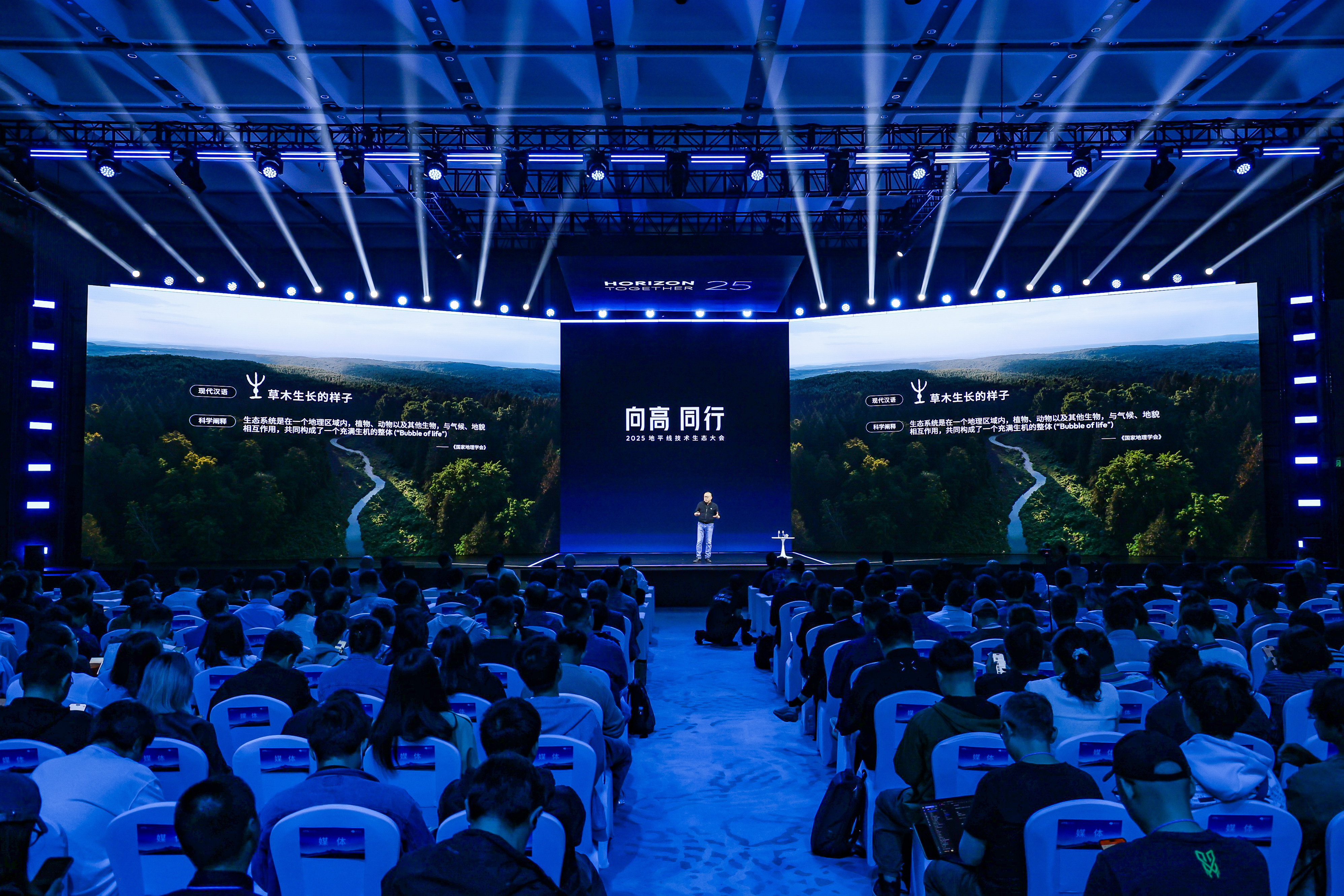
文远知行创始人韩旭:从示范到规模商用自动驾驶企业的破局之路
Zhong Guo Jing Ji Wang· 2025-12-11 01:50
Core Viewpoint - The "14th Five-Year Plan" serves as a precise navigation map for the Chinese technology industry, particularly highlighting four key concepts: new quality productivity, new type of national system, new security pattern, and Chinese-style modernization, which align closely with the development of the autonomous driving industry [2][3]. Group 1: New Quality Productivity - Autonomous driving exemplifies new quality productivity by leveraging cutting-edge technologies such as AI, big data, and IoT to revolutionize transportation, urban sanitation, and logistics efficiency [3]. - The plan emphasizes the full implementation of the "AI+" initiative and promotes deep integration of innovation chains, industry chains, capital chains, and talent chains, facilitating the technological iteration and commercialization from Level 2 (partial automation) to Level 4 (high automation) [3][4]. - The autonomous driving services, including Robotaxi, Robobus, and Robovan, significantly enhance travel efficiency, reduce operational costs, and create new employment opportunities, aligning with the plan's focus on high-level technological self-reliance [3][4]. Group 2: New Type of National System - The new type of national system provides crucial support for overcoming key core technologies in the autonomous driving industry, which is complex and involves multiple foundational elements such as chips, operating systems, high-precision maps, and sensors [4]. - The system is characterized by market-based mechanisms guided by national strategies, enabling coordinated resource integration to tackle critical challenges [4]. - National-level coordination accelerates infrastructure development and standardization, creating a conducive environment for the large-scale deployment of autonomous driving technologies [4]. Group 3: New Security Pattern - Safety is paramount in autonomous driving, encompassing functional safety, expected functional safety, network security, data security, and national-level technology and supply chain security [4]. - The heightened national focus on safety will drive the establishment of stricter and unified safety standards and certification systems, purging non-compliant entities from the market [4]. - Policies addressing data security will lead to improved data governance frameworks, enhancing public trust, which is essential for large-scale commercialization [4]. Group 4: Chinese-style Modernization - The development of autonomous driving is integral to the journey of Chinese-style modernization, with the country's vast transportation and logistics demands providing an ideal testing ground for world-class autonomous driving technologies [5][6]. - The emphasis on new urbanization, rural revitalization, and a strong transportation nation within the plan supports diverse application scenarios for autonomous driving, contributing to modernization efforts [5][6]. Group 5: Future Industry Integration - The "14th Five-Year Plan" encourages forward-looking layouts in future industries, with 6G and brain-computer interfaces highlighted as key areas that can synergize with autonomous driving [7][8]. - 6G technology is crucial for achieving high-level vehicle-road collaboration, enabling real-time awareness of dynamic environments and enhancing safety [7]. - Brain-computer interfaces offer unique applications in semi-autonomous driving scenarios, allowing for emergency control and improved interaction within smart cabins [8]. Group 6: Breakthroughs in Commercialization - The next five years are expected to be pivotal for achieving significant breakthroughs in Level 4 autonomous driving commercialization, focusing on three main areas: establishing unified access standards, clarifying liability, and opening typical scenarios for commercialization [9]. - A national-level initiative to create a unified certification system for Level 4 autonomous driving will facilitate large-scale operational networks [9]. - Clear legal frameworks for accident liability are essential to remove barriers to commercialization, while the systematic opening of urban public transport and logistics scenarios will enhance technology iteration and business model validation [9]. Group 7: Industry Outlook - The planning suggestions are viewed as both a compass and an accelerator for the autonomous driving industry, with expectations for a historic leap from demonstration operations to large-scale commercialization in the next five years [10].

经纬恒润:中标龙拱港项目 重载自动驾驶破解钢卷运输难题
Zhong Guo Qi Che Bao Wang· 2025-12-11 01:44
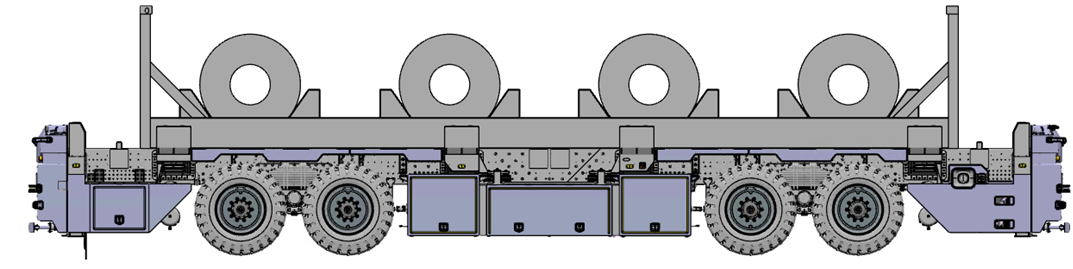
Core Insights - The company successfully won the bid for the unmanned horizontal transportation project of steel coils at Longgong Port, marking a new scenario in the "piece cargo" unmanned transportation field and deepening cooperation for port intelligent upgrades [1][6] Industry Challenges - Steel coil transportation faces dual challenges of efficiency and safety, with three main pain points: - Prominent safety risks due to human intervention during loading and transfer, leading to potential accidents and damage to high-value steel coils [2] - Low standardization in manual operations affecting precision and stability in high-frequency port operations, limiting overall process efficiency [2] - Strict driving control requirements due to the physical characteristics of steel coils, necessitating high stability in vehicle operations to prevent accidents [2] Technological Solutions - The company has developed a solution to address industry pain points by upgrading flatbed trucks to create "smart movers" capable of multi-scenario operations, integrating advanced perception, intelligent decision-making, and precise control algorithms [3] - Key upgrades include: - Core technology adaptations for unmanned operation, ensuring precise responses in complex port environments and developing intelligent scheduling systems for efficient task management [3] Value Creation - The upgraded unmanned flatbed trucks have achieved multiple efficiency breakthroughs in port operations: - Enhanced logistics turnaround efficiency through automated operations, allowing for 24/7 operation and significantly increasing equipment utilization and daily output [4] - Expanded operational scenarios beyond traditional container transport, adapting to diverse material transfer needs within the port [4] - Implemented dual safety mechanisms for high-risk scenarios, ensuring controlled operations and minimizing safety risks during manual interventions [4] Future Outlook - Winning the bid for the steel coil unmanned transportation project signifies recognition of the company's technical strength and capability, establishing a new paradigm for unmanned transportation of piece cargo and providing replicable practices for the intelligent upgrade of the port logistics industry [6]

文远知行(0800.HK):单三季度收入同比增长144% L4产品商业化落地加速推进
Ge Long Hui· 2025-12-11 01:41
Core Insights - The company achieved revenue of 171 million yuan in Q3 2025, representing a year-on-year growth of 144.2% and a quarter-on-quarter increase of 34.4%, while net profit was -307 million yuan [1] - The company's gross margin improved year-on-year, with a gross margin of 32.9%, reflecting a significant increase of 26.4 percentage points [2] - The company is a leading provider of L4 autonomous driving products and solutions, having accelerated the commercialization of its L4 products [3] Financial Performance - In Q3 2025, the company's product business revenue was 79.2 million yuan, up 428.0% year-on-year, driven by increased sales of Robotaxi and Robobus [1] - The service business revenue reached 91.8 million yuan, a year-on-year increase of 66.9%, primarily due to growth in smart data services and autonomous driving-related operational and technical support services [1] - The adjusted net profit for Q3 2025 was -276 million yuan, compared to -240 million yuan in Q3 2024 and -301 million yuan in Q2 2025 [1] Operational Highlights - The company has received autonomous driving licenses in eight countries, including Switzerland, China, UAE, Saudi Arabia, Singapore, France, Belgium, and the USA [3] - As of October 31, 2025, the company deployed over 300 Robotaxi vehicles in Guangzhou, achieving up to 25 single trips per vehicle during a 24-hour operational period [3] - The company announced a partnership with Uber to launch L4 Robotaxi commercial operations in Abu Dhabi, with plans to scale to thousands of vehicles by 2030 [3] Technological Advancements - The company successfully achieved SOP for its L2+ level assisted driving solution, which supports the entire vehicle series of the Xingtu brand [4] - The Robobus service in Guangzhou has served over 1 million public passengers as of September 30, 2025 [3] - The company has initiated trial operations for Robobus in the UAE and received Belgium's first federal-level L4 autonomous driving testing license [3] Future Outlook - The company has revised its revenue forecasts for 2025-2027, expecting revenues of 551 million, 1 billion, and 1.866 billion yuan respectively, down from previous estimates [4] - The projected net losses for the same period are expected to be -1.416 billion, -1.310 billion, and -1.018 billion yuan [4]
毫末智行猝然停工 智驾公司上岸路在何方
Zhong Guo Qing Nian Bao· 2025-12-11 01:34
Core Viewpoint - The smart driving company, Haomo Zhixing, which was once valued at over $1 billion, has announced a complete work stoppage for all employees due to its current operational status, raising concerns about its viability and future operations [2][3]. Company Overview - Haomo Zhixing was established on November 29, 2019, focusing on autonomous driving technology, including passenger car assistance, logistics delivery vehicles, smart hardware, and the MANA data intelligence system [3]. - The company has received significant investments from major players like Great Wall Motors, Meituan, and Hillhouse Capital, with a total financing scale of approximately 2 billion yuan [3]. - After its A-round financing in 2021, Haomo Zhixing achieved a valuation exceeding $1 billion, entering the unicorn category [3]. Operational Challenges - The company has faced rumors of layoffs since 2023, with reports indicating that the layoff rate in functional departments has reached 30%-50% [3]. - Despite signing cooperation agreements with major manufacturers like Beijing Hyundai, Toyota, and BMW, Haomo Zhixing's products are primarily used in Great Wall Motors' brands, making it vulnerable to being replaced by other suppliers if its driving solutions negatively impact user experience [3][4]. Market Dynamics - The competitive landscape in the autonomous driving sector is intensifying, with Great Wall Motors shifting its focus and investments towards competitors like Yuanrong Qixing, which has been selected as a high-level driving supplier [5]. - The industry is characterized by long cycles and high investments, and Haomo Zhixing, despite its backing from Great Wall, must operate independently and manage its profitability [5]. - The limited installation volume of its main product, the city NOH (highway navigation assistance), has made it difficult to support R&D costs [5]. Industry Trends - The automotive industry is experiencing a downturn, with forecasts indicating a slowdown in domestic passenger car sales growth from 8% in 2025 to -2% in 2026 [6]. - Major automotive companies are reporting lower-than-expected sales, with Great Wall Motors experiencing a 13.09% decline in new energy vehicle sales month-on-month in November [6]. - The demand for smart driving technology is increasing, but third-party suppliers like Haomo Zhixing may struggle to compete against companies that are investing heavily in in-house development [7][8]. Financial Pressures - The cost of materials for NOA solutions has been driven down to levels as low as 4,000 to 7,000 yuan, leading to a cash flow battle among companies in the sector [8]. - Companies that lack strong cost control and profitability may face significant challenges in surviving the current market conditions [8].

仿真数据也能Scaling!虚实结合训练,端到端性能全面提升|中科院x港大x小米汽车
量子位· 2025-12-11 01:33
来自香港大学OpenDriveLab、中科院自动化所、小米汽车的联合团队提出了一种解决方案—— SimScale 。 自动驾驶数据荒怎么破? OpenDriveLab 投稿 量子位 | 公众号 QbitAI 该方案 通过真实世界仿真生成关键场景,以及真实仿真协同训练策略,首次揭示了自动驾驶仿真数据的规模效应 。 现实世界难以提供足够的关键与长尾场景,采集到的大多是价值有限的常态片段,导致 数据越多、提升越难 。 因此,自动驾驶的瓶颈不在规模,而在缺乏能系统生成关键场景并支撑大规模训练的新路径。 无需更多真实数据, 只靠扩大仿真数量,一样能持续突破任何端到端驾驶模型的性能上限 。 为什么要有SimScale? 因为让大模型屡创新高的Data Scaling,在自动驾驶场景中失灵了—— 为此,SimScale应运而生。 什么是SimScale? SimScale是一个能"无限扩张世界"的仿真生成框架,通过高保真神经渲染,自动制造多样化反应式交通场景与伪专家示范。 它也是一套让仿真与真实"相互增益"的训练策略,使各种端到端模型都能越训越强,鲁棒性与泛化性全面提升。 它还是一份首次系统揭示自动驾驶仿真规模效益的"实践 ...

国信证券晨会纪要-20251211
Guoxin Securities· 2025-12-11 01:12
Macro and Strategy - The inflation data indicates a continued trend of price improvement, with CPI slightly decreasing by 0.1% month-on-month and increasing by 0.7% year-on-year, while PPI increased by 0.1% month-on-month but decreased by 2.2% year-on-year [8][12]. Industry and Company Social Services Industry - The consumer services sector saw a 2.38% increase during the reporting period, with notable performers including Junting Hotel (up 14.27%) and Zhongjiao Holdings (up 12.73%) [8][9]. - The major event was the change of control of Junting Hotel to Hubei Provincial State-owned Assets Supervision and Administration Commission, with a transaction value of 1.499 billion yuan [9]. Non-Banking Sector - The release of the commercial health insurance innovative drug directory marks a significant step in the innovative drug payment sector, creating a "second battlefield" for medical payments and alleviating long-standing conflicts between cost control and innovation needs in the pharmaceutical industry [12]. Metal Industry - The tin industry is facing a supply shortage due to declining ore grades and regulatory challenges, with global tin resources estimated at 4.2 million tons and production at 300,000 tons in 2024 [13][14]. - The global tin supply is expected to decrease significantly in 2025, with a projected demand of 386,000 tons, leading to a supply-demand gap of approximately 16,000 tons [15][16]. SUTENG Technology - SUTENG Technology reported a 34% year-on-year increase in laser radar sales in Q3 2025, although total revenue decreased by 0.2% to 407 million yuan [17][18]. - The company is focusing on becoming a leading platform in robotics technology, with significant orders from major automotive manufacturers [18]. WenYuan ZhiXing - WenYuan ZhiXing achieved a 144% year-on-year revenue growth in Q3 2025, driven by increased sales of Robotaxi and Robobus [20][21]. - The company is expanding its L4 autonomous driving product commercialization, having received multiple licenses across several countries [22]. Yilian Network - Yilian Network is developing a comprehensive communication ecosystem, with a revenue CAGR of 22% from 2017 to 2024, and a focus on AI integration in its products [23][24]. - The company maintains a high gross margin above 60% and emphasizes cash flow management [23]. TianNai Technology - TianNai Technology is experiencing rapid growth in single-wall carbon nanotube products, with significant increases in production and profitability expected in the coming years [26][27].
上交最新!端到端&VLA综述:广义范式下的统一视角
自动驾驶之心· 2025-12-11 00:05
Core Viewpoint - The article discusses the evolution of autonomous driving technology, emphasizing the need for a unified perspective on various paradigms, including end-to-end (E2E), VLM-centric, and hybrid approaches, to enhance understanding and performance in complex driving scenarios [2][4][14]. Group 1: Introduction and Background - Traditional modular approaches in autonomous driving have led to information loss and error accumulation due to task fragmentation, prompting a shift towards data-driven end-to-end architectures [5][10]. - The article introduces a comprehensive review titled "Survey of General End-to-End Autonomous Driving: A Unified Perspective," which aims to bridge the gap in understanding between different paradigms [3][4]. Group 2: Paradigms of Autonomous Driving - General End-to-End (GE2E) is defined as any model that processes raw sensor inputs into planning trajectories or control actions, regardless of whether it includes visual-language models (VLM) [4][14]. - The three main paradigms unified under GE2E are: - Traditional End-to-End (Conventional E2E), which relies on structured scene representation for precise trajectory planning [9][17]. - VLM-centric End-to-End, which utilizes pre-trained visual-language models to enhance generalization and reasoning capabilities in complex scenarios [11][33]. - Hybrid End-to-End, which combines the strengths of both traditional and VLM-centric approaches to balance high-level semantic understanding with low-level control precision [12][39]. Group 3: Performance Comparison - In open-loop performance tests, the hybrid paradigm outperformed others, demonstrating the importance of world knowledge in handling long-tail scenarios [54]. - Traditional E2E methods still dominate in numerical trajectory prediction accuracy, indicating their robustness in structured environments [54]. - In closed-loop performance, traditional methods maintain a stronghold, particularly in complex driving tasks, while VLA methods show potential but require further refinement in fine-grained trajectory control [55][56]. Group 4: Data and Learning Strategies - The evolution of datasets from geometric annotations to semantic-rich datasets is crucial for training models capable of logical reasoning and understanding complex traffic contexts [46][48]. - The introduction of Chain of Thought (CoT) annotations in datasets supports advanced reasoning tasks, moving beyond simple input-output mappings [47]. Group 5: Model Architecture and Details - The article provides a detailed comparison of mainstream model architectures, including their inputs, backbone networks, intermediate tasks, and output forms, to clarify the distinctions among different paradigms [57].

自动驾驶公司希迪智驾寻求通过香港IPO募资14.2亿港元
Jin Rong Jie· 2025-12-10 23:48
据香港交易所公告,希迪智驾香港上市拟发行540万股股票,发售价每股263港元。该公司势将募资14.2 亿港元;将于12月19日挂牌交易。中金、中信建投国际和平安证券为联席保荐人。 本文源自:金融界AI电报 ...
华尔街见闻早餐FM-Radio | 2025年12月11日
Hua Er Jie Jian Wen· 2025-12-10 23:26
Market Overview - The Federal Reserve announced its third interest rate cut of the year, interpreted as "not QE's QE," with Chairman Powell's speech slightly more dovish than expected [2][5] - U.S. stock indices closed higher, with small-cap stocks leading the market; Oracle's post-earnings drop of over 10% dragged Nvidia down by more than 1% in after-hours trading [2][11] - U.S. Treasury yields fell across the board, with the two-year yield dropping over 7.6 basis points [2][13] Economic Indicators - China's November CPI rose by 0.7% year-on-year, the highest since March 2024, while PPI showed a slightly larger decline [4][18] - The U.S. employment cost index fell to a four-year low of 3.5%, indicating easing inflationary pressures [5][19] Real Estate Sector - The real estate sector saw a significant midday surge, driven by discussions around Vanke's bond extension and market expectations for "mortgage interest subsidies" [5][19] Federal Reserve Actions - The Federal Reserve cut rates by 25 basis points as expected, with three dissenting votes; it plans to purchase $40 billion in short-term bonds [5][24] - Powell indicated that the scale of bond purchases may remain high in the coming months, with a gradual cooling of the labor market [5][24] Silver Market - The Silver Institute reported a surge in industrial demand for silver, driven by sectors like photovoltaics, electric vehicles, and data centers, projecting continued growth over the next five years [7][20] Oracle's Financial Performance - Oracle's earnings report showed revenue and cloud business figures below expectations, with capital expenditures exceeding forecasts by approximately $15 billion, leading to a post-market drop of over 10% [8][20] Meta's Strategic Shift - Meta is shifting its strategy under Zuckerberg's leadership, moving from open-source to a profit-oriented closed-source AI model, incorporating Alibaba's Qwen for training [9][21] Autonomous Driving Market - Bank of America reported that the market for autonomous ride-hailing could reach trillions, with a critical cost threshold of $2 per mile being a potential trigger for growth [10][21] Semiconductor Industry - AI server manufacturers reported record high revenues in November, with Wistron leading growth at 194.6% year-on-year, driven by increased demand for AI servers [23][30]