电商

Search documents
港股收盘(01.06) | 恒指收涨1.38% 大金融股发力走高 有色、智驾概念走势强劲
智通财经网· 2026-01-06 08:57
Market Overview - The Hong Kong stock market indices showed strong performance, with the Hang Seng Index rising by 1.38% to close at 26,710.45 points, and a total trading volume of HKD 2,917.58 million [1] - The government policies and support from the "national team" are expected to stabilize the Hong Kong stock index, making it a favorable time for investment [1] Blue-Chip Stocks Performance - China Hongqiao (01378) led the blue-chip stocks with a 6.14% increase, closing at HKD 35.26, contributing 10.84 points to the Hang Seng Index [2] - Other notable performers included JD Health (06618) up 5.41%, China Ping An (02318) up 4.96%, while Hengan International (01044) and Alibaba-W (09988) saw declines of 2.57% and 1.31% respectively [2] Sector Highlights - Large technology stocks showed mixed results, with financial stocks, particularly Chinese brokerage firms, performing well [3] - The non-ferrous metals sector was strong, with significant gains in gold and copper stocks [4] - The commercial aerospace sector saw a rise, with companies like Goldwind Technology and JunDa Co. experiencing notable increases [6] Investment Opportunities - The capital market is expected to maintain a strong performance in 2026, with brokerage firms likely to benefit from a relatively low valuation environment [4] - The non-ferrous metals sector is anticipated to continue its upward trend due to tight supply conditions and rising prices [5] - The autonomous driving sector is gaining traction, with companies like NVIDIA and their partnerships driving demand for related technologies [6] Notable Stock Movements - Xindong Company (02400) saw a 6.04% increase following the announcement of a large share buyback plan [7] - Hesai Technology (02525) rose 5.9% after being selected as a lidar partner for NVIDIA's platform and announcing a significant increase in production capacity [8] - Cathay Pacific (00293) faced pressure, with a 2.6% decline due to a share placement by China National Aviation [9]
长三角议事厅·周报|杭衢高铁牵引“1小时都市圈”向西扩容
Xin Lang Cai Jing· 2026-01-06 07:56
Core Viewpoint - The opening of the Hangzhou-Qiuzhou High-Speed Railway significantly enhances connectivity in the Yangtze River Delta, reducing travel time between Qiuzhou and Hangzhou to as little as 73 minutes, thereby transforming regional collaboration and economic dynamics [1][3][4]. Group 1: Infrastructure Development - The Hangzhou-Qiuzhou High-Speed Railway spans approximately 131 kilometers with a design speed of 350 km/h, facilitating faster travel and improved accessibility [1]. - The railway connects Qiuzhou with the existing high-speed rail network, creating a dual-channel system that enhances travel efficiency between Zhejiang's western regions and Hangzhou [3][4]. - Initial operations will feature 12 daily trains, with plans to increase to 34 trains per day by the first quarter of 2026, making cross-city travel more routine [4]. Group 2: Economic Integration - The railway's opening marks a shift from administrative-driven "mountain-sea cooperation" to market-driven collaboration, allowing industries to connect based on comparative advantages rather than reliance on government initiatives [5]. - The establishment of the Qiuzhou Hai Chuang Park, which has attracted over 140 companies, exemplifies the integration of R&D and production capabilities between Qiuzhou and Hangzhou [5][6]. - Significant investments in lithium battery materials projects in Qiuzhou, totaling nearly 479 billion yuan, highlight the region's growing industrial capacity and its ability to support high-value manufacturing [6]. Group 3: Urban and Regional Development - The Hangzhou-Qiuzhou High-Speed Railway contributes to a new urban network in the Yangtze River Delta, evolving from simple point-to-point connections to a more integrated and sustainable commuting framework [7]. - By 2025, the total investment in the Yangtze River Delta railway construction is expected to exceed 600 billion yuan, with over 2,600 kilometers of new rail lines, enhancing the overall connectivity of the region [7]. - The railway facilitates a shift in the relationship between Qiuzhou and the core areas of the Yangtze River Delta, moving from mere connectivity to deeper integration and collaboration [8].


网经社2025《数字经济系列年终盘点&报告&百强榜》计划发布
Sou Hu Cai Jing· 2026-01-06 06:21
Core Insights - The company is launching the 2025 "Digital Economy Year-End Review & Report & Top 100 List"招商计划, covering various sectors such as digital retail, digital life, mobile travel, industrial e-commerce, cross-border e-commerce, digital education, digital health, and logistics technology [1][11] Group 1: Year-End Review Series - The company is initiating its 17th annual "Year-End Review" series, which aims to provide a professional retrospective and trend prediction rather than just a simple listing of events [2] - The series will include significant events in various sectors, including fresh e-commerce, digital retail, content e-commerce, second-hand e-commerce, logistics technology, AI e-commerce, and major players like Alibaba, Pinduoduo, and JD [5][6] Group 2: Reports and Rankings - The company will release the 2025 annual series of reports and rankings, utilizing its self-developed e-commerce database "DianShuBao" and various research methods such as data analysis, partner surveys, platform evaluations, user surveys, and expert interviews [9][12] - The reports will cover a wide range of topics, including market data reports for various sectors like cross-border e-commerce, digital health, and digital education, as well as investment and financing reports [16][17] Group 3: Publication Channels - The reports and rankings will be published through multiple channels, including the company's own media, self-media matrix, and a registered user base of over 500,000, which includes government departments, investors, and e-commerce service providers [20][25] - The annual reports and rankings are considered influential indicators in the e-commerce and digital economy sectors, useful for public relations, financing endorsement, brand promotion, and market research [36]

亚太新兴经济体驱动因素边际减弱:环球市场动态2026年1月6日
citic securities· 2026-01-06 03:11
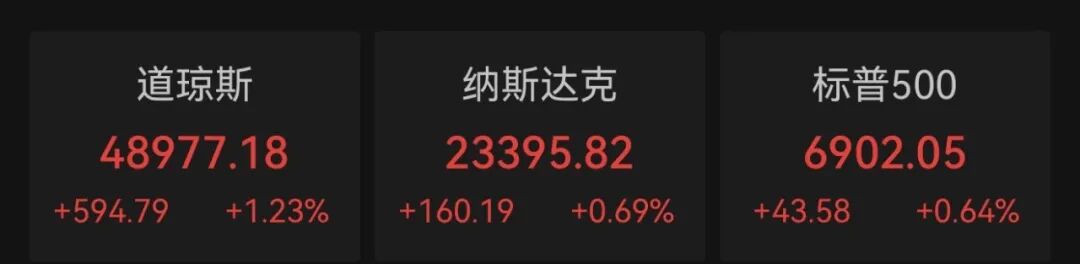
Market Overview - Global economic growth in 2025 showed unexpected resilience, driven by preemptive consumer spending, AI capital expenditure, and a strong stock market, leading to better-than-expected growth in Asia-Pacific emerging economies[4] - In 2026, growth drivers for Asia-Pacific emerging economies may weaken marginally, with a "front-low and back-stable" moderate slowdown expected due to high base effects[4] Stock Market Performance - A-shares opened strong in 2026, with the Shanghai Composite Index rising 1.38%, and nearly 4,200 stocks advancing, marking a 12-day winning streak[13] - The Dow Jones Industrial Average closed at 48,977.2, up 1.2%, while the S&P 500 and Nasdaq rose 0.6% and 0.7%, respectively[6] - European markets strengthened, with the Euro Stoxx 600 index up 0.9% and the DAX 30 rising 1.3%[7] Commodity and Currency Movements - International oil prices increased, with NYMEX crude oil rising 1.74% to $58.32 per barrel, and Brent crude up 1.7% to $61.76[24] - Gold prices rose by 2.82% to $4,451.5 per ounce, while silver increased by 7.94% to $76.657 per ounce[24] Fixed Income Market - U.S. Treasury yields fell by 2-4 basis points due to an unexpected decline in the ISM manufacturing index, with the 10-year yield at 4.16%[27] - The primary market was active, with issuance exceeding $37 billion, about half of the expected issuance for the week[27] Sector Highlights - In the U.S. stock market, energy stocks led gains, with the energy index up 2.67%[7] - In Hong Kong, the Hang Seng Index rose slightly by 0.03%, while the Hang Seng Tech Index increased by 0.09%[9] Emerging Market Insights - The KOSPI index in South Korea surged 3.4% to 4,457 points, while the Nikkei 225 in Japan rose 3.0% to 51,832 points[19] - The S&P Mexico IPC index increased by 1.4%, closing at 65,014 points, with the materials sector leading gains[7]


2026杭州新春消费季活动发布
Hang Zhou Ri Bao· 2026-01-06 02:50
杭州将为每位来杭游客送上"三个一"服务:一张杭城消费礼遇卡,线上线下均可通用,推出涵盖吃 住行游购娱的丰富优惠,更有政府消费券叠加折扣,实现"E卡在手、嗨购全城";一个"杭城好物"线上 专区,集聚杭州六小龙AI科技新品等万款杭产好物,一站式购买杭州特色商品;一档《消费之夜》栏 目,官方消费指南为大家提供沉浸式导购服务。 一批"杭城好物""数贸优品"在活动中展示。 活动现场启动了上海、杭州、宁波、长春、西安、昆明六城跨区域消费联动。后续,六城将依托各 自独特优势,搭建政策赋能、首发经济、美食购物、经典旅游、非遗老字号、重要展会等多元协同的消 费合作框架,通过资源共享、经验互鉴,让外贸优品互通、特色消费互补。 作为长三角消费核心城市,沪杭两地进一步筑牢协同根基。活动中,杭州市上城区、拱墅区、西湖 区、余杭区,与总部设于上海的拉扎斯网络科技、能良电商、百胜中国、盒马四家行业领军企业签约。 发布推介活动结束后,现场嘉宾还参与了杭帮菜品鉴交流活动。 1月3日,"赛会之城 购物天堂"2026年杭州新春消费季发布推介活动在上海举行。今年,杭州将聚 焦扩大汽车消费、促进大宗消费、繁荣餐饮消费、做大入境消费、升级平台消费、挖潜 ...

1.6犀牛财经早报:2026年约50万亿元存款到期 流向备受关注
Xi Niu Cai Jing· 2026-01-06 01:35
Group 1 - The long-term assessment mechanism for pension funds exceeding 7 trillion yuan has been introduced, aiming to promote long-term investments and enhance the capital market [1] - Over 40 A-share companies have forecasted a year-on-year increase in performance for 2025, particularly in the electronics, machinery, basic chemicals, and pharmaceutical sectors [1] - A-share listed companies are expected to distribute over 2.6 trillion yuan in dividends for 2025, marking a historical high, with significant contributions from both the Shanghai and Shenzhen stock exchanges [1] Group 2 - Approximately 50 trillion yuan in medium to long-term deposits are set to mature in 2026, drawing market attention amid declining interest rates [2] - The insurance industry has seen bond issuance exceed 100 billion yuan annually for the past three years, reflecting challenges in capital management and regulatory requirements [2] - The "cold resources" sector is experiencing growth, with new consumer dynamics emerging from events like the Changchun Snow Festival [2] Group 3 - Changyuan Tungsten has raised its procurement prices for tungsten concentrates for the first half of January 2026 [3] - Bridgewater's founder, Ray Dalio, has warned that the current AI hype is in the early stages of a bubble, with U.S. stock performance lagging behind non-U.S. equities and gold [4][5] - Nvidia's CEO highlighted the rise of open-source models as a catalyst for innovation in the AI industry during a recent conference [6] Group 4 - Airbus is expected to deliver 793 aircraft in 2025, achieving a key production target despite previous adjustments due to supply chain issues [6] - Nord Fund's actual controller has changed to Sichuan Energy Investment Group, with no impact on the fund's capital structure [6] - The control of Aerospace Science and Industry Corporation's rocket company is being transferred, with an estimated overall valuation of 11.2 billion yuan [7] Group 5 - Grandpa's Farm International Holdings has submitted a listing application to the Hong Kong Stock Exchange, focusing on baby food and household products [7] - The Shanghai Stock Exchange has issued a regulatory warning to Tianpu Co. for inadequate risk disclosures related to its AI business [8][9] - Dengyun Co.'s actual controller has been arrested for illegal public deposit collection, but the company's operations remain unaffected [10]
今日A股市场重要快讯汇总|2026年1月6日
Xin Lang Cai Jing· 2026-01-06 00:25
一、上市公司重要公告 1月5日盘后,红棉股份、长高电新、先锋精科、尚纬股份、百川能源、南亚新材、好太太、信科移动、 航亚科技、深赛格、合富中国、富特科技、莱绅通灵、ST逸飞、中钢洛耐、博通集成、万泽股份等17 家A股上市公司披露减持情况,当日暂无A股上市公司披露增持情况。 二、外围市场与关联资产 周一美股三大指数集体收涨,道指涨1.23%创历史新高,纳指涨0.69%,标普500指数涨0.64%;大型科 技股涨跌不一,特斯拉涨超3%,亚马逊涨超2%,Meta、高通涨超1%,苹果、美光、博通、甲骨文、 AMD跌超1%。 纳斯达克中国金龙指数收涨0.53%,嘉楠科技涨9.01%,万物新生涨8.58%,康迪车业涨8.34%,叮咚买 菜涨7.89%。 此外,纽约期金突破4470美元/盎司,日内涨0.43%;纽约期银日内涨9%,现报77.41美元/盎司。 声明:市场有风险,投资需谨慎。本文为AI大模型基于第三方数据库自动发布,任何在本文出现的信 息(包括但不限于个股、评论、预测、图表、指标、理论、任何形式的表述等)均只作为参考,不构成 个人投资建议。受限于第三方数据库质量等问题,我们无法对数据的真实性及完整性进行分辨或核 ...
今日国际国内财经新闻精华摘要|2026年1月6日
Xin Lang Cai Jing· 2026-01-06 00:25
International News - Significant fluctuations in international financial markets were observed, with precious metals and energy sectors showing active performance influenced by geopolitical and macroeconomic policies. Gold futures in New York surpassed $4,470 per ounce, with an intraday increase of 0.43%, previously touching $4,460 per ounce, where the intraday increase exceeded 3%. Spot gold also rose, breaking $4,450 per ounce, with an intraday increase of 2.71% [1][11] - The silver market exhibited even stronger performance, with New York silver futures surging 9% to $77.41 per ounce, while spot silver broke $77 per ounce, with an intraday increase of 5.8%. Domestic silver futures also rose by 4%, reaching 18,898 yuan [1][11] - The Azerbaijan State Oil Fund announced profits exceeding $10 billion from gold investments, reflecting an increasing demand for precious metal asset allocation [2] - In the energy market, crude oil futures rose over $1 per barrel due to the situation in Venezuela [3] - The U.S. Department of Energy announced a $2.7 billion investment to enhance uranium enrichment capabilities to ensure domestic energy security. All three major U.S. stock indices closed higher, with the Dow Jones rising 1.23% to reach a historical high, the Nasdaq increasing by 0.69%, and the S&P 500 up by 0.64%. Oil and gas stocks led the gains, with Halliburton, Schlumberger, and Chevron rising by 8.8%, 8.2%, and 6.9%, respectively [4][14] - Goldman Sachs shares rose nearly 5%, marking the largest increase since May of the previous year [5] - Large tech stocks showed mixed performance, with Tesla rising over 3% and Amazon increasing over 2%, while Apple and Micron fell over 1% [6][16] - The Nasdaq Golden Dragon China Index closed up 0.53%, with companies like Canaan Inc., Wanwu Xingsheng, and Kandi Technologies seeing gains exceeding 8% [7][17] Domestic News - The domestic bulk commodity market followed international trends with significant fluctuations, particularly in silver and nickel. Silver futures rose by 4% to 18,898 yuan, while nickel futures increased by 1% to 135,610 yuan [9][19] - In the Hong Kong stock market, the total number of property sale contracts reached 80,702 in 2025, an increase of 18.7% year-on-year, marking a four-year high, with a total value of 614.277 billion HKD, up 15% year-on-year. Residential property sales accounted for 62,832 contracts, valued at 519.83 billion HKD [9][20] - In the A-share market, 17 listed companies disclosed share reduction plans on January 5, including Hongmian Co., Changgao Electric, and Xianfeng Precision, with no increase cases reported on that day [9][20] - The Nasdaq Golden Dragon China Index initially fell over 1%, with Xpeng Motors and Baidu dropping 4.5% and 3.89%, respectively, but rebounded to close up 0.53% [9][20] - In international capital flows, TSMC shares surged 3.4% to $330 per share, with a total market capitalization of $1.7 trillion, reflecting market confidence in the long-term prospects of the semiconductor industry [10][20]


2025电商榜单价值及影响力洞察报告
艾瑞咨询· 2026-01-06 00:03
Core Insights - The article emphasizes the evolving role of e-commerce rankings, highlighting their transition from simple recommendation tools to comprehensive business components that enhance user decision-making efficiency, build platform trust, leverage brand growth, and promote industry quality ecosystems [1]. Group 1: User Behavior and Trust - Over 90% of consumers pay attention to ranked products, with 50% prioritizing clicks on items marked with rankings, indicating that rankings are crucial decision-making touchpoints in the purchasing process [6][4]. - Approximately 30% of consumers have started to focus on e-commerce rankings while shopping, and this trend is on the rise, with over 40% believing that ranked products are worth considering [4][6]. - 75.6% of consumers view rankings as a decisive factor in their purchasing decisions, reflecting their significant influence on consumer trust and decision-making [6][15]. Group 2: Ranking Mechanism and Consumer Experience - The rankings are built on a data-driven model that ensures objectivity and transparency, addressing consumer concerns about potential marketing biases [23][25]. - The rankings utilize a comprehensive evaluation system based on sales, popularity, reputation, growth, and brand strength, which helps consumers navigate the overwhelming product choices available [43]. - 61% of consumers express high satisfaction with products recommended by rankings, and 96.9% plan to maintain or increase their usage of e-commerce rankings in the future [6]. Group 3: Brand and Industry Impact - E-commerce rankings serve as a trust-building infrastructure for platforms, providing fair exposure opportunities for quality products and brands, thus enhancing the platform's influence [8][30]. - The rankings reflect consumer trend changes and provide essential guidance for product innovation, driving a positive development cycle in the quality consumption ecosystem [30][32]. - Case studies, such as the success of Hai Lan Zhi Jia's jeans and the collaboration with SHOKZ for exclusive earphones, illustrate how rankings can significantly boost product visibility and sales, creating a virtuous cycle of exposure and consumer trust [32][33]. Group 4: Future Trends and Innovations - The future of e-commerce rankings is expected to see advancements in AI technology, leading to more personalized and intelligent ranking systems that enhance user experience and brand engagement [37][40]. - The article suggests that the evolution of rankings will focus on maintaining objectivity and enhancing user experience, which are critical for meeting consumer needs in a competitive market [35][46].


白银大涨!道指创历史新高;马杜罗在美首次出庭:我无罪!
Zhong Guo Zheng Quan Bao· 2026-01-05 23:51
当地时间1月5日,美股三大股指全线收涨,道指涨1.23%、创历史新高,纳指、标普500指数小幅上涨。 中概股多数上涨,纳斯达克中国金龙指数涨0.49%。商品市场方面,白银大涨,黄金、原油均上涨。 道指创历史新高 美国三大股指收涨,截至当地时间1月5日收盘,数据显示,道指涨1.23%、创历史新高,纳指涨0.69%,标普500指数涨0.64%。 马杜罗在美首次出庭:我无罪 新华社消息,遭美国强行控制的委内瑞拉总统马杜罗夫妇5日中午在美国纽约南区联邦地区法院首次出庭,拒绝美方所谓"犯罪"指控。 马杜罗在法庭上表示,自己是"被绑架的","我无罪",拒绝美方对其一切指控。马杜罗强调,他仍然是委内瑞拉总统。 美国大型科技股涨跌不一,美国科技七巨头指数上涨0.41%。个股方面,特斯拉涨超3%,亚马逊涨近3%,Meta涨超1%,谷歌母公司Alphabet-C涨0.63%, 苹果跌超1%,微软、英伟达小幅下跌。 消息面上,三星联席CEO卢泰文在CES 2026期间透露,公司计划在2026年将搭载谷歌Gemini AI功能的移动设备数量增加一倍,达到8亿台。 中概股走强,纳斯达克中国金龙指数涨0.49%。个股方面,灿谷涨超16% ...