电池

Search documents
52亿!卫蓝新能源,15GWh固态电池项目落地
DT新材料· 2026-01-12 16:06
Core Viewpoint - The article highlights the signing of 36 projects in Jiangning District, including a significant investment of 5.2 billion yuan in a solid-state lithium battery production base by Yunshi Weilan, which aims to achieve an annual production capacity of 15 GWh [1]. Group 1: Project Overview - The solid-state lithium battery production base project will focus on manufacturing solid-state batteries, battery packs, and energy storage equipment [1]. - The investment is led by Shandong Yunshi Weilan New Materials Co., Ltd., a joint venture established by Shandong Yunshi Forestry Development Co., Ltd. and Weilan New Energy, with respective stakes of 90% and 10% [2]. - The first production line of Yunshi Weilan is set to invest 1.2 billion yuan and will be located in the existing workshop of Weilan Haibo New Energy Technology Co., Ltd. in Zibo, aiming for rapid scale production [3]. Group 2: Strategic Partnerships and Agreements - An investment cooperation agreement was signed between Weilan New Energy and Shanlin Group, focusing on leveraging their strengths in industrial resources, capital investment, and core technology in solid-state batteries [4]. - A procurement agreement for 4 GWh of solid-state battery cells and energy storage equipment was also established, with a total contract value of approximately 4 billion yuan [4]. Group 3: Product Development and Market Applications - Weilan New Energy's hybrid solid-liquid battery products cater to three main sectors: new energy vehicles, energy storage, and low-altitude economic power [4]. - Key products include a high-energy density power cell with 360 Wh/kg, capable of over 1000 km range, and a 280 Ah ultra-safe energy storage cell, both of which have commenced mass production and delivery [4]. - The company plans to achieve mass production of full solid-state batteries by around 2027, targeting an energy density of 400 Wh/kg [5].

国内AIDC招标开启,哪些环节受益?| 0112
Hu Xiu· 2026-01-12 15:19
Group 1 - The Chinese government has adjusted the export tax rebate policy for photovoltaic and battery products, reducing the VAT export rebate rate for battery products from 9% to 6% starting April 1, 2026, and fully canceling it by January 1, 2027, with a three-month transition period [2] - The purpose of the policy adjustment is to compress the profit margins of low-value-added production, encourage companies to transition to high-value-added products, and guide enterprises to establish overseas production to mitigate geopolitical risks [2][3] - The lithium carbonate futures market has seen a significant increase, with the main contract closing at 156,060 yuan per ton, marking a 9% increase and the first time surpassing the 150,000 yuan mark in two years, driven by policy changes and improved fundamentals [2] Group 2 - In the photovoltaic sector, companies are expected to accelerate order deliveries during the transition period, leading to a significant increase in export growth in the first quarter of 2026, particularly benefiting leading companies with high export ratios [3] - From 2027 onwards, industry differentiation is expected to intensify, with overseas production capacity becoming a core competitive advantage for leading companies like CATL, BYD, and LONGi, as domestic production costs will rise by 6-9% due to the cancellation of tax rebates [3] - The exit of outdated production capacity is anticipated to significantly increase industry concentration, with the top five companies expected to exceed 80% market share by 2027, enhancing pricing power and overall profitability in the industry [3] Group 3 - The Federal Reserve Chairman Jerome Powell is under criminal investigation related to the renovation of the Federal Reserve's headquarters, which has escalated tensions with former President Trump, who has previously criticized Powell for not lowering interest rates [4][5] - Powell described the investigation as unprecedented and questioned its motives, asserting that he would not succumb to political pressure while fulfilling his duties [4][5][7] Group 4 - Gold and silver prices have surged, with gold surpassing $4,600 and silver exceeding $83, driven by increased geopolitical risks and expectations of interest rate cuts following poor non-farm payroll data [8][9] - The U.S. government is considering various options to intervene in Iran, including military actions, which has contributed to rising demand for safe-haven assets like gold [8][9] Group 5 - ByteDance has significantly increased its investment in data centers, with a capital expenditure budget of approximately 160 billion yuan for 2025, including nearly 70 billion yuan specifically for data center infrastructure and network equipment [10][11] - The bidding activity for AI data centers has accelerated, with major projects like a 1 GW project already announced, indicating a robust demand surge starting in the fourth quarter of 2025 [11][14] - The improvement in AI chip supply, particularly the easing of export restrictions on NVIDIA's H200 chips, has facilitated the resumption of data center construction plans that were previously hindered by chip shortages [12][15] Group 6 - The domestic AI data center bidding landscape is expected to benefit from the scarcity of resources, with operators possessing high-quality resources having a stronger ability to fulfill orders and maintain pricing power [19] - The preference for bidding is concentrated in regions with lower electricity costs, such as Inner Mongolia and Shanxi, which will significantly reduce operational costs for data centers [19] - The domestic liquid cooling sector is poised for recovery as demand from AI data centers exceeds expectations, benefiting local manufacturers closely tied to major internet companies [18]






金龙羽(002882.SZ)拟12亿元投建年产2GWh固态电池量产线项目
智通财经网· 2026-01-12 14:14
Core Viewpoint - Jinlongyu (002882.SZ) is investing in a 2GWh solid-state battery production line in Shenzhen, with an estimated total investment of approximately 1.2 billion yuan, to capitalize on opportunities in the new energy and solid-state battery sectors [1] Group 1: Investment and Strategic Development - The investment aims to promote the industrialization and commercialization of solid-state battery technologies and their key materials [1] - This initiative aligns with the company's strategic development plan to accelerate its industrial transformation and upgrade [1]

海科新源:公司的电解液溶剂、添加剂等产品应用于锂离子电池领域
Zheng Quan Ri Bao Zhi Sheng· 2026-01-12 14:08
Core Viewpoint - The company, Haike Xinyuan, is actively engaged in the lithium-ion battery sector, focusing on the development of electrolyte solvents and additives, which are utilized in electric vehicles, robotics, low-altitude economy, and energy storage applications [1] Group 1 - The company emphasizes its research and development strategy of "solving current pain points + seizing future high points" to ensure continuous performance growth [1] - The company is committed to actively developing new products and technologies to maintain its competitive edge in the market [1]
安孚科技:南孚电池已推出全新品牌IP“大孚”
Zheng Quan Ri Bao Zhi Sheng· 2026-01-12 14:08
Core Viewpoint - Anfu Technology emphasizes brand building and marketing innovation for its Nanfu batteries, adapting to the changes brought by the new media era and intelligent development [1] Group 1: Brand Strategy - The company is committed to enhancing its marketing model and strengthening the integration of online and offline channels [1] - Nanfu has launched a new brand IP "Dafu," which aims to establish deep communication with consumers through a personalized image [1] Group 2: Marketing Approach - The marketing strategy focuses on creating a multi-dimensional marketing system centered around scenario-based content and aggregating quality media resources [1] - The efforts have effectively increased the brand's influence and penetration in the digital environment [1]

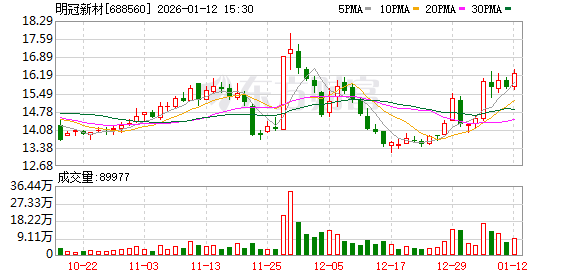
明冠新材:加快公司铝塑膜产品在消费电子、低空经济、人工智能领域的推广应用
Zheng Quan Ri Bao· 2026-01-12 14:06
Group 1 - The core viewpoint of the article highlights the recovery in the consumer electronics sector, which is expected to benefit the company’s aluminum-plastic film products [2] - The company aims to improve the consistency and stability of its aluminum-plastic film products while accelerating their application in consumer electronics, low-altitude economy, and artificial intelligence [2] - Key customers for the company's aluminum-plastic film include Guanyu, Ganfeng, Funeng, Guoxuan, Camel, Pylon, and Huayu Sodium Battery, indicating a strong market presence [2]

取消光伏和电池出口退税 有利产业进化和财政资源优化
Mei Ri Jing Ji Xin Wen· 2026-01-12 13:41
Core Viewpoint - The Ministry of Finance and the State Taxation Administration announced adjustments to the export tax rebate policy for photovoltaic and battery products, effective from April 1, 2026, with a complete cancellation of the VAT export rebate for these products, indicating a shift towards a mature industry that no longer requires policy support [1][2]. Group 1: Policy Changes - From April 1, 2026, the VAT export rebate for photovoltaic products will be completely canceled, and the rebate rate for battery products will be reduced from 9% to 6% until December 31, 2026, after which it will also be canceled [1]. - The export tax rebate rates for certain products, including photovoltaic and battery products, were previously reduced from 13% to 9% starting December 1, 2024, reflecting a trend towards decreasing support for these mature industries [1][4]. Group 2: Industry Impact - The removal of the export tax rebate will increase export costs for companies, leading to market consolidation where less competitive firms may be eliminated, while leading companies with scale and technology will strengthen their market positions [3]. - The photovoltaic industry has seen a significant drop in export prices, with prices for photovoltaic modules falling over 60% from $0.24 per watt to $0.09 per watt, resulting in a 33% year-on-year decline in export value for 2024 [2][3]. Group 3: Economic Implications - The adjustment of export tax rebates is expected to redirect fiscal resources towards domestic demand and social welfare, addressing challenges such as insufficient effective demand and overcapacity in certain sectors [3]. - The policy changes are part of a broader strategy to optimize fiscal resource allocation, allowing for more targeted support in areas like consumer subsidies and employment assistance, which are crucial for stabilizing economic expectations [3][4].
每经热评|取消光伏和电池出口退税 有利产业进化和财政资源优化
Sou Hu Cai Jing· 2026-01-12 13:38
Core Viewpoint - The Ministry of Finance and the State Taxation Administration announced adjustments to the export tax rebate policy for photovoltaic and battery products, effective from April 1, 2026, which includes the cancellation of VAT export rebates for these products, indicating a shift towards a mature industry that no longer requires policy support [1][2]. Group 1: Policy Changes - From April 1, 2026, the VAT export rebate for photovoltaic products will be eliminated, and the rebate rate for battery products will be reduced from 9% to 6% until December 31, 2026, after which it will also be canceled [1]. - The previous adjustments included a reduction of the export rebate rate for certain products from 13% to 9% starting December 1, 2024, which included solar cells [1][4]. Group 2: Industry Competitiveness - The reduction and eventual elimination of export tax rebates reflect the enhanced global competitiveness of China's photovoltaic and battery products, which account for approximately 80% of global solar cell production and 70% of lithium battery production [1][2]. - The export tax rebate has historically helped reduce export costs and enhance international competitiveness, but the industry has reached a stage where such support is no longer necessary [2]. Group 3: Market Dynamics - The cancellation of export tax rebates is expected to accelerate market clearing, leading to the elimination of companies that rely heavily on these rebates for profitability, while stronger companies with technological advantages will consolidate market share [3]. - The photovoltaic industry has faced issues of disorderly competition and price declines, with solar module prices dropping over 60% from $0.24 per watt at the beginning of 2023 to $0.09 per watt, resulting in a 33% year-on-year decline in export value for 2024 [2][3]. Group 4: Fiscal Resource Allocation - The policy adjustment aims to redirect fiscal resources towards domestic demand and social welfare, addressing challenges such as insufficient effective demand and overcapacity in certain industries [3][4]. - The cancellation of export rebates for strong industries allows for better allocation of fiscal resources, which can be directed towards consumer subsidies, employment support, and healthcare, thereby enhancing domestic consumption and stabilizing economic expectations [3].
4680电池的大饼,马斯克不想画了
36氪· 2026-01-12 13:35
Core Viewpoint - Tesla's ambitious plans for the 4680 battery have faced significant setbacks, leading to a drastic reduction in supply contracts and raising concerns about the viability of its low-cost battery strategy [5][6][7]. Group 1: Tesla's 4680 Battery Challenges - Tesla has been working on the 4680 battery for over five years but has now quietly acknowledged difficulties, as evidenced by a supply contract with L&F being reduced from $2.9 billion to $7386, a decrease of over 99% [5][6]. - The 4680 battery was intended to be a key component in Tesla's low-cost battery and affordable vehicle plans, but its production has been inconsistent, oscillating between "suspended" and "mass production" states [6][7]. - The performance issues of the 4680 battery, particularly in energy density and charge/discharge capabilities, have hindered the rollout of models like the Model Y, which was initially intended to utilize this technology [11][12]. Group 2: Cybertruck's Impact on Battery Development - The disappointing sales of the Cybertruck have directly impacted the 4680 battery's development, as it was designed to support larger, heavier vehicles like the Cybertruck and Semi [9][11]. - Initial projections for Cybertruck deliveries have fallen short, with estimates hovering around 50,000 units, far from Elon Musk's target of 250,000 units annually [12][14]. - The significant price increases and reduced range of the Cybertruck compared to initial promises have contributed to its lackluster market performance, further complicating the 4680 battery's commercial viability [14][15]. Group 3: Technical Challenges in Battery Production - The 4680 battery aims to improve energy density by 5 times, increase range by 16%, and reduce costs by 56%, but achieving these goals has proven difficult [17][19]. - Key innovations such as the "tabless" design, high nickel content in the cathode, and dry electrode manufacturing are essential for the battery's success, yet progress on these fronts has been slow [20][23][25]. - The transition from wet to dry electrode manufacturing is particularly challenging, with industry experts predicting that full commercialization may not occur until 2027-2028 [34][35]. Group 4: Broader Implications for Tesla - Tesla's struggles with the 4680 battery and the Cybertruck suggest a shift in focus away from automotive business, as Musk appears more invested in ventures like AI and robotics [36][37]. - As Tesla's automotive sales decline by 8.6% globally in 2025, the company may view the 4680 battery as a burden rather than a priority [36][37]. - In response to market pressures, Tesla has introduced financing options to maintain sales momentum, indicating a strategic pivot in its approach to the automotive market [41].