
智能网联新能源汽车

Search documents
增强供需适配促进形成3个万亿级消费领域|营商环境周报
2 1 Shi Ji Jing Ji Bao Dao· 2025-12-03 06:49
Group 1 - The State Administration for Market Regulation has introduced a new credit repair management method to encourage individuals to correct violations and rebuild credit, effective from December 25 [1] - The new method categorizes violations into three levels: minor, general, and serious, each with different public disclosure periods and repair conditions [1] - Minor violations with only warnings will not be publicly disclosed, while general violations will have a minimum disclosure period of three months and a maximum of one year; serious violations will be disclosed for a minimum of one year and a maximum of three years [1] Group 2 - The Ministry of Industry and Information Technology and six other departments have issued a plan to enhance the supply of consumer goods, aiming to create three trillion-yuan consumption sectors and ten billion-yuan consumption hotspots by 2027 [2] - The plan includes 19 key tasks focusing on new technology applications, expanding the supply of unique products, and creating new consumption scenarios [2] - Key industries targeted include smart connected vehicles, smart home products, consumer electronics, and green building materials, with a goal to develop iconic products and innovative enterprises [2] Group 3 - The plan emphasizes the need to improve the supply of baby products, quality student supplies, trendy fashion items, and products for the elderly [3] Group 4 - The Ministry of Industry and Information Technology has initiated commercial trials for satellite IoT services, targeting industries such as transportation, energy, and agriculture [4] - The trials aim to enhance market supply, stimulate market activity, and establish a safety regulatory framework for emerging industries [4] - Companies that fail to provide services or violate regulations may have their trial qualifications revoked [4] Group 5 - Hunan Province has launched initiatives to create friendly environments for new employment groups, addressing issues faced by delivery workers and couriers [5] - Specific measures include optimizing delivery environments, improving access to buildings, and providing essential services like drinking water and charging stations [5] - The initiative aims to enhance the overall working conditions for new employment groups [5] Group 6 - Sichuan Province has released guidelines to improve government services and administrative efficiency through the "Efficient Completion of One Thing" initiative [6] - The guidelines propose the integration of artificial intelligence into government services to provide intelligent support for both citizens and officials [6] - The focus is on creating a list of key services and exploring streamlined processes for various stages of business development [6] Group 7 - Hangzhou has introduced a new land management reform to align land use with industrial needs, promoting a market-oriented approach [7] - The reform includes categorizing commercial land into industrial and real estate types, with incentives for industrial land use [7] - The city is piloting flexible land use policies to adapt to changing industrial trends, enhancing the responsiveness of land planning [7][8]
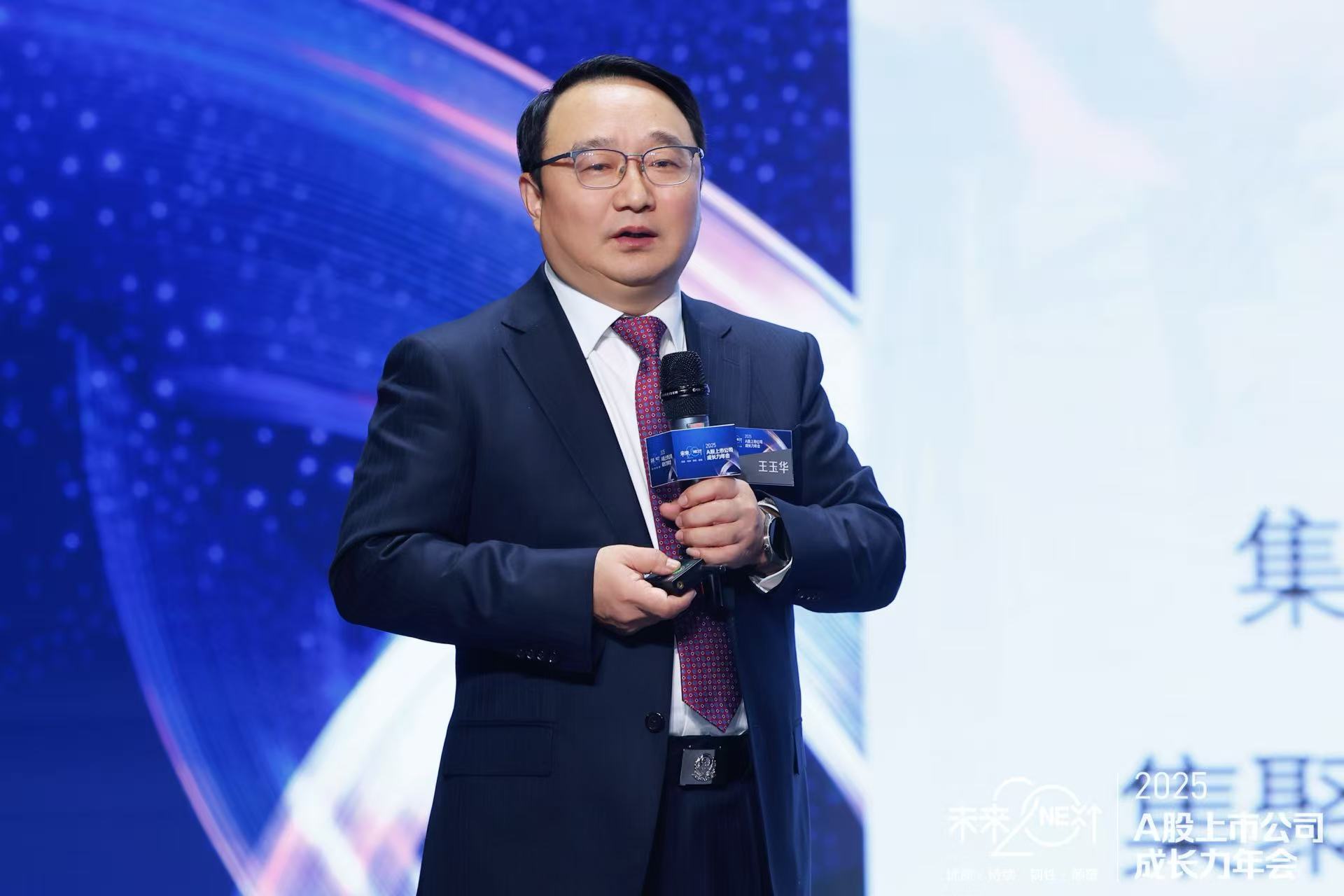
王玉华:嘉定新城有信心和耐心,为企业提供发展沃土
Di Yi Cai Jing· 2025-12-03 01:33
Core Insights - The key mission for the future is to develop industries, ensuring that each enterprise's growth is supported by its own strength and core technology, as well as a conducive development environment [1] Group 1: Industrial Development - Jiading has established three major identities: a historical cultural city, an international automotive city, and a technology satellite city, focusing on the development of intelligent connected new energy vehicles, integrated circuits, and biomedicine as part of its "14th Five-Year Plan" [1] - A number of leading autonomous driving companies have settled in Jiading, showcasing the latest achievements in the automotive "new four modernizations" [1] - The biomedicine industry is being developed according to a planning framework of "one axis, one town, two valleys, and two areas," aiming to create a highland for the city's biomedicine industry [1] Group 2: Future Industry Layout - Jiading is actively pursuing future industries in areas such as future intelligence, future energy, future materials, future health, and future space [1] - The Jiading New City is focusing on the integration of industry and city, with key industries including industrial internet, low-altitude economy, high-end medical care, green low-carbon, and financial technology [3] - The Jiading Industrial Internet Park is recognized as a benchmark and pilot park for industrial internet in Shanghai, providing ample cooperation opportunities with manufacturing enterprises [3] Group 3: Investment and Development - The leadership expresses a strong desire for more listed companies to invest and develop in Jiading New City, highlighting the progress in landscape, ecology, and branding over the past 20 years [4] - Confidence and patience are identified as two key factors for future listed companies, with Jiading New City committed to providing convenience in land, talent, and policies for enterprises [4]

袁家军、胡衡华、徐思伟、黄耀文,共同为新公司揭牌
Xin Jing Bao· 2025-12-01 13:14
Core Viewpoint - The establishment of Guoxin Holdings (Chongqing) Co., Ltd. marks a significant step in enhancing cooperation between Guoxin and Chongqing, focusing on strategic emerging industries and the development of the western financial center [1][2]. Group 1: Company Overview - Guoxin Holdings Co., Ltd. was established on December 22, 2010, and is one of the central enterprises regulated by the State-owned Assets Supervision and Administration Commission (SASAC) [3]. - The company was designated as a pilot for state-owned capital operation by the State Council in early 2016 and officially transitioned to a phase of continuous deepening reform in December 2022 [3]. - As of the end of 2024, the company's total assets are projected to reach 980 billion yuan, with annual profits exceeding 20 billion yuan for four consecutive years [3]. Group 2: Strategic Cooperation - The unveiling of Guoxin Holdings (Chongqing) Co., Ltd. is seen as a new starting point for further practical cooperation in various fields, including modern industrial systems, strategic emerging industries, state-owned enterprise reform, and digital development in Chongqing [2]. - Guoxin expresses confidence in Chongqing's future development and plans to increase its investment in sectors such as semiconductors, artificial intelligence, advanced materials, biomedicine, low-altitude economy, and new energy vehicles [2].
全国工业和信息化技术技能大赛破解人才瓶颈观察
Zheng Quan Shi Bao Wang· 2025-12-01 08:39
Core Viewpoint - The development of new quality productivity is essential for promoting high-quality development in China, driven by technological breakthroughs, innovative resource allocation, and deep industrial transformation, with a focus on cultivating high-quality technical talent [1] Group 1: Talent Gap and Skills Demand - The rise of emerging industries and the transformation of traditional industries have created a significant talent gap, particularly for interdisciplinary and composite talents in fields like smart connected vehicles, industrial internet, artificial intelligence, and integrated circuits [2] - By 2025, there is an expected shortage of 256,000 skilled personnel in smart connected vehicle technologies, highlighting the urgent need for talent that understands both industrial mechanisms and digital technologies [2] Group 2: Competition and Industry Relevance - The national industrial and information technology skills competition targets the talent gap by focusing on practical skills and real industry challenges, with competition categories such as smart hardware assembly and generative AI system applications [3] - The competition's assessment model combines theory and practice, simulating real industrial scenarios to quickly cultivate composite talents capable of solving actual problems [3] Group 3: Market Value of Skills - Winners of the competition become highly sought after by companies, as demonstrated by a case where a student received job inquiries from companies immediately after winning a competition [3] - The competition emphasizes the value of practical problem-solving abilities over traditional academic qualifications, reflecting a shift towards a "capability-first" talent perspective [4][5] Group 4: Knowledge Transfer and Mentorship - The competition serves as a platform for knowledge transfer and mentorship, exemplified by the relationship between a teacher and a former student who has now become a coach, fostering a culture of continuous learning and innovation [6] - The integration of new technologies such as big data and AI into the competition reflects an ongoing commitment to evolving skill sets and ensuring that the talent pool remains relevant [7] Group 5: Overall Impact on Industry - The national industrial and information technology skills competition exemplifies how to provide robust talent support for the development of new quality productivity, acting as a platform for showcasing skills and nurturing future craftsmen [7][8] - The competition embodies the spirit of "learning through competition," practical application, and the continuity of knowledge transfer, which are crucial for the advancement of China's manufacturing sector towards high-end, intelligent, and green production [8]
2027年形成3个万亿级消费领域和10个千亿级消费热点
Xin Hua Wang· 2025-11-30 22:29
Core Viewpoint - The Ministry of Industry and Information Technology, along with five other departments, has issued an implementation plan aimed at enhancing the adaptability of supply and demand in consumer goods, targeting significant optimization of the supply structure by 2027 and establishing three trillion-level consumption sectors and ten hundred-billion-level consumption hotspots [1][2]. Group 1: Key Objectives - By 2027, the supply structure of consumer goods is expected to be significantly optimized, with the formation of three trillion-level consumption sectors and ten hundred-billion-level consumption hotspots [1]. - The plan emphasizes leading industrial upgrades through consumption upgrades and aims for a dynamic balance between supply and demand, with a goal of establishing a high-quality development pattern by 2030 [1][2]. Group 2: Key Tasks - The plan outlines 19 key tasks across five areas: accelerating the application of new technologies and models, expanding the supply of distinctive and new products, precisely matching the needs of different demographics, cultivating new consumption scenarios and business formats, and creating a favorable development environment [2]. - Specific focus areas include intelligent connected new energy vehicles, smart home products, consumer electronics, modern textiles, food, and green building materials, with the goal of creating hundreds of iconic products and innovative enterprises [2]. Group 3: Market Segmentation - The plan aims to enhance the supply of green products, improve rural consumer goods, and significantly develop leisure and sports products, adapting to trends in green and low-carbon consumption [2]. - It also targets niche markets by enriching the supply of baby and children's products, enhancing quality student supplies, expanding fashionable "trendy" products, and optimizing products for the elderly [2].
政策问答·回应关切丨如何增强消费品供需适配性
Ren Min Ri Bao· 2025-11-30 04:06
Core Viewpoint - The implementation plan aims to enhance the adaptability of supply and demand in the consumer goods market, addressing the mismatch between what consumers want to buy and what is available for sale [1][2]. Group 1: Supply and Demand Adaptability - The plan emphasizes the need for consumer goods production to actively adapt to changing consumption trends, ensuring dynamic and precise matching of diverse consumer demands in terms of quality, structure, and utility [1]. - The initiative is expected to maximize consumption potential and promote smooth economic circulation by aligning what consumers desire with what companies produce [1]. Group 2: Consumer Goods Market Overview - China currently has a total of 230 million types of consumer goods, with over 100 categories, including home appliances, furniture, and clothing, leading the world in production [2]. - The strong manufacturing capability allows consumer goods companies to quickly respond to technological upgrades and subtle changes in consumer preferences, facilitating continuous product iteration and innovation [2]. Group 3: Specific Measures in the Implementation Plan - On the supply side, the plan includes accelerating the application of new technologies, expanding the supply of unique and new products, and focusing on sectors like smart connected vehicles and smart home devices [2]. - On the demand side, the plan aims to activate domestic demand by creating a favorable development environment, addressing differentiated needs across age groups, and enhancing consumer financial products and services [2]. Group 4: Future Market Potential - The implementation plan focuses on supply-side structural reforms, aiming to stimulate the multiplier effect and structural dividends of China's vast domestic market, with the potential to create trillions of yuan in new consumer markets by 2027 [3].
如何增强消费品供需适配性(政策问答·回应关切)
Ren Min Ri Bao· 2025-11-29 22:18
Core Viewpoint - The implementation plan aims to enhance the adaptability of supply and demand in consumer goods, addressing the mismatch between what consumers want to buy and what is available in the market [1][2]. Group 1: Supply and Demand Adaptability - The plan emphasizes the need for consumer goods production to actively adapt to changing consumer trends, ensuring dynamic and precise matching of diverse consumer demands in terms of quality, structure, and utility [1]. - The initiative is expected to maximize consumption potential and promote smooth economic circulation by aligning what consumers desire with what companies produce [1]. Group 2: Current Market Landscape - China currently has a total of 230 million types of consumer goods, with over 100 categories such as home appliances, furniture, and clothing leading global production [2]. - The strong manufacturing capability allows consumer goods companies to quickly respond to technological upgrades and subtle changes in consumer preferences, facilitating continuous product iteration and innovation [2]. Group 3: Specific Measures in the Implementation Plan - On the supply side, the plan includes accelerating the application of new technologies, expanding the supply of unique and new products, and focusing on emerging fields like smart connected vehicles and smart home devices [2]. - On the demand side, the plan aims to activate domestic demand potential by creating a favorable development environment, addressing differentiated needs across age groups, and implementing safety measures for children's products [2]. - The plan also includes policies for large-scale equipment updates and trade-in programs for consumer goods, as well as enhancing consumer finance products and services [2]. Group 4: Future Market Potential - The implementation plan focuses on supply-side structural reforms, aiming to stimulate the multiplier effect and structural dividends of China's vast domestic market, with the potential to create trillions of yuan in new consumer markets by 2027 [3].
人机共舞 产才融合——第三届全国工业和信息化技术技能大赛决赛观察
Xin Hua She· 2025-11-29 10:50
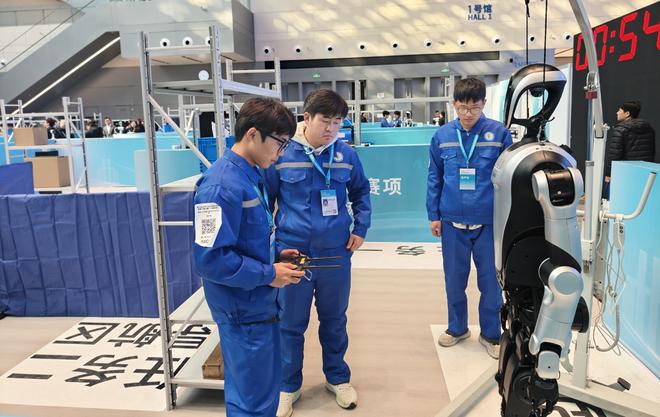
Core Insights - The third National Industrial and Information Technology Skills Competition showcased advancements in human-robot collaboration and the integration of industry needs into competition design [1][5] - The competition featured 408 teams and 834 participants across six fields, emphasizing practical skills and innovation in smart connected new energy vehicles and industrial robots [1][4] Group 1: Competition Overview - The event took place from November 26 to 28 in Chongqing, highlighting a vibrant scene of "human-machine collaboration" and "industry-talent integration" [1] - The competition introduced a "static + dynamic + virtual" three-dimensional format for the smart connected new energy vehicle category, requiring participants to perform both hardware adjustments and real-world driving tests [1][4] Group 2: Skills and Knowledge Requirements - Participants were required to possess multidisciplinary knowledge, including mechanical, electronic, and artificial intelligence skills, to effectively command and understand the underlying logic of robots [2][4] - The newly established Industrial Internet Operations Technician category aimed to cultivate talents that integrate operational technology (OT) and information technology (IT) [4] Group 3: Outcomes and Industry Impact - The competition resulted in the awarding of 24 first prizes, 96 second prizes, and 106 third prizes, with a focus on promoting technology transfer and deep integration of talent with industry needs [4] - The Industrial Internet Operations Technician category is expected to generate over 30 replicable industry solutions, accelerating the application of industrial internet technologies in small and medium-sized enterprises [5]
六部门发文:拓展汽车改装等汽车后市场消费
Cai Jing Wang· 2025-11-28 01:35
Core Viewpoint - The implementation plan aims to enhance the adaptability of supply and demand in consumer goods, targeting significant optimization of the supply structure by 2027, with the formation of three trillion-level consumption sectors and ten billion-level consumption hotspots [1] Group 1: Key Industries - Focus on key industries such as smart connected new energy vehicles and consumer electronics, with initiatives for typical innovative application activities [1] - Encouragement of green and low-carbon consumption in sectors like new energy vehicles [1] Group 2: Market Development - Expansion of automotive aftermarket consumption, including vehicle modifications, RV camping, and automotive events [1] - Promotion of high-quality development in the automotive rental market [1]
进一步促进消费,重磅政策发布!这些内容涉及文旅!
Sou Hu Cai Jing· 2025-11-27 13:10
Core Viewpoint - The implementation plan aims to enhance the adaptability of supply and demand for consumer goods, further promoting consumption in China, with a target to optimize the supply structure by 2027 and establish a high-quality development pattern by 2030 [7][8][9]. Group 1: Overall Requirements - By 2027, the plan aims to form three trillion-level consumption sectors and ten hundred-billion-level consumption hotspots, creating a batch of high-quality consumer goods with cultural connotations and global recognition [2][8][24]. - By 2030, a high-quality development pattern characterized by positive interaction between supply and consumption is expected to be established, with a steady increase in the contribution of consumption to economic growth [9][26]. Group 2: Accelerating Innovation in New Technologies and Models - The plan focuses on key industries such as smart connected vehicles, smart home products, and modern textiles, promoting innovative applications and creating a hundred landmark products and enterprises [10][27]. - It encourages the establishment of flexible manufacturing factories and the integration of consumer data with production systems to enhance responsiveness to consumer needs [10][11][27]. Group 3: Expanding Supply of Unique and New Products - The initiative promotes the expansion of green products and encourages the development of high-efficiency, energy-saving appliances suitable for rural environments [12][29]. - It emphasizes the development of leisure and sports products, particularly in response to emerging demands in event economies and outdoor activities [12][29]. Group 4: Precise Matching of Different Consumer Needs - The plan aims to enhance the supply of quality products for infants and children, students, and the elderly, focusing on safety and functionality [15][16][31]. - It encourages the development of fashionable "trendy" products and the optimization of aging-friendly products to meet the needs of an aging population [15][16][31]. Group 5: Cultivating New Consumption Scenarios and Business Models - The plan supports the establishment of flagship stores and new concept stores, promoting product launches and enhancing the consumer experience through digital technologies [17][34]. - It encourages the development of new business models such as live e-commerce and circular e-commerce, while ensuring the quality and safety of shared consumption products [18][34]. Group 6: Creating a Favorable Development Environment - The initiative emphasizes the importance of financial support for consumer goods industries, including policies for equipment updates and trade-in programs [19][35]. - It aims to strengthen market order by addressing issues like local protectionism and enhancing regulatory measures against counterfeit products [20][36].
