
物流

Search documents
东兴晨报-20260305
Dongxing Securities· 2026-03-05 11:27
Core Insights - The report highlights the importance of expanding domestic demand as a strategic focus for China's economic growth, emphasizing the need to boost consumption and develop a strong domestic market [3] - It also underscores the significance of technological innovation, particularly in achieving self-sufficiency in core technologies during the 14th Five-Year Plan period [3][4] - The report projects that China's middle-income group may exceed 800 million people in the next decade, positioning China as an attractive investment destination for foreign investors [3] Economic Outlook - The government aims for an economic growth target of 4.5%-5% for 2026, with a focus on job creation and maintaining a stable urban unemployment rate of around 5.5% [3] - The expected consumer price increase is around 2%, with a target for grain production set at approximately 1.4 trillion jin [3] - The fiscal deficit is projected to be around 4% of GDP, with a deficit scale of 5.89 trillion yuan, an increase of 230 billion yuan from the previous year [3] Industry Insights - The coal industry is experiencing fluctuations, with coking coal prices showing a decrease while futures prices have risen due to geopolitical tensions [8][9] - As of March 2, 2026, the comprehensive coking coal price index in China was reported at 1457.56 yuan/ton, reflecting a month-on-month decrease of 1.52% [8] - Coking coal inventories at major ports have decreased, indicating a tightening supply situation, with total inventories down by 5.15% month-on-month [9] Company Updates - Muxi Co. is expected to report a net loss of between 90.76 million yuan and 181.51 million yuan for Q1 2026, although this represents a reduction in losses compared to the previous year [7] - Shanghai Electric has received approvals for two offshore wind power projects, indicating ongoing investment in renewable energy [7] - Debang Co. has applied for voluntary delisting from the Shanghai Stock Exchange, reflecting strategic shifts within the company [7]



京东物流2025年营收同比增长18.8%
Bei Jing Shang Bao· 2026-03-05 10:10
Core Insights - JD Logistics reported a total revenue of 217.1 billion yuan for the year 2025, representing a year-on-year growth of 18.8% [1] - The adjusted net profit for the company reached 7.71 billion yuan [1] - In the fourth quarter, the integrated supply chain revenue experienced a significant year-on-year increase of 44.5% [1]
京东物流2025年营收2171亿元,同比增长18.8%,海外业务连续高速增长
Ge Long Hui A P P· 2026-03-05 09:50
Core Insights - JD Logistics reported a total revenue of 217.1 billion yuan for 2025, representing an 18.8% year-on-year growth, with an adjusted net profit of 7.71 billion yuan, showcasing strong performance [1] - The company continues to lead the industry in integrated supply chain services, with a 44.5% year-on-year growth in the fourth quarter [1] Revenue Growth - In 2025, JD Logistics' integrated supply chain logistics service revenue reached 116.2 billion yuan, a 33% increase year-on-year, with over 90,000 external integrated supply chain customers, up 13% [1][2] Service Upgrades - The company upgraded its basic warehousing and distribution services to include three new products, enhancing delivery efficiency with a 60% and 35% coverage increase for 211 and next-day delivery services, respectively [2] - JD Logistics successfully expanded its service capabilities in various industries, including luxury goods and home appliances, achieving over 300% revenue growth in collaboration with a leading home appliance brand [4] Global Expansion - JD Logistics is actively expanding its overseas integrated supply chain, adding multiple self-operated warehouses in countries like the USA, UK, and France, totaling nearly 200 warehouses globally by the end of 2025 [5] - The launch of the self-operated express brand "JoyExpress" in several European and Middle Eastern countries has improved delivery efficiency and service reliability [5] Technological Advancements - The company has implemented its proprietary "Super Brain 2.0" and "Wolf Pack" intelligent equipment across its operations, significantly enhancing efficiency and sustainability in supply chain services [8] - JD Logistics has introduced over 1,000 autonomous vehicles in more than 20 provinces, improving operational efficiency and extending its delivery capabilities to international markets [11] Commitment to Social Responsibility - As the only logistics company with a "self-operated direct signing" model, JD Logistics ensures 100% labor contract signing and benefits for its employees, committing to invest 22 billion yuan over the next five years to improve living conditions for frontline workers [15][17] - The company has been recognized for its green development initiatives, being included in the "Geneva Vision Initiative" for sustainable branding [17]

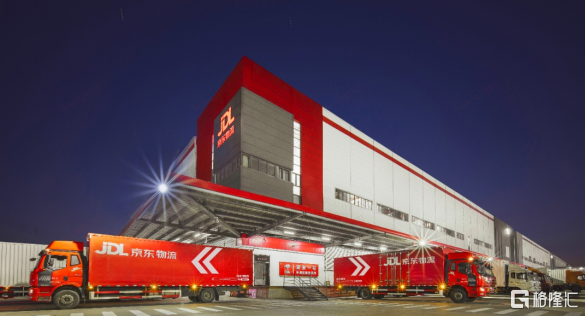
京东物流2025年业绩:全年营收2171亿元同比增长18.8% 净利润77.1亿元 海外业务高速增长
Zhi Tong Cai Jing· 2026-03-05 09:22
Core Viewpoint - JD Logistics (02618) reported a total revenue of 217.1 billion yuan for the year 2025, reflecting a year-on-year growth of 18.8%, with adjusted net profit reaching 7.71 billion yuan, indicating strong performance [1] Group 1: Financial Performance - Total revenue for 2025 reached 217.1 billion yuan, marking an 18.8% increase compared to the previous year [1] - Adjusted net profit for the year was 7.71 billion yuan, showcasing significant growth [1] Group 2: Segment Performance - Integrated supply chain revenue in the fourth quarter grew by 44.5% year-on-year, leading the industry [1] - The overseas business continued to achieve rapid growth, contributing positively to overall performance [1]
京东物流(02618)2025年业绩:全年营收2171亿元同比增长18.8% 净利润77.1亿元 海外业务高速增长
智通财经网· 2026-03-05 09:11
智通财经APP获悉,3月5日,京东物流(02618)发布2025年年度业绩报告,全年总收入达2171亿元,同比 增长18.8%,经调整后净利润达77.1亿元,业绩增长亮眼。其中第四季度一体化供应链收入同比增长 44.5%,再次领跑行业,海外业务继续实现高速增长。 ...
海南省国民经济和社会发展第十五个五年规划纲要
Zhong Shang Chan Ye Yan Jiu Yuan· 2026-03-05 00:05
Investment Rating - The report emphasizes the importance of high-standard construction of the Hainan Free Trade Port, indicating a positive investment outlook for the region [9][41]. Core Insights - The "15th Five-Year Plan" period is crucial for achieving high-quality development and deepening reform and opening up in Hainan, with a focus on building a modern industrial system and enhancing international competitiveness [8][24]. - The report highlights significant achievements during the "14th Five-Year Plan" period, including the establishment of a preliminary policy system for the Free Trade Port and substantial economic growth [30][41]. - The report outlines the strategic positioning of Hainan as a key area for national reform and opening up, aiming to become a major hub for international trade and investment [9][42]. Summary by Sections Development Foundation - Hainan's development foundation has become more solid, with a favorable environment for growth despite complex challenges [26]. - The province has achieved significant economic milestones, including a GDP growth rate of 5.7% and the establishment of a modern industrial system [30][41]. Guiding Principles - The report emphasizes the need for comprehensive reform and opening up, focusing on high-quality development and the integration of market mechanisms with government initiatives [52][53]. - It stresses the importance of ecological preservation and sustainable development as foundational principles for Hainan's growth [53]. Main Goals - The report sets ambitious targets for the Free Trade Port, aiming for a more complete policy system and enhanced trade and investment liberalization [55][56]. - It anticipates an annual economic growth rate of over 6% and a significant increase in the contribution of key industries to the GDP [56][57]. Infrastructure and Regional Development - Infrastructure improvements are highlighted, including the completion of major transportation projects and advancements in digital connectivity [34][36]. - The report discusses the importance of regional coordination and integration with national strategies, particularly with the Guangdong-Hong Kong-Macao Greater Bay Area [35][58]. Social and Economic Progress - The report notes improvements in social welfare, education, and healthcare, contributing to a higher quality of life for residents [38][39]. - It emphasizes the need for continued focus on safety and security, ensuring a stable environment for economic activities [39][40].
美联储褐皮书:美国经济温和扩张 通胀与政策不确定性仍构成风险
美股IPO· 2026-03-04 23:08
Economic Overview - The report indicates that the U.S. economy showed a relatively robust performance at the beginning of the year, but businesses remain cautious about future prospects [2] - Consumer spending has seen a rebound, yet many households are still reducing large purchases due to uncertainty [2] - Manufacturers in the Philadelphia area report challenges to production and orders due to unclear economic outlook and recent winter storms [2] Employment Trends - The labor market remains stable overall, but lacks significant vitality, with many companies limiting hiring plans due to weak demand and rising operational costs [2] - A survey by the Dallas Fed reveals that most businesses in both the service and manufacturing sectors currently have no plans to expand hiring [2] Automation and Workforce Changes - Some companies on the West Coast are reducing their workforce through layoffs or natural attrition, while exploring automation and AI to enhance efficiency [3] - A manufacturer in Memphis is reallocating capital budgets towards automation equipment due to ongoing recruitment difficulties [3] Impact of Immigration Enforcement - Strengthened immigration enforcement in the Minneapolis area has significantly impacted the local economy, with many employees resigning or not showing up for work [3] - A landscaping company reported challenges in finding suitable labor to replace departing employees, and a labor program for new immigrants saw a 43% drop in enrollment [3] Inflation and Cost Pressures - Inflation remains a widespread concern among businesses, with all 12 Federal Reserve districts reporting price increases [3] - Eight districts noted moderate inflation, while four reported slight increases, with rising costs in insurance, energy, and raw materials being common themes [3] Pricing Strategies - Some companies are responding to rising costs by maintaining stable prices while reducing product packaging sizes [4] - A Chicago-based company plans to pass on more tariff costs to customers this year, shifting from a previous cost-sharing approach [5] Regional Price Trends - The Dallas Fed noted that service prices are rising moderately, while physical goods prices are experiencing more significant increases [6] - The Atlanta Fed observed relatively mild inflation pressures, with prices remaining stable or only slightly increasing, alongside growing consumer resistance to price hikes [6] Overall Economic Sentiment - The Beige Book reflects a steady U.S. economy at the start of 2026, but growth momentum is uneven, with businesses facing cost pressures and policy uncertainties [6]
周大福创建(0659.HK):多元业务显韧性 财务稳健助增长;上调目标价
Ge Long Hui· 2026-03-04 21:29
Core Viewpoint - The performance of Chow Tai Fook in the first half of the fiscal year aligns with expectations, showcasing resilience through a diversified business portfolio and a commitment to gradual dividend growth [1][3]. Financial Performance - For the first half of the fiscal year, Chow Tai Fook recorded a profit attributable to shareholders of HKD 1.334 billion, representing a year-on-year increase of 15%. Total revenue increased by 5.9% to HKD 12.827 billion, driven by strong growth in the insurance business [1]. - The company declared an interim dividend of HKD 0.28 per share, reflecting a year-on-year increase of approximately 3%, with the total interim dividend amount rising by about 6% to HKD 1.27 billion [1]. Business Segment Performance - The financial services segment emerged as the main growth driver, with attributable operating profit increasing by 19% to HKD 729 million, and annualized premium income rising significantly by 48%, while new business value grew by 39% [2]. - The logistics and construction segments faced external challenges, with profits declining by 14% and 21%, respectively. The company plans to optimize its business portfolio, focusing on potential growth areas and continuing to strengthen its financial services as a core pillar [2]. Financial Health - As of the end of 2025, the company has approximately HKD 31 billion in available liquidity, with cash and bank deposits amounting to HKD 20.9 billion, significantly exceeding current liabilities. Debt due within one year decreased by 28% to HKD 6.8 billion, and net debt fell by 6% to HKD 13.8 billion, improving the net debt ratio to 34% [2]. - The average borrowing cost has decreased to approximately 4.0% from 4.2% in the same period last year [2]. Investment Outlook - The company maintains a "Buy" rating with an increased target price of HKD 10.6, supported by its diversified business model and strong performance in the financial services sector. The company is expected to sustain stable growth over the next three years, supporting its progressive dividend policy [3]. - The forecasted adjusted EBITDA for FY26/27/28 is approximately HKD 7.39 billion, HKD 7.75 billion, and HKD 8.02 billion, respectively. The company's re-inclusion in the Hang Seng Composite Index and potential short-term inclusion in the Stock Connect is anticipated to further enhance its valuation [3].

行业研究|行业周报|航空货运与物流:反内卷监管强势延续,龙头增长确定性提升-20260304
Changjiang Securities· 2026-03-04 08:11
Investment Rating - The industry investment rating is "Positive" and is maintained [9] Core Insights - The report emphasizes the continuation of anti-involution regulations, which are expected to enhance the growth certainty of leading companies in the logistics sector. The focus is on improving compliance levels and optimizing algorithms within courier companies to balance interests among headquarters, franchisees, and couriers [2][4] - The report highlights that the adjustment of delivery fees in provinces like Sichuan aims to secure the income levels of frontline workers, while regulatory measures in grain-producing areas like Guangdong and Yiwu help maintain stable prices. The pressure from social security compliance provides cost support for courier prices, limiting the risk of price declines [2][4] - The advancement of e-commerce value-added tax is accelerating the industry's process of eliminating inefficiencies, with low-efficiency practices like fake orders rapidly declining. This environment favors leading courier companies such as Zhongtong, Yuantong, and Shentong, which are expected to see increases in market share, profitability, and valuation [5] Summary by Sections Regulatory Environment - The report indicates that the national postal work meeting in 2026 will focus on comprehensive rectification of "involution-style" competition, marking a shift from "end correction" to "system reconstruction" in industry regulation [4] - The report notes that the anti-involution regulations are becoming a consensus in the industry, with a strong emphasis on compliance transformation for courier companies [4] Market Dynamics - The report states that the courier business volume growth rate has improved, with a cumulative year-on-year growth rate of 6.4% as of March 1, 2026. The volume of postal courier collected during the Spring Festival period increased by 13.2% year-on-year [7] - The air freight market is showing resilience, with air freight price indices reflecting strong demand during the off-peak season, particularly for high-tech products [7] Company Recommendations - The report recommends focusing on leading courier companies such as Zhongtong, Yuantong, and Shentong, which are expected to benefit from the favorable regulatory environment and market dynamics [5]



国泰海通晨报-20260304
GUOTAI HAITONG SECURITIES· 2026-03-04 00:43
Fixed Income Research - Geopolitical conflicts typically impact bond markets for only a few weeks, with inflation expectations and monetary policy being the primary drivers of interest rates [2] Transportation Research: Aviation - Spring Festival travel demand is strong, with post-holiday ticket prices continuing to rise, and Q1 industry profitability is expected to improve [2] - As of March 1, 2026, the total flow of people during the Spring Festival increased by 5.8% year-on-year, with air travel up by 6.9% [4][22] - Domestic air ticket prices are estimated to have risen by approximately 4-5% year-on-year during the Spring Festival, with a significant increase of nearly 8% during the holiday period [6][23] - The geopolitical situation in the Middle East has led to rising oil prices, but this does not alter the long-term value of airlines, suggesting a rare opportunity for reverse positioning [7][24] Power Equipment and New Energy Research - The cessation of natural gas production in Qatar has led to a significant increase in natural gas prices, which is expected to drive demand for distributed solar storage [9][10] - European electricity prices are likely to rise due to the surge in natural gas prices, impacting the wholesale electricity market [11][20] - The demand for distributed solar and storage solutions is anticipated to grow significantly as a result of the current energy supply challenges [12][21]