
机械

Search documents
由创新高个股看市场投资热点
量化藏经阁· 2025-05-30 09:16
报 告 摘 要 乘势而起:市场新高趋势追踪 触及新高的个股、行业和板块可被视为市场的风向标。越来越多的研究表明动量、趋势跟踪策略的有效性。本报告旨在定期跟踪市场中创新高的个股及其 分布,以追踪市场趋势、把握市场热点。 截至2025年5月30日,上证指数、深证成指、沪深300、中证500、中证1000、中证2000、创业板指、科创50指数250日新高距离分别为4.08%、 12.65%、9.77%、10.42%、8.85%、6.39%、21.84%、13.29%。中信一级行业指数中银行、电力及公用事业、医药、家电、农林牧渔行业指数距离 250日新高较近,煤炭、石油石化、房地产、消费者服务、电子行业指数距离250日新高较远。概念指数中,数字货币、银行精选、制药、创新药、万得微 盘股日频等权、银行等概念指数距离250日新高较近。 见微知著:利用创新高个股进行市场监测 截至2025年5月30日,共697只股票在过去20个交易日间创出250日新高。其中创新高个股数量最多的是基础化工、机械、医药行业,创新高个股数量占 比最高的是银行、汽车、纺织服装行业。按照板块分布来看,本周制造、周期板块创新高股票数量最多;按照指数分布 ...


中国贸促会:推动中拉经贸务实合作 协议金额超30亿美元
news flash· 2025-05-30 02:46
Core Insights - The China Council for the Promotion of International Trade (CCPIT) has successfully facilitated over $3 billion in cooperation agreements between China and Latin American countries this year [1] Group 1: Economic Cooperation - CCPIT has organized domestic business delegations to visit Brazil, Chile, Cuba, and other Latin American countries, resulting in the signing of cooperation agreements [1] - A total of 117 exhibition projects have been approved for Chinese enterprises to participate in Latin America and the Caribbean, covering eight countries including Brazil, Mexico, Peru, Colombia, and Argentina [1] Group 2: Exhibition and Participation - The planned exhibition area for these projects exceeds 50,000 square meters, with nearly 20,000 square meters already exhibited [1] - A total of 1,588 enterprises have participated in these exhibitions, spanning various sectors such as machinery, auto parts, and medical equipment [1]
大成旗下浮动费率基金6月3日开售
Cai Jing Wang· 2025-05-29 02:43
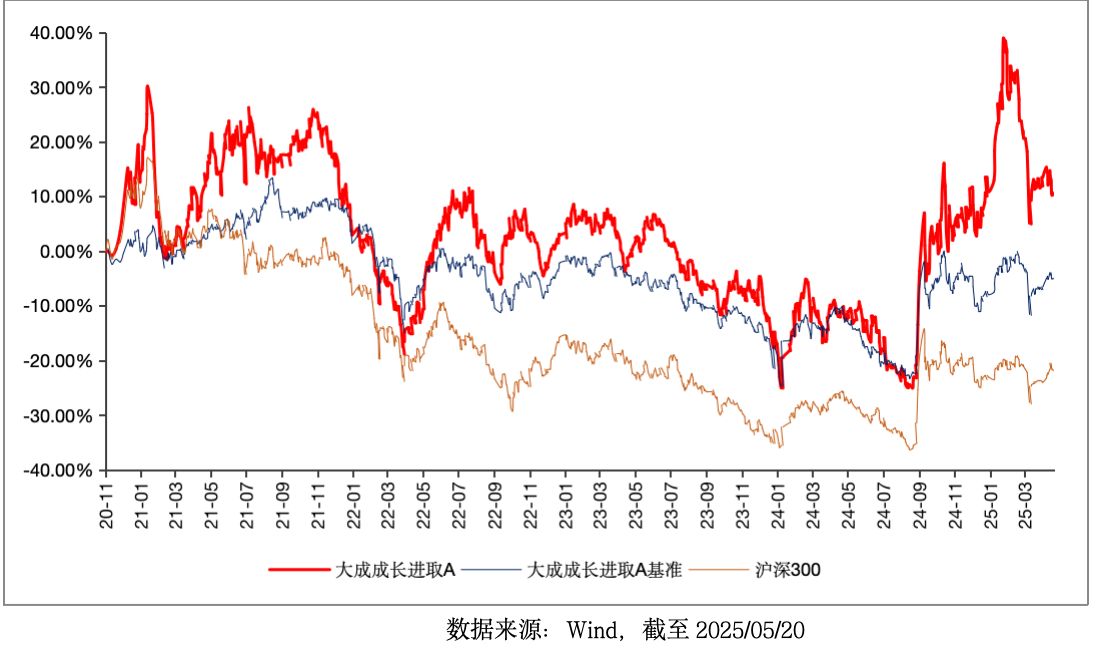
Core Viewpoint - The newly approved floating rate fund, Dachen Zhi Zhen Return Mixed Fund, will start issuing on June 3, with a focus on active equity investment and managed by Du Cong, who has demonstrated strong performance in technology growth investments [1][2]. Group 1: Fund Overview - The Dachen Zhi Zhen Return Mixed Fund is set to be issued on June 3, with Du Cong as the proposed fund manager and ICBC as the custodian [1]. - Dachen Fund is known for its active equity investment capabilities, with notable fund managers like Xu Yan, Liu Xu, and Han Chuang [1]. - Du Cong has shown a significant excess return of 18.7% relative to the performance benchmark since managing Dachen Growth Progress Fund [1]. Group 2: Investment Strategy - Du Cong's investment framework focuses on identifying "key variables" to determine investment weight through expected return rates and curvature [2]. - The investment process consists of two main steps: assessing long-term performance potential and understanding company quality and future valuation [2]. - "Curvature" is a key concept in Du Cong's strategy, representing the acceleration of growth, which influences company pricing during market turning points [2]. Group 3: Performance Metrics - Since Du Cong took over Dachen Growth Progress Fund, it has achieved a cumulative return of 20.74%, ranking in the top 15% of its category [3]. - The fund's net asset value curve has shown steep growth, indicating strong performance during various bull markets in the technology sector [3]. - The fund's turnover rate reached 1,076.12%, reflecting Du Cong's active management and responsiveness to market changes [3]. Group 4: Market Opportunities - Du Cong highlighted several investment opportunities in the 2024 annual report, including AI computing power, domestic substitution industries, and the Apple supply chain [6][7]. - The fund achieved a quarterly return of 11.2% in Q1 2025, with an excess return of 8.27% relative to its benchmark [6]. - The ongoing U.S.-China trade tensions are seen as a catalyst for investment opportunities in semiconductor and software sectors [6].
推动重点产品检测更快更准
Guang Xi Ri Bao· 2025-05-29 01:38
Group 1: Modern Industrial System Development - The government aims to lead or participate in the formulation and revision of over 500 international and national standards, and over 400 industry standards by 2027 [1] - The initiative includes the establishment of over 1,500 new core testing and inspection capabilities, ensuring quality infrastructure meets modern industrial demands [1] - Focus areas include new industrialization, artificial intelligence standards, and standards for strategic emerging industries such as new generation information technology [1] Group 2: Agricultural and Forestry Standards - The development of standards will focus on key agricultural sectors including grains, vegetables, fruits, and livestock, as part of the "10+3+N" modern agricultural system [2] - A comprehensive quality safety monitoring system for agricultural products will be established across various administrative levels [2] - Standards will be developed for 23 subfields in forestry, including wood processing, carbon sinks, and ecological tourism [2] Group 3: Quality Infrastructure and Cooperation - The construction of national and regional quality infrastructure platforms, such as the sugar industry measurement testing center, is prioritized [3] - The establishment of a China-ASEAN inspection and testing system aims to enhance inspection capabilities for various products [3] - The initiative includes international cooperation projects in green agriculture and cross-border logistics, aligning Chinese standards with ASEAN standards [3]
高分答卷:重庆国企改革加速系统重塑
Sou Hu Cai Jing· 2025-05-28 00:46
Core Insights - The article highlights significant progress in the restructuring and integration of state-owned enterprises (SOEs) in Chongqing, achieving major breakthroughs in reform and efficiency improvements since the Fourth Plenary Session of the Sixth Municipal Party Committee [1][2]. Financial Performance - In 2024, the total profit of key municipal SOEs exceeded 37.7 billion yuan, representing a year-on-year growth of 12.8%, with an added value of 128.8 billion yuan, up 6.3% year-on-year [12]. - From January to April 2024, key municipal SOEs reported a total profit of 12.12 billion yuan, a year-on-year increase of 9.6%, and achieved operating revenue of 104.5 billion yuan, with an added value of 39.7 billion yuan, reflecting growth rates of 4.3% and 7.2% respectively [12]. Restructuring and Integration - A total of 19 groups of strategic restructuring have been implemented across five batches, reducing the number of key municipal SOEs from 51 to 33, and completing 13 specialized integrations, resulting in a reduction of the total number of legal entities to 690 [12]. - The restructuring efforts have led to the activation of assets worth 151 billion yuan and the recovery of 59.5 billion yuan [2][3]. Sector-Specific Developments - The hotel industry has seen significant consolidation, with the Chongqing Cultural Tourism Group leading the integration of over 100 municipal hotels, enhancing brand recognition and market competitiveness [3]. - The Chongqing Water Environment Group, after merging with the Municipal Water Investment Group, has accelerated management optimization and internal specialization, ranking first in net assets among China's top 50 environmental enterprises [2]. Project Investment and Economic Impact - As of April 2024, municipal SOEs have invested 46.19 billion yuan in 180 key municipal projects, accounting for 30.3% of the total investment in the city [4][6]. - The Chongqing Logistics Group reported a 20.3% year-on-year increase in container volume and a 5.3% increase in port cargo throughput from January to April 2024 [6]. Innovation and Technology Development - Chongqing's SOEs have established a gradient cultivation system, nurturing 221 technology-based enterprises and 158 high-tech enterprises, with a significant increase in R&D investment [7][8]. - The Chongqing Machinery and Electronics Group has improved the efficiency of technology transfer from laboratories to production lines, with R&D investment reaching 625 million yuan in 2024 [7]. Digital Transformation and Risk Management - The "State-owned Assets Intelligent Management" digital platform has been developed to enhance regulatory oversight, achieving 100% digitalization of core business processes [9][10]. - The platform has facilitated real-time monitoring of investment projects and risk indicators, identifying compliance issues and providing intelligent risk alerts [10][11].



智库要览丨解码中国企业“出海”新动向
Sou Hu Cai Jing· 2025-05-27 08:04
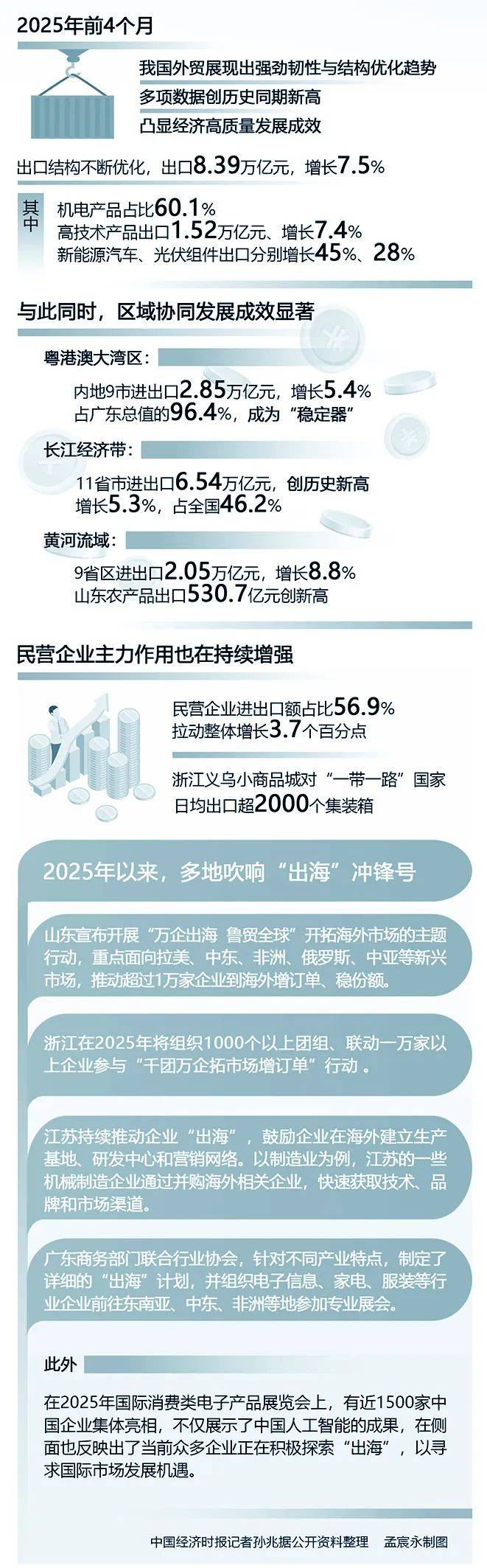
Core Viewpoint - Chinese companies are transitioning from merely exporting products to establishing brands and conducting research overseas, particularly in sectors like renewable energy, electric vehicles, and high-tech products, amidst a complex global economic landscape [1][30][31]. Group 1: Challenges and Opportunities for Chinese Companies Going Global - The EU's policies aimed at achieving carbon neutrality by 2050 create significant market opportunities in solar energy and storage, but Chinese companies face high entry barriers and costs when expanding into these markets [2][3][24]. - The Regional Comprehensive Economic Partnership (RCEP) offers Chinese companies reduced trade barriers and easier market access, yet challenges such as policy continuity and supply chain completeness remain [5][6][26]. - Companies are advised to adopt both horizontal and vertical strategies for international expansion, focusing on deepening their presence in manufacturing, services, and consumption while enhancing collaboration with related enterprises [4][24]. Group 2: Market Trends and Strategic Recommendations - The shift from product export to brand and research export indicates a maturation in the international strategies of Chinese firms, necessitating a focus on local market compliance and strategic planning [15][30]. - Reports highlight the importance of optimizing overseas patent strategies to mitigate risks associated with intellectual property disputes, particularly in the automotive sector [17][18][31]. - The increasing role of private enterprises in international trade is evident, with significant contributions to export growth and initiatives aimed at expanding market presence in emerging regions [10][29]. Group 3: Economic Performance and Regional Developments - In the first four months of 2025, China's exports reached 8.39 trillion yuan, marking a 7.5% increase, with high-tech products and electric vehicles showing notable growth rates of 7.4% and 45%, respectively [10][28]. - Regional cooperation has proven effective, with significant trade volumes reported in areas like the Guangdong-Hong Kong-Macao Greater Bay Area and the Yangtze River Economic Belt, contributing to national economic stability [10][28]. - Initiatives in provinces like Jiangsu and Guangdong are encouraging companies to establish overseas production bases and participate in international trade fairs, further supporting the "going global" strategy [11][29].
新方向,将迎来爆发性成长!
Zhong Guo Ji Jin Bao· 2025-05-27 04:33
Group 1 - The core viewpoint is that China's manufacturing industry has achieved "quantity increase and quality improvement," effectively serving as a "ballast" and "stabilizer" for the economy [1][3] - The manufacturing sector is the backbone of China's economy, with significant investments leading to a 9.2% year-on-year growth in manufacturing investment and a 7.7% increase in the added value of large-scale equipment manufacturing [3] - Technological innovation is driving the development of new productive forces, with advancements in high-end equipment and artificial intelligence leading to the emergence of new products with high technical content and added value [3] Group 2 - China holds a dominant position in the global renewable energy sector, both in terms of capacity and output, with significant advancements in photovoltaic and lithium battery technologies [4][5] - Chinese companies have transitioned from following to leading in the renewable energy industry, with notable achievements in battery technology, including the development of solid-state batteries [5][6] - The market share of Chinese battery manufacturers in the global market reached 68%, with CATL maintaining its position as the global leader [5] Group 3 - The domestic manufacturing industry has entered a new phase of transformation, characterized by automation and intelligence, which has spurred innovation in various mechanical equipment sectors [7] - The market share of domestic manufacturers in industrial robots has increased from 18% in 2015 to 52.3% in 2024, indicating a significant shift towards local production [8] - The application of embodied intelligence and "AI+" technologies is expected to drive explosive growth in the domestic AI industry this year [8] Group 4 - The environmental protection industry is undergoing a phase of new technology development and domestic substitution, with a focus on cost reduction and economic parity [9] - The sanitation sector is evolving through mechanization and electrification, with the application of autonomous driving technology gaining traction [9] - The hydrogen energy sector is in its early stages, with ongoing efforts to reduce costs and achieve domestic substitution in key components [9]
日本每周启动东京证券交易所访问确认持续关注并购、企业效率和少数股东权利
Goldman Sachs· 2025-05-26 13:25
Investment Rating - The report indicates a focus on improving the M&A environment in Japan, suggesting a positive outlook for the market [6][29]. Core Insights - The report highlights the ongoing commitment of Japanese regulatory bodies to enhance the M&A landscape, with significant revisions to corporate governance expected in the coming months [6][29]. - The report emphasizes the importance of protecting minority shareholders during M&A transactions, which is seen as a critical factor for accelerating M&A activities in Japan [6][29]. - The report notes that the recent increase in share buybacks has led to a rise in total dividend payouts, indicating a positive trend in corporate capital return strategies [18][19]. Summary by Sections Market Overview - The TOPIX index is currently at 2,735.52, reflecting a slight decrease of 0.2%, while the NK225 index is at 37,160.47, down by 1.6% [1]. - Key sectors performing well include non-ferrous metals and pharmaceuticals, while insurance and glass & ceramics are lagging [1][20]. Corporate Actions - There has been a notable net purchase of TSE Prime cash stocks by foreign investors amounting to ¥597 billion, while individual and institutional investors have net sold ¥222 billion each [3]. - The report mentions that the total amount of share buybacks announced in the second quarter has already surpassed the total for the entire second quarter of the previous fiscal year [2][13]. Earnings and Forecasts - The report provides earnings per share (EPS) forecasts for FY24 and FY25, with expected growth rates of 10% and 2% respectively [25][30]. - The average exchange rate assumptions for the yen against the dollar are set at ¥145 for FY25, indicating a potential impact on export-oriented companies [11][29]. Sector Performance - The pharmaceutical sector has shown a 3% increase over the past week, while the defense sector has also performed well with a 3% rise [20]. - The report lists various sectors with their respective performance metrics over different time frames, highlighting the best and worst performers [21][66].

市场情绪监控周报(20250519-20250523):本周热度变化最大行业为综合、交通运输-20250526
Huachuang Securities· 2025-05-26 05:44
- Model name: Broad-based index rotation strategy; Model construction idea: Using the weekly change rate of the total heat of different broad-based indices to construct a rotation strategy; Model construction process: Calculate the weekly heat change rate of different groups of stocks and smooth it using MA2. On the last trading day of each week, buy the broad-based index with the highest total heat change rate MA2. If the highest change rate is in the "other" group, stay in cash. The strategy's net value is shown in the report. The formula is: $ \text{Heat Change Rate MA2} = \frac{\sum_{i=1}^{n} \text{Heat Change Rate}_i}{n} $ where $ n $ is the number of weeks. The strategy's annualized return since 2017 is 8.74%, with a maximum drawdown of 23.5%. The return since 2025 is 8.13%[14][16][17] - Model name: Broad-based index heat; Model construction idea: Aggregate the total heat of component stocks in broad-based indices; Model construction process: Group the entire A-share sample according to the component stocks of the CSI 300, CSI 500, CSI 1000, CSI 2000, and "other" groups. Sum the total heat indicators of the component stocks in each group to obtain the heat of the four mainstream broad-based indices and the heat of stocks not included in these indices ("other" group). The formula is: $ \text{Total Heat} = \sum_{i=1}^{n} (\text{Browse Count}_i + \text{Self-selection Count}_i + \text{Click Count}_i) $ where $ n $ is the number of stocks in the group. The heat is normalized by dividing by the total market heat and multiplying by 10000, with a range of [0,10000][9][12] - Factor name: Total heat indicator; Factor construction idea: Aggregate the browsing, self-selection, and click counts of stocks; Factor construction process: Define the total heat indicator as the sum of the browsing, self-selection, and click counts of a stock, normalized by its proportion in the entire market on the same day, and multiplied by 10000. The formula is: $ \text{Total Heat} = \frac{(\text{Browse Count} + \text{Self-selection Count} + \text{Click Count})}{\text{Total Market Heat}} \times 10000 $ with a range of [0,10000][8] - Factor name: Concept heat; Factor construction idea: Aggregate the total heat of component stocks in different concepts; Factor construction process: Calculate the weekly heat change rate of each concept and smooth it using MA2. Construct two simple portfolios: select the top 5 concepts with the highest heat change rate each week, exclude the smallest 20% of stocks by market cap, and equally hold the top 10 stocks with the highest total heat in each concept to form the heat TOP portfolio. Similarly, select the bottom 10 stocks with the lowest total heat in each concept to form the BOTTOM portfolio. The formula is: $ \text{Heat Change Rate MA2} = \frac{\sum_{i=1}^{n} \text{Heat Change Rate}_i}{n} $ where $ n $ is the number of weeks. The BOTTOM portfolio's annualized return is 15.71%, with a maximum drawdown of 28.89%. The return since 2025 is 18.35%[28][30][32][33] Model backtest results - Broad-based index rotation strategy, annualized return 8.74%, maximum drawdown 23.5%, return since 2025 8.13%[17] - Broad-based index heat, CSI 300 heat change rate increased by 5.25%, CSI 500 heat change rate decreased by 13.72%[17] Factor backtest results - Total heat indicator, normalized range [0,10000][8] - Concept heat, BOTTOM portfolio annualized return 15.71%, maximum drawdown 28.89%, return since 2025 18.35%[33]
如何看待特朗普对欧盟50%的关税威胁?
HTSC· 2025-05-26 02:25
Market Reaction - Following Trump's announcement, the US experienced a significant decline in stocks, bonds, and the dollar, with the dollar index dropping by 0.8% and the euro strengthening by 0.7%[2] - European stock indices, particularly France's CAC40 and Germany's DAX, fell by 1.9% and 1.5% respectively, while the S&P 500 index in the US decreased by 0.7%[2] - The 10-year Eurozone bond yield increased by 1.4 basis points, while the 10-year US Treasury yield fell by 2.3 basis points, indicating market volatility[2] Tariff Implications - Trump's proposed 50% tariff on the EU could lead to significant economic repercussions for both the US and EU, as they are each other's largest trading partners[4] - In 2024, the US accounted for 14% of EU imports and 21% of EU exports, while the EU represented 18% of US imports and 19% of US exports[4] - If implemented, the US could see a reduction of over 50% in imports from the EU, severely impacting industries such as pharmaceuticals, machinery, and automobiles[4] Economic Context - The US faces increasing pressure from rising Treasury yields, which could limit the effectiveness of its tariff policies and lead to greater asset sell-off[5] - The US Treasury yields for 10-year and 30-year bonds have recently surpassed 4.5% and 5.0% respectively, reflecting concerns over fiscal sustainability[5][6] - The EU has more room for fiscal expansion compared to the US, which may lead to a more favorable economic outlook for Europe in the face of potential tariffs[5] Political Dynamics - Trump's tariff threats may be more of a strategic maneuver in trade negotiations with the EU, especially given the slow progress in recent talks[3] - The political landscape in the US may limit Trump's ability to implement the proposed tariffs, as domestic pressures could shift focus away from international trade issues[7] - The likelihood of the 50% tariff being enacted is low, with expectations that the final tariff level will not exceed 20%[8]