煤炭

Search documents
光大期货:2月25日矿钢煤焦日报
Xin Lang Cai Jing· 2026-02-25 01:09
螺纹钢: (邱跃成,从业资格号:F3060829;交易咨询资格号:Z0016941) 春节后首个交易日,螺纹盘面震荡下跌,截止日盘螺纹2605合约收盘价格为3027元/吨,较上一交易收 盘价格下跌28元/吨,跌幅为0.92%,持仓增加9.21万手。现货市场仍基本处于休市局面,局部报价下 跌,唐山地区迁安普方坯价格下跌20元/吨至2880元/吨,杭州市场中天螺纹价格下跌20元/吨至3150元/ 吨。据我的钢铁数据,春节周螺纹产量环比增加1.22万吨至170.38万吨,农历同比下降7.29万吨;热卷 周产量环比增加2.05万吨至309.81万吨,农历同比下降13.62万吨。春节周螺纹总库存环比增加129.22万 吨至716.04万吨,农历同比增加62.91万吨,库存累积幅度偏中性;热卷总库存环比增加63.08万吨至 433.85万吨,农历同比增加45.23万吨,热卷库存处于近五年同期最高水平。今年春节螺纹库存累库幅度 不大,但热卷库存累积较大,尤其是热卷库存处于历年同期高位水平。春节后终端需求恢复仍要一个过 程,预计库存整体仍要继续累积3周左右,库存将面临较大的消化压力。 预计短期螺纹盘面仍以偏弱运 行为主。 铁 ...


A股市场大势研判:A股马年开门红
Dongguan Securities· 2026-02-24 23:30
Market Performance - The A-share market opened positively in the Year of the Horse, with major indices showing significant gains, including the Shanghai Composite Index rising by 0.87% to close at 4117.41 points and the Shenzhen Component Index increasing by 1.36% to 14291.57 points [2][4] - The trading volume in the Shanghai and Shenzhen markets reached 2.2 trillion yuan, an increase of 219.4 billion yuan compared to the previous trading day, indicating a strong market sentiment [6] Sector Analysis - The top-performing sectors included Oil & Petrochemicals, which rose by 5.53%, and Building Materials, which increased by 3.71% [3] - Conversely, sectors such as Media and Computer experienced declines, with the Media sector dropping by 3.20% [3] - Notable concept stocks included Combustible Ice and Cultivated Diamonds, which saw significant gains, while MLOps and AI Corpus concepts faced declines [4][3] Future Outlook - The report indicates a positive outlook for the A-share market, supported by strong performance in oil and gas stocks, chemical sectors, and precious metals [4] - The market is expected to benefit from favorable macroeconomic policies and the upcoming Two Sessions, which historically lead to a high probability of index increases post-Spring Festival [6] - Analysts suggest focusing on sectors such as dividends, TMT (Technology, Media, and Telecommunications), and power equipment for potential investment opportunities [6]
陕西煤矿智能化产能占比达80%
Xin Lang Cai Jing· 2026-02-24 23:26
Core Insights - Shaanxi Province's coal mining industry has achieved a significant milestone with 80% of its production capacity being intelligent mining, with a total capacity of 600 million tons [1] - The province's raw coal output is projected to reach 805 million tons by 2025, marking a year-on-year increase of 2.9%, positioning it as the third-largest coal producer in the country [1] - The transition from "scale growth" to "quality efficiency" and "technology-driven" development is evident in the coal sector, with 24 large modern coal mines established, showcasing advanced technology and innovation capabilities [1] Industry Developments - The average scale of coal mines in Shaanxi has increased significantly, from 2.45 million tons per year in 2024 to 3.2 million tons per year in 2025 [1] - The Shaanxi Coal Group's Yulin Chemical Co., Ltd. is advancing modern coal chemical processes towards high-end, diversified, and low-carbon solutions [1] - The province has produced 86 scientific research achievements recognized by the China Coal Industry Science and Technology Award, indicating a strong focus on technological breakthroughs [1]
河南神火煤电股份有限公司董事会第九届二十六次会议决议公告
Shang Hai Zheng Quan Bao· 2026-02-24 17:07
Meeting Overview - The 26th meeting of the 9th Board of Directors of Henan Shenhuo Coal Power Co., Ltd. was held on February 24, 2026, via communication methods, chaired by Chairman Li Hongwei [2][3] - All nine directors attended the meeting, fulfilling legal and regulatory requirements [2] Resolutions Passed - The board approved the proposal to elect a non-independent director, Liu Dexue, following the resignation of Chairman Li Hongwei due to age [3][5] - The voting result for this proposal was unanimous, with 100% approval from the board [5] - The proposal will be submitted to the first temporary shareholders' meeting of 2026 for further approval [6] Chairman Resignation - Li Hongwei submitted his resignation as Chairman and director, effective upon the election of a new chairman [13] - His resignation will not affect the company's operations, and he confirmed no disagreements with the board [13][14] Candidate for Non-Independent Director - Liu Dexue, born in May 1976, is proposed as a candidate for the non-independent director position, with a background in finance and various roles within the company [10][18] - Liu holds 75,000 shares of the company and meets all legal qualifications for the position [19] Shareholders' Meeting Notification - The first temporary shareholders' meeting is scheduled for March 13, 2026, with both on-site and online voting options available [20][22] - The meeting will address the election of the new non-independent director and is open to all shareholders registered by March 10, 2026 [24][27]

马年A股喜迎“开门红”:周期“老登”领涨 科技、消费遇冷
Mei Ri Jing Ji Xin Wen· 2026-02-24 14:32
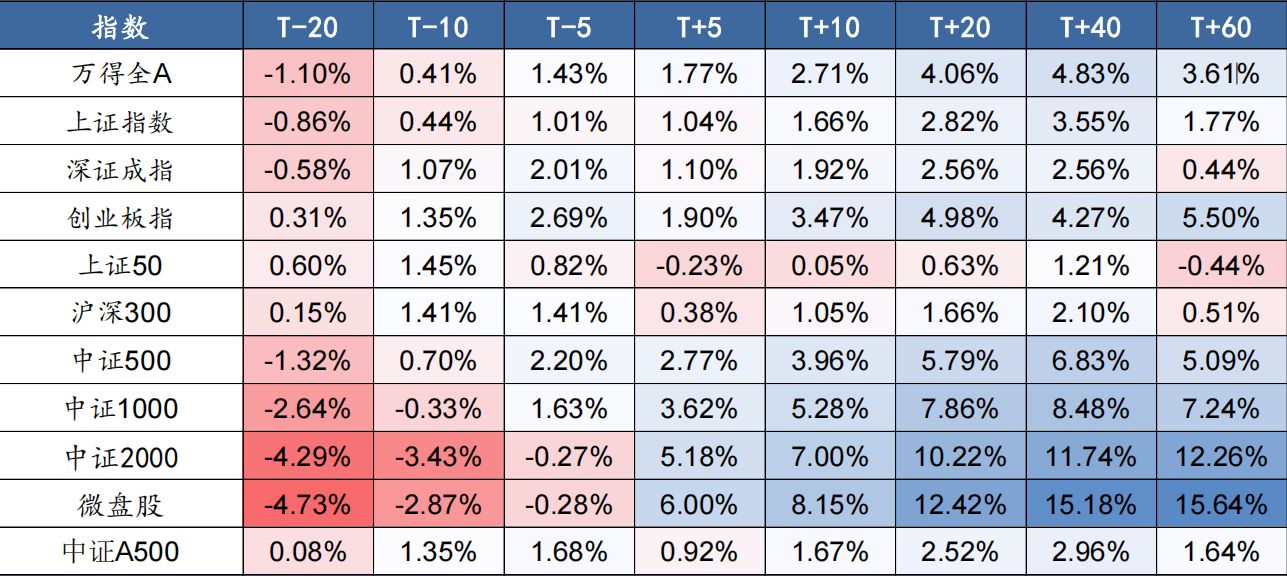
Group 1 - The A-share market experienced a broad increase on the first trading day of the Year of the Horse, with most core indices rising between 1% and 2% [1][2] - The Shanghai Composite Index rose by 0.87% to close at 4117.41 points, returning above the 4100-point mark [2] - The technology sector showed weaker performance, with the Sci-Tech 50 and Sci-Tech 100 indices declining by 0.34% and 1.55%, respectively [2] Group 2 - The market's "opening red" trend is attributed to the overseas markets showing upward trends during the Spring Festival holiday and a recovery demand following a significant adjustment before the holiday [4] - The spring market is expected to continue, with a short-term outlook of sector rotation and upward fluctuations [4] - Historical data since 2010 indicates a high probability of A-shares rising shortly after the Spring Festival, particularly in small-cap indices like the CSI 2000 and micro-cap stocks, which have shown average gains exceeding 10% in the 20 trading days post-holiday [4] Group 3 - The leading sectors today were traditional industries such as petrochemicals, building materials, basic chemicals, non-ferrous metals, coal, and steel, with significant gains [5][6] - The Petrochemical Index surged by 5.53%, while building materials, basic chemicals, and non-ferrous metals indices all rose over 3% [5][6] - In contrast, sectors like AI models, robotics, and consumer goods, which performed well in the Hong Kong market during the holiday, did not reflect similar trends in the A-share market [7] Group 4 - The recent improvement in the Producer Price Index (PPI) and the high valuations in the technology sector have led to a market shift towards traditional sectors [8] - The PPI for January showed a year-on-year decline of 1.4%, with a narrowing drop compared to previous months, indicating a potential recovery in pricing power across various industries [8] - The resource sector, particularly non-ferrous metals, has been a standout performer in the A-share market, with price increases becoming a central theme across multiple sectors [9] Group 5 - Looking ahead to the next 1-2 months, there is optimism for cyclical "old economy" assets, particularly as seasonal economic activities typically rise in March and April [13] - The period following the National People's Congress is expected to see accelerated implementation of macro policies, which could enhance market sentiment towards cyclical sectors [13]
马年A股首个交易日迎“开门红” 分析师表示周期板块是布局关键
Zheng Quan Ri Bao Wang· 2026-02-24 13:46
Group 1 - A-shares experienced a positive start in the Year of the Rabbit, with major indices mostly rising; the Shanghai Composite Index increased by 0.87%, the Shenzhen Component by 1.36%, and the ChiNext Index by 0.99% on February 24, with total trading volume reaching 2.22 trillion yuan, a 10.97% increase from the previous period [1] - The leading sectors included petroleum and petrochemicals, building materials, basic chemicals, non-ferrous metals, coal, and telecommunications, with respective gains of 5.53%, 3.71%, 3.45%, 3.31%, 3.10%, and 3.07% [1] - The surge in cyclical stocks is attributed to multiple factors, including geopolitical tensions, global supply-demand dynamics, industrial policies, and market style rotation [1] Group 2 - Analysts suggest that the valuation and cost of energy and chemical sectors may be at a bottom range, with rigid demand driven by AI computing expansion and energy transition, alongside structural supply-demand gaps remaining unchanged [2] - Short-term market expectations are supported by policy anticipation and capital inflow, with A-shares expected to trend upward; in the medium to long term, the driving factors for A-shares will shift to fundamentals, with more industries likely to see profit recovery [2] - The focus for investment should be on midstream and upstream energy and resource sectors, as well as key areas like humanoid robots, consumer electronics, communication devices, and semiconductors, reflecting a shift in domestic economic logic towards new productive forces [3]
华源晨会精粹20260224-20260224
Hua Yuan Zheng Quan· 2026-02-24 12:18
Group 1: Solid-State Battery Industry - The global solid-state battery industry is expected to achieve GWh-level mass production by 2027, driven by collaborative innovation in materials, processes, and equipment [5][6][7] - The solid-state battery supply chain is evolving towards a "materials-equipment-manufacturing-application" collaborative innovation model, with key advancements in electrolyte film formation processes impacting ionic conductivity [6][7] - The global solid-state battery equipment market is projected to reach 120 billion yuan by 2026, with significant demand for new equipment such as dry electrode preparation and isostatic pressing [7][8] Group 2: AI Applications and Media Consumption - The 2026 Spring Festival has become a battleground for major AI companies to showcase their technological capabilities, integrating AI deeply into program production and real-time interactions [10][11] - The focus of domestic AI large models has shifted from general capabilities to native agent capabilities, emphasizing task planning and multi-modal technology breakthroughs [10][11] - The gaming sector during the Spring Festival saw a preference for high DAU games, particularly in the MOBA and FPS genres, with Tencent's games dominating the market [11][12] Group 3: Energy Sector and Coal Market - In 2025, the State Grid's total bidding amount reached 89.4 billion yuan, doubling that of 2022 and increasing by 27% compared to 2024, indicating strong growth in the energy sector [14][15] - The coal market experienced unexpected inventory reductions before the Spring Festival, leading to optimistic coal prices post-holiday, supported by favorable supply conditions [16] - The release of the national unified electricity market policy aims to establish a market-oriented mechanism centered on supply and demand, emphasizing sustainability [17][18] Group 4: New Consumption Trends - The 2026 Spring Festival saw a significant increase in travel and consumption, with cross-regional passenger flow expected to reach 9.5 billion, a 5.32% increase from 2025 [19][20] - The beauty sector showed signs of recovery during the off-peak season, with a notable increase in sales, particularly in the makeup category, driven by festive consumption [22][23] - The overall retail and catering sales during the Spring Festival increased by 8.6% compared to the previous year, reflecting a vibrant consumer market [21][22]




2月24日A股市场点评:马年首日收涨
Zhongshan Securities· 2026-02-24 12:07
Market Performance - On February 24, the A-share market showed a collective increase, with major indices rising, indicating a broad market rally. The Shanghai Composite Index rose by 0.87%, the Shenzhen Component Index increased by 1.36%, and the CSI 300 Index gained 1.01% [3][6] - The energy and materials sectors led the gains, with the oil and gas industry, chemicals, precious metals, and fiberglass sectors showing significant increases, driven by a rebound in international oil prices and heightened geopolitical risks [6] Sector Analysis - The top-performing sectors included: - Oil and Petrochemicals: +5.53% - Building Materials: +3.71% - Basic Chemicals: +3.45% - Non-ferrous Metals: +3.31% - Coal: +3.10% - Conversely, the underperforming sectors were: - Media: -3.20% - Computers: -1.81% - Retail: -1.46% - Food and Beverage: -0.86% - Non-bank Financials: -0.42% [3] Concept Indices - The top-performing concept indices included: - Cultivated Diamond Index: +12.05% - Fiberglass Index: +8.98% - Phosphate Chemical Index: +8.41% - Oil and Gas Extraction Index: +7.92% - Superhard Materials Index: +7.39% - The underperforming concept indices were: - Seedance Video Model Index: -5.83% - Short Drama Game Index: -4.29% - DeepSeek Index: -4.22% - Kimi Index: -4.20% - AIGC Index: -3.55% [3] Monetary Policy Insights - The People's Bank of China conducted a 7-day reverse repurchase operation of 526 billion yuan at a fixed rate of 1.40%, indicating a net withdrawal of 926.4 billion yuan for the day. This reflects the central bank's assessment that the current market liquidity is sufficient [5] - The upcoming expiration of 22.524 billion yuan in reverse repos and other liquidity tools suggests a focus on managing liquidity in response to pre-holiday cash demands [5] Market Outlook - The market is expected to continue its structural trend, supported by improved liquidity post-holiday, rising policy expectations, and signals for stable growth ahead of the Two Sessions. However, geopolitical uncertainties and tariff policy disruptions may increase volatility [6] - Investors are likely to rotate funds towards cyclical sectors while keeping an eye on new productivity areas that may benefit from policy changes [6]
力量发展(01277.HK)增持MC Mining至44.01%
Ge Long Hui· 2026-02-24 11:39
Core Viewpoint - The company has completed a recent subscription, acquiring a total of 325,437,024 new ordinary shares of MC Mining, resulting in a holding of approximately 44.01% of MC Mining's expanded issued share capital [1] Group 1: Company Developments - The total resource volume of MC Mining's mining rights is approximately 8.3 billion tons, including flagship projects such as Makhado, Vele coal mine, Uitkomst coal mine, and the Greater Soutpansberg project [1] - The Makhado project has a resource volume of 706 million tons, primarily producing coking coal and 5,500 kcal thermal coal, laying a solid foundation for long-term development [1] - The construction of the Makhado project is progressing steadily, with completion expected by the end of March 2026 and joint trial operations planned to start in April 2026 [1] Group 2: Future Production Capacity - The Makhado project is designing and testing future capacity enhancement plans, with the potential to increase annual production capacity to 2.2 million tons of coking coal and 1.8 million tons of thermal coal within the next two years if tests are successful [1]
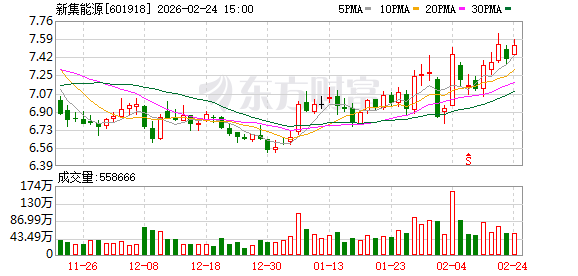
新集能源:截至2026年2月10日公司股东户数约为9万户
Zheng Quan Ri Bao· 2026-02-24 11:35
Group 1 - The core point of the article is that Xinji Energy has approximately 90,000 shareholders as of February 10, 2026 [2]