
电力

Search documents
A股开盘速递 | 指数集体高开 创业板指高开0.30% 算力板块领涨
智通财经网· 2026-02-12 01:53
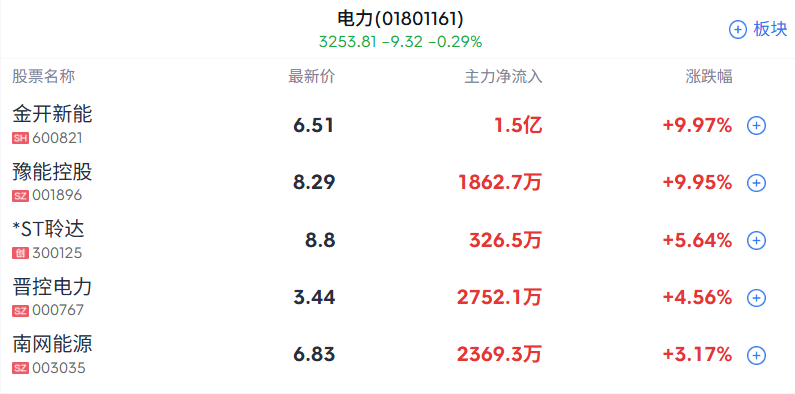
Core Viewpoint - The A-share market opened higher on February 12, with the Shanghai Composite Index up 0.12%, the Shenzhen Component Index up 0.12%, and the ChiNext Index up 0.30% [1] Group 1: Sector Performance - The power sector opened strong, with notable stocks such as Yunnan Energy Holdings and Jin Kong Power both experiencing significant gains [2][3] - The computing power leasing concept continued its strong performance, with Dawei Technology achieving a four-day consecutive rise and Youke De increasing by over 10% [4][5] Group 2: Market Sentiment and Outlook - Dongguan Securities noted that as the Spring Festival approaches, investor sentiment is becoming more cautious, leading to a potential reduction in trading volume and a phase of consolidation in the A-share market [6] - Caixin Securities indicated that despite a decrease in market activity, there are still structural opportunities available, particularly in sectors with concentrated favorable events [7] - CITIC Securities projected that commodities will remain a preferred investment direction in 2026, driven by factors such as risk aversion and fundamental improvements [8]




中泰国际:美股方面,美国1月非农就业人数增加13.5%
ZHONGTAI INTERNATIONAL SECURITIES· 2026-02-12 01:40
Market Overview - On February 11, Hong Kong stocks opened higher and expanded gains, with the Hang Seng Index closing up 83 points (0.3%) at 27,266 points[1] - The Hang Seng Tech Index rose by 48 points (0.9%) to close at 5,499 points, with total market turnover reaching HKD 217.2 billion[1] - Southbound capital saw a net inflow of HKD 4.82 billion, compared to a previous day's net inflow of HKD 84.66 million[1] Key Stock Movements - Semiconductor company SMIC reported a 61% year-on-year increase in Q4 net profit, but its Q1 gross margin guidance fell short of expectations, leading to a 2.1% drop in its stock price[1] - Precious metal stocks saw gains, with Zijin Mining up 2.8%, Shandong Gold up 4.4%, and Zijin Gold International up 9.1%[1] - Xiaomi's stock rose 4.3% after it invested in a humanoid robot parts supplier, while other automotive stocks like BYD and Geely also saw increases of 2.7% to 3.9%[4] Economic Indicators - In the U.S., January non-farm payrolls increased by 130,000, significantly above the expected 65,000, with the unemployment rate dropping to 4.3% from 4.4% in December[2] - China's January PPI fell by 1.4% year-on-year, slightly better than the expected 1.5% decline, while CPI rose by 0.2% year-on-year, below the expected 0.4%[3] Sector Performance - The healthcare sector saw a 0.7% increase in the Hang Seng Healthcare Index, with WuXi Biologics forecasting a 16.7% revenue growth to HKD 21.79 billion for 2025[4] - The renewable energy and utilities sector generally rose, with Huaneng International and Datang Power increasing by 1.7% to 2.4%[5]
统一电力市场赋能储网风光高质发展
HTSC· 2026-02-12 01:39
Investment Rating - The report maintains an "Overweight" rating for the Electric Equipment and New Energy sector [1] Core Viewpoints - The implementation of a unified national electricity market in China is expected to enhance the profitability mechanisms, development space, and consumption guarantees for the new power system, particularly benefiting energy storage, main grid construction, and structural growth in new energy demand [4] - The expansion of cross-provincial and cross-regional electricity trading will increase the demand for flexible adjustment resources, driving the growth of new energy storage installations [4] - The report highlights the establishment of a capacity market to support the construction of reliable adjustment power sources, which will lay the foundation for the market-oriented development of new energy storage [4] - The projected internal rate of return (IRR) for energy storage projects could reach 5.8%, 7.9%, and 9.2% under different capacity price guarantees over 2, 10, and 20 years, respectively, with additional revenue from auxiliary services further enhancing returns [4] - The report emphasizes the role of energy storage as an independent market entity, encouraging its participation in various electricity markets, which is expected to transition the industry from mandatory storage to market-oriented profitability [4] Summary by Sections National Unified Electricity Market - The national unified electricity market aims to be established by 2030, allowing all types of power sources and users (excluding guaranteed users) to participate directly in the electricity market [4] - The construction of a high-voltage main grid is crucial for supporting the unified electricity market, with significant investments expected during the 14th and 15th Five-Year Plans [5] Energy Storage Development - The report anticipates accelerated development of energy storage due to the unified electricity market, with a focus on creating a stable revenue structure for energy storage projects [4] - The report outlines a dual-track profit model for energy storage, combining guaranteed income with market-based revenue [4] New Energy Demand Growth - The report identifies structural growth opportunities in new energy demand, particularly in wind and solar energy, driven by favorable policies and market conditions [6][8] - The report expects the wind power sector to benefit from a more competitive position in the market, with a steady increase in installations and profitability recovery anticipated in 2026 [8]
港股开盘:恒指跌0.2%、科指跌0.47%,AI应用及芯片股走高,锂电池概念股活跃,科网股普遍回调
Jin Rong Jie· 2026-02-12 01:33
Market Overview - The Hong Kong stock market opened slightly lower, with the Hang Seng Index down 0.2% at 27,210.56 points, the Hang Seng Tech Index down 0.47% at 5,474.25 points, and the National Enterprises Index down 0.19% at 9,250.27 points [1] - Major tech stocks mostly opened lower, with Alibaba down 1.37%, Tencent down 2.01%, and Meituan down 2.48%, while AI application stocks showed strength, with Zhihui up 8.77% and MINIMAX-WP up 5.65% [1] Company Performance - NetEase reported strong performance, with a net revenue of approximately 112.63 billion yuan, a year-on-year increase of 6.96%, and a net profit of approximately 33.76 billion yuan, up 13.68% [2] - NetEase Cloud Music saw a significant profit increase of 75.4%, with a revenue of 7.76 billion yuan and a profit of 2.75 billion yuan, confirming a turning point in performance [2] Industry Trends - The hard technology and manufacturing sectors showed signs of recovery, with Qiu Tai Technology reporting a 22.8% year-on-year increase in camera module sales and an 18.4% increase in fingerprint recognition module sales, driven by demand in IoT and smart automotive sectors [3] - The renewable energy sector also saw growth, with China Resources Power reporting a 28.4% year-on-year increase in electricity sales, and solar power sales soaring by 72.3% [3] Biopharmaceutical Sector - The biopharmaceutical sector experienced significant positive developments, with Rebio Biotech announcing a global exclusive licensing agreement worth up to 4.4 billion USD, leading to a substantial increase in stock price [4] - Heng Rui Pharmaceutical's product was included in a breakthrough therapy list, with projected global sales exceeding 6.5 billion USD in 2024 [4] Capital Market Activity - Industrial capital is actively engaging in buybacks to stabilize the market, with Geely Automobile repurchasing shares worth approximately 20.30 million HKD and other companies like Kingsoft and Bai Rong Cloud also participating in buybacks [5] - Huili Group is expected to see a profit increase of over 20 times in 2025, indicating a strong performance reversal [5] Institutional Insights - There is a divergence in institutional views regarding market fluctuations, with some suggesting that the recent pullback is a liquidity shock, while others believe that valuation recovery is nearly complete [6] - Specific sectors like AI computing and surgical robots are highlighted for potential growth, with expectations for high performance in 2025 and 2026 [6]

完善全国统一电力市场体系
Qi Huo Ri Bao Wang· 2026-02-12 00:59
Core Viewpoint - The State Council's "Implementation Opinions on Improving the National Unified Electricity Market System" aims to establish a comprehensive national electricity market by 2030, with market transactions accounting for approximately 70% of total electricity consumption, and to fully complete the system by 2035 [1] Group 1: Market Structure and Functionality - By 2030, all types of power sources and electricity users, except for guaranteed users, will directly participate in the electricity market, with a focus on market-based trading [1] - The implementation of a unified market regulatory system and a market pricing mechanism will be established to ensure fair competition [1] - The transition to a formal operation of the spot market is targeted for completion by 2027, enhancing real-time price discovery and supply-demand adjustment [2] Group 2: Long-term Market Stability - The long-term market will be improved to ensure stable electricity supply and enhance risk response capabilities through effective contract signing and performance measures [3] - The long-term market will be refined to allow continuous trading across various time frames, including annual and monthly contracts [3] - Effective integration between long-term and spot markets will be emphasized to meet national energy security requirements [3] Group 3: Green Electricity Market - A unified green certificate market will be established to recognize renewable energy production and consumption, promoting the expansion of green electricity consumption [4] - The introduction of a consumption certification mechanism for green electricity will be accelerated, incorporating technologies like blockchain for full-chain certification [4] - The development of various trading models for green electricity, including long-term purchase agreements, will be encouraged [4] Group 4: Participation of Generation Entities - The participation of generation entities in the electricity market will be further promoted, particularly for renewable energy sources [5] - A sustainable pricing settlement mechanism for renewable energy will be established to encourage long-term trading [5] - The optimization of coal-fired power generation operations will be pursued to ensure all generated electricity participates in the market [5]
关于负电价 这些错误认知要澄清!
Zhong Guo Dian Li Bao· 2026-02-12 00:32
Core Viewpoint - The recent notice from Southern Power Grid in Guangdong regarding distributed photovoltaic power generation during the Spring Festival highlights the risk of negative electricity prices due to a significant drop in electricity demand while supply remains high, indicating a need for system regulation [2][5]. Group 1: Negative Electricity Prices - Negative electricity prices are becoming a common issue in the context of China's energy transition and market reforms, reflecting challenges in absorbing large-scale renewable energy [5][18]. - The occurrence of negative prices is not a sign of market failure but rather a necessary outcome of the efficient price mechanism in the electricity market [5][18]. - Negative prices have been observed in various industries, indicating that they are not unique to the electricity sector and are a result of short-term supply-demand imbalances [7][8]. Group 2: Impact on Power Generation Companies - Concerns that negative prices will lead to widespread losses for power generation companies are unfounded, as a multi-faceted revenue system has been established to mitigate these impacts [10][11]. - The long-term contracts in the electricity market allow companies to secure most of their revenue, thus providing stability against fluctuations caused by negative prices [11]. - The growth of green certificate trading has become a significant revenue source for distributed photovoltaic projects, helping to offset the effects of negative prices [11]. Group 3: Future of Negative Prices - Negative prices are expected to become a regular feature of the electricity market rather than a temporary phenomenon, driven by the increasing share of renewable energy generation [13][18]. - The ongoing expansion of renewable energy capacity and improvements in market mechanisms will likely lead to more frequent occurrences of negative prices as a tool for balancing supply and demand [13][18]. Group 4: Benefits to Users - Negative prices can provide economic benefits to users, particularly commercial users, by linking retail electricity prices to real-time market prices, allowing them to share in the cost savings [15][16]. - The mechanism of negative pricing helps internalize external costs associated with excess electricity, encouraging efficient resource utilization and minimizing social costs [16][18].
基期轮换对CPI和PPI数据是否有影响?国家统计局回应……盘前重要消息还有这些
证券时报· 2026-02-12 00:27
重要的消息有哪些 1.国务院办公厅印发《关于完善全国统一电力市场体系的实施意见》。其中提出,到2030年,基本建成全国统一电力市场体系,各类型电源和除保障性用 户外的电力用户全部直接参与电力市场,市场化交易电量占全社会用电量的70%左右。跨省跨区和省内实现联合交易,现货市场全面转入正式运行,市场 基础规则和技术标准全面统一,市场化电价机制基本健全,公平统一的市场监管体系基本形成。到2035年,全面建成全国统一电力市场体系,市场功能进 一步成熟完善,市场化交易电量占比稳中有升。跨省跨区和省内交易有机融合,电力资源的电能量、调节、环境、容量等多维价值全面由市场反映,电力 资源全面实现全国范围内的优化配置和高效利用,以电力为主体、多种能源协同互济的全国统一能源市场体系初步形成。 巨力索具:市场传闻不实,商业航天订单金额占比对公司经营业绩影响很小。 二连板小崧股份:控股公司短剧业务尚处于早期投资阶段。 2 . 2月11日,国家统计局发布了以2025年为基期的全国居民消费价格指数(CPI)和工业生产者出厂价格指数(PPI)数据。这是本次基期轮换后的首次数 据发布。基期轮换是国际惯例和通行做法,每五年进行一次。具体看,1 ...
国资向新 川企向上
Si Chuan Ri Bao· 2026-02-12 00:24
Core Viewpoint - The Sichuan State-owned Assets and State-owned Enterprises (SOEs) system is at a critical juncture, aiming for high-quality development and reform as it transitions from the 14th Five-Year Plan to the 15th Five-Year Plan, with a focus on optimizing layout, structural adjustment, and development transformation [5][10]. Group 1: Achievements During the 14th Five-Year Plan - Sichuan's SOEs have shown remarkable growth, with total assets increasing from 10.75 trillion yuan to 23.23 trillion yuan, a growth of 116.2%, and total revenue surpassing 2 trillion yuan, with an average annual growth of 16.7% [6]. - The six major advantageous industries of local SOEs reported total assets of 2.04 trillion yuan, revenue of 543.8 billion yuan, and profit of 101.56 billion yuan, marking increases of 132.2%, 41.3%, and 59.1% respectively [6]. - Strategic emerging industries saw total assets of 719.07 billion yuan, revenue of 150.45 billion yuan, and profit of 5.92 billion yuan, with growth rates of 245.4%, 145.7%, and 91.9% respectively [7]. Group 2: Technological Innovation and Reform - R&D investment by local SOEs reached 21.71 billion yuan, doubling since the end of the 13th Five-Year Plan, with an average annual growth of 18.4% [7]. - Significant progress in SOE reform includes the establishment of 45 enterprises with assets exceeding 100 billion yuan and 37 enterprises with revenue exceeding 10 billion yuan, reflecting a substantial increase from the previous plan [8]. - The integration of party leadership into corporate governance has been institutionalized, enhancing the management and operational efficiency of SOEs [8]. Group 3: Strategic Support and Future Goals - The SOEs are expected to play a crucial role in supporting major strategies such as the Chengdu-Chongqing Economic Circle, with significant investments in infrastructure and energy resources [9][11]. - Future goals include achieving higher quality and efficiency in SOEs, optimizing industrial layout, and enhancing innovation capabilities by the end of the 15th Five-Year Plan [10][12]. - Key strategies for the next five years involve strengthening strategic support, optimizing modern industrial layout, enhancing technological innovation, and reforming operational mechanisms to foster a more competitive SOE landscape [11][12].

经济日报财经早餐【2月12日星期四】
Jing Ji Ri Bao· 2026-02-12 00:14
Group 1 - The Ministry of Finance issued the first tranche of 14 billion RMB government bonds in Hong Kong, with a subscription multiple of 3.94 times, indicating strong investor interest [2] - The Ministry of Commerce reported that online retail sales reached 989.73 billion RMB from January 19 to February 8, with online dining and tourism growing by 11.5% and 5.3% respectively [2] - The China Automobile Industry Association announced that in January, automobile production and sales reached 2.45 million and 2.346 million units respectively, with production increasing by 0.01% year-on-year and sales decreasing by 3.2% [2] Group 2 - The South African Agricultural Chamber stated that despite the impact of US tariffs, agricultural exports are expected to grow by 10% to reach 15.1 billion USD by 2025, setting a new historical high [3] - The Ministry of Culture and Tourism introduced a new complaint handling method for tourism, effective from March 15, 2026 [4] - The railway department announced the addition of night high-speed trains on major routes to meet passenger return travel demand, with ticket sales implemented in a staggered pre-sale manner [4]
盘前必读丨国资委推动央企扩大算力有效投资;电力市场重磅意见发布
Di Yi Cai Jing· 2026-02-12 00:09
Group 1 - The market is experiencing a "horizontal slightly strong" trend, with a judgment that the index will continue to consolidate before the Spring Festival due to the effects of the long holiday and risk-averse behavior leading to relatively low trading activity [1][13] - The State Council emphasized the importance of advancing AI technology innovation and industry development during a recent meeting, aiming to enhance productivity and promote high-quality development [2] - The Central State-Owned Enterprises (SOEs) are urged to strengthen investment traction and expand effective investment in computing power, focusing on autonomous innovation and the application of AI technologies [2] Group 2 - The implementation opinions for a unified national electricity market system were released, aiming to establish a market where 70% of electricity consumption is traded by 2030, with a fully operational spot market and unified pricing mechanisms [3] - The State Administration for Market Regulation introduced guidelines to prevent monopolistic behaviors in public utilities, aiming to enhance fair competition and protect consumer interests [4] - The Ministry of Finance announced that certain VAT exemption policies for imported cancer and rare disease drugs will continue to be effective until the end of 2027 [4] Group 3 - China Bank will adjust the minimum purchase amount for gold accumulation products starting February 12, 2026, increasing it from 950 yuan to 1200 yuan [5] - NetEase reported a stable performance for 2025, with Q4 revenue of 27.5 billion yuan and an annual total revenue of 112.6 billion yuan, reflecting a 21% year-on-year increase in operating profit [6] - Dongfeng Group announced plans for privatization through a merger, distributing shares of Lantu and achieving the necessary conditions for the merger [6] Group 4 - Meta Platforms Inc. plans to invest over $10 billion in a data center in Lebanon, Indiana, which will support over 4,000 construction jobs and create 300 long-term positions [8] - The U.S. House of Representatives passed a resolution to terminate President Trump's punitive trade measures against Canadian goods, reflecting ongoing trade policy discussions [8] - Major technology stocks showed mixed performance, with declines in Google and Microsoft, while storage and mining sectors saw significant gains [11]

