贵金属
Search documents
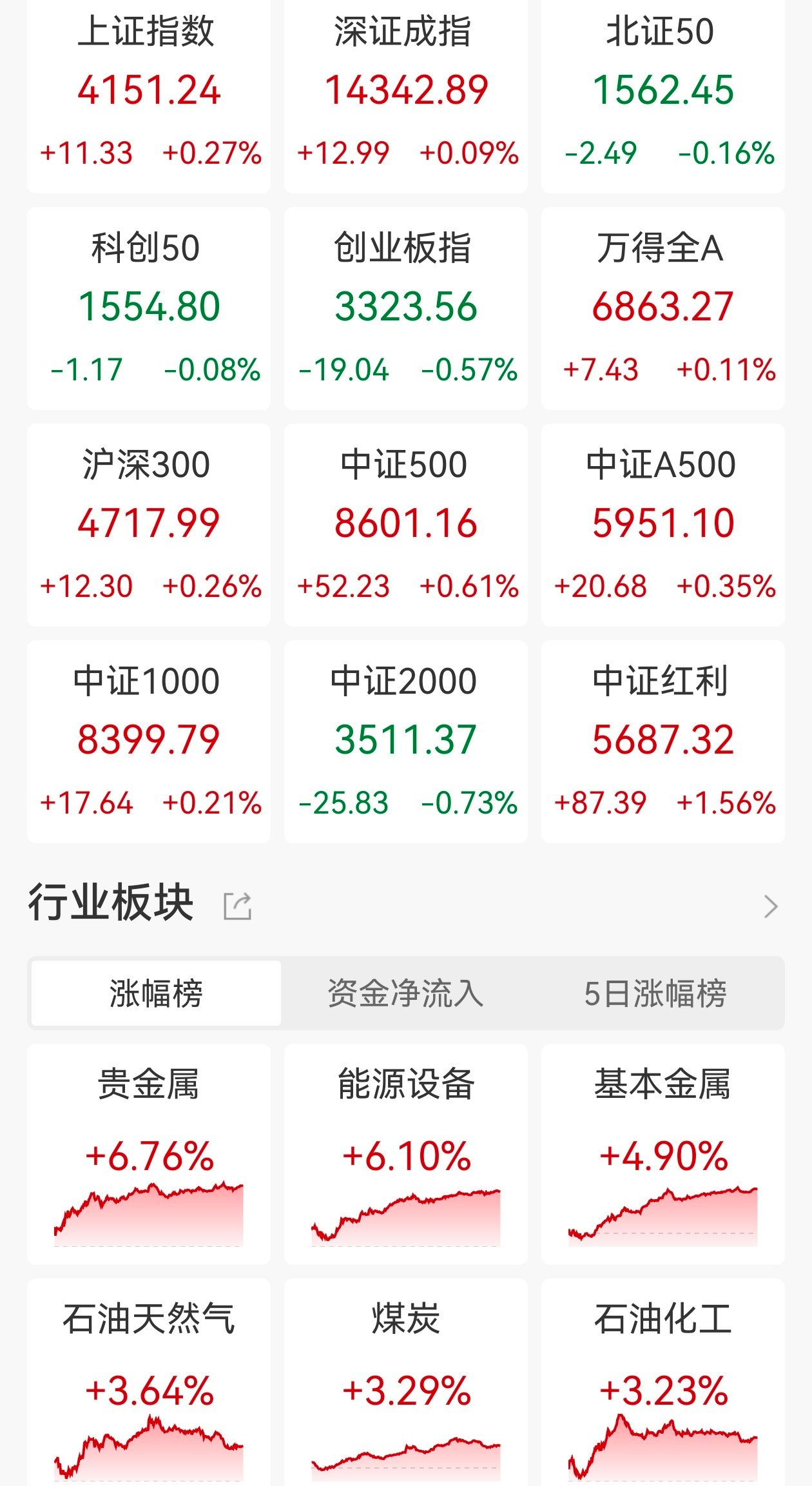
黄金股票ETF(517400)涨超6.6%,近5日资金净流入超2亿元 ,资金积极布局
Sou Hu Cai Jing· 2026-01-26 06:40
风险提示:提及个股仅用于行业事件分析,不构成任何个股推荐或投资建议。指数等短期涨跌仅供参 考,不代表其未来表现,亦不构成对基金业绩的承诺或保证。观点可能随市场环境变化而调整,不构成 投资建议或承诺。提及基金风险收益特征各不相同,敬请投资者仔细阅读基金法律文件,充分了解产品 要素、风险等级及收益分配原则,选择与自身风险承受能力匹配的产品,谨慎投资。 每日经济新闻 德邦证券指出,贵金属与有色金属表现强势。具体来看,国际商品中"贵金属领涨,银价飙升,锡、 金、镍价大涨"。国内市场同样呈现"贵金属、有色、能化强势,白银领涨"的格局,并提到"金属分化, 有色大多强势"。地缘局势方面,"格陵兰局势升级引发美欧分化,美元转弱,贵金属攀升"是推动价格 的重要因素。整体而言,在美元走弱的背景下,以贵金属和部分基本金属为代表的有色金属行业价格表 现强劲。 中长期看,黄金价格中枢仍有望上行,投资者或可考虑后续回调参与、逢低分批布局。关注直接投资实 物黄金,免征增值税的黄金基金ETF(518800),覆盖黄金全产业链股票的黄金股票ETF(517400)。 ...
白银和黄金价格上涨,美元走软
Jin Rong Jie· 2026-01-26 06:35
Core Viewpoint - The article highlights that the weakening of the US dollar has positively impacted the entire metal market, leading to record high prices for both silver and gold in early trading sessions [1] Group 1: Market Dynamics - The current bullish scenario for precious metals is supported by strong reserve demand and ongoing market participants' pursuit of de-dollarization [1] - Industrial demand is also contributing positively to silver prices [1] Group 2: Analyst Insights - Michael Brown from Pepperstone notes that while there has been significant price appreciation in a short period, a period of consolidation would not be detrimental [1] - The medium-term outlook suggests that the "path of least resistance" remains upward for precious metals [1]
5100美元在望,机构还在看涨黄金
Di Yi Cai Jing Zi Xun· 2026-01-26 06:21
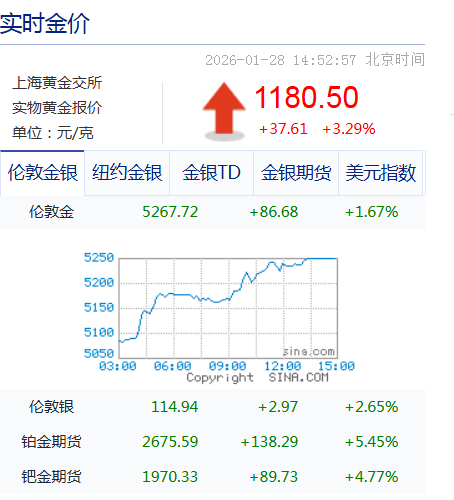
国内市场,黄金概念股1月26日开盘冲高,湖南黄金(002155.SZ)、四川黄金(001337.SZ)、招金黄 金(000506.SZ)、湖南白银(002716.SZ)等纷纷涨停。 南华期货贵金属新能源研究组负责人夏莹莹对第一财经分析称,黄金强势突破5000关口,是短期避险需 求、中期政策预期、长期货币信用重构三重逻辑共振的结果。预计2026年金价或有望挑战6000美元关 口。当前金价处于高价位、高波动阶段,投资者需做好仓位控制。 金银价格继续"狂飙"。 避险情绪持续升温,金银齐创新高 1月26日,伦敦现货黄金冲破5000美元/盎司,最高触及5093美元,距5100美元/盎司仅一步之遥,距离 其首次突破4000美元关口仅过去100多天。伦敦现货白银更是一举升破109美元/盎司,再度创下历史新 高。 全球地缘不确定性加剧,贵金属价格也在多重利好支撑下继续上涨。 Wind数据显示,截至北京时间1月26日12:00,伦敦现货黄金报5076.53美元/盎司,最高触及5093.19美 元/盎司;COMEX黄金期货同步走强,报5076.2美元/盎司,最高至5091.5美元/盎司。 白银方面,伦敦现货白银报108.248美 ...
综合晨报-20260126
Guo Tou Qi Huo· 2026-01-26 06:19
Group 1: Oil and Related Products - The US Treasury imposed new sanctions on Iran, increasing concerns about Middle East crude supply disruptions. The Tengiz oil field's extended shutdown and US cold wave also affected the market. Despite a recent price rebound, the high inventory pressure in Q1 2026 may limit the price increase [2]. - Low - sulfur fuel oil followed crude oil in a callback due to the end of cold - wave speculation and EIA's unexpected inventory build - up. High - sulfur fuel oil remained strong, supported by geopolitical tensions and the strengthening of Asian spot spreads [22]. - Kpler data shows sufficient Venezuelan crude arrivals in January, but a significant reduction in shipments since January may lead to supply shortages in February and subsequent months. Cost support and weak terminal demand suggest a short - term bullish but volatile outlook for asphalt [23]. Group 2: Precious Metals - Geopolitical risks have raised the price center of precious metals. However, after gold and silver broke through key price levels, there may be short - term fluctuations due to profit - taking and overbought technical indicators. It is advisable to wait for a stable period before re - entering the market [3]. Group 3: Base Metals - Copper prices were pushed up by the trading sentiment of precious metals and a weak US dollar. Supply - side factors such as strikes in Chilean small mines and roadblocks affecting large mines are being monitored [4]. - Aluminum prices rebounded on Friday. Geopolitical factors caused market sentiment to fluctuate. The price is expected to oscillate at a high level, and attention should be paid to the price direction of gold and silver after breaking through key levels [5]. - Zinc prices are expected to oscillate between 24,000 - 25,000 yuan/ton in the short term. There is an opportunity for short - selling at the 25,000 yuan/ton level due to the expected supply surplus [8]. - Lead prices are expected to oscillate between 17,000 - 17,800 yuan/ton. The production of recycled lead is restricted by high costs and low prices, and environmental protection policies may affect future production [9]. - Nickel prices rose significantly with active trading. However, there is a risk of negative feedback from downstream due to high prices. Short - term sentiment is positive, and a long - position strategy is recommended [10]. - Tin prices continued to rise, driven by investment funds and the expected long - term demand from AI - related investments [11]. Group 4: Industrial Metals and Alloys - Cast aluminum alloy prices follow the trend of Shanghai aluminum. The market is inactive, and the supply surplus is difficult to change. The price difference with Shanghai aluminum is weaker than in previous years [6]. - Alumina production capacity is still high, and the supply surplus persists. With falling ore prices, the cost has decreased, but the price is under pressure, and the upside of the futures price is limited [7]. - Industrial silicon's supply is expected to be affected if major enterprises cut production. Demand is weakening, and inventory is increasing. The price is expected to be strong in the short term, and attention should be paid to whether it can break through the 9,000 yuan/ton level [14]. Group 5: Steel and Iron - related Products - Steel prices rebounded slightly. Rebar demand decreased slightly, production increased, and inventory accumulated again. Hot - rolled coil demand and production both decreased slightly, and inventory continued to decline [15]. - Iron ore prices oscillated last week. Global shipments decreased seasonally but remained high year - on - year. Domestic port inventory increased significantly. Demand is weak, but there is still an expectation of winter stockpiling [16]. - Coke prices rebounded. The first price increase was postponed, production decreased slightly, and inventory increased slightly. The market is expected to oscillate in a range [17]. - Coking coal prices rebounded slightly. Production increased slightly, inventory increased, and winter stockpiling demand continued. The price is expected to oscillate in a range [18]. - Manganese ore prices increased slightly. There are structural problems in port inventory. Silicon - manganese production decreased slightly, and inventory decreased slightly. A short - selling strategy on price rebounds is recommended [19]. - Silicon - iron prices increased slightly. Affected by policies, the price is relatively strong. Supply decreased significantly, inventory decreased slightly. A short - selling strategy on price rebounds is recommended [20]. Group 6: Chemical Products - Polycrystalline silicon's overseas orders increased, but the spot trading is weak. The futures price may face pressure in the future, waiting for the official guidance from the exchange [13]. - Urea prices were stable over the weekend. Downstream demand increased, and production enterprises continued to reduce inventory. The price is expected to oscillate strongly in the medium - to - long term [24]. - Methanol prices fluctuated due to geopolitical factors. Overseas production is low, and domestic port inventory is high. However, the expected reduction in imports in Q1 provides support, and the short - term price is expected to be strong [25]. - Pure benzene's upward momentum weakened. Supply decreased, demand increased slightly, and inventory in East China ports decreased significantly. The short - term price is expected to oscillate strongly, and slow inventory reduction is expected in the long term [26]. - Styrene prices increased significantly, but downstream resistance to high prices may limit the upside. Supply - demand competition may intensify [27]. - Propylene supply has no obvious pressure, and downstream demand is weak. Polyethylene supply will increase, and demand is weakening. Polypropylene supply pressure is not large, but demand is weak [28]. - PVC prices are strong. Factory inventory decreased, but social inventory increased. There is a possibility of capacity reduction and increased exports this year. Caustic soda prices are oscillating, with high inventory and high production. The profit of chlor - alkali integration may continue to be compressed [29]. - PX and PTA prices increased. There is a risk of inventory accumulation around the Spring Festival. In Q2, there may be opportunities for long - positions in PX processing margins and positive spreads, subject to downstream demand [30]. - Ethylene glycol production decreased slightly, and polyester load is expected to decline. There is an expectation of inventory accumulation around the Spring Festival. In Q2, supply - demand conditions may improve, but the long - term price is under pressure [31]. - Short - fiber production is high, and inventory is low. Downstream orders are weak, but sales increased due to raw material price increases. Bottle - chip production decreased, and processing margins improved slightly. Long - term capacity pressure remains [32]. Group 7: Building Materials - Glass inventory increased slightly, and there is a risk of further accumulation during the downstream holiday season. Production is currently unprofitable, and the price may fluctuate with the macro - environment. Attention should be paid to future capacity changes [33]. - Soda ash inventory decreased slightly but remains under pressure. Some enterprises cut production. The short - term price is expected to follow the macro - trend, and a short - selling strategy on price rebounds is recommended in the long term [34]. Group 8: Agricultural Products - Soybean meal prices oscillated. South American soybean harvest is affected by weather, and Chinese soybean purchases are progressing. Attention should be paid to the Brazilian harvest and potential imports from Canada [35]. - Palm oil and soybean oil prices are strong. US biomass diesel policies are favorable, and the supply - demand situation in Indonesia and Malaysia needs to be monitored [36]. - Rapeseed and rapeseed oil prices are expected to oscillate at the bottom. Rapeseed supply in Canada is sufficient but exports are weak. The supply of rapeseed oil may be slightly tighter than that of rapeseed meal [37]. - Domestic soybean prices rebounded from a low level. Attention should be paid to policy and spot market guidance [38]. - Corn prices are relatively strong due to reduced available supply and pre - holiday restocking demand. Future price trends depend on the sales progress in Northeast China and auction results [39]. - Pig prices are expected to be strong before the Spring Festival but weak after the holiday. The industry still needs to reduce production capacity, but the current price recovery may slow down this process [40]. - Egg prices are strong due to pre - festival stocking and reduced supply. In the long - term, the fundamental situation is improving, and a long - position strategy on price dips is recommended [41]. - Cotton prices are oscillating. US cotton exports increased significantly. Domestic cotton inventory is high, but demand is stable. The impact of the reduction in Xinjiang's planting area is uncertain [42]. - Sugar prices are oscillating. Indian sugar production is progressing rapidly, while Thai production is slow. In China, the focus is on the expected difference in production. The short - term price faces pressure [43]. - Apple prices are oscillating. Cold - storage sales increased for the Spring Festival, but poor fruit quality and high prices may affect inventory reduction [44]. - Wood prices are at a low level. Supply is expected to decrease, demand has increased slightly, and low inventory provides some support. Temporarily hold off on trading [45]. - Pulp prices are oscillating. Downstream demand is weak, and inventory has been increasing for three consecutive weeks. Paper mills' purchases are mainly for immediate needs. Temporarily hold off on trading [46]. Group 9: Financial Products - A - share indexes rose, and futures contracts showed different trends. The market is concerned about the continuity of US dollar liquidity repair and the impact of the Greenland conflict on risk appetite. A - shares are expected to shift from rapid upward movement to a strong - oscillating trend [47]. - Bond prices were strong last week. In the short - term, the yield of medium - to - long - term bonds is likely to oscillate, and the short - term yield may continue to decline due to loose liquidity. There are opportunities for steepening the yield curve and flattening the ultra - steep spread [48]. Group 10: Shipping - The container shipping index (European line) oscillated last week. The "weak reality" logic suppressed the price, while CMA CGM's suspension of resuming flights provided short - term support. The market is expected to be weak - oscillating in the future, and the key factors for near - term and far - term contracts are different [21].
ETF盘中资讯|洛阳钼业完成巴西金矿收购!有色ETF华宝(159876)猛拉5%,量价齐创历史新高!获资金净申购超1.2亿份!
Sou Hu Cai Jing· 2026-01-26 05:41
Group 1 - The non-ferrous metal sector is leading the market with a net inflow of nearly 15 billion yuan, ranking first among 31 Shenwan primary industries [1] - The Huabao non-ferrous ETF (159876) saw its price surge over 5.1% during the day, with a current increase of 3.85% and a transaction volume of 181 million yuan, setting historical highs in both price and volume [1] - The Huabao non-ferrous ETF has reached a new scale of 1.892 billion yuan, marking a historical peak [4] Group 2 - The recent acquisition by Luoyang Molybdenum of a Brazilian gold mine is expected to yield 6 to 8 tons of gold this year, with strong profitability and a short investment return period [3] - The non-ferrous metal industry is anticipated to maintain high profitability for an extended period, supported by continuous demand growth [4] - Domestic non-ferrous metal companies are valued lower compared to their overseas counterparts, despite having similar growth potential and core competitiveness [4] Group 3 - Several stocks in the non-ferrous sector, including Vanadium Titanium Co., Silver Nonferrous, and Hunan Gold, have reached their daily limit up, indicating strong market performance [5] - The Huabao non-ferrous ETF and its associated funds cover a wide range of metals, including copper, aluminum, gold, and lithium, allowing for better exposure to the sector's performance [8]
国投期货综合晨报-20260126
Guo Tou Qi Huo· 2026-01-26 05:27
Report Industry Investment Ratings No relevant content provided. Core Views of the Report - Geopolitical conflicts and supply disruptions are major factors affecting the prices of commodities such as crude oil, precious metals, and base metals [2][3]. - The supply - demand relationship and seasonal factors have significant impacts on various commodities, including metals, energy, and agricultural products [15][16][35]. - Macroeconomic factors, such as interest rate policies and geopolitical events, influence the performance of financial markets, including stocks and bonds [47][48]. Summary by Categories Energy - **Crude Oil**: US sanctions on Iran and the fire at Tengiz oilfield have raised concerns about supply disruptions, leading to a recent rebound in oil prices. However, the high inventory pressure in Q1 2026 restricts the upward space of oil prices [2]. - **Fuel Oil & Low - Sulfur Fuel Oil**: Low - sulfur fuel oil is回调 due to the fading of cold wave speculation and EIA's unexpected inventory build - up. High - sulfur fuel oil remains strong due to geopolitical tensions in the Middle East [22]. - **Natural Gas**: The cold wave in the US has caused a sharp rise in natural gas prices, which also boosts the demand for crude oil as heating oil [2]. - **Coal (Coking Coal and Coke)**: The supply of carbon elements is abundant, and the downstream iron - making is in the off - season. The prices of coking coal and coke are likely to fluctuate within a range, with the market having certain expectations for "anti - involution" policies [17][18]. - **Liquefied Natural Gas**: No relevant content provided. - **Petroleum Products (e.g., Asphalt)**: The cost of asphalt is still supported, but the terminal demand is weak, and high - priced resources have poor sales. In the short term, asphalt is expected to fluctuate strongly [23]. Metals - **Precious Metals (Gold and Silver)**: Geopolitical risks have pushed up the prices of gold and silver. After breaking through key integer levels, there may be fluctuations due to profit - taking, and it is advisable to wait for a stable period before participating [3]. - **Base Metals**: - **Copper**: The price of Shanghai copper has been boosted by the trading sentiment of precious metals and the weak US dollar. Attention should be paid to the impact of strikes in small Chilean copper mines and road blockades on large - scale copper mines [4]. - **Aluminum**: Shanghai aluminum rebounded on Friday. Geopolitical games have made the financial market sentiment volatile, and the price of Shanghai aluminum is in a high - level shock. Attention should be paid to the direction change of gold and silver after breaking through integer levels [5]. - **Zinc**: The road blockage at NEXA's Atacocha mine has little impact on zinc prices. The weakening of the US dollar index supports the strong operation of non - ferrous metals. High zinc prices have a negative impact on the consumption side, and the price of Shanghai zinc is expected to fluctuate within the range of 24,000 - 25,000 yuan/ton [8]. - **Lead**: The resumption of production of primary lead smelters has increased, and the profit of secondary lead smelters is under pressure. The price of Shanghai lead is expected to fluctuate within the range of 17,000 - 17,800 yuan/ton [9]. - **Nickel and Stainless Steel**: Shanghai nickel has risen sharply, and the market trading is active. The high - price resistance of downstream stainless steel consumption is increasing, and the negative feedback risk is accumulating. In the short term, it is still dominated by policy sentiment [10]. - **Tin**: The price of tin has been rising, driven by investment funds. The LME spot discount has widened, and the domestic social inventory has increased [11]. - **Alumina**: The domestic alumina production capacity is in a state of significant surplus, and the price is under pressure. Before large - scale production cuts, the weakness is difficult to change, and the upward space of the futures price is limited [7]. - **Silicon (Industrial Silicon)**: The supply - demand pattern of industrial silicon has an improvement expectation, but it is restricted by the weak supply - demand situation, and the inventory removal process is restricted. In the short term, the futures price is running strongly, and attention should be paid to the breakthrough of the 9,000 yuan/ton mark [14]. - **Manganese (Silicon Manganese)**: The manganese ore port inventory has a structural problem. The iron - making production has decreased seasonally. The weekly output of silicon manganese has decreased slightly, and the inventory has also decreased slightly. It is recommended to short on rebounds [19]. - **Ferrosilicon**: Affected by relevant policy documents, the price is relatively strong. The demand has certain resilience, the supply has decreased significantly, and the inventory has decreased slightly. It is recommended to short on rebounds [20]. Chemicals - **Carbonate Lithium**: The price of carbonate lithium has reached a new high, but the downstream acceptance of high prices is weak, and the market is in a high - level shock. Short - term uncertainty is extremely high [12]. - **Polysilicon**: The spot trading of polysilicon is weak, and the market expects the price to weaken. The futures price still faces pressure to rise [13]. - **Methanol**: Geopolitical situations have increased the volatility of methanol futures. Although there is a strong expectation of a significant reduction in imports in the first quarter and the macro - environment is favorable, the high port inventory may suppress the market [25]. - **Pure Benzene**: The upward momentum of pure benzene has weakened, but the short - term market is in a strong shock due to improved supply - demand and macro - sentiment [26]. - **Styrene**: The price of styrene has risen rapidly, but the downstream's fear of high prices may restrict its upward space, and the supply - demand game may intensify [27]. - **Polypropylene, Plastic, and Propylene**: The supply of propylene has no obvious pressure, and the demand of polyethylene and polypropylene is weak. The supply of polypropylene has some support, but the overall demand is weak [28]. - **PVC and Caustic Soda**: PVC is running strongly, and there is still inventory pressure. Caustic soda is in a shock trend, and the chlor - alkali integrated profit may continue to be compressed [29]. - **PX and PTA**: In the short term, the chemical sentiment has improved, and PX and PTA have increased in price. In the second quarter, there are opportunities for long - positions based on PX maintenance and polyester load - increasing expectations [30]. - **Ethylene Glycol**: The supply and demand of ethylene glycol are both decreasing, and there is an expectation of inventory build - up around the Spring Festival. In the second quarter, there is an expectation of supply - demand improvement, but the long - term pressure still exists [31]. - **Short - Fiber and Bottle Chip**: The short - fiber price has risen with the raw materials, and the bottle - chip price has risen with the market sentiment. However, the long - term capacity pressure still exists [32]. Agricultural Products - **Soybeans and Soybean Meal**: The South American soybean harvest is affected by weather, and the progress is slow. The import of Canadian rapeseed and rapeseed meal may impact the domestic soybean meal price [35]. - **Edible Oils (Soybean Oil and Palm Oil)**: The prices of domestic soybean oil and palm oil are strong. The US biomass diesel policy is favorable, and the supply - demand structure of Malaysian palm oil has improved marginally [36]. - **Rapeseed and Rapeseed Oil**: The supply of Canadian rapeseed is abundant, but the export is sluggish. The supply of rapeseed oil may be slightly more tense than that of rapeseed meal. The overall trend of the rapeseed sector is expected to be in a bottom - level shock [37]. - **Soybean No. 1**: The price of domestic soybean futures has rebounded from a low level. Attention should be paid to policy and spot guidance [38]. - **Corn**: The price of corn is relatively strong due to the reduction of available grain sources and pre - holiday inventory replenishment demand. It is expected to fluctuate in the short term [39]. - **Livestock (Pigs)**: The spot price of pigs has strengthened recently. Before the Spring Festival, the supply and demand are both strong, but after the Spring Festival, the price is expected to be weak. The industry still needs to reduce production capacity [40]. - **Poultry (Eggs)**: The price of eggs is strong due to pre - holiday stocking and a decrease in supply. In the long - term, the fundamentals are improving, and the strategy is to go long at low prices [41]. - **Cotton**: The US cotton price has fallen back, and the Zhengzhou cotton price is in a high - level shock. The demand is stable, and the impact of the reduction in Xinjiang's planting area is uncertain [42]. - **Sugar**: The international sugar production situation varies, and the domestic sugar price is under pressure in the short term. Attention should be paid to the production progress [43]. - **Apples**: The futures price of apples is in a shock. The market focus has shifted to demand, and the high - price and low - quality situation may affect the inventory removal speed [44]. - **Timber**: The futures price of timber is at a low level. The low inventory provides some support, and it is advisable to wait and see [45]. - **Pulp**: The pulp futures price is in a shock. The downstream demand is weak, and the port inventory has increased. Attention should be paid to the price increase of downstream base paper [46]. Financial Products - **Stock Index**: The A - share market is generally strong, and the index may change from a rapid upward trend to a shock - strong trend. Attention should be paid to the Fed's interest - rate meeting and geopolitical issues [47]. - **Treasury Bonds**: The bond market has been strong recently. In the short term, the medium - and long - term yields are likely to fluctuate, and the short - term yields are more certain to rise. Attention should be paid to the curve - steepening and flattening opportunities [48]. Shipping - **Container Shipping Index (European Line)**: The market is in a shock pattern. The "weak reality" suppresses the futures price, and the suspension of CMA CGM's service provides short - term upward momentum. The market is expected to be in a shock - weak trend in the future [21].
有色板块 “狂飙” 不止,新一轮“超级周期”备受关注
Sou Hu Cai Jing· 2026-01-26 05:21
Core Viewpoint - The non-ferrous metal sector is experiencing significant growth, driven by high international gold prices and strong performance from leading companies, making it a focal point for investors in 2026 [1][2]. Group 1: Market Performance - The non-ferrous metal sector has outperformed other sectors, with the MSCI Metals and Mining Index rising nearly 90% since the beginning of 2025, surpassing semiconductor and global banking sectors [2]. - Major companies in the sector, such as Zijin Mining, are expected to report substantial profit increases, with projected net profits for 2025 reaching between 51 billion to 52 billion yuan, reflecting a year-on-year growth of 59% to 62% [2]. Group 2: Fund Inflows and ETF Growth - There has been a remarkable influx of capital into the non-ferrous metal sector, with over 36 billion yuan net inflow into non-gold themed ETFs as of January 22, 2026, pushing the total scale of these ETFs to over 100 billion yuan [3]. - The non-ferrous metal ETF (512400) reached a scale of 40 billion yuan, indicating strong investor interest and positioning in this sector [3]. - Public funds have significantly increased their holdings in the non-ferrous sector, with 15 related fund products reported in a short span from early December 2025 to mid-January 2026, indicating a robust investment trend [3]. Group 3: Geopolitical and Economic Factors - The non-ferrous metal sector is transitioning from traditional cyclical characteristics to a new phase characterized by a combination of safe-haven demand, strategic security, and tight supply-demand balance due to rising geopolitical risks [4]. - The recent surge in gold prices, surpassing 5,000 USD per ounce, and silver prices exceeding 100 USD per ounce, reflects a shift in the global monetary system and increased demand for these metals as safe-haven assets [4][5]. Group 4: Specific Metal Insights - Gold and silver are experiencing a "super cycle" driven by geopolitical conflicts, loss of confidence in the US dollar, and ongoing central bank purchases, making them attractive for investment [5]. - Copper prices are showing resilience due to strong pre-holiday stocking, with supply constraints emerging as copper concentrate treatment charges have dropped to negative values, indicating a tight supply situation [6]. - Aluminum prices are expected to rebound due to low global inventories and strong demand driven by investments in power grids and solar exports, despite slight domestic inventory increases [7]. - The strategic importance of metals like cobalt and lithium is being reaffirmed, with supply concentrated in regions like the Democratic Republic of Congo, highlighting their long-term investment potential [8].
南方基金:持续大涨!黄金突破4990美元!
Sou Hu Cai Jing· 2026-01-26 05:21
上周市场整体走高,但各大指数表现分化。其中中证500、科创50等指数涨幅领跑,沪深300、上证50却小幅走低。 中信行业板块方面:建材、石油石化、钢铁指数涨幅居前;银行、通信、食品饮料指数跌幅居前。 | | | 估值水平 (PE TTM) | 周涨跌幅 | 近一李度 涨跌幅 | | | --- | --- | --- | --- | --- | --- | | A股主要 | 中证500 | 39. 06 | 4. 34% | 18. 35% | 15.06% | | | 中证1000 | 51.81 | 2. 89% | 14.17% | 11. 53% | | | 科创50 | 180. 18 | 2. 62% | 6. 26% | 15. 59% | | | 深证成指 | 33. 62 | 1. 11% | 8. 66% | 6. 76% | | | 上证综指 | 17.13 | 0. 84% | 4. 70% | 4.22% | | 证券指数 | 创业板指 | 43. 64 | -0. 34% | 5.61% | 4. 57% | | | 科创创业50 | 59. 10 | 0. 54% | 3. 49 ...
见证A股历史!两大万亿巨头飙涨!
天天基金网· 2026-01-26 05:15
Core Viewpoint - The article discusses the recent performance of various stock indices in China, highlighting the shift in market dynamics between large-cap and micro-cap stocks, as well as the strong performance of the precious metals sector driven by rising gold and silver prices [2][4][9]. Market Performance - Last week, the micro-cap stock index reached a historical high, while large-cap indices like the CSI 300 and SSE 50 experienced adjustments. However, there was a reversal today with large-cap stocks gaining strength, as the SSE 50 index rose over 1.8% at its peak [2]. - As of the morning close, the SSE Composite Index increased by 0.12%, while the Shenzhen Component Index and the ChiNext Index fell by 0.74% and 0.86%, respectively. The total market turnover exceeded 2.26 trillion yuan [4]. Precious Metals Sector - The precious metals sector showed strong performance, with significant gains in gold and silver prices. Notable stocks such as Hunan Gold and Zhaojin Mining reached their daily limit up, while leading companies like Zijin Mining and China Uranium also saw substantial increases [6][9]. - Gold prices surged past $5,000 per ounce, marking a new historical high, which is attributed to geopolitical factors and fluctuations in confidence towards U.S. assets, leading to increased demand for gold as a safe-haven asset [8][10]. Earnings Forecasts - Several precious metals companies have announced optimistic earnings forecasts for 2025. Zijin Mining expects a net profit of 51 to 52 billion yuan, a year-on-year increase of 59% to 62%. Chifeng Jilong Gold anticipates a net profit of 3 to 3.2 billion yuan, reflecting a growth of 70% to 81% [9]. - The overall outlook for the non-ferrous metals sector is driven by three main catalysts: recovery in manufacturing and inventory replenishment, long-term demand reshaping due to green and technological trends, and favorable liquidity expectations enhancing the financial attributes of precious metals [10]. Financial Sector Activity - The financial sector was active, with the insurance sector leading gains. Major insurance companies collectively saw increases, with New China Life Insurance rising over 4% [12]. - The insurance industry is expected to face short-term challenges but may benefit from a rebound in the equity market in early 2026, driven by improved asset performance and a potential stabilization of long-term interest rates [14].
STARTRADER :美日罕见联手干预 全球市场迎变局?
Sou Hu Cai Jing· 2026-01-26 05:14
干预预期已在多市场形成连锁反应。汇市方面,美元指数受拖累跌至三个月低点97.7附近,欧元、英镑等非美货币同步走强, 亚洲货币也获得喘息;债市层面,市场担忧日本为干预抛售美债,推升美国10年期国债收益率至4.25%,日债波动有所收敛但 流动性压力未消;贵金属市场则借避险情绪升温,现货黄金突破5000美元/盎司大关,凸显资金对信用资产的担忧。股市呈现 分化,日股受日元升值拖累,出口企业股价承压,美股风险资产则因美元走弱获得部分支撑。 市场对干预效果与持续性的分歧显著。乐观派认为,美日协同释放的强信号的能有效遏制日元投机性下跌,稳定跨市场情绪, 甚至为日本央行争取政策调整窗口。部分机构指出,美国的默许态度是关键,若后续实施直接干预,短期可重塑汇市格局,缓 解日本金融体系压力。 谨慎派则强调干预的局限性,高盛明确表示,单纯汇率干预无法解决根本问题,若日本央行不调整货币政策立场、不改善债市 流动性,日元与日债的长期压力仍难消除。此外,干预可能引发贸易摩擦风险,且美国国内政策诉求存在变数,特朗普政府对 弱势美元的偏好是否持续,也为联合干预的连贯性增添不确定性。 影响后续格局的关键变量持续演化。政策层面,美日是否实施实质性 ...