软件

Search documents
【招商电子】博通FY25Q4跟踪报告:AI在手订单超730亿美元,指引FY26Q1 AI收入同比翻倍
招商电子· 2025-12-14 15:15
Core Viewpoint - Broadcom (NASDAQ: AVGO) reported record revenue of $18.015 billion for FY2025 Q4, driven by strong performance in AI semiconductor and VMware businesses, with a year-over-year growth of 28% and a quarter-over-quarter growth of 13% [3][4] Financial Performance - FY2025 Q4 revenue reached a historical high of $18.015 billion, exceeding previous guidance of approximately $17.4 billion, with a gross margin of 77.9%, slightly above the guidance of 77.7% [3][4] - The company has an unprecedented backlog of $162 billion in unfulfilled orders, with AI business orders significantly outpacing non-AI orders [3][4] - The semiconductor segment generated $11.072 billion in revenue, accounting for 61% of total revenue, with a year-over-year growth of 35% and an operating profit margin of 59% [4][10] AI Business Growth - AI revenue reached $6.5 billion, marking a 74% year-over-year increase, continuing a trend of over 10 consecutive quarters of growth [4][10] - The company expects AI revenue to double year-over-year to $8.2 billion in FY26 Q1, driven by strong demand and a backlog of over $73 billion in AI orders [5][6][10] Software Segment Performance - Infrastructure software revenue was $6.943 billion, representing 39% of total revenue, with a year-over-year growth of 19%, exceeding previous expectations [4][13] - The gross margin for the infrastructure software segment was 93%, reflecting strong performance and successful integration of VMware [4][13] Future Guidance - For FY26 Q1, the company projects revenue of approximately $19.1 billion, a year-over-year increase of 28%, with semiconductor revenue expected to reach $12.3 billion, a 50% increase [5][17] - The company anticipates continued acceleration in customer AI spending, with a significant portion of the backlog expected to be fulfilled within the next 18 months [6][17] Operational Insights - The company reported a free cash flow of $7.5 billion for the quarter, representing 41% of revenue, with a focus on maintaining strict inventory management [15][22] - Broadcom's cash and cash equivalents stood at $16.2 billion, with total debt of $67.1 billion, indicating a strong liquidity position [15][22] Market Dynamics - The company is experiencing robust demand for AI-related products, with significant orders from major clients, including a recent $11 billion order from Anthropic [6][11] - The competitive landscape is evolving, with customers increasingly exploring custom AI accelerators, although Broadcom remains confident in its market position [18][21]



一个新视角:何时有为?
Guotou Securities· 2025-12-14 14:43
Group 1 - The report indicates that the A-share market is currently in a state of high rotation and confusion regarding the main investment themes, with the main line of investment being unclear at this time [3][24][25] - The report highlights that the "high-cut low" market phase has ended, and the market is now entering a period lacking clear main lines, especially following significant macroeconomic events [24][25][41] - The report suggests that the transition from a liquidity-driven market to a fundamental-driven market is expected to occur, with a focus on cyclical sectors and global pricing resources [1][2][40] Group 2 - The report notes that the technology sector has shown significant internal differentiation, with certain segments like AI hardware receiving continued investment, while software applications lag behind [54][55] - The report emphasizes that the current market environment is characterized by a shift from high-valuation technology stocks to traditional sectors that are more sensitive to interest rates, such as finance and industrials [9][11] - The report indicates that the performance of the A-share technology sector is expected to improve after the year-end, based on historical trends where technology stocks tend to perform better in the early part of the following year [67][69][71] Group 3 - The report discusses the impact of the recent Central Economic Work Conference, which emphasizes a balanced approach to economic policy, focusing on both existing and new growth drivers [2][40] - The report highlights that the overall economic environment remains challenging, with a focus on addressing risks in key areas such as real estate and local government debt [2][40] - The report suggests that the upcoming year may see a clearer transition towards new growth drivers, particularly in technology and cyclical sectors, as risks are gradually mitigated [2][40]
赛意信息:公司牵头申报的基于模型仿真的智能排程软件科技攻关项目获正式批复立项
Zhi Tong Cai Jing· 2025-12-14 09:22
Core Viewpoint - The company, Saiyi Information (300687.SZ), has received official approval for its project focused on model-based simulation intelligent scheduling software, which is part of a national major science and technology project in intelligent manufacturing systems and robotics [1] Group 1 - The company is leading a project that has been formally approved by national authorities [1] - The project is categorized under a significant national science and technology initiative [1] - The focus of the project is on intelligent scheduling software utilizing model-based simulation [1]

赛意信息:基于模型仿真的智能排程软件科技攻关项目已获正式批复立项
Ge Long Hui· 2025-12-14 09:19
Core Viewpoint - The company, Saiyi Information (300687.SZ), has received formal approval for its project on intelligent scheduling software based on model simulation, which is part of a national major science and technology project in intelligent manufacturing and robotics [1]. Group 1 - The project led by the company has been officially approved by the national authorities [1]. - The project focuses on intelligent scheduling software utilizing model simulation technology [1].
赛意信息:公司牵头承担国家科技重大专项项目
Xin Lang Cai Jing· 2025-12-14 08:37
Group 1 - The core announcement is that the company has received official approval for a major national science and technology project focused on intelligent manufacturing systems and robotics [1] - The project is centered around model-based simulation for intelligent scheduling software, which the company is leading [1]
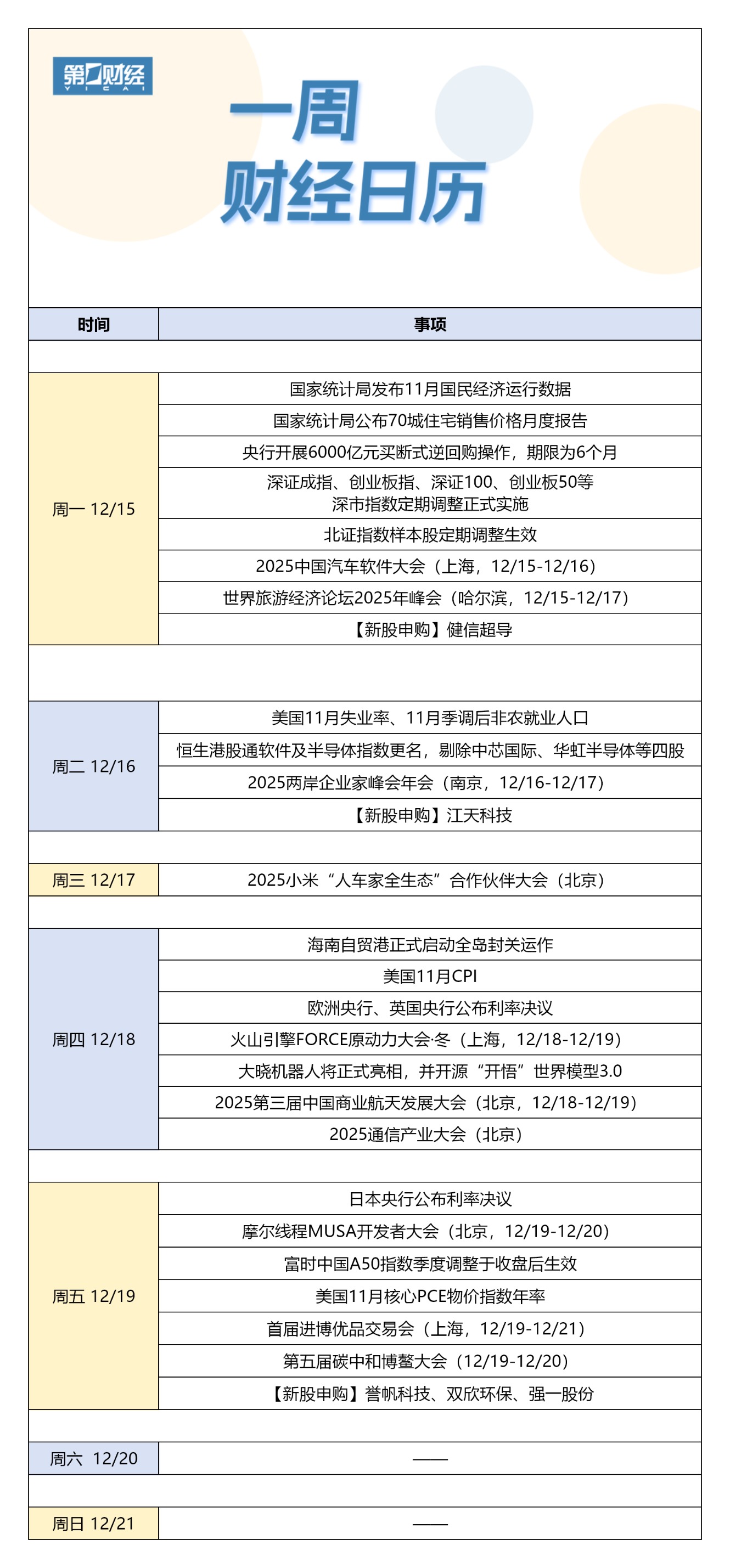
【下周财经日历】12月15日-12月21日
Di Yi Cai Jing· 2025-12-13 12:43
Group 1 - The National Bureau of Statistics released the national economic operation data for November, indicating ongoing economic trends [1] - The National Bureau of Statistics published the monthly report on residential sales prices in 70 cities, reflecting the real estate market conditions [1] - The People's Bank of China conducted a 600 billion yuan reverse repurchase operation with a term of six months, aimed at providing liquidity [1] Group 2 - The Hainan Free Trade Port officially launched its full island closure operation, marking a significant step in economic development [2] - The European Central Bank and the Bank of England announced their interest rate decisions, impacting monetary policy in their respective regions [2] - The U.S. November Core PCE Price Index year-on-year data was released, providing insights into inflation trends [2]
比特币“囤积巨鲸”Strategy(MSTR.US)保住纳指100席位 MSCI仍警告1月或下剔除“裁决”
Zhi Tong Cai Jing· 2025-12-13 07:03
Group 1 - Strategy (MSTR.US) has maintained its position in the Nasdaq 100 index for over a year, despite ongoing skepticism about its business model [1][2] - The company's "buy and hold" Bitcoin strategy resembles that of an investment fund, leading to the emergence of numerous imitators in the market [1] - Concerns about the sustainability of crypto asset reserve companies are increasing, with Strategy's stock price being highly sensitive to Bitcoin's volatility [1] Group 2 - Nasdaq has removed several companies, including Biogen (BIIB.US) and CDW (CDW.US), from the Nasdaq 100 index, while adding new constituents like Alnylam Pharmaceuticals (ALNY.US) and Seagate Technology (STX.US) [1] - Initially a software company, Strategy shifted to Bitcoin investment in 2020 and was included in the Nasdaq 100 index in December of the previous year [2] - MSCI has expressed concerns about including digital asset reserve companies in its benchmark index and is expected to make a decision regarding Strategy in January [2]

潮州市新小林包装有限公司成立 注册资本1万人民币
Sou Hu Cai Jing· 2025-12-13 06:15
Group 1 - A new company, Chaozhou Xinxiaolin Packaging Co., Ltd., has been established with a registered capital of 10,000 RMB [1] - The company's business scope includes packaging services, sales of packaging materials and products, and various other sales activities [1] - The company is authorized to operate independently within the scope of its business license, excluding projects that require approval [1]
广州鑫诺亚新技术发展有限公司成立 注册资本50万人民币
Sou Hu Cai Jing· 2025-12-13 05:41
Core Viewpoint - Guangzhou Xinnoya New Technology Development Co., Ltd. has been established with a registered capital of 500,000 RMB, focusing on various technology and product services in multiple sectors [1] Group 1: Company Overview - The company specializes in new material technology research and development [1] - It offers a wide range of services including sales and manufacturing of office equipment consumables, stationery, and electronic components [1] - The company is involved in both domestic and international trade, including import and export activities [1] Group 2: Business Scope - The operational scope includes technology services such as consulting, development, and transfer [1] - It provides maintenance services for electronic and mechanical equipment, as well as software sales and IT consulting [1] - The company also engages in the sale of pre-packaged food through online channels and offers various printing services [1]
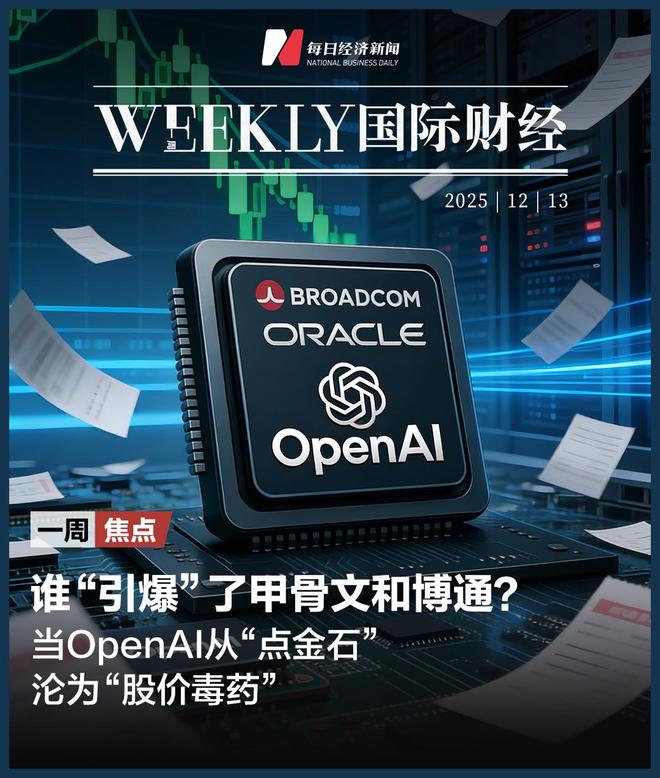
甲骨文和博通大跌,OpenAI沦为“股价毒药”;泽连斯基主张选举或公投解决“和平计划”分歧;下任美联储主席候选人有变;英伟达下周将就“缺电”问题开会 |...
Mei Ri Jing Ji Xin Wen· 2025-12-13 04:23
Core Insights - OpenAI's association with companies like Oracle and Broadcom has shifted from a growth driver to a source of significant stock price declines, with Oracle's stock dropping 16% and Broadcom's 11% in a short period [4][5][6] - The market is increasingly skeptical about OpenAI's revenue potential and ability to fulfill its contracts, particularly in light of competition from Google [4][5][7] Company Performance - Oracle reported a total revenue of $16.06 billion for Q2 FY2026, which fell short of expectations, while its cloud business revenue of $8 billion grew 34% year-over-year but did not meet analyst forecasts [12][14] - Oracle's remaining performance obligations (RPO) surged 438% to $523 billion, with $300 billion attributed to a five-year computing power procurement agreement with OpenAI, raising concerns about OpenAI's ability to meet its spending commitments [12][14][16] - Broadcom's Q4 FY2025 earnings per share reached $1.95, exceeding analyst expectations, and revenue was $18.02 billion, also above forecasts. However, the stock fell sharply due to concerns over the timing of revenue from its $73 billion AI product backlog [7][9][11] Market Impact - The combined market capitalization of major AI companies, including Oracle and Broadcom, saw a significant decline, with a total loss of approximately $547 billion (around 3.8 trillion yuan) in a single day [5][6] - Companies deeply tied to OpenAI, such as Oracle, SoftBank, Microsoft, and Nvidia, have experienced substantial stock price drops since late October, with Oracle's stock down 27.7% and SoftBank's down 34% [20][21] Competitive Landscape - OpenAI faces increasing pressure from Google's new Gemini 3 model, which is perceived to have a competitive edge in the AI ecosystem, leading to concerns about OpenAI's long-term viability [22][26] - Analysts suggest that OpenAI's ambitious expansion plans may be unrealistic, with estimates indicating that it would require over $1 trillion in investments to fulfill its commitments, raising doubts about its business model sustainability [23][25][26]