游戏

Search documents
8点1氪:SK海力士向全体员工发放人均超64万元绩效奖金;深圳水贝市场推出投资铜条;茶颜悦色回应在北上深开店传闻
36氪· 2026-01-20 00:11
Group 1 - SK Hynix announced a record performance bonus of over 136 million KRW (approximately 640,000 RMB) per employee, the highest in the company's history [3][4] - The company offers an option for employees to receive up to 50% of their year-end bonus in company stock, which can yield an additional cash reward of 15% after holding the stock for one year [3][4] - SK Hynix's stock price surged by 275% in 2025, driven by the AI boom, and the company reported that its entire chip production capacity for 2026 is already sold out [4] Group 2 - The performance bonus distribution is part of SK Hynix's strategy to enhance employee engagement and align their interests with shareholders [3] - The stock option plan is designed to incentivize long-term commitment from employees, potentially increasing their investment in the company's future [3][4] - The strong demand for SK Hynix's products reflects the ongoing growth in the semiconductor industry, particularly in memory chips, fueled by advancements in AI technology [4]


财信证券晨会纪要-20260120
Caixin Securities· 2026-01-19 23:34
Market Strategy - The market experienced a volume contraction rebound, with the electric grid equipment sector showing strength [6][7] - The overall market saw a slight increase, with the Wind All A Index rising by 0.41% to 6798.66 points, while the Shanghai Composite Index increased by 0.29% to 4114 points [6][7] - The electric grid equipment sector is expected to continue its upward trend, supported by a projected fixed asset investment of 4 trillion yuan by the State Grid Corporation during the 14th Five-Year Plan, representing a 40% increase from the previous plan [7][8] Economic Indicators - In 2025, China's total retail sales of consumer goods reached 501.202 billion yuan, a year-on-year increase of 3.7% [14] - Fixed asset investment in China decreased by 3.8% year-on-year in 2025, totaling 485.186 billion yuan [16] - The GDP growth for the fourth quarter of 2025 was reported at 4.5% year-on-year, with an annual GDP of 14,018.79 billion yuan, reflecting a 5.0% increase [18] Industry Dynamics - In 2025, the national pig slaughter volume reached 720 million heads, with a total pork production of 5.938 million tons, marking a 4.1% increase [31] - The milk production in China for 2025 was 4.091 million tons, showing a slight growth of 0.3% compared to the previous year [33] - The commercial housing loan down payment ratio has been adjusted to a minimum of 30% [36] Company Updates - Victory Technology announced an expected net profit of 4.16 billion to 4.56 billion yuan for 2025, with a fourth-quarter net profit median of 1.115 billion yuan, reflecting a year-on-year growth of 186.03% [38] - XGIMI Technology disclosed a development notification from a well-known domestic automotive manufacturer, indicating its subsidiary will supply in-car projection products [41] - OCO Group projected a net profit of 96 million to 110 million yuan for 2025, representing a year-on-year increase of 67.53% to 91.96% [46]
中国游戏出海按下“快进键”
Jing Ji Ri Bao· 2026-01-19 22:14
Core Insights - The Chinese cultural "new three" represented by online literature, online film and television, and online games has rapidly risen and gained popularity in overseas markets, with game exports becoming a new engine for the growth of China's service trade [1] - In the first half of 2025, the actual sales revenue of independently developed Chinese games in overseas markets reached $9.501 billion, a year-on-year increase of 11.07% [1] Group 1: Game Development and Technology - The first domestic 3A game "Black Myth: Wukong" showcases top-notch graphics technology and artistic expression, while "Yanyun Sixteen Sounds" utilizes nano-level detail rendering technology, achieving over 50 million views on overseas platforms [2] - Chinese game companies have developed a "premium R&D system" that enables them to produce high-quality mobile and cross-platform games, supported by a deep understanding of the free-to-play (F2P) model and refined operational capabilities [2][4] - The integration of artificial intelligence-generated content (AIGC) is accelerating game exports, enhancing player experience through real-time NPC interactions and significantly improving production efficiency [3] Group 2: Cultural Integration and Global Appeal - The integration of traditional cultural IP with games is enhancing the quality of the gaming industry and spreading Chinese culture to global players [5] - Games like "Black Myth: Wukong" and "Genshin Impact" incorporate elements of Chinese culture, such as using Pinyin for character names and designing events based on traditional festivals, which has sparked interest among international players [5][6] - The current trend in game exports has shifted from mere product output to cultural empowerment and systemic output, with major game companies actively participating in global competition [7] Group 3: Policy Support and Industry Growth - The growth of Chinese games in overseas markets is supported by various policies from national and local governments, which provide institutional guarantees for companies to expand internationally [8] - The Ministry of Commerce has outlined a comprehensive plan for the game export industry, covering everything from IP creation to overseas operations, with notable companies and games included in the national cultural export directory [8] - Local governments, such as Guangdong and Beijing, are implementing policies to accelerate the development of the gaming industry and support international market expansion [9] Group 4: Future Growth Opportunities - Future growth in game exports will focus on refined operations in emerging markets, with an emphasis on deep customization based on local cultures and social habits [10] - The integration of AI technology is seen as a significant opportunity that will transform game development and user experience, with companies that adopt AI early gaining a competitive edge [10] - Products that enable data interoperability across mobile, PC, and console platforms, as well as those that create an ecosystem of "games + events + community," are expected to drive future growth [10]
内资逃外资抄,监管连夜发声!A股关键点位全透视,这三类股成资金避风港
Sou Hu Cai Jing· 2026-01-19 17:22
Market Overview - The A-share market experienced significant volatility last Friday, with the Shanghai Composite Index closing down 0.26% at 4101.91 points, barely holding above the 4100-point mark [1] - The ChiNext Index fell by 0.2%, closing at 3361.02 points [1] - Total market turnover exceeded 30 trillion yuan, reaching 30,263 billion yuan, but nearly 3000 stocks declined, indicating clear market differentiation [1] Policy Signals - The China Securities Regulatory Commission (CSRC) emphasized the need to "firmly prevent large fluctuations in the market" during a meeting on January 15, 2026, and announced measures to combat market manipulation [3] - On January 18, the CSRC clarified its intention to guide long-term capital into the market and curb excessive speculation [3] - A significant reduction in the down payment ratio for commercial property loans was implemented over the weekend, while the Shanghai and Shenzhen stock exchanges conducted over 800 regulatory actions against abnormal trading [3] Capital Flow - On January 16, northbound capital saw a net inflow of 8.6 billion yuan, marking a new single-day high for 2026, with a focus on the semiconductor sector [3] - However, main capital has seen a net outflow for nine consecutive trading days, with over 40 billion yuan withdrawn on that day, particularly from high-position stocks in computing and media [3] - The adjustment of the financing margin ratio to 100% was officially implemented on January 19, which is expected to moderately suppress market leverage [3] Sector Performance - The semiconductor sector surged by 4.26%, with significant inflows exceeding 23.7 billion yuan, driven by strong performance in storage chips and advanced packaging [4] - Conversely, the media sector dropped by 4.6%, with multiple stocks in AI applications and gaming hitting the daily limit down, while the computing sector saw a net outflow of 16.8 billion yuan [4] - The commercial aerospace sector faced negative sentiment due to news of satellite launch failures, potentially impacting related stocks [4] Investment Trends - Capital is increasingly flowing towards hard technology with industrial logic, while speculative high-position stocks are being sold off [5] - The semiconductor industry chain has become a recent market highlight, benefiting from the explosive demand for AI computing power and an upward cycle in global storage chip prices, with a projected 40% increase in storage chip prices in Q1 2026 [9] - Low-valuation financial and real estate sectors are seeing valuation recovery opportunities supported by policy changes, such as the reduction of the commercial property down payment ratio to 30% [10] Market Dynamics - The market is expected to exhibit three potential scenarios on Monday, depending on whether the Shanghai Composite Index can maintain the 4100-point level and the performance of the semiconductor sector [6][7] - If the index falls below the 4090-point support, further declines to around 4070 points may occur, necessitating caution regarding high-position stock corrections [7] - The central bank's structural interest rate cuts and the release of over 1.2 trillion yuan in long-term low-cost funds are aimed at providing liquidity support while curbing speculation [8] Technical Analysis - The Shanghai Composite Index is oscillating between 4091.81 and 4140.23 points, with the 4090-point level serving as a critical support area [3] - If this support is breached, the next strong support is around 4070 points, while resistance is found in the 4120-4130 point range [3] - The market's trading volume is crucial; maintaining around 30 trillion yuan indicates market activity, while a drop below 28 trillion yuan could signal a need for caution [8]
中国儒意斥资1420万美元投资AI视频企业
Zheng Quan Ri Bao· 2026-01-19 16:15
Group 1 - On January 19, China Ruyi Holdings invested $14.2 million in AI video company Beijing Aishi Technology, focusing on AI technology applications in film and television visual design, visual effects production, and user experience enhancement [1] - The collaboration aims to explore cost reduction and efficiency improvement in the gaming sector, which is already a common practice in the industry [1] - The next phase of "AI + gaming" is expected to integrate AI as a core driver of gaming experiences, potentially opening new commercial avenues [1] Group 2 - In the film industry, AI applications are increasingly concentrated in the micro-short animation segment, with the market expected to reach 18.98 billion yuan by 2025, a year-on-year increase of 276.3% [2] - The emergence of micro-short animations and clearer monetization models provide rich application prospects for AI video tools, with various content companies joining the competition [2] - China Ruyi's entry into this space is not surprising, as the company aims to leverage Aishi Technology's innovative multimodal AI model to transform film creation methods [2] Group 3 - Despite having numerous film and long-form drama resources, China Ruyi is not the only player in this competitive AI video tool market, which is becoming increasingly intense [3] - The rise of AI live-action dramas may provide a breakthrough direction for content providers like China Ruyi, with expectations of significant growth in the micro-short drama segment over the next 1 to 2 years [3] - Long-term projections suggest that AI live-action dramas could reshape the film industry ecosystem, creating a diverse market landscape as technology and regulations evolve [3]
开源证券晨会纪要-20260119
KAIYUAN SECURITIES· 2026-01-19 14:45
Fixed Income - The total bond custody amount at the Shanghai Clearing House decreased to 49.88 trillion yuan, a net reduction of 204.5 billion yuan from the previous month, while the China Central Depository & Clearing Co. saw a net increase of 507.1 billion yuan, bringing the total custody amount to 178.55 trillion yuan, a net increase of 302.6 billion yuan [6][7][10] - The overall leverage ratio in the bond market rose to 107.14%, with commercial banks and non-bank institutions seeing increases, while brokerages experienced a decline [10] - The target range for 10-year government bonds is set at 2-3%, with a central tendency around 2.5% due to economic recovery expectations and potential monetary easing [11][12] Retail Industry - The total retail sales of consumer goods in 2025 reached 50.12 trillion yuan, reflecting a year-on-year growth of 3.7%, with December sales showing a 0.9% increase [14][15] - Online retail sales for 2025 amounted to 15.97 trillion yuan, growing by 8.6%, with physical goods online retail accounting for 26.1% of total retail sales [16] - Investment opportunities are identified in high-demand sectors such as gold and jewelry, offline retail, cosmetics, and medical aesthetics, with specific companies recommended for investment [17] Real Estate - The total sales area of commercial housing in 2025 was 881 million square meters, a year-on-year decrease of 8.7%, with sales revenue dropping by 12.6% [19][20] - New housing starts fell by 20.4% year-on-year, continuing a trend of significant declines over the past four years [20][21] - Investment recommendations include companies with strong credit ratings and those that can meet the needs of improvement-oriented customers, as well as firms benefiting from both residential and commercial real estate [22] Electronics - The electronics sector saw a 3.64% increase in the industry index, with semiconductors performing particularly well, rising by 5.12% [23][24] - TSMC's optimistic guidance and significant capital expenditure indicate a robust outlook for the AI industry, with demand for AI hardware driving investment [25][26] - Recommended companies include those involved in semiconductor manufacturing and related technologies, benefiting from the ongoing demand surge [27] Pharmaceuticals - There are currently 18 PD-(L)1/VEGF dual antibodies in clinical stages globally, with several companies accelerating their clinical trials [29][30] - Investment opportunities are highlighted in companies involved in innovative drug development and those with strong clinical trial pipelines [34] Chemicals - The fluorochemical index increased by 7.76%, with significant price increases for refrigerants R404 and R507 driven by overseas market demand [35][36][38] - Companies such as Sanmei and Yonghe are expected to see substantial profit growth due to rising prices and demand in the fluorochemical sector [40][41][43] Military Industry - The military industry index rose by 8.04%, with current valuations remaining relatively high [50] - Increased geopolitical tensions, particularly regarding Greenland and the Middle East, are influencing military spending and investment opportunities [51][52] - Recommended companies include those involved in commercial aerospace and satellite technology, which are expected to benefit from ongoing demand [53] Coal Mining - Coal prices are returning to reasonable levels, supporting a stable pricing logic in the coal market [54]
世纪华通《Whiteout Survival》跃居2025全球手游收入榜第四
Xin Lang Cai Jing· 2026-01-19 13:16
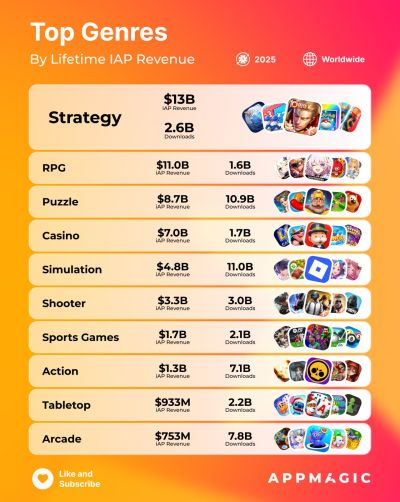
Core Insights - The article highlights the impressive performance of "Whiteout Survival," developed by Century Huatong, which has risen from eighth to fourth place in the global mobile game revenue rankings for 2025, with a revenue nearing $1 billion in 2024 and a projected annual growth rate of approximately 50% for 2025 [1][4]. Group 1: Game Performance - "Whiteout Survival" is recognized as the world's first ice and snow survival-themed SLG game, achieving significant revenue growth and becoming the champion of growth within the $1 billion revenue tier [1][4]. - The game has a broad market presence, with the United States, Japan, South Korea, and Taiwan being the top four revenue-generating markets, showcasing a doubling of revenue in Japan and a 70% increase in South Korea [1][4]. Group 2: Market Trends - The success of "Whiteout Survival" aligns with the explosive growth of the strategy game genre, which is projected to generate $13 billion in in-app purchase revenue in 2025, making it the highest-grossing game type globally [2][5]. - The game contributes significantly to the SLG segment and utilizes a "SLG+X" fusion gameplay approach, breaking user barriers and driving market growth [2][5]. Group 3: Company Strategy - Century Huatong's systematic capabilities support the game's success, leveraging a data-driven "research, operation, and development" collaborative system to create a competitive and differentiated product matrix [3][6]. - The company employs deep localization strategies to tailor activities and marketing content to regional player needs, enhancing user engagement in key overseas markets [3][6]. - The rise of "Whiteout Survival" reflects Century Huatong's leading position in the global mobile gaming sector, with a dual strategy of "strong leadership and multi-category collaboration" [3][6].

世纪华通荣膺上海市浙江商会第五届“金名片”奖
Xin Lang Cai Jing· 2026-01-19 13:15
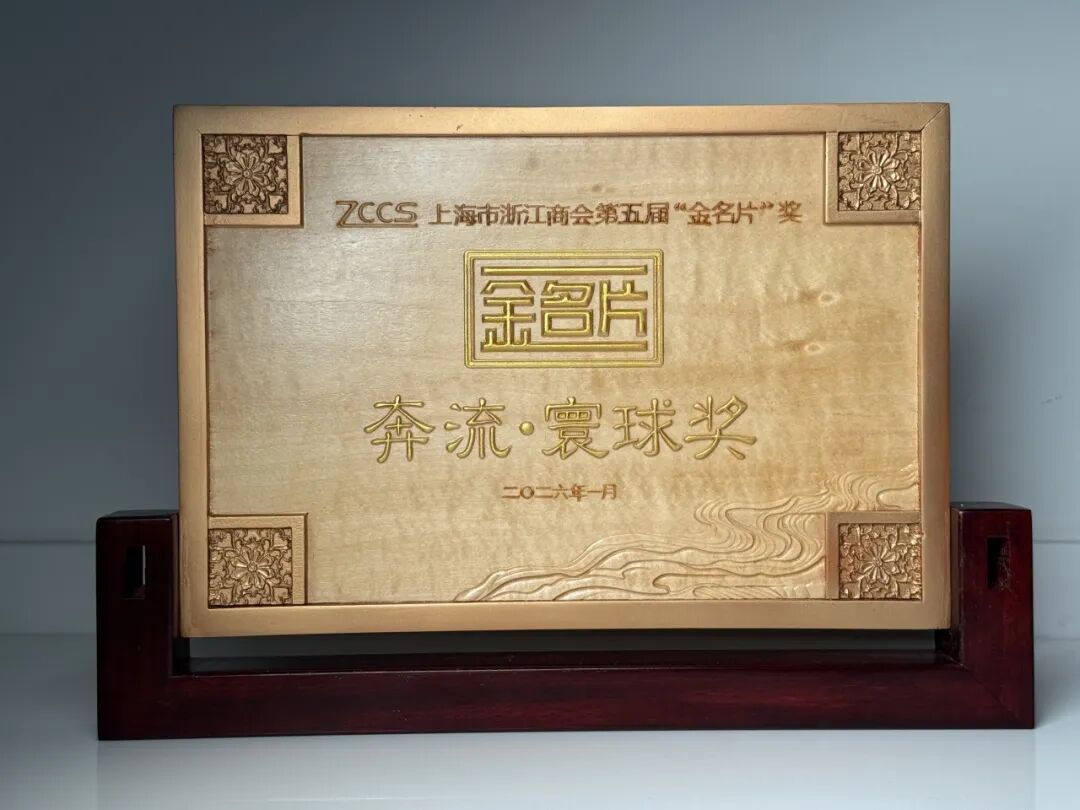
Core Viewpoint - The 9th World Zhejiang Business Forum and the 2025 Shanghai Zhejiang Chamber of Commerce Annual Meeting highlighted the theme of "running forward," exploring new development paths amid global economic changes and technological revolutions. Century Huatong was awarded the "Flowing Global Award" for its outstanding performance in globalization, industrial innovation, and high-quality development [1][6]. Group 1: Award Significance - The "Golden Name Card" award aims to recognize member enterprises that excel in innovation, craftsmanship, quality leadership, and globalization, reflecting the spirit and responsibility of Zhejiang merchants [2][8]. - Century Huatong's focus on the core gaming industry and its active expansion into international markets have established a global distribution system, contributing to global industrial upgrades [2][8]. Group 2: Financial Performance - Century Huatong reported a revenue of 27.223 billion yuan and a net profit of 4.357 billion yuan for the first three quarters of 2025, marking a year-on-year increase of 141.65% [2][8]. - The company's net profit after deducting non-recurring items reached 4.294 billion yuan, also reflecting a year-on-year growth of 140.98%, with operating cash flow increasing by 81.33% to 6.278 billion yuan [2][8]. Group 3: Market Position - In the competitive global gaming market, Century Huatong's overseas gaming business has become a key growth driver, ranking second among Chinese mobile game publishers globally [5][10]. - The company's game "Whiteout Survival" topped the overseas mobile game revenue list, while "Kingshot" and "Tasty Travels: Merge Game" also achieved significant rankings [5][10]. - The "Flowing Global Award" acknowledges Century Huatong's commitment to global market development and its embodiment of the Zhejiang merchant spirit [5][10].
新迅达,三年连亏!
Shen Zhen Shang Bao· 2026-01-19 12:46
Core Viewpoint - The company, Xin Xun Da, is expected to report a net loss for the year 2025, with projected losses ranging from 89 million to 126 million yuan, primarily due to asset impairment provisions [1][2] Group 1: Financial Performance - The company anticipates a net profit loss for 2025, mainly attributed to the provision for asset impairment [1] - The projected impairment for long-term equity investments is estimated between 10 million and 15 million yuan [1] - The company reported losses of 316 million yuan in 2024 and 255 million yuan in 2023, indicating a trend of consecutive losses for three years [2] Group 2: Impairment Details - The impairment for construction in progress is expected to be between 7 million and 10 million yuan, while the impairment for intangible assets is projected to be between 25 million and 35 million yuan [2] - The construction progress of the mining area has not made substantial advancements compared to previous disclosures, leading to anticipated impairment provisions [2] - The expected production period for the Cai Jia lithium mine is projected to be shortened by approximately 1.5 years, resulting in decreased total revenue and increased construction costs, necessitating impairment provisions [2] Group 3: Business Background - Xin Xun Da was listed on the Growth Enterprise Market in June 2016, initially focusing on the gaming industry [2] - In September 2020, the company transferred 49% of its subsidiary, Sheng Xun Yun Shang, to Xin Xuan Holdings, marking its entry into the live e-commerce sector [2] Group 4: Profit Margin Trends - The company's gross profit margin has significantly declined, with figures of 90.57%, 81.09%, 48.22%, and 11.99% from 2021 to 2024 respectively [2]

携程遭反垄断立案调查,千亿市值蒸发|ESG热搜榜
2 1 Shi Ji Jing Ji Bao Dao· 2026-01-19 12:26
Group 1: Ctrip Investigation - Ctrip Group is under investigation for alleged monopolistic behavior by the State Administration for Market Regulation, based on the Anti-Monopoly Law of the People's Republic of China [1] - Following the announcement, Ctrip's stock fell significantly, with a 6.49% drop in Hong Kong shares and a 17% decline in U.S. shares, leading to a market value loss exceeding 100 billion RMB [1] Group 2: Battery Recycling Regulations - China is entering a phase of large-scale retirement of power batteries, with projections indicating that over 1 million tons of waste batteries will be generated by 2030 [2] - The newly released management measures aim to regulate the recycling and utilization of power batteries, emphasizing the importance of legal frameworks to prevent environmental pollution and resource wastage [2] Group 3: Weather and Climate - The World Meteorological Organization confirmed that 2025 is projected to be one of the hottest years on record, with the past 11 years being the hottest ever recorded [3] - The average temperature from 2023 to 2025 is expected to be 1.48°C higher than pre-industrial levels, indicating a persistent trend of global warming [3] Group 4: JuShi Chemical Penalty - JuShi Chemical has been penalized 6.7 million RMB for inflating revenue, costs, and profits through false trade activities, with significant impacts on their financial statements [4] - The inflated revenue amounted to 157 million RMB, representing 8.32% of total revenue for the first half of 2023 [4] Group 5: Perfect World Corruption Case - Perfect World reported that three art department heads were detained for corruption, with ongoing investigations revealing multiple cases of employee misconduct [5] - The company has filed reports with law enforcement regarding these incidents, which involve employees colluding with suppliers [5] Group 6: TianCi Materials Legal Judgment - TianCi Materials' subsidiary received a criminal judgment for commercial secret infringement, resulting in a fine of 20 million RMB for the company and prison sentences for involved individuals [6] - The judgment highlights the legal risks associated with commercial secret violations in the industry [6] Group 7: XinNing Logistics Lawsuit - XinNing Logistics has filed a lawsuit against Zhuhai Guanyu, seeking compensation of 64.5264 million RMB for damages caused by a fire linked to Guanyu's lithium batteries [7] - The case has been accepted by the court, but the impact on the company's profits remains uncertain [7]