
建筑装饰

Search documents
【金工】能繁母猪存栏微增,炼化行业景气度同比持稳——金融工程行业景气月报20250702(祁嫣然/宋朝攀)
光大证券研究· 2025-07-02 13:14
Group 1: Coal Industry - In June 2025, coal prices are lower than the same period last year, leading to a forecast of a year-on-year decline in industry profits for July 2025, maintaining a neutral outlook for the coal industry [3]. Group 2: Livestock Farming - As of the end of May 2025, the number of breeding sows is 40.42 million, showing a slight month-on-month increase. It is predicted that the supply and demand for pigs will balance in Q4 2025, with pork prices expected to stabilize at the bottom while waiting for a significant reduction in production capacity [4]. Group 3: Steel Industry - A forecast for June 2025 indicates a year-on-year negative growth in profits for the general steel industry. The rolling average of PMI has not exceeded the threshold, maintaining a neutral signal for the steel industry [5]. Group 4: Construction Materials and Engineering - In June 2025, the gross profit of float glass is expected to decline year-on-year, maintaining a neutral signal for the glass industry. The cement industry is predicted to see year-on-year profit growth in June 2025, awaiting positive signals from new housing starts, also maintaining a neutral outlook for the cement industry [5]. - The manufacturing PMI rolling average is stabilizing, while year-on-year data for commercial housing sales shows a slight decline. Economic data remains stable, and expectations for infrastructure support are unlikely to materialize, maintaining a neutral signal for the construction and decoration industry [5]. Group 5: Fuel Refining and Oil Services - A forecast for June 2025 suggests that profits in the fuel refining industry will remain roughly flat year-on-year, maintaining a neutral outlook. Oil prices have not yet formed an upward trend year-on-year, and new drilling activities are also stable year-on-year, leading to a neutral outlook for oil services [6].


北交所市场点评20250701:上半年北证50领涨,IPO受理再提速,关注海洋经济
Western Securities· 2025-07-02 08:54
Investment Rating - The report suggests a positive outlook for the industry, indicating a potential for growth in the next 6-12 months, with a focus on specific sectors such as high-end equipment, new energy, and information technology [6][7]. Core Insights - The North Exchange A-shares saw a trading volume of 30.73 billion yuan on July 1, with a slight increase in the index by 0.7%. Among 268 companies, 113 rose, 6 remained flat, and 149 fell [3][13]. - The newly launched North Exchange Specialized and Innovative Index has strengthened the positioning of the North Exchange as a primary platform for specialized and innovative companies, attracting new capital [6][7]. - The report emphasizes the importance of monitoring macroeconomic policies and performance indicators, particularly in light of upcoming central government meetings and mandatory mid-year earnings forecasts [6][7]. Market Review - The trading volume for North Exchange A-shares reached 30.73 billion yuan, with a turnover rate of 5.4%, leading among various sectors [13][14]. - The top five gainers included Huawai Design (30.0%), Jinbo Biological (11.0%), and Jinhao Medical (10.6%), while the top five losers were Patel (-9.4%), Tonghui Information (-9.2%), and Guoyuan Technology (-7.5%) [23][26]. Important News - The People's Bank of China and other departments issued guidelines to support consumption and capital markets, aiming to enhance financial services and boost market sentiment [27]. - JinHao Medical announced a cash dividend of 0.3 yuan per 10 shares, while other companies like DR Tianrun Technology reported obtaining three invention patents, highlighting their innovation capabilities [29][32].
固定收益市场周观察:利差压缩行情或延续
Orient Securities· 2025-07-01 09:45
Report Industry Investment Rating - Not provided in the given content Core Views of the Report - After the cross - quarter period, the spread compression market of credit bonds will continue. Seasonal decline in interest rates, stable capital, and the risk - taking preference of asset management products are the main reasons. The short - term market for medium - and long - term credit bonds will continue, and the term spread will further compress [5][8]. - The allocation value of industrial bonds can be concerned. The market may chase high - yield subjects, and the follow - up sinking motivation may strengthen. The sectors with thick spreads such as construction local state - owned enterprises, coal state - owned enterprises, etc., are expected to be further explored [5][10]. - There is a callback risk due to the "scar effect" of previous adjustments. For ultra - long - term credit bonds, a small - scale participation is advisable. The rapidly expanding credit bond ETF helps compress the liquidity premium [5][13]. - The Shanghai Composite Index has started a new round of market, and the bullish sentiment has driven up the market risk preference. The underlying logic of the convertible bond market remains unchanged, and the long - term allocation logic is still valid. When the convertible bond valuation reaches an absolute high and the equity market has a small upward trend, it may be a good window period. Convertible bonds can be appropriately added to the position [5][14]. Summary According to the Directory 1. Credit Bonds and Convertible Bonds Views: Spread Compression Market May Continue - The spread compression market of credit bonds will continue after the cross - quarter. The market's risk - taking preference for extending the duration to obtain capital gains may increase, and the term spread of medium - and long - term credit bonds will further compress [5][8]. - The allocation value of industrial bonds is worthy of attention. The market may continue to chase high - yield subjects, and sectors with thick spreads may be further explored [5][10]. - There is a potential callback risk for credit bonds, and ultra - long - term credit bonds can be participated in with a small position. The convertible bond market's basic logic remains unchanged, and it can be appropriately added to the position when the equity market is strong [5][13][14]. 2. Credit Bond Review: The Market Continues to Chase Absolute Coupon Income 2.1 Negative Information Monitoring - From June 23 to June 29, 2025, there were no bond defaults or overdue events. However, there were several cases of corporate rating downgrades and negative events, such as the rating downgrades of Montz New Urbanization Development Investment Co., Ltd. and some overseas companies like Longfor Group [17][18]. 2.2 Primary Issuance: Issuance Volume Declined, and the Financing Cost of Medium - and High - Grade Bonds Slightly Decreased - The primary issuance volume of credit bonds decreased to 300 billion yuan, with the maturity scale remaining flat and the net financing slightly negative. Six credit bonds were cancelled or postponed, with a total scale of 4 billion yuan. The average coupon rates of AAA and AA + grade bonds decreased by 1bp and 4bp respectively [19][21]. 2.3 Secondary Trading: Medium - and Low - Valued, Medium - and Long - Term Bonds Outperformed - Except for AAA - grade bonds, the valuations of credit bonds generally declined, and the spreads of medium - and low - grade credit bonds significantly narrowed. The term spread of each grade mainly narrowed, and the 3Y - 5Y part continued to outperform. The credit spreads of urban investment bonds in most provinces widened by about 2bp, while industrial bonds fluctuated slightly and outperformed urban investment bonds. The liquidity of credit bonds weakened slightly, with the turnover rate dropping by 0.06pct to 2.25% [25][29][34]. 3. Convertible Bond Review: Convertible Bonds Rose Significantly, and the Right - Side Window Opened 3.1 Market Overall Performance: The Stock Market Continued to Rise, and Convertible Bonds Followed Strongly - From June 23 to June 27, 2025, major stock indices rose. The leading convertible bonds outperformed their underlying stocks, and some convertible bonds were actively traded [39]. 3.2 Convertible Bonds Followed Strongly, Seize the Right - Side Opportunity - This week, convertible bonds rose significantly, but the average daily trading volume decreased to 7.5907 billion yuan. The CSI Convertible Bond Index rose 2.08%, the parity center rose 3.7% to 98.0 yuan, and the conversion premium center fell 2.8% to 25.9%. Medium - and low - rated, small - cap, and high - priced convertible bonds performed well [43].

金工定期报告20250701:预期高股息组合跟踪
Soochow Securities· 2025-07-01 09:03
Quantitative Models and Construction Methods 1. Model Name: Expected High Dividend Portfolio - **Model Construction Idea**: The model uses a two-stage process to construct the expected dividend yield indicator. The first stage calculates the dividend yield based on annual report profit distribution data, while the second stage predicts and calculates the dividend yield using historical dividend data and fundamental indicators. Additionally, two short-term factors—reversal factor and profitability factor—are used to assist in stock selection. The portfolio is optimized within the CSI 300 constituents[4][9] - **Model Construction Process**: 1. Exclude suspended and limit-up stocks from the CSI 300 constituents to form the initial stock pool[14] 2. Remove the top 20% of stocks with the highest short-term momentum (21-day cumulative returns)[14] 3. Exclude stocks with declining profitability (quarterly net profit growth rate < 0)[14] 4. Rank the remaining stocks by expected dividend yield and select the top 30 stocks to construct an equal-weighted portfolio[10] - **Model Evaluation**: The model demonstrates a systematic approach to identifying high-dividend stocks, leveraging both historical data and fundamental analysis for robust stock selection[4][9] --- Model Backtesting Results 1. Expected High Dividend Portfolio - **Cumulative Return**: 358.90% relative to the CSI 300 Total Return Index from February 2, 2009, to August 31, 2017[12] - **Cumulative Excess Return**: 107.44% over the same period[12] - **Annualized Excess Return**: 8.87%[12] - **Maximum Drawdown of Rolling One-Year Excess Return**: 12.26%[12] - **Monthly Excess Win Rate**: 60.19%[12] --- Quantitative Factors and Construction Methods 1. Factor Name: Expected Dividend Yield Factor - **Factor Construction Idea**: This factor predicts dividend yield by combining historical dividend data with fundamental indicators. It is used to identify stocks with high expected dividend yields[4][15] - **Factor Construction Process**: 1. Calculate dividend yield based on annual report profit distribution data[4][9] 2. Predict and calculate dividend yield using historical dividend data and fundamental indicators[4][9] - **Factor Evaluation**: The factor effectively integrates historical and fundamental data to predict dividend yields, providing a solid foundation for high-dividend stock selection[4][15] 2. Factor Name: Reversal Factor - **Factor Construction Idea**: This factor identifies stocks with short-term price reversals, which may impact dividend yield predictions[4][15] - **Factor Construction Process**: Measure short-term momentum using 21-day cumulative returns and exclude the top 20% of stocks with the highest momentum[14] - **Factor Evaluation**: The factor helps mitigate the impact of short-term price surges, ensuring a focus on stable dividend yield predictions[4][15] 3. Factor Name: Profitability Factor - **Factor Construction Idea**: This factor screens out stocks with declining profitability, ensuring the selection of fundamentally strong companies[4][15] - **Factor Construction Process**: Exclude stocks with quarterly net profit growth rates less than 0[14] - **Factor Evaluation**: The factor ensures the portfolio is composed of financially sound companies, enhancing the reliability of dividend yield predictions[4][15] --- Factor Backtesting Results 1. Expected Dividend Yield Factor - **June 2025 Average Return**: 1.84%[15] - **Excess Return Relative to CSI 300**: -0.83%[15] - **Excess Return Relative to CSI Dividend Index**: 2.40%[15] 2. Reversal Factor - **Impact**: Excluded the top 20% of stocks with the highest short-term momentum, ensuring stability in the portfolio's dividend yield predictions[14] 3. Profitability Factor - **Impact**: Excluded stocks with declining profitability, maintaining a focus on fundamentally strong companies[14]




75只股涨停 最大封单资金4.86亿元
Zheng Quan Shi Bao Wang· 2025-07-01 07:38
截至收盘,上证指数报收3457.75点,上涨0.39%;深证成指收于10476.29点,上涨0.11%;创业板指下 跌0.24%;科创50指数下跌0.86%。 | 605006 | 山东玻纤 | 7.39 | 8.15 | 710.06 | 5247.38 | 建筑材 | | --- | --- | --- | --- | --- | --- | --- | | | | | | | | 料 | | 603936 | 博敏电子 | 10.37 | 11.69 | 495.73 | 5140.68 | 电子 | | 603091 | 众鑫股份 | 69.60 | 10.08 | 73.46 | 5112.57 | 轻工制 | | | | | | | | 造 | | 000900 | 现代投资 | 4.65 | 3.59 | 1098.30 | 5107.1 1 | 交通运 | | | | | | | | 输 | | 600353 | 旭光电子 | 14.67 | 12.69 | 321.23 | 4712.44 | 电子 | | 002102 | 能特科技 | 3.48 | 4.70 | 1317.38 | 45 ...


民营经济人士谈民营经济促进法:助力企业行稳致远
Zhong Guo Xin Wen Wang· 2025-07-01 04:09
Group 1 - The "Private Economy Promotion Law" provides a stable legal and policy environment for private enterprises, enhancing their confidence in innovation and development [1][2][3] - The law includes measures to support technological innovation, such as funding subsidies and tax incentives, which alleviate the financial burden on companies like Xiaopeng Motors [1] - Stronger intellectual property protection under the law allows companies to focus on R&D without fear of losing competitive advantages [1] Group 2 - The law creates a fair competitive environment for private enterprises, allowing them to compete on equal footing with state-owned enterprises [2] - Companies like Jintanglang have already experienced benefits from the law, such as improved project payment speeds [2] - The concept of "co-opetition" is emphasized, where companies should collaborate while competing to enhance the overall industry ecosystem [2] Group 3 - The law enhances certainty in the development of the private economy, encouraging entrepreneurs to focus on solving operational challenges [3] - Compliance with regulations is highlighted as essential for the sustainable development of companies, particularly in the context of new employment models [3] - The law aims to protect the rights and interests of laborers, ensuring that businesses operate within legal boundaries [3]
铸诚集团启动全国合伙人招募计划,携手赋能建筑行业绿色转型
Zhong Guo Chan Ye Jing Ji Xin Xi Wang· 2025-07-01 01:37
Core Viewpoint - The article highlights the launch of a national partner recruitment plan by Zhucheng Group, aimed at leveraging national dual carbon strategies to create a win-win ecosystem in the integrated construction and decoration industry, promoting green and high-quality development in the sector [1][5]. Group 1: Industry Context - The Ministry of Housing and Urban-Rural Development and other departments have emphasized the development of prefabricated buildings, with a target that by 2025, prefabricated buildings will account for over 30% of new constructions [1]. - Prefabricated buildings are identified as a key pathway to achieve China's commitment to peak carbon emissions by 2030 and achieve carbon neutrality by 2060 [1]. Group 2: Company Strategy - Zhucheng Group initiated a "Digital Interior Decoration" strategic transformation in 2020, creating a comprehensive digital platform integrating BIM, ERP, and MES, which has resulted in a 40% reduction in project delivery time and a 65% decrease in carbon emissions compared to traditional renovation methods [3]. - The company has reported a 58% increase in user satisfaction and a 76% reduction in maintenance rates for projects utilizing its integrated solutions [3]. Group 3: Partner Recruitment Plan - The partner recruitment plan allows partners to enter the market without the need for storefronts or mandatory targets, minimizing financial and networking pressures [3]. - The plan includes an "Eight Empowerment System" that transforms the company's 31 years of technical experience into market competitiveness, providing a "zero-risk gold mining" path for regional partners [5]. - The original direct sales team has transitioned to a "Channel Support Center," with over 100 experts available to provide comprehensive services from design to delivery, while the company covers service costs to maximize profits for partners [3][5].
ST中装: 深圳市中装建设集团股份有限公司相关债券2025年跟踪评级报告
Zheng Quan Zhi Xing· 2025-06-30 16:49
Core Viewpoint - The credit rating of Shenzhen Zhongzhuang Construction Group Co., Ltd. remains at B- with a stable outlook, reflecting significant financial distress, ongoing liquidity issues, and a deteriorating capital structure, alongside a reliance on property management for revenue generation [2][3][5]. Financial Performance - The company reported total assets of 59.90 billion yuan for 2025, down from 96.10 billion yuan in 2022, indicating a significant decline [2]. - The net profit for 2024 is projected to be a loss of 18.63 billion yuan, with total liabilities increasing to 25.65 billion yuan [2][5]. - The operating income for 2024 is expected to drop to 1.85 billion yuan, a substantial decrease from 52.12 billion yuan in 2022 [2]. Debt and Liquidity - The company faces severe debt pressure, with overdue borrowings totaling 5.47 billion yuan as of May 29, 2025, and a significant portion of its financial debts either overdue or in default [2][5]. - The liquidity situation is critical, with cash flow severely constrained due to frozen bank accounts and limited access to credit facilities [2][5]. Business Operations - The property management and service segment remains the primary source of gross profit, contributing 6.05 billion yuan in revenue for 2024, with a gross margin of 13.56% [2][5]. - The construction and design segments have seen a drastic reduction in revenue, with the company actively seeking to expedite project settlements to improve cash flow [9][12]. Legal and Regulatory Issues - The company has faced administrative penalties and disciplinary actions due to false reporting in annual reports from 2017 to 2021, which has damaged its credibility [5][6]. - There is an ongoing increase in litigation and arbitration cases, with 13 significant lawsuits pending, amounting to 890 million yuan, further complicating the company's financial situation [5][6]. Market Environment - The construction and decoration industry is experiencing a downturn due to the ongoing adjustments in the real estate sector, with a 10.6% decline in real estate investment in 2024 [9]. - The competitive landscape is intensifying, with many companies facing operational pressures, leading to a potential increase in market exits among smaller firms [9][10].

A股回购增持贷款规模突破1300亿元!民企占比超六成
Zheng Quan Shi Bao Wang· 2025-06-30 12:24
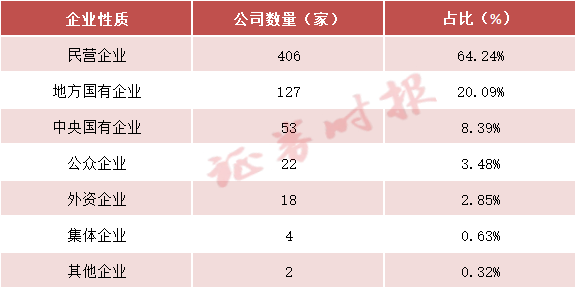
Core Viewpoint - The stock repurchase and increase loan tool, established in October 2024, has shown positive effects in stabilizing the market and boosting investor confidence, with over 630 listed companies receiving support totaling more than 130 billion yuan by June 30, 2024 [1][2]. Summary by Relevant Sections Policy and Implementation - The People's Bank of China, along with financial regulatory bodies, announced the establishment of the stock repurchase and increase loan tool, with an initial quota of 300 billion yuan at an interest rate of 1.75% for one year, extendable based on circumstances [2]. - By June 30, 2024, 632 companies or major shareholders had received repurchase and increase loans, amounting to 134.26 billion yuan, with 412 companies receiving 84.98 billion yuan in the first half of the year [2]. Market Impact - The repurchase and increase loans reflect confidence in the company's future and recognition of its value, providing low-cost financing channels for listed companies and major shareholders, thus enhancing market liquidity and stability [2][3]. - The tool has created a stabilizing mechanism, allowing major shareholders to utilize low-cost funds for stock repurchases when market valuations are low, effectively curbing negative market cycles [3]. Company Types and Participation - Among the companies receiving loans, 406 are private enterprises, accounting for 64.24%, while state-owned enterprises make up 28.48% with 180 companies [4][5]. - The highest loan amounts were granted to companies like Dongfang Shenghong, which received a total of 3.8 billion yuan, and other notable companies include Muyuan Foods and Rongsheng Petrochemical, with loan amounts of 2.5 billion yuan and 1.8 billion yuan respectively [5][6]. Future Outlook - The stock repurchase and increase loan tool is expected to continue expanding, enhancing the market's ability to withstand external risks and promoting long-term corporate governance and development [9][10]. - The policy is seen as a transformative shift in market value management, initiating a cycle of low-cost financing, value management, and valuation recovery, which is anticipated to stabilize the capital market [10].
24只创业板股获杠杆资金加仓超10%
Zheng Quan Shi Bao Wang· 2025-06-30 01:41
Core Insights - The latest financing balance of the ChiNext market is 354.57 billion yuan, with a week-on-week increase of 203 million yuan, indicating a positive trend in financing activities [1] - A total of 470 stocks in the ChiNext saw an increase in financing balance, with 24 stocks experiencing a growth rate exceeding 10% [1][2] - The average increase in stock prices for those with financing balance growth over 10% was 3.86%, with notable performers including Lian Te Technology and Xin Heng Hui [2] Financing Balance Growth - The stock with the highest increase in financing balance is Zhonglun New Materials, which saw a 49.88% increase, bringing its latest financing balance to 110.51 million yuan [3] - Other significant gainers include Weiteou and Kaige Precision Machinery, with increases of 38.60% and 32.72% respectively [3] - The total financing balance for ChiNext stocks reached 355.56 billion yuan, marking a continuous increase over five trading days [1][2] Stock Performance - Among the stocks with over 10% financing balance growth, 17 stocks rose on the day, with two hitting the daily limit up [2] - Stocks with the highest price increases included Lian Te Technology (17.37%), Xin Heng Hui (14.00%), and Kaige Precision Machinery (6.09%) [2] - Conversely, stocks with notable declines included Xin Hongye and Jun Ting Hotel, with decreases of 6.49% and 3.76% respectively [2] Financing Balance Decline - A total of 463 stocks experienced a decline in financing balance, with 12 stocks seeing a decrease of over 10% [4] - The stock with the largest decline was Hengyu Xintong, which saw a 23.06% drop in financing balance, bringing it to 14.38 million yuan [4] - Other significant decliners included Zhengqiang Co. and Huaren Health, with decreases of 21.48% and 18.85% respectively [4]
