人形机器人

Search documents
汽车零部件、机器人主线周报:特斯拉ModelS/X产线切换为机器人,理想入局人形赛道-20260201
Soochow Securities· 2026-02-01 09:53
Investment Rating - The industry investment rating is "Overweight," indicating an expected outperformance of the industry index relative to the benchmark by more than 5% over the next six months [51]. Core Insights - The automotive parts sector saw a weekly decline of 5.74%, ranking 4th within the SW automotive sector, while the robot sector declined by 6.16%, with a year-to-date performance of +0.48% [2][24]. - Key developments include Tesla's transition of the Model S/X production line to Optimus manufacturing and Li Auto's entry into the humanoid robot market [34]. - Investment recommendations focus on identifying structural opportunities in the automotive parts sector and certainty opportunities in the robotics sector, particularly with the anticipated release of Optimus V3 [2][46]. Summary by Sections Automotive Parts Sector Weekly Review - The SW automotive parts index is down 5.74% this week, with a year-to-date increase of 2.85%, ranking 4th among automotive sectors [2][11]. - The latest trading day PE (TTM) for the SW automotive parts sector is at 82.67% historical percentile, while the PB (LF) is at 77.62% [22]. - Notable stock movements include significant gains for Xingyu Co. (+11.19%) and Beite Technology (+3.75%) [2][40]. Humanoid Robot Sector Weekly Review - The humanoid robot index decreased by 6.16% this week, with a year-to-date increase of 0.48% [24]. - The latest trading day PE (TTM) for the humanoid robot sector is at 66.92% historical percentile, and the PB (LF) is at 77.19% [33]. - Key events include the announcement of Tesla's production shift and Li Auto's entry into humanoid robotics [34]. Core Coverage Stock Tracking - Key stocks in the automotive parts sector include Fuyao Glass, Top Group, and Xingyu Co., with notable performance and strategic developments [40][44]. - New strategic partnerships and performance forecasts indicate potential growth for companies like New Spring Co. and Blue Dai Technology [44]. Investment Recommendations - For the automotive parts sector, focus on companies with strong product offerings and those expanding into high-value markets, particularly in Europe, North America, and Southeast Asia [46]. - In the robotics sector, prioritize companies benefiting from advancements in technology and manufacturing synergies, with recommendations for Top Group and Junsheng Electronics [46].
东湖高新区举行“世界光谷”全球产业合伙人大会,现场签约项目总投资额突破200亿元
Xin Lang Cai Jing· 2026-02-01 01:00
据长江日报消息,1月31日,东湖高新区举行"世界光谷"全球产业合伙人大会,现场签约项目总投资额 突破200亿元,涵盖光电子信息、生命健康、现代服务业及未来产业等关键领域。签约项目中,投资80 亿元的存算一体产业园一期直指集成电路的核心环节;朗来科技AI创新药科技园等项目,强化了在生 物医药与高端医疗器械领域的创新布局。尤为引人注目的是对未来赛道的押注:盛创机器人全国总部、 览翌航空eVTOL(电动垂直起降飞行器)研发生产基地等项目,卡位人形机器人与低空经济这两个全 球竞逐的未来产业和新兴产业高地。 ...

机械行业周报:全球半导体设备龙头财报亮眼,北京国际商业航天展览会开幕
GUOTAI HAITONG SECURITIES· 2026-02-01 00:25
Investment Rating - The report rates the industry as "Buy" [5] Core Insights - The demand for semiconductor equipment is increasing due to AI advancements, with leading companies like ASML and KLA reporting significant order growth. ASML's fourth-quarter orders reached €13.2 billion, nearly double market expectations, while KLA's revenue for Q2 2026 was $3.297 billion, a 7.2% increase year-over-year [5] - The humanoid robotics sector is rapidly advancing, with companies like Zhongqing and Zhiyuan making strides in space exploration, indicating a strong integration of robotics and aerospace industries [5] - The 2026 Beijing International Commercial Aerospace Exhibition highlights China's commitment to developing its commercial space industry, showcasing the latest advancements and policies to support satellite data utilization [5] Summary by Sections Industry Overview - The mechanical equipment sector saw a decline of 3.16% from January 26 to January 30, 2026, underperforming compared to the CSI 300 index, which increased by 0.08% [8] - The mechanical equipment sub-sector indices showed varied performance, with other automation equipment leading with a 2.20% increase [9] Semiconductor Equipment Industry - Semiconductor sales reached $75.28 billion in November 2025, reflecting a 3.53% month-over-month increase [77] - The Philadelphia Semiconductor Index rose to 8320.39 points, a weekly increase of 3.29% [81] Robotics and AI Infrastructure - Recommended stocks in humanoid robotics include Hengli Hydraulic, Changying Precision, and Zhaowei Electric, while AI infrastructure recommendations include Ice Wheel Environment and Hanzhong Precision [5] - The humanoid robotics sector is positioned to meet the demands of the aerospace industry, creating a beneficial cycle of technology validation and industry growth [5] Engineering Machinery - Recommended stocks in engineering machinery include Sany Heavy Industry, XCMG Machinery, and Zoomlion Heavy Industry [5] - The report emphasizes the potential for growth in the engineering machinery sector, supported by ongoing infrastructure investments [5] Export Chain - Recommended stocks in the export chain include Honghua Digital Science, Giant Star Technology, and Jack Technology [5]


机械行业周报:全球半导体设备龙头财报亮眼,北京国际商业航天展览会开幕-20260131
GUOTAI HAITONG SECURITIES· 2026-01-31 15:22
机械行业周报 | [姓名table_Authors] | 电话 | 邮箱 | 登记编号 | | --- | --- | --- | --- | | 肖群稀(分析师) | 0755-23976830 | xiaoqunxi@gtht.com | S0880522120001 | | 黄龙(分析师) | 021-38031028 | huanglong@gtht.com | S0880525070027 | 本报告导读: 上周(2026/1/26-2026/1/30)AI 推动半导体设备需求不断增加,中国人形机器人集体 "问天",商业航天政策支持与产业布局密集。 股 票 研 究 全球半导体设备龙头财报亮眼,北京国际商业航天展览会开幕 [Table_Industry] 机械行业 究 报 告 请务必阅读正文之后的免责条款部分 行 业 投资要点: [Table_Report] 相关报告 机械行业《Figure 发布 Helix 02 模型,人形机器 人全身自主控制实现突破》2026.01.30 机械行业《SpaceX 与特斯拉规划部署太阳能产 能,光伏产业链迎发展新机遇》2026.01.26 机械行业《液态气周均价环比 ...
光谷2025年新认定瞪羚企业505家,平均研发投入强度超25%
Jing Ji Guan Cha Bao· 2026-01-30 10:53
Core Insights - The 2025 Guanggu Gazelle Enterprise Development Report was released, highlighting the growth of high-quality development in Wuhan's East Lake High-tech Zone, which has nurtured over 2,000 gazelle enterprises, with 505 newly recognized in 2025 [1][2] Group 1: Economic Impact - Gazelle enterprises are defined as small and medium-sized tech companies that have crossed the "valley of death" and entered a high-growth phase, serving as indicators of regional economic vitality and innovation capability [1] - In 2025, the total revenue of Guanggu gazelle enterprises grew by 34.4% year-on-year, with a profit margin of 13.9% [1] - Over 830 gazelle enterprises created more than 22,000 new jobs, accounting for over 20% of new employment in the East Lake High-tech Zone, with a significant proportion in mid-to-high-end positions such as R&D and design [1] Group 2: Financing and Investment - In 2025, 79 Guanggu gazelle enterprises completed 102 equity financing rounds, raising over 6 billion yuan, a year-on-year increase of over 40%, representing nearly 70% of financing cases in the East Lake High-tech Zone [2] - The majority of financing rounds were early-stage, with over 80% of enterprises in Series A or earlier [2] Group 3: Innovation and Development - Guanggu gazelle enterprises exhibit high innovation input and efficiency, with an average R&D investment intensity of 25.8%, three times the provincial average [1] - In the past year, these enterprises authorized over 2,700 invention patents, contributing to 24% of the total patent authorizations for small and medium-sized enterprises in Hubei province [1] - More than 110 gazelle enterprises are distributed across cutting-edge sectors such as general artificial intelligence, humanoid robots, advanced semiconductors, and future displays, laying the foundation for world-class industrial clusters and new productive forces [2]

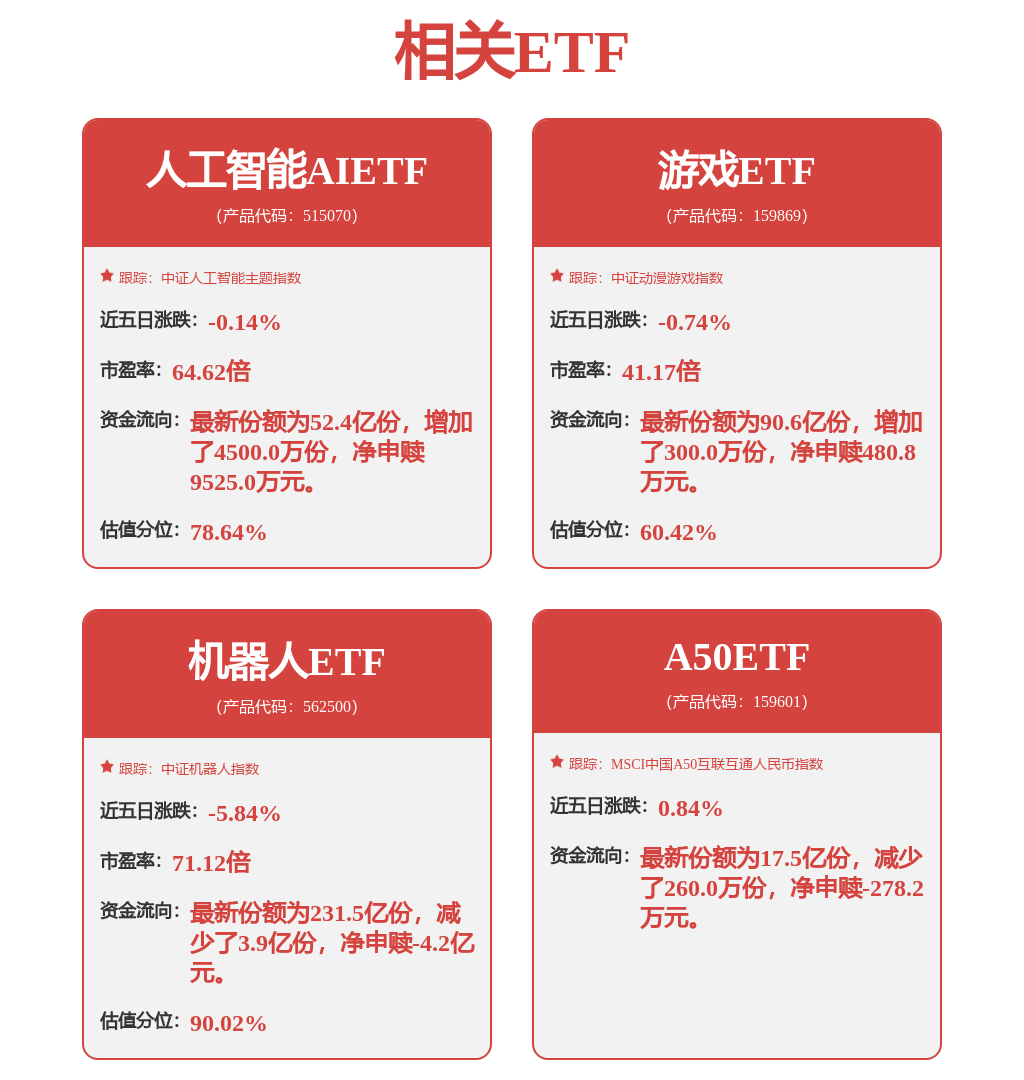
热点轮动!午后“20CM”涨停
Zhong Guo Zheng Quan Bao· 2026-01-30 08:50
Market Performance - In January, the Shanghai Composite Index rose by 3.76%, the Shenzhen Component Index increased by 5.03%, and the ChiNext Index gained 4.47% [1] - The market showed a mixed performance on the last trading day of January, with the ChiNext Index rising by 1.27%, while the Shanghai Composite Index and Shenzhen Component Index fell by 0.96% and 0.66%, respectively [1] Sector Performance - The non-ferrous metals and technology sectors were the main drivers throughout the month, with alternating leadership in gains [1] - Precious metals performed strongly but faced significant adjustments recently due to a sharp drop in international gold and silver prices [10] - The technology sector saw a rebound, particularly in AI applications and commercial aerospace, with notable performances from companies like Kexin New Source and Tianqi Co., which achieved significant stock price increases [1][4] Individual Stocks - Kexin New Source (300731) hit the daily limit with a 20% increase, while Tianqi Co. (002009) achieved a "5 days 3 boards" performance [3][4] - Hunan Gold (002155) recorded a "5 consecutive boards" performance, indicating strong investor interest [3] - The stock price of Kexin New Source closed at 69.92 yuan per share, with a market capitalization of 8.84 billion yuan [4] Future Outlook - The liquid cooling server industry is expected to see significant growth, with projections indicating that by 2026, the domestic AI server liquid cooling penetration rate will exceed 50%, potentially reaching over 20 billion yuan [9] - The humanoid robot sector is also gaining traction, with the establishment of a testing platform in Beijing, indicating a growing focus on this technology [9] Precious Metals Insights - Despite recent adjustments, several institutions remain optimistic about gold investment opportunities, citing geopolitical tensions and monetary policy shifts as supportive factors for gold prices [13] - The World Gold Council's report suggests that strong demand for gold in China is expected to continue into 2026, driven by consumer purchasing behavior around the Lunar New Year [13]
四点半观市 | 机构:“弱美元+低利率”预期支撑贵金属中长期走强
Sou Hu Cai Jing· 2026-01-30 08:19
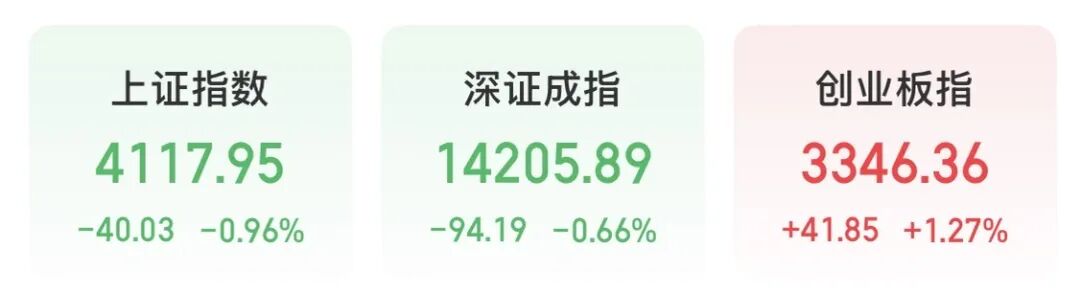
【市场回顾】 1月30日,A股主要指数涨跌不一,创业板指探底回升。截至收盘,上证指数报4117.95点,跌0.96%; 深证成指跌0.66%,创业板指涨1.27%,科创综指涨0.08%。沪深北三市全天成交28624亿元。盘面上, 算力硬件股集体反弹,CPO方向领涨,太辰光、天孚通信涨超10%,长飞光纤涨停;人形机器人股概念 表现活跃,思看科技、百达精工等涨停。前期热门的贵金属板块遭遇深度调整,四川黄金、山东黄金等 多股跌停。从月度层面来看,沪指本月累计上涨3.76%,深证成指累计上涨5.03%,创业板指累计上涨 4.47%,科创综指累计上涨11.97%。 1月30日日间盘,国内商品期货主力合约多数收跌。截至15:00收盘,菜籽涨超4%,PVC涨超3%,原木 涨超2%,焦煤、丁二烯橡胶、焦炭涨超1%,原油、红枣、白糖等微涨;跌幅方面,钯、铂跌超11%, 碳酸锂跌停,沪锡跌超8%,沪银跌超6%,沪金跌超4%,沪镍、沪铝跌超3%,国际铜、沪铜、不锈钢 跌超2%,玻璃、氧化铝、粳米等跌超1%,苹果、豆油、短纤等微跌。 1月30日,ETF收盘涨跌不一,A500ETF融通(159379)领涨5.61%,通信ETF(515 ...
指数还是绷不住了,个股要小心!题材轮动快,还有哪些投资机会?
Sou Hu Cai Jing· 2026-01-30 07:00
Group 1: AI and Technology Sector - The current technology market is expected to continue its upward trend after a short-term correction, driven by the low likelihood of a fundamental reversal in the AI industry in the US stock market, which provides significant valuation growth potential for A-share companies [1] - In the US market, AI leaders are still experiencing strong earnings growth, and large-scale stock buybacks are mitigating institutional selling pressure, indicating that while there may be high volatility and internal clearing among individual stocks, a systemic collapse similar to the 2000 tech bubble is unlikely [1] - The current stage of the AI sector in A-shares corresponds to the period in the US market from 2023 to 2024, where funds are shifting from hardware to applications, suggesting that the AI market is far from reaching its peak [1] Group 2: Tesla and Physical AI Industry - Tesla is leading the global "physical AI" industry transformation, with humanoid robots as a core pillar, sharing technology foundations with smart driving, thus initiating a closed-loop iteration of "data-algorithm-hardware" [3] - The sentiment in the sector is recovering, driven by the upcoming release of Tesla's Optimus V3 and clear production plans for Gen3, with the market speculating on Tesla's potential to establish a million-unit production line by the end of 2026 [3] Group 3: Commodities and Precious Metals - Precious metals, particularly silver, are experiencing a strong upward trend, becoming the leader in the commodities market, with ongoing high volatility and strong bullish pressure [5] - The market is closely monitoring whether the Chicago Mercantile Exchange's increase in margin requirements can curb the bullish trend in silver; if not, silver may continue to exhibit unexpected price movements [5] - The rise in precious metal prices is positively impacting the performance of non-ferrous metal companies and innovative pharmaceutical firms, while some traditional industries are facing cyclical pressures and declining performance [5] Group 4: Market Sentiment and Investment Opportunities - The Shanghai Composite Index is showing signs of weakness, indicating a drop in market sentiment to a new low, influenced by ongoing risk events in the commodities market [9] - Despite the volatility, there is an increase in capital inflow, with significant investments in A500 ETF and a rise in margin financing, suggesting a potential for structural investment opportunities [9] - The sentiment indices for A-shares and Hong Kong stocks are rising, with a bullish outlook on A-shares and a cautious approach to Hong Kong stocks, while institutional interest in the defense and military industry remains high [9]

美股再迎6只新股上市 今晚还将有3只
Sou Hu Cai Jing· 2026-01-30 06:46
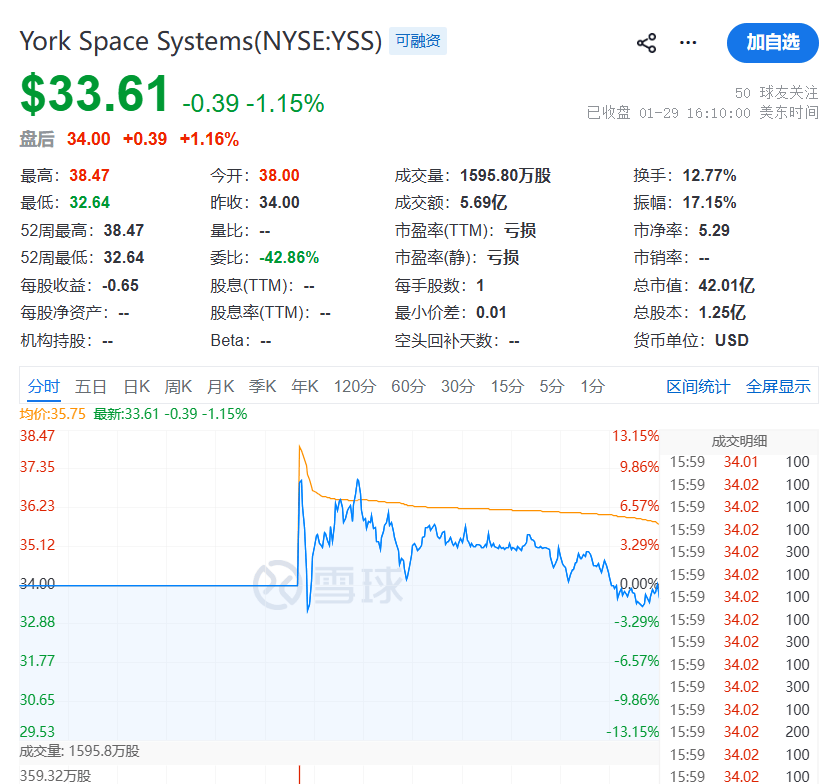
Summary of Key Points Core Viewpoint - Six new stocks entered the US capital market on January 29, 2026, raising approximately $1.783 billion, with three additional companies set to list that evening, all of which are SPACs [1]. Group 1: Newly Listed Stocks - **York Space System (YSS)**: - Opened at $38 per share, up 11.76% from the offering price, but closed at $33.61, down 1.15%, with a total market capitalization of $4.201 billion [2]. - Issued 18.5 million shares at $34 each, raising $629 million. The company provides end-to-end critical solutions for space missions in the aerospace and defense sectors, reporting $281 million in revenue and a net loss of $56.04 million for the first nine months of 2025 [4]. - **Ethos Technologies (LIFE)**: - Opened at $19 per share, unchanged from the offering price, and closed at $16.85, down 11.32%, with a total market capitalization of $1.061 billion [5]. - Issued 10.53 million shares at $19 each, raising $200 million. The company operates a technology platform connecting consumers, agents, and insurance companies, reporting $277 million in revenue and a net profit of $46.59 million for the first nine months of 2025 [7]. - **Picpay (PICS)**: - Opened at $19.5 per share, a slight increase of 2.63%, and closed at $19, with a total market capitalization of $2.462 billion [7]. - Issued 22.86 million shares at $19 each, raising $434 million. The company serves the Brazilian market across various sectors, reporting $1.122 billion in revenue and a net profit of $59 million for the first nine months of 2025 [10]. Group 2: SPACs - Three SPACs listed: - **Xsolla SPAC 1 (XSLLU)** raised $200 million, targeting the video game industry and related sectors [10]. - **United Acquisition I (UACU)** raised $100 million, with no specific acquisition target yet identified, focusing on companies with strong management and competitive advantages [10]. - **K2 Capital Acquisition (KTWOU)** raised $120 million, concentrating on humanoid robotics, physical AI, and advanced energy sectors, particularly small modular nuclear reactors [10].

成为首个万亿级地市辖区之后,南山能为大湾区做什么
第一财经· 2026-01-30 05:26
Core Viewpoint - The article highlights that Nanshan District in Shenzhen is set to become the first district in China to surpass a GDP of 1 trillion yuan, marking a significant milestone in its economic development and serving as a model for the Guangdong-Hong Kong-Macao Greater Bay Area [3][4]. Economic Development - Nanshan's GDP is projected to exceed 1 trillion yuan in 2025, with a per capita GDP surpassing 540,000 yuan and a land GDP of 54 million yuan per square kilometer, ranking it among the top in the nation [3][6]. - The district has transformed from a GDP of only 78 million yuan at its establishment 35 years ago to a projected 1 trillion yuan, showcasing a consistent upward trajectory in economic growth [6]. Key Strategies for Growth - Nanshan has effectively utilized its limited land area of 185 square kilometers to contribute to a quarter of Shenzhen's GDP, a third of its patents, and two-fifths of its listed companies through innovative urban development strategies [6][7]. - The district's R&D investment intensity is expected to reach 7.87% by 2025, significantly higher than the national average, with a high number of patents and market entities, including over 6,000 high-tech enterprises [7][9]. Contributions to the Greater Bay Area - Nanshan is positioned to provide a "new quality productivity" engine for the Greater Bay Area, with strategic emerging industries expected to account for 60% of its economy by 2025 [9][10]. - The district's experience in achieving a trillion-yuan economy offers a replicable model for urban development across the Greater Bay Area and beyond, including innovative approaches to land use and technology integration [9][10]. Future Directions - Moving forward, Nanshan aims to enhance its role as a comprehensive champion in various high-tech fields, including artificial intelligence and quantum information, while also addressing urban challenges such as housing and public services [13][14]. - The district seeks to strengthen its connections with Hong Kong and Macau, facilitating cross-border collaboration in data flow, research, and talent exchange to create a "super technology corridor" [13][14].