先进制造业

Search documents
迟福林:促进供给和需求良性互动的实践逻辑与实现路径
Bei Jing Ri Bao Ke Hu Duan· 2026-01-11 23:41
Core Viewpoint - The article emphasizes the importance of building a strong domestic market in China, focusing on "demand-led, consumption-driven, and endogenous growth" as a strategic choice to adapt to economic changes and enhance resilience against international challenges [1]. Group 1: Domestic Market Development - Building a strong domestic market is crucial for achieving high-quality development and requires addressing structural contradictions between consumption and investment [1][3]. - The current economic situation shows a significant imbalance characterized by strong supply and weak demand, particularly in consumer spending [3]. - The transformation of "Chinese manufacturing" and "Chinese consumption" is essential for unlocking the potential of the vast domestic market, with manufacturing accounting for nearly 30% of global output by 2024 [2]. Group 2: Consumption Trends - China's retail sales are projected to reach 48.3 trillion yuan in 2024, which is 2.4 times that of 2012, indicating rapid growth in consumer spending [2]. - The contribution of final consumption to economic growth is expected to be 44.5% in 2024, showing a decline compared to 2023, highlighting the need to boost consumer spending [3]. - The service consumption sector is becoming a key driver of economic growth, with its share of total consumption rising from 39.7% in 2013 to 46.1% in 2024 [5]. Group 3: Service Consumption Potential - Enhancing service consumption is vital for achieving a dynamic balance between supply and demand, with a potential increase in consumer spending of approximately 800 billion yuan for every 1% rise in the consumption rate [4]. - By 2030, service consumption is expected to exceed 50% of total consumption, contributing an additional 40 trillion yuan to consumer demand [6]. - The shift towards comprehensive, international, and intelligent service consumption is anticipated to drive innovation and transformation in various industries, including healthcare and tourism [6][7]. Group 4: Structural Reforms - Structural reforms are necessary to resolve the contradictions between investment and consumption, with a focus on "investing in people" to stimulate demand [9]. - Urbanization and equalization of basic public services are critical to addressing the lag in urbanization compared to industrialization, which could significantly boost consumer spending [10]. - The government plays a crucial role in facilitating economic transformation by optimizing the relationship between effective markets and proactive government policies [11].
多地部署支持发展先进制造业
Zheng Quan Ri Bao· 2026-01-11 17:07
Core Viewpoint - The Shanghai Municipal Government has released the "Three-Year Action Plan for Supporting the Transformation and Upgrading of Advanced Manufacturing (2026-2028)", aiming to accelerate the establishment of a modern industrial system centered on advanced manufacturing [1] Group 1: Policy Initiatives - Various regions, including Shanghai and Guangzhou, have introduced policies to support the development of advanced manufacturing and emerging industries [1][2] - The "Action Plan" aims to add 100 manufacturing enterprises with an annual output value exceeding 1 billion yuan by 2028, totaling over 600, and to drive the addition of 500 large-scale industrial enterprises in the supply chain [2] - Guangzhou's "Planning" targets significant progress in building a strong advanced manufacturing city by 2030, with a new economic structure supported by trillion-yuan industries [2] - Hangzhou's "Action Plan" sets a goal for the total industrial added value to reach 530 billion yuan by 2027, with an average annual growth of over 6% [2] Group 2: Focus on Emerging Industries - The "Action Plan" emphasizes investment in emerging fields such as low-altitude economy, commercial aerospace, embodied intelligence, and biomanufacturing [3] - Guangzhou's "Planning" aims to accelerate the cultivation of five strategic leading industries, including artificial intelligence and semiconductors [3] - Experts believe that local layouts for emerging industries will drive industrial cluster development and reshape the industrial chain [3] Group 3: Financial and Support Mechanisms - To support advanced manufacturing, regions are enhancing financial support and accelerating scenario cultivation [4] - The "Action Plan" proposes lower interest rates and longer loan terms for manufacturing loans, with interest subsidies ranging from 0.8% to 1.3% for key components and raw materials [4] - Experts suggest that local governments should optimize financial supply and implement "technology credit loans" using patents as collateral [4] Group 4: Comprehensive Support System - A comprehensive support system is needed for advanced manufacturing, focusing on innovation, policy coordination, and scenario empowerment [5] - The establishment of industrial funds and R&D expense subsidies is recommended to encourage increased R&D investment [5] - There is a call for the integration of artificial intelligence with manufacturing to create practical platforms for high-quality development [5]
中国经济以“内在连续性”从容应对外部挑战——访法国丝路商学院教授阿祖莱
Xin Hua Wang· 2026-01-11 08:34
Core Insights - The article emphasizes China's ability to maintain internal continuity while responding to external challenges, particularly through expanding domestic demand and high-quality growth [1][2]. Group 1: Economic Stability and Growth - China is enhancing its stability by expanding domestic demand and providing support to the global economy through high-quality growth and high-level openness [1][2]. - The country is not relying on short-term stimulus but is focusing on upgrading consumption structures, with significant growth in sectors like new energy vehicles, cultural products, health industries, and high-quality services [2]. Group 2: Innovation and Supply Chain Transformation - China is transitioning from a "scale + cost" advantage to an "innovation + efficiency" advantage, with new growth engines emerging in artificial intelligence, semiconductors, robotics, green energy, and biotechnology [2]. - The country benefits from institutional advantages in innovation policy, including rapid resource mobilization, flexible pilot mechanisms, and high collaboration between local governments and enterprises [2]. Group 3: Global Trade and Investment - In the context of rising uncertainty in global trade and investment, China is committed to high-level openness, which includes further easing market access and improving the business environment [2]. - Companies like Tesla and Schneider Electric have thrived in China by aligning with the country's focus on electric vehicles, digitalization, advanced manufacturing, and energy transition, contributing to China's role as a global innovation and production hub [2]. Group 4: Future Contributions to Global Economy - China's contributions to the world economy extend beyond growth momentum to include structural transformation and green development, particularly through investments in renewable energy, energy storage, and electric vehicles [3]. - The country is significantly lowering the cost barriers for global green technologies, enabling more countries to participate in energy transitions, which will have a profound impact on the world economy [3].
创新体系能级实现历史性跨越
Xin Lang Cai Jing· 2026-01-09 22:52
创新综合实力系统性跃升 全域创新格局成形成势 嘉兴坚定不移实施创新驱动发展战略,推动创新从"点的突破"迈向"系统能力"的整体提升,创新综合实 力稳居全省第一方阵。全市先后3次捧得全省科技创新最高荣誉"科技创新鼎",创新指数持续保持全省 第二位;2023年成功入选全国创新驱动示范市建设试点,创新工作纳入国家战略布局;2024年又成功创 建全国首批、浙江唯一的制造业新型技术改造试点城市,为传统产业转型升级赋予新抓手。 昨天,嘉兴市"十四五"时期高水平创新型城市建设成就新闻发布会召开。市科技局相关负责人介绍发展 成果,市委组织部、市经济和信息化局、市教育局相关负责人一起答记者问。5年来,嘉兴聚焦一体化 推进教育科技人才发展、科技创新与产业创新深度融合"两篇大文章",深入实施"315"科技创新体系建 设工程,在平台搭建、企业培育、人才集聚等领域创下多个"全国首批""全省第一",创新体系能级实现 历史性跨越。 ■记者 俞艳婷 通讯员 王肖童 (来源:嘉兴日报) 转自:嘉兴日报 嘉兴构建起"高等教育筑高峰、职业教育强基础、产教融合促协同"的特色发展路径。市委教育工委专职 副书记、市教育局党组副书记金剑辉介绍,"十四五"期 ...
上海:围绕制造业发展规划建设工业物流仓储设施,推动物流仓储与制造业融合布局
Di Yi Cai Jing· 2026-01-09 10:28
Core Viewpoint - The Shanghai Municipal Government has issued a three-year action plan (2026-2028) to support the transformation and upgrading of advanced manufacturing industries, emphasizing the enhancement of logistics support for manufacturing development [1] Group 1: Logistics Infrastructure Development - The plan includes the construction of industrial logistics and warehousing facilities to promote the integration of logistics and manufacturing [1] - A public service platform for industrial logistics will be established to coordinate and integrate logistics resources such as public logistics information, park warehousing facilities, and transportation capacity [1] - The initiative aims to increase specialized logistics and warehousing resources, including innovative regulatory methods for hazardous materials storage [1] Group 2: Transportation Infrastructure Improvement - The plan outlines improvements to transportation infrastructure in key manufacturing areas such as Lingang, Jinshan, and chemical zones, as well as in suburban manufacturing clusters, covering road, rail, waterway, and port facilities [1] - The establishment of new transportation hubs, including less-than-truckload (LTL) transportation aggregation points and public truck parking lots, is also highlighted [1] - A "one-on-one" liaison service mechanism will be implemented to optimize large cargo transportation permit services [1]

上海:到2028年推动大型企业实现智能工厂全覆盖,机器人密度提高到600台/万人
Xin Lang Cai Jing· 2026-01-09 10:23
上海市印发《上海市支持先进制造业转型升级三年行动方案(2026—2028年)》,其中提到,开 展"AI+制造"赋能行动,培育前沿部署工程师(FDE)队伍,支持企业应用人工智能大模型等前沿技 术,打造行业模型和工业智能体,提升数智化水平。支持企业在研发设计、物理仿真、生产控制等关键 环节应用自主基础软件和工业软件。到2027年,推动大型企业率先实现数智化应用全覆盖。实施新一轮 智能工厂领航计划;到2028年,推动大型企业实现智能工厂全覆盖,机器人密度提高到600台/万人,智 能制造装备数字化水平达到70%以上。 ...

上海:支持制造业企业发行科技创新债券
Zheng Quan Shi Bao Wang· 2026-01-09 10:12
Core Viewpoint - The Shanghai Municipal Government has issued a three-year action plan (2026-2028) to support the transformation and upgrading of advanced manufacturing, emphasizing enhanced financial support for key industries and supply chains [1] Financial Support Initiatives - Financial institutions are encouraged to offer manufacturing loans with lower interest rates, higher limits, and longer terms, specifically targeting loans for key components and raw materials [1] - A subsidy of 0.8% to 1.3% will be provided for loans related to the procurement of critical parts and materials [1] - Support for manufacturing enterprises to issue technology innovation bonds is included in the plan [1] - Insurance institutions are guided to provide customized insurance services for major technological equipment and new materials [1]
一个园区聚集三地企业
Ren Min Ri Bao· 2026-01-08 22:50
"现在有很多事得抓紧,优化提升协同发展机制,引入战略投资创新载体运营模式,推动成立投资基 金;同时加强与北京市科委、中关村管委会对接,挖掘产业协作重点方向和资源。"新年伊始,朱昌瑞 和同事们踌躇满志,"三地合力,相信未来发展会更好!" (文章来源:人民日报) "十四五"时期,科技园深化三地合作,共同打造协同创新示范基地、成果转化中心、集成服务中心等, 去年园区新增注册经营主体中来自北京、河北的占比近三成。"我基本上每周都得去北京出差。现在国 家管网集团科学试验基地已经签约落户,国内最大金属3D打印装置也落户在我们的新型产业用地。"说 起过去一年的工作,朱昌瑞很自豪。 "我们这款工业机器人需要联系汽车配件制造商磨合测试,您有合适的企业推荐吗?" "没问题,我马上联系。" 一大早,天津滨海—中关村科技园办公室里,京津冀协同科工作人员朱昌瑞的电话就没断过。"这是最 近对接的一家北京具身智能初创企业。北京有很多完成产品验证的初创企业需要实际应用场景磨合细 节,科技园所在的天津经开区先进制造业集聚,很多企业都来这儿找应用场景。"朱昌瑞说,京津冀协 同发展不仅是产业协同、政策协同,更是所有职能部门协同服务,只要企业有需求 ...
擘画“十五五”国资央企布局产业升级新路径
Xin Lang Cai Jing· 2026-01-08 21:03
Core Viewpoint - The article emphasizes the critical phase of building a modern industrial system in China during the "14th Five-Year Plan" period, highlighting the role of state-owned enterprises (SOEs) in optimizing layout and restructuring national industrial competitiveness [1]. Group 1: Optimizing Layout and Strengthening Foundations - The primary task during the "14th Five-Year Plan" is to maintain a stable proportion of manufacturing in the national economy while promoting its advancement towards high-end and cluster development [2]. - SOEs are expected to play a pivotal role in organizing the industrial and supply chains, optimizing domestic and international layouts, and ensuring the integrity and security of the industrial system [2]. Group 2: Dual-Driven Industrial Upgrade - SOEs must adopt a "dual-driven" approach to industrial upgrades, focusing on both the transformation of traditional industries and the cultivation of strategic emerging industries [3]. - The integration of AI, big data, and 5G technologies into production processes is essential for the transformation of traditional industries, alongside a commitment to green and low-carbon development [3]. - SOEs should proactively identify and invest in high-potential new sectors such as renewable energy and advanced materials, while also preparing for cutting-edge fields like quantum technology and biomanufacturing [3]. Group 3: Restructuring and Capital Empowerment - Strategic restructuring, professional integration, and high-quality mergers and acquisitions are vital for SOEs to optimize resource allocation and enhance core competitiveness [4]. - The goal of restructuring is to concentrate and synergize advantageous resources rather than merely aggregating them [4]. - State capital and various investment funds will play crucial roles in providing "patient capital" and "strategic capital" to support the modern industrial system [4]. Group 4: Expanding International Operations - SOEs are encouraged to conduct international operations in a regulated manner to enhance global competitiveness while focusing on quality and safety [6]. - The internationalization strategy should include strengthening global logistics to ensure supply chain security and promoting high-value products like new energy vehicles abroad [6]. - Risk management is critical, with SOEs required to adhere to overseas investment regulations and mitigate various operational risks [6].
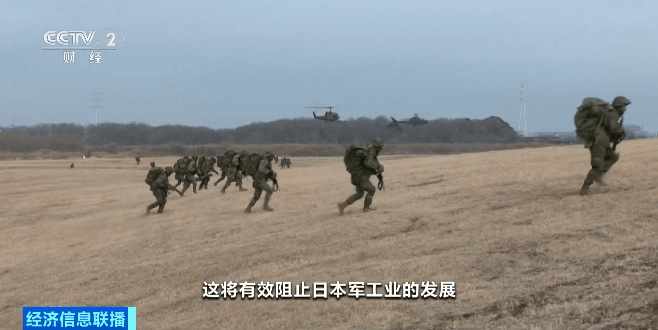
专家解读:中方禁止所有两用物项对日本军事用户用途出口 释放何种信号?
Sou Hu Cai Jing· 2026-01-08 14:56
Group 1 - The core point of the article highlights Japan's recent military expansion efforts led by Prime Minister Sanae Takaichi, which have sparked domestic opposition and international concern [1] - China's Ministry of Commerce announced a ban on the export of all dual-use items to Japanese military users, signaling a significant response to Japan's military buildup [1][3] Group 2 - The export control measures imposed by China are expected to directly impact Japan's military industry, particularly affecting the supply of key materials such as alloys and rare earths necessary for advanced military equipment [3] - The restrictions on rare earths and materials could pose a risk of supply chain disruptions for Japan's advanced manufacturing sector, potentially leading to significant economic losses and recession risks [3] - Socially, the export controls have created a noticeable impact on public sentiment in Japan, with growing concerns about the deterioration of Sino-Japanese relations and its implications for the Japanese economy [3]