医疗器械

Search documents
风险偏好或有再度降温,但板块局部阶段性亮点依然凸显
Huajin Securities· 2026-03-22 06:33
Group 1 - The new stock market is experiencing significant fluctuations, with an average decline of 3.3% for new stocks listed since 2025, and only 25% of these stocks achieving positive returns [1][12][27] - The overseas situation remains a key factor affecting market risk appetite, leading to increased risk aversion and impacting the performance of the new stock market [2][12] - Despite the overall downturn, there are structural opportunities within the new stock market, particularly in sectors like AI, commercial aerospace, and energy exports, which have strong long-term growth potential [2][12] Group 2 - Last week, there were 7 new stocks available for online subscription, with an average issuance price-earnings ratio of 23.4X, and a subscription success rate of 0.0271% [4][22] - The newly listed stocks on the North Exchange showed an average first-day increase of 274%, indicating a recovery in trading enthusiasm, although secondary market fluctuations were noted with a decline of 17.6% [4][25] - Upcoming new stocks include companies like Hongming Electronics, Shiya Technology, and Yuelong Technology, which are expected to attract attention due to their market potential [3][31] Group 3 - The report highlights specific companies such as Shenglong Co., which focuses on molybdenum-related products, and is projected to achieve revenues of 1.957 billion yuan in 2023, with a year-on-year growth of 2.41% [36] - Huigu New Materials specializes in functional resins and coatings, with expected revenues of 717 million yuan in 2023, reflecting a year-on-year growth of 8.10% [37] - Taijin New Energy, involved in high-end green electrolytic equipment, anticipates revenues of 1.669 billion yuan in 2023, with a significant year-on-year growth of 66.18% [38]
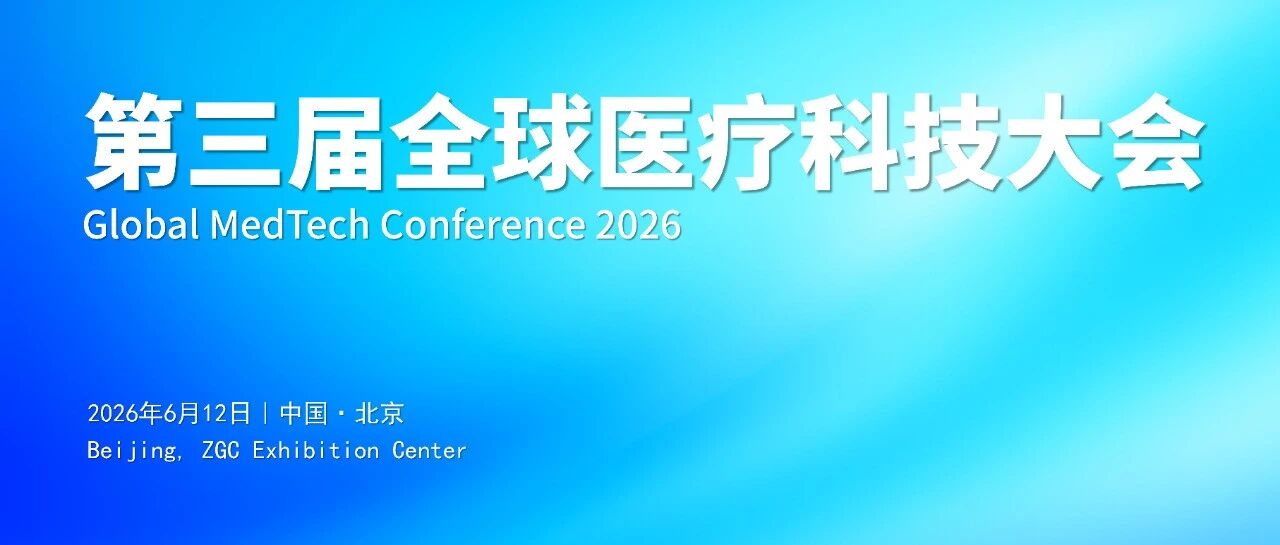
欢迎合作!第三届全球医疗科技大会:展位+白皮书+奖项
思宇MedTech· 2026-03-22 03:28
Core Insights - The development logic of medical technology is shifting due to the upgrade of medical demand, engineering technology iteration, and the evolution of payment systems, with a focus on system-level solutions and industrial collaboration becoming central [2] - The third Global MedTech Conference will be held on June 12, 2026, at the Zhongguancun Conference Center, aiming to connect engineering, clinical, corporate, capital, and regulatory aspects of medical technology innovation [2] - The conference will feature the release of a white paper, award evaluations, and multi-theme forums to present global medical technology innovation trends [2] Conference Overview - The conference will include a brand exhibition area for showcasing innovative technologies, products, and solutions, with reservations now open [3] - The second Global MedTech Conference highlighted the release of the "2026 Global Medical Technology Innovation White Paper" [6] - The conference will award multiple annual awards focusing on different dimensions of medical technology innovation [16] White Paper Focus - The "2026 Global Medical Technology Innovation White Paper" will systematically outline the technological evolution paths, product form changes, corporate development models, and industry patterns in the medical technology field [13] - The white paper serves as a significant platform for companies to showcase their technological depth, product systems, and industry positioning [14] Award Evaluation - The conference will evaluate awards based on technical innovation value, clinical significance, industry contribution, and sustainable development potential [16] - Companies are encouraged to participate in the awards without any registration fees [16] Forum Themes - The forums will cover key topics such as medical technology innovation trends, engineering technology, product form changes, and the integration of digital healthcare and AI applications [17] - The forums aim to create a multi-level dialogue system across various fields, inviting clinical experts, medical technology company leaders, industry observers, and investment representatives [18][21] Audience and Participation - The conference targets a diverse audience, including medical technology companies, clinical experts, and regulatory professionals, emphasizing its role as a systematic and research-oriented event rather than a purely academic or promotional meeting [23] - Sponsorship opportunities will provide structured, compliant, and sustainable collaboration paths for companies [22]

社保基金最新持仓出炉
财联社· 2026-03-20 16:07
Core Viewpoint - The article discusses the recent adjustments in stock holdings by social security funds and institutional investors, highlighting the sectors and companies that have seen increased or decreased investments due to changing market dynamics and demand for AI-related technologies. Group 1: Institutional Investment Trends - Social security funds have recently increased their holdings in companies benefiting from rising demand for AI computing power, such as Nanya New Materials and Jiemai Technology [2][5] - A total of 13 new stocks have been added to the top ten shareholders by social security funds, with significant investments in Kelong Pharmaceutical, Puxin Technology, and Tianhua New Energy, each exceeding 300 million yuan in market value [2][8] - The funds have also shown a mixed approach, with some stocks like New Industry in the medical device sector being reduced, while others like Jiemai Technology have seen increased holdings [7][9] Group 2: Specific Stock Movements - Nanya New Materials, a key player in the PCB industry, has seen social security funds become its ninth-largest shareholder with 1.93 million shares [5] - Jiemai Technology, involved in MLCC packaging materials, has been increased by social security funds to 4.77 million shares, reflecting a 30% increase in stock price recently [5] - Southeast Network Framework and Qingniao Fire Protection have also attracted new investments from social security funds, indicating a broader interest in sectors like construction and safety [6] Group 3: Sector Performance and Adjustments - The medical device sector, represented by New Industry, has experienced a reduction in holdings by social security funds, continuing a trend from the previous quarter [7] - The consumer electronics sector, particularly Electric Connection Technology, has also seen a slight reduction in holdings, attributed to anticipated profit declines due to external pressures [7] - The article notes that social security funds have diversified their investments across various sectors, including cyclical resources, chemicals, pharmaceuticals, and real estate, with a total of 23 stocks involved in these adjustments [8][9]






策略周报:每周海内外重要政策跟踪:德国化工称因能源飙升减产-20260320
Guoxin Securities· 2026-03-20 14:38
Domestic Macro - The State Council approved the "2026 Key Work Division Plan," emphasizing the implementation of the government work report and ensuring a solid start for the "14th Five-Year Plan" [11][19] - An article by General Secretary Xi Jinping highlighted the importance of high-quality development of the marine economy, advocating for efficient development and utilization of marine resources [11][19] - The State Council's meeting outlined key tasks for 2026, including promoting a unified national market, enhancing service industry capacity, developing smart manufacturing, and increasing investment in people's livelihoods [11][19] Industrial Policy - The National Medical Products Administration approved the first invasive brain-computer interface medical device for market launch, marking a significant advancement in medical technology [12][21] - The Ministry of Industry and Information Technology initiated a pilot program for comprehensive hydrogen energy applications, aiming to reduce costs through large-scale applications [12][21] - The China Internet Finance Association issued a risk warning regarding the application of OpenClaw in the internet finance sector, highlighting potential security vulnerabilities [12][22] Local Policy - The Minhang District of Shanghai issued an action plan to build an advanced energy equipment industry cluster, targeting an industry scale of over 200 billion yuan by 2030 [13][21] - Jiangxi Province introduced measures to support the upgrade of industrial clusters, focusing on developing service-oriented manufacturing and rewarding successful industrial design projects [13][21] - Jiangsu Province's action plan aims to enhance urban quality development through digital transformation and smart city applications [13][21] Overseas Dynamics - The German chemical industry reported production cuts due to supply chain disruptions and soaring energy costs, indicating a ripple effect from geopolitical tensions [14][23] - The U.S. announced airstrikes on Iran's oil export hub and plans to establish a "maritime escort alliance" in the Strait of Hormuz to protect commercial shipping [14][23] - The European Union imposed sanctions on entities in China and Iran, which has drawn strong opposition from China [14][23]
德适-B(02526):IPO申购指南
Guoyuan Securities2· 2026-03-20 11:09
Investment Rating - The report suggests a cautious subscription for the company’s IPO [1]. Core Insights - The company, established in 2016, focuses on developing medical imaging products and services, with a diverse product portfolio aimed at enhancing diagnostic efficiency and service quality [2]. - The core product, AI AutoVision®, is designed for chromosome karyotype analysis, targeting prenatal diagnosis and assisted reproductive diagnosis [2]. - The global market for chromosome karyotype analysis is projected to grow from USD 3.826 million in 2019 to USD 6.588 million by 2024, with a compound annual growth rate (CAGR) of 11.5% [3]. - The company’s revenue is expected to grow significantly, from RMB 52.844 million in 2023 to RMB 70.352 million in 2024, representing a year-on-year increase of 33.2% [4]. - The company is currently operating at a loss, with losses narrowing due to revenue growth and cost control measures [4]. - The estimated market capitalization post-IPO is between HKD 8.49 billion and HKD 9.99 billion, with a static price-to-sales (PS) ratio of 110 times, indicating a high valuation despite the company's growth potential [4].
IPO申购指南:德适-B
Guoyuan International· 2026-03-20 10:24
Investment Rating - The report suggests a cautious subscription for the company’s IPO [1]. Core Insights - The company, established in 2016, focuses on developing medical imaging products and services, with a diverse product portfolio aimed at enhancing diagnostic efficiency and service quality [2]. - The core product, AI AutoVision®, is designed for chromosome karyotype analysis, targeting prenatal diagnosis and assisted reproductive diagnosis [2]. - The global market for chromosome karyotype analysis is projected to grow from USD 3.826 billion in 2019 to USD 6.588 billion by 2024, with a compound annual growth rate (CAGR) of 11.5% [3]. - The company’s revenue is expected to grow significantly, from RMB 52.844 million in 2023 to RMB 70.352 million in 2024, representing a year-on-year increase of 33.2% [4]. - Despite revenue growth, the company remains in a loss position, with losses narrowing from RMB 56.116 million in 2023 to RMB 43.375 million in 2024 [4]. - The estimated market capitalization post-IPO is between HKD 8.49 billion and HKD 9.99 billion, with a static price-to-sales (PS) ratio of 110 times, indicating a high valuation [4]. Industry Overview - The chromosome karyotype analysis market is expected to accelerate, reaching USD 15.33 billion by 2030 and further expanding to USD 50.467 billion by 2035, driven by the adoption of automated workstations [3].
新股覆盖研究:普昂医疗
Huajin Securities· 2026-03-20 08:24
Investment Rating - The investment rating for the company is "Buy," indicating an expected increase of more than 15% in the stock price relative to the market index over the next 6-12 months [46]. Core Insights - The company, Puan Medical, specializes in the research, production, and sales of medical devices for diabetes care, general drug infusion, and minimally invasive interventional medical devices. It has established a strong market position in the diabetes care sector, particularly with its insulin pen needles, which account for approximately 65.80% of its main business revenue in the first half of 2025 [2][36]. - The company has shown a steady growth trajectory in revenue and profit, with projected revenues of 236.5 million yuan, 318.3 million yuan, and 382.2 million yuan for the years 2023, 2024, and 2025, respectively. The year-on-year growth rates are -2.19%, 34.61%, and 20.07% [9][4]. - The company has a strong focus on innovation, having developed a range of safety and comfort-enhancing products, including various types of insulin pen needles and electronic insulin injection pens. Its global market share for insulin pen needles is expected to grow from 7.52% in 2022 to 11.78% in 2024 [38][39]. Summary by Sections Basic Financial Status - The company achieved revenues of 236.5 million yuan in 2023, with a projected increase to 318.3 million yuan in 2024 and 382.2 million yuan in 2025. The net profit attributable to the parent company is expected to rise from 45.9 million yuan in 2023 to 64.9 million yuan in 2024 and 89.8 million yuan in 2025 [9][4]. - The main revenue sources in the first half of 2025 include diabetes care (145 million yuan, 81.61%), general drug infusion (25 million yuan, 14.33%), and minimally invasive intervention (5 million yuan, 2.60%) [9]. Industry Situation - The company operates within the diabetes care and general drug infusion device market, which is projected to grow significantly. The Chinese medical infusion and puncture device market was valued at 331.6 billion yuan in 2022 and is expected to reach 523.1 billion yuan by 2026 [16]. - The global market for insulin pen needles is projected to grow from approximately 1.35 billion USD in 2024 to 1.99 billion USD by 2031, with a compound annual growth rate (CAGR) of 5.8% [22]. Company Highlights - Puan Medical has established itself as a leading manufacturer in the diabetes care sector, with a focus on safety and innovation. The company was one of the first in China to introduce safety automatic self-destruct insulin pen needles and has expanded its product line to include various safety features [36][39]. - The company is also developing minimally invasive interventional products, which are expected to become significant growth drivers in the future. The global minimally invasive surgical market is projected to grow from 29.87 billion USD in 2023 to 34.84 billion USD by 2025, with a CAGR of 8% [39][30]. Fundraising Project Investment - The company plans to invest in two main projects through its IPO proceeds: the construction of an intelligent manufacturing production line for puncture intervention medical devices and the research and industrialization of minimally invasive intervention medical devices [40][41].
普昂医疗(920069):新股覆盖研究
Huajin Securities· 2026-03-20 08:23
Investment Rating - The investment rating for the company is "Buy," indicating an expected increase in stock price greater than 15% over the next 6-12 months [46]. Core Insights - The company, Puang Medical, specializes in the research, production, and sales of medical devices focused on diabetes care, general drug infusion, and minimally invasive interventional medical devices. It has established a strong market position in the insulin pen needle segment, with a global market share projected to grow from 7.52% in 2022 to 11.78% in 2024 [2][36]. - The company has shown a revenue forecast of CNY 236.5 million, CNY 318.3 million, and CNY 382.2 million for the years 2023, 2024, and 2025, respectively, with year-over-year growth rates of -2.19%, 34.61%, and 20.07% [9][4]. - The company is expanding its product offerings in the minimally invasive interventional sector, which is expected to become a significant growth driver. The global market for minimally invasive surgical products is projected to grow at a compound annual growth rate (CAGR) of 8% from USD 29.87 billion in 2023 to USD 34.84 billion in 2025 [39][30]. Summary by Sections Basic Financial Status - The company achieved revenues of CNY 236.5 million in 2023, with a projected increase to CNY 318.3 million in 2024 and CNY 382.2 million in 2025. The net profit attributable to the parent company is expected to rise from CNY 45.9 million in 2023 to CNY 64.9 million in 2024 and CNY 89.8 million in 2025 [9][4]. - The main revenue sources for the first half of 2025 are diabetes care (CNY 145 million, 81.61%), general drug infusion (CNY 25 million, 14.33%), and minimally invasive products (CNY 5 million, 2.60%) [9]. Industry Situation - The company operates in the diabetes care and general drug infusion sectors, which are part of the infusion and puncture device industry. The minimally invasive interventional medical device sector is also a key focus area [15][16]. - The Chinese medical infusion and puncture device market was valued at CNY 33.16 billion in 2022 and is expected to reach CNY 52.31 billion by 2026 [16]. Company Highlights - Puang Medical has a strong focus on diabetes care, with its main product, the insulin pen needle, accounting for approximately 65.80% of its revenue in the first half of 2025. The company has established itself as a leading supplier of insulin pen needles globally [36][39]. - The company has been recognized for its innovation, holding 119 domestic patents and 5 international patents, and has received various awards for its technological advancements [8][36]. Fundraising Project Investment - The company plans to invest in two main projects through its IPO: the construction of an intelligent manufacturing production line for puncture interventional medical devices and the research and industrialization of minimally invasive interventional medical devices [40][41].
大公司,想养“龙虾”也不容易
第一财经· 2026-03-20 06:28
Core Viewpoint - The article discusses the challenges and opportunities of integrating AI technologies, particularly intelligent agents like "OpenClaw," into non-tech industries such as healthcare and banking, highlighting the need for proper infrastructure, talent, and data management for successful implementation [3][12]. Group 1: AI Integration Challenges - Many large non-tech enterprises, including those in healthcare and banking, are unprepared for AI integration due to a lack of core talent skilled in fine-tuning large models and the inability to utilize internal data effectively [3][12]. - A survey by PwC revealed that 61% of financial institutions have less than 10% of their tech budget allocated to AI, with aspirations to increase this to 50%, but current profit declines limit their ability to invest significantly in AI [6][8]. - The cost of building the necessary infrastructure to support AI technologies is substantial, and companies face budget constraints that hinder their ability to invest in AI [7][8]. Group 2: Talent Shortage - The scarcity of core AI talent is a significant barrier for non-tech companies, as many skilled professionals are concentrated in tech giants like Google and Alibaba, making it difficult for traditional industries to attract them [12][13]. - Existing IT personnel in large enterprises may only be familiar with outdated AI technologies, which complicates the transition to new models that require advanced skills in fine-tuning and reinforcement learning [12][13]. Group 3: Data Management Issues - Data availability and quality are major challenges for AI deployment, particularly in the pharmaceutical industry, where companies struggle to gather sufficient real-world data for effective AI training [13]. - Financial institutions face significant data management challenges related to security and privacy, which limits their ability to leverage internal proprietary data for AI applications [13]. - The lack of standardized data management practices within large organizations can lead to inefficiencies, with data cleaning and processing consuming a significant portion of AI project timelines [13].

永安期货晨会纪要-20260320
Xin Yong An Guo Ji Zheng Quan· 2026-03-20 05:37
Group 1: Market Overview - The A-share market experienced a significant decline, with the Shanghai Composite Index dropping by 1.39% to 4006.55 points, and the Shenzhen Component Index falling by 2.02% [1] - The Hang Seng Index also saw a sharp drop of 2.02%, closing at 25500.58 points, while the Hang Seng Technology Index decreased by 2.19% [1][5] - In the external market, major European indices closed lower, and the US indices also saw slight declines, with the Dow Jones down by 0.44% to 46021.43 points [1][5] Group 2: Central Bank Actions - The European Central Bank (ECB) maintained interest rates, with President Christine Lagarde stating that the bank is prepared to respond to the risks posed by the ongoing war [8][14] - The ECB warned that the conflict in the Middle East is accelerating inflation and slowing economic growth, indicating a commitment to stabilize inflation around the 2% target [14] - The ECB's projections suggest that inflation could peak at 6.3% in 2027 under severe scenarios related to the conflict [14] Group 3: Geopolitical Developments - Israeli Prime Minister Benjamin Netanyahu announced that Israel would no longer target Iranian energy facilities and would assist the US in attempting to reopen the Strait of Hormuz [8][14] - Netanyahu claimed that Iran is no longer capable of uranium enrichment or missile manufacturing, suggesting that the war would end sooner than expected [8][14] Group 4: Economic Indicators - China's fiscal expenditure in January-February recorded the fastest growth since 2022, with a year-on-year increase of 6%, while total fiscal revenue fell by 1.4%, leading to a deficit exceeding 1 trillion yuan [8][14] - The increase in fiscal spending is seen as a measure to support the economy amid rising external uncertainties [14]