
能源

Search documents
三一重能(688349.SH)业绩快报:2025年归母净利润7.35亿元,同比下降59.44%
Ge Long Hui A P P· 2026-02-27 12:57
Core Viewpoint - Sany Heavy Energy (688349.SH) reported a significant increase in revenue for the fiscal year 2025, but experienced a substantial decline in net profit compared to the previous year [1] Financial Performance - The company achieved an operating revenue of 27.366 billion yuan, representing a year-on-year growth of 53.81% [1] - The net profit attributable to the parent company was 735 million yuan, showing a year-on-year decrease of 59.44% [1] - The net profit attributable to the parent company after deducting non-recurring gains and losses was 472 million yuan, down 70.38% year-on-year [1] Asset and Equity Position - At the end of the reporting period, the total assets of the company were 45.544 billion yuan, an increase of 10.00% compared to the beginning of the reporting period [1] - The equity attributable to the parent company was 13.863 billion yuan, reflecting a growth of 1.02% from the beginning of the reporting period [1] - The earnings per share attributable to the parent company was 11.30 yuan, which is an increase of 0.98% compared to the beginning of the reporting period [1]

美国让特朗普骑虎难下,白宫的口风突变,让中国有了更强议价能力
Sou Hu Cai Jing· 2026-02-27 12:31
Core Viewpoint - A landmark ruling by the U.S. Supreme Court has disrupted the White House's policy plans and altered the power dynamics in U.S.-China trade negotiations, particularly affecting the use of tariffs as a pressure tool [1][5]. Group 1: Supreme Court Ruling - On February 20, 2026, the U.S. Supreme Court ruled 6-3 that the government's imposition of additional tariffs on Chinese goods under the International Emergency Economic Powers Act (IEEPA) exceeded the legislative authority granted by Congress, rendering them illegal [5][6]. - This ruling effectively freezes the Trump administration's tariff policy, which allowed for immediate imposition without congressional approval, significantly limiting the White House's policy flexibility [6][8]. Group 2: Changes in Tariff Implementation - Following the ruling, the excessive tariffs on Chinese goods will be terminated, and the tax rate for Chinese exports to the U.S. will gradually align with the global most-favored-nation rate of 15%, consistent with major trading partners like the EU and Japan [8][10]. - Trump announced a new round of additional tariffs on global imports, starting at 10% and potentially increasing to 15%, but the implementation process has become more constrained, requiring public commentary and risk assessments, thus extending the decision-making timeline to 8-12 weeks [10][12]. Group 3: Impact on U.S.-China Negotiations - The Supreme Court's decision has enhanced China's institutional standing and bargaining power in U.S.-China economic dialogues, as the legitimacy of tariffs as a negotiation tool has been undermined [14][16]. - With the loss of tariff leverage, China is expected to propose more constructive positions on issues such as semiconductor cooperation and the lifting of sanctions on Chinese high-tech companies during future negotiations [18][20]. Group 4: Domestic Political and Economic Pressures - The ruling has sparked a political response within the U.S., with several state governors demanding the return of over $28 billion in tariffs deemed illegally collected, reflecting the intertwining pressures of federal and state politics [23]. - The upcoming midterm elections are intensifying the competition for economic policy discourse, with tariffs becoming a focal point for state-level political support [23]. Group 5: Market Reactions and Future Outlook - Following the ruling, Chinese A-shares are expected to benefit from improved market sentiment, supported by positive domestic consumption data [23]. - Both the U.S. and China appear inclined to maintain existing economic cooperation frameworks, signaling a potential shift towards a more stable bilateral relationship, despite ongoing pressures from the Trump administration [23].

长城基金:市场主线逐渐清晰,硬科技与顺周期机会凸显
Xin Lang Cai Jing· 2026-02-27 11:51
Core Viewpoint - The A-share market has shown a continuation of the risk appetite recovery observed before the Spring Festival, characterized by "increased volume and structural differentiation" in the first trading week after the holiday [1][3]. Market Performance - The overall market trend is influenced by rising overseas uncertainties, with geopolitical and tariff narratives resurfacing, leading to a pullback in the Hong Kong stock market while energy and resource sectors perform relatively well [1][3]. - A-shares exhibit a stronger internal momentum, maintaining high trading volumes with total turnover exceeding 2 trillion yuan [1][3]. Market Structure - The market style has shifted from a focus on "pure software/AI applications" to "hard technology + cyclical stocks" [1][3]. - The cyclical sector has shown a phase of strength, driven by geopolitical risk premiums pushing up energy prices and uncertainties around tariffs leading to "re-inflation trades" [1][3]. - The hard technology sector is characterized by a "discerning" approach, with funds favoring companies with verifiable orders and performance in the computing hardware chain (e.g., optical communication, PCB, liquid cooling), while being sensitive to AI software themes lacking performance validation [1][3]. Investment Strategy - The first week after the holiday has reinforced market risk appetite, but variables such as overseas geopolitical issues, tariffs, and interest rate expectations may amplify volatility [4]. - The current investment focus is clear, transitioning from narrative-driven to performance-driven, with attention on the following areas: - Emphasis on "performance verification" and "domestic substitution," particularly in AI computing hardware chains, semiconductor equipment, and materials, while avoiding high-volatility stocks without performance support [4]. - Focus on cyclical and resource sectors, leveraging the "hedging attributes" of geopolitical premiums and re-inflation, with potential value in energy, precious metals, and non-ferrous metals, while also considering traditional industries benefiting from "anti-involution" [4]. - Defensive and thematic directions, suggesting high-dividend sectors may offer some "anti-volatility" value amid increased fluctuations, with recommendations to base themes on policy documents and industry progress, avoiding purely conceptual extrapolations [4].
英伟达大跌,总市值蒸发逾1.77万亿元
Zhong Guo Zheng Quan Bao· 2026-02-26 23:55
Group 1: Market Overview - Major U.S. tech stocks experienced a pullback, with the Nasdaq dropping over 1% and the Dow Jones showing a slight increase [2][4] - Nvidia saw a significant decline of over 5%, resulting in a market cap loss of nearly $26 billion, equivalent to over 177 billion RMB [4] - Dell Technologies reported record revenue for fiscal year 2026, with Q4 revenue reaching $33.379 billion, a 39% year-over-year increase, and total revenue for the fiscal year at $113.538 billion, a 19% increase [4] Group 2: Commodity Market - Gold prices showed a slight increase, while silver futures declined; as of February 27, gold was priced at $5,187.68 per ounce, up 0.45%, and silver at $89 per ounce, down 2.87% [5][7] - Oil prices also saw a minor increase, with NYMEX WTI crude at $65.45 per barrel and ICE Brent crude at $71 per barrel [6][8] - Analysts predict that gold prices may continue a strong oscillating trend due to ongoing geopolitical risks and the impact of de-globalization on the U.S. dollar's credit system [5][8]

稳物价促改革 强监管惠民生
Xin Lang Cai Jing· 2026-02-26 23:51
Core Viewpoint - The Tibet Autonomous Region Development and Reform Commission has achieved significant results in stabilizing price levels, deepening price reforms, regulating market order, and improving people's livelihoods, providing a solid price guarantee for long-term stability and high-quality development in Tibet [1]. Group 1: Price Stability Measures - The price department prioritizes "stabilizing prices" in response to challenges such as imported inflation, high transportation costs, and extreme weather [1]. - From 2022 to 2024, the Consumer Price Index (CPI) in the region is controlled to remain within a 3% increase for three consecutive years [1]. - Monitoring of essential livelihood goods such as grains, oils, meat, vegetables, eggs, fruits, and milk is strengthened, with emergency monitoring initiated during important festivals for early detection and response [1]. Group 2: Electricity and Fuel Pricing - A special electricity policy for border residents and businesses has been implemented, offering a 50% discount on electricity prices [1]. - The price structure for electricity sales has been optimized to reduce social energy costs [1]. - Significant reductions in fuel prices have been made, with the price differences between regions like Chamdo and Ali reduced to 250 yuan/ton and 500 yuan/ton, respectively, addressing the issue of high fuel costs [1]. Group 3: Aviation and Agricultural Pricing - The financial subsidy for flights entering and leaving Tibet has been increased to 30%, benefiting 1.08 million passengers and providing over 1.05 billion yuan in savings [1]. - Comprehensive reforms in agricultural water pricing have been advanced, covering 3.8087 million acres with a water fee recovery rate exceeding 90% [1]. Group 4: Educational and Water Pricing Reforms - The government has set a guiding price for compulsory education subject training and adjusted textbook printing prices [2]. - A tiered pricing system for urban water supply is being promoted [2]. - Collaboration agreements with the insurance industry have been established to support food security and rural revitalization in key production areas [2]. - The pricing directory for the Tibet Autonomous Region has been revised to clarify the boundaries between government and market, stimulating market vitality [2].
2月27日你需要知道的隔夜全球重要信息
Sou Hu Cai Jing· 2026-02-26 23:43
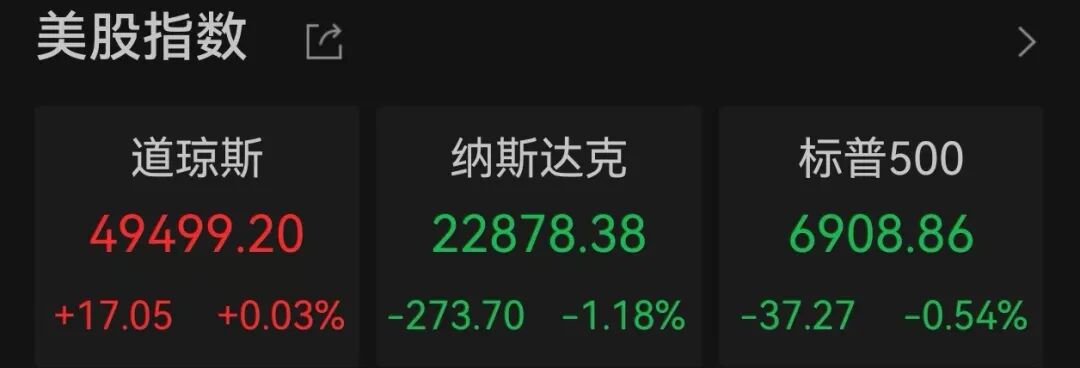
Market Performance - US stock market closed with Dow Jones slightly up, S&P 500 down by 0.5%, and Nasdaq Composite down by 1.18% [1] - Nvidia shares fell by 5.5% post-earnings, while AMD and Intel dropped by 3% [1] - Nasdaq Golden Dragon China Index decreased by 1.78%, with Alibaba down by 2.7% and Baidu down by 5.6% [1] - Dell's stock rose by 12% in after-hours trading, and Netflix surged nearly 8% [1] Economic Developments - Significant progress in US-Iran negotiations, with plans for technical discussions in Vienna next week [1] - Federal Reserve's Goolsbee indicated that interest rates could be lowered, but not before inflation eases [1] - US 30-year mortgage rates fell below 6% for the first time since 2022 [1] Geopolitical Events - Six US aerial refueling aircraft are en route to Israel to join military deployments in the region [1] - US-Ukrainian talks in Geneva concluded without specific outcomes [1] - Saudi Aramco canceled liquefied petroleum gas shipments from Juaymah terminal for February and March due to structural damage [1] Industry News - Meta's internal chip design efforts are reportedly facing obstacles [1] - Spot gold prices fell below $5200 per ounce, influenced by US-Iran negotiation progress affecting oil prices [1]


减少对美依赖,加拿大总理卡尼再访亚太
Huan Qiu Shi Bao· 2026-02-26 22:59
Group 1 - Canadian Prime Minister Carney's visit to India, Australia, and Japan aims to diversify trade away from the U.S. amid uncertain tariff prospects [1] - Canada heavily relies on the U.S. for trade, with approximately 75% of its exports going to the U.S. [1] - Carney's goal is to double exports to non-U.S. regions within the next decade to counteract U.S. tariffs on key industries [1] Group 2 - The agenda for Carney's visit to India includes potential cooperation agreements in fields such as research, artificial intelligence, quantum computing, and education [2] - The urgency for diversifying economic partnerships is heightened by rapid changes in global trade policies and U.S. tariff uncertainties [2] - Carney's trade-oriented foreign policy is reflected in previous agreements, such as the electric vehicle import quota with China [2] Group 3 - Ongoing tensions in U.S.-Canada trade relations persist despite a recent Supreme Court ruling against large-scale tariffs [3] - Specific tariffs on steel, aluminum, and automobiles remain effective, indicating that trade costs and difficulties will increase for Canada [3] - The North American Free Trade Agreement (USMCA) is set for renegotiation, with Canada and Mexico preferring to maintain it, while the U.S. shows interest in bilateral agreements [3]
中德双方企业达成 十余项商业协议
Xin Lang Cai Jing· 2026-02-26 17:41
Group 1 - The core point of the article is that during German Chancellor Merz's high-level economic delegation visit to China, over ten business agreements were reached between companies from both countries, covering sectors such as automotive, machinery, energy, logistics, and finance [2] Group 2 - The visit included a stop in Hangzhou, Zhejiang, where Chancellor Merz visited the Chinese robotics company Yushutech [2] - The founder of Yushutech, Wang Xingxing, accompanied Chancellor Merz to observe performances featuring robotic boxing and dancing [2]

接棒“股神”首秀!阿贝尔迎来伯克希尔(BRK.A.US)年度股东信大考
Zhi Tong Cai Jing· 2026-02-26 14:10
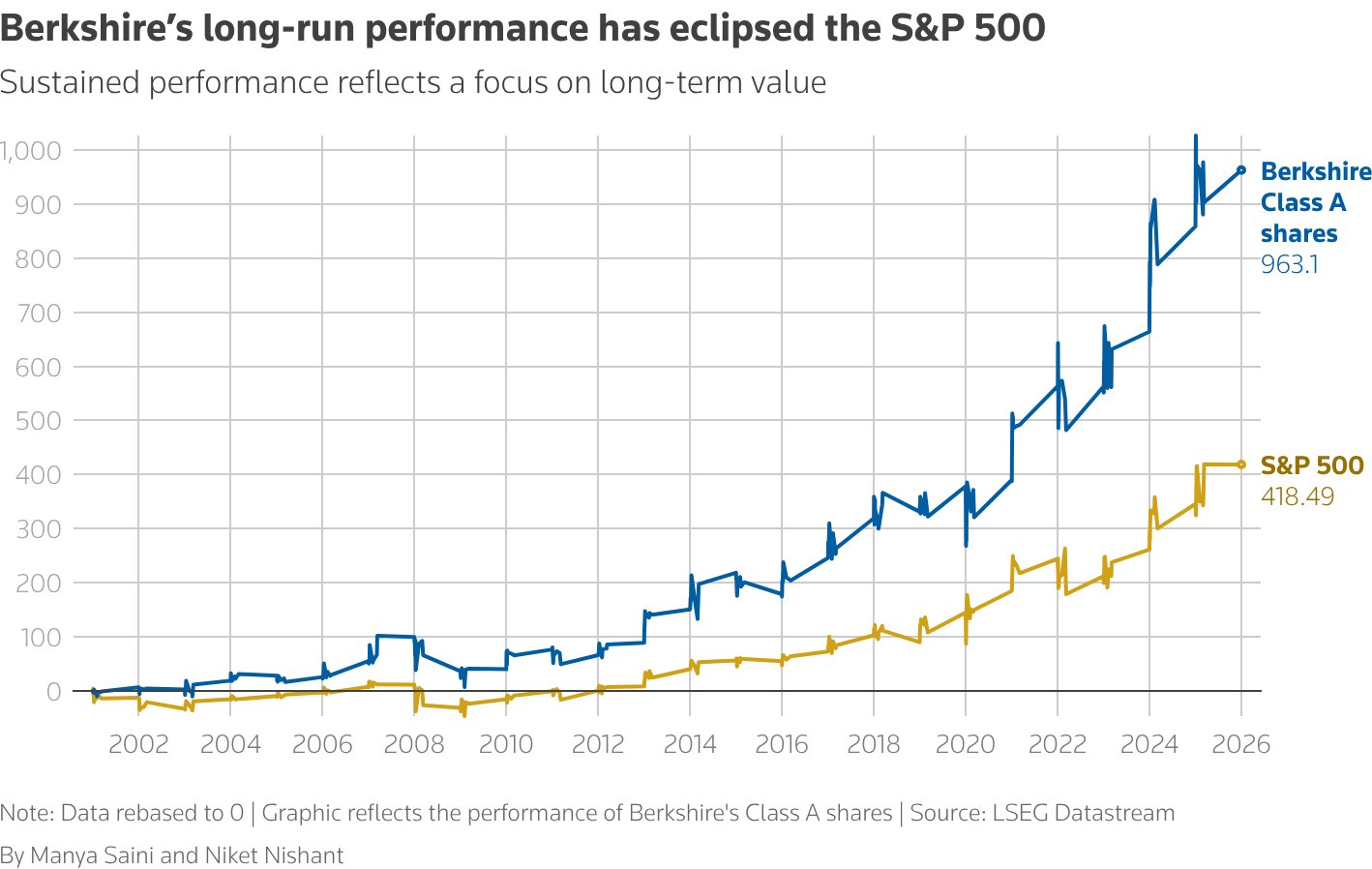
伯克希尔哈撒韦(BRK.A.US)新任首席执行官格雷格.阿贝尔作为著名亿万富翁沃伦.巴菲特的继任者,面临诸多挑战。本周六,华尔街将看到他是如何应对伯 克希尔独有的一个问题:备受期待的年度股东信。 95岁的巴菲特于年初卸任首席执行官,结束了他长达六十年的职业生涯。在这六十年里,他将一家濒临破产的纺织公司转型为一家市值超过1万亿美元的企 业集团,旗下拥有多家保险公司、BNSF铁路公司以及数十家能源、工业和零售企业。在仍担任董事长期间,巴菲特曾于去年11月表示他将"不再发声",因 为阿贝尔已接掌公司。 巴菲特难以被效仿,63岁的阿贝尔也不会成为他的翻版。 无论是在内布拉斯加州奥马哈举行的年度股东大会上与巴菲特一同应对提问,还是在2022年那封关于环境可持续性的信中——该信由巴菲特要求他撰写—— 阿贝尔在与投资者交流时,更多地关注伯克希尔业务的具体运作细节。 他的信函或许也会如此,尽管可能不如巴菲特备受期待的年度演讲那样文采斐然。这封信提供了一个机会,展现伯克希尔哈撒韦未来的发展方向——甚至可 能还会逐步削减其高达3817亿美元的现金储备。"沃伦.巴菲特堪称股东信撰写界的马克.吐温,"埃文.庞德尔说道。庞德尔是投资者 ...
默茨抵达杭州参访 实地感受中国新质生产力发展
Xin Lang Cai Jing· 2026-02-26 13:05
德国总理默茨昨天抵京开启就任以来的首次访华行程。今天,默茨总理由北京飞抵杭州,参访中国机器 人企业宇树科技和德国企业西门子能源,实地感受中国新质生产力发展。默茨总理一行抵达宇树科技 时,机器人在前迎宾。观看机器人格斗表演,默茨总理津津有味,频频点头。在具体设备和部件展示 前,他仔细聆听介绍,不时询问。总台马年春晚节目《武bot》的现场展示,更是吸引访问团成员们纷 纷录像拍照,并赢得阵阵掌声。随后,默茨总理一行来到西门子能源。该企业在中国能源发展转型以及 创新等领域有着广泛合作,并在海南全岛封关运作后率先投资。默茨总理认真了解公司在华运营情况, 并参观断路器生产车间。(央视新闻) ...